



In space, no one can spread your cream


Welcome to Friday, futurists.
Astronaut Christina Koch’s jar of Nutella floated past the moon this week, and it soon became one of the most powerful marketing moments in our lifetimes.
By now, you've most certainly seen the now-viral GoPro footage of the Nutella jar tumbling through the cabin of Orion, Integrity. Brands aren't allowed to "sponsor" these moments, but the cultural resonance made the clip a monetizable moment anyway.

A few numbers for scale:
- 18.1M linear viewers watched the launch across broadcast and cable, a NASA record
- 10M concurrent streamers tuned in for the lunar flyby, one of the largest livestreamed events ever recorded
GoPros captured the inside of the cabin. Nikons captured the outside.
The crew flew with iPhone 17 Pro Maxes and iPads, but as federal employees, they couldn't say so directly. The workaround was "highly powerful computing devices with outstanding cameras," which fooled exactly nobody. And on every wrist: an Omega Speedmaster X-33, a direct descendant of the watch Buzz Aldrin wore on the lunar surface in 1969.
Then came the moment when a brand was actually named out loud. Koch radioed Mission Control in search of a very specific item: Honest Company hand lotion.
"That is wild. To think that I had this idea of wanting people just to have safer, better products... and now it's in space? What? This is a moment I never thought would be my real life." — Jessica Alba, Founder of The Honest Company
That's a founder learning, in real time, that her product has outgrown the story she wrote for it.
(Sidebar: if you can’t spread honey in space, how on earth do you spread hand lotion? Asking for a spider rock friend.)
Brand is Our Language of Space
Space is abstract, but a jar of Nutella is physical, tangible, and has been experienced by many people around the world. In 1963, Tang at a kitchen table was not abstract. The consumer object is our bridge to collectively experience an event we’d otherwise only passively consume as a press release.
This isn't new. It's the oldest pattern in space travel. The brands that end up on a spacecraft are the brands that were already load-bearing on Earth, and they become the vessels through which we narrate history back to ourselves. I’d even argue that, given the history of the space program and my own brief experience with the team at NASA JPL, they gave a lot of thought to brand exposure and selection for this mission for precisely this reason.
A Lunar Capsule
At the VISIONS Summit at MoMA, I opened by arguing that brands are our time capsules and the bulk of what we put into them, including literal space capsules like the Voyager missions and their Golden Records (and a Lunar time capsule we’ve previously reported on). Curating one requires deep reflection on the present and on what you want to teach the future.
I want to amend the thesis.
What Artemis II made plainly visible is that in the age of the Multiplayer Brand, we’re no longer putting items into a physical capsule, but we’re assembling collective media moments. Timothée Chalamet pitches A24 on Zoom, then stands on the Vegas Sphere… our collective reaction is part of the vectorized capsule.
When Nutella tumbles through the frame, the world decides, on our behalf, that it's now a media moment worthy of the Artemis capsule. It probably won't become what Tang was for the Mercury generation, but it will be part of the discourse, alongside GoPro, Omega, and Apple, when we tell this story back to ourselves.
When your grandchildren ask where you were the week humans flew farther than anyone in history, you'll reach for the tweets and the IG posts, and in those images, you’ll see a floating Nutella jar.
The Final Frontier
So what’s next? We covered the NASA x Prada spacesuit collaboration for Artemis III back in 2024. What felt then like a curiosity now reads like an inevitability. Prada worked alongside Axiom Space engineers on materials and features built to protect astronauts and visually inspire the next era of exploration.
The moment that suit is captured on camera will reignite the same passion. We'll keep playing I Spy in our running history of commerce in the culture.
If you've been listening to the podcast weekly, you already knew Artemis II was going to be a cultural inflection point. (We were calling it in January 2025.) That's the advantage of following the signal before it becomes noise.
As I said in The Reliquary Economy, we experience global events through the brands we buy. Why?
Because commerce is culture.
— Phillip


Coachella Chaos, Population: Us.
The first weekend of Coachella starts today, which means the internet is already flooding with horror stories. And boy, is there mess. Brands and influencer agencies are canceling brand trips before their creator partners are supposed to leave for the festival (and after said creators already spent their own money on travel). StubHub is canceling wristband orders after reports of several sellers failing to send out their passes. Airbnb hosts have canceled reservations at the last minute, only to re-list their homes at higher rates.
Last year, we examined how much it actually costs to participate in Coachella and other events. But the costs have risen significantly because it’s no longer about the obvious financial implications. Vendors, brands, and agencies are now challenging the basic ethics of commerce. Demand is so high that they are playing by a new set of rules where they can cancel on a whim to reap more benefits. But people will continue to spend, which means there will be minimal, if any, repercussions. How much until it’s enough?
Phone-Free Fest.
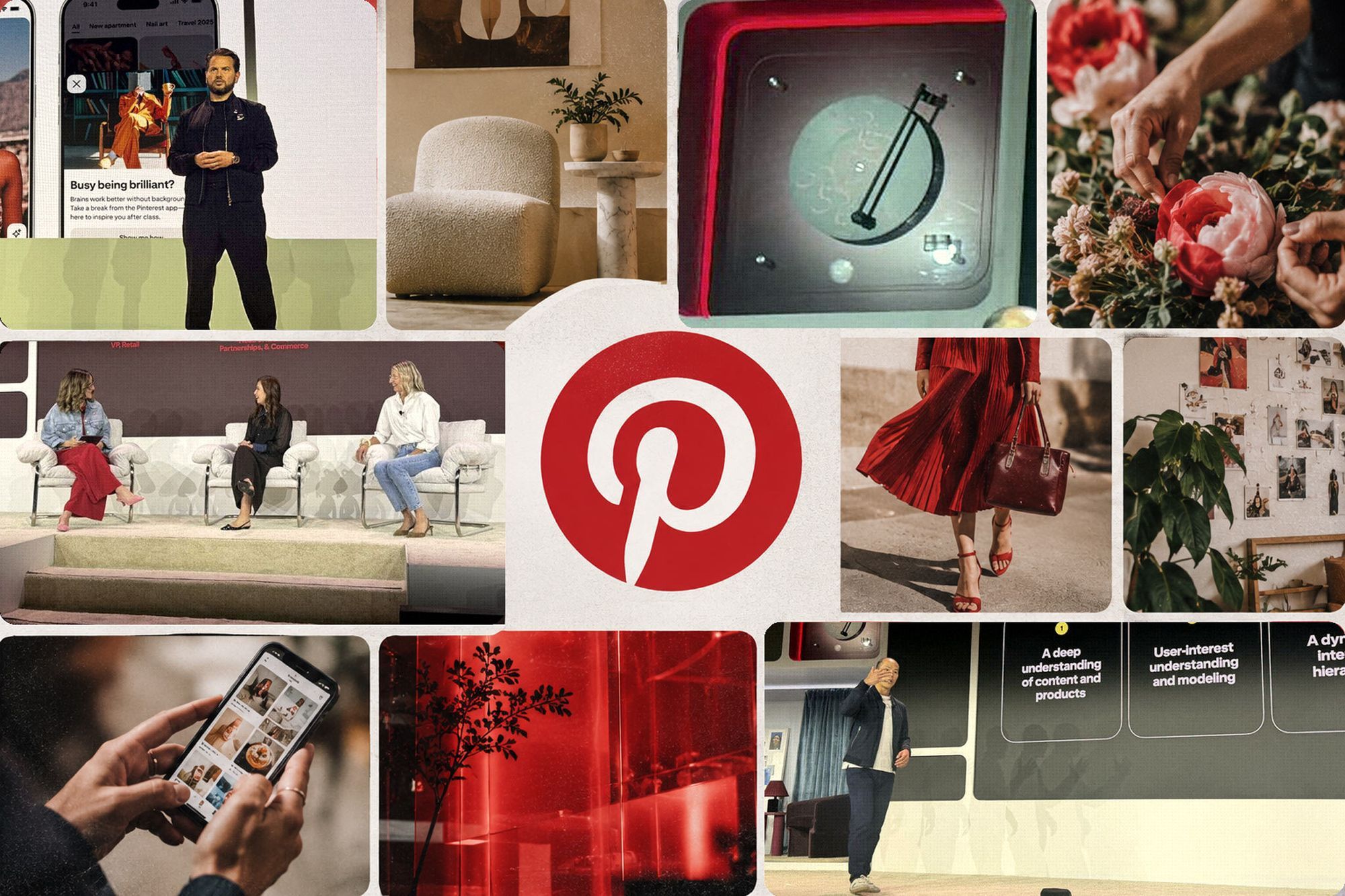
Searches for “analog aesthetic” are up 260% on Pinterest, so the company is turning the trend into a Coachella marketing moment. When festival-goers visit the Pinterest activation, they will be asked to lock their phones in pouches so they can commit the entire experience to memory. They’ll be able to create custom charms, get styling and beauty touch-ups inspired by Pinterest trends, and capture their looks in a photo op. The epicenter of the experience, though, is a Joy Guide, a printed tome that folks can customize with physical artifacts like stickers, postcards, and lenticular photos.
Want to learn how Pinterest identifies the intent signals that will drive tomorrow’s trends? Listen to our conversation with Julie Towns, the company’s VP of Ads Product Marketing. She gave us a special peek inside the Pinterest trend-prediction machine, including how the platform leverages its ecosystem of micro-communities and subcultures.


Drip as Fresh as a Slushie.
The internet went bananas this week after getting a glimpse at 7-Eleven’s merch site. From vintage cardigans to camo trucker hats and branded slides, the store is brimming with specialty goods that are the perfect combination of luxe and kitsch. The most fascinating part is that this isn’t just a limited drop of five SKUs; there are highly niche collections for golf, fishing, general outdoors, and cars, competing with the breadth and depth of a specialty retailer. Props, 7-Eleven. We had no idea.
Papal Peeps.
Pope Leo XIV is going viral for his love of Peeps. Earlier this year, he was gifted a plush version of the Easter treat, which was dressed in its own miniature mitre. On Easter Sunday, he was taped welcoming a crowd and quickly catching sight of some in the wild. He had his security detail snatch them up for his enjoyment. Of course, this is something the brand already knows: it featured Rome as a top Spring Break destination to drop the ultimate name in its social media marketing.
This isn’t the first time His Holiness influenced commerce. After the latest conclave, social media was flooded with questions about his “past life,” including his favorite teams, foods, Chicago hot spots, and even his watch. Earlier this week, the White Sox added a limited-edition ‘Pope hat’ to its giveaway schedule to commemorate his fandom.


Give Green to Get Green.
Unilever is acquiring Grüns, the company that has penetrated social media feeds with its sewage-colored, good-for-you gummy bears. It’s a clear chess move for the holdco, which recently combined its food division with McCormick to create a distinct business focused on home, personal care, and beauty.
Valued at $1.2B (a major boost from its $500M valuation in early 2025), Grüns has made a major splash in the supplement market since its founding in 2023 by Chad Janis. Unilever shared in its announcement that the brand currently ships about 10M gummies each day, has more than 1 million customers, and is ranking as the top green supplement on Amazon and in US retail. Make no mistake, this is just as much a brand play as it is a portfolio play.
Freshen Your Fridges.
Danone CEO Antoine de Saint-Affrique noted that higher food prices may be on the horizon due to the war in Iran. Energy prices have increased, as have the costs of fertilizer and shipping, due to the Strait of Hormuz’s closure. If you’re a raspberry fiend (or have a small one in your household), you may be hit the hardest. Growing and harvesting the delicate fruit apparently requires a lot of resources, which has led some retailers to raise their container prices to $8.


A Not-So-Bad Week for Perplexity.
The AI company has pivoted from search to AI agents, and revenue has jumped 50% in the last month as a result. According to new reporting from the Financial Times, Perplexity has more than 100M monthly active users from its search and agent tools, including “tens of thousands” of enterprise clients. Consumer- and enterprise-level subscriptions cost between $20 and $200 a month.
And a No-Good, Very-Bad Week for OpenAI.
Meanwhile, one of Perplexity’s top competitors is in the news for enabling a “sociopath.” A damning new piece from Ronan Farrow and Andrew Marantz attempts to unpack what’s inside the mind of OpenAI’s Sam Altman and whether he can actually be trusted with the future of AI and, well, humanity.
Farrow has become the New Yorker’s official authority on twisted men in power; he exposed Harvey Weinstein’s sexual misconduct in 2017 and helped activate the #MeToo movement shortly thereafter. Now, he has published the culmination of hundreds of interviews, including hours of conversations with Altman himself, and background research from hundreds of pages of internal records.
It’s easy for us to pontificate why every modern “genius” seems to have such pathological traits. Still, some quotes refer to a mental and emotional gray area that conveys just how “squishy” the AI sector is. The technology is evolving rapidly, as are the ethics and culture surrounding it. Therein lies a much bigger discussion of trust. Who owns the future of AI and, in turn, our society? And most of all, do they deserve the right to own that trust? (Just some light thinking on a Friday…)

.svg)
