


Fashion was for fashion. Now it's for you.

Peacocks don't perform at the zoo
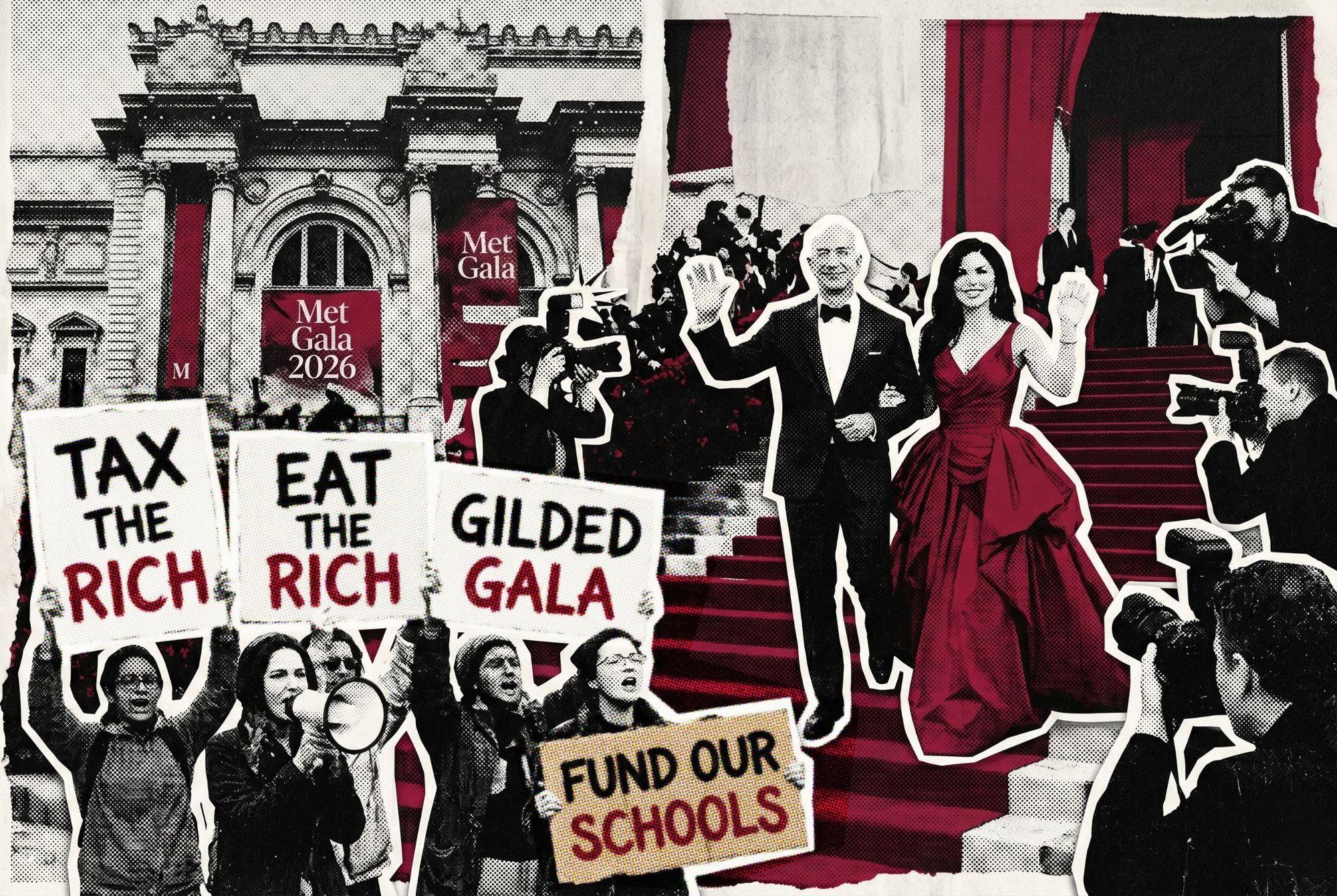
The Met Gala was once fashion's ultimate peacocking event. Insiders were performing for insiders. They could embrace outlandish themes and embrace their creative weirdness.
The energy is different now, and so is the cultural imprint.
Big Tech is sponsoring tables, Zara is dressing celebs, and one of commerce’s most controversial couples is receiving ‘honorary co-chair’ titles. Boycotts, protests, and yapper videos abound.
What’s left of fashion’s biggest night?

B2B Isn’t So (B2)Boring, After All.
We spent this past week in Chicago at B2B Online, where we learned how B2B culture is evolving amid the “agentic era.” The overarching message was best stated by chairperson David Nagy, who noted that “the noise around AI is ‘weather’ and AI itself is ‘climate.’” The leaders moving fastest aren't reacting to every new tool; they're building teams and protocols to help them see around the next corner.
→ Even in B2B, commerce is culture. Business-to-business operations are rooted in human-to-human engagement. Sales reps are highly committed to their clients and want to take complete ownership of their relationships. That’s why AI cannot simply be a switch you turn on. Leaders must consider how to embrace the nuances of B2B culture and turn digital into a meaningful value-add, not something that will take control. MES Life Safety's SVP of Marketing and Commercial Excellence shared how he turned a stalled eCommerce rollout into a win by rebranding the platform as the sales reps' own catalog. And a panel of executive leaders from Schneider Electric, J. J. Keller & Associates, Inc., and Hexion Inc. shared how success is built on three leadership essentials: clarity of vision, trust in the team, and decisions made closest to the customer. These are all powered by human instinct and connection.
→ Open the gate. Because commerce is culture, and AI is now the front door to commerce, B2B organizations need to rethink their approach to content creation and syndication. Donna Bedford, Global Senior Executive Officer of Strategy and Operations at Lenovo, preached to a packed room that brands must ungate their content, remove lead-gen forms, and make meaningful, buyer-relevant content discoverable and consumable by individuals and LLMs. She noted that creator-led content is a particularly overlooked opportunity, especially as corporate and B2B niche creators embed products organically into their skits.
→ Clean data is the great unlock. Nearly every AI ambition surfaced this week ended at the same place: data readiness and governance. Sarah Feeler, VP of Channel Strategy, Operations, and Digital Enablement for Schneider Electric, made the pragmatic case that chasing 100% clean data has diminishing returns and slows transformation, while Rodrigo Garcia, Chief Technology and Operating Officer of PartsBase, cited the sobering stat that 95% of AI projects fail because organizations under-invest in their people and their data. The takeaway across panels is to identify critical data slices that must be perfect (especially product data), ship the rest iteratively, and stop letting hygiene projects become the place transformation goes to die.
→ Friction quietly costs you the customer. 70% of B2B buyers bypass digital channels that don't work, and 46% will switch suppliers entirely for an easier ordering experience. Those data points added new meaning to discussions around search, PIM, and UX. Arguably, B2B scenarios are even more reliant on these areas since buying decisions are longer, more complex, and include more parties. The teams moving the needle are reducing clicks, dead-end searches, and broken product data so buyers can simply complete the job.
→ Agentic commerce stopped being theoretical this year. Several sessions shifted the agentic conversation from conceptual “chatbot” conversations to questions of who builds the procurement agent, who governs it, and what happens when both sides of a transaction are autonomous. One speaker projected $15T in B2B spend flowing through AI agent exchanges by 2028. Treating agentic as a bolt-on to complex catalogs and processes is a path to being out-procured by buyers whose agents go elsewhere. The work now is rooted in data quality, payment modernization, and protocols that let businesses be discoverable and transactable by both agents and humans.
The Modern Mall Rat Speaketh.
Oversized, off-the-shoulder graphic tees. Tube tops. Patterned camis. No, this isn’t a fashion fever dream of a geriatric Millennial. It’s what Gen Alpha is buying right now. In a three-day shopping safari at American Dream Mall, Strategist writer Bella Druckman spoke with teens to uncover what’s hot: top brands, styles, and trends. No surprise, Sephora is a must for the girlies, but there’s a turf war brewing between Alo Yoga and Lululemon for the top athleisure brand.

TikTok’s Hidden Creator Problem.
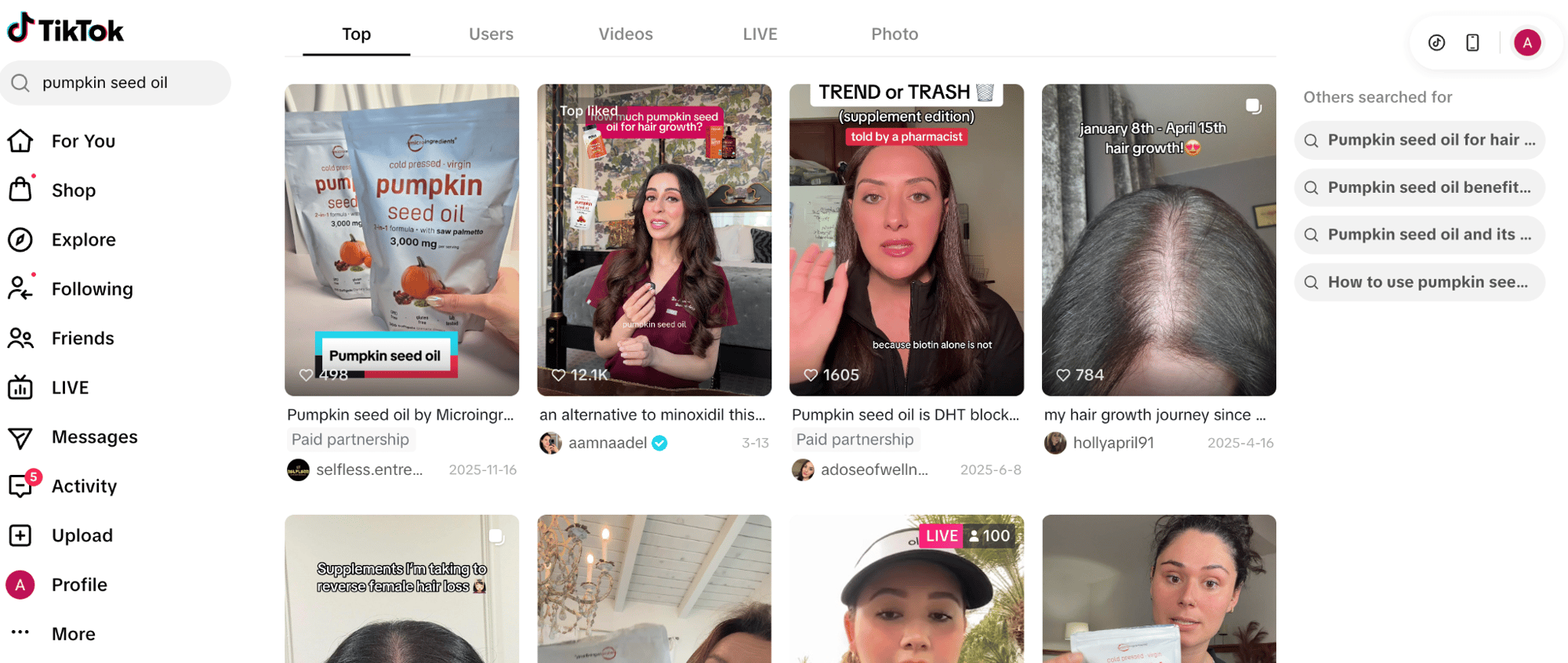
TikTok’s North American director of beauty, wellness, and personal care has data to back up what we’ve been saying about the new age of the creator economy: consumers may find influencer content engaging and entertaining, but trust in them is waning. After seeing affiliate content on TikTok, 77% of users search for the same product on the platform to learn more. The search function has become a “validation tool” for fact-checking what others say, making science-backed messaging and content more central to how brands market themselves on the platform.
The Everything Store Hits the Supply Chain.
Amazon is getting into the supply chain business with a new ecosystem of services aimed at replicating its AWS success. Amazon Supply Chain Services (ASCS) will extend its freight, distribution, fulfillment, and parcel shipping solutions to a vast client ecosystem that already includes brands like Procter & Gamble, Lands’ End, and American Eagle. With ASCS, merchants of all sizes will gain access to Amazon’s expansive network of US fulfillment centers, intermodal containers, and aircraft, all of which have been competitive differentiators and have completely raised the bar on the fulfillment experience. ASCS will also give Amazon a strategic edge over traditional delivery companies that are not prioritizing lightweight eCommerce volume, an area in which Amazon already has an established presence.

A Little (Aesthetic) Treat.
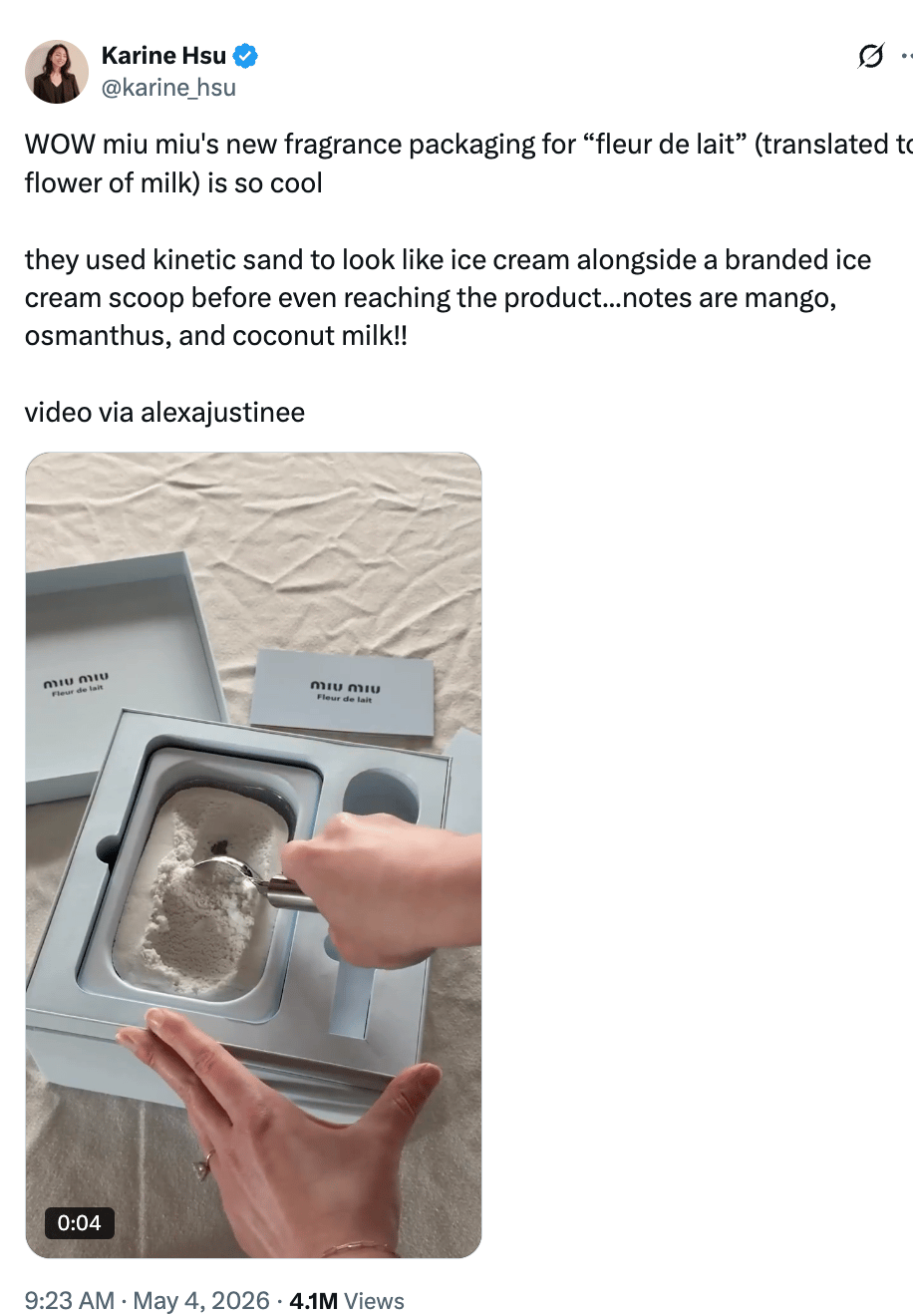
The PR packaging for Miu Miu’s new fragrance is making the rounds on social media for its tasteful creativity. Rather than putting Fleur de Lait bottles in basic boxes, the luxury brand presented them inside kinetic sand sculpted like ice cream, which recipients must then “scoop” out. It’s fun, it’s interactive, it’s shareworthy. The only thing it’s not? Edible.
Where’s the Beef?
The beef between McDonald’s and Burger King continues. Although McDonald’s latest earnings beat analyst expectations, CEO Chris Kempczinski warned that spending conditions “could be getting a little worse.” The Golden Arches has launched new value meals but offset them with pop-culture collabs and marketing campaigns, yet it seems Burger King is the one seeing the greatest return on its branding investments. BK CEO Tom Curtis famously piled on Kempczinski when his big-bite vertical video went viral for all the wrong reasons.

We Could’ve Predicted This.
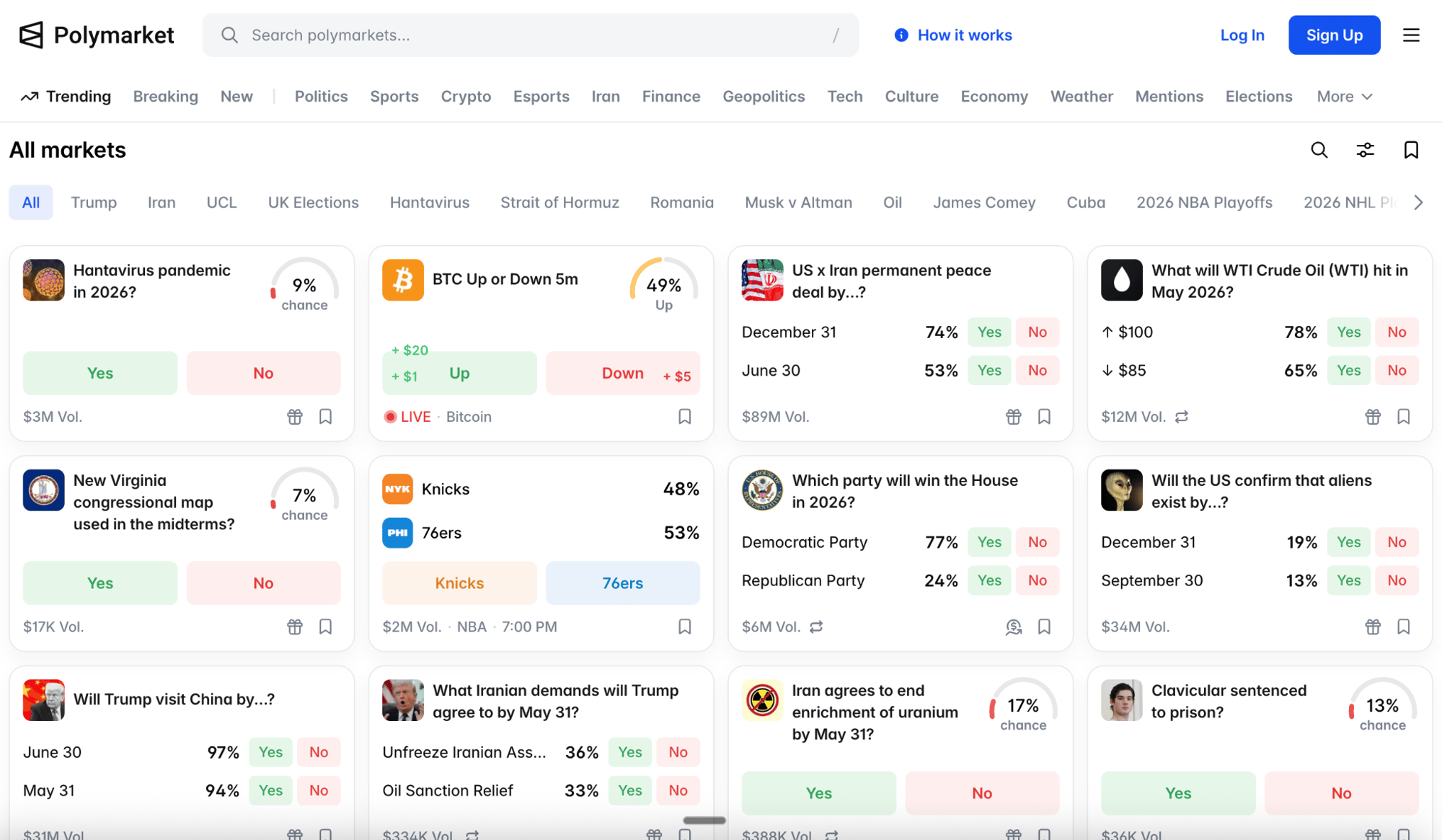
A new expose from the Wall Street Journal found that 67% of Polymarket profits go to only 0.1% of accounts. With fewer than 2,000 accounts netting nearly half a billion dollars, the math shows that the prediction market isn’t so much about “predicting” but gaming outcomes for a very small number of “sharks” equipped with data-driven algorithmic trading knowledge. Of course, these numbers don’t account for those who use classified government information or tamper with weather sensors to win the big bucks.
🎧 Revisit our 2026 Predictions episode to get Phillip and Brian’s hot takes on how this space is shaping the modern economy.
Accountability on Display.
In an extreme case of “commerce is culture,” a nonprofit called The Institute for Primary Facts has opened a part-museum, part-reading room in Tribeca that puts all 3.5M pages of the Epstein files, and a timeline of his relationship with President Trump, on display. The museum is free and open to anyone over the age of 16, with 20-minute appointments now available online. Members of Congress, law enforcement, and journalists with government-issued credentials are encouraged to reach out to schedule private appointments to read the files, which have unredacted areas.


.svg)
