


Is This the Cultural Decline of TikTok?

Welcome to Wednesday, futurists.
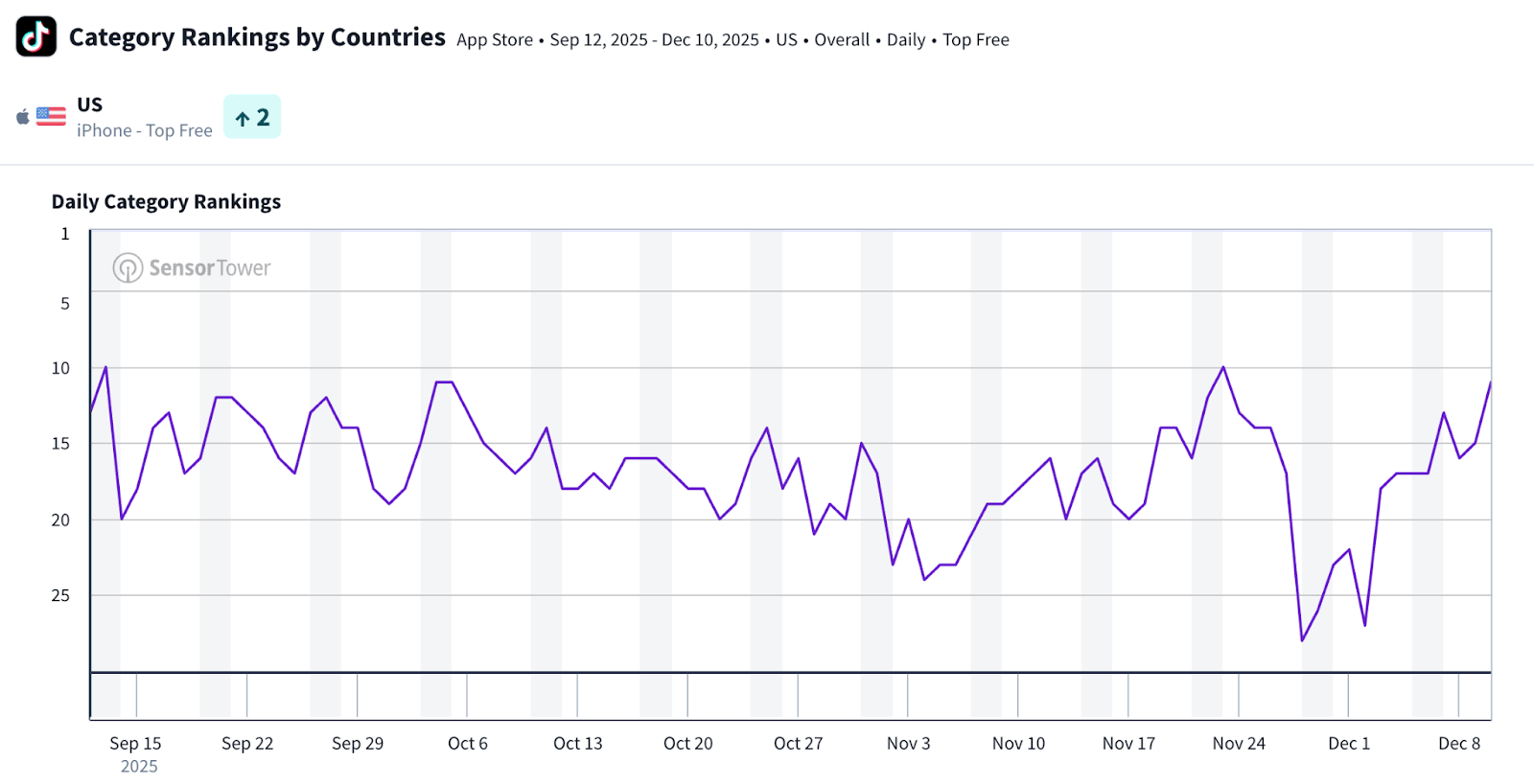
Something curious is happening in consumer culture. The once-dominant cultural force that was TikTok seems to have hit its sophomore slump on the App Store, where it has struggled to maintain a top-ten position for the past 90 days.
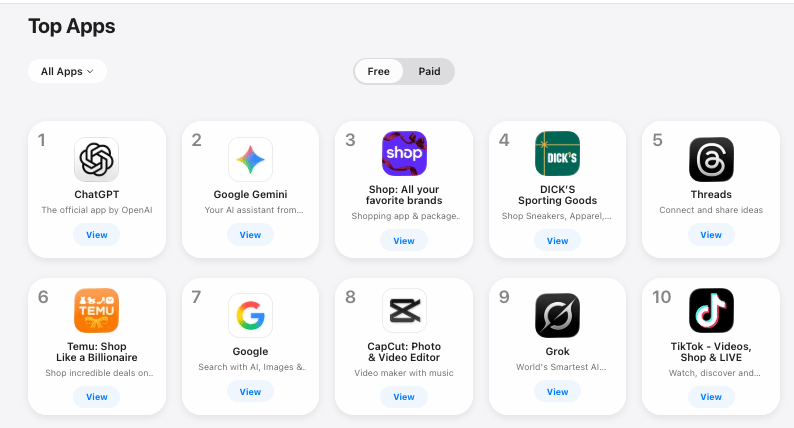
TikTok’s slogan, “It Starts on TikTok,” has been a mainstay since 2020. Based on App Store rankings, however, consumers are also turning to a bevy of other apps for search and shopping: the two areas where TikTok has been making strategic investments to siphon off market share from the incumbents: Google and Amazon.
We were surprised here at FC HQ this week when we dove into the most recent SensorTower data. The data shows strong consumer engagement with AI and shopping-based apps: three of the top ten apps are shopping apps, and the number-three spot belongs to Shop, Shopify’s consumer shipment-tracking and marketplace shopping app.
Even Google’s own Search app is besting the house that Charli D’Amelio built; something that would have been unthinkable three years ago, according to the online thinkboi discourse following a TechCrunch article that disclosed an internal Google study showing it was losing market share to TikTok.
App Store rankings track more than just daily installs; they also track updates, which are a decent barometer for an app’s overall install base and usage (stale/unused apps are often prompted to be removed as garbage collection in modern iOS and Android).
We’ve held firm to our conviction here at Future Commerce: TikTok was a new modality, not a replacement for the information density you can find in traditional search, with Answer Engines, or with grid-based marketplace product searches. As we said in our 2022 missive on the subject:
It’s not news that searches begin off of Google. For nearly a decade, shopping searches have begun at Amazon.com. Product reviews at Instagram, and “how to” searches on YouTube. TikTok sits at the intersection, with a decidedly younger audience, and a preference for short-form content.
The relatively high quality of the service today is due to the authenticity and the purity of the current audience. That will be driven down over time as more brands and marketers try to extract value from the platform. (July 13, 2022)
Can you find a creator with precisely the answer to the question you’re asking? Yes. Do you have to watch that video on 2X and wade through a sea of sponsored and affiliate content to find quality and trusted advice in 2025? Also yes.
Future Commerce predicts the future yet again. 🔮
“TikTok Shop killed TikTok,” says Isaac Medeieros, founder of Kanpai Foodz, a social-native brand with tens of millions of subscribers across YouTube and TikTok. “It’s basically an affiliate platform now. I have no issue with that, but Instagram and Shorts have more cultural impact now.”
Or maybe it’s something more complicated, and potentially more chilling? If I were TikTok, I would be concerned about two cultural shifts: a reduction in screen time and the rise of AI.
Feed scrolling has negative connotations as a time-waster, and the habituation and screen time association is associated with anxiety. The Brick screen time control device is a trending gift this holiday season. Hank Green’s screen time control app, Focus Friend, hit #1 on the App Store after its debut this Fall.
Perhaps those parasocial relationships that taught us dances and psyoped us to buy dropship tchotchkes from China are shifting away from other people and cultures through short-form video and instead into the relationships we’re forming with Grok, ChatGPT, and Gemini?
— Phillip

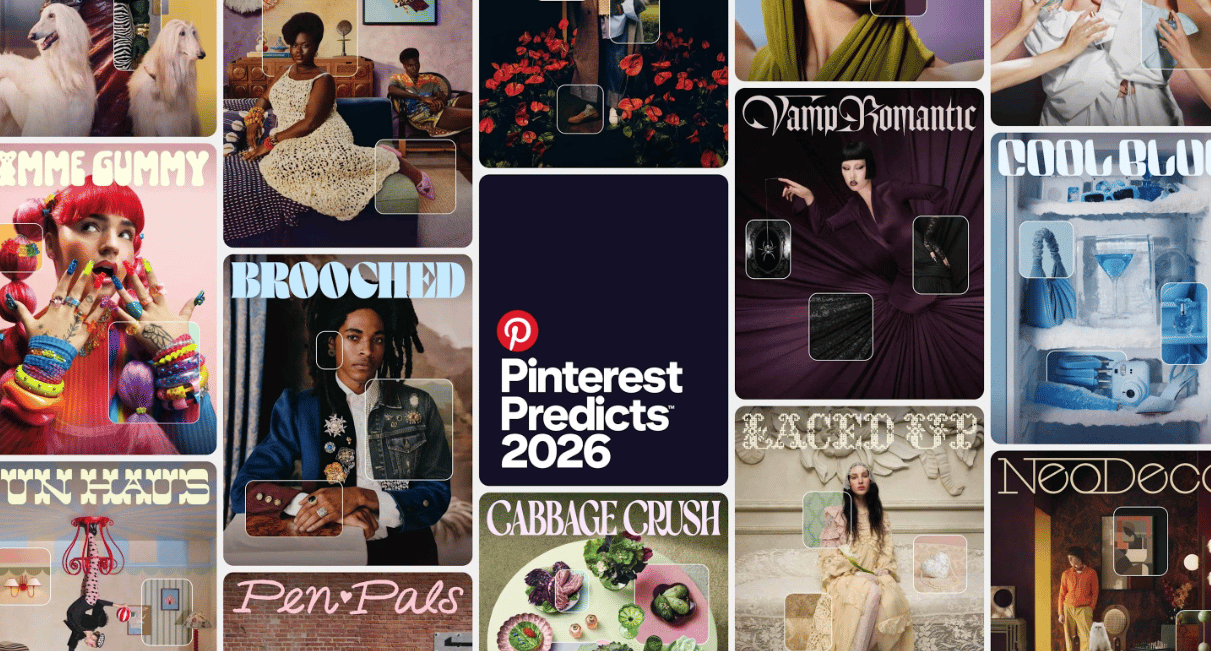
Pining for Predictions. Pinterest has unveiled its 2026 predictions, and nonconformity, self-preservation, and escapism are emerging as dominant cultural drivers. Its users are opting out of algorithmic chaos and building more personal, protective worlds.
Gen Z’s migration to Pinterest for “calm search” (note: doomscrolling) is highly evident in the data. And with a 500-billion-pin taste graph powering 80% accurate foresight, Pinterest has first-party data to validate how consumers engage with the platform to design their lives and express their personal tastes.
🔮 Want to learn how Pinterest predicts the future? Listen to our chat with Julie Towns, Pinterest’s VP of Ads Product Marketing.
Sloppy Clown Behavior. McDonald’s is the latest mega-brand to be hit with the unique brand of FAFO that only AI slop can provide. McDonald’s Netherlands’ holiday-themed ad, “It’s the most terrible time of the year,” was meant to be a tongue-in-cheek take on our collective holiday experiences. Ad agency TBWA\NEBOKO worked with film production company Sweetshop to create the 45-second spot and used AI to support the process. The end product sparked an uproar on social media; as a result, the brand has removed the ad completely from its account.
Our Take: Sure, some folks are eager to sniff out and hate on AI. But we agree with Luiza Jarovsky, PhD, who called out key strategic flaws in the ad that likely led to such a harsh response: no story, poor continuity, and a jarring structure that doesn’t immerse us in the brand’s world or the essence of the holiday season. Sure, AI can help conceptualize and ideate to an extent, but without thoughtful execution steered by a knowledgeable human, things can quickly fall off the rails.
Coca-Cola saw a similar response to its AI-generated holiday commercial, though it appears Coca-Cola (at the very least) saw more humorous, even light-hearted, discourse on social media. Meanwhile, Apple was able to save face for once, reaping the benefits of its high-touch, analog approach.


Another Girlie GAP Collab. Later this week, GAP is embarking on another collab adventure. This time, it’s with Summer Fridays, the skincare brand with the lipgloss the girlies love. This new line features a series of cozy fits, undoubtedly designed to complement consumers’ extensive self-care regimens. Soft knits, fleece sets, matching pajamas, and accessories blend GAP’s classic designs with Summer Fridays’ minimalist Southern California vibe, and have a relatively mild price tag ($28-$28). Customers who spend at least $125 will get an exclusive Summer Fridays beauty bundle, while supplies last.
Between Summer Fridays and BÉIS, GAP clearly wants to target a younger, social-media-first consumer, but as consumers strive to break free from their algorithmic aesthetic prison, the retailer may want to diversify. Read on to see what we mean.
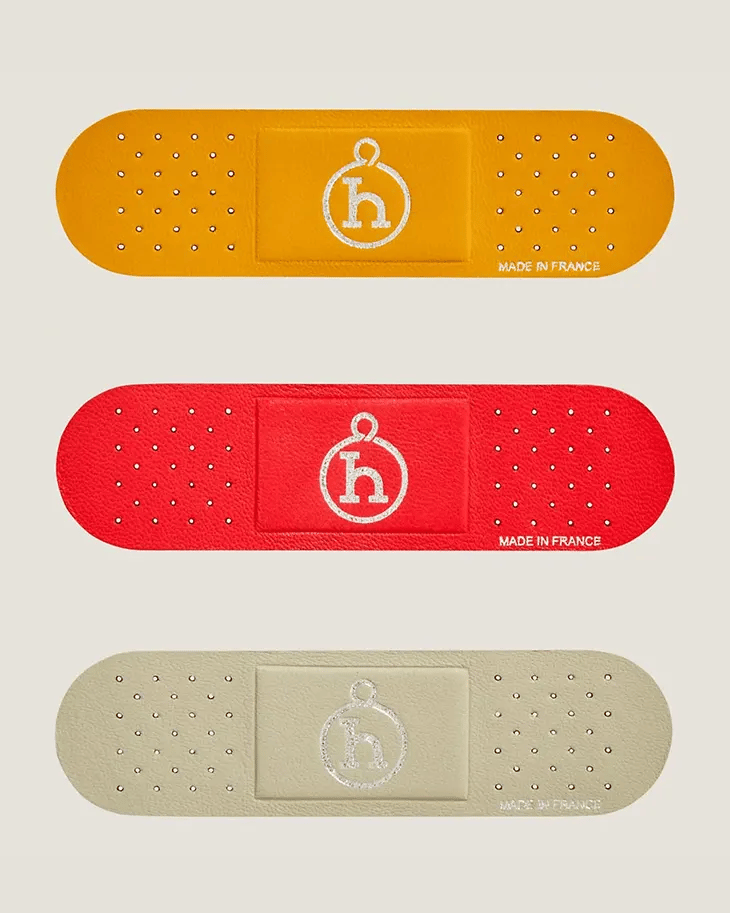
Yep, That’s a Hermès Band-Aid. The luxury house is redefining “product extension” with the launch of its new leather patch collection. Designed in the shape of bandages and including the brand’s petit h, these new patches are being sold as “decorative items” in sets of three. The catch? The color and leather type are always a surprise when you decide to add to cart. Product photography shows a patch on a white leather tennis shoe, a patch that ties up a phone charger, and even one that covers a laptop camera, illustrating the diversity of the products and the many ways you can signal your status. If only the Hermès eCom site didn’t keep crashing every time we tried to check out the PDP…

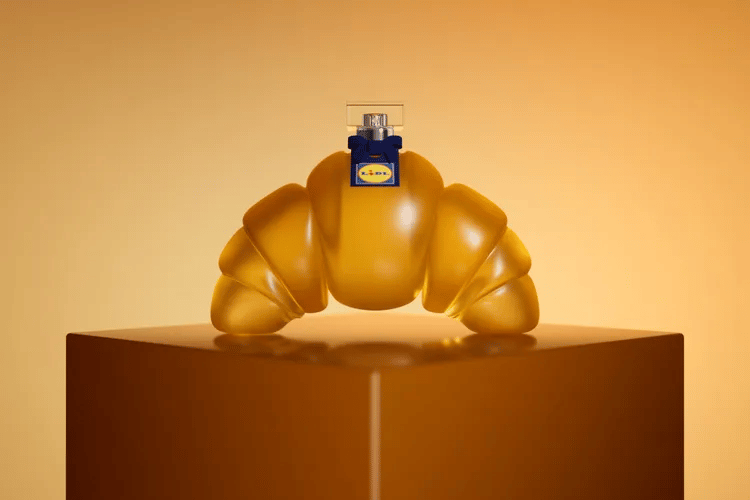
Fresh-Baked Luxury. Lidl US is getting on the merch bandwagon with a special social media campaign. The grocer partnered with Sarah McCartney, the “Fairy Godmother of UK Perfumery,” to create a fragrance inspired by its popular 49-cent croissants. Only 100 croissant-shaped bottles are available, and anyone who wants to get their hands on the exclusive fragrance must enter by following and engaging with Lidl US’s Instagram account. Followers must reshare the post, tag the grocery chain, and leave a comment tagging friends until the contest ends on Dec. 18.
Our Take: The campaign is an amalgamation of several brand campaigns we’ve covered on The Senses lately. Exclusive brand merch drives urgency and exclusivity. But rather than prompting people to visit stores, the grocery chain is using the merch drop as a lever to bolster its social media presence. It shows the model can address different goals when the prize is right.

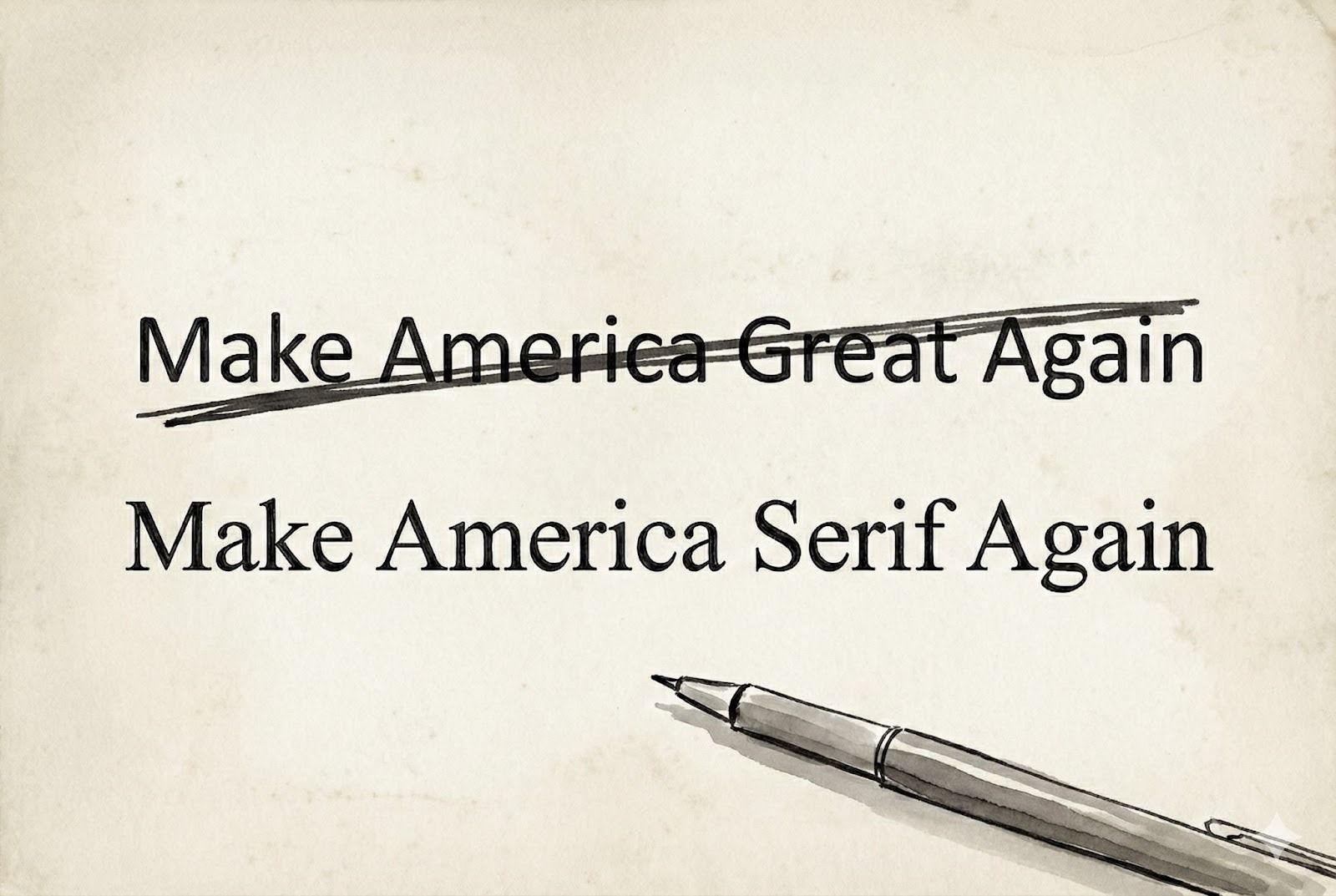
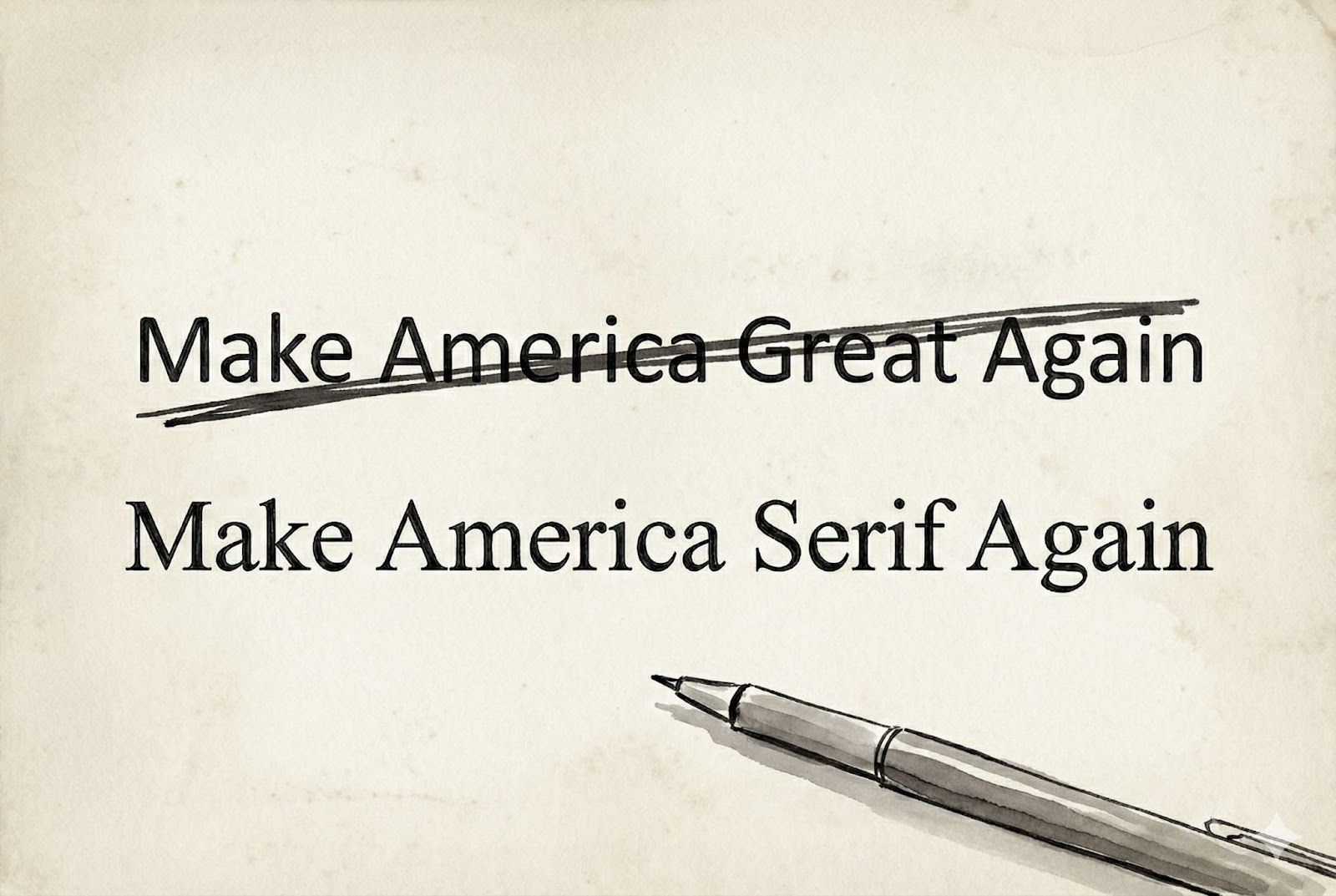
Serif's Up. Secretary of State Marco Rubio is mandating Times New Roman for all State Department communications, replacing Calibri in what he frames as eliminating a “wasteful DEI program.” The font change reverses former Secretary Antony Blinken's 2023 accessibility decision and signals the administration's continued dismantling of federal DEI initiatives.
Blinkin: “I shot the serif.”
Rubio: “But you did not shoot the deputy (Secretary of State).”
Holly Jolly Gig-mas. Over 43% of US kids have asked for in-game currency this holiday season, more than those asking for video game consoles (39%), video game accessories (37%), physical games (37%), or gaming subscriptions (32%). The data, gathered by the Entertainment Software Association, aligns with the broader trend of gamers moving toward mobile apps and live gaming services such as Roblox and Fortnite. It should come as no surprise, then, that young consumers are asking for Robux (currency for Roblox) and V-Bucks (currency for Fortnite) to purchase digital skins, in-game boosts, virtual real estate, and other perks.
Commerce brands are embedding themselves in these spaces by offering exclusive digital goods and brand environments featuring events and challenges. By tapping into young consumers’ innate need for connection, creativity, and exclusivity, brands are getting in-game engagement right. Learn what this means for the future of customer experience and loyalty.
🗺️ And if you want to dig deeper into the virtual world of Roblox, we’ve been tracking all the key trends and activations from the world’s most culturally relevant brands. Dive deeper.
.jpg)

.svg)
