



Vandalism, But Make It Fashion

Welcome to Friday, futurists.
Today, hundreds of brands and celebrities are abstaining from school, work, and, notably, shopping, in a nationwide anti-ICE protest. Retail stores and online shops are participating in online and IRL demonstrations—the largest seen since 2020’s Black Out Tuesday—by weaponizing commerce as their primary form of speech.
Notably absent from the protest? Sydney Sweeney, whose lingerie brand, Syrn, launched this week with a flurry of desperate activations, ranging from corny (walking around the streets of LA in lingerie) to illegal (hanging bras from the Hollywood sign).
At the center of it all is the attention economy.
Celebrities and influencers are using their social media accounts to intentionally post misleading carousels to drive awareness of the protest. Ariana Madix, Preston Mitchum, and Elizabeth Booker Houston are among those who have used the technique to drive engagement to posts that begin by saying “why I didn’t return to Bravo,” but end by saying “abolish ICE.”
The Instagram carousel has become the Trojan horse of political speech. As we wrote in “Proof of Life, Proof of Purchase,” following the capture of Nicolás Maduro:
The civic square has not disappeared. It has been replatformed. It now lives in feeds, carts, and odds, where participation is measured, priced, and amplified.
The juxtaposition of Sweeney’s launch of Syrn makes her antics feel transgressive by comparison. When speaking with Variety this week, Sweeney said she’s not political, but rather, “I’m in the arts.”
Protesters being arrested for being present in public spaces while celebrities trespass and vandalize public property for commercial gain, on camera, with impunity, is the quiet part out loud.
And it underscores what America prioritizes most. The things we buy, and who sells them, matter a lot more to us than the people who buy them.
Because commerce. is. our. culture.
— Phillip

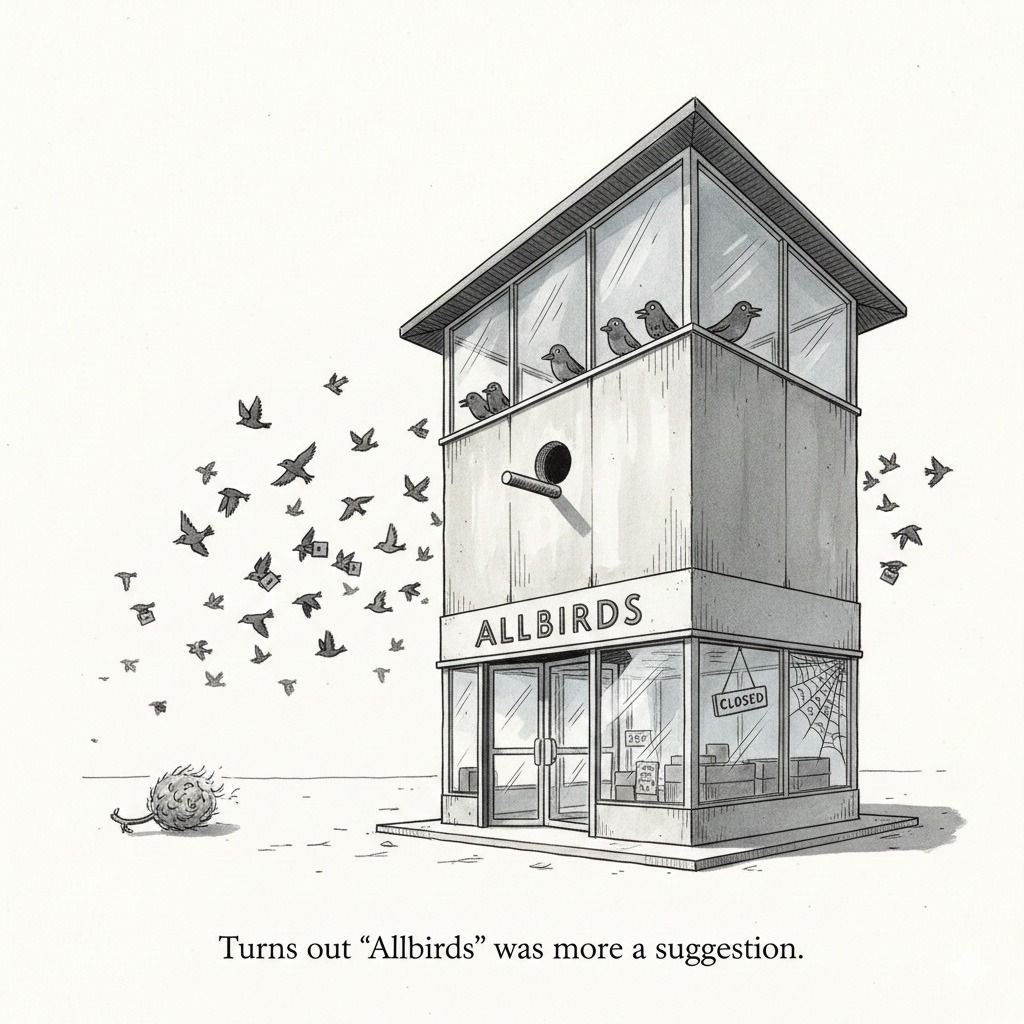
All the Birds Have Left the Building. In its quest to streamline operations, Allbirds is closing all but four of its company-run stores worldwide by the end of February. During the brand’s ascent, “hundreds” of store openings were on the docket, but Allbirds peaked at just 60 doors globally in 2023. Since then, the brand has continued to face a long line of financial missteps, largely driven by a more competitive category and a handful of new competitors that have established a more distinct (and compelling) brand POV. Recently, the company noted that while losses were not as significant, sales were still down globally and store operations were eating into costs.
Luxury Lag. Despite hyping up a luxury recovery, LVMH, the house behind Louis Vuitton, Tiffany & Co, and Sephora, reported less-than-stellar results for Q4. Revenue was up 1% organic, but down 5% actual, and net profit was down 13%. The group said that while sales in China (a key luxury market) were up for the quarter, the rebound was not as significant as expected.
Our Take: In Insiders #216, writer Simone Oltolina explored what’s really happening in the luxury realm, and he argues that the infrastructure for desire is changing. While many brands are investing heavily in fashion shows and flashy activations, some of the more compelling moments that drive brand engagement and loyalty are architected in closed communities, wellness retreats, and unexpected spaces like specialty florists.


JCPenney Wants to Cash in On Your Breakup. The department store retailer is continuing its quest for relevance by running another tongue-in-cheek marketing campaign. This time, the focus is on Valentine’s Day. “The Ex Change” campaign concept was developed in partnership with Mischief to encourage customers to trade in their jewels from former flames for something better (or perhaps not as heavy due to all the emotional baggage).
On February 14, the first 100 customers to visit JCPenney’s flagship in Garden City, NY, and the first 50 customers at other participating locations, can trade in any jewelry item for a new one. Those who can’t make it to a store can also cash in on The Perfect Ex-Cuse Discount, which offers up to 70% off fine and fashion jewelry. All jewelry traded in will be donated to the nonprofit Good360. While we appreciate the cleverness of the campaign (though it’s slightly reminiscent of GameStop’s “trade anything” strategy), we especially appreciate the charitable giving component, which shows depth behind the “let’s-go-viral” exterior.
Amazon’s Grocery Efforts Go Sour. It turns out that we don’t need an Amazon-branded grocery store when we have Whole Foods. Despite being more futuristic, tech-forward experiences, Amazon’s grocery and grab-and-go formats have failed to create enough value for consumers to return, or frankly, visit at all. As a result, the company announced this week that it’s closing all Amazon Go and Fresh stores. The news proves that even an innovation engine as robust as Amazon’s still struggles to do physical retail well, even with all the tech bells and whistles. But that doesn’t mean the company is giving up on brick-and-mortar completely. In fact, we reported last week that Amazon plans to open a mass-retail concept, a clear competitor to Walmart, in the Chicago area.

Is America So Back? Starbucks’ stock jumped after the company announced its turnaround was “ahead of schedule.” Sales and foot traffic were both up last quarter, driven by holiday beverage demand and a plastic bear cup that took social media by storm. US sales were up 4% YOY for the quarter, which ended Dec. 28. This was also the biggest boost Starbucks saw in about two years.)
Our Take: During his tenure as CEO, Brian Niccol reduced corporate headcount by 2,000, closed underperforming stores, and added staff to high-traffic locations to improve service. During the call, he reported that locations with higher headcounts during peak hours were able to fulfill customer orders within Starbucks’ four-minute target. Niccol has also broadened Starbucks’ menu to include more specialty (and trendy) items, such as a line of protein-forward beverages and energy drinks, and, most recently, revamped the Starbucks loyalty program.
Niccol’s turnaround efforts have been swift, but there is a broader cultural context to consider: the University of Michigan’s consumer sentiment index reached 56 in January, its second consecutive month of improvement. Despite these improvements, consumers are still slightly cautious, making “little treats” like $6 lattes and $30 reusable cups more attainable.
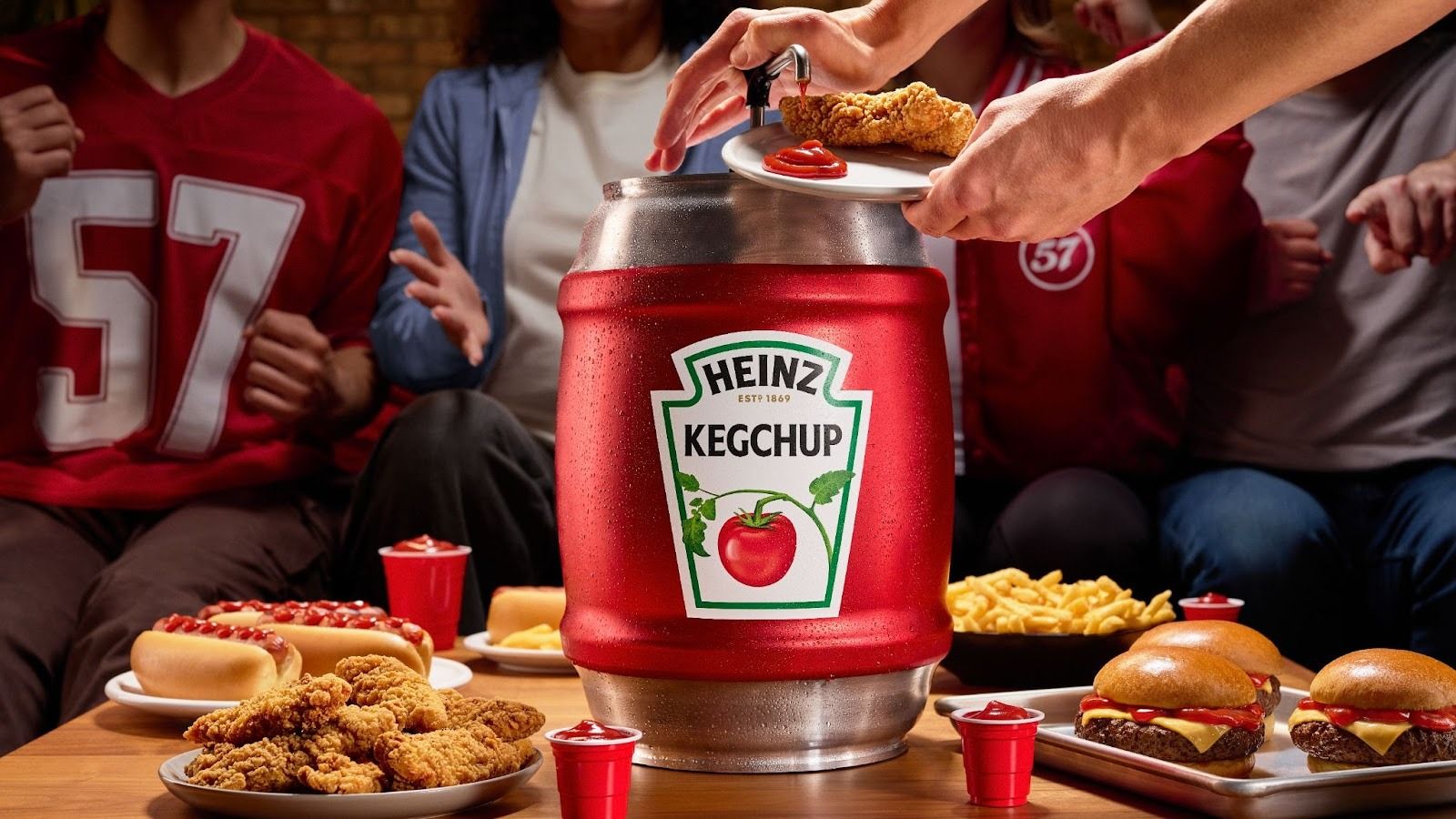
A Keg Stand That Nobody Wanted. HEINZ has released the KegChup, a literal keg filled with ketchup, ahead of the Super Bowl. It’s a clever nod to most Americans’ drink of choice during the big game, but also a very economical (and dare we say Costco-like) way to guarantee that parties never run out of ketchup. HEINZ teased the idea on Instagram last year, garnering nearly one million views and thousands of fan interactions. It’s another example of how brands use social data to drive decision-making, especially product development.

OpenAI Kisses the Big Tech Ring. OpenAI is courting Amazon, Microsoft, Nvidia, and a host of other tech giants to contribute to a $100B funding round, according to the Financial Times. The news comes following rumblings that the company is quickly running out of cash due to its massive AI infrastructure and training costs. SoftBank Group is also in talks to invest another $30B in OpenAI, on top of the $22.5B contribution it made in December.
But of course, this won’t be the company’s only financial resource as it begins testing ads in ChatGPT over the coming months. Although the cost structure remains unclear, early conversations indicate the company plans to charge about $60 per 1,000 views.
💡 This is the influence of intent. The rumoured cost of ChatGPT ads is about triple Meta’s rates and in line with the cost of live TV events. While some may have sticker shock, there’s an argument to be made about the context (and value) of each audience. Meta undoubtedly has the audience size, but there is a seismic difference between the passive scrolling many do on Instagram and the high-intent searching and conversing users do on ChatGPT.
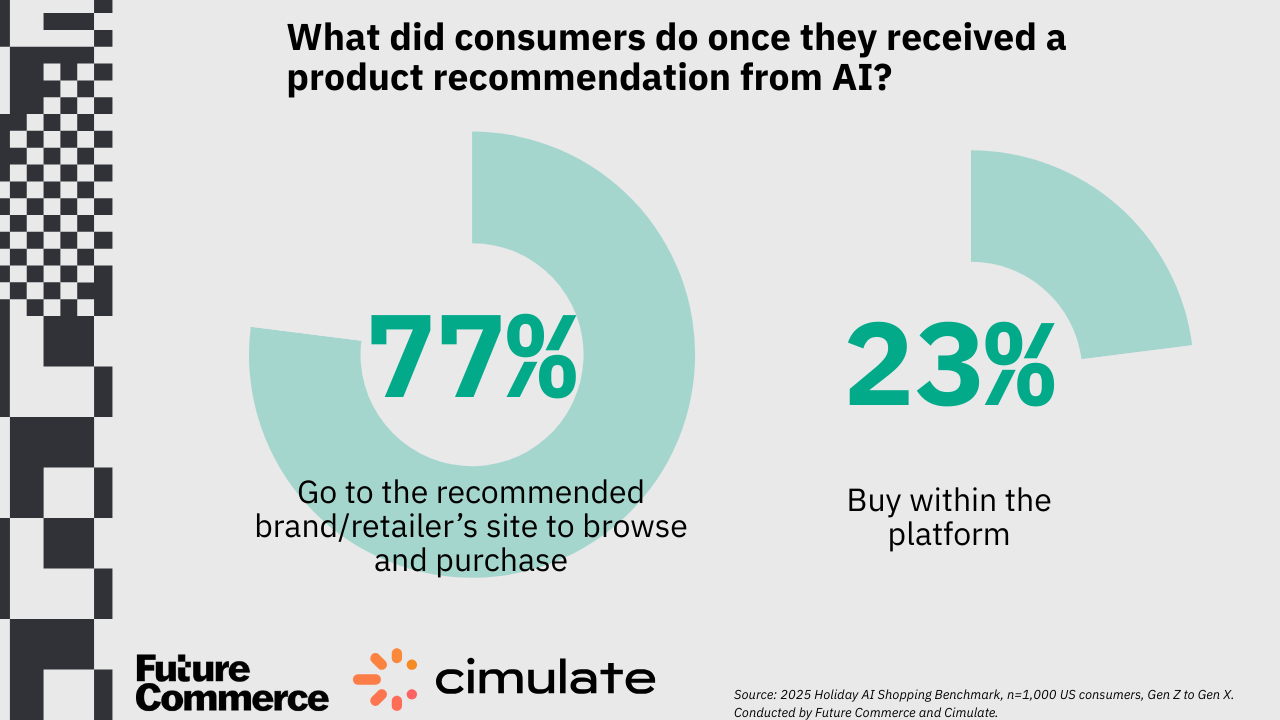
Our research with Cimulate got to the heart of this value, noting that when consumers receive a viable product recommendation from an LLM platform, 77% end up clicking to the brand’s eCommerce site to browse, explore, and make a purchase. ChatGPT is far more than a source of knowledge and inspiration. For brands, it’s a connecting point between high-intent shoppers and their owned eCommerce experience.
Our Shitty Robot Future is Here. The future is very much the present, as this week brought layoff announcements from both the retail and tech sectors, largely driven by organizations’ AI investments. Earlier this week, Nike cut 775 jobs because it has accelerated automation spending at its distribution centers. This round of layoffs follows the brand's elimination of 1,000 corporate jobs last summer. The Home Depot also eliminated 800 corporate roles, with the layoffs mostly affecting remote workers in the retailer’s support center.
In tech, Pinterest laid off up to 15% of its staff earlier this week. As it restructures its sales organization, the company plans to focus on hiring “AI-focused roles” and bolstering its “AI-powered products and capabilities.” Bill Watkins, who served as the company’s CRO and was part of the organization for 12 years, announced his departure last week. Nearly at the same time, Pinterest announced the hire of new Chief Marketing Officer Claudine Cheever, formerly of Amazon, and the creation of a new role, Chief Business Officer, now held by Lee Brown, who joined Pinterest from DoorDash.

.jpg)

.svg)
