


.jpg)
“Dump Him, Buy This”

Welcome to Galentine's Day, futurists.
Not just two years ago, the cultural conversation took a turn toward the newfound power and rise of the "manosphere." Brands and media alike began to court men in particular, sometimes at the intersection of the two: supplements founded by the likes of Joe Rogan or Andrew Huberman. The rise of male culture was said to affect everything from 'anti-woke' ideologies to election outcomes to policy decisions that followed (see: MAHA).
But in the eighteen months hence, the pendulum has swung back hard, and brands, as they are wont to do, have led the counterculture.
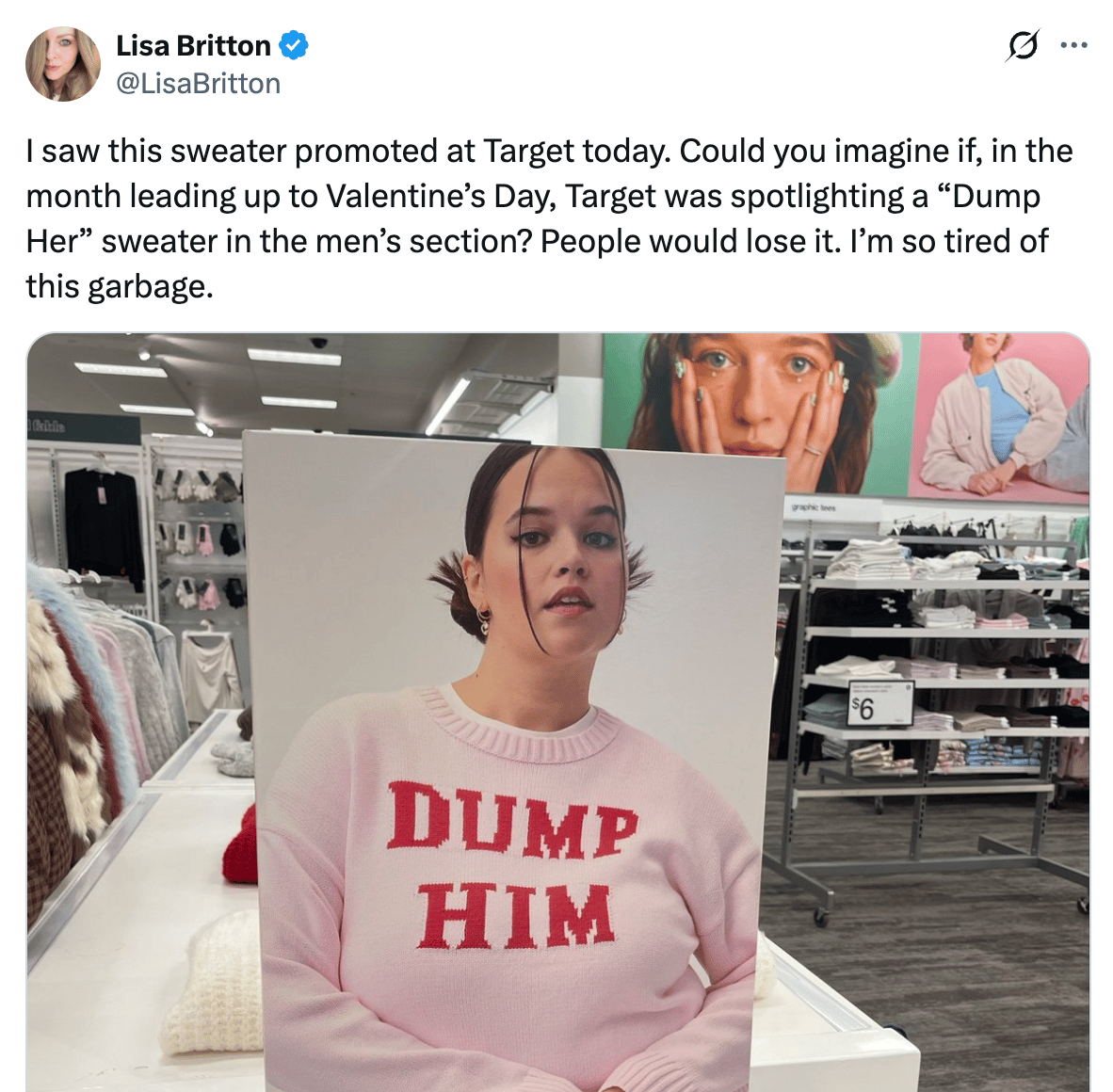
💝Target fired the opening salvo with a Galentine's Day display (over a traditional Valentine's display) featuring shirts and pillows emblazoned with the phrase 'DUMP HIM.'
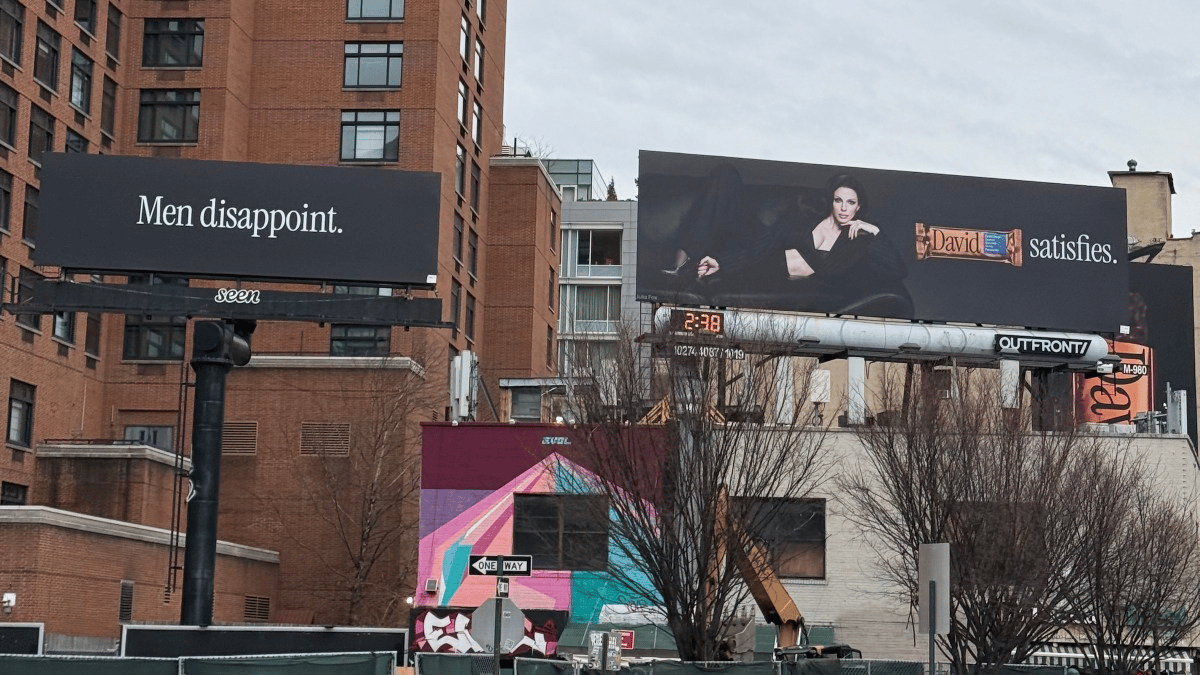
🍆David Protein then launched the 'Men Disappoint' campaign with actress Julia Fox, complete with a sacrilegious ad of Fox in a confessional, a David x Maude collab sending vibrators to influencers (the box included David's new Bronze bar with the tagline "finish twice"), and billboards by the Holland Tunnel.
Evidently, the rise of the manosphere and its accompanying host of brands was short-lived.
"Single people, especially women, tend to spend more on self-care products, travel, and experiences," Lisa Britton recently wrote for Evie Magazine. Data also shows that they're prioritizing fulfillment through friendships, not romantic relationships. Lightspeed found that while 33% of Gen Z consumers planned to celebrate Valentine's Day with a partner, 42% planned to only celebrate with friends.
If we are to normalize anti-male sentiment in advertising as a selling point, it is because it speaks to a rising countercultural movement in Gen Z. And to do so would be to underscore that commerce is culture. We need brands to present our ideologies, but misandry was grossly underrepresented.
So now brands openly wield misandry as a strategy,, and in my experience, at least, the most vocal proponents of this as a valid strategy are men themselves.
So why the pivot?
Well, maybe men do disappoint: the manosphere audience isn't buying enough bars. Women drive roughly 70-80% of consumer purchasing decisions, according to Harvard Business Review, and courting them is the next natural step. (You'd think you'd make a product that tastes good, but that's none of my business.)
Meanwhile, Target's play is more calculated: with Ulta's imminent departure from in-store shop-in-shops, Target needs Gen Z women. Those same buyers are likely to be single for longer and more likely to spend on goods that signal their values.
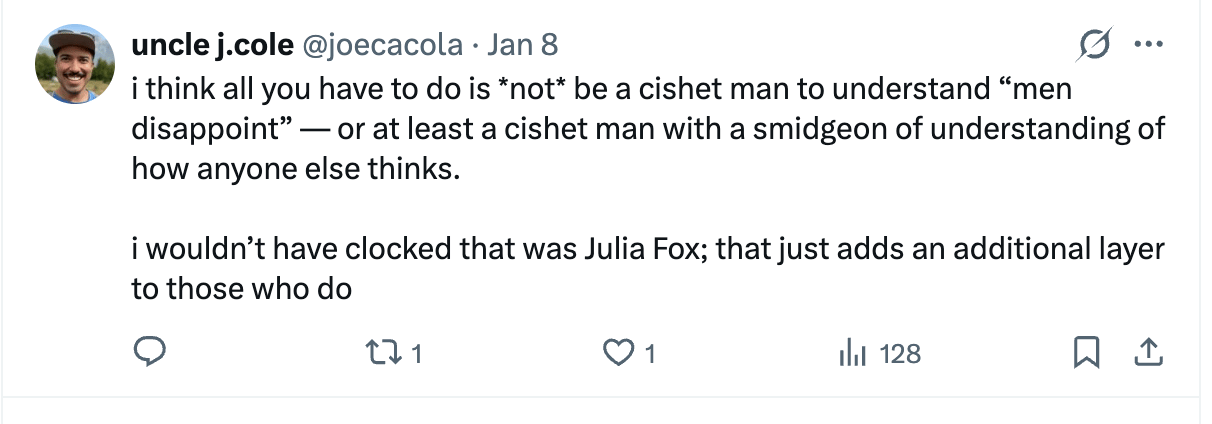
So why "Dump Him" as the message? Or why "Men Disappoint?" Your ability to decode this language fully largely depends on your understanding of cultural lore. Britney Spears famously wore a Dump Him baby tee, while Julia Fox came out in August of 2025 in an interview with Allure.
But brands don't just follow culture, they produce it. And Target's Galentine's Day accelerates the post-manosphere correction. As we wrote in The Reliquary Economy, we now participate in cultural moments through branded purchases. To participate in the capture of Nicolás Maduro, we buy the Origin Hoodie. To participate in the post-manosphere correction, we buy the "DUMP HIM" sweatshirt.
The receipt is the relic. The purchase is the protest.
If David really wants to talk about disappointing men, they might start closer to home: their own Chief Science Advisor, Dr. Peter Attia, was named in the Epstein files. David's founder, Peter Rahal, promptly announced his departure from the company.
Men disappoint, indeed, but not in the way the billboard suggests.
— Phillip

Big Game, Big Numbers. Super Bowl LX drew 124.9M viewers this year, which is the second-highest in the big game's history. The game reached 137.8M in the second quarter, the highest peak viewership in US TV history, and then dipped slightly to 128.2M during Bad Bunny's halftime show.
Kendrick Lamar's performance last year was the most-watched halftime show in history, but Bad Bunny's performance had ripple effects into other areas of media and pop culture. For instance, Spotify's top artist of 2025 caused a spike in Spanish lessons on Duolingo amid a marketing campaign that offered a "Bad Bunny 101" crash course. Social media was also fluttering with in-depth cultural analysis of Bad Bunny's performance, from the set design to his wardrobe, and even the intention behind the celebrity cameos.
🔥 Want more Super Bowl hot takes? Check out our breakdown of some of the top advertising themes from the game, and subscribe to the pod for a special cultural breakdown with author Dr. Marcus Collins, dropping on February 18.

Book Binge. Spotify is partnering with Bookshop.org to sell physical books directly through its app. To create a more seamless reading experience, Spotify members can use a new Page Match tool to sync their analog reading with their audiobook listening. Readers must first identify the title they're reading in the Spotify app and tap the "Page match" button. They then use their camera to scan the page they're on, and Spotify will find the exact spot in the audio version. The experience also works in reverse, so customers can pick up their (digital or physical) books after they listen in the car or on a run.
Spotify first entered the audiobooks market in 2022, but the partnership with Bookshop.org expands the publishing division into physical goods and underscores a broader mission. When people buy from Bookshop.org, a portion of their sales goes to supporting local bookstores.

Beauty is Getting Ugly. Estée Lauder has sued Walmart, alleging that Walmart is selling counterfeit La Mer, Le Labo, Clinique, Aveda, and Tom Ford beauty products on its online marketplace. A third-party seller sold the products in question, but the suit is rooted in the belief that Walmart plays a role in connecting this malicious seller to shoppers, who are clearly unaware that the products are counterfeit. Walmart reps said it has “zero tolerance for counterfeit products” and “will respond appropriately with the court when we are served.”
Our Take: The suit spotlights a much larger issue: a recent study found that 67% of branded cosmetics purchased on marketplaces were counterfeit. When third-party sellers offer counterfeit goods in categories such as beauty and skincare, it opens up a whole new realm of risk.
These aren’t just harmless dupes; they’re products that are applied to one’s skin and beneath their eyes, which could lead to irritation and even allergic reactions that damage consumers’ skin. A similar risk exists for wellness and supplement brands using marketplaces to grow their businesses
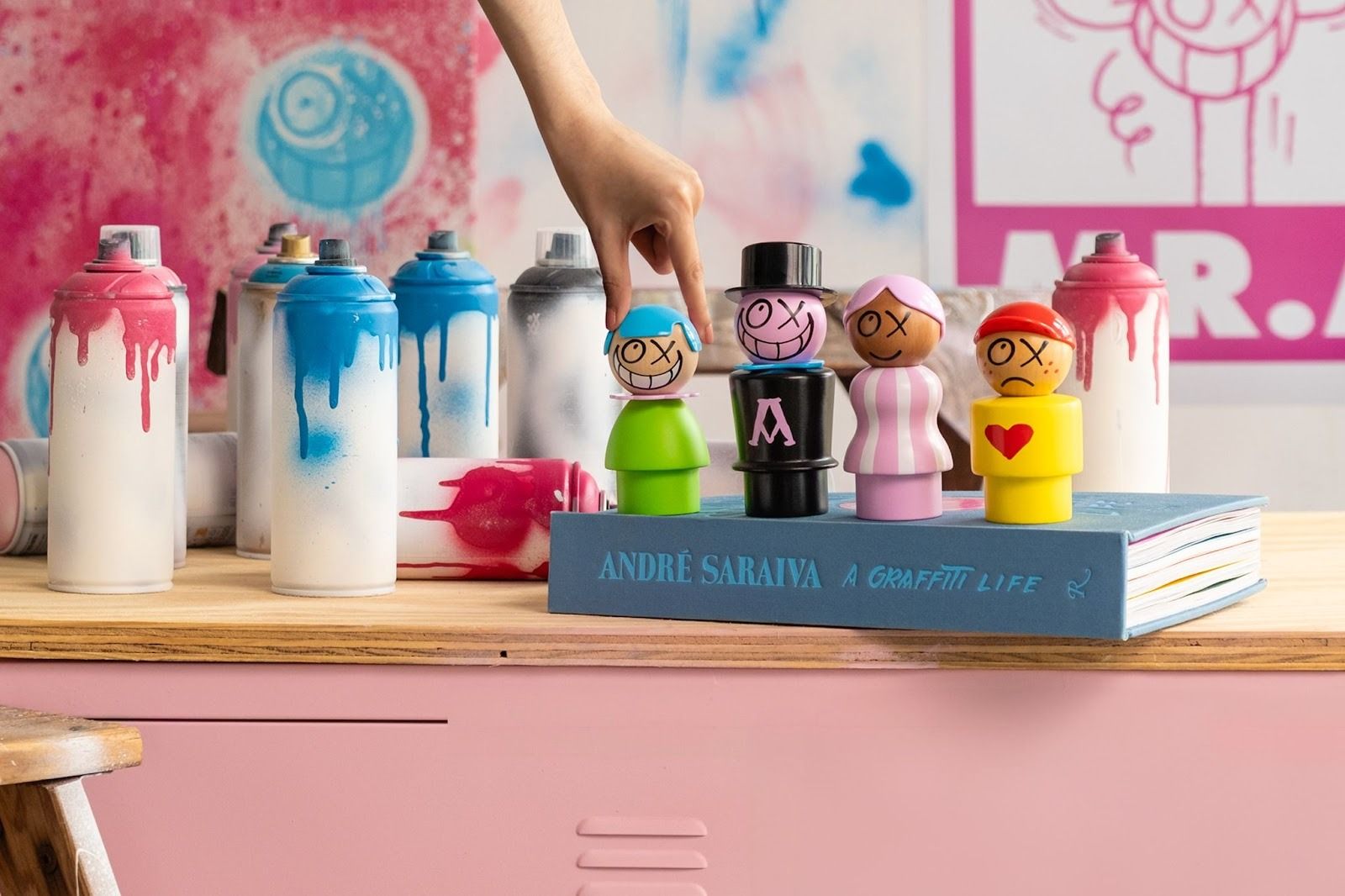
The Art of Play. Mattel Creations, the company’s design-driven DTC platform for collectibles, has launched a Fisher-Price Little People x André Saraiva set, blending childhood nostalgia and eccentric art into one experience. This partnership is part of Mattel Creations’s broader effort to bring more artists into its collab ecosystem, so its limited-edition toys are perceived (and treated) as collectibles, not playthings.
Crafted from wood, each figure's natural grain is visible, with three distinct skin tones, as well as clothes and facial features that reflect Andre’s expressive, graffiti-inspired visual language. The figures are produced at a larger scale to reflect their dual purpose as toys and collectible art.

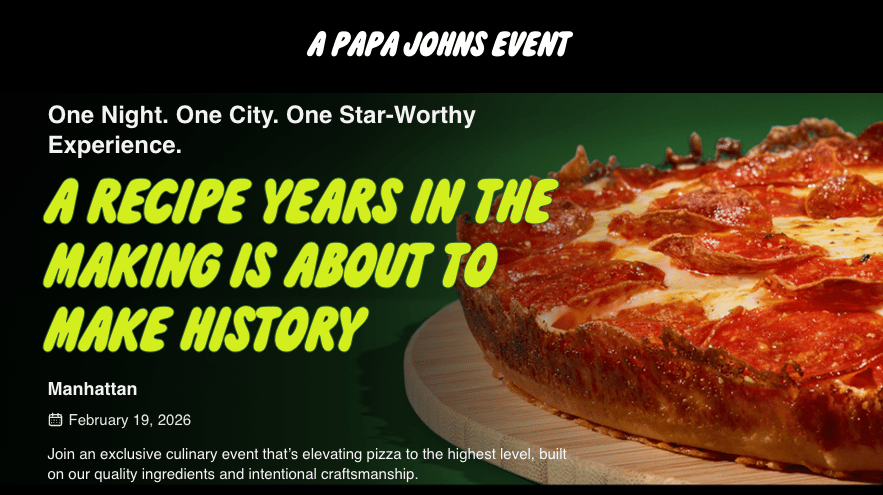
Elite Pizza. If you weren’t questioning reality before, this news is sure to send you into a tailspin. As part of a new stunt marketing campaign, Papa Johns is bidding for a MICHELIN star. To kick off the campaign, the pizza chain is transforming an undisclosed NYC location into an elite dining space, giving only Papa Rewards members access to reservations. The three-course experience centers on the Pan Pizza, reaffirming that these special slices are worthy of the coveted culinary stars. If successful in its efforts, Papa Johns would be the first pizzeria awarded a MICHELIN star.
Kraft Heinz Pauses Split. Steve Cahillane’s first big move as CEO? Pausing Kraft Heinz’s planned split. He claimed that all of the company’s current issues are “fixable and within our control,” and that the company plans to invest $600 million in a turnaround of its US business, with a focus on marketing, sales, and research and development. The announcement was made during Kraft Heinz’s Q4 and fiscal year results, during which executives reported a net sales decrease of 3.5% and an operating income loss of $4.7B for 2025.
Cahillane may be the best person to judge whether a breakup is the best option: he has firsthand experience leading Kellogg’s breakup and then spent time at Kellanova before it was sold to Mars.

(A)I Am Outta Here. It has been a busy week of resignations for the world’s top AI companies. Why? Because of a clear misalignment of principles. Zoë Hitzig, a former researcher at OpenAI, put in her notice via a New York Times editorial. She gave a scathing critique of the company’s venture into advertising via ChatGPT, comparing the move to Facebook. Specifically, her concern lies in whether ads will be used intentionally and transparently for users. An AI safety researcher for Anthropic also resigned due to his existential concerns about how AI is shaping the world at large.
While these departures include smoking guns, the xAI exits seem par for the course when you work with Elon Musk. Six of the original 12 founders have left the company, and while Musk sought to own the narrative by claiming it was part of a planned reorganization to “improve speed of execution,” losing at least 10 engineers in such a short period raises major red flags. According to TechCrunch, three staff members plan to launch another initiative alongside other former xAI engineers.
SaaS Watch. Both Shopify and Klaviyo released their latest earnings reports this week, setting the tone for the broader SaaS market.
Shopify’s revenue topped $11.5B for 2025, a YOY growth of 30%, with North American revenue up 28%. For the company’s Q4, which ended Dec. 31, 2025, revenue increased 31% YOY, reaching $3.67B and exceeding analysts' expectations of $3.59B. Up to 14% of the US eCommerce market is now powered by Shopify, largely thanks to some of the major brands that signed on in 2025, including Estée Lauder Companies, Starbucks, Coach, Michael Kors, Elf Cosmetics, Toys R Us, Goop, and Balenciaga.
Klaviyo saw annual revenue growth of 32% for the 2025 fiscal year, which also ended Dec. 31, 2025. Revenue growth outside the US increased by 42% YOY. With 193,000 customers, Klaviyo achieved a net revenue retention (NRR) of 110%. A major focus in the earnings report was the company’s integration with major AI platforms, particularly with the Klaviyo App in ChatGPT.


.svg)
