


$2.1 Billion Says Your Cat Is the Real Love of Your Life

Preview Line: PLUS: Time Capsules Don't Need Concrete Anymore
Welcome to Friday, futurists.
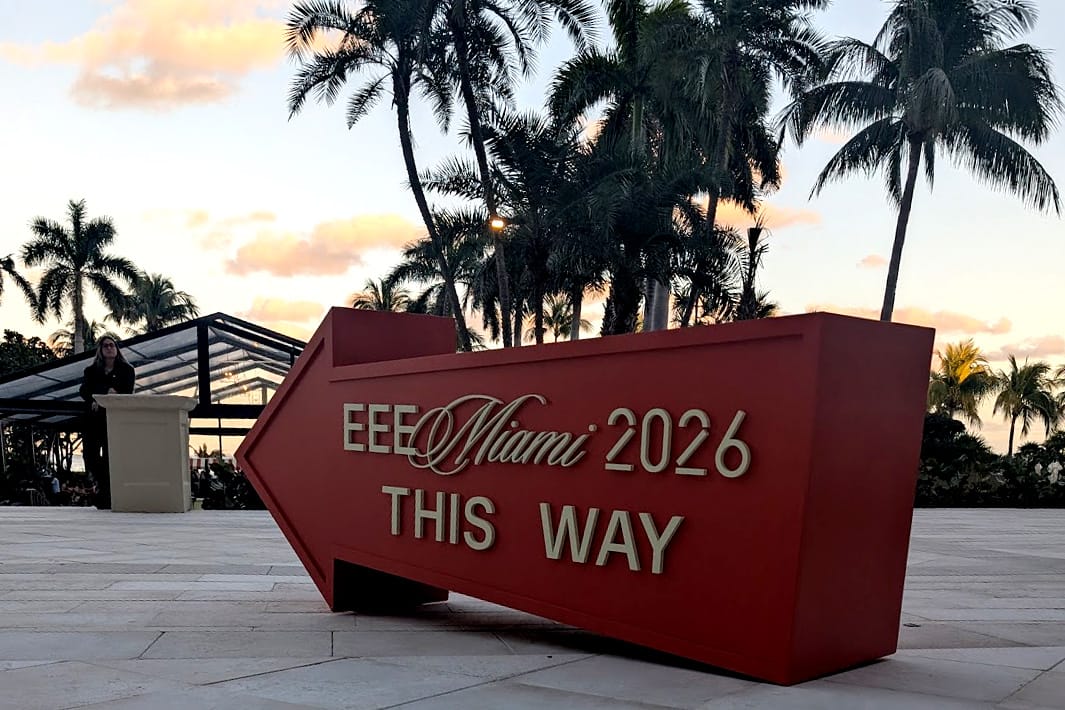
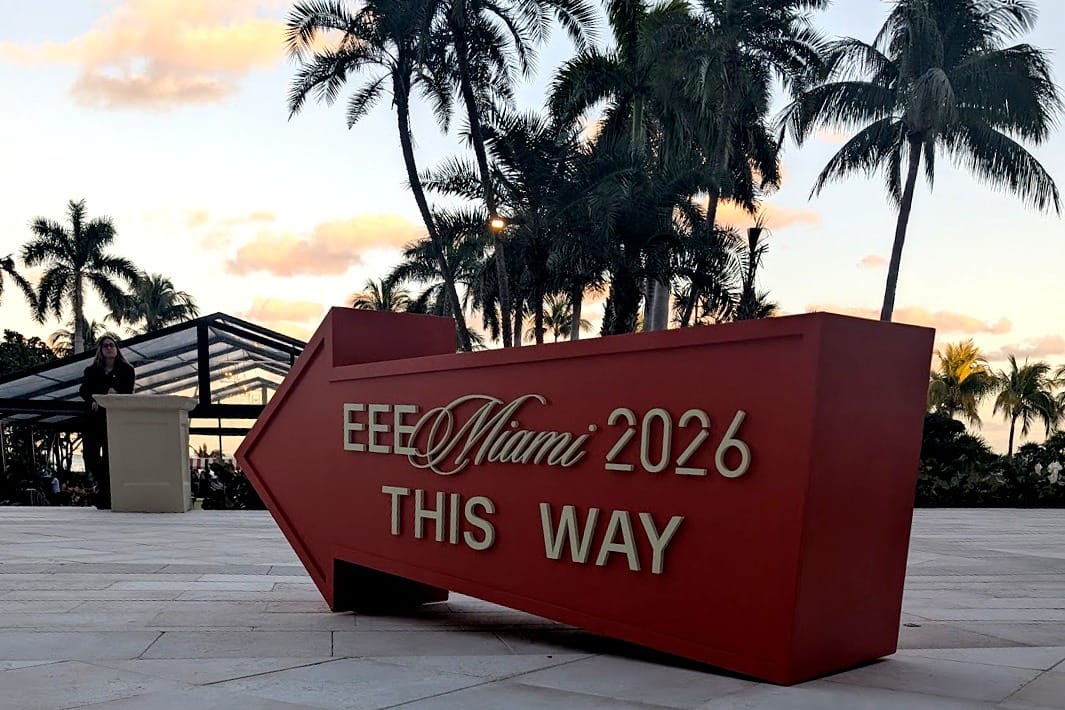
This week, Future Commerce returned to EEE Miami, the premier eCommerce conference and capstone to Miami eCommerce Week. EEE, (“Triple-E,” if you’re nasty) welcomed its most prestigious crowd to the most prestigious venue of its five-year run—the Ritz-Carlton Key Biscayne—with its largest crowd yet and its most illustrious attendee list to date.
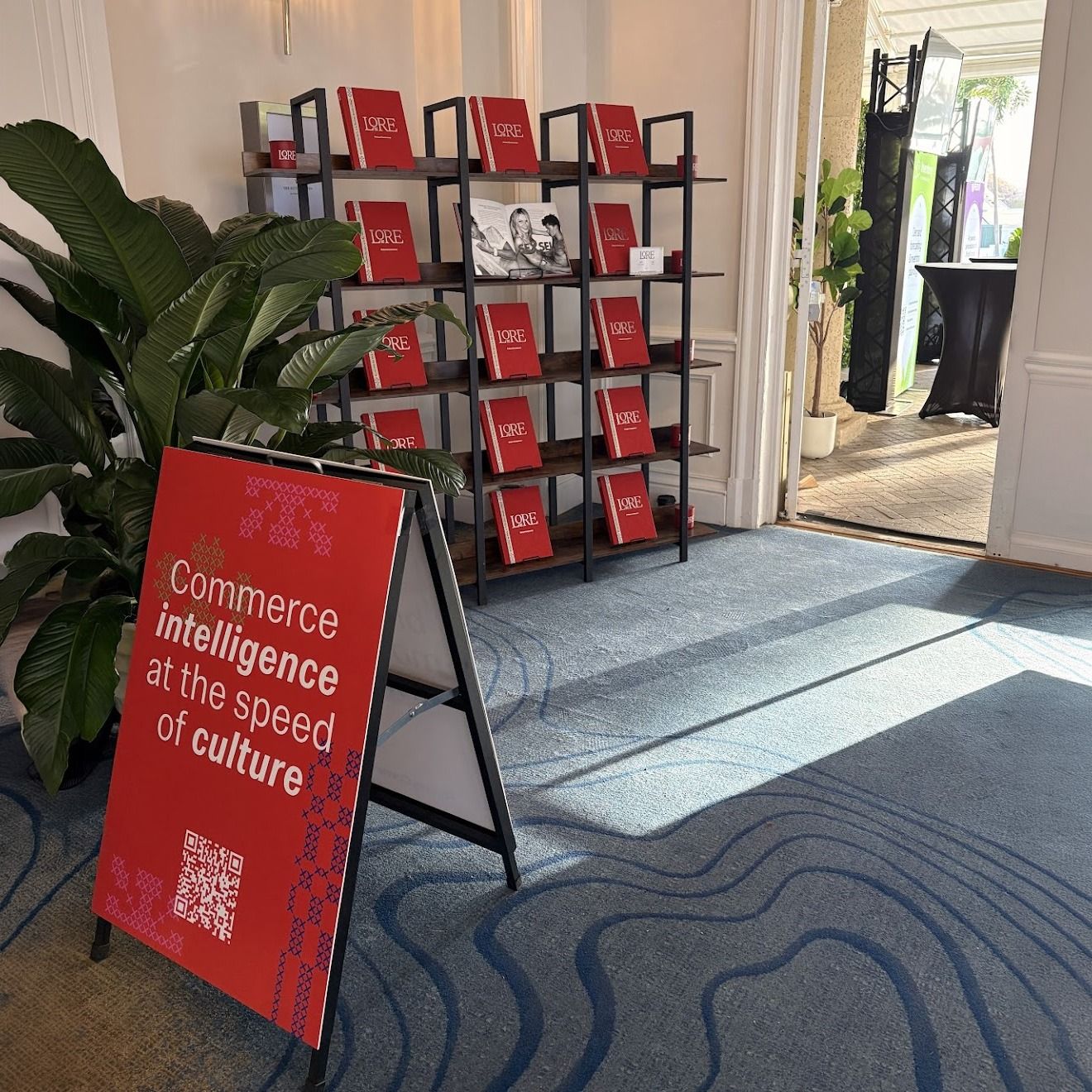
Future Commerce has been a media partner from the very beginning, and we turned up to deliver a keynote on our forthcoming annual journal, ECHOES, and to pop up our LORE bookshop.
My keynote at EEE discussed the concepts of our forthcoming annual journal, ECHOES, from Future Commerce. We are at a pivotal moment where we have abandoned the concrete, materialist, literalism of our past. Our culture used to make time capsules: collecting consumer goods, entombing them in concrete or durable alloys, and burying them for centuries.
Today, we have no such sense of physical preservation. We are a metamodernist society that creates digital and contextual preservation. You can't bury a campaign like friend.com in Cupaloy for 5,000 years. But that doesn’t mean it won’t be remembered by future civilizations. AI is instead cataloging and committing to vector analysis every piece of media, every mention, every backreference of our moment.
Today’s time capsules are experiences encoded via media into neural networks, resurrected and re-encoded into future campaigns via LLMs. Gorgie founder Michelle Cordeiro Grant illustrated this from the stage: she used AI to generate four video concepts in just one hour for a Target buyer meeting, then told her team, “These will never be ads for our company.” The point isn’t to create ads as fast as possible, convert more customers, or generate ROAS; it's to manage the context for human connection.

The parallel is obvious with EEE as events have evolved in our space, from primarily events where you consume information to co-creative and experiential affairs. EEE's own roots trace to the Magento ecosystem's splashy resort parties. Today, Absolute Web and its partners have elongated the experience into a full week of co-creative activation.
The opening panel, "The Future of Commerce," featured Legacybox, a time capsule-esque company that digitizes your physical media, and broke the day open on AI, with mentions of Claude, Kling, and Higgsfield. ChatGPT was curiously the rare name-drop on the day.
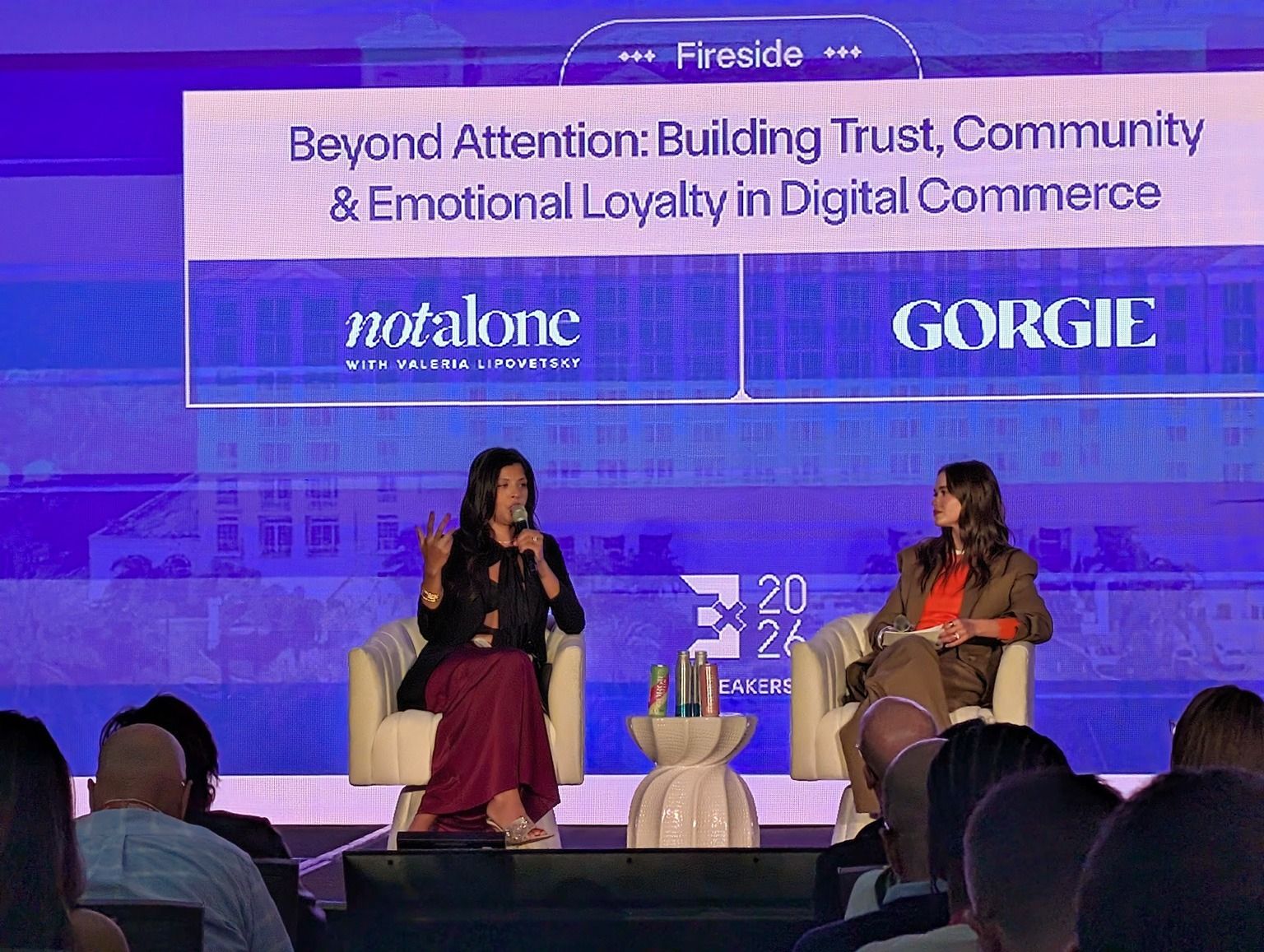
Legacybox CMO Rick Cadotte offered the day's best metaphor: AI is "a genius-level MIT engineer you keep in the background, but they have no social skills." Cuyana's Max Lishansky seconded: AI lets him storyboard seasonal creative straight from his head. "The models leapfrog each other," he added, "so just be testing."
The real test will be how EEE can top this year’s event.
— Phillip

Cupid's ROI is $29.1 Billion. Americans plan to spend $29.1B on Valentine’s Day this year, far exceeding last year’s record of $27.5B, according to the National Retail Federation. While most consumers plan to purchase gifts for a significant other (83%), 58% plan to spend on other family members, and 35% plan to spend a record $2.1B on their pets.
The top categories are not necessarily surprising: Jewelry ($7B), a night out ($6.3B), clothing ($3.5B), and flowers ($3.1B). But the most fascinating takeaway is that even consumers who don’t plan to actually celebrate Valentine’s Day with a partner will still participate in the shopping customs associated with it: 31% plan to splurge on a gift for themselves, participate in a self-care ritual, or plan an outing with friends.
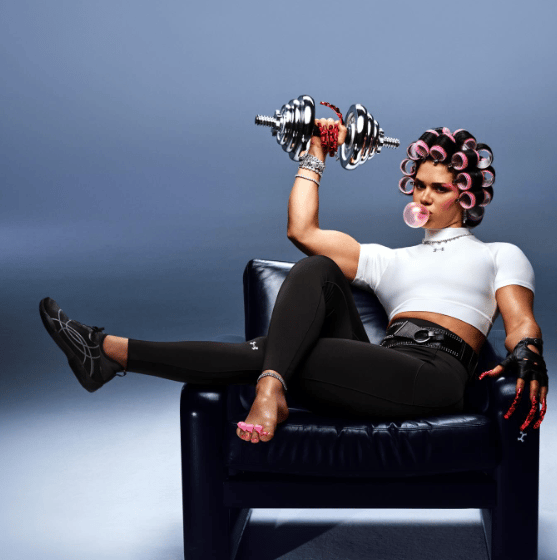
Image: Under Armour, Uncommon Creative Studio
New Look, Who Dis? The brand positioning plot thickens for Under Armour, which has unveiled a new brand campaign that looks more “fashion editorial” than “athletic showcase.” Images from its ‘Unapologetic By Design’ campaign are making the rounds for their distinctly un-UA vibes. The brand collaborated with Uncommon Creative Studio on the concept to promote its Womenswear SS26 Baselayer. Uncommon is also behind Ordinary’s ‘The Periodic Fable’ campaign, a stirring interpretation of how we mindlessly participate in skincare rituals.

Mall Brands, Mass Graves. Catalyst Brands, which operates Eddie Bauer’s physical stores, plans to file for bankruptcy and close all 200 of its locations throughout the US. Catalyst Brands is the retail entity formed by JCPenney and SPARC Group, which also includes Brooks Brothers, Aeropostale, Lucky Brand, and Nautica. (Possibly where 90s-era mall brands go to die?)
Authentic Brands Group, the global brand development and licensing platform that owns the Eddie Bauer brand, reported last month that an Eddie Bauer licensee, Outdoor 5, would take over the brand’s eCommerce and wholesale operations. The top priority moving forward is to build that side of the business, according to ABG reps.
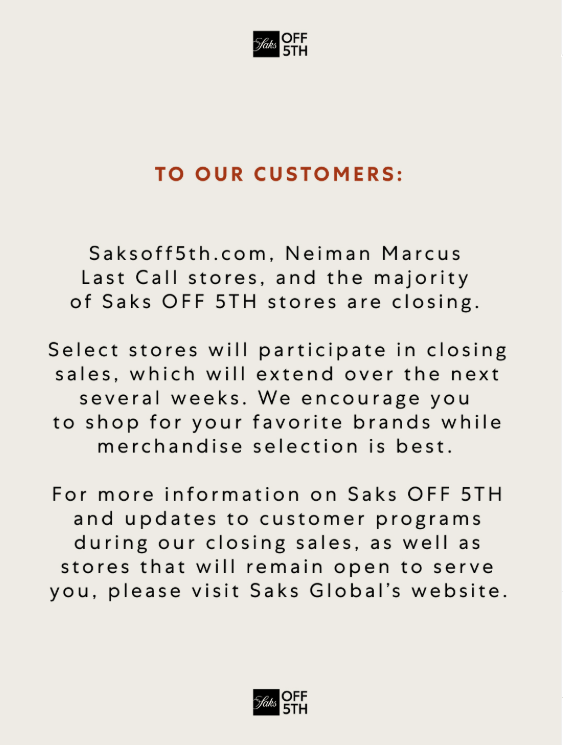
Pictured: A post from the @saksoff5th official Instagram, dated Monday, February 2.
Speaking of sad days, shoppers have been hit with messages from Saks OFF 5th and Neiman Marcus Last Call that their operations are winding down as mega sales roll out. Only 12 of 74 Saks OFF 5th and Last Call stores will remain open to sell residual merchandise. But it’s not just consumers reaping the benefits; other merchants can swoop in to snatch up all the new leases hitting the market. Saksoff5th.com will also cease operations.
The Claire’s Comeback Tour. The tween accessories retailer has tapped a new Chief Brand Officer following its emergence from bankruptcy in August 2025. Michelle Goad was most recently the Chief Digital Officer at Athleta and has experience at Nike and Alo Yoga. (She’s also a Future Commerce reader. Hi, Michelle!)
“Brand” may be in her title, but stores will be central to Goad’s day-to-day as she strives to create experiential spaces for tweens and teens. A big part of that is appealing to millennial-aged parents seeking safe, fun spaces for their children that go beyond Starbucks and Sephora, Goad shared in a statement.
Our Take: Clarie’s had a hot digital streak in the early 2020s, mainly for its investments in Roblox. But research has shown repeatedly that younger consumers are looking for IRL experiences, even (gasp!) shopping malls, to connect with their friends and communities. Claire’s is undoubtedly a fixture of that experience and creates a pang of nostalgia for the millennial cohort the retailer is trying to re-engage. If this doesn’t make a compelling canvas for multiplayer experiences, we don’t know what does.

Snack Attack. PepsiCo plans to cut prices on its snack-food brands, including Lay’s and Cheetos, by up to 15% to drive more sales. The company’s financial results showed that the total volume of food items sold in the US declined 1%, despite overall sales growth. The results illustrated the squeeze on American households and why so many consumers are focusing on affordability.
In other earnings news…
Yum Brands reportedly missed its quarterly earnings goals, but Taco Bell was the portfolio’s bright spot. Same-store sales increased 7% for the quarter, exceeding Wall Street’s goal of 5.6% growth. Yum Brands plans to employ some of the best practices from The Bell’s playbook (you can get them here) for brands like KFC and Raising Cane’s. David Sheds the Weight. After its Chief Science Officer was identified in more than 1,700 documents in the newly released Epstein Files, David Protein moved swiftly, removing Dr. Peter Attia from his post as of Monday. Attia has become known as a “biohacking” expert and is the author of Outlive: The Science and Art of Longevity. He has a string of CPG investments under his belt, from David Protein to AG1, Vitra Health, and Whoop, according to Pitchbook. He was recently a co-founder of startup Biograph (which has conveniently scrubbed his name from its website).

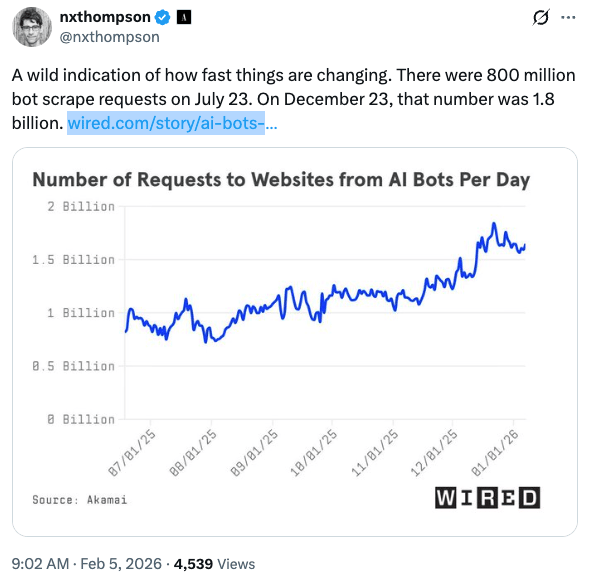
The Bots Are Hungry. New reports from Akamai and WIRED show that AI bots now make up a meaningful share of web traffic, and numbers will only continue to rise. Training-related bot traffic, in particular, is increasing as chatbots and AI tools retrieve real-time information (from inventory levels to flight rates) to improve their outputs. Another study from TollBit found that one in 31 visits to its customers’ sites in Q4 was from an AI scraping bot.
Companies are attempting to mitigate the rise of AI bot traffic by implementing blockers to prevent scraping on their sites. In fact, TollBit reported a 336% increase in attempts to block these AI bots over the past year. As we’ve noted in the past, this can prove problematic, especially as consumers turn to AI platforms first in their shopping journeys to distill, simplify, and curate the mounds of information they’re consuming. Our research, conducted with Cimulate, breaks down the implications for merchants. If you want to dig into how these implications translate to new opportunities, join our webinar exploring the future of digital commerce experiences.
Breaking Down Moltbook Mania. What happens when a bunch of AI agents interact with each other? The answer is on Moltbook, a new Reddit-like forum just for (you guessed it) AI agents. With more than 1.5 million agent “members” and more than 150,000 posts, the social network is just as much a social experiment and a study of how this technology works and interacts. The platform’s founder, Matt Schlicht, noted that the bots were “creating a civilization,” but a human infiltration tells a different story.
.jpg)

.svg)
