


.jpg)

Saks Probably Owes Your Mom Money


Welcome to Friday, futurists.
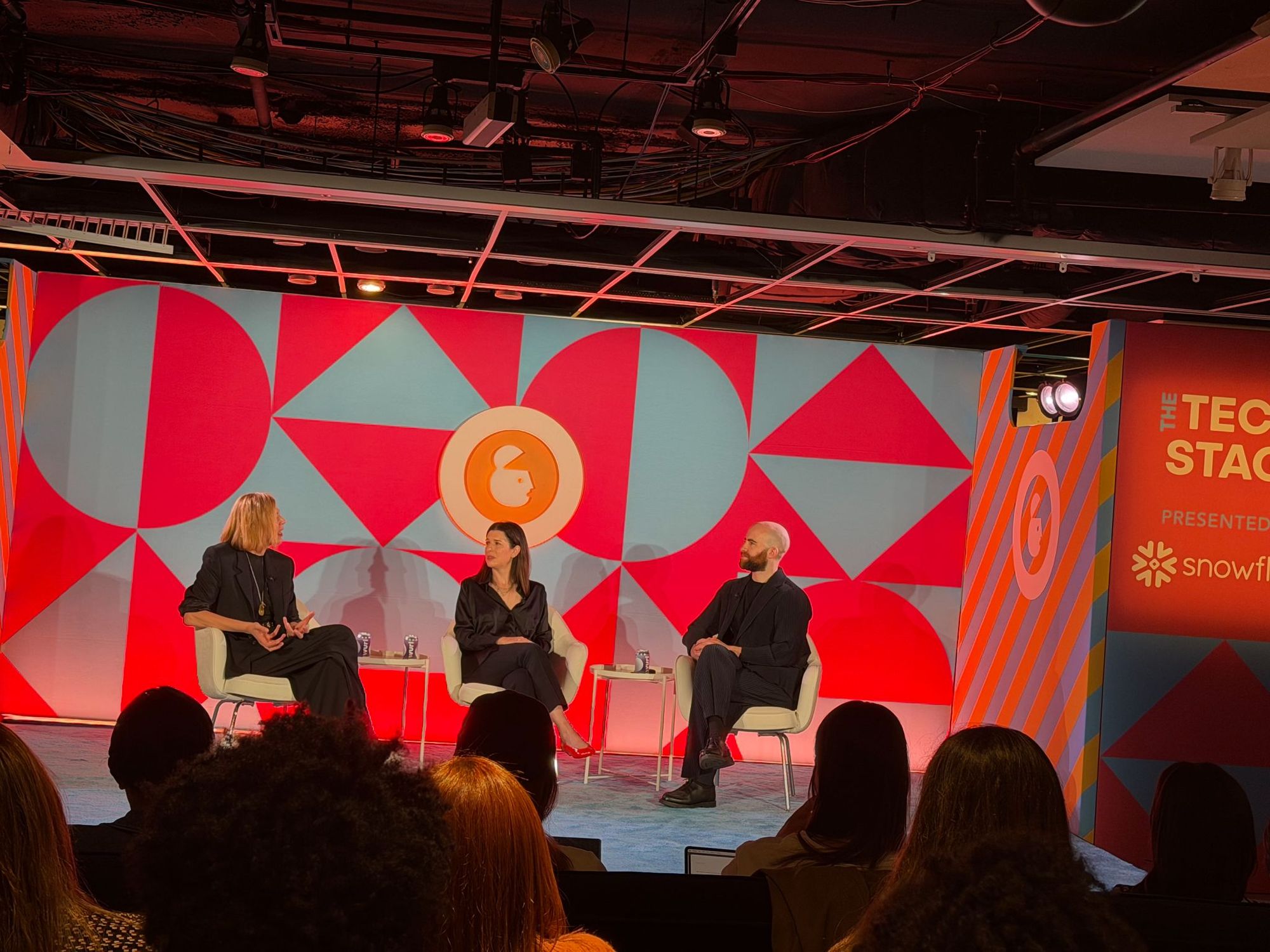
The NRF 2026 Big Show wasn't about the next app or the latest gadget; it was about unlearning long-standing assumptions about efficiency, value, control, and scale, as commerce enters a period of deep cultural evolution.
Some brands are better positioned to adapt to, or shape, the culture.
Taco Bell has long been a part of our collective cultural experience (Fourthmeal, Run for the Border, and “Yo Quiero Taco Bell,” anyone?).
I sat down with Dane at NRF’s Big Show to chat about their Multiplayer Brand ambitions, and their consumer Muse.
In this brief, we break down the four critical shifts we identified at NRF’s Big Show that will define the year ahead and help you move beyond the cyclical noise.


Coach Enters SimNation. The luxury brand loved by Gen Z has entered the Sims gaming universe. Players of The Sims 4 can now access a new in-game collection that includes varsity jackets, sneakers, Tabby bags, and even decor. These items are available for free, giving consumers creative carte blanche to mix, match, and style their avatars however they please. Of course, Coach is no stranger to the gaming world. It has fully embraced Roblox as a creative platform and has trialed less-reported gaming communities like Zepeto. This is an example of a brand that uses gaming as a palette for testing, learning, and understanding its emerging consumers on a much deeper level.
Lights, Camera, GAP. Richard Dickson is going back to his entertainment roots by creating a new Gap Inc. leadership role: Chief Entertainment Officer. Pam Kaufman, who has held roles at companies ranging from Paramount to Stella McCartney and the Rock & Roll Hall of Fame, will tap into her experience in entertainment and licensing to help the Gap build out its “fashiontainment” strategy. With Kaufman’s hiring, Gap will open a Los Angeles-area office on Sunset Boulevard, serving as the active hub for its pop culture integration.
Our Take: The creation of a Chief Entertainment Officer role signals to the industry that Gap sees creators, celebrities, and branded media as central to the business, while others simply tack these initiatives onto their brand and growth marketing campaigns.
But the power will be in the execution: how will this role shape organizational structure, brand strategy, and product development? How will success be measured? And how will Kaufman’s team embed itself into other areas of the Gap operation? The follow-through of the idea and its translation into a new, comprehensive vision are key. Otherwise, it’s just a flashy PR headline.


The Creditors Call. Saks Global’s Chapter 11 bankruptcy filing shows just how severe the company’s financial struggles are. Saks estimates that it has between 10,001 and 25,000 creditors, which means it owes most of its partners money. The list of those owed the most is truly a “who’s who” in luxury: Chanel is owed the most by far ($136M), followed by Kering ($59.9M) and Capri Holdings ($33.3M).
After Saks Global submitted its bankruptcy financing plan, Amazon, which invested $475M into Saks’ acquisition of Neiman Marcus, threatened more “drastic remedies,” essentially calling its stake in the business “worthless.”

The Grocery Games Continue. The Amazon Fresh concept may have floundered, but that doesn’t mean the Everything Store is giving up on grocery for good. According to local planning documents shared by Retail Dive, the company plans to build a store spanning 225,000 square feet in Orland Park, near Chicago.
In addition to fresh groceries, the currently-unnamed store will sell household essentials and general merchandise, making it a clear competitor to Walmart. Amazon has tested various store formats and tech-integrated experiences for grocery specifically. One Whole Foods store piloted an in-aisle QR code experience that allowed shoppers to buy items from an in-store microfulfillment center. And as Whole Foods’ Daily Shop concept expands, the future of Fresh remains relatively unclear.
An Appetite for Value. Discount grocer Aldi plans to open more than 180 stores in the US this year to deliver on consumers’ insatiable appetite for value. Known for low prices, private-label brands, and smaller-format stores, the German grocer ranks only behind Walmart and Kroger in overall store count. It had 2,614 US stores as of Dec. 31. Aldi also plans to relaunch its website in the near future.


Pacsun x Perplexity. While all eyes are currently on ChatGPT and Google, more brands are bringing in-cart checkout to the Perplexity experience. Pacsun Chief Digital and Information Officer Shirley Gao shared on LinkedIn that the youth retailer has partnered with Commerce to power agentic commerce across surfaces, starting with Perplexity and soon, Google. Pacsun will use Feedonomics to ensure all product information, including inventory availability data, is accurate, real-time, and always available.
“The priority is to share our authentic product and contextualized product information with customers with real-time availability to enrich discoverability,” Gao told Feedonomics’ Sharon Gee in an interview during NRF. “The instant checkout is the most exciting part.”

AI Gets into the Ad Game. After years of insisting that ads were “a transitional phase for the internet,” Sam Altman has decided to reverse course and make moolah the old-fashioned way: by selling billboard space to eyeballs.
OpenAI will test ads inside ChatGPT in the coming weeks, with initial ad tests rolling out in the US before expanding globally. OpenAI reported that ads will not influence ChatGPT’s responses. Instead, they’ll appear in separate, clearly labeled boxes directly below the chatbot’s answer. The first ads will appear to logged-in users on ChatGPT’s free tier and its $8-a-month Go tier.
Our Take: The funniest take of the day came from Nick St. Pierre on X. But the reality is this is an arbitrage opportunity in both paid and organic. If you’re testing AEO and GEO, you should stop testing and jump all in.

.svg)
