


.jpg)

Dispatch from Semafor: Pritzker on what beats fear

Welcome to a special edition, futurists.
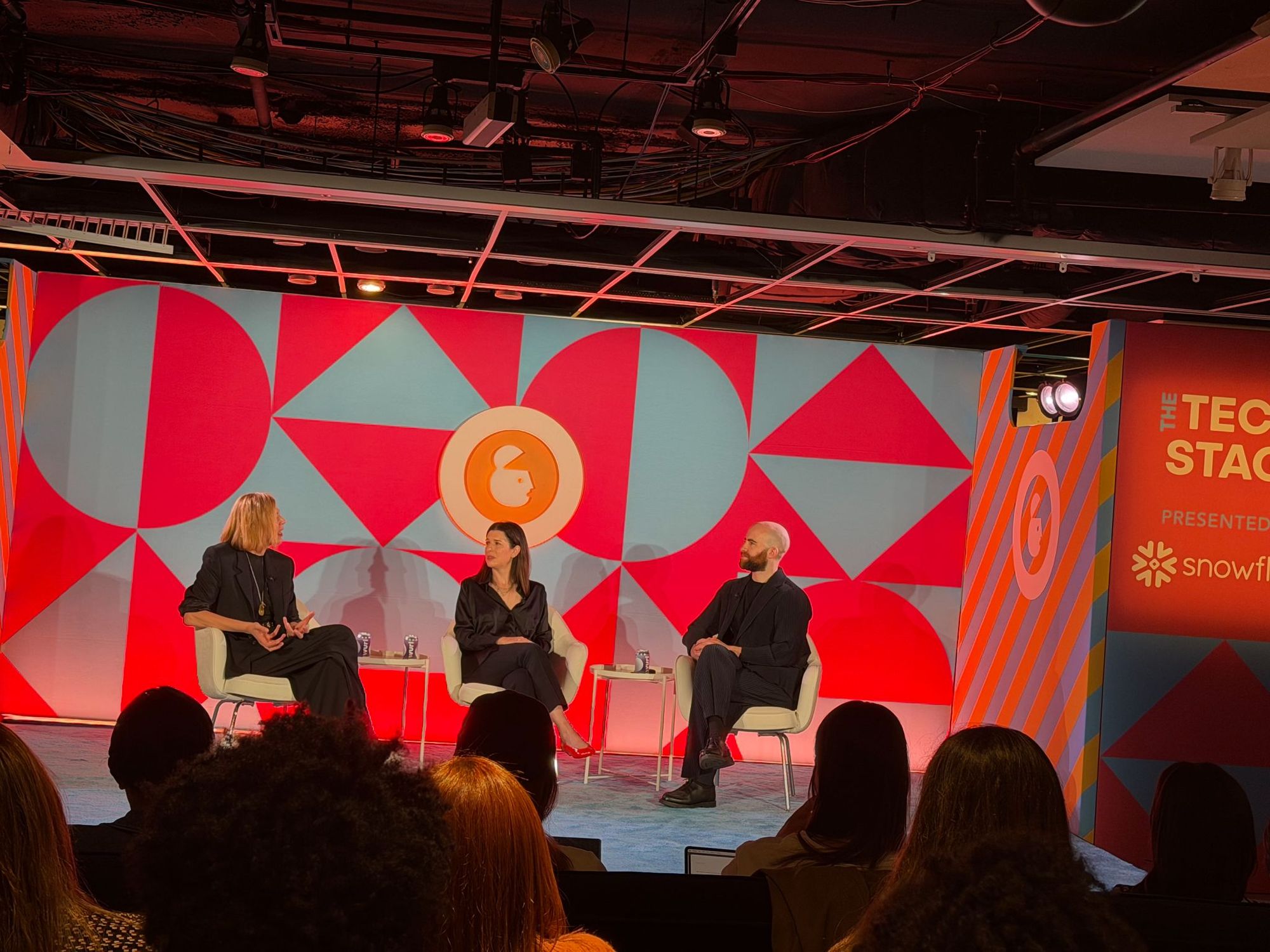
It is a particular honor for Future Commerce to be one of the few media organizations invited to the Semafor World Economy. This five-day Washington convening has quietly become the most executive-dense event on the policy calendar.
Now in its third year, the Summit brings heads of state, cabinet members, chief executives, capital allocators, and even deploying capital into one room, and bets that conversations are sharper when the press tables are angled toward the stage rather than walled off from it.
The defining voice of the event so far for me was Penny Pritzker, former Commerce Secretary, Microsoft board member, and chair of the Harvard Corporation, who walked on stage Tuesday afternoon and handed the room a three-word framework: “power, productivity, and people.” That’s what’s required to fully take on AI, cybersecurity threats, China, and other looming existential threats.
It’s that center point from which she leads. When asked what it has been like to lead Harvard through an active fight with the President of the United States, she said, “Well, fear, for one.” Then, she named what beats it: Veritas. Truth, as a posture and an anchor.
The rest of this special edition is best read through that lens.
— Phillip
P.S. STRATA, our newest piece of print, dropped earlier this week. Grab you copy before it’s gone, and that’s the truth.


Levi's, Ralph Lauren, and the Quiet Reassertion of the Brand.
Semafor features the largest gathering of global CEOs (their words), so it stands to reason that fashion would have a place on the stage.
Michelle Gass at Levi Strauss reported 14% sales growth, raised guidance, and disclosed that 50% of Levi's business is now direct-to-consumer, with 16 consecutive quarters of DTC growth behind that number. 60% of revenue is now international. Levi's has already shipped Stitch, an internal generative tool now in the hands of in-store stylists, moving AI from corporate experiment to a floor-level operating layer.

Patrice Louvet, CEO of Ralph Lauren, reported 12% revenue growth and 29% earnings growth across all regions, including China, driven by a strategy he called “inclusive luxury.” He also gave the room the under-quoted data point of the morning: eCommerce is now 25% of the Ralph Lauren business, and AI agents will accelerate that further.
But that doesn’t mean he’s retreating from physical retail. He’s actually doubling down on it. “Welcome to our home, not welcome to our store,” says Louvet, while simultaneously throwing shade at luxury brands that require you to queue outside the store. Five new restaurants will launch in 2026, and Ralph's Coffee is as much an apparel brand as it is a functional café.
Noah Horowitz of Art Basel shared the stage with Louvet and described an art market shifting toward community-anchored experiences for the same structural reason. The throughline is that, in an AI-saturated commerce environment where every brand can spin up a campaign in an afternoon, the moat lies in owning the customer relationship, the data, and the channel. The operators reporting double-digit growth this quarter are the ones who built that ownership before they needed it.


Yahoo Is 30. It Wants the Open Web Back.
The web’s most side-eyed email address has a visionary CEO, and he’s making a public plea to return to the web's glory days. You remember—the era where Yahoo! actually meant something other than a dead email in your list.
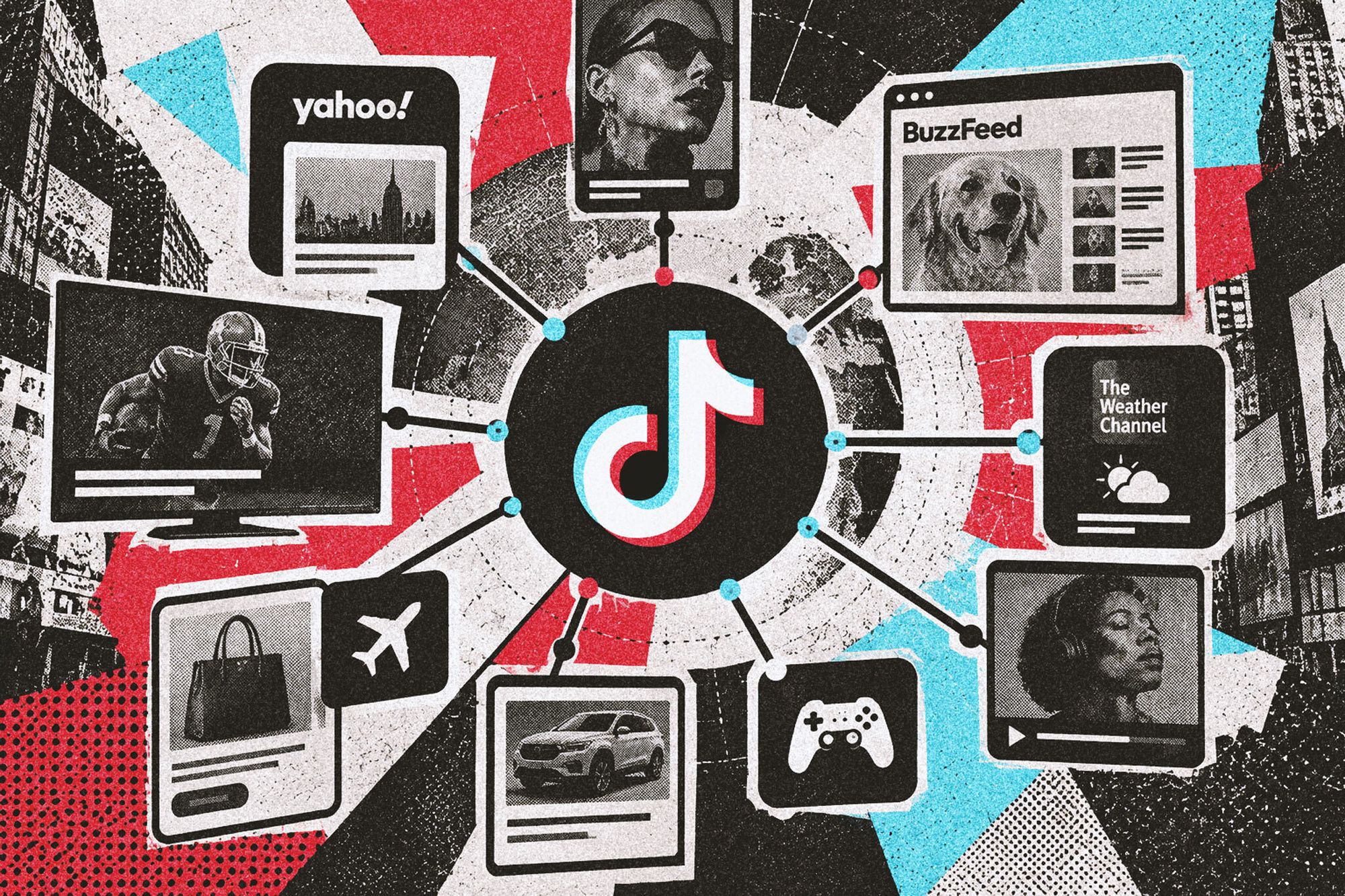
CEO Jim Lanzone used the Semafor stage to position Yahoo Scout as the AI search product that doesn't black-box the publisher. You might be surprised to learn they still have 700 million monthly users, they’re in the top five for global traffic, and recently launched the Scout Intelligence Platform, built with Anthropic's Haiku, that (this is novel) links back to original sources rather than swallowing them.
Lanzone also hinted at a return to public markets. The interesting subtext for the open web crowd: a 30-year-old portal is now arguing the same thing as the indie publisher coalition. Performance advertising, he noted, is holding up nicely in the macro chop. Worth watching whether Scout's “link back to the source” promise survives the pressure to monetize.
The Age of Autonomy Has a P&L Now.
When Future Commerce predicted in December that 2026 would be the Age of Autonomy, the bet was that automation would take over the mundane and that human capacity would get redirected to the work that actually moves a business.
Two CEOs at Semafor World Economy proved us right, and they came with receipts. Rishi Khosla of Oaknorth Bank reported a 30% increase in lending volumes against flat headcount, driven by AI, beginning with rebuilt credit models that were previously human-powered.
That is the cleanest single-number disclosure of the AI productivity dividend anyone offered all week. It is also exactly the operator behavior we said would separate the survivors from the displaced. If your headcount has to grow with your volume, you are still in 2024.
The other side of the same coin: Martin Schroeter, Chairman and CEO of Kyndryl, runs 73,000 employees with 1,030 proprietary AI agents that automate over 200 million tasks per month across the company's "run, transform, run" approach to client modernization.
The under-discussed story of the AI productivity era is that public companies do not yet have an agreed-upon language for telling shareholders that an agent did the work, except that it’s delivering productivity to the bottom line. Accounting catches up to technology last.


Overshoot, Underserved, Overdue.
By the time Taddy Hall of Lippincott sat down with Craig Dubitsky (who ate a tube of toothpaste on the stage, mind you), on the Semafor stage and named the Clayton Christensen overshoot dynamic as the “single most useful framework for consumer categories in 2026,” Monique Rodriguez of Mielle Organics and Jake Bullock of CANN had already spent the morning unintentionally illustrating it on a separate panel.
Taddy’s diagnosis: incumbents, doing exactly what their P&Ls reward, keep adding dimensions of performance their mainstream customers cannot absorb or value. Disruptors simplify the equation for the consumer.
It seems so simple, but the three founders at the summit embodied Christensen’s disruptor archetype. They created products for customers who were systematically ignored, with the dimensions of their personal experiences and emotions neglected.
The panel was a clinic in both. Dubitsky's portfolio, which includes Method soap, EOS lip balm, Hello toothpaste, and now Happy (the Robert Downey Jr. coffee brand with a stake carved out for NAMI), runs the emotion play. “Function is fine,” said Dubitsky, “but in a world where AI is commoditizing it weekly, authenticity is the scarcest resource.”

Mielle Organics focuses on the customer access axis. Legacy haircare spent decades optimizing for everyone except the textured-hair consumer, so Rodriguez built a generational brand in the gap.
CANN focuses on the experience access axis. Bullock isn't out-speccing alcohol; he's competing against “its side effects, its social cost, its incompatibility with how millennials and older drinkers actually want to feel.”
The strategic read for 2026: the categories everyone declared finished are the ones with the widest overshoot openings.

$1 Trillion Cyber Asymmetry?
The most over-mentioned word of the summit so far? Mythos, Claude’s new model, was referenced across multiple Semafor sessions, from Booz Allen's Horacio Rozanski to CLEAR's Caryn Seidman Becker and the Iconiq investor panel. The most jarring takeaway was that Mythos can crack a network in under ten minutes by stringing together horizontal patterns to find zero-day vulnerabilities.
In all, seven of the eleven talks addressed the dangers posed by large models like Mythos, while weighing the importance of America’s leadership in AI and cybersecurity.
Greg Case of AON put the global cyber insurance market at $15 billion against a potential $1 trillion in loss exposure. The panel warned to watch for an AI-accelerated breach event between now and Q3 to reset how every CFO thinks about cyber as a line item, and how every board talks about agentic identity governance.

.svg)
