.jpg)


of the United Kingdom’s capitol city.
In 2025, institutional trust reached record lows.
Our collective belief in politicians, healthcare, tech, and even in the economy was challenged by algorithmic misinformation, rage baiting, and our very real, firsthand experiences with unemployment, food insecurity, and financial constraints.
In the past, we have negotiated with systems, haphazardly following them because that was simply the only option we thought we had. However, in 2026, consumers will replace them, using technology and intuition to shape a new reality.
Across commerce, media, health, technology, and work, trust in institutions has eroded beyond the point of reform. Consumers will no longer outsource decisions to brands, experts, platforms, or governments. Our 2026 predictions point to the same conclusion: autonomy and sovereignty are now default expectations. We are now in the era of self-rule.
“2026 is the year consumers and companies stop relying on institutions and start relying on themselves.”
Every year, we discuss our annual predictions and reflect on the previous year’s wins and losses, but we’ve captured them here for Future Commerce Plus members. If you want to listen while you read, you can do so on Apple Podcasts and Spotify.
Walmart: More Than a Retail Winner
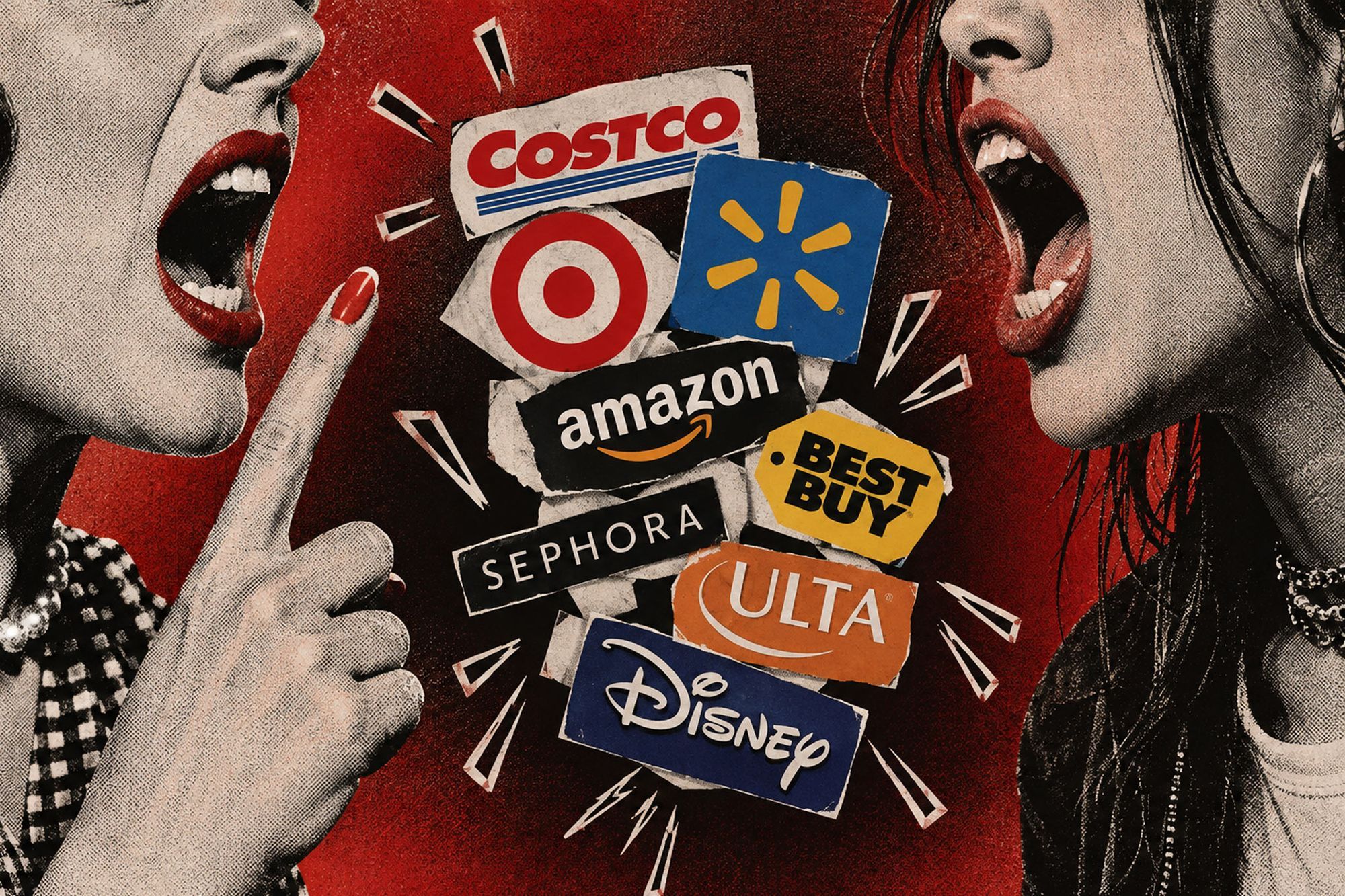
In the era of autonomy, retail winners succeed by reducing consumer burdens. They are so ever-present, with their products and services extending into so many facets of our lives, that they’re impossible to ignore.
It should come as no surprise, then, that the shared pick for next year’s Retail Winner is Walmart.
The retailer has quietly become indispensable, with even higher-income households relying on the retailer for groceries and everyday essentials. With Doug McMillon retired and John Furner assuming leadership, Walmart is positioned to maintain its strategic advantage.
Brian: “John Furner was the head of Sam's Club. Do you know who Sam's Club competed with? Costco. Do you know how successful that was for Sam's Club? Actually, [pretty] successful. This is the guy who had to build a business that competed against the best in the world and succeeded. John is highly technology-focused, and he understands the middle-class American consumer better than almost anyone in this country.”
But this is about so much more than retail.
Phillip: “In 2026, we start to see Walmart becoming America's frontline health system, primarily because they are becoming the primary touchpoint for more Americans than any other healthcare provider through footprint and accessibility alone.”
Through its low-cost lab and diagnostic services, access to GLP-1 programs, and basic care, Walmart is the new front door for Americans who want to take control of their health, especially those using technology and AI to self-diagnose and biohack.

Healthcare: Where Sovereignty Becomes Moralized
Healthcare is the clearest example of sovereignty in action: wearables, continuous glucose monitors, direct-to-consumer labs, personalized supplements, and AI-driven health analysis put longevity in consumers’ hands.
As a result, healthcare is poised to become a continuous system, not an episodic one rooted in doctor visits and annual checkups. The onus will be on individuals to manage their biometrics, monitor alerts, and use real-time data to automate preventative care.
Phillip: “People want to self-quantify, self-diagnose, and self-optimize. Your body is a platform, [so] we should have tools that allow us to optimize the platform.”
Brian: “As we look at how people think about health and bodies, we're going to start to see not using data tools as a burden on the economy and as a transgressive health issue, where it's like not wearing a seat belt. Why wouldn't you use the tools available to you to optimize your body for the purposes of a greater society and for yourself?”
But there is tension at play: while digital tools and technologies democratize access to healthcare data, consumers remain wary of the institutions that hold it. The collapse of companies like 23andMe underscores the risk of handing agency to venture-backed organizations.

Media: Content in a Post-Authority World
The media landscape isn’t safe from the sovereignty shift. With wavering institutional trust comes a lack of confidence in “old media,” including newspapers, radio, and TV. Consumers are using social media as their primary news source, and that’s why creator-driven media is going to be a significant sector to watch in 2026.
Phillip: “If we're heading into a time where we have a lack of institutional trust, whether that's old media or whether that is celebrity credibility, then any brand whose legitimacy depends on that credentialed expert, editor, celebrity, or institutional validation rather than measurable outcomes also would suffer in the mind of the consumer who is now turning to other forms of authority.”
While Brian noted this shift to highlight his media winner, Substack, Phillip saw it as a throughline to his media winner: prediction markets like Polymarket and Kalshi. Arguably, these two distinct industries work in tandem. Prediction markets rely on eager gamblers to bet on and establish collective belief, while independent media platforms like Substack shape and amplify reality.
Brian: “The belief economy is the future of the economy. Maybe this has always been true; it's just manifesting in different ways now. You control the narrative through a gambling platform.”

Transportation and Work: Autonomy Goes Physical
As autonomy and sovereignty continue to shape consumer decisions, autonomous vehicles will not only see accelerated adoption but also greater legislative approval.
Phillip: “2026 is the year that we start to see some highway infrastructure that prioritizes a self-driving lane for full self-driving. That is the next subsidy or consumer incentive that will start pushing us toward an autonomous future.”
Waymo will be a key player in this space, especially as return-to-office (RTO) mandates force workers to commute long distances to metro areas like Manhattan. While the convenience is an obvious win, autonomous vehicles will also provide safety, control, and productivity. Being able to work from the road will make autonomous rides an undeniable perk for employers.
Employers will also continue to embed AI into their operations, making it an integral “layer” to how teams communicate, collaborate, and create. There will be less entry-level work and fewer middle managers; however, this evolution will lead to more solo operators and micro-collectives of workers laid off in 2025. These groups will converge to provide guidance and support to budding entrepreneurs who want to take control of their own income.

Lifestyle & Culture: Intention Becomes a Force of Rebellion
Our culture’s entrenchment in digital technology has kept us constantly online and overly stimulated. From prediction markets and sports betting to infinite scroll and algorithmic outrage, the internet increasingly functions less like a public square and more like a slot machine, rewarding compulsion and attention.
Phillip: “The whole world is a casino now…If we're heading towards autonomy and we're heading towards self-regulation, we need to push back against things that are undoing that for us because we're actually just enslaving ourselves to these forms of addiction.”
This is the dark side of autonomy. Some companies, like Brick, are attempting to reverse this self-enslavement and add a layer of control to this compulsive connectivity. And it is just one piece of a much larger trend, where intention is used as a weapon and force of rebellion.
Make no mistake: many people will still embrace always-on feeds, dopamine loops and algorithmic decision-making, even as government powers double down on AI legislation. But there will be a clear divide between this community and the growing cohort of consumers and businesses that want to move slower, revert back to analog technology, and prioritize quality and craft over speed and scale.
As synthetic content saturates culture, the value of human effort increases. By focusing on quality and craft, we are intentionally opting out of the algorithmic trance that has hypnotized both brands and consumers.

Related Content & Further Reading
Previous Predictions Episodes
- 2026 Predictions Episode
- 2025 Predictions Victory Lap
- 2025 Predictions Episode
- 2024 Predictions Episode
- 2023 Predictions Episode
- 2022 Predictions Episode
Related Future Commerce Content
In 2025, institutional trust reached record lows.
Our collective belief in politicians, healthcare, tech, and even in the economy was challenged by algorithmic misinformation, rage baiting, and our very real, firsthand experiences with unemployment, food insecurity, and financial constraints.
In the past, we have negotiated with systems, haphazardly following them because that was simply the only option we thought we had. However, in 2026, consumers will replace them, using technology and intuition to shape a new reality.
Across commerce, media, health, technology, and work, trust in institutions has eroded beyond the point of reform. Consumers will no longer outsource decisions to brands, experts, platforms, or governments. Our 2026 predictions point to the same conclusion: autonomy and sovereignty are now default expectations. We are now in the era of self-rule.
“2026 is the year consumers and companies stop relying on institutions and start relying on themselves.”
Every year, we discuss our annual predictions and reflect on the previous year’s wins and losses, but we’ve captured them here for Future Commerce Plus members. If you want to listen while you read, you can do so on Apple Podcasts and Spotify.
Walmart: More Than a Retail Winner
In the era of autonomy, retail winners succeed by reducing consumer burdens. They are so ever-present, with their products and services extending into so many facets of our lives, that they’re impossible to ignore.
It should come as no surprise, then, that the shared pick for next year’s Retail Winner is Walmart.
The retailer has quietly become indispensable, with even higher-income households relying on the retailer for groceries and everyday essentials. With Doug McMillon retired and John Furner assuming leadership, Walmart is positioned to maintain its strategic advantage.
Brian: “John Furner was the head of Sam's Club. Do you know who Sam's Club competed with? Costco. Do you know how successful that was for Sam's Club? Actually, [pretty] successful. This is the guy who had to build a business that competed against the best in the world and succeeded. John is highly technology-focused, and he understands the middle-class American consumer better than almost anyone in this country.”
But this is about so much more than retail.
Phillip: “In 2026, we start to see Walmart becoming America's frontline health system, primarily because they are becoming the primary touchpoint for more Americans than any other healthcare provider through footprint and accessibility alone.”
Through its low-cost lab and diagnostic services, access to GLP-1 programs, and basic care, Walmart is the new front door for Americans who want to take control of their health, especially those using technology and AI to self-diagnose and biohack.
Healthcare: Where Sovereignty Becomes Moralized
Healthcare is the clearest example of sovereignty in action: wearables, continuous glucose monitors, direct-to-consumer labs, personalized supplements, and AI-driven health analysis put longevity in consumers’ hands.
As a result, healthcare is poised to become a continuous system, not an episodic one rooted in doctor visits and annual checkups. The onus will be on individuals to manage their biometrics, monitor alerts, and use real-time data to automate preventative care.
Phillip: “People want to self-quantify, self-diagnose, and self-optimize. Your body is a platform, [so] we should have tools that allow us to optimize the platform.”
Brian: “As we look at how people think about health and bodies, we're going to start to see not using data tools as a burden on the economy and as a transgressive health issue, where it's like not wearing a seat belt. Why wouldn't you use the tools available to you to optimize your body for the purposes of a greater society and for yourself?”
But there is tension at play: while digital tools and technologies democratize access to healthcare data, consumers remain wary of the institutions that hold it. The collapse of companies like 23andMe underscores the risk of handing agency to venture-backed organizations.
Media: Content in a Post-Authority World
The media landscape isn’t safe from the sovereignty shift. With wavering institutional trust comes a lack of confidence in “old media,” including newspapers, radio, and TV. Consumers are using social media as their primary news source, and that’s why creator-driven media is going to be a significant sector to watch in 2026.
Phillip: “If we're heading into a time where we have a lack of institutional trust, whether that's old media or whether that is celebrity credibility, then any brand whose legitimacy depends on that credentialed expert, editor, celebrity, or institutional validation rather than measurable outcomes also would suffer in the mind of the consumer who is now turning to other forms of authority.”
While Brian noted this shift to highlight his media winner, Substack, Phillip saw it as a throughline to his media winner: prediction markets like Polymarket and Kalshi. Arguably, these two distinct industries work in tandem. Prediction markets rely on eager gamblers to bet on and establish collective belief, while independent media platforms like Substack shape and amplify reality.
Brian: “The belief economy is the future of the economy. Maybe this has always been true; it's just manifesting in different ways now. You control the narrative through a gambling platform.”
Transportation and Work: Autonomy Goes Physical
As autonomy and sovereignty continue to shape consumer decisions, autonomous vehicles will not only see accelerated adoption but also greater legislative approval.
Phillip: “2026 is the year that we start to see some highway infrastructure that prioritizes a self-driving lane for full self-driving. That is the next subsidy or consumer incentive that will start pushing us toward an autonomous future.”
Waymo will be a key player in this space, especially as return-to-office (RTO) mandates force workers to commute long distances to metro areas like Manhattan. While the convenience is an obvious win, autonomous vehicles will also provide safety, control, and productivity. Being able to work from the road will make autonomous rides an undeniable perk for employers.
Employers will also continue to embed AI into their operations, making it an integral “layer” to how teams communicate, collaborate, and create. There will be less entry-level work and fewer middle managers; however, this evolution will lead to more solo operators and micro-collectives of workers laid off in 2025. These groups will converge to provide guidance and support to budding entrepreneurs who want to take control of their own income.
Lifestyle & Culture: Intention Becomes a Force of Rebellion
Our culture’s entrenchment in digital technology has kept us constantly online and overly stimulated. From prediction markets and sports betting to infinite scroll and algorithmic outrage, the internet increasingly functions less like a public square and more like a slot machine, rewarding compulsion and attention.
Phillip: “The whole world is a casino now…If we're heading towards autonomy and we're heading towards self-regulation, we need to push back against things that are undoing that for us because we're actually just enslaving ourselves to these forms of addiction.”
This is the dark side of autonomy. Some companies, like Brick, are attempting to reverse this self-enslavement and add a layer of control to this compulsive connectivity. And it is just one piece of a much larger trend, where intention is used as a weapon and force of rebellion.
Make no mistake: many people will still embrace always-on feeds, dopamine loops and algorithmic decision-making, even as government powers double down on AI legislation. But there will be a clear divide between this community and the growing cohort of consumers and businesses that want to move slower, revert back to analog technology, and prioritize quality and craft over speed and scale.
As synthetic content saturates culture, the value of human effort increases. By focusing on quality and craft, we are intentionally opting out of the algorithmic trance that has hypnotized both brands and consumers.
Related Content & Further Reading
Previous Predictions Episodes
- 2026 Predictions Episode
- 2025 Predictions Victory Lap
- 2025 Predictions Episode
- 2024 Predictions Episode
- 2023 Predictions Episode
- 2022 Predictions Episode
Related Future Commerce Content
In 2025, institutional trust reached record lows.
Our collective belief in politicians, healthcare, tech, and even in the economy was challenged by algorithmic misinformation, rage baiting, and our very real, firsthand experiences with unemployment, food insecurity, and financial constraints.
In the past, we have negotiated with systems, haphazardly following them because that was simply the only option we thought we had. However, in 2026, consumers will replace them, using technology and intuition to shape a new reality.
Across commerce, media, health, technology, and work, trust in institutions has eroded beyond the point of reform. Consumers will no longer outsource decisions to brands, experts, platforms, or governments. Our 2026 predictions point to the same conclusion: autonomy and sovereignty are now default expectations. We are now in the era of self-rule.
“2026 is the year consumers and companies stop relying on institutions and start relying on themselves.”
Every year, we discuss our annual predictions and reflect on the previous year’s wins and losses, but we’ve captured them here for Future Commerce Plus members. If you want to listen while you read, you can do so on Apple Podcasts and Spotify.
Walmart: More Than a Retail Winner
In the era of autonomy, retail winners succeed by reducing consumer burdens. They are so ever-present, with their products and services extending into so many facets of our lives, that they’re impossible to ignore.
It should come as no surprise, then, that the shared pick for next year’s Retail Winner is Walmart.
The retailer has quietly become indispensable, with even higher-income households relying on the retailer for groceries and everyday essentials. With Doug McMillon retired and John Furner assuming leadership, Walmart is positioned to maintain its strategic advantage.
Brian: “John Furner was the head of Sam's Club. Do you know who Sam's Club competed with? Costco. Do you know how successful that was for Sam's Club? Actually, [pretty] successful. This is the guy who had to build a business that competed against the best in the world and succeeded. John is highly technology-focused, and he understands the middle-class American consumer better than almost anyone in this country.”
But this is about so much more than retail.
Phillip: “In 2026, we start to see Walmart becoming America's frontline health system, primarily because they are becoming the primary touchpoint for more Americans than any other healthcare provider through footprint and accessibility alone.”
Through its low-cost lab and diagnostic services, access to GLP-1 programs, and basic care, Walmart is the new front door for Americans who want to take control of their health, especially those using technology and AI to self-diagnose and biohack.
Healthcare: Where Sovereignty Becomes Moralized
Healthcare is the clearest example of sovereignty in action: wearables, continuous glucose monitors, direct-to-consumer labs, personalized supplements, and AI-driven health analysis put longevity in consumers’ hands.
As a result, healthcare is poised to become a continuous system, not an episodic one rooted in doctor visits and annual checkups. The onus will be on individuals to manage their biometrics, monitor alerts, and use real-time data to automate preventative care.
Phillip: “People want to self-quantify, self-diagnose, and self-optimize. Your body is a platform, [so] we should have tools that allow us to optimize the platform.”
Brian: “As we look at how people think about health and bodies, we're going to start to see not using data tools as a burden on the economy and as a transgressive health issue, where it's like not wearing a seat belt. Why wouldn't you use the tools available to you to optimize your body for the purposes of a greater society and for yourself?”
But there is tension at play: while digital tools and technologies democratize access to healthcare data, consumers remain wary of the institutions that hold it. The collapse of companies like 23andMe underscores the risk of handing agency to venture-backed organizations.
Media: Content in a Post-Authority World
The media landscape isn’t safe from the sovereignty shift. With wavering institutional trust comes a lack of confidence in “old media,” including newspapers, radio, and TV. Consumers are using social media as their primary news source, and that’s why creator-driven media is going to be a significant sector to watch in 2026.
Phillip: “If we're heading into a time where we have a lack of institutional trust, whether that's old media or whether that is celebrity credibility, then any brand whose legitimacy depends on that credentialed expert, editor, celebrity, or institutional validation rather than measurable outcomes also would suffer in the mind of the consumer who is now turning to other forms of authority.”
While Brian noted this shift to highlight his media winner, Substack, Phillip saw it as a throughline to his media winner: prediction markets like Polymarket and Kalshi. Arguably, these two distinct industries work in tandem. Prediction markets rely on eager gamblers to bet on and establish collective belief, while independent media platforms like Substack shape and amplify reality.
Brian: “The belief economy is the future of the economy. Maybe this has always been true; it's just manifesting in different ways now. You control the narrative through a gambling platform.”
Transportation and Work: Autonomy Goes Physical
As autonomy and sovereignty continue to shape consumer decisions, autonomous vehicles will not only see accelerated adoption but also greater legislative approval.
Phillip: “2026 is the year that we start to see some highway infrastructure that prioritizes a self-driving lane for full self-driving. That is the next subsidy or consumer incentive that will start pushing us toward an autonomous future.”
Waymo will be a key player in this space, especially as return-to-office (RTO) mandates force workers to commute long distances to metro areas like Manhattan. While the convenience is an obvious win, autonomous vehicles will also provide safety, control, and productivity. Being able to work from the road will make autonomous rides an undeniable perk for employers.
Employers will also continue to embed AI into their operations, making it an integral “layer” to how teams communicate, collaborate, and create. There will be less entry-level work and fewer middle managers; however, this evolution will lead to more solo operators and micro-collectives of workers laid off in 2025. These groups will converge to provide guidance and support to budding entrepreneurs who want to take control of their own income.
Lifestyle & Culture: Intention Becomes a Force of Rebellion
Our culture’s entrenchment in digital technology has kept us constantly online and overly stimulated. From prediction markets and sports betting to infinite scroll and algorithmic outrage, the internet increasingly functions less like a public square and more like a slot machine, rewarding compulsion and attention.
Phillip: “The whole world is a casino now…If we're heading towards autonomy and we're heading towards self-regulation, we need to push back against things that are undoing that for us because we're actually just enslaving ourselves to these forms of addiction.”
This is the dark side of autonomy. Some companies, like Brick, are attempting to reverse this self-enslavement and add a layer of control to this compulsive connectivity. And it is just one piece of a much larger trend, where intention is used as a weapon and force of rebellion.
Make no mistake: many people will still embrace always-on feeds, dopamine loops and algorithmic decision-making, even as government powers double down on AI legislation. But there will be a clear divide between this community and the growing cohort of consumers and businesses that want to move slower, revert back to analog technology, and prioritize quality and craft over speed and scale.
As synthetic content saturates culture, the value of human effort increases. By focusing on quality and craft, we are intentionally opting out of the algorithmic trance that has hypnotized both brands and consumers.
Related Content & Further Reading
Previous Predictions Episodes
- 2026 Predictions Episode
- 2025 Predictions Victory Lap
- 2025 Predictions Episode
- 2024 Predictions Episode
- 2023 Predictions Episode
- 2022 Predictions Episode
Related Future Commerce Content
In 2025, institutional trust reached record lows.
Our collective belief in politicians, healthcare, tech, and even in the economy was challenged by algorithmic misinformation, rage baiting, and our very real, firsthand experiences with unemployment, food insecurity, and financial constraints.
In the past, we have negotiated with systems, haphazardly following them because that was simply the only option we thought we had. However, in 2026, consumers will replace them, using technology and intuition to shape a new reality.
Across commerce, media, health, technology, and work, trust in institutions has eroded beyond the point of reform. Consumers will no longer outsource decisions to brands, experts, platforms, or governments. Our 2026 predictions point to the same conclusion: autonomy and sovereignty are now default expectations. We are now in the era of self-rule.
“2026 is the year consumers and companies stop relying on institutions and start relying on themselves.”
Every year, we discuss our annual predictions and reflect on the previous year’s wins and losses, but we’ve captured them here for Future Commerce Plus members. If you want to listen while you read, you can do so on Apple Podcasts and Spotify.
Walmart: More Than a Retail Winner
In the era of autonomy, retail winners succeed by reducing consumer burdens. They are so ever-present, with their products and services extending into so many facets of our lives, that they’re impossible to ignore.
It should come as no surprise, then, that the shared pick for next year’s Retail Winner is Walmart.
The retailer has quietly become indispensable, with even higher-income households relying on the retailer for groceries and everyday essentials. With Doug McMillon retired and John Furner assuming leadership, Walmart is positioned to maintain its strategic advantage.
Brian: “John Furner was the head of Sam's Club. Do you know who Sam's Club competed with? Costco. Do you know how successful that was for Sam's Club? Actually, [pretty] successful. This is the guy who had to build a business that competed against the best in the world and succeeded. John is highly technology-focused, and he understands the middle-class American consumer better than almost anyone in this country.”
But this is about so much more than retail.
Phillip: “In 2026, we start to see Walmart becoming America's frontline health system, primarily because they are becoming the primary touchpoint for more Americans than any other healthcare provider through footprint and accessibility alone.”
Through its low-cost lab and diagnostic services, access to GLP-1 programs, and basic care, Walmart is the new front door for Americans who want to take control of their health, especially those using technology and AI to self-diagnose and biohack.
Healthcare: Where Sovereignty Becomes Moralized
Healthcare is the clearest example of sovereignty in action: wearables, continuous glucose monitors, direct-to-consumer labs, personalized supplements, and AI-driven health analysis put longevity in consumers’ hands.
As a result, healthcare is poised to become a continuous system, not an episodic one rooted in doctor visits and annual checkups. The onus will be on individuals to manage their biometrics, monitor alerts, and use real-time data to automate preventative care.
Phillip: “People want to self-quantify, self-diagnose, and self-optimize. Your body is a platform, [so] we should have tools that allow us to optimize the platform.”
Brian: “As we look at how people think about health and bodies, we're going to start to see not using data tools as a burden on the economy and as a transgressive health issue, where it's like not wearing a seat belt. Why wouldn't you use the tools available to you to optimize your body for the purposes of a greater society and for yourself?”
But there is tension at play: while digital tools and technologies democratize access to healthcare data, consumers remain wary of the institutions that hold it. The collapse of companies like 23andMe underscores the risk of handing agency to venture-backed organizations.
Media: Content in a Post-Authority World
The media landscape isn’t safe from the sovereignty shift. With wavering institutional trust comes a lack of confidence in “old media,” including newspapers, radio, and TV. Consumers are using social media as their primary news source, and that’s why creator-driven media is going to be a significant sector to watch in 2026.
Phillip: “If we're heading into a time where we have a lack of institutional trust, whether that's old media or whether that is celebrity credibility, then any brand whose legitimacy depends on that credentialed expert, editor, celebrity, or institutional validation rather than measurable outcomes also would suffer in the mind of the consumer who is now turning to other forms of authority.”
While Brian noted this shift to highlight his media winner, Substack, Phillip saw it as a throughline to his media winner: prediction markets like Polymarket and Kalshi. Arguably, these two distinct industries work in tandem. Prediction markets rely on eager gamblers to bet on and establish collective belief, while independent media platforms like Substack shape and amplify reality.
Brian: “The belief economy is the future of the economy. Maybe this has always been true; it's just manifesting in different ways now. You control the narrative through a gambling platform.”
Transportation and Work: Autonomy Goes Physical
As autonomy and sovereignty continue to shape consumer decisions, autonomous vehicles will not only see accelerated adoption but also greater legislative approval.
Phillip: “2026 is the year that we start to see some highway infrastructure that prioritizes a self-driving lane for full self-driving. That is the next subsidy or consumer incentive that will start pushing us toward an autonomous future.”
Waymo will be a key player in this space, especially as return-to-office (RTO) mandates force workers to commute long distances to metro areas like Manhattan. While the convenience is an obvious win, autonomous vehicles will also provide safety, control, and productivity. Being able to work from the road will make autonomous rides an undeniable perk for employers.
Employers will also continue to embed AI into their operations, making it an integral “layer” to how teams communicate, collaborate, and create. There will be less entry-level work and fewer middle managers; however, this evolution will lead to more solo operators and micro-collectives of workers laid off in 2025. These groups will converge to provide guidance and support to budding entrepreneurs who want to take control of their own income.
Lifestyle & Culture: Intention Becomes a Force of Rebellion
Our culture’s entrenchment in digital technology has kept us constantly online and overly stimulated. From prediction markets and sports betting to infinite scroll and algorithmic outrage, the internet increasingly functions less like a public square and more like a slot machine, rewarding compulsion and attention.
Phillip: “The whole world is a casino now…If we're heading towards autonomy and we're heading towards self-regulation, we need to push back against things that are undoing that for us because we're actually just enslaving ourselves to these forms of addiction.”
This is the dark side of autonomy. Some companies, like Brick, are attempting to reverse this self-enslavement and add a layer of control to this compulsive connectivity. And it is just one piece of a much larger trend, where intention is used as a weapon and force of rebellion.
Make no mistake: many people will still embrace always-on feeds, dopamine loops and algorithmic decision-making, even as government powers double down on AI legislation. But there will be a clear divide between this community and the growing cohort of consumers and businesses that want to move slower, revert back to analog technology, and prioritize quality and craft over speed and scale.
As synthetic content saturates culture, the value of human effort increases. By focusing on quality and craft, we are intentionally opting out of the algorithmic trance that has hypnotized both brands and consumers.
Related Content & Further Reading
Previous Predictions Episodes
- 2026 Predictions Episode
- 2025 Predictions Victory Lap
- 2025 Predictions Episode
- 2024 Predictions Episode
- 2023 Predictions Episode
- 2022 Predictions Episode
Related Future Commerce Content
In 2025, institutional trust reached record lows.
Our collective belief in politicians, healthcare, tech, and even in the economy was challenged by algorithmic misinformation, rage baiting, and our very real, firsthand experiences with unemployment, food insecurity, and financial constraints.
In the past, we have negotiated with systems, haphazardly following them because that was simply the only option we thought we had. However, in 2026, consumers will replace them, using technology and intuition to shape a new reality.
Across commerce, media, health, technology, and work, trust in institutions has eroded beyond the point of reform. Consumers will no longer outsource decisions to brands, experts, platforms, or governments. Our 2026 predictions point to the same conclusion: autonomy and sovereignty are now default expectations. We are now in the era of self-rule.
“2026 is the year consumers and companies stop relying on institutions and start relying on themselves.”
Every year, we discuss our annual predictions and reflect on the previous year’s wins and losses, but we’ve captured them here for Future Commerce Plus members. If you want to listen while you read, you can do so on Apple Podcasts and Spotify.
Walmart: More Than a Retail Winner
In the era of autonomy, retail winners succeed by reducing consumer burdens. They are so ever-present, with their products and services extending into so many facets of our lives, that they’re impossible to ignore.
It should come as no surprise, then, that the shared pick for next year’s Retail Winner is Walmart.
The retailer has quietly become indispensable, with even higher-income households relying on the retailer for groceries and everyday essentials. With Doug McMillon retired and John Furner assuming leadership, Walmart is positioned to maintain its strategic advantage.
Brian: “John Furner was the head of Sam's Club. Do you know who Sam's Club competed with? Costco. Do you know how successful that was for Sam's Club? Actually, [pretty] successful. This is the guy who had to build a business that competed against the best in the world and succeeded. John is highly technology-focused, and he understands the middle-class American consumer better than almost anyone in this country.”
But this is about so much more than retail.
Phillip: “In 2026, we start to see Walmart becoming America's frontline health system, primarily because they are becoming the primary touchpoint for more Americans than any other healthcare provider through footprint and accessibility alone.”
Through its low-cost lab and diagnostic services, access to GLP-1 programs, and basic care, Walmart is the new front door for Americans who want to take control of their health, especially those using technology and AI to self-diagnose and biohack.
Healthcare: Where Sovereignty Becomes Moralized
Healthcare is the clearest example of sovereignty in action: wearables, continuous glucose monitors, direct-to-consumer labs, personalized supplements, and AI-driven health analysis put longevity in consumers’ hands.
As a result, healthcare is poised to become a continuous system, not an episodic one rooted in doctor visits and annual checkups. The onus will be on individuals to manage their biometrics, monitor alerts, and use real-time data to automate preventative care.
Phillip: “People want to self-quantify, self-diagnose, and self-optimize. Your body is a platform, [so] we should have tools that allow us to optimize the platform.”
Brian: “As we look at how people think about health and bodies, we're going to start to see not using data tools as a burden on the economy and as a transgressive health issue, where it's like not wearing a seat belt. Why wouldn't you use the tools available to you to optimize your body for the purposes of a greater society and for yourself?”
But there is tension at play: while digital tools and technologies democratize access to healthcare data, consumers remain wary of the institutions that hold it. The collapse of companies like 23andMe underscores the risk of handing agency to venture-backed organizations.
Media: Content in a Post-Authority World
The media landscape isn’t safe from the sovereignty shift. With wavering institutional trust comes a lack of confidence in “old media,” including newspapers, radio, and TV. Consumers are using social media as their primary news source, and that’s why creator-driven media is going to be a significant sector to watch in 2026.
Phillip: “If we're heading into a time where we have a lack of institutional trust, whether that's old media or whether that is celebrity credibility, then any brand whose legitimacy depends on that credentialed expert, editor, celebrity, or institutional validation rather than measurable outcomes also would suffer in the mind of the consumer who is now turning to other forms of authority.”
While Brian noted this shift to highlight his media winner, Substack, Phillip saw it as a throughline to his media winner: prediction markets like Polymarket and Kalshi. Arguably, these two distinct industries work in tandem. Prediction markets rely on eager gamblers to bet on and establish collective belief, while independent media platforms like Substack shape and amplify reality.
Brian: “The belief economy is the future of the economy. Maybe this has always been true; it's just manifesting in different ways now. You control the narrative through a gambling platform.”
Transportation and Work: Autonomy Goes Physical
As autonomy and sovereignty continue to shape consumer decisions, autonomous vehicles will not only see accelerated adoption but also greater legislative approval.
Phillip: “2026 is the year that we start to see some highway infrastructure that prioritizes a self-driving lane for full self-driving. That is the next subsidy or consumer incentive that will start pushing us toward an autonomous future.”
Waymo will be a key player in this space, especially as return-to-office (RTO) mandates force workers to commute long distances to metro areas like Manhattan. While the convenience is an obvious win, autonomous vehicles will also provide safety, control, and productivity. Being able to work from the road will make autonomous rides an undeniable perk for employers.
Employers will also continue to embed AI into their operations, making it an integral “layer” to how teams communicate, collaborate, and create. There will be less entry-level work and fewer middle managers; however, this evolution will lead to more solo operators and micro-collectives of workers laid off in 2025. These groups will converge to provide guidance and support to budding entrepreneurs who want to take control of their own income.
Lifestyle & Culture: Intention Becomes a Force of Rebellion
Our culture’s entrenchment in digital technology has kept us constantly online and overly stimulated. From prediction markets and sports betting to infinite scroll and algorithmic outrage, the internet increasingly functions less like a public square and more like a slot machine, rewarding compulsion and attention.
Phillip: “The whole world is a casino now…If we're heading towards autonomy and we're heading towards self-regulation, we need to push back against things that are undoing that for us because we're actually just enslaving ourselves to these forms of addiction.”
This is the dark side of autonomy. Some companies, like Brick, are attempting to reverse this self-enslavement and add a layer of control to this compulsive connectivity. And it is just one piece of a much larger trend, where intention is used as a weapon and force of rebellion.
Make no mistake: many people will still embrace always-on feeds, dopamine loops and algorithmic decision-making, even as government powers double down on AI legislation. But there will be a clear divide between this community and the growing cohort of consumers and businesses that want to move slower, revert back to analog technology, and prioritize quality and craft over speed and scale.
As synthetic content saturates culture, the value of human effort increases. By focusing on quality and craft, we are intentionally opting out of the algorithmic trance that has hypnotized both brands and consumers.
Related Content & Further Reading
Previous Predictions Episodes
- 2026 Predictions Episode
- 2025 Predictions Victory Lap
- 2025 Predictions Episode
- 2024 Predictions Episode
- 2023 Predictions Episode
- 2022 Predictions Episode
Related Future Commerce Content
Continue Reading...

Insights and futurism for executives in eCom and Retail
Those things we shouldn’t say out loud? We say them on the private feed. Bi-weekly “after dark” podcasts and a members-only newsletter, just for subscribers.
Our research reports combine visionary thinking with data-backed findings from our own advisory panel, made up of leaders at brands you know and trust.
Upskill, cross-skill, and future-proof your teams with Future Commerce Learning, the leading digital eCommerce learning platform, created by professional educators.