


Rich People Can Finally Play UNO in Style

Welcome to Friday, futurists.
This month, our Word of Mouth Index started its annual ascent as BFCM and holiday gift-giving went into full swing.
The November numbers are in. Let’s see how they’re faring compared to last year:
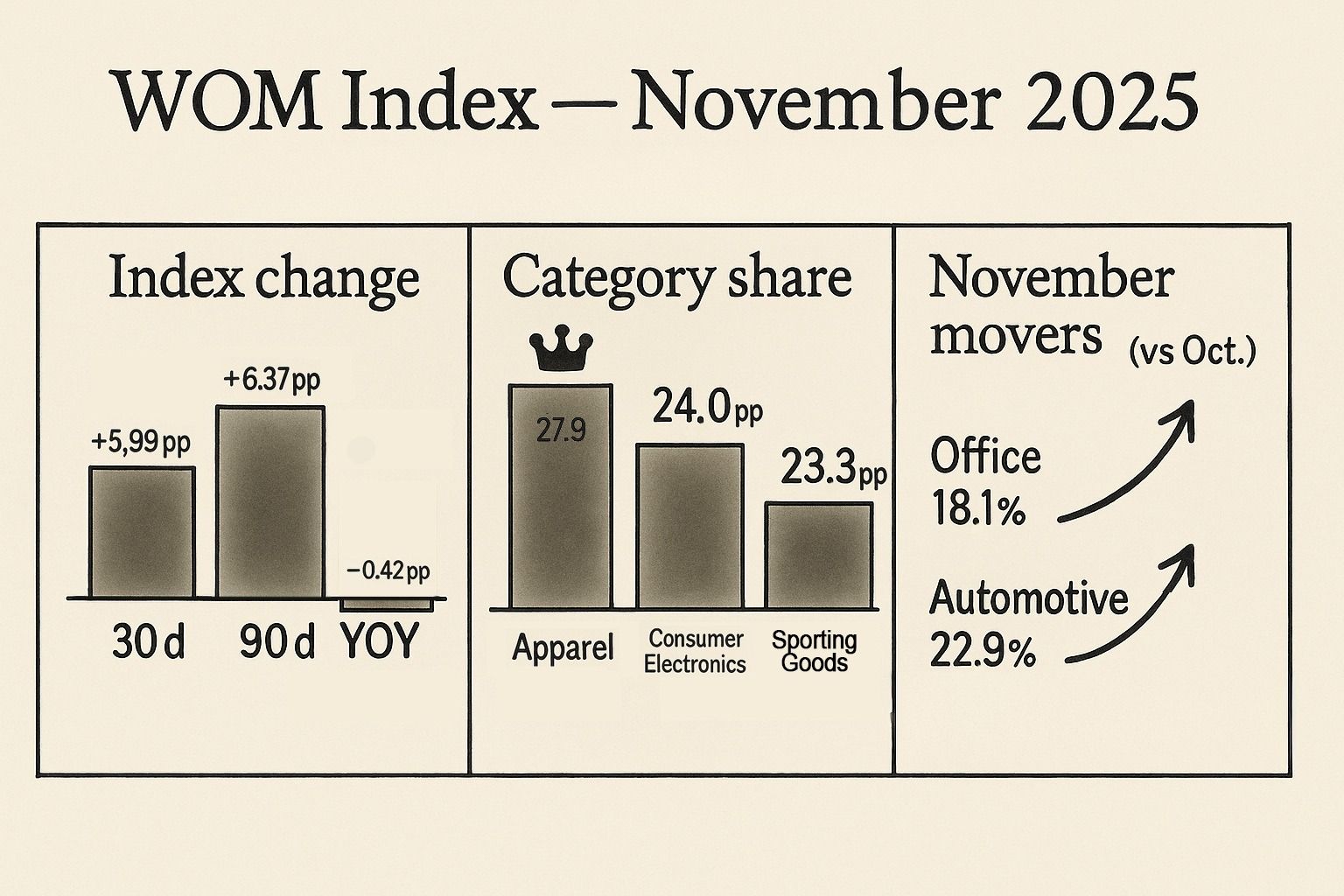
📈 The headline: WOM spiked in November as expected due to the holiday ramp-up, but this year’s average sits a touch below 2024 and 2023.
👗 Category leader shift: Apparel and Accessories took the crown in share, with Consumer Electronics and Sporting Goods right behind, a very gift-centric mix.
🗂️ Biggest MoM comeback: Office jumped hard into relevance after a sleepy fall, now firmly in the holiday conversation.
🔌 CE momentum: Consumer Electronics surged month over month, aligning with pre-promo comparison shopping and list-building behavior.
🚗 The only notable pullback: Automotive eased vs. October, with attention rotating into giftable categories while shoppers position for deals.
I recently chatted with Fairing’s Matt Bahr about how WOM is a predictor of other strong business indicators, including repeat purchases, subscription conversions, and more. If you can drive WOM, you can drive growth. Become a Future Commerce Plus member to learn how you can use this data to pull performance marketing and referral levers during the holiday season and beyond. (And be sure to take advantage of our special end-of-year offer while you still have time.)
— Phillip

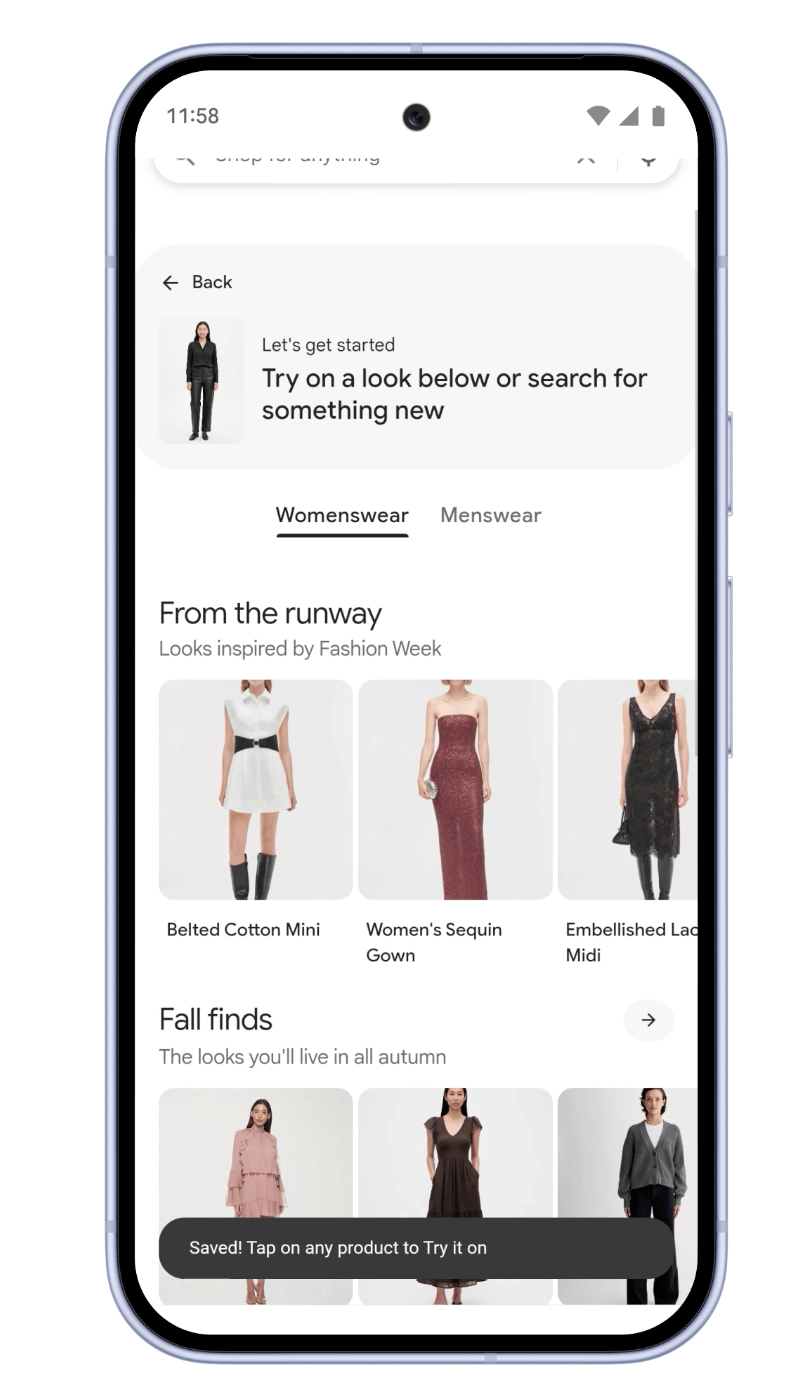
Google Nano-Banana-fies Try-On. Gone are the days when you had to take an unwieldy full-body image to virtually try on items. A new tool from Google lets you simply upload a selfie, and Nano Banana will generate a full-body digital model to do the rest. After you upload a selfie, you select your typical clothing size, and Google will generate several studio-like images. Select one as your default try-on photo, and you’ll be set.
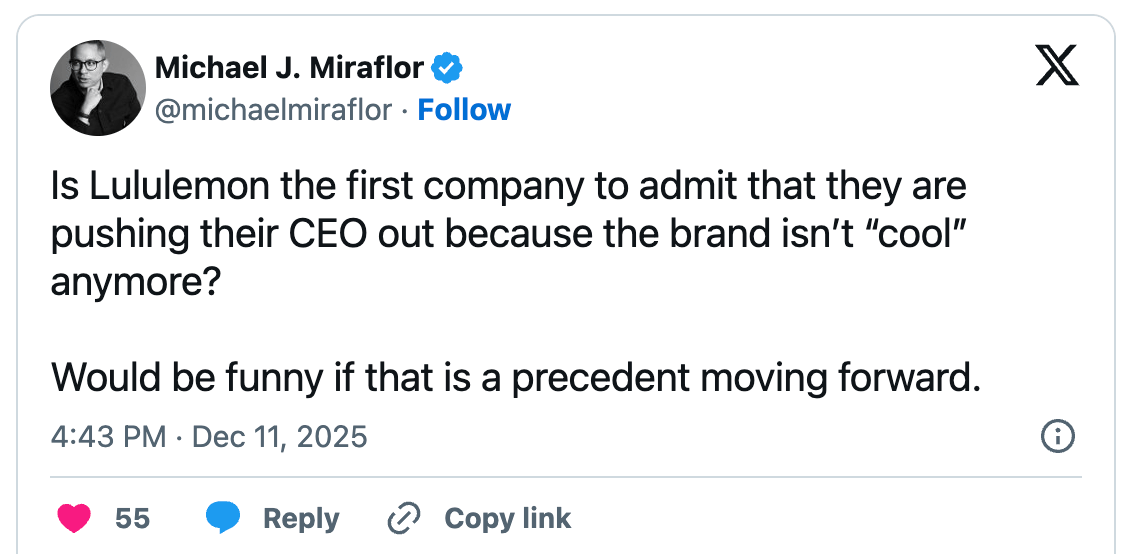
Let’s Not Stretch it Out. After more than seven years, Lululemon CEO Calvin McDonald will step down from his role, effective Jan. 31, 2026. The news was announced the same day the athletic brand reported its Q3 2025 earnings, which beat expectations after several weak quarters. Overall revenue came in at $2.6B, up 7% YOY, and international revenues increased by 33%. Yet some challenges remained, including a declining US position (revenue dropped 2% YOY) and a gross margin that fell nearly 56% due to higher tariffs and more aggressive markdowns.
During his tenure, McDonald helped Lululemon expand into more than 30 markets and expand its product portfolio to include additional athletic and lifestyle categories, such as tennis and golf. The chief executive noted in a LinkedIn post that this is the ideal time to pass the baton, as the brand nears the end of its five-year growth strategy.
We can’t help but wonder if other factors are at play: Lulu founder Chip Wilson sparked industry chatter about McDonald’s poor stewardship of a two-decade lead on the rest of the athleisure industry, taking out a full-page ad to call out the brand’s slow descent into irrelevance.

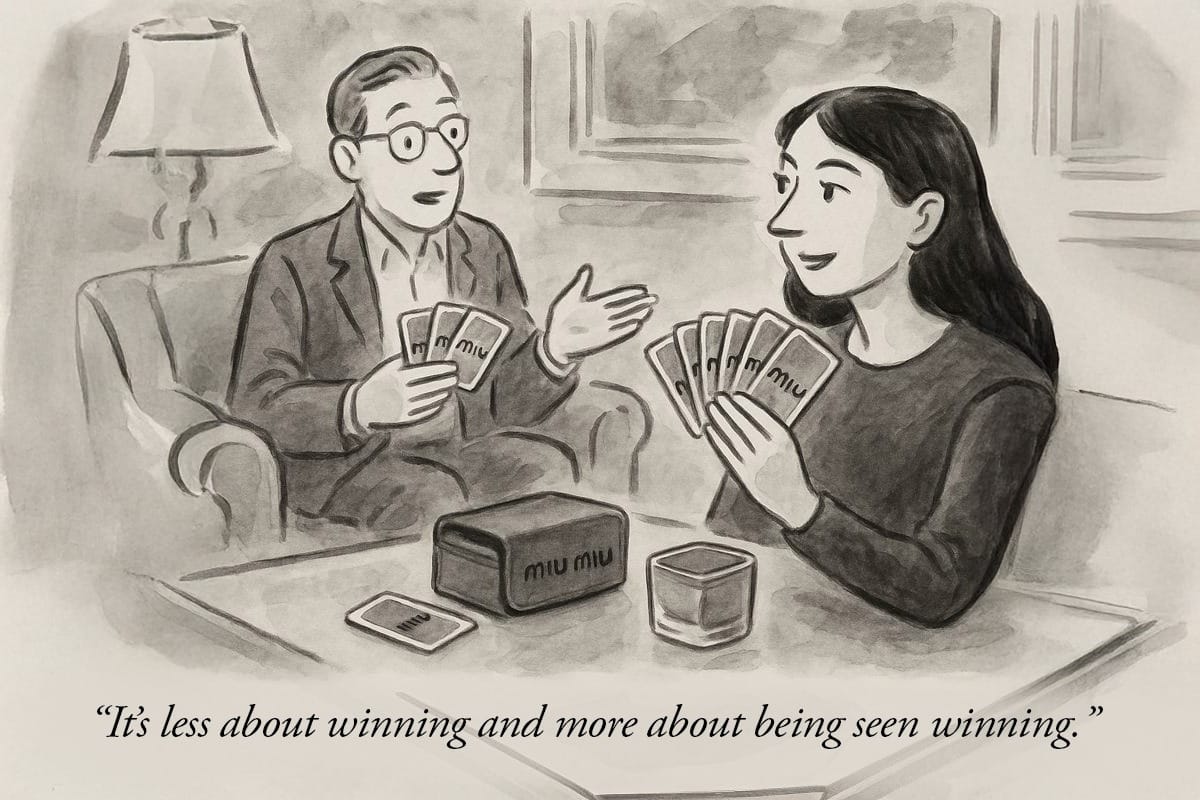
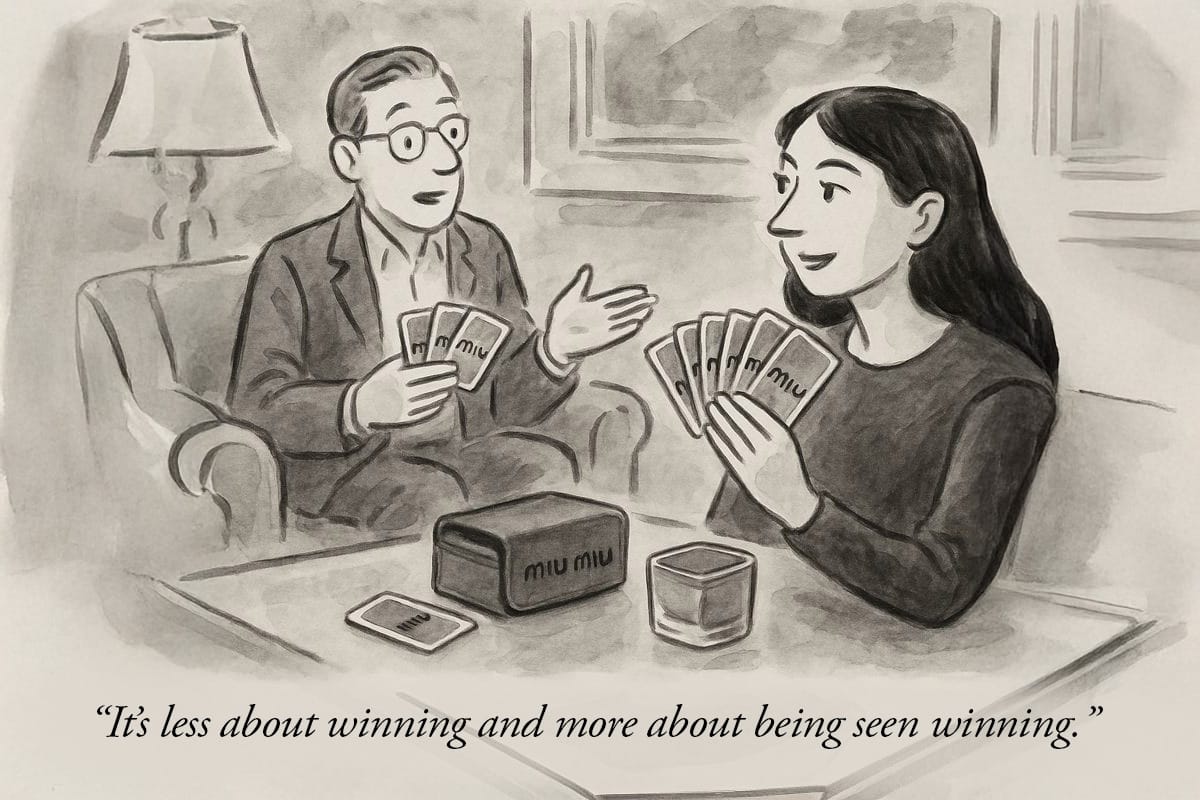
Luxury Game Night. Just a few weeks after Bottega Veneta added an exclusive Jenga game design to the Art of Living section of its website (retailing for $6,900), Miu Miu has dropped a special edition of UNO that includes branded designs and a leather case.
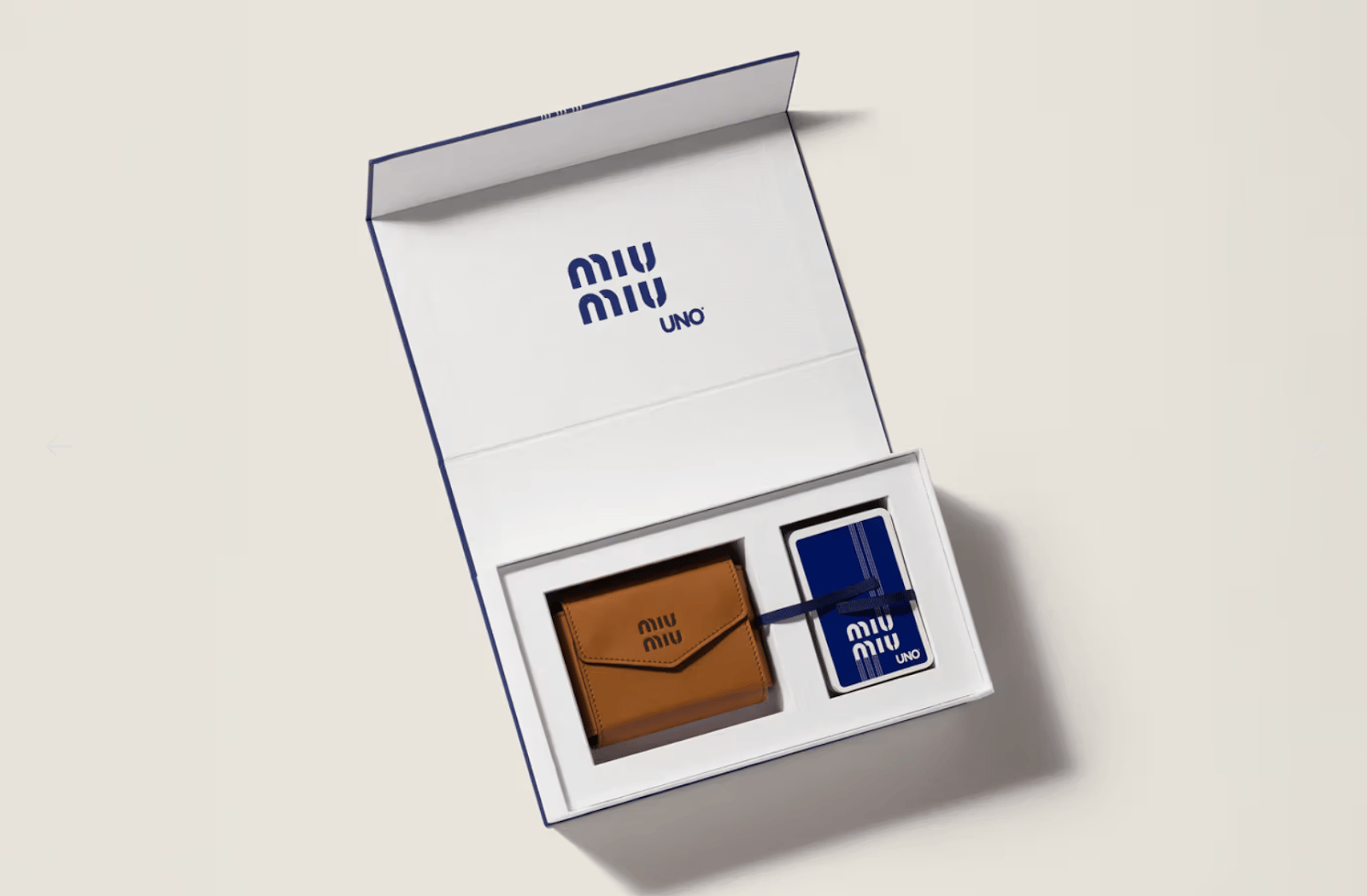
Retailing for $575, the UNO launch is an interesting play (pun intended) to go deeper into consumers' lives. Luxury isn’t something you wear; it’s something you live, and board games are a relatively untapped market. The difference is, these games aren’t for actual living; they’re for displaying.
Our Take: Despite numerous think pieces critiquing the need for expensive versions of games, consider the intentionality brand teams employ for these collaborations. For these new status games to make sense within the brands, they must fit within the cultural framework that the brands have created.
Bottega Veneta is centered on craftsmanship; to wit, the Bottega Jenga set came in a woven Intreccio calf leather case and was crafted from walnut. To win at Jenga, you need to employ steady, careful movement; you must be intentional.
Miu Miu has always been about youthful rebellion (often seen as Prada's "rebellious younger sibling"); it has served as Miuccia Prada's most instinctive and immediate ideas. UNO exemplifies the kind of playful and rebellious attitude that a “Miu Miu Girl” has always had.

Going Dry. Thrive Market is adding more than 100 SKUs to its non-alcoholic category, including beers, wines, and cocktails from brands like Athletic Brewing Company, Best Day Brewing, De Soi, and others. The move reflects broader industry trends, indicating that consumers across demographics are curbing their alcohol consumption or going sober completely. But of course, it’s the perfect time on the calendar expand non-alc offerings; with a few weeks left until New Year’s Day, consumers are crafting their resolutions, and “stop drinking” will likely be at the top of many lists.

Disney Goes Multiplayer. In a major AI position change, Disney has invested $1B in OpenAI. The entertainment juggernaut has also agreed to become the first major licensing partner for Sora, OpenAI’s short-form generative AI video platform. Now, fans will be able to use Disney’s most beloved characters, including Mickey and Minnie Mouse, Lilo, Stitch, and animated versions of Marvel and Lucasfilm characters, in their videos.
Back in the Summer, Disney joined Universal in a landmark lawsuit against Midjourney, alleging that Midjourney used beloved IP to train its platform for AI-generated image creation. At the time, it was considered a major statement that raised pointed questions about character ownership and who should have rights to remix and reimagine beloved stories for mass consumption. But now, Disney’s pivot shows that this likely wasn’t about storytelling integrity at all; the price just had to be right. Get ready for some really wild Mickey and Minnie scenes…
The Algorithmic Cart. A study by Groundwork Collaborative and Consumer Reports found that Instacart’s AI is causing significant price fluctuations, leading some customers to pay significantly more for groceries. The progressive advocacy group tapped 437 shoppers across four cities to run the study, and all were asked to add the same items from the same store to their carts. Nearly 75% of the items were offered at different prices, causing the total cost of the same basket of goods to vary by about 7%.
.jpg)

.svg)
