

of the United Kingdom’s capitol city.
“May the Fourth be with you” started as an inside joke among fans but has become the most successful corporate holiday that Disney never invented.
The clever turn of phrase has evolved beyond a timely pun, akin to the Justin Timberlake “It’s gonna be May” meme, to retail calendar holiday; one programmed by merchants to drop exclusive merchandise or “unlock” limited-time deals and sales tied to all of fandom, let alone Star Wars merchandise.
Amazon has a dedicated “store” featuring a curated collection of branded merch, from specialty Squishmallows to Owala water bottles. DTC intimates brand MeUndies has launched a new collection dedicated to the franchise. LEGO has unveiled a specialty Mando and Grogu kit, just in time for the release of The Mandalorian & Grogu later this month. And Disney has the most to win (and lose) during the holiday.
80% of US consumers identify as fans of at least one category.
Music, sports, TV shows, movies, or video games — fandom is the default state of the American consumer.
Source: Deloitte Digital Media Trends 2026
The entertainment juggernaut acquired Lucasfilm in 2012 for a cool $4B and has since turned the Star Wars IP into its own branded universe of toys, films, television series, and specialty merch. And, for better or worse, it has turned May the Fourth into a multichannel, global holiday that makes its Galaxy’s Edge park the hub for the celebration.
But May the Fourth is so much more than a case study on how a major public company can squeeze every drop of creative juice from a once-unique story. There are many examples of that. It's an example of fandom's cultural and commercial force, and what happens when the general public connects to a story and its characters in such a profound way that it activates a continuous cycle of consumption, connection, ownership, and participation.
In nearly fifty years, Lucasfilm, Disney, and George Lucas himself have done more than build a $46B franchise; they've created a world that people actually want to be part of.
But as we’ll discover in today’s Future Commerce Insiders, fandom is a gift fans give to IP, not a resource companies own outright. Brands don't create the fandom, they borrow from it.
And the capitalization of that model means companies forget that distinction, often leading to expensive lessons learned. In Disney’s case, a $4,800-a-night hotel that nobody stayed in twice, and a YouTuber's four-hour autopsy watched by millions.
Monetizing the Magic
The monetization of Star Wars and its ecosystem of planets, characters, and myths wasn’t established by Disney overlords. Creator George Lucas had it in his mind from the very beginning. While negotiating with Twentieth Century Fox, he famously reduced his director’s fee from $500,000 to $150,000 in exchange for total merchandising and sequel rights. Within the first year of the film’s release, toy brand Kenner sold $100M worth of Star Wars toys.
Merchandising agreements were just as much a tool for liquidity as they were for driving brand loyalty. Toy sales helped Lucas fund the two follow-ups to A New Hope and kept Luke Skywalker, Darth Vader, and Princess Leia embedded in the cultural zeitgeist. When characters go from the big screen to your bedroom shelves, the relationship dynamic changes. What was once larger than life becomes accessible, even intimate to your personal existence.
71% of fans say being a fan is "cool." 80% say it brings them joy. 61% actively defend their fandom to others.
Fandom isn't passive consumption. It's a community that fans are willing to argue for, spend for, and travel for.
Source: Twitch Ads 'Anatomy of Hype' 2023 / Kearney Consumer Institute
Lucas developed a repeatable playbook that every major film franchise uses. Three, even six months before a release, toys begin to trickle onto shelves. When the film finally opens in theaters, more toys are released, especially those featuring new characters or scenarios that reveal major plot points. The marketing cycle winds down after the first holiday season post-release, but there are typically tentpole moments when new or reimagined products hit shelves.
Thanks to its expanding ecosystem of films, cartoons, and streaming series, Star Wars has kept the merch lifecycle moving. Yet, with the recent glut of sequels after The Force Awakens’ release, the merch came too quickly. Retailers like Walmart and Target had to slash prices to sell through merchandise. It was a strong example of how Disney oversold the fandom. Its forecast rested too heavily on the laurels of The Force Awakens, yet box office sales and general fan excitement gradually dwindled with each release.
The same overreach logic shaped the parks. Galaxy's Edge, Disney's billion-dollar Star Wars-themed land at Disneyland and Hollywood Studios, opened in 2019 to crowds that didn't show. Attendance at Disneyland actually decreased in the months after launch, but per-guest spending climbed. Even if the park extension didn’t drive more people to the park, it was built to make the people already there spend more.
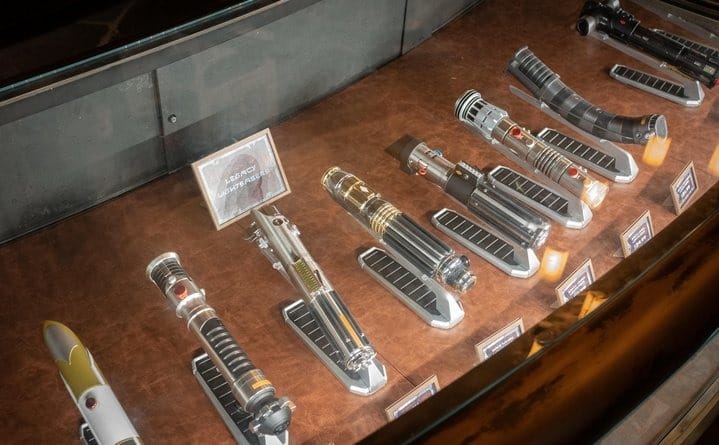
By 2024, guests had built 1.5M droids and 1.2M lightsabers across both Galaxy's Edge locations. Lightsabers alone account for an estimated $300M+ in revenue.
Attendance at Disneyland actually decreased in the months after [Galaxy’s Edge] launch, but per-guest spending climbed. Even if the park extension didn’t drive more people to the park, it was built to make the people already there spend more.
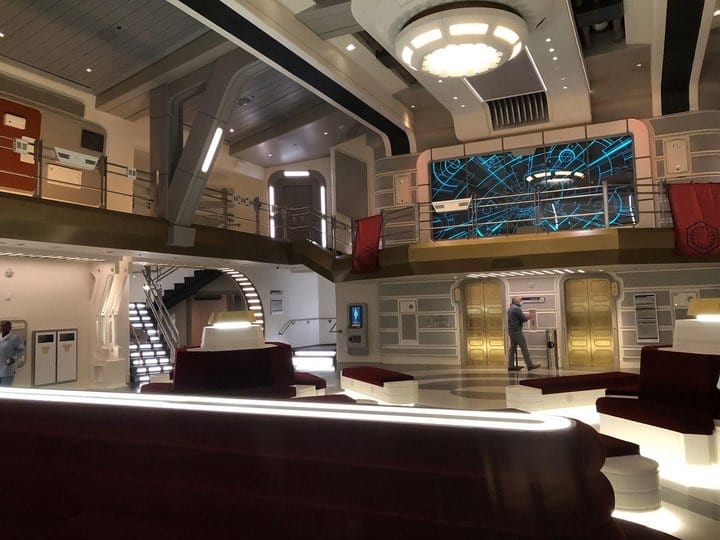
The most toxic example of overselling a fandom, though, was the Star Wars: Galactic Starcruiser. Described by Walt Disney World as “the most immersive Star Wars story ever created,” the Galactic Starcruiser was a two-night voyage where guests stayed entirely in character. The experience cost $4,800 for two people and about $6,000 for a family of four. With only 100 rooms, it was meant to be the most exclusive fan experience ever created. It was also a milestone project for Disney’s Imagineering team. And in less than 18 months, it was closed.
Creator Jenny Nicholson went viral in 2024 after launching a four-hour YouTube review that dissected the experience's failures in exhaustive detail. She was an example of a Star Wars fan who was committed to the franchise but more committed to supporting her fellow fans. And the review illustrated what happens when experiences price out fans but fail to meet expectations. Diehards are the fastest distribution network a fandom has: for praise, and for damage.
Two-thirds of Superfans consider their fandom "a big part" of their identity. ~40% describe it as a form of escapism and comfort.
This is not hobbyism. Fandom functions as both a retreat and a form of self-definition. When brands break that, they're not just losing a customer. They're disrupting a coping mechanism.
Source: Mintel 2024 US Superfans Consumer Report
And when consumers feel their fandoms are not honored, it can quickly lead to a pushback on loyalty. Research published in Frontiers in Psychology found that when fans develop "psychological ownership,” a state in which fans perceive their idol or IP as an extension of the self, it can lead to feelings of possessiveness, perceived influence, and emotional attachment. Platform mechanisms amplify this. Every act of content creation, voting, or fan support (including dollars spent) becomes a substantive contribution to shaping the IP's public image, making ownership a psychological perception as well as a form of group emotion and identity practice. This explains why fans gathered on Threads to rage against Disneyland’s new makeup for Leia. They don’t just feel connected to the stories; they feel connected to the people in the stories. And when the representation of these characters strays from what they know and love, they feel personally wronged.
The Holiday That Fandom Built
Major milestones like “release anniversaries” are low-hanging fruit because they add a signifier to a product launch. When you purchase a commemorative T-shirt or LEGO set that celebrates the 25th anniversary of Star Wars: The Phantom Menace, that shows that you’re not just committed to the lore of the franchise, but that you regularly celebrate it and want to be part of it. And when you purchase AMC’s exclusive popcorn bucket when you see The Mandalorian and Grogu on opening weekend, that shows that you want to be part of the history and take it home with you, too.
Having an annual holiday, like May the Fourth, brings the FOMO to the next level. It makes fan reactivation an embedded part of the marketing calendar. Disney has learned this firsthand with its expanding rolodex of park events, which promise exclusive moments for surprise and delight. While May the Fourth spans channels, Galaxy’s Edge is where the celebration actually lives.
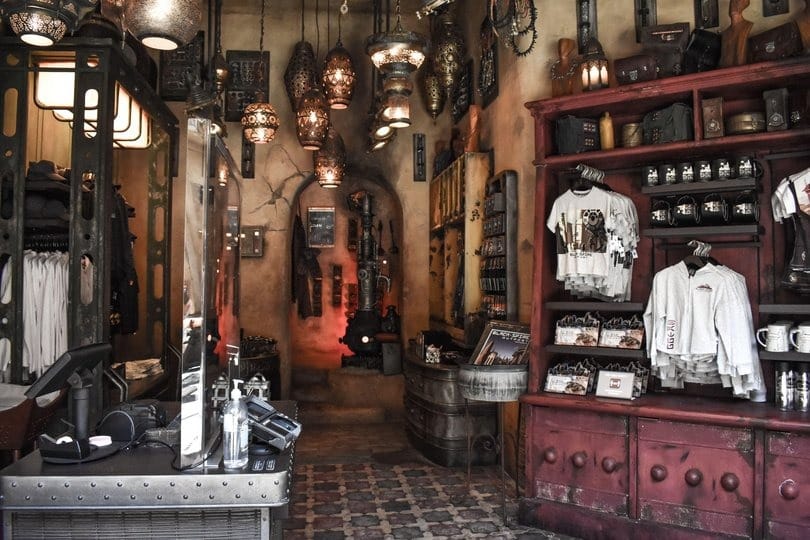
Nestled in Disneyland and Disney World’s Hollywood Studios, Galaxy’s Edge is the home base for exclusive merch drops and limited-edition food and beverages. The parks, which each cost about $1B to construct, have become a hub for longtime fans to immerse themselves in the world—to sit in Oga’s Cantina, drink the specialty cocktails, build your own droid, and even stare down Kylo Ren during your speed-walk to the Millennium Falcon to ride Smugglers Run. But it’s also a pipeline for new (younger) fans who are so hypnotized by sensory overload that all they can think of is all the cool, intergalactic merch their parents simply must buy. In 2024, guests had built 1.5M droids and 1.2M lightsabers at Savi’s Workshop in Galaxy’s Edge. With these experiences starting at $150, these world-immersion moments alone are a major revenue driver.
The irony is that May the Fourth wasn’t initially concocted as a corporate invention. It was a fan invention that was repurposed, reimagined, and then monetized so people could gather and celebrate the “holiday” in a culturally meaningful way.
As a phrase, “May the 4th be with you” dates back to the first film’s release in 1977. Initially, it was an inside joke, but it burst into the mainstream in 1979 when a political ad celebrated Margaret Thatcher’s victory as prime minister. The fan-made holiday turned into a formal celebration in 2011 at the Toronto Underground Cinema in Canada, where attendees enjoyed trivia, costume contests, and exclusive film screenings. After Disney acquired Lucasfilm, it turned into a full-blown marketing event. By 2013, some claimed that May 4th became “half earnest celebration, half shameless marketing bonanza,” but it reached its peak in 2019. That year, the California Legislature designated May 4 as Star Wars Day to observe the opening of Disneyland’s Galaxy’s Edge theme park.
May the Fourth is just one moment in a calendar of events and gatherings for Star Wars fans. Revenge of the Fifth has become a new fan-made holiday that focuses on the Sith and other franchise villains. Star Wars Celebration has become a landmark fan gathering, with the next event in 2027 timed with the first film’s fiftieth anniversary. Comic Con has become a home base for cast meet-and-greets and cosplay meetups. And, of course, Disney’s own D23 convention has become the hub of it all, with major Star Wars announcements running in tandem with Marvel news, theme park updates, and more.
Where Authenticity Lives and Dies
Fandom is one of the most powerful forces in consumer culture. It creates a sense of belonging, drives spending, builds communities, and spans generations. It is, in many ways, a gift. But gifts come with a relational psychology, and when brands treat that gift as a resource to extract rather than a relationship to steward, something breaks.
May the Fourth shows how fan passion can trigger cultural movements and drive commercial impact. It also shows what happens when major corporations take control of fandom and use emotional triggers as levers to drive demand. Yet the toxicity doesn’t sit on one side alone; fandoms breed feelings of ownership, and with that ownership comes a sense of entitlement.
But when a corporation buys a fandom, turns it into a content machine, and floods the market with product, is it fair to blame fans for this toxicity, or is it a machine of their own making?
Fandom is what happens when a story is so alive that people build their lives around it. They buy theme park tickets and costumes, and join communities and conventions. They even pass their fandom down to their children. That is not something brands create. That is something brands borrow. The question for any company trying to participate in any fandom is whether they’re contributing to that life or extracting from it. Whether they’re building something fans can belong to, or just charging admission to an ecosystem they already built authentically.
May the force be with you.
“May the Fourth be with you” started as an inside joke among fans but has become the most successful corporate holiday that Disney never invented.
The clever turn of phrase has evolved beyond a timely pun, akin to the Justin Timberlake “It’s gonna be May” meme, to retail calendar holiday; one programmed by merchants to drop exclusive merchandise or “unlock” limited-time deals and sales tied to all of fandom, let alone Star Wars merchandise.
Amazon has a dedicated “store” featuring a curated collection of branded merch, from specialty Squishmallows to Owala water bottles. DTC intimates brand MeUndies has launched a new collection dedicated to the franchise. LEGO has unveiled a specialty Mando and Grogu kit, just in time for the release of The Mandalorian & Grogu later this month. And Disney has the most to win (and lose) during the holiday.
80% of US consumers identify as fans of at least one category.
Music, sports, TV shows, movies, or video games — fandom is the default state of the American consumer.
Source: Deloitte Digital Media Trends 2026
The entertainment juggernaut acquired Lucasfilm in 2012 for a cool $4B and has since turned the Star Wars IP into its own branded universe of toys, films, television series, and specialty merch. And, for better or worse, it has turned May the Fourth into a multichannel, global holiday that makes its Galaxy’s Edge park the hub for the celebration.
But May the Fourth is so much more than a case study on how a major public company can squeeze every drop of creative juice from a once-unique story. There are many examples of that. It's an example of fandom's cultural and commercial force, and what happens when the general public connects to a story and its characters in such a profound way that it activates a continuous cycle of consumption, connection, ownership, and participation.
In nearly fifty years, Lucasfilm, Disney, and George Lucas himself have done more than build a $46B franchise; they've created a world that people actually want to be part of.
But as we’ll discover in today’s Future Commerce Insiders, fandom is a gift fans give to IP, not a resource companies own outright. Brands don't create the fandom, they borrow from it.
And the capitalization of that model means companies forget that distinction, often leading to expensive lessons learned. In Disney’s case, a $4,800-a-night hotel that nobody stayed in twice, and a YouTuber's four-hour autopsy watched by millions.
Monetizing the Magic
The monetization of Star Wars and its ecosystem of planets, characters, and myths wasn’t established by Disney overlords. Creator George Lucas had it in his mind from the very beginning. While negotiating with Twentieth Century Fox, he famously reduced his director’s fee from $500,000 to $150,000 in exchange for total merchandising and sequel rights. Within the first year of the film’s release, toy brand Kenner sold $100M worth of Star Wars toys.
Merchandising agreements were just as much a tool for liquidity as they were for driving brand loyalty. Toy sales helped Lucas fund the two follow-ups to A New Hope and kept Luke Skywalker, Darth Vader, and Princess Leia embedded in the cultural zeitgeist. When characters go from the big screen to your bedroom shelves, the relationship dynamic changes. What was once larger than life becomes accessible, even intimate to your personal existence.
71% of fans say being a fan is "cool." 80% say it brings them joy. 61% actively defend their fandom to others.
Fandom isn't passive consumption. It's a community that fans are willing to argue for, spend for, and travel for.
Source: Twitch Ads 'Anatomy of Hype' 2023 / Kearney Consumer Institute
Lucas developed a repeatable playbook that every major film franchise uses. Three, even six months before a release, toys begin to trickle onto shelves. When the film finally opens in theaters, more toys are released, especially those featuring new characters or scenarios that reveal major plot points. The marketing cycle winds down after the first holiday season post-release, but there are typically tentpole moments when new or reimagined products hit shelves.
Thanks to its expanding ecosystem of films, cartoons, and streaming series, Star Wars has kept the merch lifecycle moving. Yet, with the recent glut of sequels after The Force Awakens’ release, the merch came too quickly. Retailers like Walmart and Target had to slash prices to sell through merchandise. It was a strong example of how Disney oversold the fandom. Its forecast rested too heavily on the laurels of The Force Awakens, yet box office sales and general fan excitement gradually dwindled with each release.
The same overreach logic shaped the parks. Galaxy's Edge, Disney's billion-dollar Star Wars-themed land at Disneyland and Hollywood Studios, opened in 2019 to crowds that didn't show. Attendance at Disneyland actually decreased in the months after launch, but per-guest spending climbed. Even if the park extension didn’t drive more people to the park, it was built to make the people already there spend more.
By 2024, guests had built 1.5M droids and 1.2M lightsabers across both Galaxy's Edge locations. Lightsabers alone account for an estimated $300M+ in revenue.
Attendance at Disneyland actually decreased in the months after [Galaxy’s Edge] launch, but per-guest spending climbed. Even if the park extension didn’t drive more people to the park, it was built to make the people already there spend more.
The most toxic example of overselling a fandom, though, was the Star Wars: Galactic Starcruiser. Described by Walt Disney World as “the most immersive Star Wars story ever created,” the Galactic Starcruiser was a two-night voyage where guests stayed entirely in character. The experience cost $4,800 for two people and about $6,000 for a family of four. With only 100 rooms, it was meant to be the most exclusive fan experience ever created. It was also a milestone project for Disney’s Imagineering team. And in less than 18 months, it was closed.
Creator Jenny Nicholson went viral in 2024 after launching a four-hour YouTube review that dissected the experience's failures in exhaustive detail. She was an example of a Star Wars fan who was committed to the franchise but more committed to supporting her fellow fans. And the review illustrated what happens when experiences price out fans but fail to meet expectations. Diehards are the fastest distribution network a fandom has: for praise, and for damage.
Two-thirds of Superfans consider their fandom "a big part" of their identity. ~40% describe it as a form of escapism and comfort.
This is not hobbyism. Fandom functions as both a retreat and a form of self-definition. When brands break that, they're not just losing a customer. They're disrupting a coping mechanism.
Source: Mintel 2024 US Superfans Consumer Report
And when consumers feel their fandoms are not honored, it can quickly lead to a pushback on loyalty. Research published in Frontiers in Psychology found that when fans develop "psychological ownership,” a state in which fans perceive their idol or IP as an extension of the self, it can lead to feelings of possessiveness, perceived influence, and emotional attachment. Platform mechanisms amplify this. Every act of content creation, voting, or fan support (including dollars spent) becomes a substantive contribution to shaping the IP's public image, making ownership a psychological perception as well as a form of group emotion and identity practice. This explains why fans gathered on Threads to rage against Disneyland’s new makeup for Leia. They don’t just feel connected to the stories; they feel connected to the people in the stories. And when the representation of these characters strays from what they know and love, they feel personally wronged.
The Holiday That Fandom Built
Major milestones like “release anniversaries” are low-hanging fruit because they add a signifier to a product launch. When you purchase a commemorative T-shirt or LEGO set that celebrates the 25th anniversary of Star Wars: The Phantom Menace, that shows that you’re not just committed to the lore of the franchise, but that you regularly celebrate it and want to be part of it. And when you purchase AMC’s exclusive popcorn bucket when you see The Mandalorian and Grogu on opening weekend, that shows that you want to be part of the history and take it home with you, too.
Having an annual holiday, like May the Fourth, brings the FOMO to the next level. It makes fan reactivation an embedded part of the marketing calendar. Disney has learned this firsthand with its expanding rolodex of park events, which promise exclusive moments for surprise and delight. While May the Fourth spans channels, Galaxy’s Edge is where the celebration actually lives.
Nestled in Disneyland and Disney World’s Hollywood Studios, Galaxy’s Edge is the home base for exclusive merch drops and limited-edition food and beverages. The parks, which each cost about $1B to construct, have become a hub for longtime fans to immerse themselves in the world—to sit in Oga’s Cantina, drink the specialty cocktails, build your own droid, and even stare down Kylo Ren during your speed-walk to the Millennium Falcon to ride Smugglers Run. But it’s also a pipeline for new (younger) fans who are so hypnotized by sensory overload that all they can think of is all the cool, intergalactic merch their parents simply must buy. In 2024, guests had built 1.5M droids and 1.2M lightsabers at Savi’s Workshop in Galaxy’s Edge. With these experiences starting at $150, these world-immersion moments alone are a major revenue driver.
The irony is that May the Fourth wasn’t initially concocted as a corporate invention. It was a fan invention that was repurposed, reimagined, and then monetized so people could gather and celebrate the “holiday” in a culturally meaningful way.
As a phrase, “May the 4th be with you” dates back to the first film’s release in 1977. Initially, it was an inside joke, but it burst into the mainstream in 1979 when a political ad celebrated Margaret Thatcher’s victory as prime minister. The fan-made holiday turned into a formal celebration in 2011 at the Toronto Underground Cinema in Canada, where attendees enjoyed trivia, costume contests, and exclusive film screenings. After Disney acquired Lucasfilm, it turned into a full-blown marketing event. By 2013, some claimed that May 4th became “half earnest celebration, half shameless marketing bonanza,” but it reached its peak in 2019. That year, the California Legislature designated May 4 as Star Wars Day to observe the opening of Disneyland’s Galaxy’s Edge theme park.
May the Fourth is just one moment in a calendar of events and gatherings for Star Wars fans. Revenge of the Fifth has become a new fan-made holiday that focuses on the Sith and other franchise villains. Star Wars Celebration has become a landmark fan gathering, with the next event in 2027 timed with the first film’s fiftieth anniversary. Comic Con has become a home base for cast meet-and-greets and cosplay meetups. And, of course, Disney’s own D23 convention has become the hub of it all, with major Star Wars announcements running in tandem with Marvel news, theme park updates, and more.
Where Authenticity Lives and Dies
Fandom is one of the most powerful forces in consumer culture. It creates a sense of belonging, drives spending, builds communities, and spans generations. It is, in many ways, a gift. But gifts come with a relational psychology, and when brands treat that gift as a resource to extract rather than a relationship to steward, something breaks.
May the Fourth shows how fan passion can trigger cultural movements and drive commercial impact. It also shows what happens when major corporations take control of fandom and use emotional triggers as levers to drive demand. Yet the toxicity doesn’t sit on one side alone; fandoms breed feelings of ownership, and with that ownership comes a sense of entitlement.
But when a corporation buys a fandom, turns it into a content machine, and floods the market with product, is it fair to blame fans for this toxicity, or is it a machine of their own making?
Fandom is what happens when a story is so alive that people build their lives around it. They buy theme park tickets and costumes, and join communities and conventions. They even pass their fandom down to their children. That is not something brands create. That is something brands borrow. The question for any company trying to participate in any fandom is whether they’re contributing to that life or extracting from it. Whether they’re building something fans can belong to, or just charging admission to an ecosystem they already built authentically.
May the force be with you.
“May the Fourth be with you” started as an inside joke among fans but has become the most successful corporate holiday that Disney never invented.
The clever turn of phrase has evolved beyond a timely pun, akin to the Justin Timberlake “It’s gonna be May” meme, to retail calendar holiday; one programmed by merchants to drop exclusive merchandise or “unlock” limited-time deals and sales tied to all of fandom, let alone Star Wars merchandise.
Amazon has a dedicated “store” featuring a curated collection of branded merch, from specialty Squishmallows to Owala water bottles. DTC intimates brand MeUndies has launched a new collection dedicated to the franchise. LEGO has unveiled a specialty Mando and Grogu kit, just in time for the release of The Mandalorian & Grogu later this month. And Disney has the most to win (and lose) during the holiday.
80% of US consumers identify as fans of at least one category.
Music, sports, TV shows, movies, or video games — fandom is the default state of the American consumer.
Source: Deloitte Digital Media Trends 2026
The entertainment juggernaut acquired Lucasfilm in 2012 for a cool $4B and has since turned the Star Wars IP into its own branded universe of toys, films, television series, and specialty merch. And, for better or worse, it has turned May the Fourth into a multichannel, global holiday that makes its Galaxy’s Edge park the hub for the celebration.
But May the Fourth is so much more than a case study on how a major public company can squeeze every drop of creative juice from a once-unique story. There are many examples of that. It's an example of fandom's cultural and commercial force, and what happens when the general public connects to a story and its characters in such a profound way that it activates a continuous cycle of consumption, connection, ownership, and participation.
In nearly fifty years, Lucasfilm, Disney, and George Lucas himself have done more than build a $46B franchise; they've created a world that people actually want to be part of.
But as we’ll discover in today’s Future Commerce Insiders, fandom is a gift fans give to IP, not a resource companies own outright. Brands don't create the fandom, they borrow from it.
And the capitalization of that model means companies forget that distinction, often leading to expensive lessons learned. In Disney’s case, a $4,800-a-night hotel that nobody stayed in twice, and a YouTuber's four-hour autopsy watched by millions.
Monetizing the Magic
The monetization of Star Wars and its ecosystem of planets, characters, and myths wasn’t established by Disney overlords. Creator George Lucas had it in his mind from the very beginning. While negotiating with Twentieth Century Fox, he famously reduced his director’s fee from $500,000 to $150,000 in exchange for total merchandising and sequel rights. Within the first year of the film’s release, toy brand Kenner sold $100M worth of Star Wars toys.
Merchandising agreements were just as much a tool for liquidity as they were for driving brand loyalty. Toy sales helped Lucas fund the two follow-ups to A New Hope and kept Luke Skywalker, Darth Vader, and Princess Leia embedded in the cultural zeitgeist. When characters go from the big screen to your bedroom shelves, the relationship dynamic changes. What was once larger than life becomes accessible, even intimate to your personal existence.
71% of fans say being a fan is "cool." 80% say it brings them joy. 61% actively defend their fandom to others.
Fandom isn't passive consumption. It's a community that fans are willing to argue for, spend for, and travel for.
Source: Twitch Ads 'Anatomy of Hype' 2023 / Kearney Consumer Institute
Lucas developed a repeatable playbook that every major film franchise uses. Three, even six months before a release, toys begin to trickle onto shelves. When the film finally opens in theaters, more toys are released, especially those featuring new characters or scenarios that reveal major plot points. The marketing cycle winds down after the first holiday season post-release, but there are typically tentpole moments when new or reimagined products hit shelves.
Thanks to its expanding ecosystem of films, cartoons, and streaming series, Star Wars has kept the merch lifecycle moving. Yet, with the recent glut of sequels after The Force Awakens’ release, the merch came too quickly. Retailers like Walmart and Target had to slash prices to sell through merchandise. It was a strong example of how Disney oversold the fandom. Its forecast rested too heavily on the laurels of The Force Awakens, yet box office sales and general fan excitement gradually dwindled with each release.
The same overreach logic shaped the parks. Galaxy's Edge, Disney's billion-dollar Star Wars-themed land at Disneyland and Hollywood Studios, opened in 2019 to crowds that didn't show. Attendance at Disneyland actually decreased in the months after launch, but per-guest spending climbed. Even if the park extension didn’t drive more people to the park, it was built to make the people already there spend more.
By 2024, guests had built 1.5M droids and 1.2M lightsabers across both Galaxy's Edge locations. Lightsabers alone account for an estimated $300M+ in revenue.
Attendance at Disneyland actually decreased in the months after [Galaxy’s Edge] launch, but per-guest spending climbed. Even if the park extension didn’t drive more people to the park, it was built to make the people already there spend more.
The most toxic example of overselling a fandom, though, was the Star Wars: Galactic Starcruiser. Described by Walt Disney World as “the most immersive Star Wars story ever created,” the Galactic Starcruiser was a two-night voyage where guests stayed entirely in character. The experience cost $4,800 for two people and about $6,000 for a family of four. With only 100 rooms, it was meant to be the most exclusive fan experience ever created. It was also a milestone project for Disney’s Imagineering team. And in less than 18 months, it was closed.
Creator Jenny Nicholson went viral in 2024 after launching a four-hour YouTube review that dissected the experience's failures in exhaustive detail. She was an example of a Star Wars fan who was committed to the franchise but more committed to supporting her fellow fans. And the review illustrated what happens when experiences price out fans but fail to meet expectations. Diehards are the fastest distribution network a fandom has: for praise, and for damage.
Two-thirds of Superfans consider their fandom "a big part" of their identity. ~40% describe it as a form of escapism and comfort.
This is not hobbyism. Fandom functions as both a retreat and a form of self-definition. When brands break that, they're not just losing a customer. They're disrupting a coping mechanism.
Source: Mintel 2024 US Superfans Consumer Report
And when consumers feel their fandoms are not honored, it can quickly lead to a pushback on loyalty. Research published in Frontiers in Psychology found that when fans develop "psychological ownership,” a state in which fans perceive their idol or IP as an extension of the self, it can lead to feelings of possessiveness, perceived influence, and emotional attachment. Platform mechanisms amplify this. Every act of content creation, voting, or fan support (including dollars spent) becomes a substantive contribution to shaping the IP's public image, making ownership a psychological perception as well as a form of group emotion and identity practice. This explains why fans gathered on Threads to rage against Disneyland’s new makeup for Leia. They don’t just feel connected to the stories; they feel connected to the people in the stories. And when the representation of these characters strays from what they know and love, they feel personally wronged.
The Holiday That Fandom Built
Major milestones like “release anniversaries” are low-hanging fruit because they add a signifier to a product launch. When you purchase a commemorative T-shirt or LEGO set that celebrates the 25th anniversary of Star Wars: The Phantom Menace, that shows that you’re not just committed to the lore of the franchise, but that you regularly celebrate it and want to be part of it. And when you purchase AMC’s exclusive popcorn bucket when you see The Mandalorian and Grogu on opening weekend, that shows that you want to be part of the history and take it home with you, too.
Having an annual holiday, like May the Fourth, brings the FOMO to the next level. It makes fan reactivation an embedded part of the marketing calendar. Disney has learned this firsthand with its expanding rolodex of park events, which promise exclusive moments for surprise and delight. While May the Fourth spans channels, Galaxy’s Edge is where the celebration actually lives.
Nestled in Disneyland and Disney World’s Hollywood Studios, Galaxy’s Edge is the home base for exclusive merch drops and limited-edition food and beverages. The parks, which each cost about $1B to construct, have become a hub for longtime fans to immerse themselves in the world—to sit in Oga’s Cantina, drink the specialty cocktails, build your own droid, and even stare down Kylo Ren during your speed-walk to the Millennium Falcon to ride Smugglers Run. But it’s also a pipeline for new (younger) fans who are so hypnotized by sensory overload that all they can think of is all the cool, intergalactic merch their parents simply must buy. In 2024, guests had built 1.5M droids and 1.2M lightsabers at Savi’s Workshop in Galaxy’s Edge. With these experiences starting at $150, these world-immersion moments alone are a major revenue driver.
The irony is that May the Fourth wasn’t initially concocted as a corporate invention. It was a fan invention that was repurposed, reimagined, and then monetized so people could gather and celebrate the “holiday” in a culturally meaningful way.
As a phrase, “May the 4th be with you” dates back to the first film’s release in 1977. Initially, it was an inside joke, but it burst into the mainstream in 1979 when a political ad celebrated Margaret Thatcher’s victory as prime minister. The fan-made holiday turned into a formal celebration in 2011 at the Toronto Underground Cinema in Canada, where attendees enjoyed trivia, costume contests, and exclusive film screenings. After Disney acquired Lucasfilm, it turned into a full-blown marketing event. By 2013, some claimed that May 4th became “half earnest celebration, half shameless marketing bonanza,” but it reached its peak in 2019. That year, the California Legislature designated May 4 as Star Wars Day to observe the opening of Disneyland’s Galaxy’s Edge theme park.
May the Fourth is just one moment in a calendar of events and gatherings for Star Wars fans. Revenge of the Fifth has become a new fan-made holiday that focuses on the Sith and other franchise villains. Star Wars Celebration has become a landmark fan gathering, with the next event in 2027 timed with the first film’s fiftieth anniversary. Comic Con has become a home base for cast meet-and-greets and cosplay meetups. And, of course, Disney’s own D23 convention has become the hub of it all, with major Star Wars announcements running in tandem with Marvel news, theme park updates, and more.
Where Authenticity Lives and Dies
Fandom is one of the most powerful forces in consumer culture. It creates a sense of belonging, drives spending, builds communities, and spans generations. It is, in many ways, a gift. But gifts come with a relational psychology, and when brands treat that gift as a resource to extract rather than a relationship to steward, something breaks.
May the Fourth shows how fan passion can trigger cultural movements and drive commercial impact. It also shows what happens when major corporations take control of fandom and use emotional triggers as levers to drive demand. Yet the toxicity doesn’t sit on one side alone; fandoms breed feelings of ownership, and with that ownership comes a sense of entitlement.
But when a corporation buys a fandom, turns it into a content machine, and floods the market with product, is it fair to blame fans for this toxicity, or is it a machine of their own making?
Fandom is what happens when a story is so alive that people build their lives around it. They buy theme park tickets and costumes, and join communities and conventions. They even pass their fandom down to their children. That is not something brands create. That is something brands borrow. The question for any company trying to participate in any fandom is whether they’re contributing to that life or extracting from it. Whether they’re building something fans can belong to, or just charging admission to an ecosystem they already built authentically.
May the force be with you.
“May the Fourth be with you” started as an inside joke among fans but has become the most successful corporate holiday that Disney never invented.
The clever turn of phrase has evolved beyond a timely pun, akin to the Justin Timberlake “It’s gonna be May” meme, to retail calendar holiday; one programmed by merchants to drop exclusive merchandise or “unlock” limited-time deals and sales tied to all of fandom, let alone Star Wars merchandise.
Amazon has a dedicated “store” featuring a curated collection of branded merch, from specialty Squishmallows to Owala water bottles. DTC intimates brand MeUndies has launched a new collection dedicated to the franchise. LEGO has unveiled a specialty Mando and Grogu kit, just in time for the release of The Mandalorian & Grogu later this month. And Disney has the most to win (and lose) during the holiday.
80% of US consumers identify as fans of at least one category.
Music, sports, TV shows, movies, or video games — fandom is the default state of the American consumer.
Source: Deloitte Digital Media Trends 2026
The entertainment juggernaut acquired Lucasfilm in 2012 for a cool $4B and has since turned the Star Wars IP into its own branded universe of toys, films, television series, and specialty merch. And, for better or worse, it has turned May the Fourth into a multichannel, global holiday that makes its Galaxy’s Edge park the hub for the celebration.
But May the Fourth is so much more than a case study on how a major public company can squeeze every drop of creative juice from a once-unique story. There are many examples of that. It's an example of fandom's cultural and commercial force, and what happens when the general public connects to a story and its characters in such a profound way that it activates a continuous cycle of consumption, connection, ownership, and participation.
In nearly fifty years, Lucasfilm, Disney, and George Lucas himself have done more than build a $46B franchise; they've created a world that people actually want to be part of.
But as we’ll discover in today’s Future Commerce Insiders, fandom is a gift fans give to IP, not a resource companies own outright. Brands don't create the fandom, they borrow from it.
And the capitalization of that model means companies forget that distinction, often leading to expensive lessons learned. In Disney’s case, a $4,800-a-night hotel that nobody stayed in twice, and a YouTuber's four-hour autopsy watched by millions.
Monetizing the Magic
The monetization of Star Wars and its ecosystem of planets, characters, and myths wasn’t established by Disney overlords. Creator George Lucas had it in his mind from the very beginning. While negotiating with Twentieth Century Fox, he famously reduced his director’s fee from $500,000 to $150,000 in exchange for total merchandising and sequel rights. Within the first year of the film’s release, toy brand Kenner sold $100M worth of Star Wars toys.
Merchandising agreements were just as much a tool for liquidity as they were for driving brand loyalty. Toy sales helped Lucas fund the two follow-ups to A New Hope and kept Luke Skywalker, Darth Vader, and Princess Leia embedded in the cultural zeitgeist. When characters go from the big screen to your bedroom shelves, the relationship dynamic changes. What was once larger than life becomes accessible, even intimate to your personal existence.
71% of fans say being a fan is "cool." 80% say it brings them joy. 61% actively defend their fandom to others.
Fandom isn't passive consumption. It's a community that fans are willing to argue for, spend for, and travel for.
Source: Twitch Ads 'Anatomy of Hype' 2023 / Kearney Consumer Institute
Lucas developed a repeatable playbook that every major film franchise uses. Three, even six months before a release, toys begin to trickle onto shelves. When the film finally opens in theaters, more toys are released, especially those featuring new characters or scenarios that reveal major plot points. The marketing cycle winds down after the first holiday season post-release, but there are typically tentpole moments when new or reimagined products hit shelves.
Thanks to its expanding ecosystem of films, cartoons, and streaming series, Star Wars has kept the merch lifecycle moving. Yet, with the recent glut of sequels after The Force Awakens’ release, the merch came too quickly. Retailers like Walmart and Target had to slash prices to sell through merchandise. It was a strong example of how Disney oversold the fandom. Its forecast rested too heavily on the laurels of The Force Awakens, yet box office sales and general fan excitement gradually dwindled with each release.
The same overreach logic shaped the parks. Galaxy's Edge, Disney's billion-dollar Star Wars-themed land at Disneyland and Hollywood Studios, opened in 2019 to crowds that didn't show. Attendance at Disneyland actually decreased in the months after launch, but per-guest spending climbed. Even if the park extension didn’t drive more people to the park, it was built to make the people already there spend more.
By 2024, guests had built 1.5M droids and 1.2M lightsabers across both Galaxy's Edge locations. Lightsabers alone account for an estimated $300M+ in revenue.
Attendance at Disneyland actually decreased in the months after [Galaxy’s Edge] launch, but per-guest spending climbed. Even if the park extension didn’t drive more people to the park, it was built to make the people already there spend more.
The most toxic example of overselling a fandom, though, was the Star Wars: Galactic Starcruiser. Described by Walt Disney World as “the most immersive Star Wars story ever created,” the Galactic Starcruiser was a two-night voyage where guests stayed entirely in character. The experience cost $4,800 for two people and about $6,000 for a family of four. With only 100 rooms, it was meant to be the most exclusive fan experience ever created. It was also a milestone project for Disney’s Imagineering team. And in less than 18 months, it was closed.
Creator Jenny Nicholson went viral in 2024 after launching a four-hour YouTube review that dissected the experience's failures in exhaustive detail. She was an example of a Star Wars fan who was committed to the franchise but more committed to supporting her fellow fans. And the review illustrated what happens when experiences price out fans but fail to meet expectations. Diehards are the fastest distribution network a fandom has: for praise, and for damage.
Two-thirds of Superfans consider their fandom "a big part" of their identity. ~40% describe it as a form of escapism and comfort.
This is not hobbyism. Fandom functions as both a retreat and a form of self-definition. When brands break that, they're not just losing a customer. They're disrupting a coping mechanism.
Source: Mintel 2024 US Superfans Consumer Report
And when consumers feel their fandoms are not honored, it can quickly lead to a pushback on loyalty. Research published in Frontiers in Psychology found that when fans develop "psychological ownership,” a state in which fans perceive their idol or IP as an extension of the self, it can lead to feelings of possessiveness, perceived influence, and emotional attachment. Platform mechanisms amplify this. Every act of content creation, voting, or fan support (including dollars spent) becomes a substantive contribution to shaping the IP's public image, making ownership a psychological perception as well as a form of group emotion and identity practice. This explains why fans gathered on Threads to rage against Disneyland’s new makeup for Leia. They don’t just feel connected to the stories; they feel connected to the people in the stories. And when the representation of these characters strays from what they know and love, they feel personally wronged.
The Holiday That Fandom Built
Major milestones like “release anniversaries” are low-hanging fruit because they add a signifier to a product launch. When you purchase a commemorative T-shirt or LEGO set that celebrates the 25th anniversary of Star Wars: The Phantom Menace, that shows that you’re not just committed to the lore of the franchise, but that you regularly celebrate it and want to be part of it. And when you purchase AMC’s exclusive popcorn bucket when you see The Mandalorian and Grogu on opening weekend, that shows that you want to be part of the history and take it home with you, too.
Having an annual holiday, like May the Fourth, brings the FOMO to the next level. It makes fan reactivation an embedded part of the marketing calendar. Disney has learned this firsthand with its expanding rolodex of park events, which promise exclusive moments for surprise and delight. While May the Fourth spans channels, Galaxy’s Edge is where the celebration actually lives.
Nestled in Disneyland and Disney World’s Hollywood Studios, Galaxy’s Edge is the home base for exclusive merch drops and limited-edition food and beverages. The parks, which each cost about $1B to construct, have become a hub for longtime fans to immerse themselves in the world—to sit in Oga’s Cantina, drink the specialty cocktails, build your own droid, and even stare down Kylo Ren during your speed-walk to the Millennium Falcon to ride Smugglers Run. But it’s also a pipeline for new (younger) fans who are so hypnotized by sensory overload that all they can think of is all the cool, intergalactic merch their parents simply must buy. In 2024, guests had built 1.5M droids and 1.2M lightsabers at Savi’s Workshop in Galaxy’s Edge. With these experiences starting at $150, these world-immersion moments alone are a major revenue driver.
The irony is that May the Fourth wasn’t initially concocted as a corporate invention. It was a fan invention that was repurposed, reimagined, and then monetized so people could gather and celebrate the “holiday” in a culturally meaningful way.
As a phrase, “May the 4th be with you” dates back to the first film’s release in 1977. Initially, it was an inside joke, but it burst into the mainstream in 1979 when a political ad celebrated Margaret Thatcher’s victory as prime minister. The fan-made holiday turned into a formal celebration in 2011 at the Toronto Underground Cinema in Canada, where attendees enjoyed trivia, costume contests, and exclusive film screenings. After Disney acquired Lucasfilm, it turned into a full-blown marketing event. By 2013, some claimed that May 4th became “half earnest celebration, half shameless marketing bonanza,” but it reached its peak in 2019. That year, the California Legislature designated May 4 as Star Wars Day to observe the opening of Disneyland’s Galaxy’s Edge theme park.
May the Fourth is just one moment in a calendar of events and gatherings for Star Wars fans. Revenge of the Fifth has become a new fan-made holiday that focuses on the Sith and other franchise villains. Star Wars Celebration has become a landmark fan gathering, with the next event in 2027 timed with the first film’s fiftieth anniversary. Comic Con has become a home base for cast meet-and-greets and cosplay meetups. And, of course, Disney’s own D23 convention has become the hub of it all, with major Star Wars announcements running in tandem with Marvel news, theme park updates, and more.
Where Authenticity Lives and Dies
Fandom is one of the most powerful forces in consumer culture. It creates a sense of belonging, drives spending, builds communities, and spans generations. It is, in many ways, a gift. But gifts come with a relational psychology, and when brands treat that gift as a resource to extract rather than a relationship to steward, something breaks.
May the Fourth shows how fan passion can trigger cultural movements and drive commercial impact. It also shows what happens when major corporations take control of fandom and use emotional triggers as levers to drive demand. Yet the toxicity doesn’t sit on one side alone; fandoms breed feelings of ownership, and with that ownership comes a sense of entitlement.
But when a corporation buys a fandom, turns it into a content machine, and floods the market with product, is it fair to blame fans for this toxicity, or is it a machine of their own making?
Fandom is what happens when a story is so alive that people build their lives around it. They buy theme park tickets and costumes, and join communities and conventions. They even pass their fandom down to their children. That is not something brands create. That is something brands borrow. The question for any company trying to participate in any fandom is whether they’re contributing to that life or extracting from it. Whether they’re building something fans can belong to, or just charging admission to an ecosystem they already built authentically.
May the force be with you.
“May the Fourth be with you” started as an inside joke among fans but has become the most successful corporate holiday that Disney never invented.
The clever turn of phrase has evolved beyond a timely pun, akin to the Justin Timberlake “It’s gonna be May” meme, to retail calendar holiday; one programmed by merchants to drop exclusive merchandise or “unlock” limited-time deals and sales tied to all of fandom, let alone Star Wars merchandise.
Amazon has a dedicated “store” featuring a curated collection of branded merch, from specialty Squishmallows to Owala water bottles. DTC intimates brand MeUndies has launched a new collection dedicated to the franchise. LEGO has unveiled a specialty Mando and Grogu kit, just in time for the release of The Mandalorian & Grogu later this month. And Disney has the most to win (and lose) during the holiday.
80% of US consumers identify as fans of at least one category.
Music, sports, TV shows, movies, or video games — fandom is the default state of the American consumer.
Source: Deloitte Digital Media Trends 2026
The entertainment juggernaut acquired Lucasfilm in 2012 for a cool $4B and has since turned the Star Wars IP into its own branded universe of toys, films, television series, and specialty merch. And, for better or worse, it has turned May the Fourth into a multichannel, global holiday that makes its Galaxy’s Edge park the hub for the celebration.
But May the Fourth is so much more than a case study on how a major public company can squeeze every drop of creative juice from a once-unique story. There are many examples of that. It's an example of fandom's cultural and commercial force, and what happens when the general public connects to a story and its characters in such a profound way that it activates a continuous cycle of consumption, connection, ownership, and participation.
In nearly fifty years, Lucasfilm, Disney, and George Lucas himself have done more than build a $46B franchise; they've created a world that people actually want to be part of.
But as we’ll discover in today’s Future Commerce Insiders, fandom is a gift fans give to IP, not a resource companies own outright. Brands don't create the fandom, they borrow from it.
And the capitalization of that model means companies forget that distinction, often leading to expensive lessons learned. In Disney’s case, a $4,800-a-night hotel that nobody stayed in twice, and a YouTuber's four-hour autopsy watched by millions.
Monetizing the Magic
The monetization of Star Wars and its ecosystem of planets, characters, and myths wasn’t established by Disney overlords. Creator George Lucas had it in his mind from the very beginning. While negotiating with Twentieth Century Fox, he famously reduced his director’s fee from $500,000 to $150,000 in exchange for total merchandising and sequel rights. Within the first year of the film’s release, toy brand Kenner sold $100M worth of Star Wars toys.
Merchandising agreements were just as much a tool for liquidity as they were for driving brand loyalty. Toy sales helped Lucas fund the two follow-ups to A New Hope and kept Luke Skywalker, Darth Vader, and Princess Leia embedded in the cultural zeitgeist. When characters go from the big screen to your bedroom shelves, the relationship dynamic changes. What was once larger than life becomes accessible, even intimate to your personal existence.
71% of fans say being a fan is "cool." 80% say it brings them joy. 61% actively defend their fandom to others.
Fandom isn't passive consumption. It's a community that fans are willing to argue for, spend for, and travel for.
Source: Twitch Ads 'Anatomy of Hype' 2023 / Kearney Consumer Institute
Lucas developed a repeatable playbook that every major film franchise uses. Three, even six months before a release, toys begin to trickle onto shelves. When the film finally opens in theaters, more toys are released, especially those featuring new characters or scenarios that reveal major plot points. The marketing cycle winds down after the first holiday season post-release, but there are typically tentpole moments when new or reimagined products hit shelves.
Thanks to its expanding ecosystem of films, cartoons, and streaming series, Star Wars has kept the merch lifecycle moving. Yet, with the recent glut of sequels after The Force Awakens’ release, the merch came too quickly. Retailers like Walmart and Target had to slash prices to sell through merchandise. It was a strong example of how Disney oversold the fandom. Its forecast rested too heavily on the laurels of The Force Awakens, yet box office sales and general fan excitement gradually dwindled with each release.
The same overreach logic shaped the parks. Galaxy's Edge, Disney's billion-dollar Star Wars-themed land at Disneyland and Hollywood Studios, opened in 2019 to crowds that didn't show. Attendance at Disneyland actually decreased in the months after launch, but per-guest spending climbed. Even if the park extension didn’t drive more people to the park, it was built to make the people already there spend more.
By 2024, guests had built 1.5M droids and 1.2M lightsabers across both Galaxy's Edge locations. Lightsabers alone account for an estimated $300M+ in revenue.
Attendance at Disneyland actually decreased in the months after [Galaxy’s Edge] launch, but per-guest spending climbed. Even if the park extension didn’t drive more people to the park, it was built to make the people already there spend more.
The most toxic example of overselling a fandom, though, was the Star Wars: Galactic Starcruiser. Described by Walt Disney World as “the most immersive Star Wars story ever created,” the Galactic Starcruiser was a two-night voyage where guests stayed entirely in character. The experience cost $4,800 for two people and about $6,000 for a family of four. With only 100 rooms, it was meant to be the most exclusive fan experience ever created. It was also a milestone project for Disney’s Imagineering team. And in less than 18 months, it was closed.
Creator Jenny Nicholson went viral in 2024 after launching a four-hour YouTube review that dissected the experience's failures in exhaustive detail. She was an example of a Star Wars fan who was committed to the franchise but more committed to supporting her fellow fans. And the review illustrated what happens when experiences price out fans but fail to meet expectations. Diehards are the fastest distribution network a fandom has: for praise, and for damage.
Two-thirds of Superfans consider their fandom "a big part" of their identity. ~40% describe it as a form of escapism and comfort.
This is not hobbyism. Fandom functions as both a retreat and a form of self-definition. When brands break that, they're not just losing a customer. They're disrupting a coping mechanism.
Source: Mintel 2024 US Superfans Consumer Report
And when consumers feel their fandoms are not honored, it can quickly lead to a pushback on loyalty. Research published in Frontiers in Psychology found that when fans develop "psychological ownership,” a state in which fans perceive their idol or IP as an extension of the self, it can lead to feelings of possessiveness, perceived influence, and emotional attachment. Platform mechanisms amplify this. Every act of content creation, voting, or fan support (including dollars spent) becomes a substantive contribution to shaping the IP's public image, making ownership a psychological perception as well as a form of group emotion and identity practice. This explains why fans gathered on Threads to rage against Disneyland’s new makeup for Leia. They don’t just feel connected to the stories; they feel connected to the people in the stories. And when the representation of these characters strays from what they know and love, they feel personally wronged.
The Holiday That Fandom Built
Major milestones like “release anniversaries” are low-hanging fruit because they add a signifier to a product launch. When you purchase a commemorative T-shirt or LEGO set that celebrates the 25th anniversary of Star Wars: The Phantom Menace, that shows that you’re not just committed to the lore of the franchise, but that you regularly celebrate it and want to be part of it. And when you purchase AMC’s exclusive popcorn bucket when you see The Mandalorian and Grogu on opening weekend, that shows that you want to be part of the history and take it home with you, too.
Having an annual holiday, like May the Fourth, brings the FOMO to the next level. It makes fan reactivation an embedded part of the marketing calendar. Disney has learned this firsthand with its expanding rolodex of park events, which promise exclusive moments for surprise and delight. While May the Fourth spans channels, Galaxy’s Edge is where the celebration actually lives.
Nestled in Disneyland and Disney World’s Hollywood Studios, Galaxy’s Edge is the home base for exclusive merch drops and limited-edition food and beverages. The parks, which each cost about $1B to construct, have become a hub for longtime fans to immerse themselves in the world—to sit in Oga’s Cantina, drink the specialty cocktails, build your own droid, and even stare down Kylo Ren during your speed-walk to the Millennium Falcon to ride Smugglers Run. But it’s also a pipeline for new (younger) fans who are so hypnotized by sensory overload that all they can think of is all the cool, intergalactic merch their parents simply must buy. In 2024, guests had built 1.5M droids and 1.2M lightsabers at Savi’s Workshop in Galaxy’s Edge. With these experiences starting at $150, these world-immersion moments alone are a major revenue driver.
The irony is that May the Fourth wasn’t initially concocted as a corporate invention. It was a fan invention that was repurposed, reimagined, and then monetized so people could gather and celebrate the “holiday” in a culturally meaningful way.
As a phrase, “May the 4th be with you” dates back to the first film’s release in 1977. Initially, it was an inside joke, but it burst into the mainstream in 1979 when a political ad celebrated Margaret Thatcher’s victory as prime minister. The fan-made holiday turned into a formal celebration in 2011 at the Toronto Underground Cinema in Canada, where attendees enjoyed trivia, costume contests, and exclusive film screenings. After Disney acquired Lucasfilm, it turned into a full-blown marketing event. By 2013, some claimed that May 4th became “half earnest celebration, half shameless marketing bonanza,” but it reached its peak in 2019. That year, the California Legislature designated May 4 as Star Wars Day to observe the opening of Disneyland’s Galaxy’s Edge theme park.
May the Fourth is just one moment in a calendar of events and gatherings for Star Wars fans. Revenge of the Fifth has become a new fan-made holiday that focuses on the Sith and other franchise villains. Star Wars Celebration has become a landmark fan gathering, with the next event in 2027 timed with the first film’s fiftieth anniversary. Comic Con has become a home base for cast meet-and-greets and cosplay meetups. And, of course, Disney’s own D23 convention has become the hub of it all, with major Star Wars announcements running in tandem with Marvel news, theme park updates, and more.
Where Authenticity Lives and Dies
Fandom is one of the most powerful forces in consumer culture. It creates a sense of belonging, drives spending, builds communities, and spans generations. It is, in many ways, a gift. But gifts come with a relational psychology, and when brands treat that gift as a resource to extract rather than a relationship to steward, something breaks.
May the Fourth shows how fan passion can trigger cultural movements and drive commercial impact. It also shows what happens when major corporations take control of fandom and use emotional triggers as levers to drive demand. Yet the toxicity doesn’t sit on one side alone; fandoms breed feelings of ownership, and with that ownership comes a sense of entitlement.
But when a corporation buys a fandom, turns it into a content machine, and floods the market with product, is it fair to blame fans for this toxicity, or is it a machine of their own making?
Fandom is what happens when a story is so alive that people build their lives around it. They buy theme park tickets and costumes, and join communities and conventions. They even pass their fandom down to their children. That is not something brands create. That is something brands borrow. The question for any company trying to participate in any fandom is whether they’re contributing to that life or extracting from it. Whether they’re building something fans can belong to, or just charging admission to an ecosystem they already built authentically.
May the force be with you.
Continue Reading...

Insights and futurism for executives in eCom and Retail
Those things we shouldn’t say out loud? We say them on the private feed. Bi-weekly “after dark” podcasts and a members-only newsletter, just for subscribers.
Our research reports combine visionary thinking with data-backed findings from our own advisory panel, made up of leaders at brands you know and trust.
Upskill, cross-skill, and future-proof your teams with Future Commerce Learning, the leading digital eCommerce learning platform, created by professional educators.