


Preview: AI Made Consumers Smarter (The Industry Isn’t Ready)

Welcome to Wednesday, futurists.
There’s been a lot of noise in the media about the AI hype cycle and how it will ultimately change the role that brands and retailers play. We partnered with Cimulate to get a more nuanced view of what’s happening and what the future may bring.
The main takeaway? AI isn’t eliminating the need for brands, but it is reframing how brands connect with and resonate with consumers.
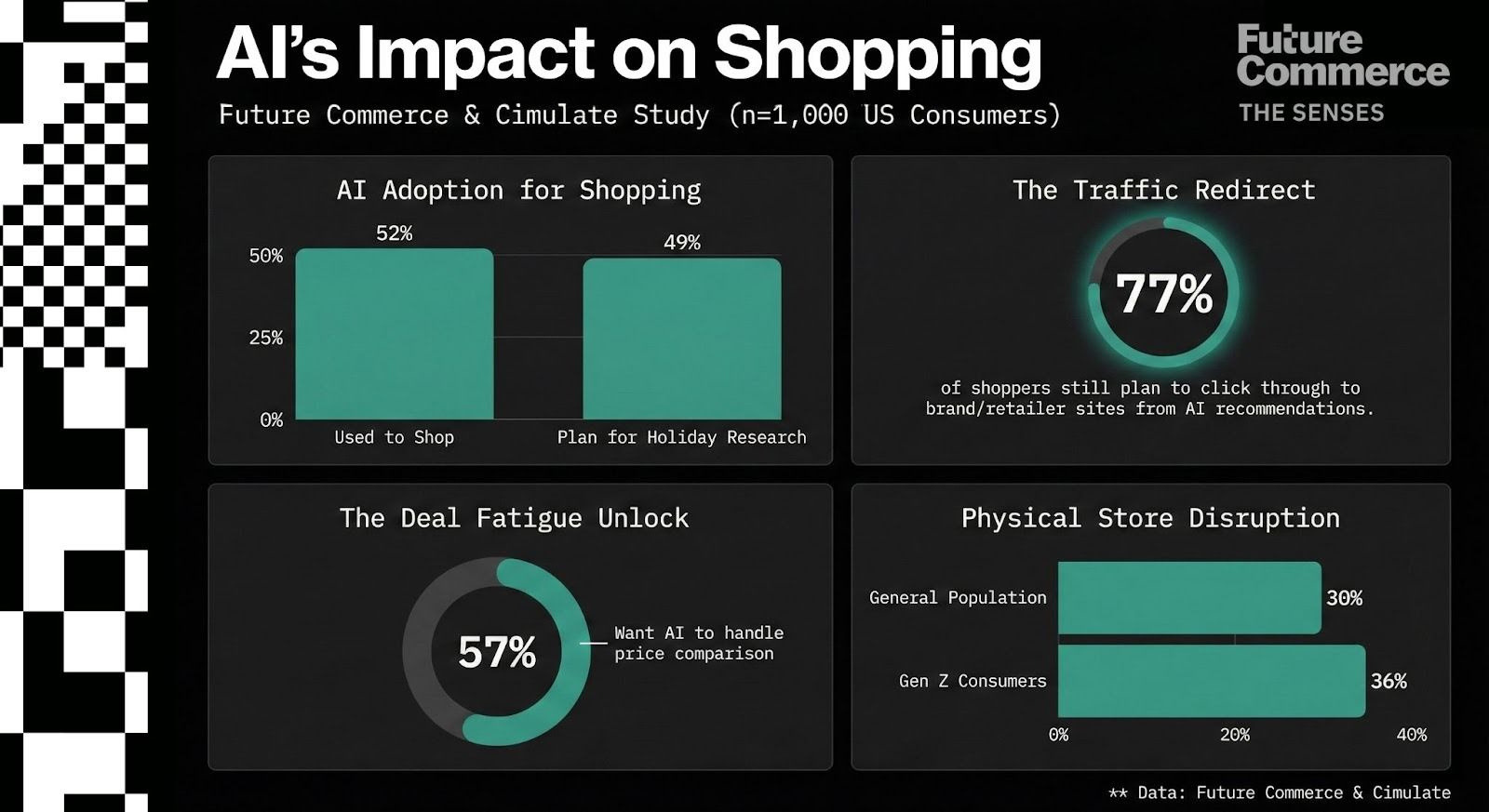
We’re running a two-part study (n=1,000 US consumers) to understand how consumers plan to shop for gifts this holiday season and how their experiences will ultimately reshape their future browsing and buying. Here are some of the key things we’ve learned so far:
🧠 AI is now a fundamental starting point.
Nearly 70% of consumers already use generative AI platforms regularly, 52% have used it to shop, and 49% plan to start AI-assisted gift research this holiday season. AI has evolved from a novelty to a habitual tool.
💸 Deal fatigue is the real unlock for adoption.
A majority (57%) of consumers want AI to handle price comparison, with Millennials feeling the greatest mental load in this area. While buying inside AI platforms isn’t a major draw right now, consumers’ willingness to do so jumps when the deal is right.
🛍️ AI redirects traffic, it doesn’t steal it.
When AI makes a recommendation, 77% of shoppers still plan to click through to brand or retailer sites. The caveat is they’re arriving at these branded environments with higher intent and less patience for friction. Plan accordingly.
🏬 The biggest disruption isn’t digital…it’s physical.
30% of consumers expect to visit stores less after shopping via AI, but this number increases significantly (36%) among Gen Z consumers.
We’ll unpack what that means for brands, pricing, loyalty, and the future funnel when the full data drops on Friday.
But for now, we’re exploring some of the more philosophical implications of these consumer behaviors. What will it mean for how merchants design their branded eCommerce environments? Become a Future Commerce Plus member to get the Member Brief 👉

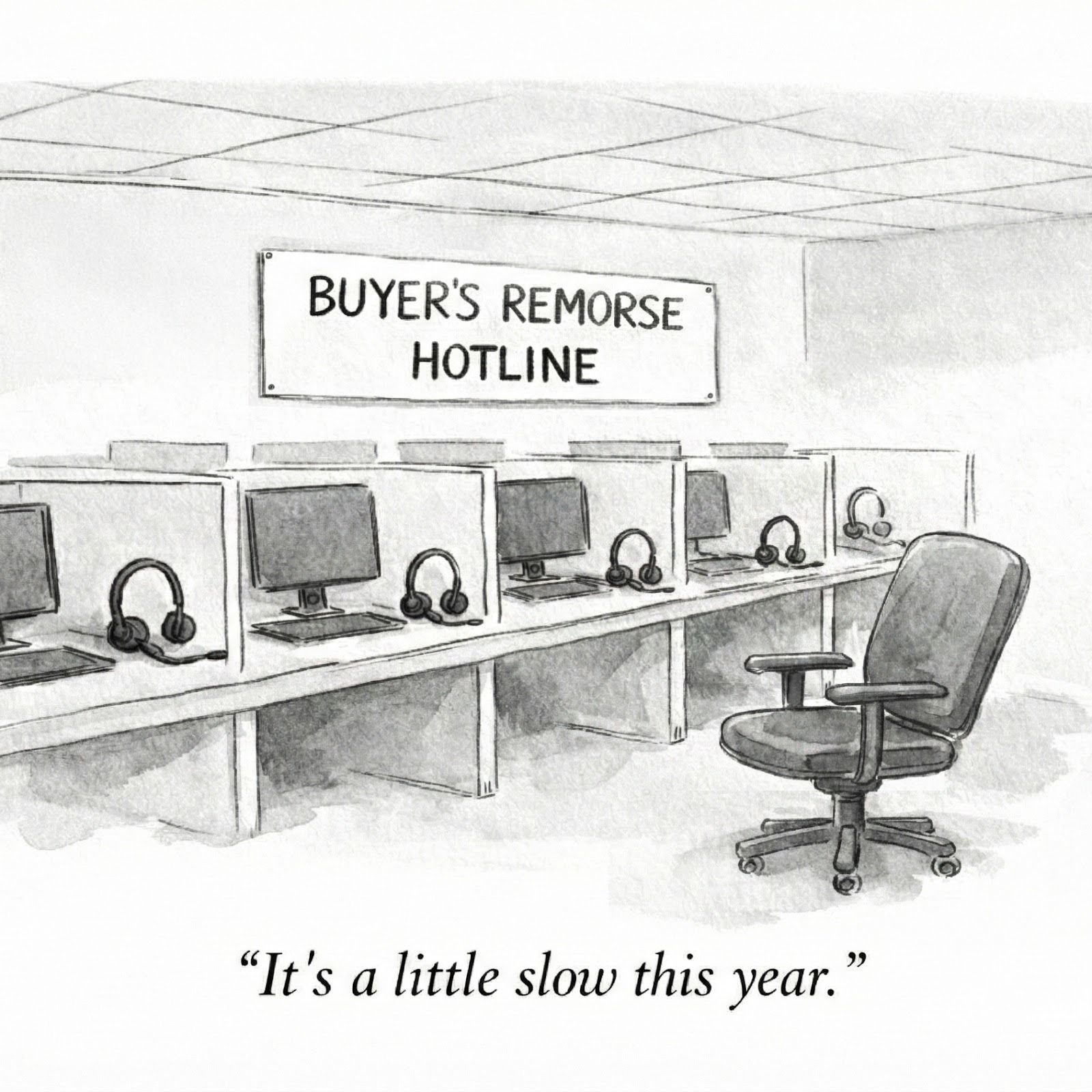
Returns Season Cometh? Historically, the rush of the holiday season has brought a tidal wave of impulse buys and, in turn, buyer’s remorse. But Adobe Analytics data show that returns for Nov. 1 to Dec. 12 are 2.5% lower than the same period last year.
A few factors could be at play here: people have shopped earlier and more consistently this year, so returns are more spread out. Another plausible explanation is that people have been more thoughtful and considerate than in years past. As we found in our forthcoming consumer study on AI adoption, consumers, especially Gen Z, are using AI and other digital tools to thoroughly research purchases before adding to their digital carts.
Adobe anticipates returns will ramp up the last week of December, with Dec. 26-31 having the highest concentration of activity.
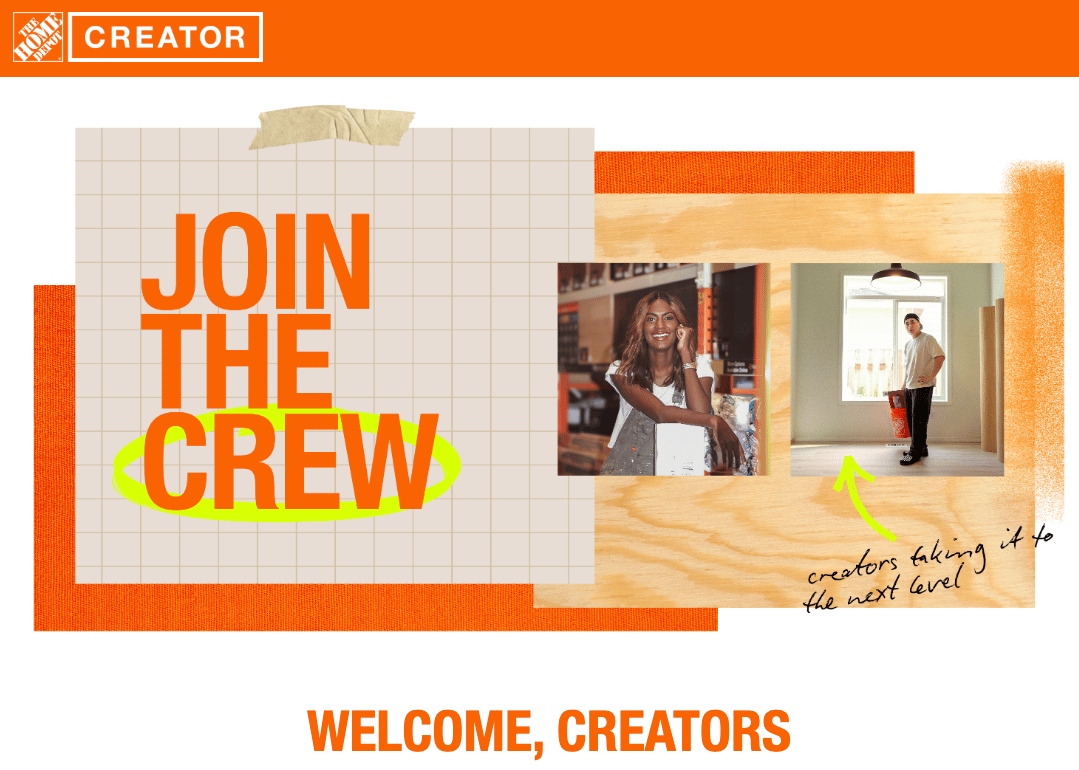
The Creator Platform Trend Won’t Die. The Home Depot is joining Sephora, Lowe’s, GAP, and other companies, including Condé Nast, in launching their own creator platforms. The Home Depot Creator Portal is a centralized hub where their creator partners can find inspiration for their content campaigns and explore the latest campaign and affiliate marketing opportunities. The home improvement retailer is using the World Cup as its first major campaign pillar, and is promoting a roster of partners, including Dude Perfect, Trinity Rodman, and Tony Henry.
The global DIY market, which primarily focuses on home improvement, is on track to reach up to $1.5T in value by 2031. Both Home Depot and Lowe’s are trying to get a piece of that pie, knowing that social media creators and personalities are becoming primary sources of inspiration and purchase influence, something that brands carried by those retailers have long known.

From TV Screens to Acquisitions. Gordon Brothers has made a majority investment in the Rachel Zoe brand, hot on the heels of the celebrity stylist’s return to reality TV. Zoe was a known figure in Hollywood, giving the likes of Nicole Richie her signature boho-chic look. But it was her foray into TV that truly made her a household name. After completing her stint on The Rachel Zoe Project, she went on to write several books, launch her website, The Zoe Report, and start her fashion brand.
Gordon Brothers, which has a diverse investment portfolio spanning from Laura Ashley to Moda Operandi, will help build out the licensing business and expand the Rachel Zoe brand into new product categories and experiences. Zoe recently joined Bravo’s The Real Housewives of Beverly Hills as a full-time cast member, following in the path of designer Rebecca Minkoff, who recently had a short stint on The Real Housewives of New York. Looks like they know Commerce is Culture, too.

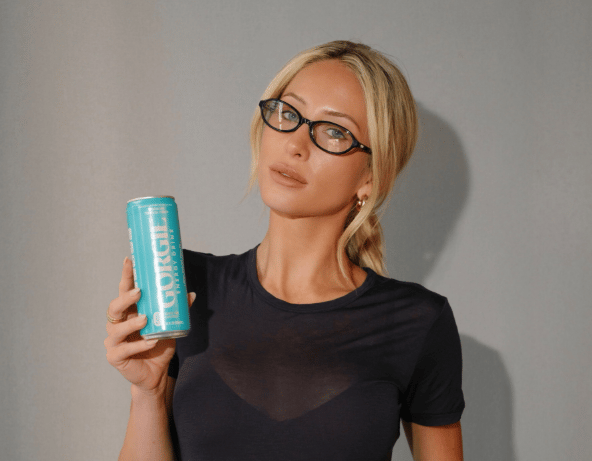
Big Drink Energy. Creator-turned-media mogul Alix Earle has become a strategic investor in Gorgie, a clean-energy drink brand. Gorgie is one of the fastest-growing brands in the sector, which is projected to reach $125B by 2030.
Although the brand is already seeing success with a growing retail footprint, Earle will help bolster brand strategy and product development to reaffirm Gorgie’s positioning in the broader wellness market. Of course, influencers are no strangers to energy drinks. Logan Paul and KSI had one of the biggest cultural success stories (and failures) with Prime, while fitness influencer Katy Hearn helped build the Alani Nu brand, which has garnered a loyal following for its energy drinks.
💪 Starting a wellness brand is the new business flex. We analyzed this evolving market, which supports everything from mental health to physical fitness and emotional well-being. You can get the latest insights on consumer spending, brand development, and more in our Member Brief.

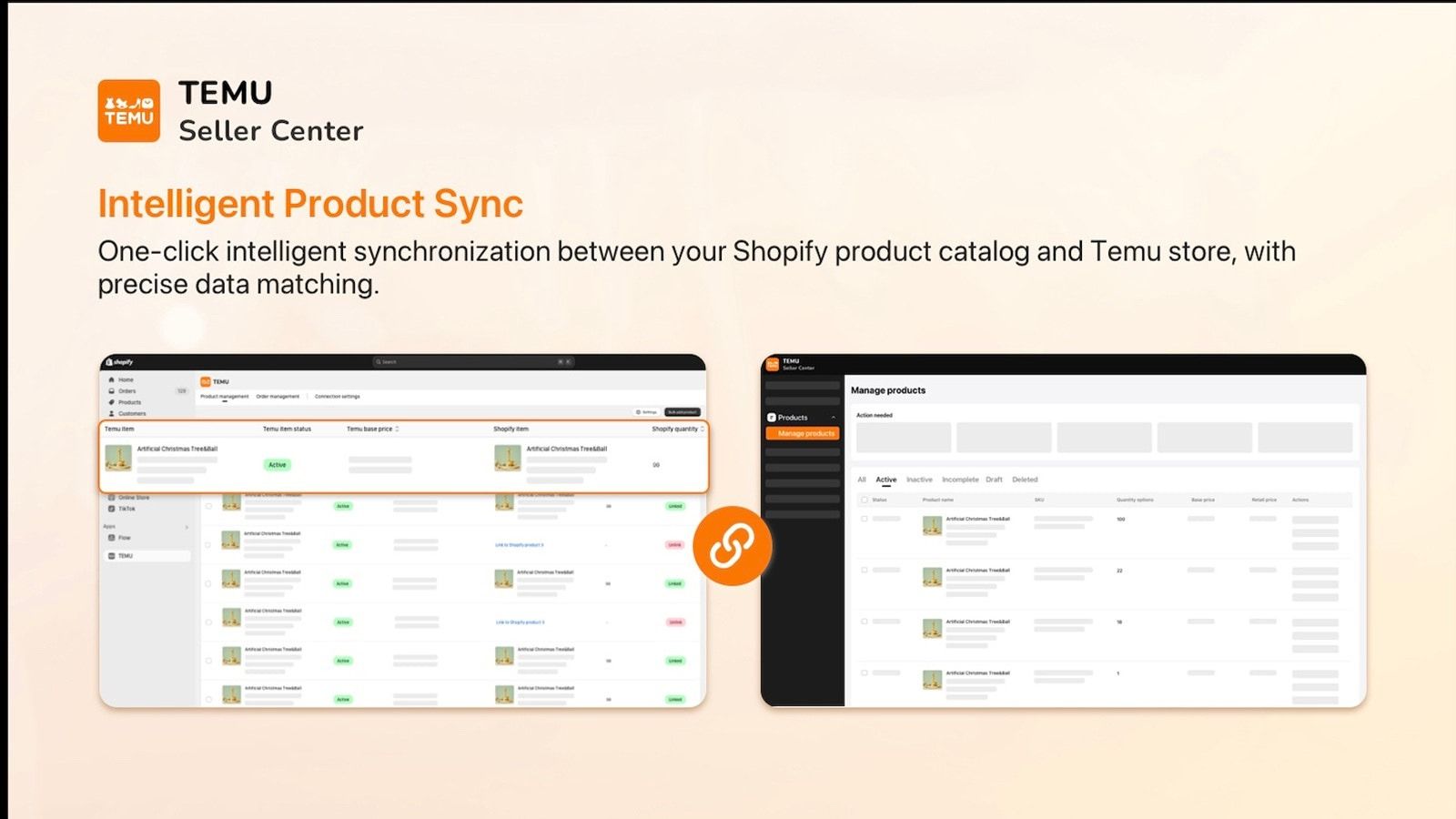
Casting the Seller Net. Temu has launched a new app for Shopify merchants that allows them to easily list and manage products for sale on the marketplace. Merchants can download the app from the Shopify App Store to access Temu’s Local Seller Program in more than 30 markets. With features such as one-click product sync, real-time inventory updates, and automated order and shopping coordination, the app is a clear chess move that makes it easier for brands to enter and succeed on Temu. The marketplace first introduced its Local Seller Program in 2024 and is now aiming to “lower barriers and create growth opportunities for businesses worldwide,” according to a spokesperson.
🎧 Keep your ears to the ground. We’re launching a new season of Step by Step in a few weeks, sponsored by Temu. We sat down with Zak Stambor of Emarketer and three Temu sellers to unpack how the brave new world of marketplaces is unlocking real opportunities for entrepreneurs. Subscribe to the main feed on your preferred podcast player to get the season when it drops on December 29.
Avatars Are the New Logomaniacs. Roblox analyzed more than 274M daily avatar updates and more than 50M daily searches, confirming what we already knew: players use their Roblox avatars to express their personal tastes and styles, especially when they can’t fully do so in real life. In fact, 87% of users said experimenting with their avatar’s style made them feel more comfortable expressing themselves in the real world. Gaming is a platform to bridge that identity gap. But the biggest callout is that 70% of Gen Z consumers on the platform wear branded virtual apparel, and these digital ‘fits guide real-world purchases. Looks like logo chasing is even happening in the virtual world.
.jpg)

.svg)
