


Sin City STRATAsphere: Our Shoptalk Debrief

Welcome to Friday, futurists.
And whew, what a week. We’re no strangers to Shoptalk. In fact, Brian is in the elite group of industry folks who have attended every Shoptalk Spring since its inception a decade ago. Despite these past experiences, nothing can fully prepare us for the energy, excitement, and mayhem that always follow.
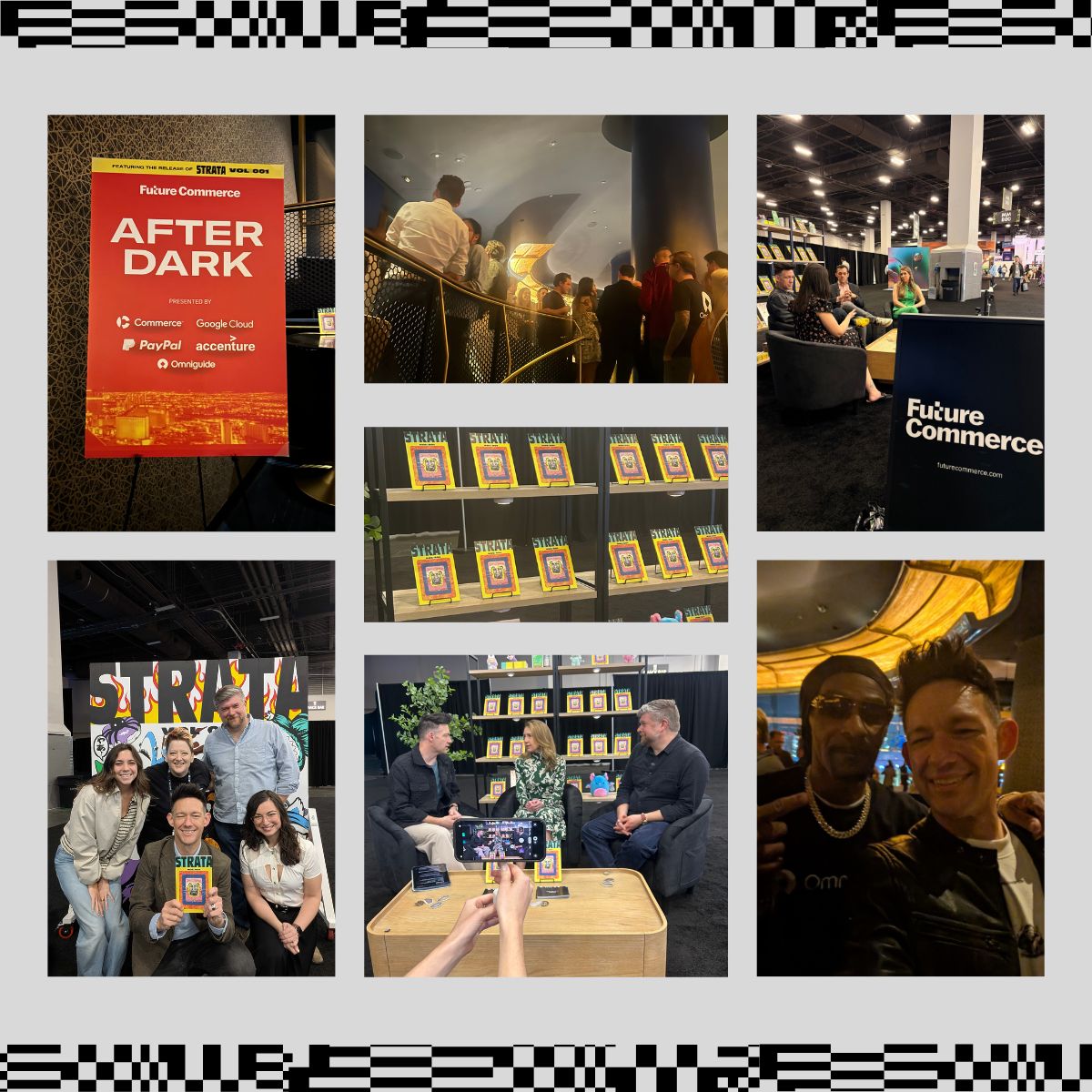
The biggest highlight of the week was sharing our newest zine, STRATA Vol. 001, with our partners, friends, clients, and… Snoop? There is truly nothing like seeing others hold our books in their hand, flipping through every page, and appreciating the creativity and care we put into every project. This is the first time we’ve done a print piece that pushes such creative boundaries, but it certainly won’t be the last. You can pre-order STRATA now.
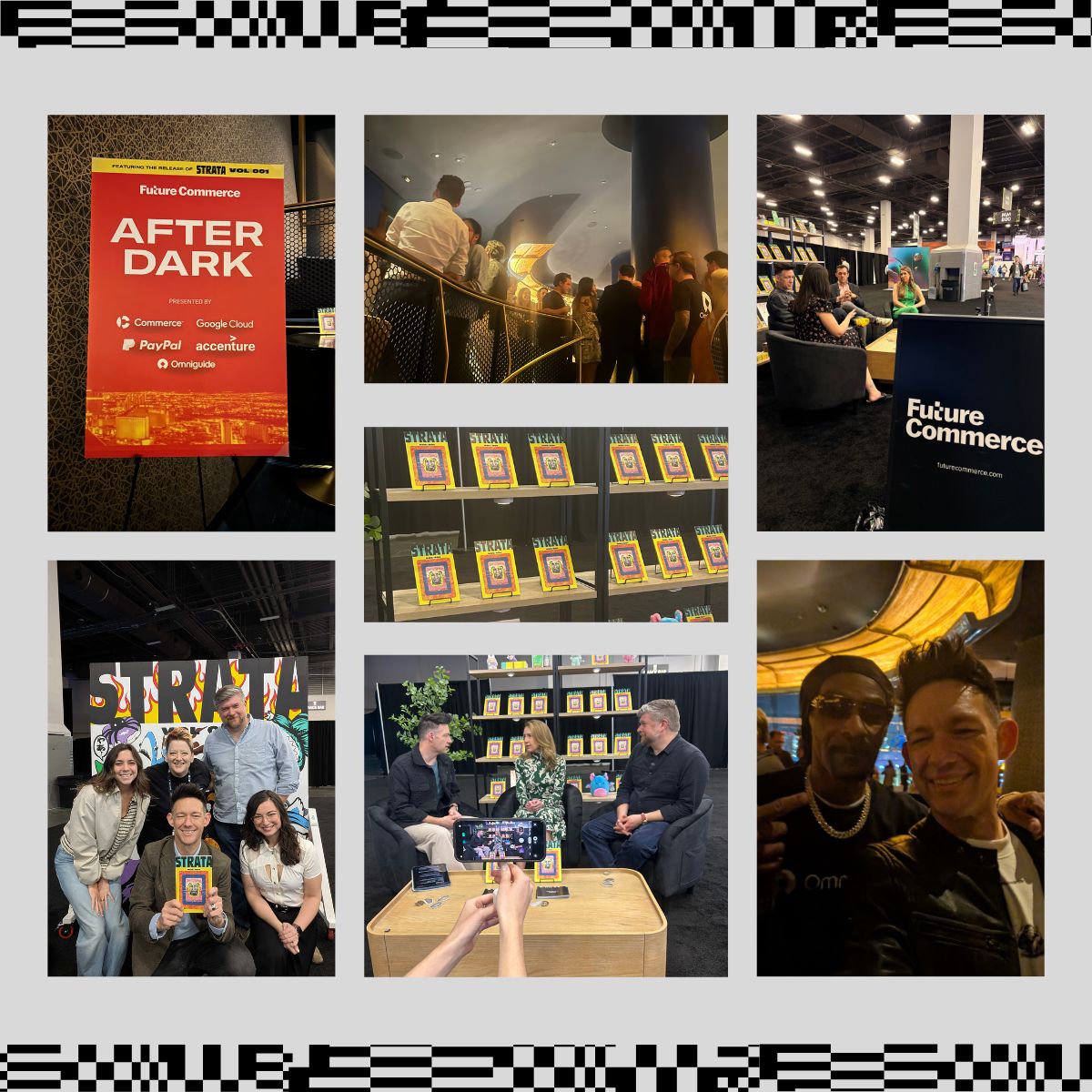
Our library pop-up was in a prime spot next to the Marketing & Media Stage, which meant passersby stopped, stared, and snapped photos as we recorded interviews with execs from Wing and David’s Bridal and as our muralist, Jeanette Hall, painted in real time. We don’t go to events like Shoptalk to scan badges! We want to create spectacle and intrigue. (Okay, and to connect, too.)
That’s why we invited 150 of our closest friends to Skyfall Lounge on the 64th floor to celebrate more after the sessions ended and the expo closed. We literally shut the place down as we basked in Sin City’s stratosphere, caught up with friends, and welcomed a special guest who would be the subject of chatter the next day…
But we know it’s not all about us, especially at a time when so many brand and retail leaders are searching for answers “in the age of AI.” Large-scale industry conferences tend to lean heavily into PR-approved talking points and presentations that puff up achievements, so it was refreshing to see so many on-stage (and off-stage) conversations that encouraged respectful disagreement. In some cases, execs willingly accepted the fact that they didn’t fully know the answers. These moments of tension inspire introspection, exploration, and, eventually, clarity. This is where innovation is supposed to happen.
Below, we’ve recapped some key sessions that illustrate this tension, but we have more coverage coming on the pod and in our newsletters all next week.
— Phillip

The New Aesthetic of Sexy.
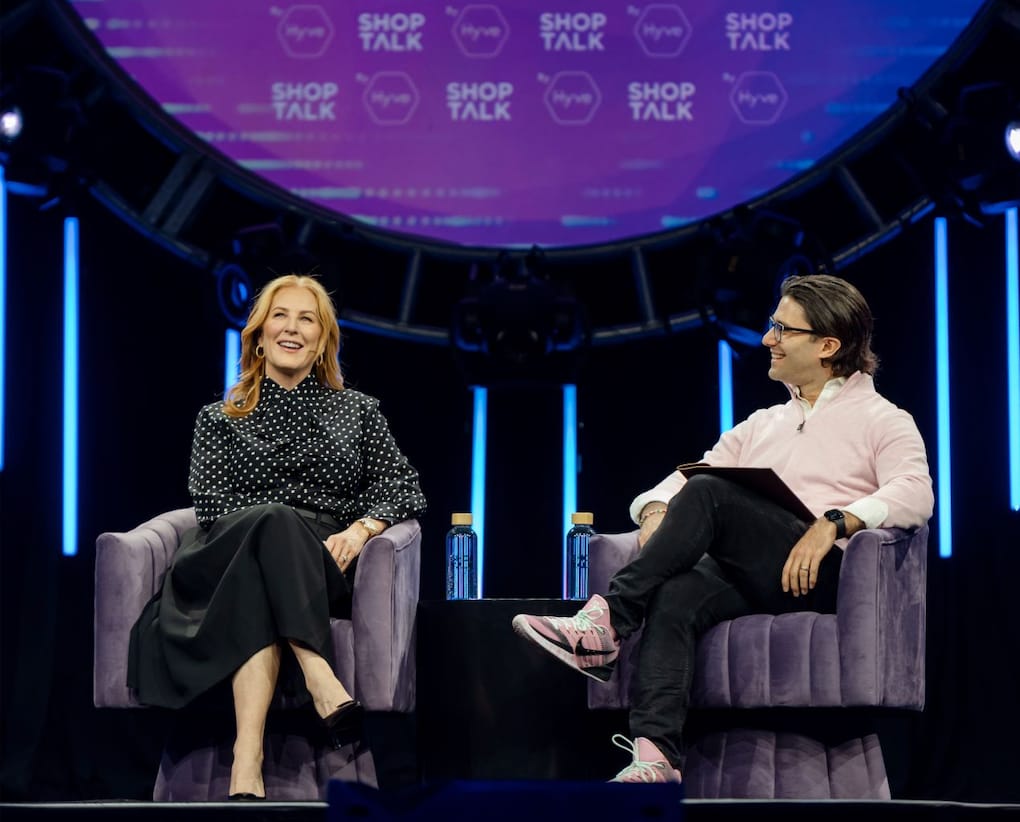
Before Hillary Super even accepted the job at Victoria’s Secret, she thought it was “the number-one transformation opportunity in the industry.” And she knew, in her gut, what the brand needed to do and where it needed to go to course-correct after one too many flawed decisions.
“It's one of the few brands in the world that is focused solely on making women feel great about themselves and feeling confident and comfortable in their own skin,” Super said. Early in her 18-month tenure, she hired a new CFO and expanded the VS&Co leadership team by adding presidents who supported the Victoria’s Secret, Pink, and Beauty businesses. She also implemented a new mandate: to hire “culture carriers” in key roles that would “really help set the bar, set a new tone, and push us forward.”
Now operating as a nearly $7B business, Victoria’s Secret has reduced promotional activities, increased sales, and seen a resurgence in store traffic.
Before Super joined the team, Victoria’s Secret was on a bumpy path. A damning documentary, Victoria's Secret: Angels and Demons, put its dirty laundry in the spotlight, and what followed was an attempt at a more inclusive, self-love-based future. But the problem, according to Super, is that the brand strayed from what it inherently stood for. In reality, the brand didn’t necessarily need to change these values, but evolve them to reflect new cultural contexts.
"Victoria's Secret stands for sexy, glamorous, and luxurious,” Super said. “And I don't think that changes... I think for a long time we were sexy in a way that was very prescriptive—very much 'if you're not this, then you're not sexy.' We believe in sexiness on your terms. We believe in it as a feeling. We believe that we are here to inspire your most confident and sexy self, whatever that looks like."
She added that a person’s definition and application of “sexiness” also has global and local implications. “Even in the United States, there are microcultures, and there's no one way of being. For a long time, we were a singular way of being. Opening that aperture has been really important for us, and something that has resonated very deeply."
These layers, coupled with Super's belief that sexiness is “one of the most broad-based human experiences,” similar to eating, offer a vast creative horizon. Still, the brand’s “Better Than Braless” campaign effectively shows her vision in action. The campaign supported the new Victoria’s Secret FlexFactor bra, which features a flexible titanium wire that is more comfortable than typical underwire. Rather than doubling down on comfort, as many brands did in the aftermath of COVID, Victoria’s Secret created a tagline and a supporting campaign featuring supermodels running through New York City while wearing the bras.
“Every woman knows ‘better than braless,’” Super said. “You know that feeling.” The FlexFactor bra has quickly become one of the brand’s top ten bras, a feat for such a new product.
Under Super’s leadership, Victoria’s Secret has seen positive momentum, but she isn’t finished. She’s still listening and connecting the data dots between associates, customers, stores, and social media, a method that has historically helped her unlock her biggest and boldest ideas. “I think I can see things in people, and I can see things around the corner, because I am generally quiet by default, and I'm always thinking and connecting dots.”
💋 We explore how women are reclaiming sexiness, selfhood, and billion-dollar brand value on their own terms in STRATA Vol. 001, our new annual mapping the ten commercial aesthetics shaping commerce right now.

The Macy’s Magic is Back.
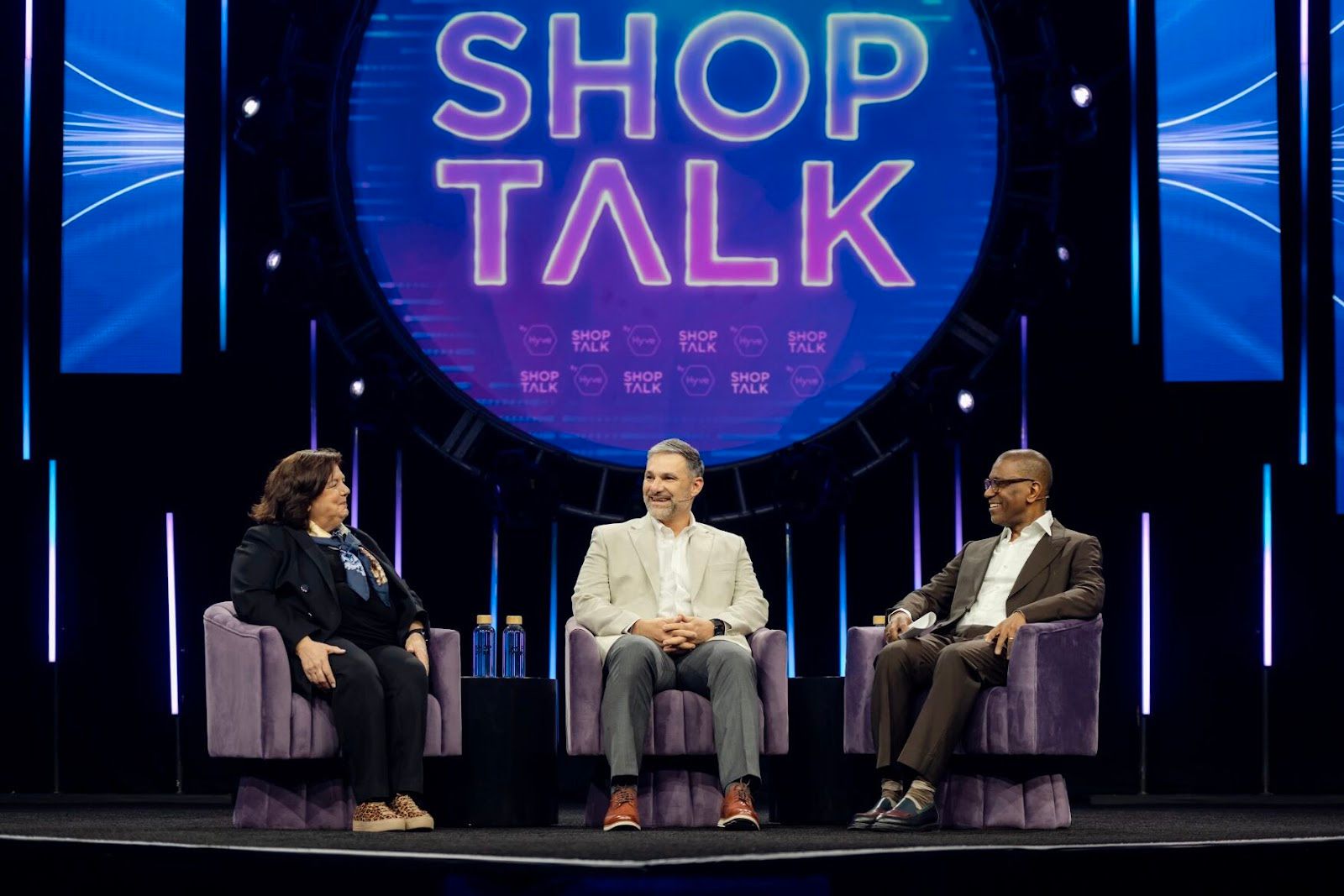
During their keynote session, executives from Macy’s put their AI-powered service experience, Ask Macy’s, front and center. It was the basis for the session’s opening sizzle reel and helped validate the retailer's investment in emerging tech amid its turnaround. Given that shoppers who use the Gemini-powered app spend 4.75 times more, the emphasis is warranted. But as a duo, Max Magni, Chief Customer & Digital Officer, and Barbie Cameron, Chief Stores Officer for Macy’s Inc., emphasized that the retailer’s tech investments were connected to a broader vision rooted in human connection.
"AI will enhance the customer experience through better product education, through a better digital experience, through helping customers sort through and buy things, but that human connection is always going to be important,” Cameron said.
Magni, despite leading the company’s digital business, agreed that “stores are the most important.” Ask Macy’s can elevate that in-store experience, with associates using the tool as a service and discovery resource. But physical retail’s role is much bigger: In cities like Manhattan, Macy’s stores have deep historical and cultural roots. Macy’s is tapping into this emotional relevance to create new physical experiences and then using digital as a complement.
For example, to celebrate the Houston rodeo in March, area stores had activations and merchandise displays that centered on denim and more western-tinged aesthetics. The branded eCommerce site featured these in-store offerings, and digital marketing included targeted messaging for this cohort to drum up excitement. During Valentine’s Day, stores were adorned with ornate, large-scale hearts. Shoppers saw consistent visual elements online to create a more enjoyable vibe, not just push for conversions.
Creating a consistent brand experience across all channels has been a mandate for retailers for nearly a decade, but putting physical interaction and community connection at the center is a major creative milestone for Macy’s, which has focused heavily on correcting flaws in in-store execution over the past year. These curated, cultural, and artistic touches will help older customers see the “magic of Macy’s” once again, and inspire new, younger customers to consider Macy’s the next time they visit the mall.
“We're seeing that younger people are going to malls, but the intent is different,” Magni said. “They are now looking to make a transaction. They're looking for retailtainment. They're looking for an experience. They're hanging out with their friends. They're posting online. It blends and it blurs, so it's very difficult to see where one begins and one ends. That's why it's so important to embrace it and make it one.”
The work so far has paid off in both conversions and loyalty. As Magni noted, “We are seeing the customers that love us are loving us more…They live the experience. They download the app. They go on Ask Macy’s. They spend four to five times more time on Macys.com, and that's really good to see.”
🛍️ When does a department store become a cultural institution again? We mapped the rituals of trust and transcendence that keep shoppers coming back in STRATA Vol. 001.

Little Treats + Taste = Culture-Led QSR
The co-founders of Dutch Bros believe they’re in so much more than the beverage business. They like to say they’re actually in the relationship business and the product of love. This belief system drives every decision the brand makes. It inspires every interaction it has with customers across its ecosystem, from its robust mobile app to its social accounts and merch drops. It has made Dutch Bros an identity-forward QSR brand at a time when so many players are focused on price and speed. And it’s why it recently became the third-largest coffee chain, largely driven by Gen Z and Gen Alpha.
These customer relationships are so strong because of the inherent customization that exists in the Dutch Bros experience. Every order is tweaked and tailored by each customer, based on what they need or crave at that moment. “I think one of the things that resonates so much about the brand is that service piece and being seen,” said CEO Christine Barone. “I think that would be the reason why Gen Z and Gen Alpha love the Dutch Bros brand, but it's a brand for everyone.”
Because the brand is all about customization, “there is a lot of menu customization that you can do within the [mobile] app to build whatever you want,” noted Tana Davila, the brand’s chief marketer. Up to 73% of Dutch Bros transactions are processed through the app or its loyalty program, making customization even more robust and data-driven.
"We've been built to customize since the very beginning,” explained Barone. “Helping you find your drink and customization is so incredibly important right now in the beverage market... we've really built our entire operation and the whole layout of our shop to deliver that level of customization."
The Dutch Bros product experience expresses how taste connects to identity. But Dutch Bros doesn't stop at the cup. Its approach to merch drops shows how the same commitment to personalization can shape cultural moments. For example, the brand tapped into the Passenger Princess social media trend to create an annual drop featuring exclusive bumper stickers and straw toppers. It essentially turned a social media trend into a pillar marketing moment.
“I think a good innovation process is 50% focusing on who your customers are and what they want, and then the other 50% is things that they didn't know they needed,” Davila said. “We’re also making sure that we're looking at trends in adjacent categories. I get a lot of inspiration from mixology and dessert categories, and then I think about how that applies to our business.”
🧋When a straw topper becomes a cultural artifact, you've crossed from menu innovation into meme-to-market territory. We cover the brands turning internet culture into product pipelines in STRATA Vol. 001.


A Stitch of Inspiration.
Stitch Fix has seen four consecutive quarters of year‑over‑year growth, including a 9.4% revenue jump in its latest quarter. A main driver is 15 years of rich first-party data, which CEO Matt Baer believes is a “competitive moat” when combined with the human expertise and personal taste of Stitch Fix stylists.
Vision is Stitch Fix’s latest innovation in this area, bringing curated styling and visualization capabilities together into one unified experience. Stitch Fix users can take a selfie and a full-body image, and the brand then combines these images with other data points, including preferred brands, fit data, and feedback on different apparel styles, cuts, and sizes. Users then receive curated outfit ideas featuring only items highly likely to fit. The images are fully shoppable and shareable, driving both sharing and new client acquisition. Stylists can access a client's full Vision image library, including likes and dislikes, enriching the recommendation engine and human styling process.
In an exclusive press breakfast during Shoptalk, Baer doubled down on the opportunity that Vision brings to the Stitch Fix business: "You've got upwards of 90% of the US population that does not enjoy shopping for apparel and accessories in person, and it's not much better when you look online,” he said. “We believe that TAM is ours to earn, ours to take."
Stitch Fix has also seen value from its AI Style Assistant, which allows customers to use plain language to define their wants and needs. The solution then translates these inputs into industry terminology, offers visual confirmation, and hands the full output to a human stylist.
Engagement on both sides (the stylist and the client) generates even more data that can flow throughout the business. These insights create better client experiences, improving service levels as well as brand and merchandise assortment. Stitch Fix uses these insights to broaden its assortment—its newest brands include Birkenstock, Madewell, and Faherty—and also refine its private-label collections, which represent approximately half of the business.
With a deep understanding of trends and a new AI design tool that now drives private-label product development, the product team has adopted a test-and-learn mindset, enabling Stitch Fix to evolve its assortment in response to emerging consumer preferences. Baer made a point of showing off his bomber jacket during the fireside chat, which was made using this new process.
“I do fundamentally believe that the proprietary data we have helps us do it better than most because we can see trends in advance of when others in the market might be experiencing. We see that both in terms of style and fit.” Baer shared a staggering statistic to make his point: Stitch Fix has seen the number of clients writing to stylists about their weight loss journeys triple over the last two years, with a 75% quarter-over-quarter increase. Baer cited this as an example of how their data surfaces behavioral and cultural shifts. GLP-1 drug adoption is impacting sizing and silhouette trends, which has a trickle-down effect on the styles Stitch Fix buys and the number of units it places for each size.
Baer framed every piece of technical innovation around empowering stylists and deepening client relationships, not replacing them. Because ultimately, fashion is deeply personal. "What you wear every day, how you show up, how you express who you are, and your identity,” he said, “it's about the combination of AI and humans."
🤖 Stitch Fix is betting that the combination of AI and human taste preserves identity rather than flattens it. We explore the paradox of our relationship with these anthropomorphized tools in STRATA Vol. 001, now available for pre-order.


.svg)
