

of the United Kingdom’s capitol city.
The heart of the holiday spirit lives on Manhattan’s Fifth Avenue. Brands and retailers residing in this commerce landmark have embraced its lore, returning to the stories that have shaped more than New York City culture.
The hustle and bustle of tourists, the vibrant energy of holiday music, and the splendor of scenes of Yuletide celebrations. The storefronts are time capsules, transporting us back to a holiday season when things felt wholesome, simple, and cozy. Their windows are projectors amplifying the holiday season Americans are desperate to return to. One rooted in community, serendipitous joy, and a little bit of magic.
Comfort, nostalgia, and familiarity are synonymous with the holiday season. Indeed, it is during these times that we relive traditions and embrace the old that has shaped the new. But this year in particular, the pull of nostalgia is especially strong.
Not all that long ago, nostalgia was seen as a legitimate, diagnosable form of mental illness. In The Future of Nostalgia, author Svetlana Boym draws on the Greek root of the word, nostos, and its original meaning, a “return home.” The condition was first medically observed and diagnosed in 1688 in a platoon of homesick Swiss soldiers serving in France, whose conditions worsened when eating a bowl of home-cooked soup.
Professor Constantine Sedikides, Professor of Social and Personality Psychology at the University of Southampton, helped to debunk the notion that nostalgia is a form of emotional weakness or escapism. Quite the opposite: it is a way for individuals to stabilize themselves during periods of volatility and uncertainty. More traditional holiday designs can create feelings of familiarity and belonging.
Many argue that digital technology has made us more connected than ever, yet the loneliness epidemic confirms that this is a fallacy.
Arguably, the basic act of in-store shopping is considered nostalgic and can trigger interpersonal connection, particularly among Gen Z. These consumers have grown up immersed in the world of constant scrolling; their shopping journeys are largely dictated by what’s trending on TikTok and what deals are available on Amazon. Now, they’re gravitating toward experiences that require more in-store connection, more exploration, and, in some cases, hunting for the perfect item. According to Archrival research, the majority of Gen Z consumers think shopping in-person feels more luxurious (60%) and fun (52%), and more "like a special occasion" (64%) than scrolling on social media. They’ll wait in line to get into pop-ups, store openings, and special events in order to capture that feeling of community connection and belonging.
These feelings of connection are nourished by specific design practices. During the holiday season, certain colors, patterns, materials, iconography, and stories can reaffirm the shared ideas and rituals that fundamentally connect us. Under the umbrella of nostalgia, however, distinct aesthetics have made holiday store design, especially on Fifth Avenue, far more vibrant and exciting.
The Return of Ralph Lauren Maximalism
Ralph Lauren Christmas is trending for a reason. This form of classic maximalism embraces rich layers, textured materials such as velvet, and a color palette of burgundy, green, and navy. At a surface level, holiday vignettes may seem simple, but the more time you spend assessing the scenes, the more subtle references and powerful icons you notice.
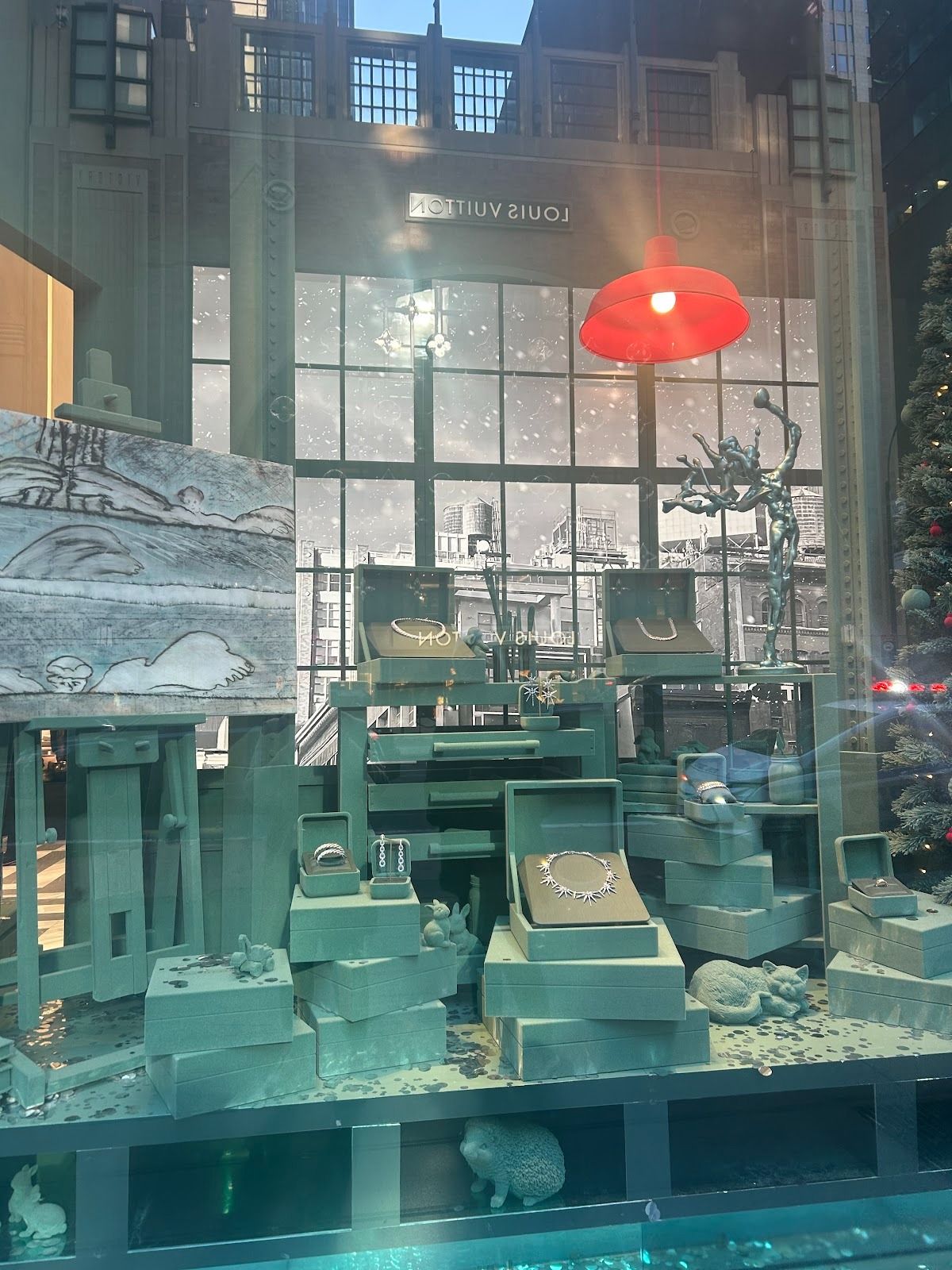
The David Yurman store is jarringly monochrome, but the classic maximalism comes into play when you see the level of curation applied to the space. Stacks of boxes draw the eye to different pieces of jewelry, but the green statues add natural whimsy.
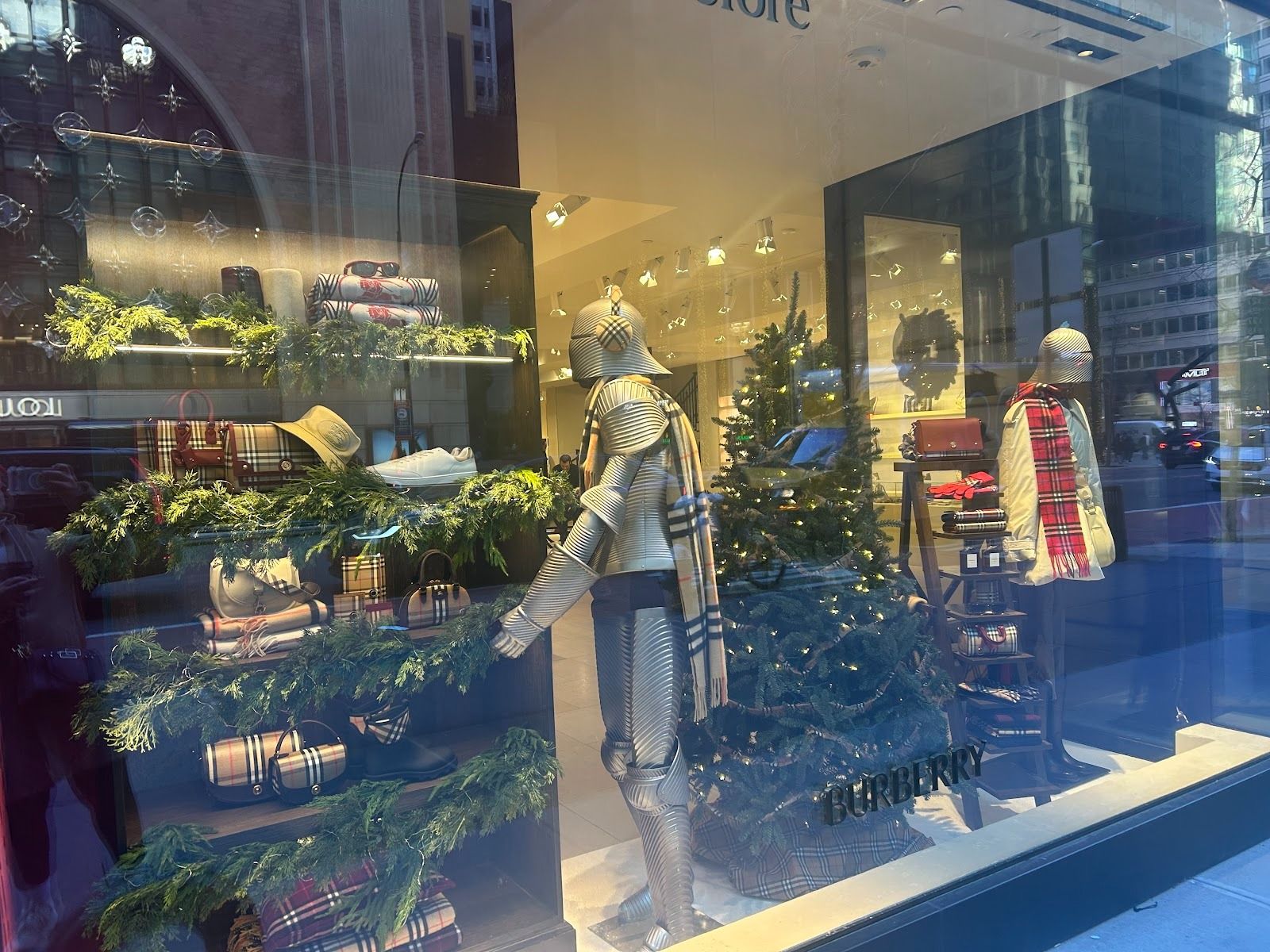
Burberry leans even further into the trend, using its story of “Twas the Knight Before” as a compelling design foundation. After years of trying to over-modernize, the brand is embracing its heritage and is bringing lush greenery, soft lighting, and curated bookshelves that tell the story of a homey, lived-in environment.
Nutcrackercore and the New Sentimentality
After years of leaning into farmhouse decor and brash minimalism, consumers are desperate for a little whimsy, a delightful form of expression that embraces creativity and a little kitsch. Neutral color palettes, sharp angles, and, let’s be honest, no personality, are being replaced by unapologetic eccentricity.
Etsy’s 2025 Holiday Trend Guide lists Play Haus, Nutcrackercore, and other eclectic, expressive decor styles as top of mind, and it’s even inspiring established retailers like Macy’s to return to their roots.
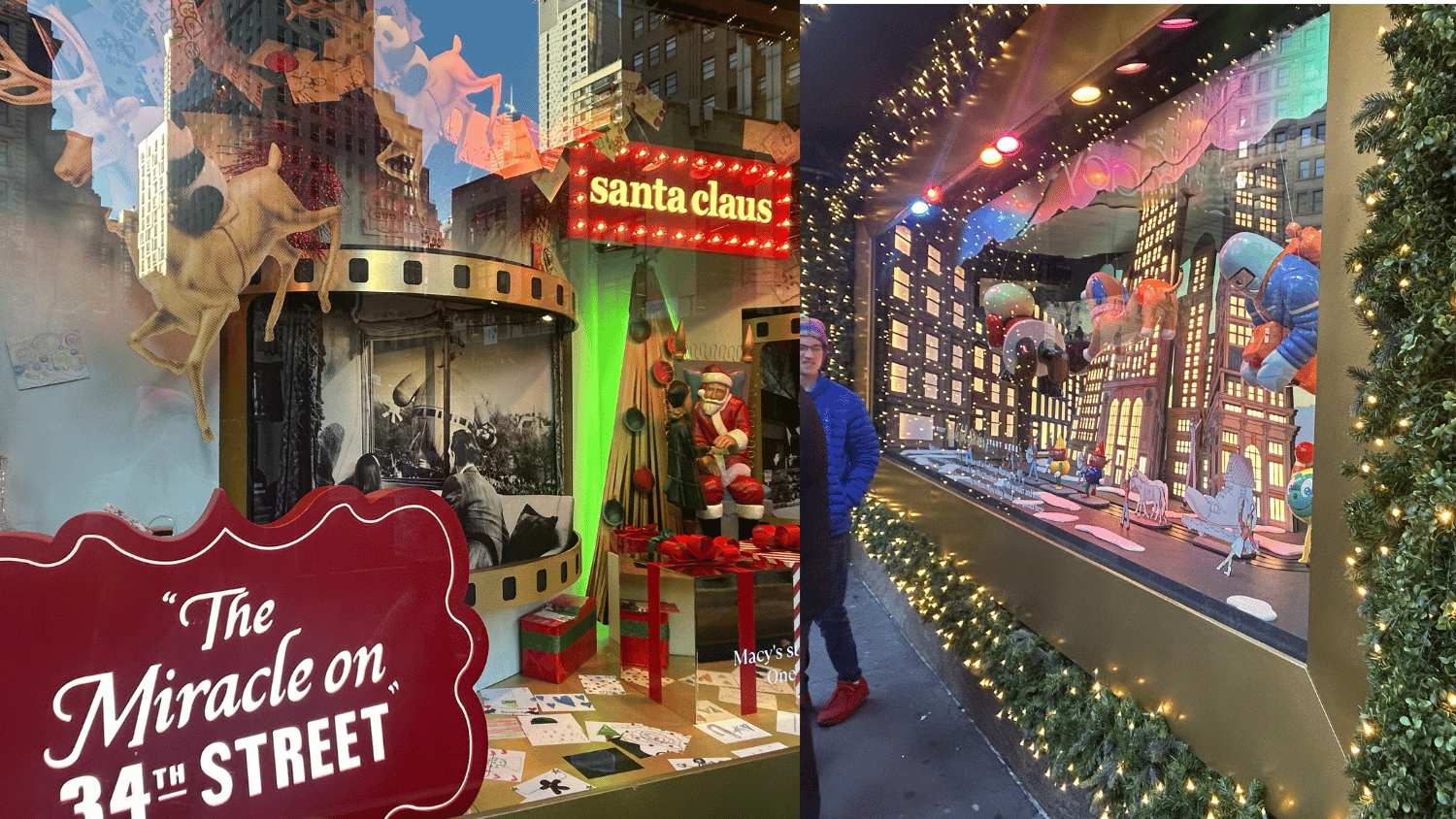
For the last few holiday seasons, Macy’s has made Tiptoe, a blue reindeer, the epicenter of its holiday windows. This year, the retailer’s Herald Square flagship is embracing the retailer’s lore. Specifically, how its windows are the home of holiday traditions that we all love and treasure. Santa is sharing stories with passersby, and Miracle on 34th Street, including the balloons of the Thanksgiving Day Parade, plays a starring role. Even the more “high-tech” windows featuring children's toys and interactive gaming moments include nostalgic touches, such as gingerbread frames with icing piping and gumdrop buttons.
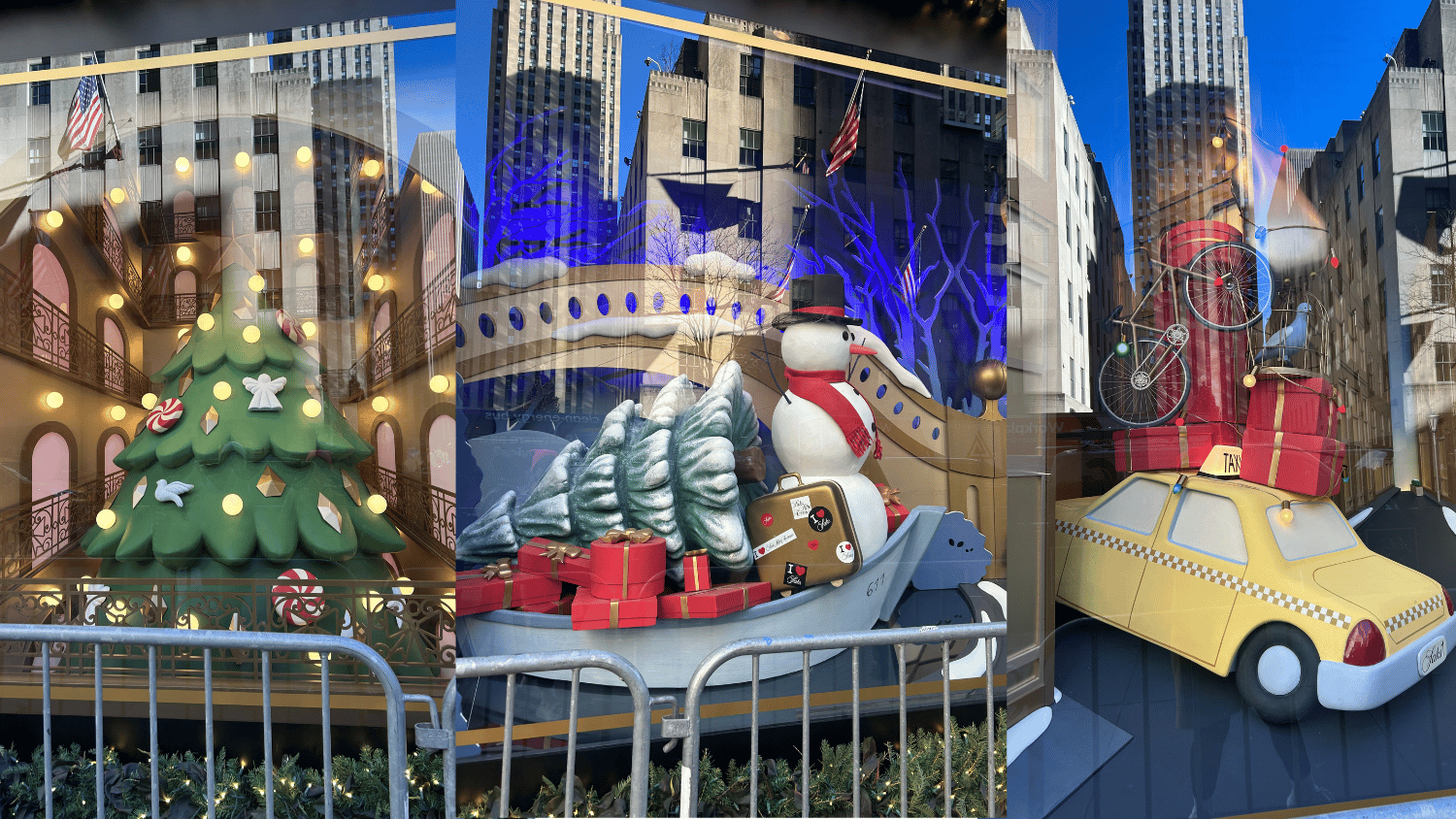
Saks Fifth Avenue also embraced its heritage, largely by bringing back its beloved holiday light show. However, a series of windows on the main drag of Fifth Avenue added a touch of whimsy to the exterior’s story, which centered on monochromatic environments that brought pops of luxury products to each scene.
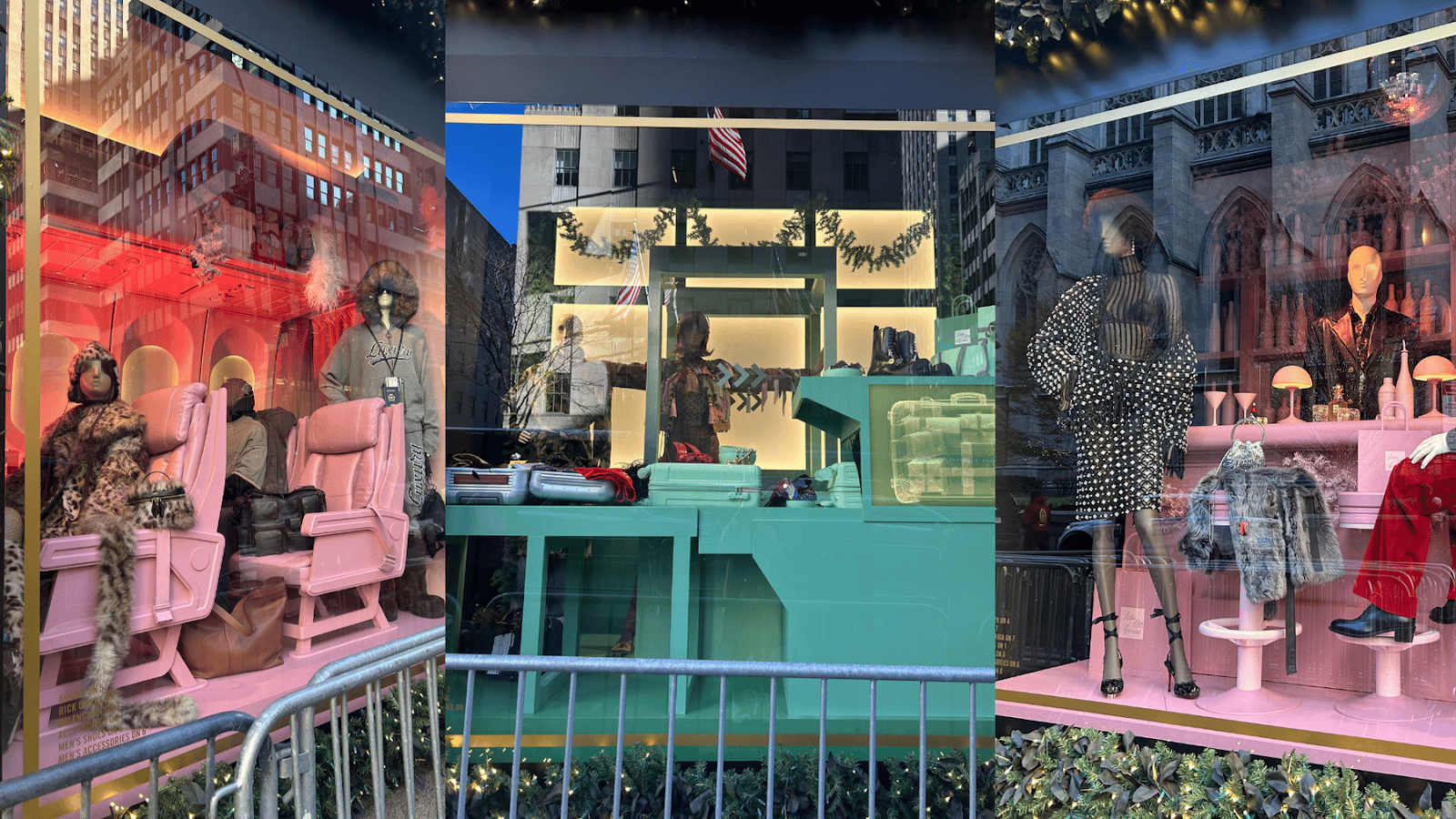
For instance, an all-bubble-gum-pink airplane scene featured modern travelers wearing high-end athleisure, glamorous accessories, and Balenciaga passport holders. A seemingly simple airline security moment features the season’s best boots and suitcases.
This is visual merchandising that contextualizes the human experience rather than fantasy.
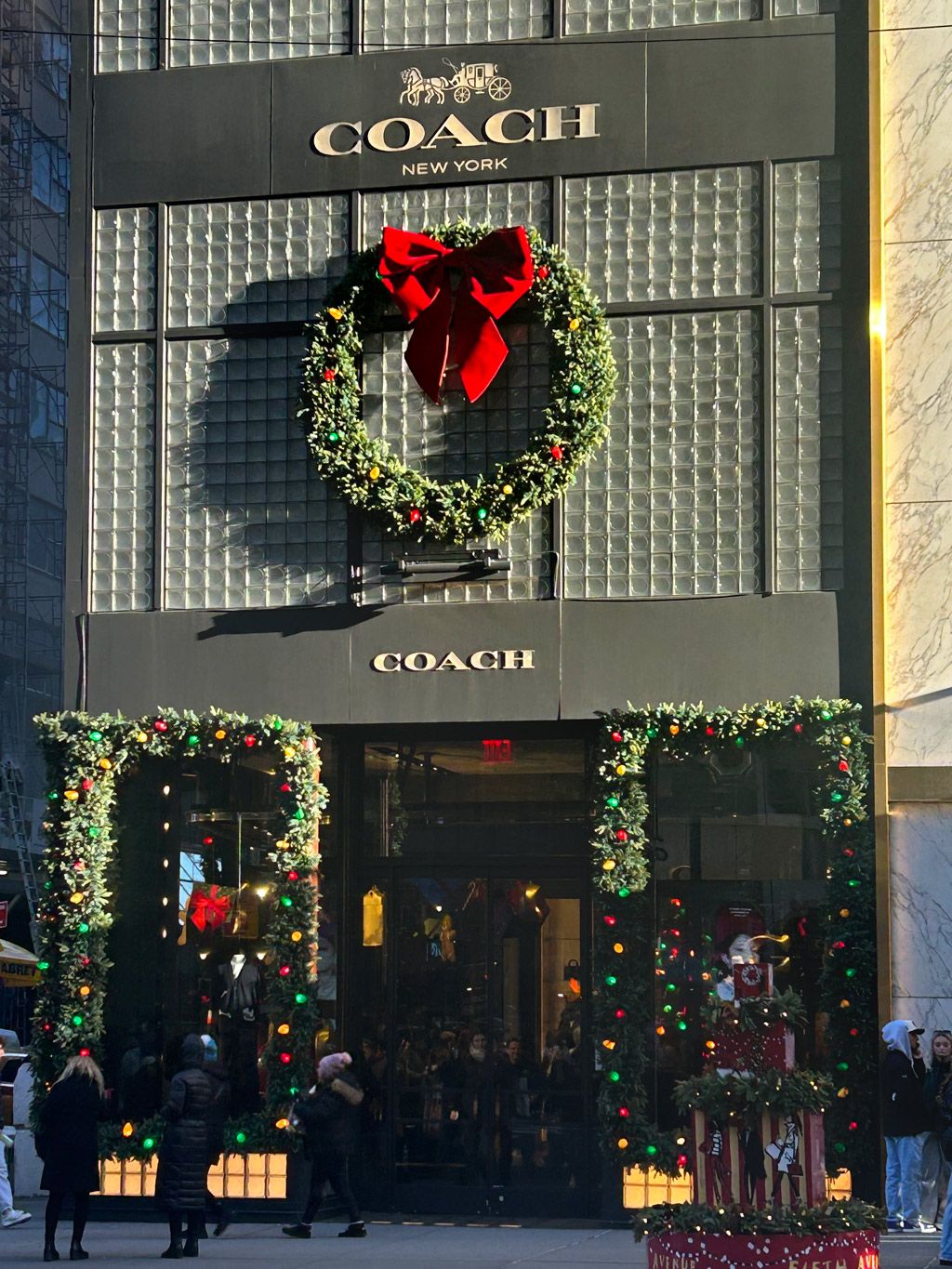
Coach also embraces whimsical vintage elements. A large-scale wreath and window garland are complemented by multicolored Christmas lights and red velvet bows. Through the windows, you can see candy canes, a Christmas tree, and lots (lots) of gingerbread men. Perfection.
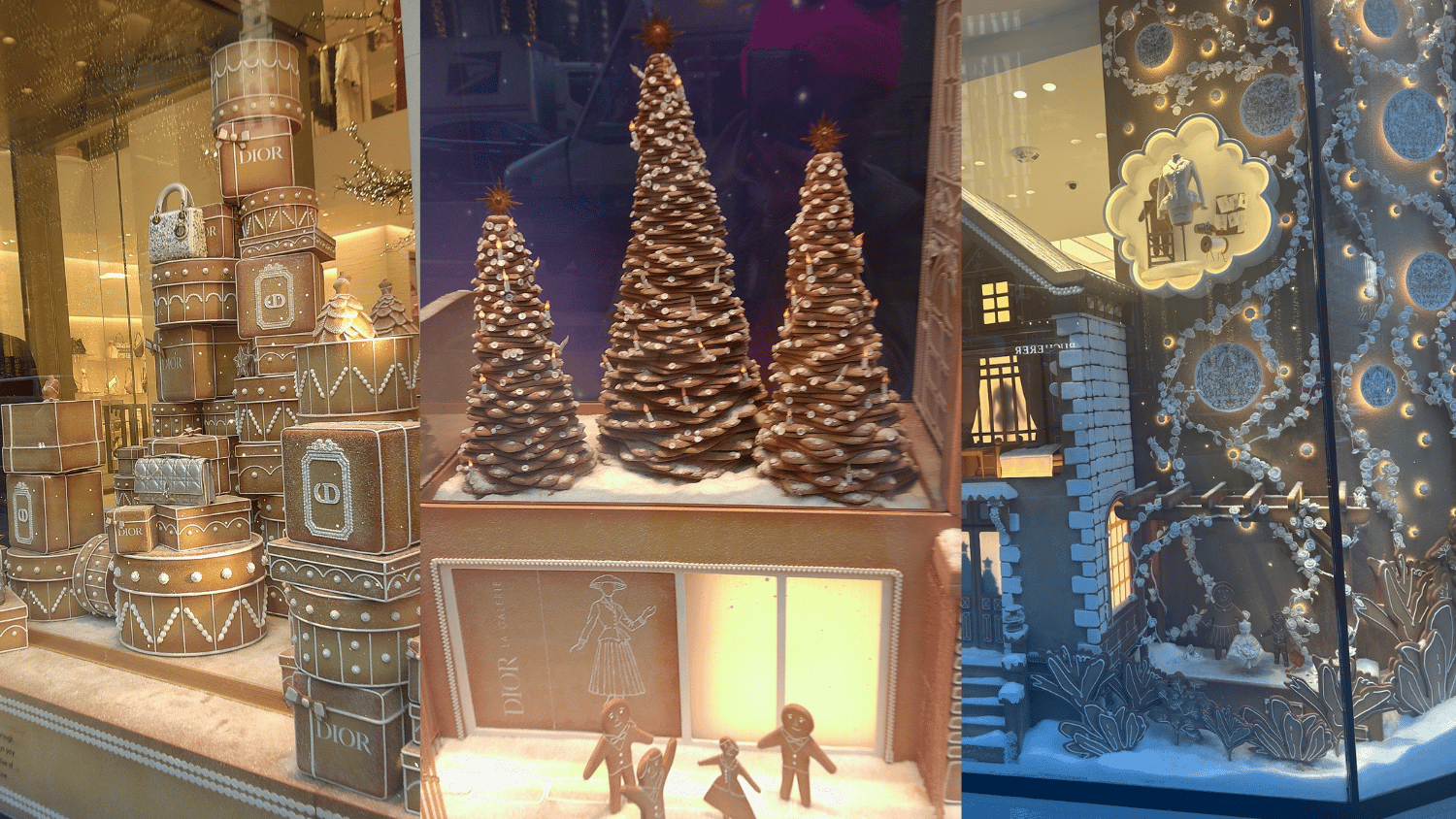
But the real showstopper of Fifth Avenue this year was the Dior flagship, which has created a scenic world of Dior made completely of gingerbread. It is truly a sight to behold, not solely due to the size of the installation but also the sheer depth of detail. Every layer and every cookie is given the utmost attention with its own unique piping, glitter, and twinkling lights.
Art Deco Reimagines the Classics
Many retailers may be embracing the past, but that doesn’t mean it’s all red and green. Kaleidoscopic colors, combined with glitter and chromatic effects, allow us to view heritage design aesthetics and themes through a modern, playful lens.
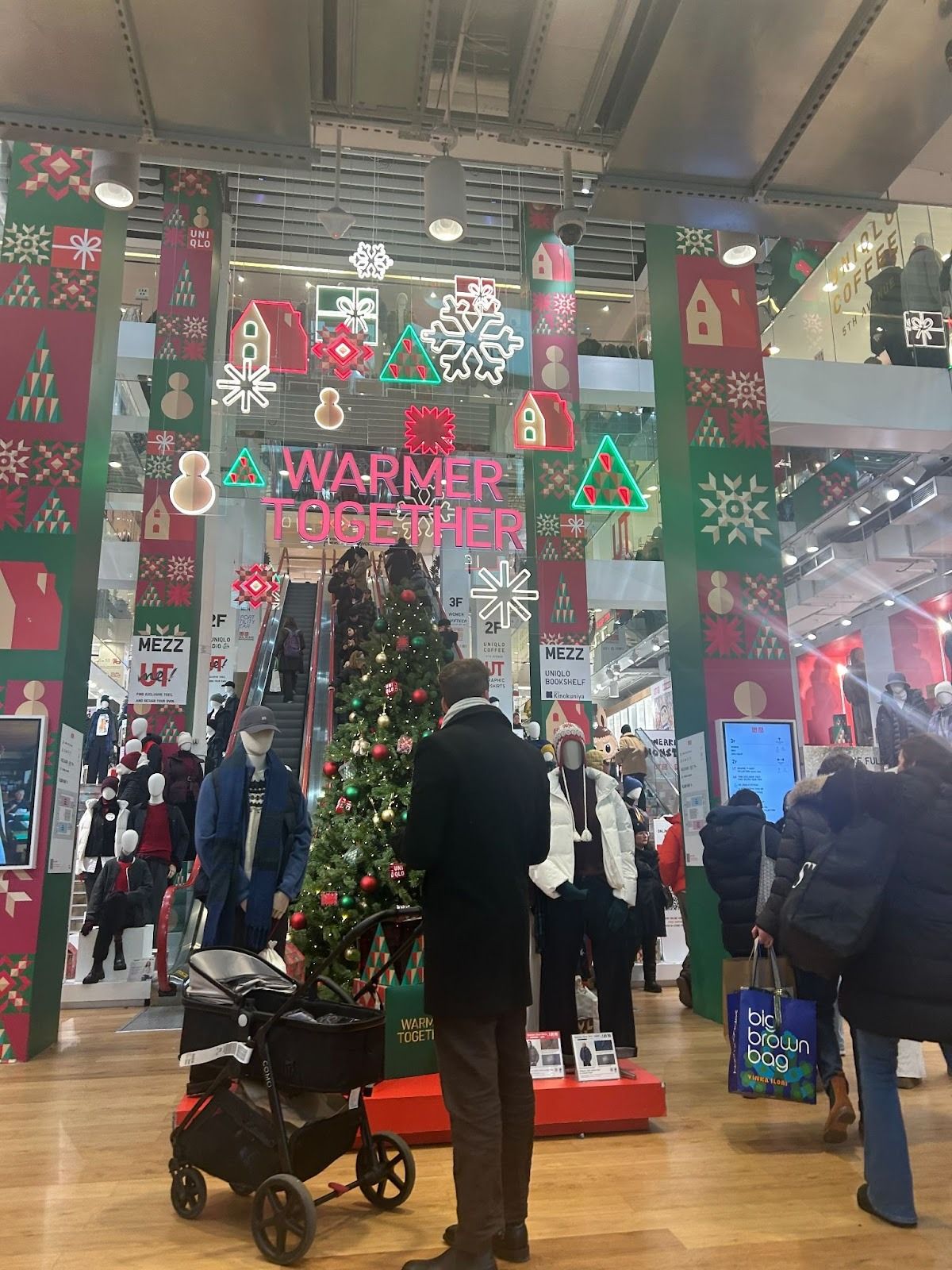
The UNIQLO on Fifth Avenue was a pleasant surprise. While the store’s exterior was relatively simple, it was effortlessly UNIQLO: very direct and incredibly on-brand. But as you peek through the doors, you are drawn into a glowing neon entryway, which modernizes holiday icons like snowflakes, snowmen, and Christmas trees by making them a sleek complement to the rest of the store’s decor.
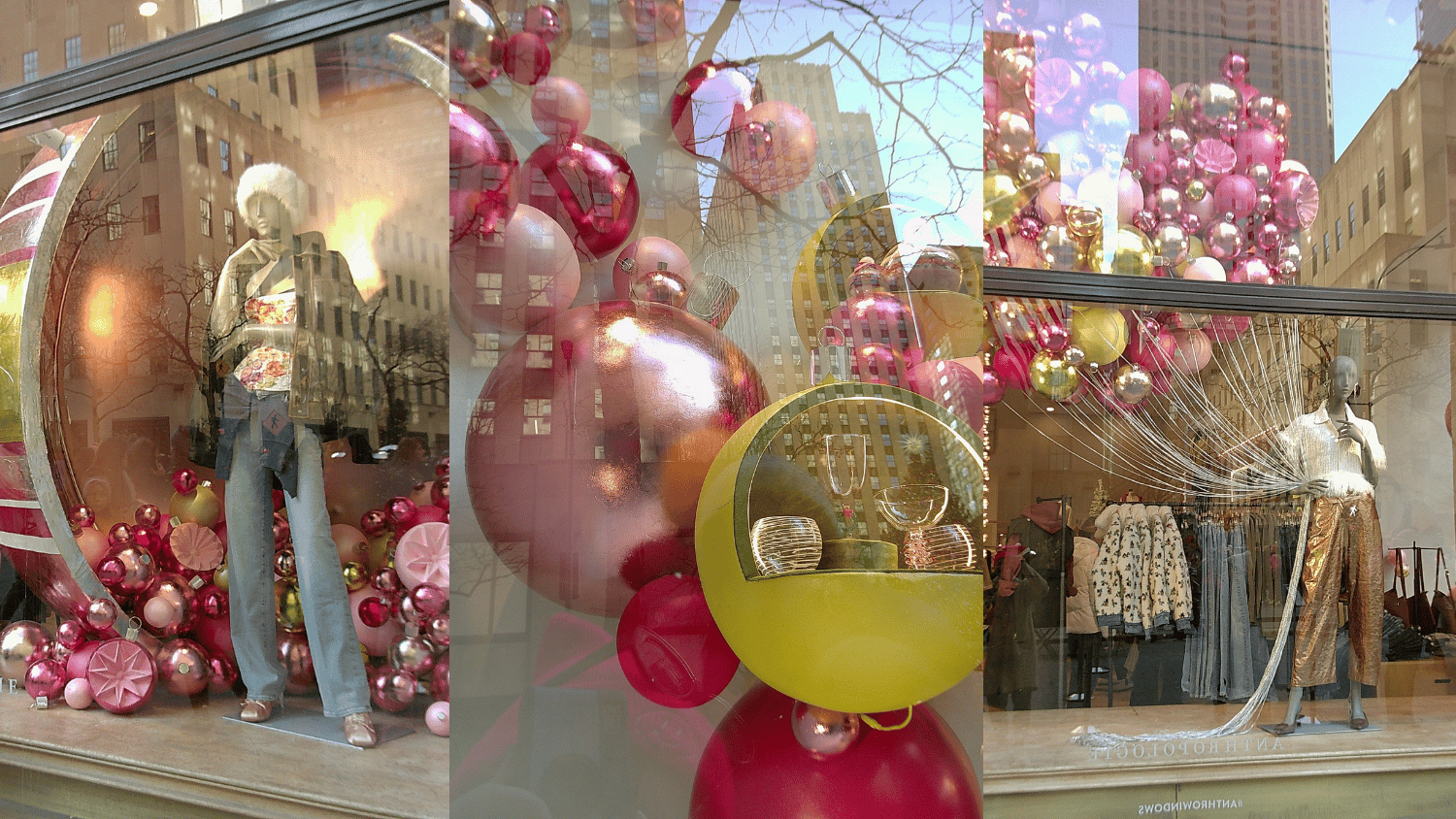
Anthropologie’s flagship store in Rockefeller Center employed a striking neon color palette, making its Christmas ornament windows highly distinctive and appealing to customers of all ages. The combination of creative, girly, and classy conveyed the essence of the brand, and brought the perfect amount of “candy color” to a city brimming with red and green.
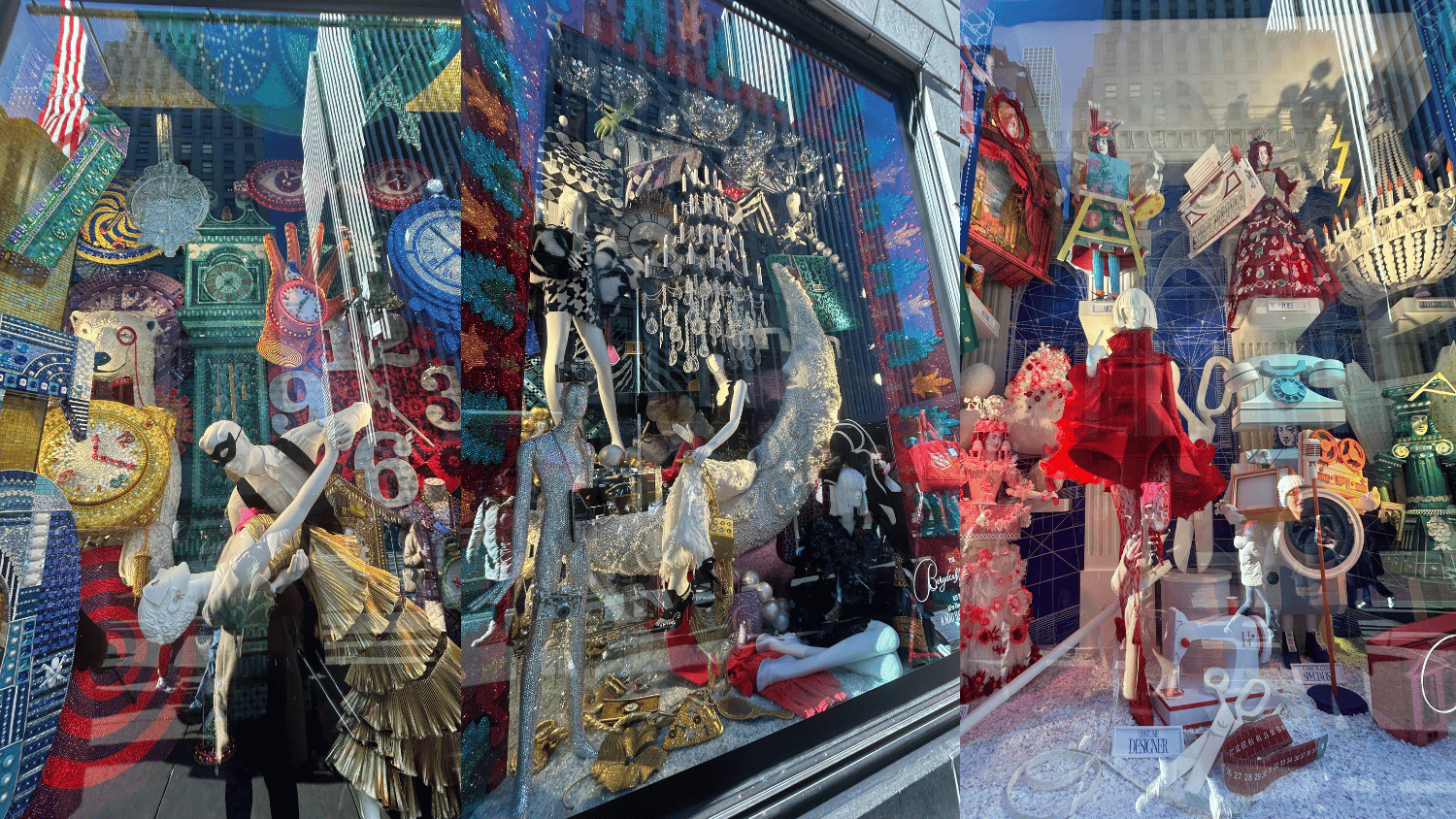
Arguably, Bergdorf Goodman remains the ideal for remarkable storytelling through layered window dressing and thoughtful visual merchandising. This year’s theme, The Bergdorf Soiree, guides consumers through an evening of unforgettable entertainment. Each window is a moment in the night, a new soiree, with its own compelling combination of glitter, gems, and paper-cutting designs. Even in moments when the color palettes are monochrome, the depth of the materials, props, trinkets, and baubles used makes each window a distinct experience. It’s the perfect blend of Art Deco, glamor, and decadence, the perfect encapsulation of Bergdorf Goodman as a brand and the era of glamorous old New York it represents.
The Holiday Window is a Portal
Back in September, Future Commerce examined the new dynamics shaping Black Friday shopping traditions. We noted that the joy and magic of holiday shopping were being stripped in favor of efficiency and performance, largely powered by digital touchpoints.
Retailers along Fifth Avenue understood the assignment. We’re in a time when we need some levity and joy, and new design trends and aesthetics are breathing new creative energy into our lives. Visual merchandising, and window dressing in particular, is a compelling entry point for merchants to actualize these trends, conveying, through layered vignettes featuring dressed mannequins, intricate sets, and props, that they are creating immersive spaces that many consumers now seek. They didn’t lean into technical prowess or AI-generated curation. They leaned into the comfort of familiarity and the emotional rush of a glassy, candy-colored palette.
And it is making an impact.
76% of consumers consider in-store holiday shopping a ritual, according to Harris Poll’s Return of Touch report. Additionally, 73% of consumers say physically touching and holding gifts makes it easier to imagine others' joy.
Because we all need a little magic now and then, especially during moments when the essence of our traditions and our cultural lore connect to that magic.
What better way to conjure it than during the holiday season in Manhattan?
Photography by Alicia Esposito and Erin DaCruz for Future Commerce.
The heart of the holiday spirit lives on Manhattan’s Fifth Avenue. Brands and retailers residing in this commerce landmark have embraced its lore, returning to the stories that have shaped more than New York City culture.
The hustle and bustle of tourists, the vibrant energy of holiday music, and the splendor of scenes of Yuletide celebrations. The storefronts are time capsules, transporting us back to a holiday season when things felt wholesome, simple, and cozy. Their windows are projectors amplifying the holiday season Americans are desperate to return to. One rooted in community, serendipitous joy, and a little bit of magic.
Comfort, nostalgia, and familiarity are synonymous with the holiday season. Indeed, it is during these times that we relive traditions and embrace the old that has shaped the new. But this year in particular, the pull of nostalgia is especially strong.
Not all that long ago, nostalgia was seen as a legitimate, diagnosable form of mental illness. In The Future of Nostalgia, author Svetlana Boym draws on the Greek root of the word, nostos, and its original meaning, a “return home.” The condition was first medically observed and diagnosed in 1688 in a platoon of homesick Swiss soldiers serving in France, whose conditions worsened when eating a bowl of home-cooked soup.
Professor Constantine Sedikides, Professor of Social and Personality Psychology at the University of Southampton, helped to debunk the notion that nostalgia is a form of emotional weakness or escapism. Quite the opposite: it is a way for individuals to stabilize themselves during periods of volatility and uncertainty. More traditional holiday designs can create feelings of familiarity and belonging.
Many argue that digital technology has made us more connected than ever, yet the loneliness epidemic confirms that this is a fallacy.
Arguably, the basic act of in-store shopping is considered nostalgic and can trigger interpersonal connection, particularly among Gen Z. These consumers have grown up immersed in the world of constant scrolling; their shopping journeys are largely dictated by what’s trending on TikTok and what deals are available on Amazon. Now, they’re gravitating toward experiences that require more in-store connection, more exploration, and, in some cases, hunting for the perfect item. According to Archrival research, the majority of Gen Z consumers think shopping in-person feels more luxurious (60%) and fun (52%), and more "like a special occasion" (64%) than scrolling on social media. They’ll wait in line to get into pop-ups, store openings, and special events in order to capture that feeling of community connection and belonging.
These feelings of connection are nourished by specific design practices. During the holiday season, certain colors, patterns, materials, iconography, and stories can reaffirm the shared ideas and rituals that fundamentally connect us. Under the umbrella of nostalgia, however, distinct aesthetics have made holiday store design, especially on Fifth Avenue, far more vibrant and exciting.
The Return of Ralph Lauren Maximalism
Ralph Lauren Christmas is trending for a reason. This form of classic maximalism embraces rich layers, textured materials such as velvet, and a color palette of burgundy, green, and navy. At a surface level, holiday vignettes may seem simple, but the more time you spend assessing the scenes, the more subtle references and powerful icons you notice.
The David Yurman store is jarringly monochrome, but the classic maximalism comes into play when you see the level of curation applied to the space. Stacks of boxes draw the eye to different pieces of jewelry, but the green statues add natural whimsy.
Burberry leans even further into the trend, using its story of “Twas the Knight Before” as a compelling design foundation. After years of trying to over-modernize, the brand is embracing its heritage and is bringing lush greenery, soft lighting, and curated bookshelves that tell the story of a homey, lived-in environment.
Nutcrackercore and the New Sentimentality
After years of leaning into farmhouse decor and brash minimalism, consumers are desperate for a little whimsy, a delightful form of expression that embraces creativity and a little kitsch. Neutral color palettes, sharp angles, and, let’s be honest, no personality, are being replaced by unapologetic eccentricity.
Etsy’s 2025 Holiday Trend Guide lists Play Haus, Nutcrackercore, and other eclectic, expressive decor styles as top of mind, and it’s even inspiring established retailers like Macy’s to return to their roots.
For the last few holiday seasons, Macy’s has made Tiptoe, a blue reindeer, the epicenter of its holiday windows. This year, the retailer’s Herald Square flagship is embracing the retailer’s lore. Specifically, how its windows are the home of holiday traditions that we all love and treasure. Santa is sharing stories with passersby, and Miracle on 34th Street, including the balloons of the Thanksgiving Day Parade, plays a starring role. Even the more “high-tech” windows featuring children's toys and interactive gaming moments include nostalgic touches, such as gingerbread frames with icing piping and gumdrop buttons.
Saks Fifth Avenue also embraced its heritage, largely by bringing back its beloved holiday light show. However, a series of windows on the main drag of Fifth Avenue added a touch of whimsy to the exterior’s story, which centered on monochromatic environments that brought pops of luxury products to each scene.
For instance, an all-bubble-gum-pink airplane scene featured modern travelers wearing high-end athleisure, glamorous accessories, and Balenciaga passport holders. A seemingly simple airline security moment features the season’s best boots and suitcases.
This is visual merchandising that contextualizes the human experience rather than fantasy.
Coach also embraces whimsical vintage elements. A large-scale wreath and window garland are complemented by multicolored Christmas lights and red velvet bows. Through the windows, you can see candy canes, a Christmas tree, and lots (lots) of gingerbread men. Perfection.
But the real showstopper of Fifth Avenue this year was the Dior flagship, which has created a scenic world of Dior made completely of gingerbread. It is truly a sight to behold, not solely due to the size of the installation but also the sheer depth of detail. Every layer and every cookie is given the utmost attention with its own unique piping, glitter, and twinkling lights.
Art Deco Reimagines the Classics
Many retailers may be embracing the past, but that doesn’t mean it’s all red and green. Kaleidoscopic colors, combined with glitter and chromatic effects, allow us to view heritage design aesthetics and themes through a modern, playful lens.
The UNIQLO on Fifth Avenue was a pleasant surprise. While the store’s exterior was relatively simple, it was effortlessly UNIQLO: very direct and incredibly on-brand. But as you peek through the doors, you are drawn into a glowing neon entryway, which modernizes holiday icons like snowflakes, snowmen, and Christmas trees by making them a sleek complement to the rest of the store’s decor.
Anthropologie’s flagship store in Rockefeller Center employed a striking neon color palette, making its Christmas ornament windows highly distinctive and appealing to customers of all ages. The combination of creative, girly, and classy conveyed the essence of the brand, and brought the perfect amount of “candy color” to a city brimming with red and green.
Arguably, Bergdorf Goodman remains the ideal for remarkable storytelling through layered window dressing and thoughtful visual merchandising. This year’s theme, The Bergdorf Soiree, guides consumers through an evening of unforgettable entertainment. Each window is a moment in the night, a new soiree, with its own compelling combination of glitter, gems, and paper-cutting designs. Even in moments when the color palettes are monochrome, the depth of the materials, props, trinkets, and baubles used makes each window a distinct experience. It’s the perfect blend of Art Deco, glamor, and decadence, the perfect encapsulation of Bergdorf Goodman as a brand and the era of glamorous old New York it represents.
The Holiday Window is a Portal
Back in September, Future Commerce examined the new dynamics shaping Black Friday shopping traditions. We noted that the joy and magic of holiday shopping were being stripped in favor of efficiency and performance, largely powered by digital touchpoints.
Retailers along Fifth Avenue understood the assignment. We’re in a time when we need some levity and joy, and new design trends and aesthetics are breathing new creative energy into our lives. Visual merchandising, and window dressing in particular, is a compelling entry point for merchants to actualize these trends, conveying, through layered vignettes featuring dressed mannequins, intricate sets, and props, that they are creating immersive spaces that many consumers now seek. They didn’t lean into technical prowess or AI-generated curation. They leaned into the comfort of familiarity and the emotional rush of a glassy, candy-colored palette.
And it is making an impact.
76% of consumers consider in-store holiday shopping a ritual, according to Harris Poll’s Return of Touch report. Additionally, 73% of consumers say physically touching and holding gifts makes it easier to imagine others' joy.
Because we all need a little magic now and then, especially during moments when the essence of our traditions and our cultural lore connect to that magic.
What better way to conjure it than during the holiday season in Manhattan?
Photography by Alicia Esposito and Erin DaCruz for Future Commerce.
The heart of the holiday spirit lives on Manhattan’s Fifth Avenue. Brands and retailers residing in this commerce landmark have embraced its lore, returning to the stories that have shaped more than New York City culture.
The hustle and bustle of tourists, the vibrant energy of holiday music, and the splendor of scenes of Yuletide celebrations. The storefronts are time capsules, transporting us back to a holiday season when things felt wholesome, simple, and cozy. Their windows are projectors amplifying the holiday season Americans are desperate to return to. One rooted in community, serendipitous joy, and a little bit of magic.
Comfort, nostalgia, and familiarity are synonymous with the holiday season. Indeed, it is during these times that we relive traditions and embrace the old that has shaped the new. But this year in particular, the pull of nostalgia is especially strong.
Not all that long ago, nostalgia was seen as a legitimate, diagnosable form of mental illness. In The Future of Nostalgia, author Svetlana Boym draws on the Greek root of the word, nostos, and its original meaning, a “return home.” The condition was first medically observed and diagnosed in 1688 in a platoon of homesick Swiss soldiers serving in France, whose conditions worsened when eating a bowl of home-cooked soup.
Professor Constantine Sedikides, Professor of Social and Personality Psychology at the University of Southampton, helped to debunk the notion that nostalgia is a form of emotional weakness or escapism. Quite the opposite: it is a way for individuals to stabilize themselves during periods of volatility and uncertainty. More traditional holiday designs can create feelings of familiarity and belonging.
Many argue that digital technology has made us more connected than ever, yet the loneliness epidemic confirms that this is a fallacy.
Arguably, the basic act of in-store shopping is considered nostalgic and can trigger interpersonal connection, particularly among Gen Z. These consumers have grown up immersed in the world of constant scrolling; their shopping journeys are largely dictated by what’s trending on TikTok and what deals are available on Amazon. Now, they’re gravitating toward experiences that require more in-store connection, more exploration, and, in some cases, hunting for the perfect item. According to Archrival research, the majority of Gen Z consumers think shopping in-person feels more luxurious (60%) and fun (52%), and more "like a special occasion" (64%) than scrolling on social media. They’ll wait in line to get into pop-ups, store openings, and special events in order to capture that feeling of community connection and belonging.
These feelings of connection are nourished by specific design practices. During the holiday season, certain colors, patterns, materials, iconography, and stories can reaffirm the shared ideas and rituals that fundamentally connect us. Under the umbrella of nostalgia, however, distinct aesthetics have made holiday store design, especially on Fifth Avenue, far more vibrant and exciting.
The Return of Ralph Lauren Maximalism
Ralph Lauren Christmas is trending for a reason. This form of classic maximalism embraces rich layers, textured materials such as velvet, and a color palette of burgundy, green, and navy. At a surface level, holiday vignettes may seem simple, but the more time you spend assessing the scenes, the more subtle references and powerful icons you notice.
The David Yurman store is jarringly monochrome, but the classic maximalism comes into play when you see the level of curation applied to the space. Stacks of boxes draw the eye to different pieces of jewelry, but the green statues add natural whimsy.
Burberry leans even further into the trend, using its story of “Twas the Knight Before” as a compelling design foundation. After years of trying to over-modernize, the brand is embracing its heritage and is bringing lush greenery, soft lighting, and curated bookshelves that tell the story of a homey, lived-in environment.
Nutcrackercore and the New Sentimentality
After years of leaning into farmhouse decor and brash minimalism, consumers are desperate for a little whimsy, a delightful form of expression that embraces creativity and a little kitsch. Neutral color palettes, sharp angles, and, let’s be honest, no personality, are being replaced by unapologetic eccentricity.
Etsy’s 2025 Holiday Trend Guide lists Play Haus, Nutcrackercore, and other eclectic, expressive decor styles as top of mind, and it’s even inspiring established retailers like Macy’s to return to their roots.
For the last few holiday seasons, Macy’s has made Tiptoe, a blue reindeer, the epicenter of its holiday windows. This year, the retailer’s Herald Square flagship is embracing the retailer’s lore. Specifically, how its windows are the home of holiday traditions that we all love and treasure. Santa is sharing stories with passersby, and Miracle on 34th Street, including the balloons of the Thanksgiving Day Parade, plays a starring role. Even the more “high-tech” windows featuring children's toys and interactive gaming moments include nostalgic touches, such as gingerbread frames with icing piping and gumdrop buttons.
Saks Fifth Avenue also embraced its heritage, largely by bringing back its beloved holiday light show. However, a series of windows on the main drag of Fifth Avenue added a touch of whimsy to the exterior’s story, which centered on monochromatic environments that brought pops of luxury products to each scene.
For instance, an all-bubble-gum-pink airplane scene featured modern travelers wearing high-end athleisure, glamorous accessories, and Balenciaga passport holders. A seemingly simple airline security moment features the season’s best boots and suitcases.
This is visual merchandising that contextualizes the human experience rather than fantasy.
Coach also embraces whimsical vintage elements. A large-scale wreath and window garland are complemented by multicolored Christmas lights and red velvet bows. Through the windows, you can see candy canes, a Christmas tree, and lots (lots) of gingerbread men. Perfection.
But the real showstopper of Fifth Avenue this year was the Dior flagship, which has created a scenic world of Dior made completely of gingerbread. It is truly a sight to behold, not solely due to the size of the installation but also the sheer depth of detail. Every layer and every cookie is given the utmost attention with its own unique piping, glitter, and twinkling lights.
Art Deco Reimagines the Classics
Many retailers may be embracing the past, but that doesn’t mean it’s all red and green. Kaleidoscopic colors, combined with glitter and chromatic effects, allow us to view heritage design aesthetics and themes through a modern, playful lens.
The UNIQLO on Fifth Avenue was a pleasant surprise. While the store’s exterior was relatively simple, it was effortlessly UNIQLO: very direct and incredibly on-brand. But as you peek through the doors, you are drawn into a glowing neon entryway, which modernizes holiday icons like snowflakes, snowmen, and Christmas trees by making them a sleek complement to the rest of the store’s decor.
Anthropologie’s flagship store in Rockefeller Center employed a striking neon color palette, making its Christmas ornament windows highly distinctive and appealing to customers of all ages. The combination of creative, girly, and classy conveyed the essence of the brand, and brought the perfect amount of “candy color” to a city brimming with red and green.
Arguably, Bergdorf Goodman remains the ideal for remarkable storytelling through layered window dressing and thoughtful visual merchandising. This year’s theme, The Bergdorf Soiree, guides consumers through an evening of unforgettable entertainment. Each window is a moment in the night, a new soiree, with its own compelling combination of glitter, gems, and paper-cutting designs. Even in moments when the color palettes are monochrome, the depth of the materials, props, trinkets, and baubles used makes each window a distinct experience. It’s the perfect blend of Art Deco, glamor, and decadence, the perfect encapsulation of Bergdorf Goodman as a brand and the era of glamorous old New York it represents.
The Holiday Window is a Portal
Back in September, Future Commerce examined the new dynamics shaping Black Friday shopping traditions. We noted that the joy and magic of holiday shopping were being stripped in favor of efficiency and performance, largely powered by digital touchpoints.
Retailers along Fifth Avenue understood the assignment. We’re in a time when we need some levity and joy, and new design trends and aesthetics are breathing new creative energy into our lives. Visual merchandising, and window dressing in particular, is a compelling entry point for merchants to actualize these trends, conveying, through layered vignettes featuring dressed mannequins, intricate sets, and props, that they are creating immersive spaces that many consumers now seek. They didn’t lean into technical prowess or AI-generated curation. They leaned into the comfort of familiarity and the emotional rush of a glassy, candy-colored palette.
And it is making an impact.
76% of consumers consider in-store holiday shopping a ritual, according to Harris Poll’s Return of Touch report. Additionally, 73% of consumers say physically touching and holding gifts makes it easier to imagine others' joy.
Because we all need a little magic now and then, especially during moments when the essence of our traditions and our cultural lore connect to that magic.
What better way to conjure it than during the holiday season in Manhattan?
Photography by Alicia Esposito and Erin DaCruz for Future Commerce.
The heart of the holiday spirit lives on Manhattan’s Fifth Avenue. Brands and retailers residing in this commerce landmark have embraced its lore, returning to the stories that have shaped more than New York City culture.
The hustle and bustle of tourists, the vibrant energy of holiday music, and the splendor of scenes of Yuletide celebrations. The storefronts are time capsules, transporting us back to a holiday season when things felt wholesome, simple, and cozy. Their windows are projectors amplifying the holiday season Americans are desperate to return to. One rooted in community, serendipitous joy, and a little bit of magic.
Comfort, nostalgia, and familiarity are synonymous with the holiday season. Indeed, it is during these times that we relive traditions and embrace the old that has shaped the new. But this year in particular, the pull of nostalgia is especially strong.
Not all that long ago, nostalgia was seen as a legitimate, diagnosable form of mental illness. In The Future of Nostalgia, author Svetlana Boym draws on the Greek root of the word, nostos, and its original meaning, a “return home.” The condition was first medically observed and diagnosed in 1688 in a platoon of homesick Swiss soldiers serving in France, whose conditions worsened when eating a bowl of home-cooked soup.
Professor Constantine Sedikides, Professor of Social and Personality Psychology at the University of Southampton, helped to debunk the notion that nostalgia is a form of emotional weakness or escapism. Quite the opposite: it is a way for individuals to stabilize themselves during periods of volatility and uncertainty. More traditional holiday designs can create feelings of familiarity and belonging.
Many argue that digital technology has made us more connected than ever, yet the loneliness epidemic confirms that this is a fallacy.
Arguably, the basic act of in-store shopping is considered nostalgic and can trigger interpersonal connection, particularly among Gen Z. These consumers have grown up immersed in the world of constant scrolling; their shopping journeys are largely dictated by what’s trending on TikTok and what deals are available on Amazon. Now, they’re gravitating toward experiences that require more in-store connection, more exploration, and, in some cases, hunting for the perfect item. According to Archrival research, the majority of Gen Z consumers think shopping in-person feels more luxurious (60%) and fun (52%), and more "like a special occasion" (64%) than scrolling on social media. They’ll wait in line to get into pop-ups, store openings, and special events in order to capture that feeling of community connection and belonging.
These feelings of connection are nourished by specific design practices. During the holiday season, certain colors, patterns, materials, iconography, and stories can reaffirm the shared ideas and rituals that fundamentally connect us. Under the umbrella of nostalgia, however, distinct aesthetics have made holiday store design, especially on Fifth Avenue, far more vibrant and exciting.
The Return of Ralph Lauren Maximalism
Ralph Lauren Christmas is trending for a reason. This form of classic maximalism embraces rich layers, textured materials such as velvet, and a color palette of burgundy, green, and navy. At a surface level, holiday vignettes may seem simple, but the more time you spend assessing the scenes, the more subtle references and powerful icons you notice.
The David Yurman store is jarringly monochrome, but the classic maximalism comes into play when you see the level of curation applied to the space. Stacks of boxes draw the eye to different pieces of jewelry, but the green statues add natural whimsy.
Burberry leans even further into the trend, using its story of “Twas the Knight Before” as a compelling design foundation. After years of trying to over-modernize, the brand is embracing its heritage and is bringing lush greenery, soft lighting, and curated bookshelves that tell the story of a homey, lived-in environment.
Nutcrackercore and the New Sentimentality
After years of leaning into farmhouse decor and brash minimalism, consumers are desperate for a little whimsy, a delightful form of expression that embraces creativity and a little kitsch. Neutral color palettes, sharp angles, and, let’s be honest, no personality, are being replaced by unapologetic eccentricity.
Etsy’s 2025 Holiday Trend Guide lists Play Haus, Nutcrackercore, and other eclectic, expressive decor styles as top of mind, and it’s even inspiring established retailers like Macy’s to return to their roots.
For the last few holiday seasons, Macy’s has made Tiptoe, a blue reindeer, the epicenter of its holiday windows. This year, the retailer’s Herald Square flagship is embracing the retailer’s lore. Specifically, how its windows are the home of holiday traditions that we all love and treasure. Santa is sharing stories with passersby, and Miracle on 34th Street, including the balloons of the Thanksgiving Day Parade, plays a starring role. Even the more “high-tech” windows featuring children's toys and interactive gaming moments include nostalgic touches, such as gingerbread frames with icing piping and gumdrop buttons.
Saks Fifth Avenue also embraced its heritage, largely by bringing back its beloved holiday light show. However, a series of windows on the main drag of Fifth Avenue added a touch of whimsy to the exterior’s story, which centered on monochromatic environments that brought pops of luxury products to each scene.
For instance, an all-bubble-gum-pink airplane scene featured modern travelers wearing high-end athleisure, glamorous accessories, and Balenciaga passport holders. A seemingly simple airline security moment features the season’s best boots and suitcases.
This is visual merchandising that contextualizes the human experience rather than fantasy.
Coach also embraces whimsical vintage elements. A large-scale wreath and window garland are complemented by multicolored Christmas lights and red velvet bows. Through the windows, you can see candy canes, a Christmas tree, and lots (lots) of gingerbread men. Perfection.
But the real showstopper of Fifth Avenue this year was the Dior flagship, which has created a scenic world of Dior made completely of gingerbread. It is truly a sight to behold, not solely due to the size of the installation but also the sheer depth of detail. Every layer and every cookie is given the utmost attention with its own unique piping, glitter, and twinkling lights.
Art Deco Reimagines the Classics
Many retailers may be embracing the past, but that doesn’t mean it’s all red and green. Kaleidoscopic colors, combined with glitter and chromatic effects, allow us to view heritage design aesthetics and themes through a modern, playful lens.
The UNIQLO on Fifth Avenue was a pleasant surprise. While the store’s exterior was relatively simple, it was effortlessly UNIQLO: very direct and incredibly on-brand. But as you peek through the doors, you are drawn into a glowing neon entryway, which modernizes holiday icons like snowflakes, snowmen, and Christmas trees by making them a sleek complement to the rest of the store’s decor.
Anthropologie’s flagship store in Rockefeller Center employed a striking neon color palette, making its Christmas ornament windows highly distinctive and appealing to customers of all ages. The combination of creative, girly, and classy conveyed the essence of the brand, and brought the perfect amount of “candy color” to a city brimming with red and green.
Arguably, Bergdorf Goodman remains the ideal for remarkable storytelling through layered window dressing and thoughtful visual merchandising. This year’s theme, The Bergdorf Soiree, guides consumers through an evening of unforgettable entertainment. Each window is a moment in the night, a new soiree, with its own compelling combination of glitter, gems, and paper-cutting designs. Even in moments when the color palettes are monochrome, the depth of the materials, props, trinkets, and baubles used makes each window a distinct experience. It’s the perfect blend of Art Deco, glamor, and decadence, the perfect encapsulation of Bergdorf Goodman as a brand and the era of glamorous old New York it represents.
The Holiday Window is a Portal
Back in September, Future Commerce examined the new dynamics shaping Black Friday shopping traditions. We noted that the joy and magic of holiday shopping were being stripped in favor of efficiency and performance, largely powered by digital touchpoints.
Retailers along Fifth Avenue understood the assignment. We’re in a time when we need some levity and joy, and new design trends and aesthetics are breathing new creative energy into our lives. Visual merchandising, and window dressing in particular, is a compelling entry point for merchants to actualize these trends, conveying, through layered vignettes featuring dressed mannequins, intricate sets, and props, that they are creating immersive spaces that many consumers now seek. They didn’t lean into technical prowess or AI-generated curation. They leaned into the comfort of familiarity and the emotional rush of a glassy, candy-colored palette.
And it is making an impact.
76% of consumers consider in-store holiday shopping a ritual, according to Harris Poll’s Return of Touch report. Additionally, 73% of consumers say physically touching and holding gifts makes it easier to imagine others' joy.
Because we all need a little magic now and then, especially during moments when the essence of our traditions and our cultural lore connect to that magic.
What better way to conjure it than during the holiday season in Manhattan?
Photography by Alicia Esposito and Erin DaCruz for Future Commerce.
The heart of the holiday spirit lives on Manhattan’s Fifth Avenue. Brands and retailers residing in this commerce landmark have embraced its lore, returning to the stories that have shaped more than New York City culture.
The hustle and bustle of tourists, the vibrant energy of holiday music, and the splendor of scenes of Yuletide celebrations. The storefronts are time capsules, transporting us back to a holiday season when things felt wholesome, simple, and cozy. Their windows are projectors amplifying the holiday season Americans are desperate to return to. One rooted in community, serendipitous joy, and a little bit of magic.
Comfort, nostalgia, and familiarity are synonymous with the holiday season. Indeed, it is during these times that we relive traditions and embrace the old that has shaped the new. But this year in particular, the pull of nostalgia is especially strong.
Not all that long ago, nostalgia was seen as a legitimate, diagnosable form of mental illness. In The Future of Nostalgia, author Svetlana Boym draws on the Greek root of the word, nostos, and its original meaning, a “return home.” The condition was first medically observed and diagnosed in 1688 in a platoon of homesick Swiss soldiers serving in France, whose conditions worsened when eating a bowl of home-cooked soup.
Professor Constantine Sedikides, Professor of Social and Personality Psychology at the University of Southampton, helped to debunk the notion that nostalgia is a form of emotional weakness or escapism. Quite the opposite: it is a way for individuals to stabilize themselves during periods of volatility and uncertainty. More traditional holiday designs can create feelings of familiarity and belonging.
Many argue that digital technology has made us more connected than ever, yet the loneliness epidemic confirms that this is a fallacy.
Arguably, the basic act of in-store shopping is considered nostalgic and can trigger interpersonal connection, particularly among Gen Z. These consumers have grown up immersed in the world of constant scrolling; their shopping journeys are largely dictated by what’s trending on TikTok and what deals are available on Amazon. Now, they’re gravitating toward experiences that require more in-store connection, more exploration, and, in some cases, hunting for the perfect item. According to Archrival research, the majority of Gen Z consumers think shopping in-person feels more luxurious (60%) and fun (52%), and more "like a special occasion" (64%) than scrolling on social media. They’ll wait in line to get into pop-ups, store openings, and special events in order to capture that feeling of community connection and belonging.
These feelings of connection are nourished by specific design practices. During the holiday season, certain colors, patterns, materials, iconography, and stories can reaffirm the shared ideas and rituals that fundamentally connect us. Under the umbrella of nostalgia, however, distinct aesthetics have made holiday store design, especially on Fifth Avenue, far more vibrant and exciting.
The Return of Ralph Lauren Maximalism
Ralph Lauren Christmas is trending for a reason. This form of classic maximalism embraces rich layers, textured materials such as velvet, and a color palette of burgundy, green, and navy. At a surface level, holiday vignettes may seem simple, but the more time you spend assessing the scenes, the more subtle references and powerful icons you notice.
The David Yurman store is jarringly monochrome, but the classic maximalism comes into play when you see the level of curation applied to the space. Stacks of boxes draw the eye to different pieces of jewelry, but the green statues add natural whimsy.
Burberry leans even further into the trend, using its story of “Twas the Knight Before” as a compelling design foundation. After years of trying to over-modernize, the brand is embracing its heritage and is bringing lush greenery, soft lighting, and curated bookshelves that tell the story of a homey, lived-in environment.
Nutcrackercore and the New Sentimentality
After years of leaning into farmhouse decor and brash minimalism, consumers are desperate for a little whimsy, a delightful form of expression that embraces creativity and a little kitsch. Neutral color palettes, sharp angles, and, let’s be honest, no personality, are being replaced by unapologetic eccentricity.
Etsy’s 2025 Holiday Trend Guide lists Play Haus, Nutcrackercore, and other eclectic, expressive decor styles as top of mind, and it’s even inspiring established retailers like Macy’s to return to their roots.
For the last few holiday seasons, Macy’s has made Tiptoe, a blue reindeer, the epicenter of its holiday windows. This year, the retailer’s Herald Square flagship is embracing the retailer’s lore. Specifically, how its windows are the home of holiday traditions that we all love and treasure. Santa is sharing stories with passersby, and Miracle on 34th Street, including the balloons of the Thanksgiving Day Parade, plays a starring role. Even the more “high-tech” windows featuring children's toys and interactive gaming moments include nostalgic touches, such as gingerbread frames with icing piping and gumdrop buttons.
Saks Fifth Avenue also embraced its heritage, largely by bringing back its beloved holiday light show. However, a series of windows on the main drag of Fifth Avenue added a touch of whimsy to the exterior’s story, which centered on monochromatic environments that brought pops of luxury products to each scene.
For instance, an all-bubble-gum-pink airplane scene featured modern travelers wearing high-end athleisure, glamorous accessories, and Balenciaga passport holders. A seemingly simple airline security moment features the season’s best boots and suitcases.
This is visual merchandising that contextualizes the human experience rather than fantasy.
Coach also embraces whimsical vintage elements. A large-scale wreath and window garland are complemented by multicolored Christmas lights and red velvet bows. Through the windows, you can see candy canes, a Christmas tree, and lots (lots) of gingerbread men. Perfection.
But the real showstopper of Fifth Avenue this year was the Dior flagship, which has created a scenic world of Dior made completely of gingerbread. It is truly a sight to behold, not solely due to the size of the installation but also the sheer depth of detail. Every layer and every cookie is given the utmost attention with its own unique piping, glitter, and twinkling lights.
Art Deco Reimagines the Classics
Many retailers may be embracing the past, but that doesn’t mean it’s all red and green. Kaleidoscopic colors, combined with glitter and chromatic effects, allow us to view heritage design aesthetics and themes through a modern, playful lens.
The UNIQLO on Fifth Avenue was a pleasant surprise. While the store’s exterior was relatively simple, it was effortlessly UNIQLO: very direct and incredibly on-brand. But as you peek through the doors, you are drawn into a glowing neon entryway, which modernizes holiday icons like snowflakes, snowmen, and Christmas trees by making them a sleek complement to the rest of the store’s decor.
Anthropologie’s flagship store in Rockefeller Center employed a striking neon color palette, making its Christmas ornament windows highly distinctive and appealing to customers of all ages. The combination of creative, girly, and classy conveyed the essence of the brand, and brought the perfect amount of “candy color” to a city brimming with red and green.
Arguably, Bergdorf Goodman remains the ideal for remarkable storytelling through layered window dressing and thoughtful visual merchandising. This year’s theme, The Bergdorf Soiree, guides consumers through an evening of unforgettable entertainment. Each window is a moment in the night, a new soiree, with its own compelling combination of glitter, gems, and paper-cutting designs. Even in moments when the color palettes are monochrome, the depth of the materials, props, trinkets, and baubles used makes each window a distinct experience. It’s the perfect blend of Art Deco, glamor, and decadence, the perfect encapsulation of Bergdorf Goodman as a brand and the era of glamorous old New York it represents.
The Holiday Window is a Portal
Back in September, Future Commerce examined the new dynamics shaping Black Friday shopping traditions. We noted that the joy and magic of holiday shopping were being stripped in favor of efficiency and performance, largely powered by digital touchpoints.
Retailers along Fifth Avenue understood the assignment. We’re in a time when we need some levity and joy, and new design trends and aesthetics are breathing new creative energy into our lives. Visual merchandising, and window dressing in particular, is a compelling entry point for merchants to actualize these trends, conveying, through layered vignettes featuring dressed mannequins, intricate sets, and props, that they are creating immersive spaces that many consumers now seek. They didn’t lean into technical prowess or AI-generated curation. They leaned into the comfort of familiarity and the emotional rush of a glassy, candy-colored palette.
And it is making an impact.
76% of consumers consider in-store holiday shopping a ritual, according to Harris Poll’s Return of Touch report. Additionally, 73% of consumers say physically touching and holding gifts makes it easier to imagine others' joy.
Because we all need a little magic now and then, especially during moments when the essence of our traditions and our cultural lore connect to that magic.
What better way to conjure it than during the holiday season in Manhattan?
Photography by Alicia Esposito and Erin DaCruz for Future Commerce.
Continue Reading...

Insights and futurism for executives in eCom and Retail
Those things we shouldn’t say out loud? We say them on the private feed. Bi-weekly “after dark” podcasts and a members-only newsletter, just for subscribers.
Our research reports combine visionary thinking with data-backed findings from our own advisory panel, made up of leaders at brands you know and trust.
Upskill, cross-skill, and future-proof your teams with Future Commerce Learning, the leading digital eCommerce learning platform, created by professional educators.