

of the United Kingdom’s capitol city.
Retail is in the midst of an existential crisis. Algorithms are flattening mainstream aesthetics, bucketing brands and products to the point where they’re so interchangeable they’re forgettable. But the world’s most visionary brands know how to make their mark because they know what to preserve, what to change, and what to reimagine.
The brands that survive “the great cultural flattening” aren't the ones with the loudest vision statements. They're the ones that have turned their vision into a system: a discrete decision methodology for what to preserve, what to evolve, and, most importantly, what to refuse. Every product choice, every campaign, every expansion runs through that filter.
Three brands: Ralph Lauren, Flower by Edie Parker, and Barrière look nothing alike. One a 60-year heritage house, translating a founder's dream into AI and Fortnite. One turns cannabis legalization into a design-led universe where retirees in Boca Raton vape alongside Gen Z. One is making transdermal supplements people actually want to wear.
What connects them is how deliberately each has decided what it isn't.
Together, these brands broaden and contextualize what vision actually means, and show how it becomes a system for any brand to analyze its path to cultural relevance and sustainable growth.
Ralph Lauren: Building from Legacy
Heritage can sound like baggage, but some brands thrive when they know how to protect the meaning of their past while evolving for the future.
Brands like Ralph Lauren have become more relevant and compelling for consumers desperately seeking comfort through nostalgia. Social media’s “Ralph Lauren Christmas” trend showed how the namesake has upheld its cultural relevance, conveying coziness and familiarity amid unending chaos. The trend also illustrated how we are increasingly embracing traditional and ornate design aesthetics as a form of rebellion in an algorithmically flattened world.
Ralph Lauren now has the ideal cultural moment, the social permission, to reinvent itself without losing the founder’s dream: to design high-quality, timeless products that get better with age.
Over the course of its history, the brand has upheld its design philosophy while intentionally modernizing its service and experiences. It has invested heavily in circularity, using its “Live On” promise to drive product innovation. The brand’s Artist in Residence program has also reaffirmed its heritage while partnering with creators, including other brands, that mirror its values and beliefs, both culturally and creatively.
Yet it was Ralph Lauren’s recent Fashion Week shows that put its modernization on full display: rich textures like velvet and leather popped when paired with the brand’s signature pleated trousers and knitted sweaters. Slouchy suits were glammed up with suede and fur-trimmed coats. The menswear show combined classic, preppy, and quirky patterns, all into unified, effortless looks. Despite being inherently “Ralph,” each moment felt edgier, modern, and interesting. They were the perfect vehicles for introducing new, younger consumers to the brand and thoughtfully redefining its position.
Vision Through New Contexts
Aesthetically, Ralph Lauren sits at the ideal intersection of tradition and innovation, and it’s using this positioning to support a broader corporate vision that includes technology.
“We always start with the vision, with the dream, with the purpose to inspire the dream of a better life through authenticity and timeless style,” said David Lauren, Chief Branding and Innovation Officer.
“Our goal is to constantly be thinking about what that vision is, whether we’re at a retail store, in a wholesale shop, or online. What we’re trying to do is make sure that a customer is enveloped in our philosophy.”
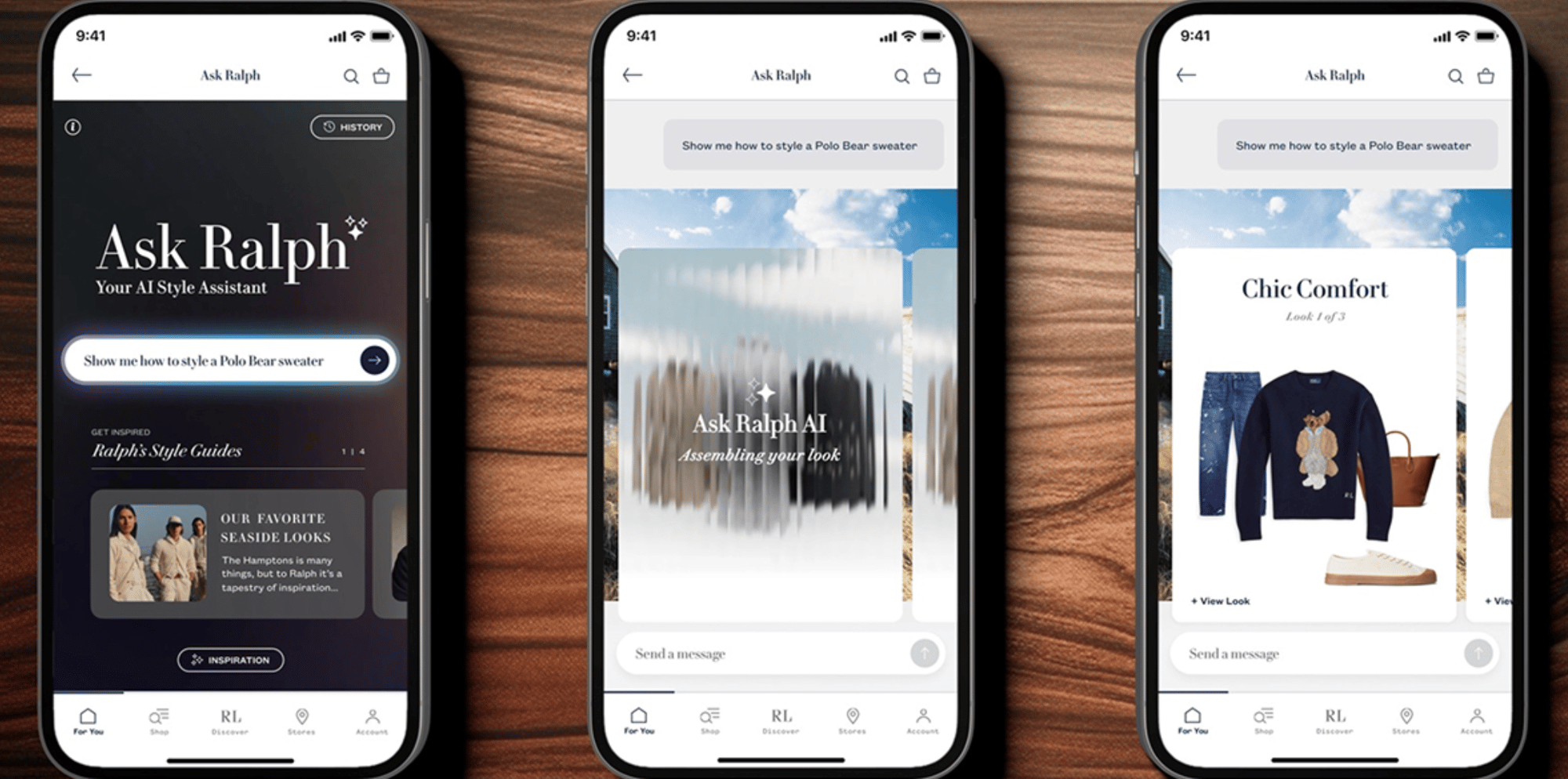
Ask Ralph is its AI-powered “styling companion” that contextualizes the brand’s design mission and evolved “vibes” to better serve consumers. The visuals and storytelling within the app align with the brand ethos, but the LLM and consumer data then mix, match, and curate items based on users’ in-the-moment wants and needs. For some, the output will be more traditional and “purely Ralph”; for others, it will be the modern aesthetic flooding social media feeds.
You’d be forgiven for writing this off as another shopping assistant LLM in the long lineage of shopping assistants that are littering sites and apps today. The reality is that Ask Ralph (and its copycats) are scaling the cultural experience of founder taste. What Ask Ralph is doing is scaling what Mr. Lauren used to do one-to-one: tell customers how to assemble outfits and wear clothes well.
“We’re trying to make sure that a customer is enveloped in our philosophy,” Lauren said. “Nobody needs a tie, flannel shirt, or pair of jeans…but showing a customer how to put it all together is part of what makes Ralph Lauren unique…so we feel that technology helps us fulfill that. The idea that you can go on-site and create something that’s even more personal for you is exciting.”
The brand was also an early mover in the gaming space, working with G2 Esports on a capsule collection and adding digital apparel and accessories to Fortnite’s Item Shop.
Ralph Lauren has shown that you can modernize without leaving your history behind. Heritage, in fact, can help focus a brand equally on what it is and what it’s not. Strip away the founder's vision and you have a retailer. Keep it, and you have a world.
Flower by Edie Parker: Turning Cultural Shifts into Worldbuilding Moments
Visionary brands turn cultural shifts into new rituals and visual languages: 88% of consumers purchase from brands that align with their values, and nearly just as many (84%) will recommend these brands to friends and family. For some, “values” equate to environmental issues, but for most, they also show up in the cultures and lifestyles they choose to participate in. What they wear, how they live, and how they unwind define what they buy and the brands they love.
Cannabis legalization has been a defining cultural moment in the US, creating a new market of brands redefining product and experience design. US cannabis sales are expected to reach nearly $47 billion in 2026, representing the vast majority (75%) of global results. Gen Z and millennials are the largest segment of cannabis current users, but now that nearly half of Americans (47%) have tried it, the user base is much more diverse than in the past.
Cannabis is now far more than a recreational drug. It’s also a tool for pain management, anxiety, and creativity. It is equal parts ritual and identity, cultural immersion and community participation. There are specialized experiential retail models just for cannabis users, and Instagram communities for “Cannamoms” who act as the philosophical antithesis to the “wine moms” that typically dominate social media culture.
When culture evolves, commerce follows. Brands have embraced the cannabis market’s diversity and have followed suit by offering products that serve different needs, preferences, and contexts.
“The space is maturing, moving from novelty to lifestyle, from potency to personality,” said Brett Heyman, who harnessed her experience working for fashion brands like Gucci and Dolce & Gabbana to develop Flower by Edie Parker, a brand that has enlivened the cannabis market with its rich design and worldbuilding principles. “Consumers are seeking experiences, not just products, and brands with strong cultural identities are thriving.”
Flower’s core reason for being is to create products built with form, function, and fun. The brand offers everyday goods, such as vintage-inspired vapes and tabletop lighters, as well as quirky, giftable smoking accessories, like patterned rolling papers, bringing Heyman’s fashion background to the forefront. Yet its pricing strategy serves a far more diverse set of customers, ranging from $5 (for pre-rolls) to $250 (for statement pieces), allowing anyone to “join the world of Flower on their own terms.”
The Convergence of Fashion, Function, and Fun
Flower by Edie Parker has defined itself in a sector typically dominated by “the 3 P’s” (price, promotions, and potency) by leading instead with creativity, emotion, and design. Through the convergence of fashion, culture, and high design, the brand reframes cannabis as playful and beautiful, but also innately normal.
“We’re cheeky, vintage-inspired, and a little subversive, using color, nostalgia, and wit to upend expectations of what cannabis can look like,” Heyman said. “Design and storytelling are both our language and our strategy. We make objects you actually want to display: bright, bold, and proudly feminine, so cannabis feels like an extension of your style, not something to hide.”
When one visits the Flower by Edie Parker eCommerce site and Instagram account, it’s easy to see the vision in the execution. In one recent Instagram carousel, a group of retired women in Boca Raton, Florida, is on a lunch date at their retirement community, with their Peta Puffer distillate vapes along for the adventure. Clever and heart-warming, the series illustrates that although Gen Z and millennials are driving the industry forward, this is truly a brand for everyone.
“We naturally resonate with design- and style-driven women, but our community is broader — anyone who loves color, humor, and a sense of play. We often describe our audience as ‘smokers with style.’
- Brett Heyman, Flower by Edie Parker
Culture-led marketing campaigns help build emotional resonance while also appealing to the “cannacurious” of all ages, genders, and backgrounds. Flower’s viral 4/20 collaboration with TV personality Gabby Windey garnered two million organic impressions. The “High in the 305” campaign with Florida-based rapper JT helped Flower authentically reach customers in the state at its launch there. And its incredibly unexpected partnership with Real Housewives of New York star Luann de Lesseps brought cannabis even further into the pop-culture mainstream while cheekily showing a broader (and arguably older) audience that cannabis doesn’t equal “classless.”
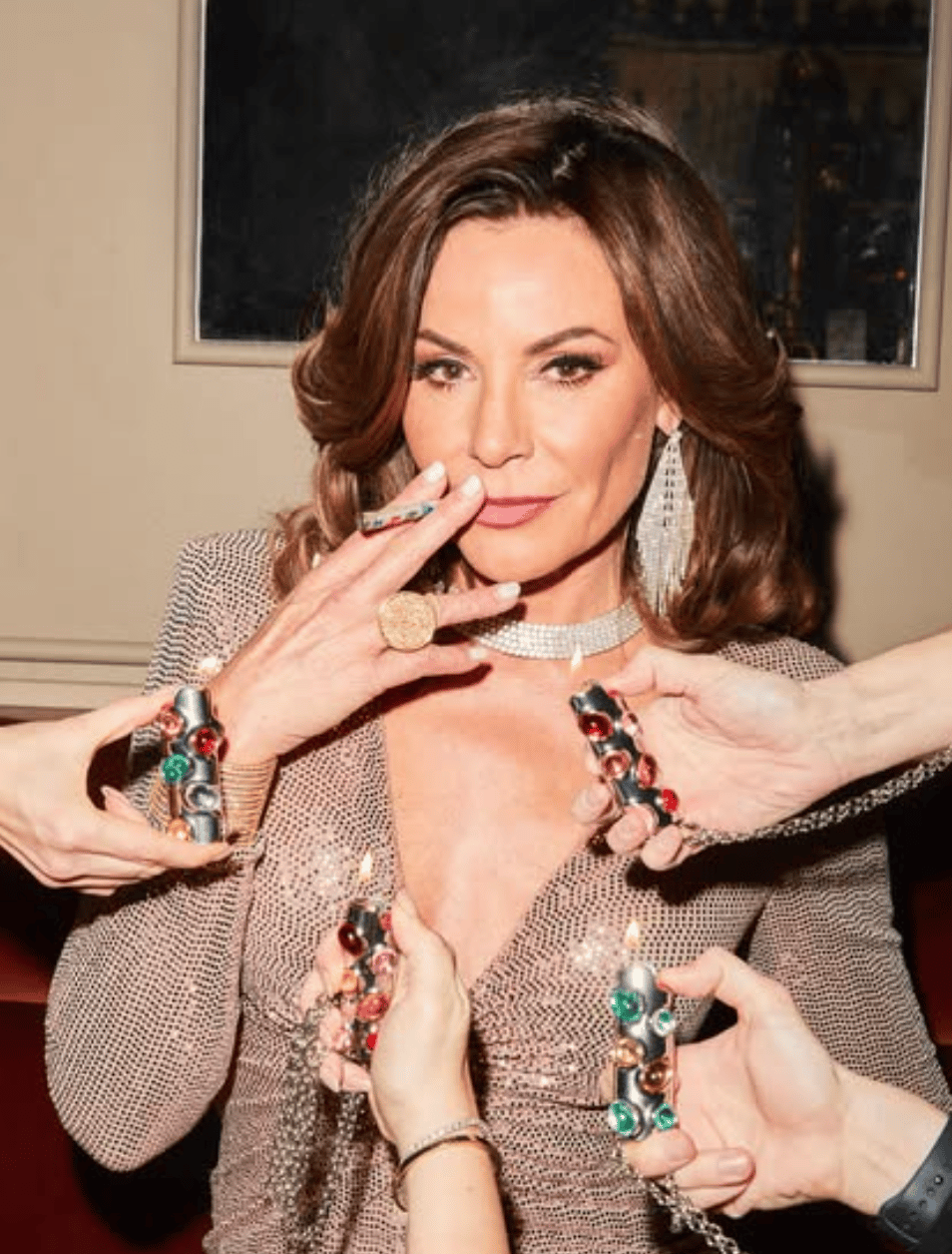
Using humor and high design as the core strategy, the brand has grown 8x since 2022 and expanded into 12 markets—a sign that personality can be as powerful a growth lever as potency.
Venturing into its next chapter of growth, Flower plans to double down on its personality and essence. “Our focus for 2026 is deepening brand equity,” Heyman said. “More collaborations that bridge cannabis with fashion, art, and entertainment; more experiential retail; and more advocacy through the Edie Parker Foundation, which supports the Women’s Prison Association and The Last Prisoner Project.”
While the goal for any brand is to get its products into more hands, Flower plans to do so with intention and without apology. Flower shows how a brand can use design and worldbuilding to translate a messy cultural shift into a universe people are proud to live in.
Barrière: Using Novelty and Identity to Shape Wellness
Sometimes, the most durable brands are often the ones that see the obvious thing everyone else has learned to live with. A challenge that’s hiding in plain sight, and presents a clear opportunity for category disruption.
Barrière is a wellness brand that takes the irritation, cost, and awkwardness out of supplements and makes self-care sustainable. For co-founders Alexa Adams and Cleo Davis-Urman, the vision for the business was shaped by Urman's firsthand experiences. Her story began with a diagnosis: she was dangerously low in iron, B12, and vitamin D. Despite years of taking oral supplements, she learned that a significant portion of their benefits is lost in the digestion process. The clinical solution was transdermal delivery, where patches bypass the gut and vitamins are absorbed directly through the skin.
Biologically, it worked. But the rest of the experience was incredibly frustrating, according to Urman. "The products irritated my skin. I couldn't get wet. They looked like something you would see in a hospital. I just didn't see myself being able to maintain that habit consistently."
That friction between what science can do and what real life allows was the founding insight. "The science worked, but the experience didn't," she said. Barrière was brought to market in a beta capacity in November 2023. After robust testing, feedback collection, and iteration, they formally launched the website and went to market in June 2024.
Urman’s experience aligns with that of the vast majority of consumers who recognize the importance of their health but struggle to prioritize it. They either don’t have the time, money, or resources. Or, in a more deceptively obvious scenario, they know what to do, but the routine is too arbitrary or frustrating to be sustainable.
Urman's own research turned up a telling gap: although 86% of Americans use supplements, adherence is below 50%. This context carries significant weight in a category where innovation has been almost entirely focused on what goes into a product rather than what it's like to actually use it.
“I'm not going to shape my world to accommodate a habit, but the habit’s important,” Urman said. “I think if we can acknowledge who we are, even if our intentions are good, we will set ourselves up for success. Now, I have not missed a day of vitamins. It's not just because I own the company, it's because it's so easy for me to wear them.”
Barrière addresses the two distinct problems plaguing the supplement industry: the biological challenges, such as delivery, absorption, and efficacy, and the behavioral challenges, which prevent routines from sticking. Most brands are laser-focused on the first area, Urman noted. Although Barrière focuses on performance, its vision and competitive advantage live in the second area.
A Supplement That Doubles as Self-Expression
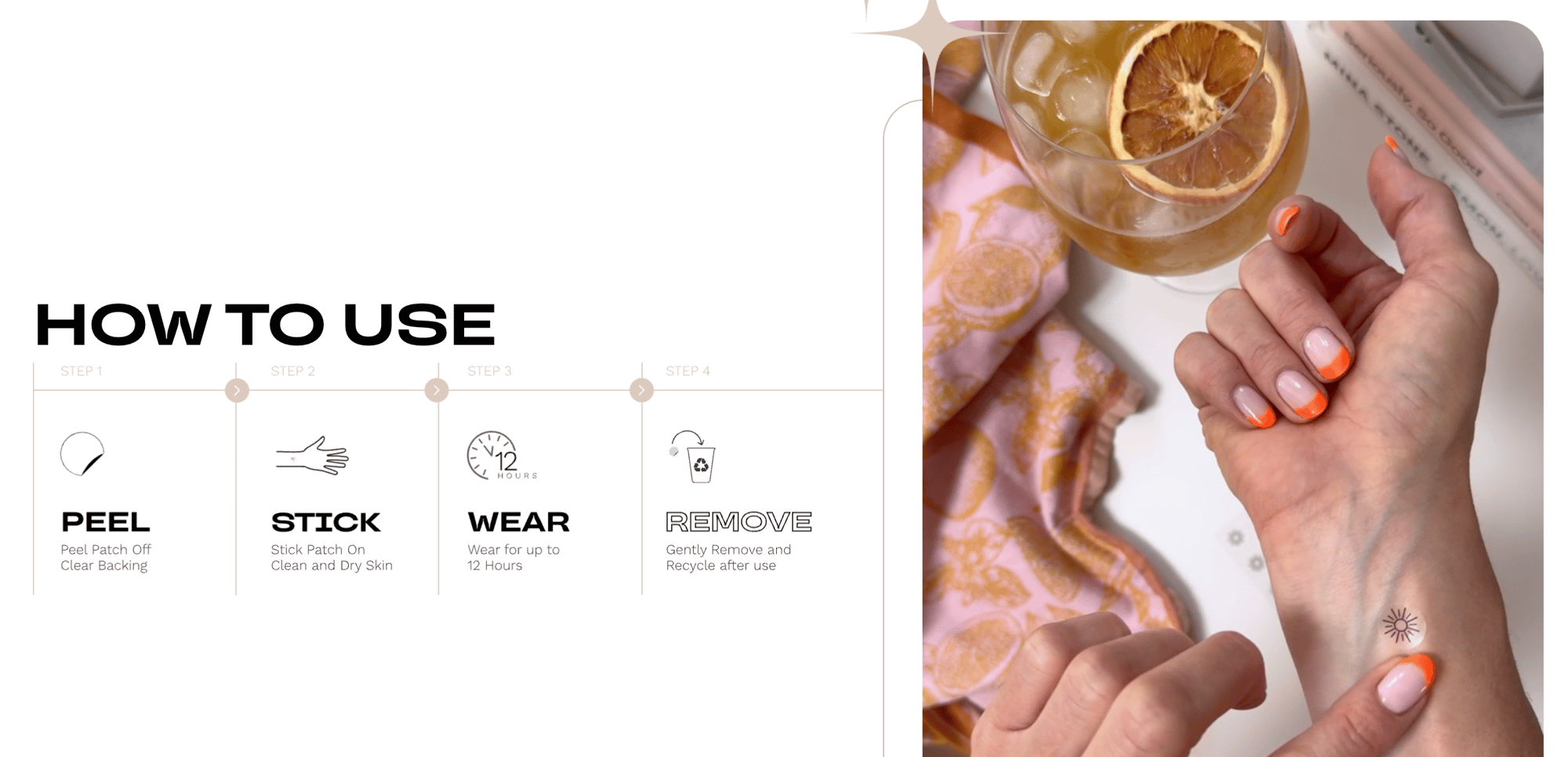
The brand oriented its entire product experience around lived human constraints. Patches are hypoallergenic and water-resistant, but they’re also aesthetically pleasing, turning them into decorations rather than medical tools.
Barrière patches are decorated with florals, astrological icons, and kid-friendly patterns, so customers can select patches not only based on their wellness needs but also on their aesthetics. The brand has turned fashion expression and identity into retention tools—a vast departure from brands like Seed and Ritual, which prioritize minimalist aesthetics and science-based messaging.
"I wanted to make it as easy and enjoyable and effective as possible to build and maintain wellness routines,” Urman explained.
And it’s working. In addition to its direct-to-consumer (DTC) site, Barrière is in nearly 5,000 Target, Walgreens, Ulta, CVS, and Hudson News doors, and has used different marketplaces, such as the Peloton Marketplace, to deliver a “curated assortment of formulas and prints that speak to that customer,” Urman said. Barrière also continues to “pop up” with partners like SoulCycle in the health and wellness space. So far, the brand’s growth has largely stemmed from organic marketing and word of mouth. In fact, paid marketing wasn’t even an option until the second half of 2024. To this day, the brand has prioritized authentic moments where they can show up, offer samples, and answer questions.
Urman acknowledged that the patches offer a diverse palette for new designs and collaborations, creating a clear pathway for expansion. “For me, the goal is to have the illusion of you creating your own. You pick your formula, you can pick from all these designs, maybe even pick your favorite team, so there is that customization and self-expression,” she said.
As the brand grows, the vision remains consistent: that self-care should be both effective and beautiful.
Turning Vision into a System
Vision doesn’t have a single defining characteristic across these three brands. In fact, each brand takes a distinct approach based on its heritage, mission, and target audience, using these insights to develop a decision-making system that drives everything they do.
But perhaps most importantly, each of these brands has very deliberately decided what it is not and what it will not do. Ralph Lauren won't abandon the founder's dream for trend. Flower won't trade its design identity for mass-market appeal. Barrière won't optimize for clinical messaging at the expense of lived experience. Vision, it turns out, is a series of intentional refusals, and the willingness to hold the line on them.
This is part of our series on developing vision for modern retail executives. Read part one, the role of the Chief Vision Officer, and part two on why new titles misguide us on what vision and innovation actually require.
Retail is in the midst of an existential crisis. Algorithms are flattening mainstream aesthetics, bucketing brands and products to the point where they’re so interchangeable they’re forgettable. But the world’s most visionary brands know how to make their mark because they know what to preserve, what to change, and what to reimagine.
The brands that survive “the great cultural flattening” aren't the ones with the loudest vision statements. They're the ones that have turned their vision into a system: a discrete decision methodology for what to preserve, what to evolve, and, most importantly, what to refuse. Every product choice, every campaign, every expansion runs through that filter.
Three brands: Ralph Lauren, Flower by Edie Parker, and Barrière look nothing alike. One a 60-year heritage house, translating a founder's dream into AI and Fortnite. One turns cannabis legalization into a design-led universe where retirees in Boca Raton vape alongside Gen Z. One is making transdermal supplements people actually want to wear.
What connects them is how deliberately each has decided what it isn't.
Together, these brands broaden and contextualize what vision actually means, and show how it becomes a system for any brand to analyze its path to cultural relevance and sustainable growth.
Ralph Lauren: Building from Legacy
Heritage can sound like baggage, but some brands thrive when they know how to protect the meaning of their past while evolving for the future.
Brands like Ralph Lauren have become more relevant and compelling for consumers desperately seeking comfort through nostalgia. Social media’s “Ralph Lauren Christmas” trend showed how the namesake has upheld its cultural relevance, conveying coziness and familiarity amid unending chaos. The trend also illustrated how we are increasingly embracing traditional and ornate design aesthetics as a form of rebellion in an algorithmically flattened world.
Ralph Lauren now has the ideal cultural moment, the social permission, to reinvent itself without losing the founder’s dream: to design high-quality, timeless products that get better with age.
Over the course of its history, the brand has upheld its design philosophy while intentionally modernizing its service and experiences. It has invested heavily in circularity, using its “Live On” promise to drive product innovation. The brand’s Artist in Residence program has also reaffirmed its heritage while partnering with creators, including other brands, that mirror its values and beliefs, both culturally and creatively.
Yet it was Ralph Lauren’s recent Fashion Week shows that put its modernization on full display: rich textures like velvet and leather popped when paired with the brand’s signature pleated trousers and knitted sweaters. Slouchy suits were glammed up with suede and fur-trimmed coats. The menswear show combined classic, preppy, and quirky patterns, all into unified, effortless looks. Despite being inherently “Ralph,” each moment felt edgier, modern, and interesting. They were the perfect vehicles for introducing new, younger consumers to the brand and thoughtfully redefining its position.
Vision Through New Contexts
Aesthetically, Ralph Lauren sits at the ideal intersection of tradition and innovation, and it’s using this positioning to support a broader corporate vision that includes technology.
“We always start with the vision, with the dream, with the purpose to inspire the dream of a better life through authenticity and timeless style,” said David Lauren, Chief Branding and Innovation Officer.
“Our goal is to constantly be thinking about what that vision is, whether we’re at a retail store, in a wholesale shop, or online. What we’re trying to do is make sure that a customer is enveloped in our philosophy.”
Ask Ralph is its AI-powered “styling companion” that contextualizes the brand’s design mission and evolved “vibes” to better serve consumers. The visuals and storytelling within the app align with the brand ethos, but the LLM and consumer data then mix, match, and curate items based on users’ in-the-moment wants and needs. For some, the output will be more traditional and “purely Ralph”; for others, it will be the modern aesthetic flooding social media feeds.
You’d be forgiven for writing this off as another shopping assistant LLM in the long lineage of shopping assistants that are littering sites and apps today. The reality is that Ask Ralph (and its copycats) are scaling the cultural experience of founder taste. What Ask Ralph is doing is scaling what Mr. Lauren used to do one-to-one: tell customers how to assemble outfits and wear clothes well.
“We’re trying to make sure that a customer is enveloped in our philosophy,” Lauren said. “Nobody needs a tie, flannel shirt, or pair of jeans…but showing a customer how to put it all together is part of what makes Ralph Lauren unique…so we feel that technology helps us fulfill that. The idea that you can go on-site and create something that’s even more personal for you is exciting.”
The brand was also an early mover in the gaming space, working with G2 Esports on a capsule collection and adding digital apparel and accessories to Fortnite’s Item Shop.
Ralph Lauren has shown that you can modernize without leaving your history behind. Heritage, in fact, can help focus a brand equally on what it is and what it’s not. Strip away the founder's vision and you have a retailer. Keep it, and you have a world.
Flower by Edie Parker: Turning Cultural Shifts into Worldbuilding Moments
Visionary brands turn cultural shifts into new rituals and visual languages: 88% of consumers purchase from brands that align with their values, and nearly just as many (84%) will recommend these brands to friends and family. For some, “values” equate to environmental issues, but for most, they also show up in the cultures and lifestyles they choose to participate in. What they wear, how they live, and how they unwind define what they buy and the brands they love.
Cannabis legalization has been a defining cultural moment in the US, creating a new market of brands redefining product and experience design. US cannabis sales are expected to reach nearly $47 billion in 2026, representing the vast majority (75%) of global results. Gen Z and millennials are the largest segment of cannabis current users, but now that nearly half of Americans (47%) have tried it, the user base is much more diverse than in the past.
Cannabis is now far more than a recreational drug. It’s also a tool for pain management, anxiety, and creativity. It is equal parts ritual and identity, cultural immersion and community participation. There are specialized experiential retail models just for cannabis users, and Instagram communities for “Cannamoms” who act as the philosophical antithesis to the “wine moms” that typically dominate social media culture.
When culture evolves, commerce follows. Brands have embraced the cannabis market’s diversity and have followed suit by offering products that serve different needs, preferences, and contexts.
“The space is maturing, moving from novelty to lifestyle, from potency to personality,” said Brett Heyman, who harnessed her experience working for fashion brands like Gucci and Dolce & Gabbana to develop Flower by Edie Parker, a brand that has enlivened the cannabis market with its rich design and worldbuilding principles. “Consumers are seeking experiences, not just products, and brands with strong cultural identities are thriving.”
Flower’s core reason for being is to create products built with form, function, and fun. The brand offers everyday goods, such as vintage-inspired vapes and tabletop lighters, as well as quirky, giftable smoking accessories, like patterned rolling papers, bringing Heyman’s fashion background to the forefront. Yet its pricing strategy serves a far more diverse set of customers, ranging from $5 (for pre-rolls) to $250 (for statement pieces), allowing anyone to “join the world of Flower on their own terms.”
The Convergence of Fashion, Function, and Fun
Flower by Edie Parker has defined itself in a sector typically dominated by “the 3 P’s” (price, promotions, and potency) by leading instead with creativity, emotion, and design. Through the convergence of fashion, culture, and high design, the brand reframes cannabis as playful and beautiful, but also innately normal.
“We’re cheeky, vintage-inspired, and a little subversive, using color, nostalgia, and wit to upend expectations of what cannabis can look like,” Heyman said. “Design and storytelling are both our language and our strategy. We make objects you actually want to display: bright, bold, and proudly feminine, so cannabis feels like an extension of your style, not something to hide.”
When one visits the Flower by Edie Parker eCommerce site and Instagram account, it’s easy to see the vision in the execution. In one recent Instagram carousel, a group of retired women in Boca Raton, Florida, is on a lunch date at their retirement community, with their Peta Puffer distillate vapes along for the adventure. Clever and heart-warming, the series illustrates that although Gen Z and millennials are driving the industry forward, this is truly a brand for everyone.
“We naturally resonate with design- and style-driven women, but our community is broader — anyone who loves color, humor, and a sense of play. We often describe our audience as ‘smokers with style.’
- Brett Heyman, Flower by Edie Parker
Culture-led marketing campaigns help build emotional resonance while also appealing to the “cannacurious” of all ages, genders, and backgrounds. Flower’s viral 4/20 collaboration with TV personality Gabby Windey garnered two million organic impressions. The “High in the 305” campaign with Florida-based rapper JT helped Flower authentically reach customers in the state at its launch there. And its incredibly unexpected partnership with Real Housewives of New York star Luann de Lesseps brought cannabis even further into the pop-culture mainstream while cheekily showing a broader (and arguably older) audience that cannabis doesn’t equal “classless.”
Using humor and high design as the core strategy, the brand has grown 8x since 2022 and expanded into 12 markets—a sign that personality can be as powerful a growth lever as potency.
Venturing into its next chapter of growth, Flower plans to double down on its personality and essence. “Our focus for 2026 is deepening brand equity,” Heyman said. “More collaborations that bridge cannabis with fashion, art, and entertainment; more experiential retail; and more advocacy through the Edie Parker Foundation, which supports the Women’s Prison Association and The Last Prisoner Project.”
While the goal for any brand is to get its products into more hands, Flower plans to do so with intention and without apology. Flower shows how a brand can use design and worldbuilding to translate a messy cultural shift into a universe people are proud to live in.
Barrière: Using Novelty and Identity to Shape Wellness
Sometimes, the most durable brands are often the ones that see the obvious thing everyone else has learned to live with. A challenge that’s hiding in plain sight, and presents a clear opportunity for category disruption.
Barrière is a wellness brand that takes the irritation, cost, and awkwardness out of supplements and makes self-care sustainable. For co-founders Alexa Adams and Cleo Davis-Urman, the vision for the business was shaped by Urman's firsthand experiences. Her story began with a diagnosis: she was dangerously low in iron, B12, and vitamin D. Despite years of taking oral supplements, she learned that a significant portion of their benefits is lost in the digestion process. The clinical solution was transdermal delivery, where patches bypass the gut and vitamins are absorbed directly through the skin.
Biologically, it worked. But the rest of the experience was incredibly frustrating, according to Urman. "The products irritated my skin. I couldn't get wet. They looked like something you would see in a hospital. I just didn't see myself being able to maintain that habit consistently."
That friction between what science can do and what real life allows was the founding insight. "The science worked, but the experience didn't," she said. Barrière was brought to market in a beta capacity in November 2023. After robust testing, feedback collection, and iteration, they formally launched the website and went to market in June 2024.
Urman’s experience aligns with that of the vast majority of consumers who recognize the importance of their health but struggle to prioritize it. They either don’t have the time, money, or resources. Or, in a more deceptively obvious scenario, they know what to do, but the routine is too arbitrary or frustrating to be sustainable.
Urman's own research turned up a telling gap: although 86% of Americans use supplements, adherence is below 50%. This context carries significant weight in a category where innovation has been almost entirely focused on what goes into a product rather than what it's like to actually use it.
“I'm not going to shape my world to accommodate a habit, but the habit’s important,” Urman said. “I think if we can acknowledge who we are, even if our intentions are good, we will set ourselves up for success. Now, I have not missed a day of vitamins. It's not just because I own the company, it's because it's so easy for me to wear them.”
Barrière addresses the two distinct problems plaguing the supplement industry: the biological challenges, such as delivery, absorption, and efficacy, and the behavioral challenges, which prevent routines from sticking. Most brands are laser-focused on the first area, Urman noted. Although Barrière focuses on performance, its vision and competitive advantage live in the second area.
A Supplement That Doubles as Self-Expression
The brand oriented its entire product experience around lived human constraints. Patches are hypoallergenic and water-resistant, but they’re also aesthetically pleasing, turning them into decorations rather than medical tools.
Barrière patches are decorated with florals, astrological icons, and kid-friendly patterns, so customers can select patches not only based on their wellness needs but also on their aesthetics. The brand has turned fashion expression and identity into retention tools—a vast departure from brands like Seed and Ritual, which prioritize minimalist aesthetics and science-based messaging.
"I wanted to make it as easy and enjoyable and effective as possible to build and maintain wellness routines,” Urman explained.
And it’s working. In addition to its direct-to-consumer (DTC) site, Barrière is in nearly 5,000 Target, Walgreens, Ulta, CVS, and Hudson News doors, and has used different marketplaces, such as the Peloton Marketplace, to deliver a “curated assortment of formulas and prints that speak to that customer,” Urman said. Barrière also continues to “pop up” with partners like SoulCycle in the health and wellness space. So far, the brand’s growth has largely stemmed from organic marketing and word of mouth. In fact, paid marketing wasn’t even an option until the second half of 2024. To this day, the brand has prioritized authentic moments where they can show up, offer samples, and answer questions.
Urman acknowledged that the patches offer a diverse palette for new designs and collaborations, creating a clear pathway for expansion. “For me, the goal is to have the illusion of you creating your own. You pick your formula, you can pick from all these designs, maybe even pick your favorite team, so there is that customization and self-expression,” she said.
As the brand grows, the vision remains consistent: that self-care should be both effective and beautiful.
Turning Vision into a System
Vision doesn’t have a single defining characteristic across these three brands. In fact, each brand takes a distinct approach based on its heritage, mission, and target audience, using these insights to develop a decision-making system that drives everything they do.
But perhaps most importantly, each of these brands has very deliberately decided what it is not and what it will not do. Ralph Lauren won't abandon the founder's dream for trend. Flower won't trade its design identity for mass-market appeal. Barrière won't optimize for clinical messaging at the expense of lived experience. Vision, it turns out, is a series of intentional refusals, and the willingness to hold the line on them.
This is part of our series on developing vision for modern retail executives. Read part one, the role of the Chief Vision Officer, and part two on why new titles misguide us on what vision and innovation actually require.
Retail is in the midst of an existential crisis. Algorithms are flattening mainstream aesthetics, bucketing brands and products to the point where they’re so interchangeable they’re forgettable. But the world’s most visionary brands know how to make their mark because they know what to preserve, what to change, and what to reimagine.
The brands that survive “the great cultural flattening” aren't the ones with the loudest vision statements. They're the ones that have turned their vision into a system: a discrete decision methodology for what to preserve, what to evolve, and, most importantly, what to refuse. Every product choice, every campaign, every expansion runs through that filter.
Three brands: Ralph Lauren, Flower by Edie Parker, and Barrière look nothing alike. One a 60-year heritage house, translating a founder's dream into AI and Fortnite. One turns cannabis legalization into a design-led universe where retirees in Boca Raton vape alongside Gen Z. One is making transdermal supplements people actually want to wear.
What connects them is how deliberately each has decided what it isn't.
Together, these brands broaden and contextualize what vision actually means, and show how it becomes a system for any brand to analyze its path to cultural relevance and sustainable growth.
Ralph Lauren: Building from Legacy
Heritage can sound like baggage, but some brands thrive when they know how to protect the meaning of their past while evolving for the future.
Brands like Ralph Lauren have become more relevant and compelling for consumers desperately seeking comfort through nostalgia. Social media’s “Ralph Lauren Christmas” trend showed how the namesake has upheld its cultural relevance, conveying coziness and familiarity amid unending chaos. The trend also illustrated how we are increasingly embracing traditional and ornate design aesthetics as a form of rebellion in an algorithmically flattened world.
Ralph Lauren now has the ideal cultural moment, the social permission, to reinvent itself without losing the founder’s dream: to design high-quality, timeless products that get better with age.
Over the course of its history, the brand has upheld its design philosophy while intentionally modernizing its service and experiences. It has invested heavily in circularity, using its “Live On” promise to drive product innovation. The brand’s Artist in Residence program has also reaffirmed its heritage while partnering with creators, including other brands, that mirror its values and beliefs, both culturally and creatively.
Yet it was Ralph Lauren’s recent Fashion Week shows that put its modernization on full display: rich textures like velvet and leather popped when paired with the brand’s signature pleated trousers and knitted sweaters. Slouchy suits were glammed up with suede and fur-trimmed coats. The menswear show combined classic, preppy, and quirky patterns, all into unified, effortless looks. Despite being inherently “Ralph,” each moment felt edgier, modern, and interesting. They were the perfect vehicles for introducing new, younger consumers to the brand and thoughtfully redefining its position.
Vision Through New Contexts
Aesthetically, Ralph Lauren sits at the ideal intersection of tradition and innovation, and it’s using this positioning to support a broader corporate vision that includes technology.
“We always start with the vision, with the dream, with the purpose to inspire the dream of a better life through authenticity and timeless style,” said David Lauren, Chief Branding and Innovation Officer.
“Our goal is to constantly be thinking about what that vision is, whether we’re at a retail store, in a wholesale shop, or online. What we’re trying to do is make sure that a customer is enveloped in our philosophy.”
Ask Ralph is its AI-powered “styling companion” that contextualizes the brand’s design mission and evolved “vibes” to better serve consumers. The visuals and storytelling within the app align with the brand ethos, but the LLM and consumer data then mix, match, and curate items based on users’ in-the-moment wants and needs. For some, the output will be more traditional and “purely Ralph”; for others, it will be the modern aesthetic flooding social media feeds.
You’d be forgiven for writing this off as another shopping assistant LLM in the long lineage of shopping assistants that are littering sites and apps today. The reality is that Ask Ralph (and its copycats) are scaling the cultural experience of founder taste. What Ask Ralph is doing is scaling what Mr. Lauren used to do one-to-one: tell customers how to assemble outfits and wear clothes well.
“We’re trying to make sure that a customer is enveloped in our philosophy,” Lauren said. “Nobody needs a tie, flannel shirt, or pair of jeans…but showing a customer how to put it all together is part of what makes Ralph Lauren unique…so we feel that technology helps us fulfill that. The idea that you can go on-site and create something that’s even more personal for you is exciting.”
The brand was also an early mover in the gaming space, working with G2 Esports on a capsule collection and adding digital apparel and accessories to Fortnite’s Item Shop.
Ralph Lauren has shown that you can modernize without leaving your history behind. Heritage, in fact, can help focus a brand equally on what it is and what it’s not. Strip away the founder's vision and you have a retailer. Keep it, and you have a world.
Flower by Edie Parker: Turning Cultural Shifts into Worldbuilding Moments
Visionary brands turn cultural shifts into new rituals and visual languages: 88% of consumers purchase from brands that align with their values, and nearly just as many (84%) will recommend these brands to friends and family. For some, “values” equate to environmental issues, but for most, they also show up in the cultures and lifestyles they choose to participate in. What they wear, how they live, and how they unwind define what they buy and the brands they love.
Cannabis legalization has been a defining cultural moment in the US, creating a new market of brands redefining product and experience design. US cannabis sales are expected to reach nearly $47 billion in 2026, representing the vast majority (75%) of global results. Gen Z and millennials are the largest segment of cannabis current users, but now that nearly half of Americans (47%) have tried it, the user base is much more diverse than in the past.
Cannabis is now far more than a recreational drug. It’s also a tool for pain management, anxiety, and creativity. It is equal parts ritual and identity, cultural immersion and community participation. There are specialized experiential retail models just for cannabis users, and Instagram communities for “Cannamoms” who act as the philosophical antithesis to the “wine moms” that typically dominate social media culture.
When culture evolves, commerce follows. Brands have embraced the cannabis market’s diversity and have followed suit by offering products that serve different needs, preferences, and contexts.
“The space is maturing, moving from novelty to lifestyle, from potency to personality,” said Brett Heyman, who harnessed her experience working for fashion brands like Gucci and Dolce & Gabbana to develop Flower by Edie Parker, a brand that has enlivened the cannabis market with its rich design and worldbuilding principles. “Consumers are seeking experiences, not just products, and brands with strong cultural identities are thriving.”
Flower’s core reason for being is to create products built with form, function, and fun. The brand offers everyday goods, such as vintage-inspired vapes and tabletop lighters, as well as quirky, giftable smoking accessories, like patterned rolling papers, bringing Heyman’s fashion background to the forefront. Yet its pricing strategy serves a far more diverse set of customers, ranging from $5 (for pre-rolls) to $250 (for statement pieces), allowing anyone to “join the world of Flower on their own terms.”
The Convergence of Fashion, Function, and Fun
Flower by Edie Parker has defined itself in a sector typically dominated by “the 3 P’s” (price, promotions, and potency) by leading instead with creativity, emotion, and design. Through the convergence of fashion, culture, and high design, the brand reframes cannabis as playful and beautiful, but also innately normal.
“We’re cheeky, vintage-inspired, and a little subversive, using color, nostalgia, and wit to upend expectations of what cannabis can look like,” Heyman said. “Design and storytelling are both our language and our strategy. We make objects you actually want to display: bright, bold, and proudly feminine, so cannabis feels like an extension of your style, not something to hide.”
When one visits the Flower by Edie Parker eCommerce site and Instagram account, it’s easy to see the vision in the execution. In one recent Instagram carousel, a group of retired women in Boca Raton, Florida, is on a lunch date at their retirement community, with their Peta Puffer distillate vapes along for the adventure. Clever and heart-warming, the series illustrates that although Gen Z and millennials are driving the industry forward, this is truly a brand for everyone.
“We naturally resonate with design- and style-driven women, but our community is broader — anyone who loves color, humor, and a sense of play. We often describe our audience as ‘smokers with style.’
- Brett Heyman, Flower by Edie Parker
Culture-led marketing campaigns help build emotional resonance while also appealing to the “cannacurious” of all ages, genders, and backgrounds. Flower’s viral 4/20 collaboration with TV personality Gabby Windey garnered two million organic impressions. The “High in the 305” campaign with Florida-based rapper JT helped Flower authentically reach customers in the state at its launch there. And its incredibly unexpected partnership with Real Housewives of New York star Luann de Lesseps brought cannabis even further into the pop-culture mainstream while cheekily showing a broader (and arguably older) audience that cannabis doesn’t equal “classless.”
Using humor and high design as the core strategy, the brand has grown 8x since 2022 and expanded into 12 markets—a sign that personality can be as powerful a growth lever as potency.
Venturing into its next chapter of growth, Flower plans to double down on its personality and essence. “Our focus for 2026 is deepening brand equity,” Heyman said. “More collaborations that bridge cannabis with fashion, art, and entertainment; more experiential retail; and more advocacy through the Edie Parker Foundation, which supports the Women’s Prison Association and The Last Prisoner Project.”
While the goal for any brand is to get its products into more hands, Flower plans to do so with intention and without apology. Flower shows how a brand can use design and worldbuilding to translate a messy cultural shift into a universe people are proud to live in.
Barrière: Using Novelty and Identity to Shape Wellness
Sometimes, the most durable brands are often the ones that see the obvious thing everyone else has learned to live with. A challenge that’s hiding in plain sight, and presents a clear opportunity for category disruption.
Barrière is a wellness brand that takes the irritation, cost, and awkwardness out of supplements and makes self-care sustainable. For co-founders Alexa Adams and Cleo Davis-Urman, the vision for the business was shaped by Urman's firsthand experiences. Her story began with a diagnosis: she was dangerously low in iron, B12, and vitamin D. Despite years of taking oral supplements, she learned that a significant portion of their benefits is lost in the digestion process. The clinical solution was transdermal delivery, where patches bypass the gut and vitamins are absorbed directly through the skin.
Biologically, it worked. But the rest of the experience was incredibly frustrating, according to Urman. "The products irritated my skin. I couldn't get wet. They looked like something you would see in a hospital. I just didn't see myself being able to maintain that habit consistently."
That friction between what science can do and what real life allows was the founding insight. "The science worked, but the experience didn't," she said. Barrière was brought to market in a beta capacity in November 2023. After robust testing, feedback collection, and iteration, they formally launched the website and went to market in June 2024.
Urman’s experience aligns with that of the vast majority of consumers who recognize the importance of their health but struggle to prioritize it. They either don’t have the time, money, or resources. Or, in a more deceptively obvious scenario, they know what to do, but the routine is too arbitrary or frustrating to be sustainable.
Urman's own research turned up a telling gap: although 86% of Americans use supplements, adherence is below 50%. This context carries significant weight in a category where innovation has been almost entirely focused on what goes into a product rather than what it's like to actually use it.
“I'm not going to shape my world to accommodate a habit, but the habit’s important,” Urman said. “I think if we can acknowledge who we are, even if our intentions are good, we will set ourselves up for success. Now, I have not missed a day of vitamins. It's not just because I own the company, it's because it's so easy for me to wear them.”
Barrière addresses the two distinct problems plaguing the supplement industry: the biological challenges, such as delivery, absorption, and efficacy, and the behavioral challenges, which prevent routines from sticking. Most brands are laser-focused on the first area, Urman noted. Although Barrière focuses on performance, its vision and competitive advantage live in the second area.
A Supplement That Doubles as Self-Expression
The brand oriented its entire product experience around lived human constraints. Patches are hypoallergenic and water-resistant, but they’re also aesthetically pleasing, turning them into decorations rather than medical tools.
Barrière patches are decorated with florals, astrological icons, and kid-friendly patterns, so customers can select patches not only based on their wellness needs but also on their aesthetics. The brand has turned fashion expression and identity into retention tools—a vast departure from brands like Seed and Ritual, which prioritize minimalist aesthetics and science-based messaging.
"I wanted to make it as easy and enjoyable and effective as possible to build and maintain wellness routines,” Urman explained.
And it’s working. In addition to its direct-to-consumer (DTC) site, Barrière is in nearly 5,000 Target, Walgreens, Ulta, CVS, and Hudson News doors, and has used different marketplaces, such as the Peloton Marketplace, to deliver a “curated assortment of formulas and prints that speak to that customer,” Urman said. Barrière also continues to “pop up” with partners like SoulCycle in the health and wellness space. So far, the brand’s growth has largely stemmed from organic marketing and word of mouth. In fact, paid marketing wasn’t even an option until the second half of 2024. To this day, the brand has prioritized authentic moments where they can show up, offer samples, and answer questions.
Urman acknowledged that the patches offer a diverse palette for new designs and collaborations, creating a clear pathway for expansion. “For me, the goal is to have the illusion of you creating your own. You pick your formula, you can pick from all these designs, maybe even pick your favorite team, so there is that customization and self-expression,” she said.
As the brand grows, the vision remains consistent: that self-care should be both effective and beautiful.
Turning Vision into a System
Vision doesn’t have a single defining characteristic across these three brands. In fact, each brand takes a distinct approach based on its heritage, mission, and target audience, using these insights to develop a decision-making system that drives everything they do.
But perhaps most importantly, each of these brands has very deliberately decided what it is not and what it will not do. Ralph Lauren won't abandon the founder's dream for trend. Flower won't trade its design identity for mass-market appeal. Barrière won't optimize for clinical messaging at the expense of lived experience. Vision, it turns out, is a series of intentional refusals, and the willingness to hold the line on them.
This is part of our series on developing vision for modern retail executives. Read part one, the role of the Chief Vision Officer, and part two on why new titles misguide us on what vision and innovation actually require.
Retail is in the midst of an existential crisis. Algorithms are flattening mainstream aesthetics, bucketing brands and products to the point where they’re so interchangeable they’re forgettable. But the world’s most visionary brands know how to make their mark because they know what to preserve, what to change, and what to reimagine.
The brands that survive “the great cultural flattening” aren't the ones with the loudest vision statements. They're the ones that have turned their vision into a system: a discrete decision methodology for what to preserve, what to evolve, and, most importantly, what to refuse. Every product choice, every campaign, every expansion runs through that filter.
Three brands: Ralph Lauren, Flower by Edie Parker, and Barrière look nothing alike. One a 60-year heritage house, translating a founder's dream into AI and Fortnite. One turns cannabis legalization into a design-led universe where retirees in Boca Raton vape alongside Gen Z. One is making transdermal supplements people actually want to wear.
What connects them is how deliberately each has decided what it isn't.
Together, these brands broaden and contextualize what vision actually means, and show how it becomes a system for any brand to analyze its path to cultural relevance and sustainable growth.
Ralph Lauren: Building from Legacy
Heritage can sound like baggage, but some brands thrive when they know how to protect the meaning of their past while evolving for the future.
Brands like Ralph Lauren have become more relevant and compelling for consumers desperately seeking comfort through nostalgia. Social media’s “Ralph Lauren Christmas” trend showed how the namesake has upheld its cultural relevance, conveying coziness and familiarity amid unending chaos. The trend also illustrated how we are increasingly embracing traditional and ornate design aesthetics as a form of rebellion in an algorithmically flattened world.
Ralph Lauren now has the ideal cultural moment, the social permission, to reinvent itself without losing the founder’s dream: to design high-quality, timeless products that get better with age.
Over the course of its history, the brand has upheld its design philosophy while intentionally modernizing its service and experiences. It has invested heavily in circularity, using its “Live On” promise to drive product innovation. The brand’s Artist in Residence program has also reaffirmed its heritage while partnering with creators, including other brands, that mirror its values and beliefs, both culturally and creatively.
Yet it was Ralph Lauren’s recent Fashion Week shows that put its modernization on full display: rich textures like velvet and leather popped when paired with the brand’s signature pleated trousers and knitted sweaters. Slouchy suits were glammed up with suede and fur-trimmed coats. The menswear show combined classic, preppy, and quirky patterns, all into unified, effortless looks. Despite being inherently “Ralph,” each moment felt edgier, modern, and interesting. They were the perfect vehicles for introducing new, younger consumers to the brand and thoughtfully redefining its position.
Vision Through New Contexts
Aesthetically, Ralph Lauren sits at the ideal intersection of tradition and innovation, and it’s using this positioning to support a broader corporate vision that includes technology.
“We always start with the vision, with the dream, with the purpose to inspire the dream of a better life through authenticity and timeless style,” said David Lauren, Chief Branding and Innovation Officer.
“Our goal is to constantly be thinking about what that vision is, whether we’re at a retail store, in a wholesale shop, or online. What we’re trying to do is make sure that a customer is enveloped in our philosophy.”
Ask Ralph is its AI-powered “styling companion” that contextualizes the brand’s design mission and evolved “vibes” to better serve consumers. The visuals and storytelling within the app align with the brand ethos, but the LLM and consumer data then mix, match, and curate items based on users’ in-the-moment wants and needs. For some, the output will be more traditional and “purely Ralph”; for others, it will be the modern aesthetic flooding social media feeds.
You’d be forgiven for writing this off as another shopping assistant LLM in the long lineage of shopping assistants that are littering sites and apps today. The reality is that Ask Ralph (and its copycats) are scaling the cultural experience of founder taste. What Ask Ralph is doing is scaling what Mr. Lauren used to do one-to-one: tell customers how to assemble outfits and wear clothes well.
“We’re trying to make sure that a customer is enveloped in our philosophy,” Lauren said. “Nobody needs a tie, flannel shirt, or pair of jeans…but showing a customer how to put it all together is part of what makes Ralph Lauren unique…so we feel that technology helps us fulfill that. The idea that you can go on-site and create something that’s even more personal for you is exciting.”
The brand was also an early mover in the gaming space, working with G2 Esports on a capsule collection and adding digital apparel and accessories to Fortnite’s Item Shop.
Ralph Lauren has shown that you can modernize without leaving your history behind. Heritage, in fact, can help focus a brand equally on what it is and what it’s not. Strip away the founder's vision and you have a retailer. Keep it, and you have a world.
Flower by Edie Parker: Turning Cultural Shifts into Worldbuilding Moments
Visionary brands turn cultural shifts into new rituals and visual languages: 88% of consumers purchase from brands that align with their values, and nearly just as many (84%) will recommend these brands to friends and family. For some, “values” equate to environmental issues, but for most, they also show up in the cultures and lifestyles they choose to participate in. What they wear, how they live, and how they unwind define what they buy and the brands they love.
Cannabis legalization has been a defining cultural moment in the US, creating a new market of brands redefining product and experience design. US cannabis sales are expected to reach nearly $47 billion in 2026, representing the vast majority (75%) of global results. Gen Z and millennials are the largest segment of cannabis current users, but now that nearly half of Americans (47%) have tried it, the user base is much more diverse than in the past.
Cannabis is now far more than a recreational drug. It’s also a tool for pain management, anxiety, and creativity. It is equal parts ritual and identity, cultural immersion and community participation. There are specialized experiential retail models just for cannabis users, and Instagram communities for “Cannamoms” who act as the philosophical antithesis to the “wine moms” that typically dominate social media culture.
When culture evolves, commerce follows. Brands have embraced the cannabis market’s diversity and have followed suit by offering products that serve different needs, preferences, and contexts.
“The space is maturing, moving from novelty to lifestyle, from potency to personality,” said Brett Heyman, who harnessed her experience working for fashion brands like Gucci and Dolce & Gabbana to develop Flower by Edie Parker, a brand that has enlivened the cannabis market with its rich design and worldbuilding principles. “Consumers are seeking experiences, not just products, and brands with strong cultural identities are thriving.”
Flower’s core reason for being is to create products built with form, function, and fun. The brand offers everyday goods, such as vintage-inspired vapes and tabletop lighters, as well as quirky, giftable smoking accessories, like patterned rolling papers, bringing Heyman’s fashion background to the forefront. Yet its pricing strategy serves a far more diverse set of customers, ranging from $5 (for pre-rolls) to $250 (for statement pieces), allowing anyone to “join the world of Flower on their own terms.”
The Convergence of Fashion, Function, and Fun
Flower by Edie Parker has defined itself in a sector typically dominated by “the 3 P’s” (price, promotions, and potency) by leading instead with creativity, emotion, and design. Through the convergence of fashion, culture, and high design, the brand reframes cannabis as playful and beautiful, but also innately normal.
“We’re cheeky, vintage-inspired, and a little subversive, using color, nostalgia, and wit to upend expectations of what cannabis can look like,” Heyman said. “Design and storytelling are both our language and our strategy. We make objects you actually want to display: bright, bold, and proudly feminine, so cannabis feels like an extension of your style, not something to hide.”
When one visits the Flower by Edie Parker eCommerce site and Instagram account, it’s easy to see the vision in the execution. In one recent Instagram carousel, a group of retired women in Boca Raton, Florida, is on a lunch date at their retirement community, with their Peta Puffer distillate vapes along for the adventure. Clever and heart-warming, the series illustrates that although Gen Z and millennials are driving the industry forward, this is truly a brand for everyone.
“We naturally resonate with design- and style-driven women, but our community is broader — anyone who loves color, humor, and a sense of play. We often describe our audience as ‘smokers with style.’
- Brett Heyman, Flower by Edie Parker
Culture-led marketing campaigns help build emotional resonance while also appealing to the “cannacurious” of all ages, genders, and backgrounds. Flower’s viral 4/20 collaboration with TV personality Gabby Windey garnered two million organic impressions. The “High in the 305” campaign with Florida-based rapper JT helped Flower authentically reach customers in the state at its launch there. And its incredibly unexpected partnership with Real Housewives of New York star Luann de Lesseps brought cannabis even further into the pop-culture mainstream while cheekily showing a broader (and arguably older) audience that cannabis doesn’t equal “classless.”
Using humor and high design as the core strategy, the brand has grown 8x since 2022 and expanded into 12 markets—a sign that personality can be as powerful a growth lever as potency.
Venturing into its next chapter of growth, Flower plans to double down on its personality and essence. “Our focus for 2026 is deepening brand equity,” Heyman said. “More collaborations that bridge cannabis with fashion, art, and entertainment; more experiential retail; and more advocacy through the Edie Parker Foundation, which supports the Women’s Prison Association and The Last Prisoner Project.”
While the goal for any brand is to get its products into more hands, Flower plans to do so with intention and without apology. Flower shows how a brand can use design and worldbuilding to translate a messy cultural shift into a universe people are proud to live in.
Barrière: Using Novelty and Identity to Shape Wellness
Sometimes, the most durable brands are often the ones that see the obvious thing everyone else has learned to live with. A challenge that’s hiding in plain sight, and presents a clear opportunity for category disruption.
Barrière is a wellness brand that takes the irritation, cost, and awkwardness out of supplements and makes self-care sustainable. For co-founders Alexa Adams and Cleo Davis-Urman, the vision for the business was shaped by Urman's firsthand experiences. Her story began with a diagnosis: she was dangerously low in iron, B12, and vitamin D. Despite years of taking oral supplements, she learned that a significant portion of their benefits is lost in the digestion process. The clinical solution was transdermal delivery, where patches bypass the gut and vitamins are absorbed directly through the skin.
Biologically, it worked. But the rest of the experience was incredibly frustrating, according to Urman. "The products irritated my skin. I couldn't get wet. They looked like something you would see in a hospital. I just didn't see myself being able to maintain that habit consistently."
That friction between what science can do and what real life allows was the founding insight. "The science worked, but the experience didn't," she said. Barrière was brought to market in a beta capacity in November 2023. After robust testing, feedback collection, and iteration, they formally launched the website and went to market in June 2024.
Urman’s experience aligns with that of the vast majority of consumers who recognize the importance of their health but struggle to prioritize it. They either don’t have the time, money, or resources. Or, in a more deceptively obvious scenario, they know what to do, but the routine is too arbitrary or frustrating to be sustainable.
Urman's own research turned up a telling gap: although 86% of Americans use supplements, adherence is below 50%. This context carries significant weight in a category where innovation has been almost entirely focused on what goes into a product rather than what it's like to actually use it.
“I'm not going to shape my world to accommodate a habit, but the habit’s important,” Urman said. “I think if we can acknowledge who we are, even if our intentions are good, we will set ourselves up for success. Now, I have not missed a day of vitamins. It's not just because I own the company, it's because it's so easy for me to wear them.”
Barrière addresses the two distinct problems plaguing the supplement industry: the biological challenges, such as delivery, absorption, and efficacy, and the behavioral challenges, which prevent routines from sticking. Most brands are laser-focused on the first area, Urman noted. Although Barrière focuses on performance, its vision and competitive advantage live in the second area.
A Supplement That Doubles as Self-Expression
The brand oriented its entire product experience around lived human constraints. Patches are hypoallergenic and water-resistant, but they’re also aesthetically pleasing, turning them into decorations rather than medical tools.
Barrière patches are decorated with florals, astrological icons, and kid-friendly patterns, so customers can select patches not only based on their wellness needs but also on their aesthetics. The brand has turned fashion expression and identity into retention tools—a vast departure from brands like Seed and Ritual, which prioritize minimalist aesthetics and science-based messaging.
"I wanted to make it as easy and enjoyable and effective as possible to build and maintain wellness routines,” Urman explained.
And it’s working. In addition to its direct-to-consumer (DTC) site, Barrière is in nearly 5,000 Target, Walgreens, Ulta, CVS, and Hudson News doors, and has used different marketplaces, such as the Peloton Marketplace, to deliver a “curated assortment of formulas and prints that speak to that customer,” Urman said. Barrière also continues to “pop up” with partners like SoulCycle in the health and wellness space. So far, the brand’s growth has largely stemmed from organic marketing and word of mouth. In fact, paid marketing wasn’t even an option until the second half of 2024. To this day, the brand has prioritized authentic moments where they can show up, offer samples, and answer questions.
Urman acknowledged that the patches offer a diverse palette for new designs and collaborations, creating a clear pathway for expansion. “For me, the goal is to have the illusion of you creating your own. You pick your formula, you can pick from all these designs, maybe even pick your favorite team, so there is that customization and self-expression,” she said.
As the brand grows, the vision remains consistent: that self-care should be both effective and beautiful.
Turning Vision into a System
Vision doesn’t have a single defining characteristic across these three brands. In fact, each brand takes a distinct approach based on its heritage, mission, and target audience, using these insights to develop a decision-making system that drives everything they do.
But perhaps most importantly, each of these brands has very deliberately decided what it is not and what it will not do. Ralph Lauren won't abandon the founder's dream for trend. Flower won't trade its design identity for mass-market appeal. Barrière won't optimize for clinical messaging at the expense of lived experience. Vision, it turns out, is a series of intentional refusals, and the willingness to hold the line on them.
This is part of our series on developing vision for modern retail executives. Read part one, the role of the Chief Vision Officer, and part two on why new titles misguide us on what vision and innovation actually require.
Retail is in the midst of an existential crisis. Algorithms are flattening mainstream aesthetics, bucketing brands and products to the point where they’re so interchangeable they’re forgettable. But the world’s most visionary brands know how to make their mark because they know what to preserve, what to change, and what to reimagine.
The brands that survive “the great cultural flattening” aren't the ones with the loudest vision statements. They're the ones that have turned their vision into a system: a discrete decision methodology for what to preserve, what to evolve, and, most importantly, what to refuse. Every product choice, every campaign, every expansion runs through that filter.
Three brands: Ralph Lauren, Flower by Edie Parker, and Barrière look nothing alike. One a 60-year heritage house, translating a founder's dream into AI and Fortnite. One turns cannabis legalization into a design-led universe where retirees in Boca Raton vape alongside Gen Z. One is making transdermal supplements people actually want to wear.
What connects them is how deliberately each has decided what it isn't.
Together, these brands broaden and contextualize what vision actually means, and show how it becomes a system for any brand to analyze its path to cultural relevance and sustainable growth.
Ralph Lauren: Building from Legacy
Heritage can sound like baggage, but some brands thrive when they know how to protect the meaning of their past while evolving for the future.
Brands like Ralph Lauren have become more relevant and compelling for consumers desperately seeking comfort through nostalgia. Social media’s “Ralph Lauren Christmas” trend showed how the namesake has upheld its cultural relevance, conveying coziness and familiarity amid unending chaos. The trend also illustrated how we are increasingly embracing traditional and ornate design aesthetics as a form of rebellion in an algorithmically flattened world.
Ralph Lauren now has the ideal cultural moment, the social permission, to reinvent itself without losing the founder’s dream: to design high-quality, timeless products that get better with age.
Over the course of its history, the brand has upheld its design philosophy while intentionally modernizing its service and experiences. It has invested heavily in circularity, using its “Live On” promise to drive product innovation. The brand’s Artist in Residence program has also reaffirmed its heritage while partnering with creators, including other brands, that mirror its values and beliefs, both culturally and creatively.
Yet it was Ralph Lauren’s recent Fashion Week shows that put its modernization on full display: rich textures like velvet and leather popped when paired with the brand’s signature pleated trousers and knitted sweaters. Slouchy suits were glammed up with suede and fur-trimmed coats. The menswear show combined classic, preppy, and quirky patterns, all into unified, effortless looks. Despite being inherently “Ralph,” each moment felt edgier, modern, and interesting. They were the perfect vehicles for introducing new, younger consumers to the brand and thoughtfully redefining its position.
Vision Through New Contexts
Aesthetically, Ralph Lauren sits at the ideal intersection of tradition and innovation, and it’s using this positioning to support a broader corporate vision that includes technology.
“We always start with the vision, with the dream, with the purpose to inspire the dream of a better life through authenticity and timeless style,” said David Lauren, Chief Branding and Innovation Officer.
“Our goal is to constantly be thinking about what that vision is, whether we’re at a retail store, in a wholesale shop, or online. What we’re trying to do is make sure that a customer is enveloped in our philosophy.”
Ask Ralph is its AI-powered “styling companion” that contextualizes the brand’s design mission and evolved “vibes” to better serve consumers. The visuals and storytelling within the app align with the brand ethos, but the LLM and consumer data then mix, match, and curate items based on users’ in-the-moment wants and needs. For some, the output will be more traditional and “purely Ralph”; for others, it will be the modern aesthetic flooding social media feeds.
You’d be forgiven for writing this off as another shopping assistant LLM in the long lineage of shopping assistants that are littering sites and apps today. The reality is that Ask Ralph (and its copycats) are scaling the cultural experience of founder taste. What Ask Ralph is doing is scaling what Mr. Lauren used to do one-to-one: tell customers how to assemble outfits and wear clothes well.
“We’re trying to make sure that a customer is enveloped in our philosophy,” Lauren said. “Nobody needs a tie, flannel shirt, or pair of jeans…but showing a customer how to put it all together is part of what makes Ralph Lauren unique…so we feel that technology helps us fulfill that. The idea that you can go on-site and create something that’s even more personal for you is exciting.”
The brand was also an early mover in the gaming space, working with G2 Esports on a capsule collection and adding digital apparel and accessories to Fortnite’s Item Shop.
Ralph Lauren has shown that you can modernize without leaving your history behind. Heritage, in fact, can help focus a brand equally on what it is and what it’s not. Strip away the founder's vision and you have a retailer. Keep it, and you have a world.
Flower by Edie Parker: Turning Cultural Shifts into Worldbuilding Moments
Visionary brands turn cultural shifts into new rituals and visual languages: 88% of consumers purchase from brands that align with their values, and nearly just as many (84%) will recommend these brands to friends and family. For some, “values” equate to environmental issues, but for most, they also show up in the cultures and lifestyles they choose to participate in. What they wear, how they live, and how they unwind define what they buy and the brands they love.
Cannabis legalization has been a defining cultural moment in the US, creating a new market of brands redefining product and experience design. US cannabis sales are expected to reach nearly $47 billion in 2026, representing the vast majority (75%) of global results. Gen Z and millennials are the largest segment of cannabis current users, but now that nearly half of Americans (47%) have tried it, the user base is much more diverse than in the past.
Cannabis is now far more than a recreational drug. It’s also a tool for pain management, anxiety, and creativity. It is equal parts ritual and identity, cultural immersion and community participation. There are specialized experiential retail models just for cannabis users, and Instagram communities for “Cannamoms” who act as the philosophical antithesis to the “wine moms” that typically dominate social media culture.
When culture evolves, commerce follows. Brands have embraced the cannabis market’s diversity and have followed suit by offering products that serve different needs, preferences, and contexts.
“The space is maturing, moving from novelty to lifestyle, from potency to personality,” said Brett Heyman, who harnessed her experience working for fashion brands like Gucci and Dolce & Gabbana to develop Flower by Edie Parker, a brand that has enlivened the cannabis market with its rich design and worldbuilding principles. “Consumers are seeking experiences, not just products, and brands with strong cultural identities are thriving.”
Flower’s core reason for being is to create products built with form, function, and fun. The brand offers everyday goods, such as vintage-inspired vapes and tabletop lighters, as well as quirky, giftable smoking accessories, like patterned rolling papers, bringing Heyman’s fashion background to the forefront. Yet its pricing strategy serves a far more diverse set of customers, ranging from $5 (for pre-rolls) to $250 (for statement pieces), allowing anyone to “join the world of Flower on their own terms.”
The Convergence of Fashion, Function, and Fun
Flower by Edie Parker has defined itself in a sector typically dominated by “the 3 P’s” (price, promotions, and potency) by leading instead with creativity, emotion, and design. Through the convergence of fashion, culture, and high design, the brand reframes cannabis as playful and beautiful, but also innately normal.
“We’re cheeky, vintage-inspired, and a little subversive, using color, nostalgia, and wit to upend expectations of what cannabis can look like,” Heyman said. “Design and storytelling are both our language and our strategy. We make objects you actually want to display: bright, bold, and proudly feminine, so cannabis feels like an extension of your style, not something to hide.”
When one visits the Flower by Edie Parker eCommerce site and Instagram account, it’s easy to see the vision in the execution. In one recent Instagram carousel, a group of retired women in Boca Raton, Florida, is on a lunch date at their retirement community, with their Peta Puffer distillate vapes along for the adventure. Clever and heart-warming, the series illustrates that although Gen Z and millennials are driving the industry forward, this is truly a brand for everyone.
“We naturally resonate with design- and style-driven women, but our community is broader — anyone who loves color, humor, and a sense of play. We often describe our audience as ‘smokers with style.’
- Brett Heyman, Flower by Edie Parker
Culture-led marketing campaigns help build emotional resonance while also appealing to the “cannacurious” of all ages, genders, and backgrounds. Flower’s viral 4/20 collaboration with TV personality Gabby Windey garnered two million organic impressions. The “High in the 305” campaign with Florida-based rapper JT helped Flower authentically reach customers in the state at its launch there. And its incredibly unexpected partnership with Real Housewives of New York star Luann de Lesseps brought cannabis even further into the pop-culture mainstream while cheekily showing a broader (and arguably older) audience that cannabis doesn’t equal “classless.”
Using humor and high design as the core strategy, the brand has grown 8x since 2022 and expanded into 12 markets—a sign that personality can be as powerful a growth lever as potency.
Venturing into its next chapter of growth, Flower plans to double down on its personality and essence. “Our focus for 2026 is deepening brand equity,” Heyman said. “More collaborations that bridge cannabis with fashion, art, and entertainment; more experiential retail; and more advocacy through the Edie Parker Foundation, which supports the Women’s Prison Association and The Last Prisoner Project.”
While the goal for any brand is to get its products into more hands, Flower plans to do so with intention and without apology. Flower shows how a brand can use design and worldbuilding to translate a messy cultural shift into a universe people are proud to live in.
Barrière: Using Novelty and Identity to Shape Wellness
Sometimes, the most durable brands are often the ones that see the obvious thing everyone else has learned to live with. A challenge that’s hiding in plain sight, and presents a clear opportunity for category disruption.
Barrière is a wellness brand that takes the irritation, cost, and awkwardness out of supplements and makes self-care sustainable. For co-founders Alexa Adams and Cleo Davis-Urman, the vision for the business was shaped by Urman's firsthand experiences. Her story began with a diagnosis: she was dangerously low in iron, B12, and vitamin D. Despite years of taking oral supplements, she learned that a significant portion of their benefits is lost in the digestion process. The clinical solution was transdermal delivery, where patches bypass the gut and vitamins are absorbed directly through the skin.
Biologically, it worked. But the rest of the experience was incredibly frustrating, according to Urman. "The products irritated my skin. I couldn't get wet. They looked like something you would see in a hospital. I just didn't see myself being able to maintain that habit consistently."
That friction between what science can do and what real life allows was the founding insight. "The science worked, but the experience didn't," she said. Barrière was brought to market in a beta capacity in November 2023. After robust testing, feedback collection, and iteration, they formally launched the website and went to market in June 2024.
Urman’s experience aligns with that of the vast majority of consumers who recognize the importance of their health but struggle to prioritize it. They either don’t have the time, money, or resources. Or, in a more deceptively obvious scenario, they know what to do, but the routine is too arbitrary or frustrating to be sustainable.
Urman's own research turned up a telling gap: although 86% of Americans use supplements, adherence is below 50%. This context carries significant weight in a category where innovation has been almost entirely focused on what goes into a product rather than what it's like to actually use it.
“I'm not going to shape my world to accommodate a habit, but the habit’s important,” Urman said. “I think if we can acknowledge who we are, even if our intentions are good, we will set ourselves up for success. Now, I have not missed a day of vitamins. It's not just because I own the company, it's because it's so easy for me to wear them.”
Barrière addresses the two distinct problems plaguing the supplement industry: the biological challenges, such as delivery, absorption, and efficacy, and the behavioral challenges, which prevent routines from sticking. Most brands are laser-focused on the first area, Urman noted. Although Barrière focuses on performance, its vision and competitive advantage live in the second area.
A Supplement That Doubles as Self-Expression
The brand oriented its entire product experience around lived human constraints. Patches are hypoallergenic and water-resistant, but they’re also aesthetically pleasing, turning them into decorations rather than medical tools.
Barrière patches are decorated with florals, astrological icons, and kid-friendly patterns, so customers can select patches not only based on their wellness needs but also on their aesthetics. The brand has turned fashion expression and identity into retention tools—a vast departure from brands like Seed and Ritual, which prioritize minimalist aesthetics and science-based messaging.
"I wanted to make it as easy and enjoyable and effective as possible to build and maintain wellness routines,” Urman explained.
And it’s working. In addition to its direct-to-consumer (DTC) site, Barrière is in nearly 5,000 Target, Walgreens, Ulta, CVS, and Hudson News doors, and has used different marketplaces, such as the Peloton Marketplace, to deliver a “curated assortment of formulas and prints that speak to that customer,” Urman said. Barrière also continues to “pop up” with partners like SoulCycle in the health and wellness space. So far, the brand’s growth has largely stemmed from organic marketing and word of mouth. In fact, paid marketing wasn’t even an option until the second half of 2024. To this day, the brand has prioritized authentic moments where they can show up, offer samples, and answer questions.
Urman acknowledged that the patches offer a diverse palette for new designs and collaborations, creating a clear pathway for expansion. “For me, the goal is to have the illusion of you creating your own. You pick your formula, you can pick from all these designs, maybe even pick your favorite team, so there is that customization and self-expression,” she said.
As the brand grows, the vision remains consistent: that self-care should be both effective and beautiful.
Turning Vision into a System
Vision doesn’t have a single defining characteristic across these three brands. In fact, each brand takes a distinct approach based on its heritage, mission, and target audience, using these insights to develop a decision-making system that drives everything they do.
But perhaps most importantly, each of these brands has very deliberately decided what it is not and what it will not do. Ralph Lauren won't abandon the founder's dream for trend. Flower won't trade its design identity for mass-market appeal. Barrière won't optimize for clinical messaging at the expense of lived experience. Vision, it turns out, is a series of intentional refusals, and the willingness to hold the line on them.
This is part of our series on developing vision for modern retail executives. Read part one, the role of the Chief Vision Officer, and part two on why new titles misguide us on what vision and innovation actually require.
Continue Reading...

Insights and futurism for executives in eCom and Retail
Those things we shouldn’t say out loud? We say them on the private feed. Bi-weekly “after dark” podcasts and a members-only newsletter, just for subscribers.
Our research reports combine visionary thinking with data-backed findings from our own advisory panel, made up of leaders at brands you know and trust.
Upskill, cross-skill, and future-proof your teams with Future Commerce Learning, the leading digital eCommerce learning platform, created by professional educators.