Frontier · Marketplaces & Channels

Marketplaces & Channels

Every retailer runs an online marketplace now. Walmart, Target, Ulta, Instacart, TikTok Shop — even agentic surfaces — have become third-party-seller channels running their own algorithms and ad networks. The discipline is deliberate diversification: expand, and don’t explode.

2.1% → 42%marketplaces’ share of eCommerce sales, 2019 to 2025. Still climbing through 2029.
$200Bwhat Americans bought from Chinese-owned sellers on Amazon in a year (roughly $70B net to Amazon)
-52% / -25%Temu and Shein daily active users after de minimis fees hit
Future Commerces Point of View

The online marketplace is a condition every retailer lives in now.

Walmart, Target, Ulta, Instacart, and TikTok Shop all became the thing they used to compete with: open shelves running someone else’s algorithm. Temu went from novelty to the world’s #2 online retailer in two years. The discipline is deliberate expansion across channels you don’t control — expand, and don’t explode.

The owned/non-owned binary is dead

The open web is bedrock, but growth happens on channels you don’t control. The real skill: operating inside several at once without losing your identity.

The Temu effect reset the price floor

Temu’s climb to the world’s #2 online retailer in two years forced a reckoning on cross-border pricing, de minimis, and what “low cost” means at platform scale.

Start Here

The essentials

The essays, research, and episodes that define Future Commerce’s position on marketplaces and channels.

Avoiding Agentic Ghettos

The Podcast

The Endless-ish Aisle

Phillip and Brian on what happens when infinite selection meets finite trust — the marketplace-everywhere reality that gives this frontier its name.

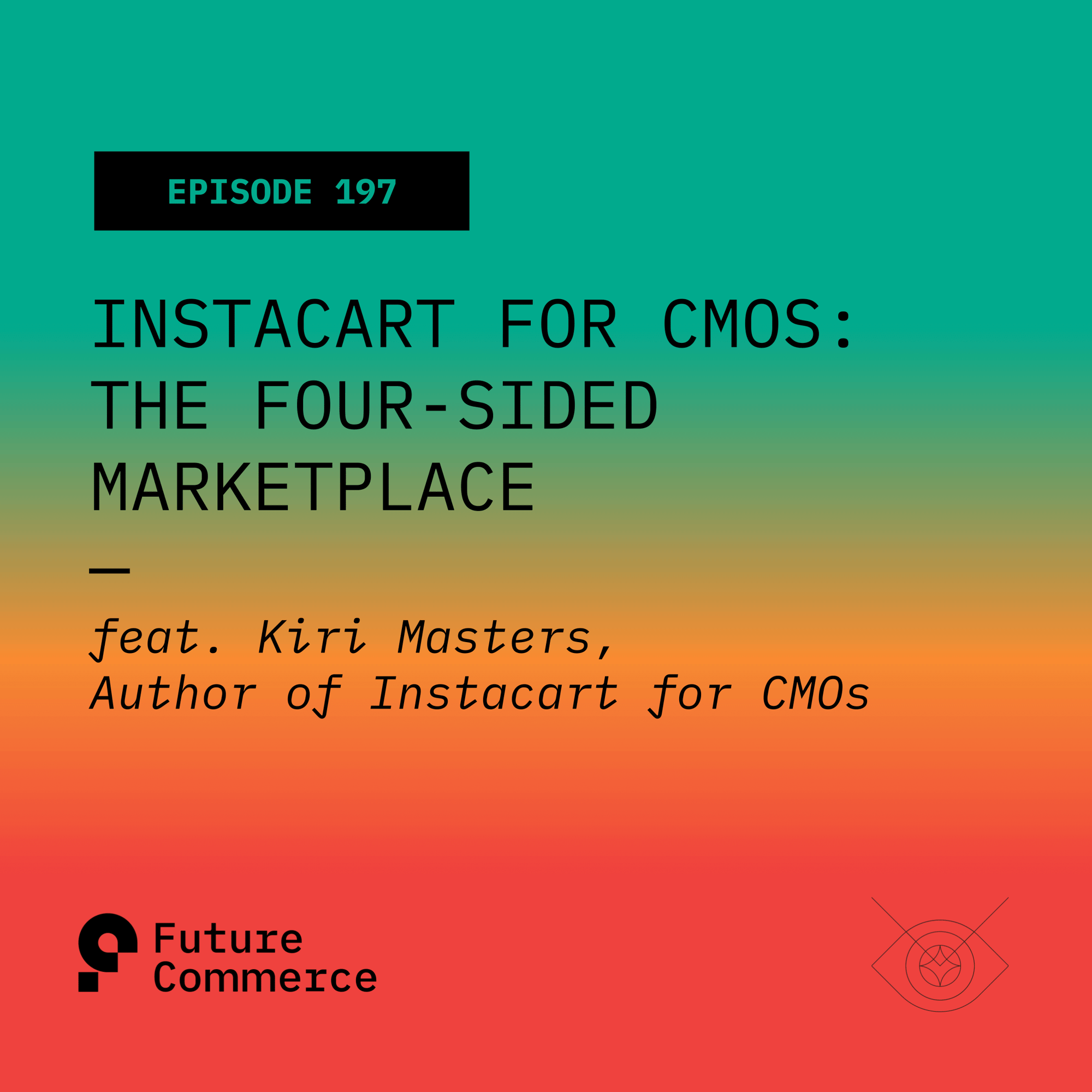
Instacart for CMOs: The Four-Sided Marketplace — Ep. 197 art
Listen • Feat. Kiri Masters, Ep. 197
Instacart for CMOs: The Four-Sided Marketplace

Kiri Masters unpacks the “Instacart Paradox” — part marketplace, part last-mile delivery, part advertising space, and not fully any one of them — the clearest field guide to what a modern retail channel actually is.

Whats Inside

What this frontier covers

Six forces shaping how retailers turn every channel into a marketplace — and how brands sell across all of them without losing themselves.

Marketplace proliferation

Walmart, Target, Best Buy, Ulta, and Instacart have each built their own seller marketplace and ad network on top of what used to be a straightforward retail relationship. The marketplace model isn’t an Amazon exclusive anymore — it’s the default operating structure for any retailer with scale.

Channel diversification (owned vs. non-owned)

The discipline FC calls “expand and not explode”: treat the owned .com as bedrock, then deliberately add non-owned channels without duplicating operations, catalog work, or brand voice across each one.

The Temu/Shein effect

Temu’s rise to the world’s #2 online retailer in two years, riding low prices and Section 321’s duty-free import rules, forced every marketplace and brand to reckon with a new pricing floor and a live policy fight over de minimis.

Cross-border & international expansion

Selling overseas still isn’t a one-click Shopify toggle — tax compliance, customs, and market-specific logistics remain the real barrier, even as the global eCommerce market races toward $7.9 trillion by 2028.

Retailer-operated marketplaces

From curated (Ulta’s ~600-brand assortment, deliberately screened) to wide-open (Walmart’s low-barrier seller onboarding), retailers are choosing radically different marketplace philosophies — and the choice defines the brand experience on top of it.

Platform risk & the myth of owning your customer

No single channel — not even your own site — fully owns the relationship anymore. Multi-marketplace operators build for redundancy, because algorithm changes, policy shifts, and platform outages can reroute a business overnight.

The Library

More from the archive

A deeper cut across essays, member briefs, and podcasts in this frontier.

The Lexicon

Key terms defined by Future Commerce

The vocabulary we coined for the marketplaces-everywhere shift.

“Every retailer is a marketplace now”

FC’s framing for the structural shift where Walmart, Target, Best Buy, Ulta, and Instacart all operate third-party-seller ecosystems with their own algorithms and ad networks — marketplace as a condition of scale, not a business model choice.

The endless-ish aisle

FC’s twist on “endless aisle”: infinite selection is real, but it collides with finite trust, finite logistics, and finite shopper attention — the aisle is endless, the ability to actually shop it isn’t.

The Temu Effect

The pricing and platform disruption caused by Temu’s two-year climb to the world’s #2 online retailer — a live case study in how fast a cross-border marketplace can reset category economics and drag policy (Section 321, de minimis) into the conversation.

“Expand and not explode”

FC’s channel-diversification discipline: add non-owned channels deliberately, without duplicating catalog, ops, or brand voice across every new surface you touch.

Owned vs. non-owned channels

The old binary FC argues is collapsing: your .com is still bedrock, but the growth increasingly lives on channels — marketplaces, retail media networks, agentic surfaces — that you don’t fully control.

Four-sided marketplace

Kiri Masters’ framing for platforms like Instacart that are simultaneously marketplace, last-mile delivery network, advertising surface, and data layer — resisting any single, simple description.

FAQ

Questions we get asked

Is Amazon still the only real marketplace?

An online marketplace is a retail site where third-party sellers list products alongside the platform’s own inventory — and Amazon isn’t the only one running at scale. Walmart, Target, Best Buy, Ulta, and Instacart have all built their own seller marketplaces and ad networks, with Walmart alone pitching 255 million weekly shoppers to new sellers.

How fast did Temu actually grow?

Two years, start to finish. Temu became the world’s second-largest online retailer, behind only Amazon, according to FC’s The Home Goods Index. The milestone landed the same week lawmakers introduced legislation to rework Section 321, the trade rule that lets Temu and Shein ship duty-free.

What does "expand and not explode" mean?

It's FC's term for disciplined channel growth — adding marketplaces, retail media, or international storefronts without duplicating your catalog, fulfillment, or brand voice for every new surface. Channel sprawl without the infrastructure to support it is the actual failure mode, not having too few channels.

Is cross-border expansion actually simple now?

Not really. One-click app integrations don’t touch the hard part: tax compliance, customs rules, and country-specific logistics still require real strategy, not a plugin. The prize is real too — global eCommerce hit $6.3 trillion in 2023 and is on pace for $7.9 trillion by 2028.

How old is "every retailer is a marketplace," really?

Older than this hype cycle by a long shot. Walmart launched its own marketplace in 2009 — 15-plus years of runway before Temu proved how fast a newcomer can climb it. What changed isn't the model, it's who's joined and how quickly they move once they do.

Keep Exploring

Related frontiers

Marketplaces don’t live in a silo — they reshape the media, culture, and agentic surfaces around them.

Every shelf is a marketplace, we help you build for the ones you don’t control.

Future Commerce publishes the research, essays, and podcasts on how AI is changing the culture of commerce. Free, every week.

Subscribe free