Frontier · Channels & Media

Retail Media

Retail media is advertising sold on a retailer’s own platform: search ads, sponsored placements, on-site display, and now in-store screens and connected TV, built on first-party shopper data instead of a third-party cookie. The only thing standing between here and the trillion-dollar version is trust and a mid-funnel that nobody has solved.

$175Bglobal retail media ad spend in 2025 (WARC)
$1.3Tcommerce media’s total value by 2026 (McKinsey)
50% → 20%share of purchase decisions made in-store — collapsed in three years
Future Commerces Point of View

Retail media is eCommerce admitting it was media all along.

Amazon figured out first that owning the moment someone decides to buy is worth more than owning the thing they buy. Every other retailer with a checkout is racing to rent out that moment the same way. The numbers are gaudy, but the next decade of retail media is won in the mid-funnel nobody has solved.

The mid-funnel is where it's at

Mike Mallazzo’s diagnosis is the spine of this frontier: RMNs monetize the bottom of the funnel but can’t educate a shopper. Closing that gap means becoming a media operation — and proving the lift.

Trust is the real constraint, not scale

Costco’s Mark Williamson won’t trade member trust for monetization: retail media should be “a treasure map for the treasure hunt.” Networks that strip-mine attention lose the members who made them worth anything.

Start Here

The essentials

The essays, research, and episodes that define Future Commerce’s position on retail and commerce media.

Avoiding Agentic Ghettos

The Essay

Ad Infinitum: Retail Media is The Final Boss

Mike Mallazzo’s TABULA RASA on the transmutation of commerce into media — why retail media’s gaudy returns hide a “gargantuan mid-funnel problem.” The intellectual spine of this frontier.

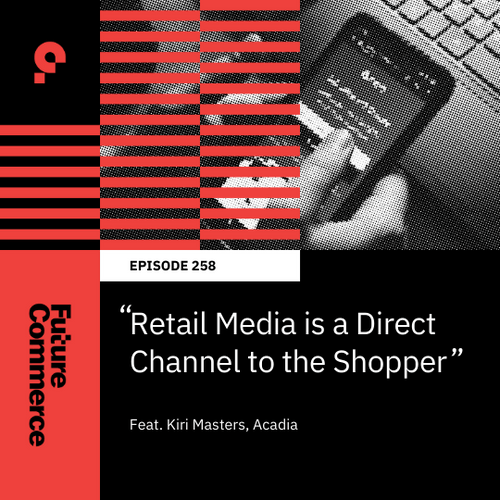
Retail Media is a Direct Channel to the Shopper — episode art
Listen • Feat. Kiri Masters, Acadia
Retail Media is a Direct Channel to the Shopper

Kiri Masters cuts through the thousand-ad-unit chaos with a deceptively simple frame: identify your objective, pick the stage of the funnel, then execute channel-agnostically. The episode that named the channel.

Whats Inside

What this frontier covers

Six questions that define retail and commerce media — from the mid-funnel problem to the store as a media surface.

Commerce-media convergence

The decade-old “content and commerce” prophecy is finally here, but it's not publishers bolting onto the checkout, but retailers buying into content to feed their ad networks. Does the balance sheet agree, though?

RMN economics, the mid-funnel & measurement

Amazon built roughly $100B in ad revenue at 90%+ gross margins by monetizing intent it never had to create. Everyone else chasing the model has to solve the content problem first — which is why Best Buy partnered with CNET instead of running more banner ads.

From retail media to commerce media

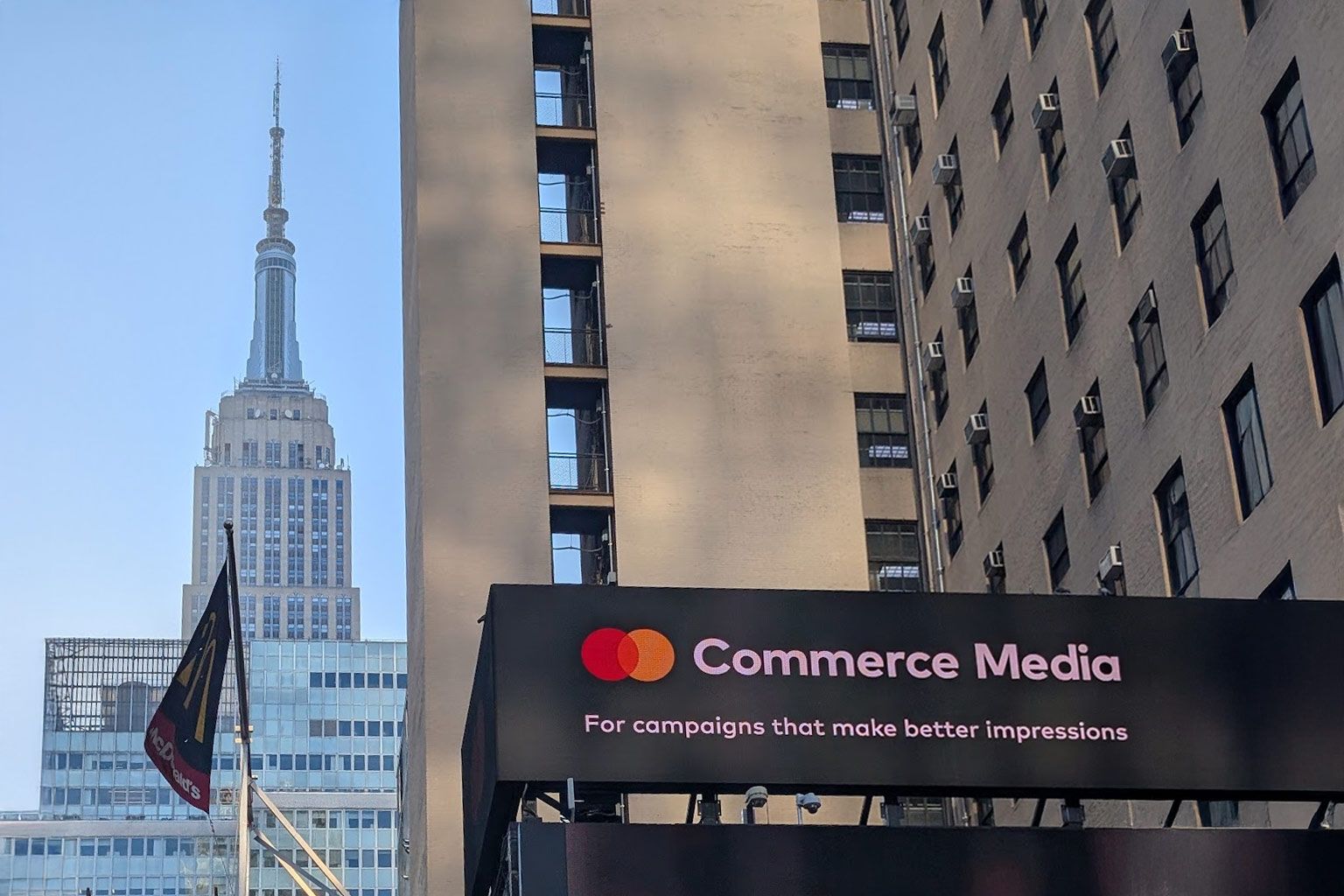
WARC says the industry was worth $175B in 2025; McKinsey says $1.3T by 2026 is the ceiling once United, Uber, and Marriott are counted in the mix. Retail media networks have become inclusive of the larger commercial ecosystem into what the industry now calls commerce media.

First-party data & the cookieless shopper graph

Loyalty + logged-in checkout make retailers the last reliable identity layer. The shopper graph is the asset that makes a store addressable.

The store as media

84% of US transactions are still in-store, making the shelf the most underpriced inventory in advertising. Screens, audio, ESL, endcaps.

The retail media duopoly & decentralized networks

Amazon and Walmart aren't just the incumbent retailers for consumers, they own the whole RMN market, too. Everyone else comes in a distant third. New growth guilds, working groups and consortiums, and decentralized RMNs for the Shopify set are the long tail opportunities in the ecosystem to compete against the big boys.

The Library

More from the archive

A deeper dive across insights, research, and podcasts in this frontier.

The Lexicon

Key terms defined by Future Commerce

The vocabulary Future Commerce coined for retail and commerce media.

Commerce is the final form of media

FC’s contributor claim (Mallazzo): the largest marketplaces became marketplaces for ad revenue; every transaction surface is, at its basest, media inventory.

Retail Media is The Final Boss

TABULA RASA: the last, hardest level of eCommerce, where retailers become media operations or get commoditized.

The mid-funnel problem

It’s the gap between what retail media networks do well and what they’re missing: content that actually educates an undecided shopper.

The halo effect / incrementality

The off-channel, full-funnel lift retail-media spend creates beyond the last click. The measurement question that separates a real growth engine from a commodity ad tax — and the proof the mid-funnel is solvable.

Retail → commerce media rebrand

United, Uber, Marriott sell the same audiences; “retail” was too narrow for a $1.3T sector.

The store as a media surface

Every physical touchpoint (screen, shelf, decal, audio) is monetizable inventory; the store becomes a media property.

FAQ

Questions we get asked

What's the difference between retail media and commerce media?

Retail media is ads on a retailer’s own site and app. Commerce media is the honest version of the same business — once United, Uber, and Marriott count, “retail” is too narrow a word. McKinsey puts commerce media at $1.3T-plus by 2026, against WARC’s $175B retail-media figure for 2025.

What is the mid-funnel problem in retail media?

It’s the gap between what retail media networks do well (capturing existing demand and selling top-funnel awareness) and what they’re missing: content that actually educates an undecided shopper. Mike Mallazzo’s essay “Ad Infinitum” is Future Commerce’s fullest treatment of the problem.

How big is the retail media market?

WARC puts global retail media spend at $175B for 2025, with the US alone up 20% year over year past $60B. McKinsey’s commerce-media number, which folds in travel and hospitality, is $1.3T-plus by 2026. Walmart’s own ad business grew 37% globally in its Q1 FY2027 earnings, with Walmart Connect US up 44%.

Is the physical store a retail media channel?

Yes, and it's underpriced. Roughly 84% of US transactions still happen in a physical store, which makes the shelf the cheapest ad inventory in the industry. The WHSmith and Essentia airport campaign, with screens, audio, pop-ups, and decals, is the template FC keeps pointing to: every surface becomes a monetizable touchpoint.

Can anyone challenge the Amazon-Walmart duopoly?

Not on scale — nobody outspends Amazon or Walmart. Mallazzo's alternative is structural: brands pooling audiences and underwriting shared affiliate content, what he calls growth guilds, to buy performant inventory collectively. Trust is the ceiling on all of it. Costco's Mark Williamson has said the network's job is to be "a treasure map for the treasure hunt," not a toll booth.

Keep Exploring

Related frontiers

Retail media doesn’t exist in a silo: it reshapes the channels, agents, and stores around it.

Every retailer is a media company now. The only question is whether yours knows it yet.

Future Commerce publishes the research, essays, and podcasts on how retail and commerce media are changing eCommerce. Free, every week.

Subscribe free