Frontier · Culture, Experience & Policy

Physical Retail & Experience

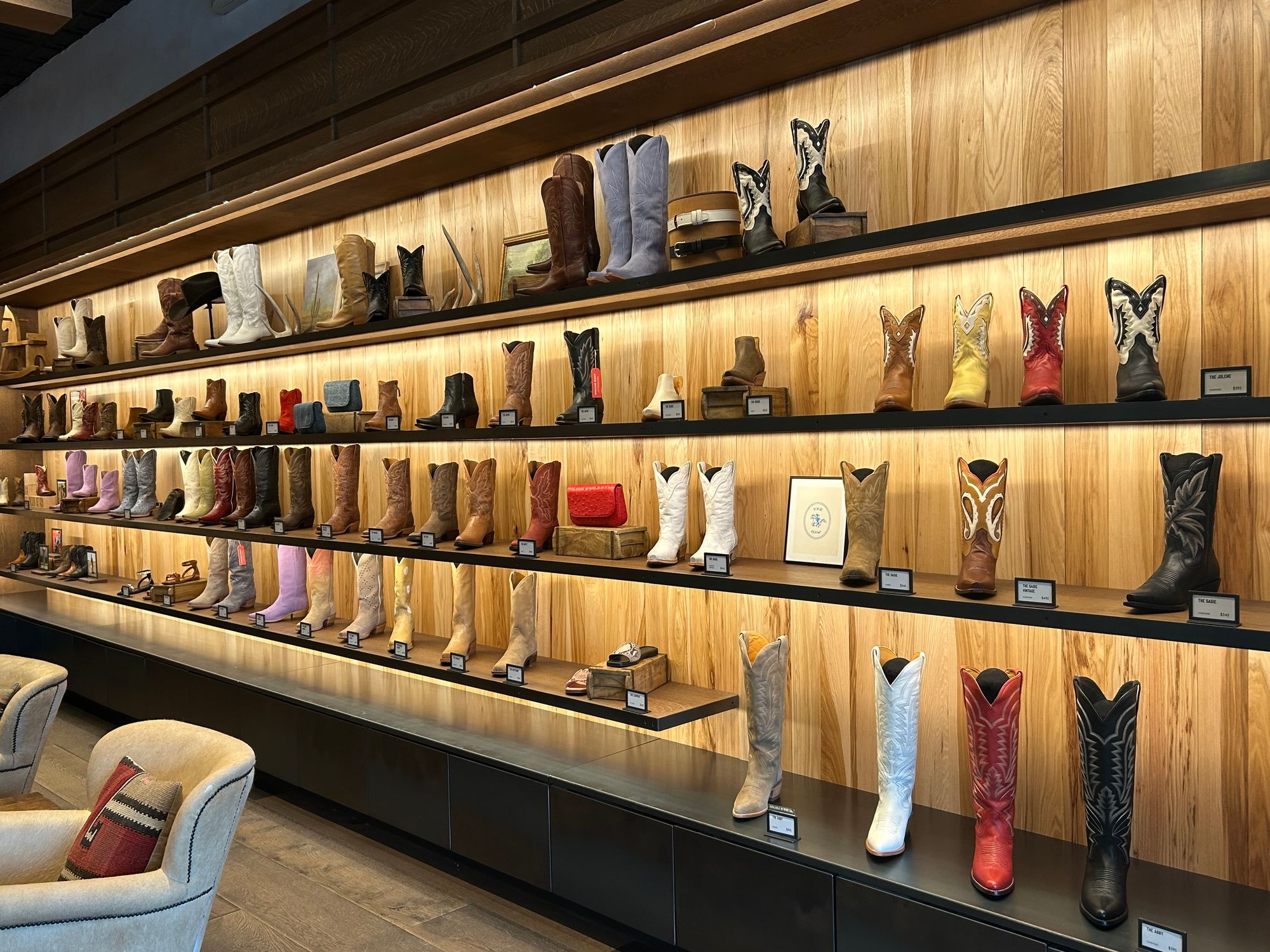
The job of the store has changed. Beyond distribution, it is now a sensorial medium and a cultural venue, and the KPI that actually tells you whether it’s working is Return on Experience. In an AI-flattened, infinitely-available world, physical space is where a brand goes to prove its tangibility, build its community, and engineer desire that a screen can’t fake.

73%of Gen Alpha go to stores to “fully immerse themselves” in a brand’s environment
47%shop in-store to see and feel items before buying — FC survey of 1,000 consumers
40%plan fewer store visits because shopping with AI was that good
Future Commerces Point of View

People buy things, but they pay for experiences.

Door count was never the scoreboard. Return on Experience is FC’s framework for what is: the Senses Matrix scores sight, scent, sound, touch, space, and a sixth sense — technology — across every store Field Notes tears down. Dollar General earns ROE on proximity; Coach earns it by making you forget you’re shopping.

ROE replaces sales-per-square-foot

Traditional metrics can’t capture why a customer chose the drive over the click. ROE — built with Kate Fannin from work at Nordstrom, Estée Lauder, and Lowe’s — measures the sensory and emotional return a store generates.

The Senses Matrix makes “vibes” measurable

Sight, scent, sound, touch, space, and a sixth sense — in-store tech — become six scoreable levers. Field Notes has run the framework against eleven live stores, turning “feels good” into a repeatable teardown.

Start Here

The essentials

The essays, research, and episodes that define Future Commerce’s position on physical retail and experience.

Return on Experience and the New KPIs of Store Design — feature art

Member Brief

Return on Experience and the New KPIs of Store Design

Alicia Esposito lays out the Return on Experience framework in full: why traditional retail KPIs miss the point, and how brands from Dollar General to luxury flagships are already scoring against it.

Building Retail Right — episode art
Listen • Ep. 340 • Feat. Rekon Retail
Building Retail Right

The allure of building a retail space is strong — doing it right is critical. Rebekah and Libby of Rekon Retail on when to spend on tech, when to invest in people instead, and the special sauce that keeps customers coming back.

Whats Inside

What this frontier covers

Six ways the store is being rebuilt as a sensory medium — and how to measure whether it’s working.

ROE & the new KPIs of store design

Sales-per-square-foot can’t explain why a shopper drove somewhere instead of clicking a button. Return on Experience is FC’s framework for scoring what actually earns the trip: 5,500 planned store openings this year say retailers already believe it.

Field Notes store tours and ratings of store experience (The Senses Matrix)

FC’s proprietary benchmarking tool scores sight, scent, sound, touch, space, and a sixth sense (technology) across real stores, from SKIMS to Nespresso to UNIQLO, each plotted for strengths, weaknesses, and whitespace.

Retail-hospitality hybrids and F&B as dwell-time engines

RH’s rooftop restaurants, Coach’s outlet cafés, Sketch in London: dining, retail, and design blur into one destination built to make people linger, not just transact.

The retail "community store" is the new third place

Anthropologie’s in-house display artists and 10,000+ store associates as “community curators”; Coach Play as an emerging third space. The store’s job shifts from conversion to connection.

Spatial commerce & physical worldbuilding

Walmart’s spatial paradigm and the broader move toward stores as branded cosmologies — environments engineered to make a brand’s world tangible, not just its inventory.

Experiential & rotating formats, and the industry bellwethers

Pop-ups like Anya Hindmarch’s rotating retail and Rhode’s LA activation prove people will show up for an experience with no expectation of buying anything; NRF’s Big Show remains the annual gut-check on where the store of the future is actually headed.

The Library

More from the archive

A deeper cut across insights, member briefs, and podcasts in this frontier.

The Lexicon

Key terms defined by Future Commerce

The vocabulary we coined for physical retail and experience.

Return on Experience (ROE)

FC’s measurement discipline for physical retail, developed with Retail Realist Kate Fannin: what a store earns in emotional, sensory, and community value, not just sales per square foot.

The Senses Matrix

FC’s proprietary framework scoring a store’s sensory activation across sight, scent, sound, touch, space, and a sixth sense (technology) — the scoring engine behind every Field Notes teardown.

Field Notes

FC’s benchmarking and analysis series, tearing down individual store environments (SKIMS, Swatch, Printemps, Rituals, Aedes de Venustas, Whole Foods, Anthropologie, Aritzia, Montblanc, Nespresso, UNIQLO) against the Senses Matrix.

The Sixth Sense

The Senses Matrix’s technology lever: data capture, in-store clienteling tech, AI-assisted decision-making, and immersive tech for discovery — the layer that makes the other five senses legible and actionable.

Store-to-Screen

FC’s framing for brands translating physical presence into omnimodal reach — and vice versa — where the store’s value (human connection, service, discovery) can’t be replicated by a screen alone.

The community store

A store re-architected around belonging, not conversion — staffed and designed to curate community first and sell second, with sales following as a byproduct of trust.

FAQ

Questions we get asked

What is Return on Experience?

It's the scorecard for what a store earns beyond sales per square foot — the emotional, sensory, and community value that gets someone to drive over instead of clicking buy. Retail Realist Kate Fannin built the framework after watching retailers open new doors with no plan for what should happen inside them; her diagnosis is blunt: most chains "don't typically create a roadmap" for the experience itself.

Is physical retail growing or shrinking this year?

Growing, barely, by the numbers that don't matter. Coresight forecasts roughly 7,900 US closures this year against 5,500 openings — the lowest closure count in three years, but still a net-negative door count. FC's argument is that counting doors was always the wrong exercise; the only question worth asking is whether each store earns its keep on experience.

What is the Senses Matrix?

FC's proprietary scoring framework for what a store actually feels like to stand inside: sight, scent, sound, touch, space, and a sixth sense for in-store technology. Field Notes has run it against eleven live retail environments, from SKIMS to Nespresso to UNIQLO, turning "this place feels good" into something you can actually benchmark.

Why do people still bother shopping in stores?

Because a screen can't let you hold the thing. In FC's 1,000-consumer survey, 47% cited wanting to see or feel an item before buying, ahead of same-day need (34%) and plain convenience (37%). Those aren't logistics problems retailers can engineer around — they're reasons a store exists that a browser tab never will.

Which stores has Future Commerce actually benchmarked?

Eleven and counting: Printemps, SKIMS, Swatch, Aedes de Venustas, Rituals, Whole Foods, Anthropologie, Aritzia, Montblanc, Nespresso, and UNIQLO. Each gets torn down against the Senses Matrix in Field Notes, scored on what's working, what's whitespace, and what's just noise dressed up as design.

Keep Exploring

Related frontiers

The store doesn’t live in a silo — it’s where loyalty, media, and luxury all show up in physical form.

Stop counting doors. Start measuring what happens inside them.

Future Commerce publishes the research, essays, and podcasts on how physical retail is being rebuilt as a sensory medium. Free, every week.

Subscribe free