


.jpg)
NVDA vs the Postmodern Hellscape Tuscan Kitchen

Welcome to Friday, futurists.
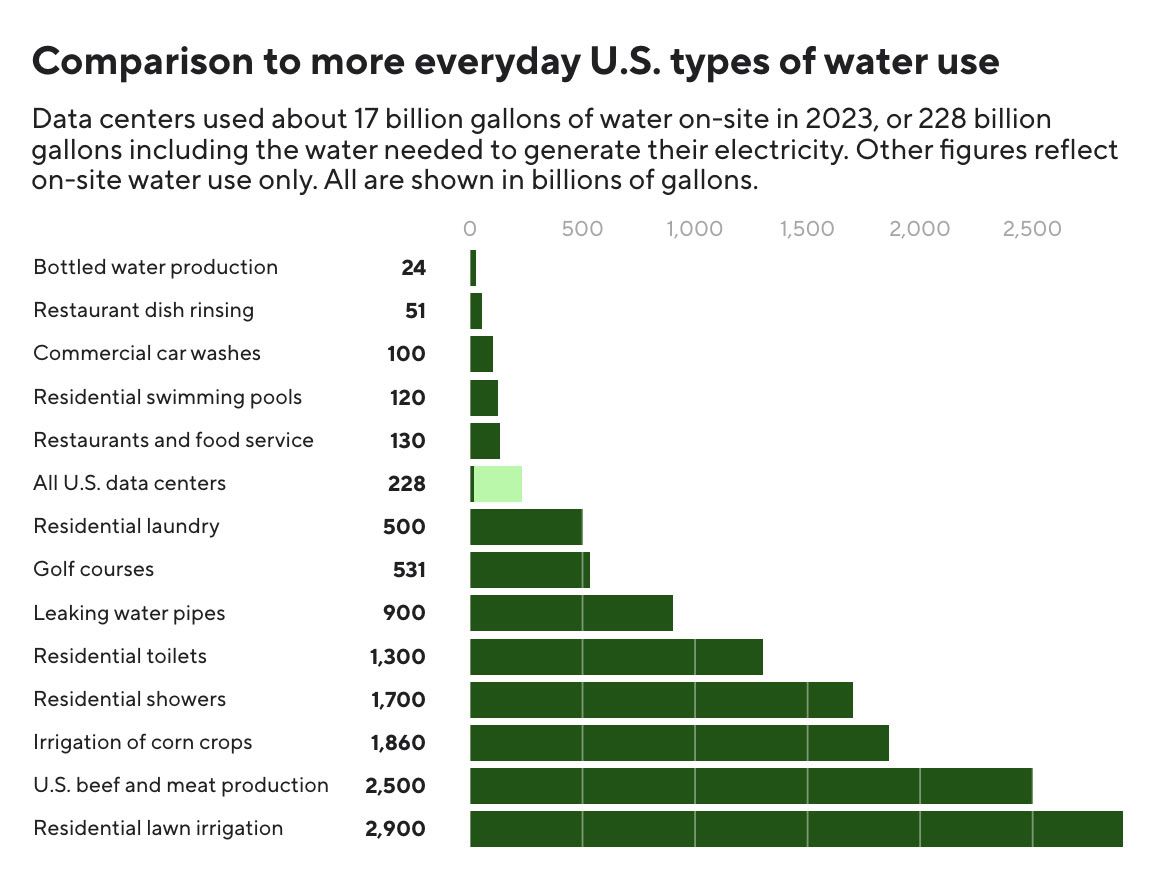
Our esteemed Commerce Secretary made the TikTok edits this week when he directly refuted a prior statement about data center water usage, seemingly flip-flopping from “they don’t need much water,” insinuating that the water debate was a psyop perpetrated by our adversaries; pivoting hard to to “these things suck water.”
Curious timing, our state media, because the very next day, on the eve of GPT-6 Astra’s release, Sam Altman quantified it for us:
…for every 38,000 ChatGPT queries, that is the same amount of water that is used in the production of a single almond in California.
Maybe he should have used the pistachio? Depending on the planting, pistachios need more water by far.
We predict the query-to-almond water consumption ratio will be the de-facto unit for water consumption in the midterm elections.
In other news, Arcade.gov launched today, in case you wanted to spend the long weekend cosplaying as a border patrol officer or as a lunch lady. Maybe this will get our minds off the present day culture wars.
What a time.
— Phillip
💡 Did you know: Fiji water and Wonderful Pistachios are produced by the same company? And they spend a ton on retail media. Sarah Ayala, PhD, Omnichannel leader at The Wonderful Company discusses the retail media impacts on the market on our newest Retail Media topic page on futurecommerce.com

Oh Gallia-NO.
Despite being known as the fashion industry’s top control freak, Anna Wintour couldn’t control the onslaught of backlash after the Costume Institute announced its next exhibit and gala subject: John Galliano.
While some argued for keeping the Met exhibit highlighting his complex, even problematic, history, the rallying agreement to cancel the Met Gala theme reaffirms the gathering’s unstable place in culture. After all, Galliano’s collaboration with Zara was actually met with intrigue, even praise, which makes the outcome of this scenario even more fascinating.
Closing the Old Navy Gap.
Investors are starting to believe in Gap’s renaissance. The retailer saw a market boost after sharing that sales for the namesake brand rose 10% in the latest quarter. The one gap, however, is Old Navy, which continues to waver despite rolling out new categories and collabs. Some fresh blood may help. That’s why CEO Haio Barbeito is stepping into an advisory role come Nov. 2, and letting Michael Francis take the lead. He joined the retailer in March 2026 as Chief Customer Officer after serving as a strategic advisor to Walmart’s executive leadership and board for a decade. Other Q2 highlights included a 9% net sales increase for Ulta and higher same-store sales for both Dollar Tree and Dollar General.

Shine Bright Like a Dyson
Microplastics are evil… unless they hold Erewhon smoothies or they sparkle.
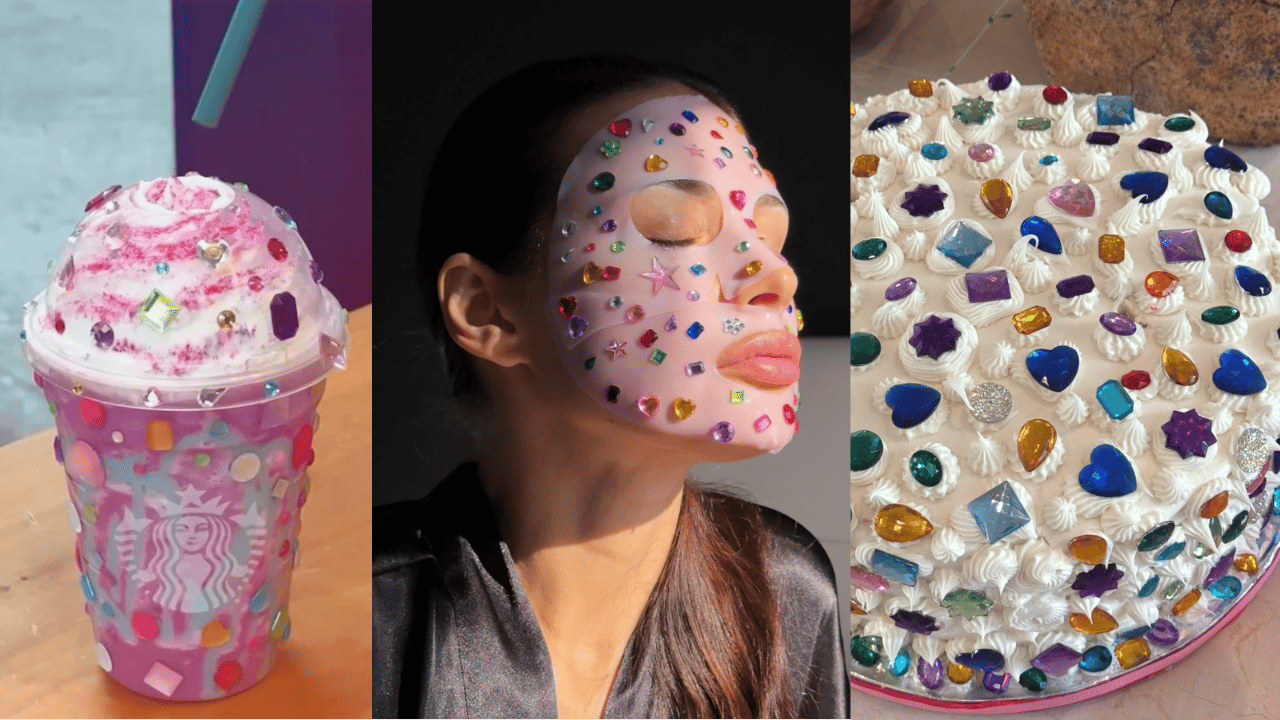
Gen Z is leaning hard into craft, customization, and proof of work; so much so they’re venturing towards the over-consumption they (supposedly) hate.
The “new” thing is bedazzling, and they’re doing it to… everything, including skincare products and, yes, Dyson Airwraps. This may seem like a harmless hobby, but it’s the Girlie Turf War in full effect. Young consumers are adding feminine flair to everything they consume to show their aesthetic whimsy; it’s a social and commercial statement. Not many brands are participating yet, but Aldi was ahead of the trend.
Gen Z is making a statement with stick-on gems, but artist Simon Weckert is creating fashion to not get noticed. (By AI, that is.) This “digital camouflage” is an artistic protest against the proliferation of AI-powered surveillance. We first covered this anti-face-tracking movement in 2021, and again during a session at VISIONS LA led by Emily Segal of NEMESIS Global.
Speaking of VISIONS, we’re returning on November 3rd to MoMA for our annual summit. Don’t miss it; speaker announcements coming soon 👀
From Your Eyes to Your Face.
Six months after its competitor Ulta made its TikTok Shop debut, Sephora is testing its own branded Drop Shop. The pilot will run in the US starting September 19 and will include a series of exclusive, monthly drops featuring a curated selection of Sephora brands. The experience will culminate in an official TikTok LIVE with a celebrity host, brand founders, and creators to unveil the featured products, answer audience questions, and engage with viewers. While US users are coveting cosmetics, Japanese sellers are showing that dumplings are so hot right now. Meanwhile, YouTube has inked a partnership with Amazon to turn its creative videos into shoppable surfaces—something we predicted would happen long before livestreams got their close-up.

Lettuce Rethink That Whole Foods Guac.
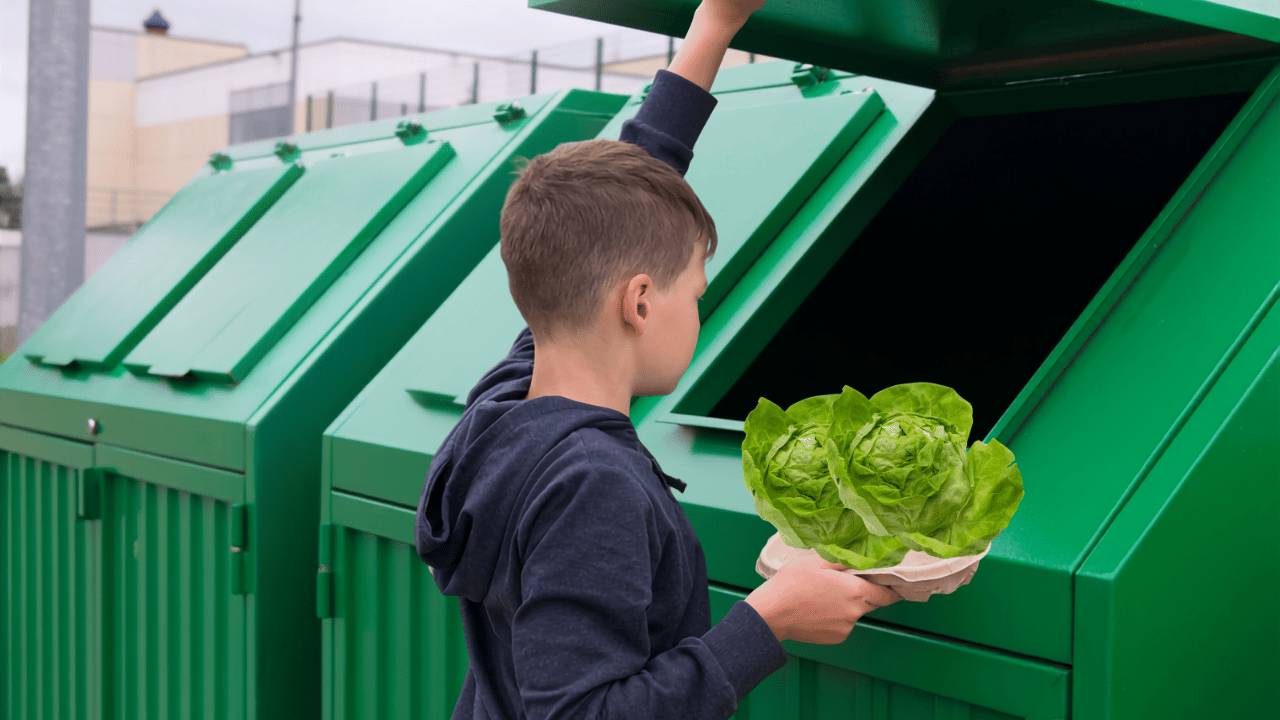
Salmonella and E. Coli recalls have hit Trader Joe’s, Whole Foods, and Publix private labels, challenging the loyalty of some of grocery’s most loyal customers. It’s a one-two punch as grocers continue to navigate the havoc wreaked by the Cyclospora outbreak. Numerator data shows that 6.5M US households stopped buying salad mixes and kits, making the category fall roughly 40%.
Guess who’s not crying. Cheesecake Factory.
Label of the Law.
David Protein has been hit with a class action lawsuit over its “zero sugar” claims. It’s the second suit against David Protein this year, but that hasn’t stopped its owners from bringing in more cash. Liquid Death is in the hot seat over similar claims. It’s a major downer after the brand went viral for its anti-data-center campaign featuring Jason Kelce. The claim in a nutshell: both brands use allulose, a monosaccharide that the FDA says, by its own definition, technically counts as a sugar.
We argued in a 2022 essay that wellness products operate in a chronically under-regulated space where the FDA’s burden of proof, not manufacturer intent, determines what claims survive contact with reality. We broadened the discussion to include the current protein-packed, GLP-1 movement in our Wellness Member Brief.


Proof of Non-Work.
Insiders contributor Sophia Epstein warned in The Process Is the Product that consumers are coveting proof-of-work content so much that the internet will soon find ways to manipulate and game it. Welp, that time is now. A recent X post showed how anyone can create a synthetic time-lapse to counterfeit labor behind an image. Another Instagram-viral post depicting a large-scale movie set, with people, cameras, and set design, was quickly labeled AI slop. The content, the creation, and even the meta-content showing the proof of work are all manufactured.
Ad Infinitum.
The FTC and 20+ states are suing Amazon over ad price manipulation. The suit alleges Amazon pushed ad auction prices up by up to 80% and raised pay-per-click costs by nearly 50% on peak shopping days. That’s an extra $20B supposedly taken from 1.2M advertisers, most of them small and midsize businesses. The news comes as ChatGPT’s Ads division expands to 31 European countries and touts its $1B annualized revenue run rate.
Future Commerce has examined Amazon’s market power for years, but the IAB’s Collin Colburn’s recent hot take is especially potent. He noted that ad auction mechanics and attribution have outrun the industry’s ability to audit them fairly. The FTC’s lawsuit is a regulatory extension of his argument.


.svg)
