



“That’s Hot…” (Literally)

Welcome to Wednesday, futurists.
It’s the hottest year on record in Europe, with temperatures topping 105°F+ (40°C), so aren’t we lucky to have chosen this year as our first at Cannes International Festival of Creativity?
Retail media (er, commerce media) and creator panels are packing out every gelato shop, wine bar, and patisserie along the avenues bordering the Boulevard de la Croisette.
But most sessions we visited this week still circled back to how AI is shaping the future of creativity and how brands can earn consumer trust.
Below are some of the highlights we’ve captured so far. Missing from this edition is a list of platitudes heard on the main stages at the large beachside buildouts.
Perhaps I could ask Paris Hilton to vibecode that app for me? More on that, and our other Commerce-at-Cannes report below, and more to come this week.
— Phillip

The Mother of All Influencers Is Vibe-Coding Now.
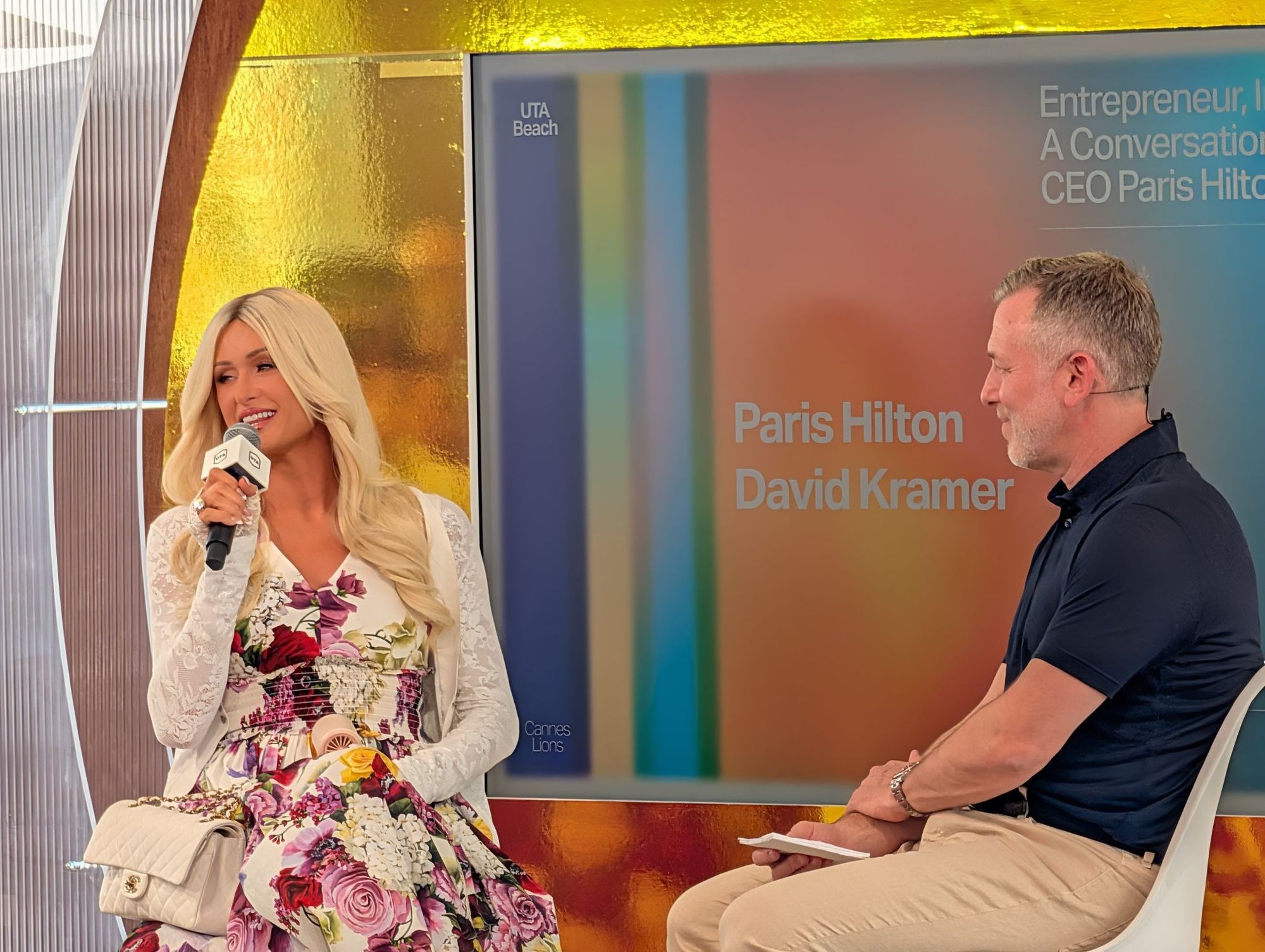
UTA CEO David Kramer opened UTA Beach by declaring the festival "has evolved into the world's premier marketplace for culture," then handed the stage to its original avatar. Kramer crowned her “the mother of all creators,” and we can’t help but agree.
Paris Hilton, now CEO of 11:11 Media, made the strong case that she was doing creator economics before the category even had a name. Her long-term success, which is driven by an ecosystem of several TV shows, a DJing career, a growing line of retail goods, and a kids' cartoon, lies in her “consistency of self.”
A career spent, in her words, "being who I am,” has simultaneously allowed her to build a highly engaged community that only compounds over the years. For brands still treating influence as a line item, Hilton is the reminder that true cultural authority builds over decades and can't be bought.
But the real scroll-stopping moment came when she explained how she aimed her instinct and cultural relevance towards technological innovation and new media. Inside Google's headquarters, she was given an in-residence lab, sat down with Gemini, and shipped her first app. She said it was proof that "anyone can build an app with Gemini." She calls herself "an undercover nerd... obsessed with anything to do with technology and being first."
The Algorithm Thinks Your Brand Is Mid.
One panel reframed the dangers of algorithmic sameness for the AI era. Hannah Elsakr, VP of GenAI New Ventures at Adobe, warned that generative models flatten everything toward the mean and to the average, and that brands like Disney and Dick’s Sporting Goods have "very special brand fingerprints" that aren't easily captured in standard model inputs like flat image files. The challenge is knowing your brand's special sauce and deploying it inside a model you trust.
Stephan Pretorius, Chief Technology Officer at WPP, provided a sharper perspective on the same idea. "LLMs perceive brands differently from humans," he explained, and the gap skews negative for legacy names whose equity lives more in collective memory than in internet culture and Reddit threads. Ask a chatbot for the best burger joint, and a heritage chain can vanish from the results entirely.
Kyle Laughlin, who leads Technology and Engineering at Walt Disney Imagineering, brought a more positive view of how an organization with such a robust history and creative archive is using AI. Disney is investing "$60 billion dollars over the next 10 years" in new parks, cruise ships, and experiences, so Laughlin’s team is using AI to move from presenting three design options to generating 30 or even 300, compressing timelines that once stretched across weeks, months, and even years.
But scale isn't the only ambition. Working with Adobe, Laughlin's team has trained models to deeply understand and respect Disney's aesthetic philosophy down to its "crookedology." This is the park’s proprietary design principle, where structures are intentionally built slightly off-kilter, as if about to topple. Every new Imagineer now has access to that institutional knowledge on day one.
Elsakr closed on a note of genuine optimism: "I think we're about to enter a new creative renaissance."

From Question Mark to Exclamation Point.
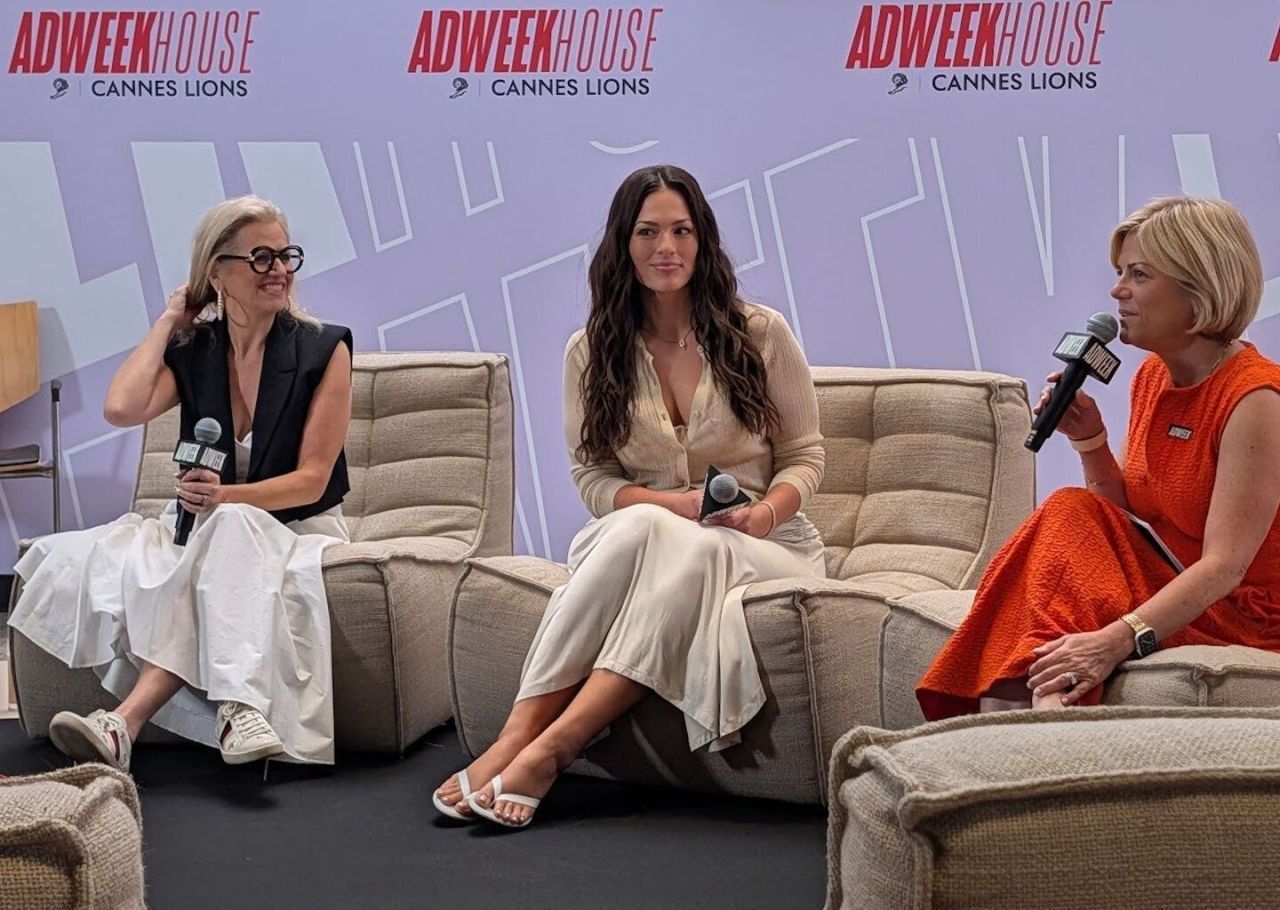
JCPenney's comeback pitch with creative director Ashley Graham and Catalyst Brands CMO Marissa Goldberg was built on the body and the price tag.
Despite the hype around GLP-1s disrupting apparel sizing, 67% of American women are still plus-size, and only 2% of them are represented in sizes found in American malls. Graham's design fix to serve this consumer is both technical and radical: most labels grade up from a size zero, which makes a flattering size 18 nearly impossible to cut, so her line starts its grading at sizes 12 and 18.
"This is still an issue with most department stores," she said. "They don't have size." Together, JPCenney and Graham turned that gap into a media moment with "Omitted," a faux movie trailer that cast the curvy woman as the lead the silver screen rarely allows.
Goldberg believes speaking to this consumer, who is underrepresented and severely condescended to by brands, is what will make shoppers travel "from that question mark to a declarative exclamation point.” (From "JCPenney?" to "Yes, JCPenney.") Graham, who says high-fashion agents still warn her the deal looks down-market, stands firmly with the retailer and her customer: "I am her, and she is me."

Partnering with Paying Reddit Moderators is the Job Now
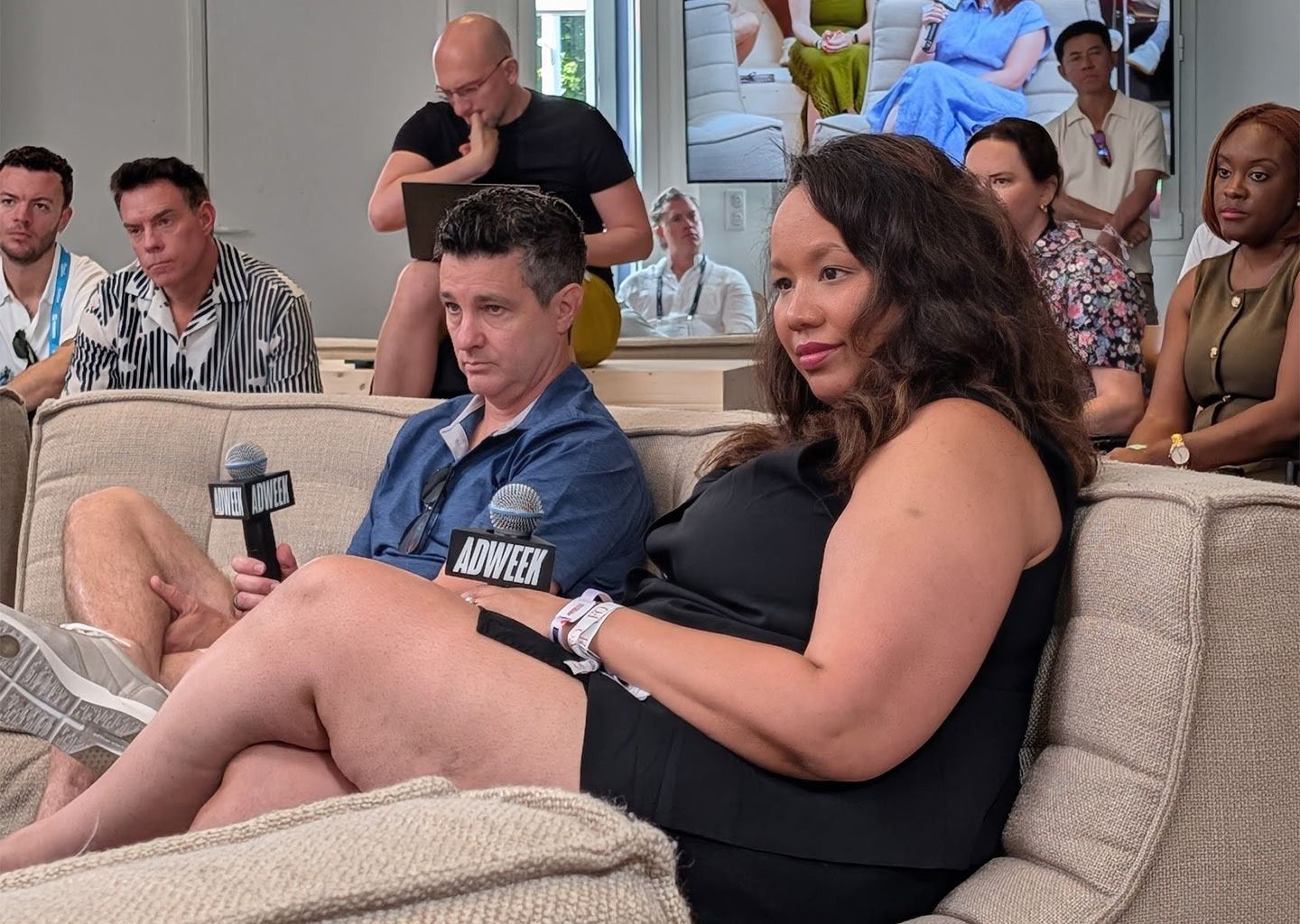
The most dynamic panel at Adweek House featured Best Buy Ads, Lowe's, Knix, and Unleashed Brands.
Pat O'Toole, CMO of Unleashed Brands and former CMO of Burger King US, described how a co-loyalty partnership with Walmart Plus helped Burger King reach a demographic it couldn't target as effectively on its own. Patrick Albano, CRO of Best Buy Ads, reaffirmed the value of these adjacencies powered by overlapping interests and passions: "If the world only lived in endemics, Dick's Sporting Goods would be the only advertiser in the NFL."
But as discovery shifts to AI, teams are rewriting their playbooks for visibility. Cyntia Leo, CMO of Knix, explained how her team is reprioritizing things. "I would have never thought a year ago that we’d be creating burner Reddit accounts and creating partnerships with Reddit moderators," she said in response to the notion that the emergent “job-to-be-done” of the modern marketer is brand and community relationship management.
Reddit is one of the most-cited sources in LLMs and a high-signal source for consumers seeking authentic feedback on purchase intent… or at least it is for now.
Somebody DoorDash’d a TV to the World Cup.
Queries in AI mode now run three times longer, one in six involves voice or an image, and planning-style searches are climbing fast.
Debbie Weinstein, President of Google EMEA, framed the shift as an "expansionary moment," and her colleague Brendan Graham explained why, frankly: "when you build a better experience, people search more."
Andy Wells, VP of Growth Marketing for DoorDash, recast answer-engine optimization as the new word-of-mouth, akin to "a recommendation that your neighbor is giving you." And he provided an example that was gloriously specific. A fan in San Jose, California, was pushed to the back of a packed World Cup watch party, unable to see the screen. So, he simply "DoorDash'd a TV."
This is an example of how DoorDash solved an overlooked, even unexpected, problem. The brand was able to “answer the call” because of an evolved search experience.
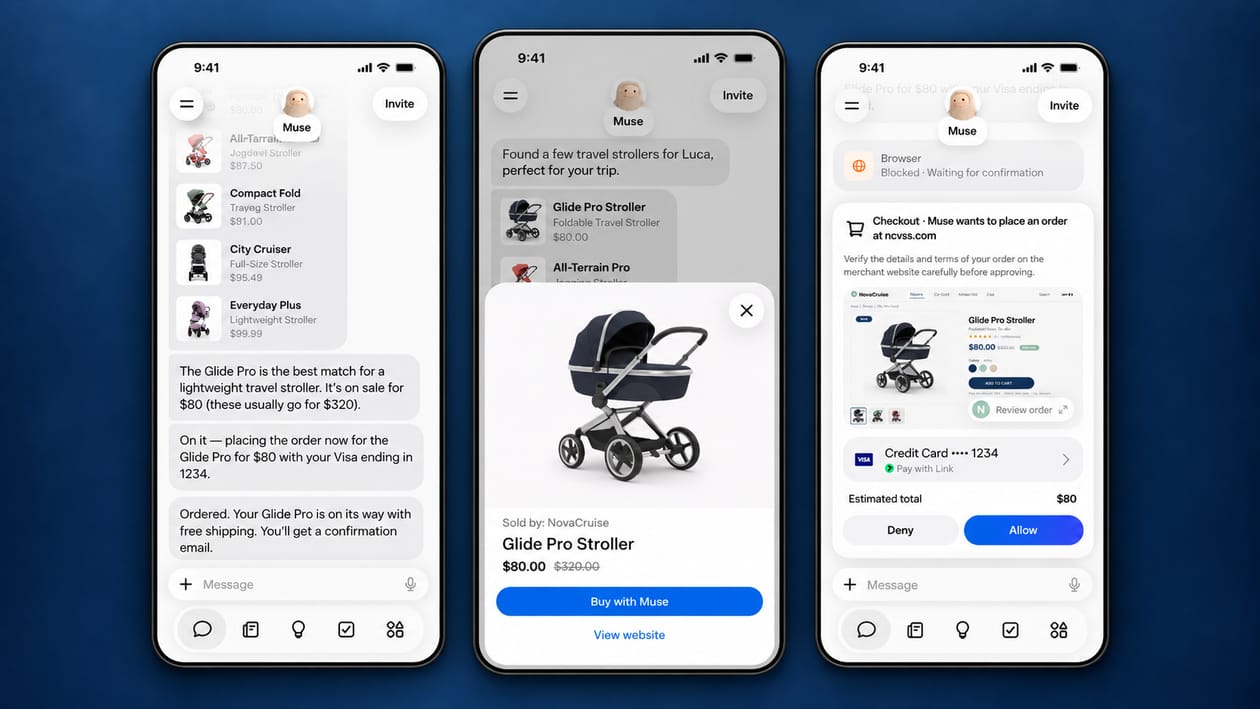
Wells also shared how the company is taking this statement to heart by investing in more robust, AI-powered search capabilities. Its new assistant will take a prompt like "a healthy meal for three that's toddler-friendly, so no vegetables, please," and effortlessly build a cart. Discovery is now rooted in a conversation, and the brands and products that surface are the ones people already vouch for.

When the Doorman Is a Bot.
"The most important customer relationship you build in the next three years may not be with the human at all."
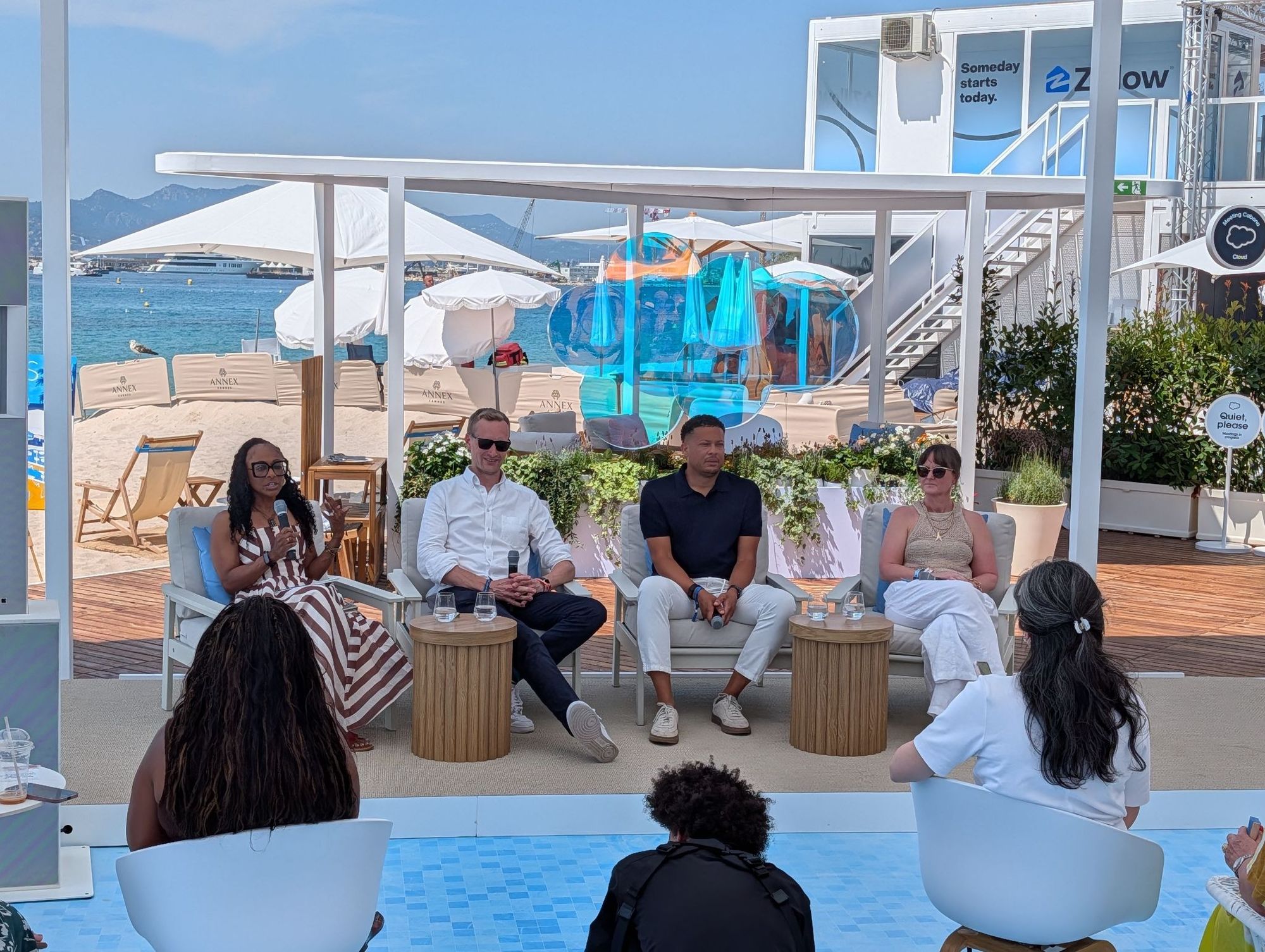
LaShonda Anderson-Williams, Chief Customer and Commercial Officer at Salesforce, delivered this mic-drop moment to a room full of marketers fighting to own customer relationships. But now that many consumers are turning to their AI bots as their first touch, it’s all about being seen and recommended by them.
Paul Johnston, who leads the CX and marketing consulting division of Capgemini under the Frog brand, noted that because most companies built their data and journeys "for customers and for consumers, not for agents," they risk being left behind. But all panelists agreed there is a balance, with even an executive from AWS, Jason Andrews, claiming that AI is the “ultimate generalizer.” He explained that “culture, storytelling, and brand actually matter more, because now everybody’s got the same information.”
Tammy Huergan, VP of Global Marketing Services at Unilever, explained how her team is adapting to keep pace with this reality, where they must serve both consumers and agents. “I want our marketers to be focused on creativity first, quality of output, and building a brief infrastructure that...is going to deliver on an engaging consumer story.”
She added: "The moment we start designing a briefing system to just win with agents, we're siloing ourselves again."

.svg)
