

of the United Kingdom’s capitol city.
If the phrase “get ‘em while they’re young” had a retail aesthetic, it would be the playful one that’s emerging in stores everywhere.
Bold and bright, these spaces intentionally use colors, sensory merchandising, and language that all feel very youthful. These stores aren’t selling toys or hobby items; more like high-end skincare and leather goods.
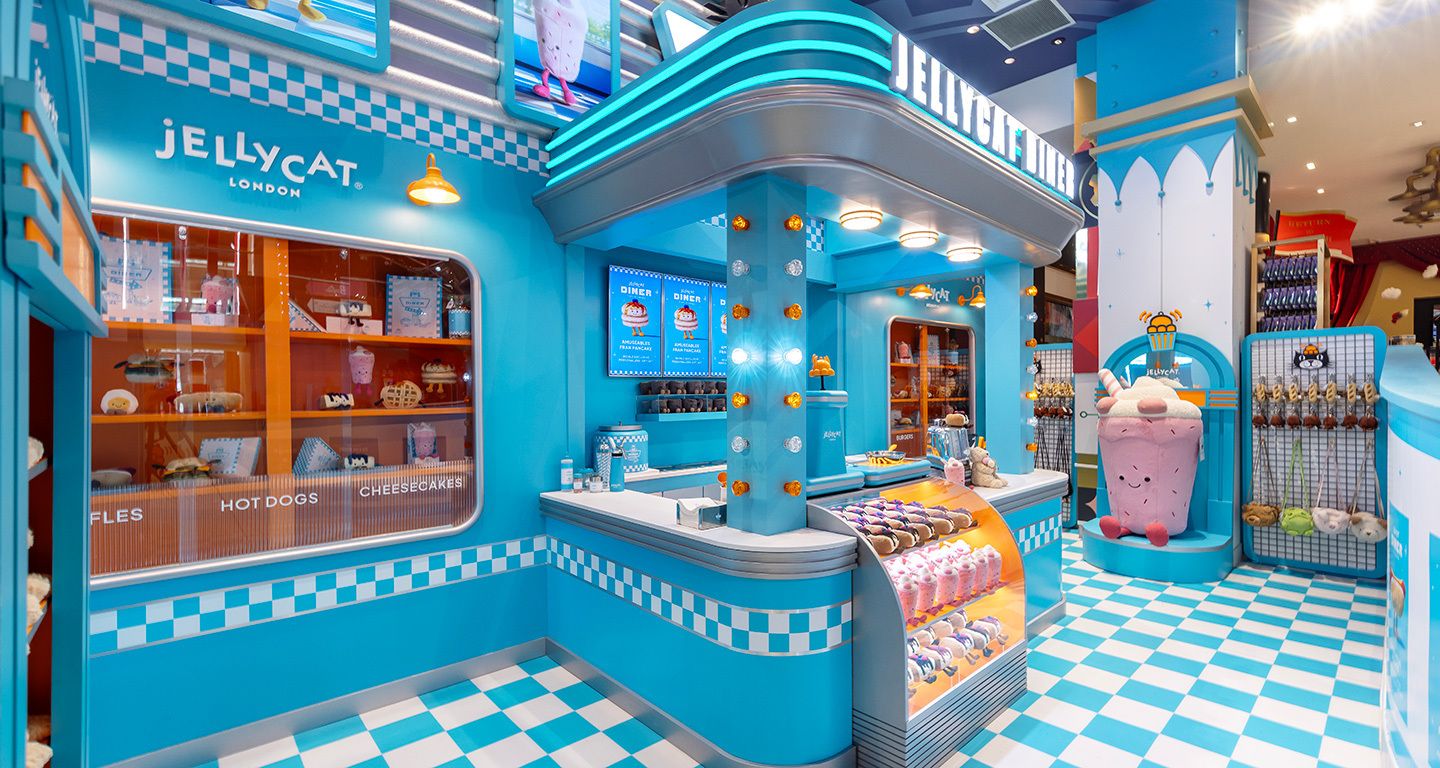
Beauty is leading the way in this tweenie aesthetic. Brands like Fwee, Pure Seoul, and Laneige are designing stores that are inspired by ice cream counters and pick-and-mix candy shops. It’s not just beauty, though. Coach’s recent Selfridges pop-up featured a slide in the shape of its dinosaur mascot, Rexy, that would fit right in at a children’s playground. Then there are brands like Jellycat, which target kids directly and are growing like crazy due to their cutesy merch and social-media-ready retail concepts.
Their growth isn’t just because kids are influencing more of household spending, though they very much are: 55% of kids surveyed by PwC say they have “a lot” of influence on what their parents buy. It’s because these spaces are intentionally designed to draw in both kids and their parents.
This is the infantilization of retail—where design aesthetics and experiential moments are rooted in interactivity, imagination, and play.
On the surface, this principle may seem harmless. After all, can’t we all use a bit more joy and levity? But new legislation indicates that now may be the right time to unpack the infantilization of retail, especially since its long-term influence on children carries a more negative weight.
From the Feed to the Shelf
If you look at the crowds who visit Jellycat’s wonderfully themed pop-ups or the people who queued up at Popmart for hours to get their hands on Labubus, you’ll see that adults are going just as crazy for these toys as the kids they’re aimed at. This is the first side of the infantilization coin: adults buying into products that are primarily targeted at kids, or “kidults.” According to the Toy Association, this particular cohort was behind a quarter of all US toy sales in 2025.
Social media built the solid foundation of this cultural phenomenon. Its algorithms are flattening everything, showing the same content, ads, and products to everyone. After users see a viral video or two on TikTok unboxing the latest Labubus, they buy into the trend because they want to participate in the excitement and become part of it. And these videos resonate because they’re dynamic, uplifting, and rooted in excitement. They go viral because the products pop and look good on camera, and the hosts are eagerly sharing the joy with viewers.
Their novelty and infantilized design are the source material for the bright colors and fun aesthetics we’re seeing bleed into brick-and-mortar.
Young adults who are curating their lives for digital feeds are always looking for ways to make the mundane more interesting. That beauty product “shelfie” looks a lot better if it’s packed with colorful bottles. The outfit photo performs better if there’s a fun, on-trend bag charm in it. The aspirational living space content is more appealing with cute homewares and a shelf of Jellycats.
But there is something deeper at work here than just aesthetically pleasing store designs and cute products.
A Different Timeline
Despite still being used as a catch-all term by many for “young” people, Millennials are in their mid-30s to 40s at this point. They’re of an age where you would expect them to be meeting the key milestones that have marked the path to adulthood for generations; buying a house, getting married, having children, and taking senior roles in their careers.
Instead, these “grown-up” indicators are being missed by some Millennials and the generations that follow them. Is it any wonder that an infantilized generation that never got to feel like “real adults” is attracted to products that reflect how they feel? If they can’t invest in the grown-up life—buying the good china, the good furniture, and the “good life”—then why not invest in affordable nostalgia? And Gen Z, who missed out on the pre-algorithm childhood that Millennials got to experience, are equally attracted to the nostalgia of a far more appealing time they never got to feel firsthand.
For many young people, the present and future look equally frightening. Climate change, political instability, economic uncertainty, and the job market’s erosion due to automation—these are all very real issues that are impacting consumer lives while also building the foundation for a bleak future. And in today’s always-on, hyper-connected digital environments, there is nowhere for younger generations to hide from these fears. Social media platforms and traditional retail outlets have built their commercial structures around monetizing fear and outrage, which means they consumers are experiencing an endless loop of negative video feeds and comment sections.
With a backdrop like that, an escape into childish innocence and small “moments of joy” seems very appealing. It also explains why 57% of Gen Z buy themselves a small treat at least once a week, according to a 2025 Bank of America report.
An Emerging Customer Base
On their own, fun and play are not problematic retail concepts. The benefits of both are well-documented and, frankly, we probably need more of them in our lives.
But brands need to consider when and why they use infantilization techniques. If they’re using this particular design style to deliberately appeal to younger consumers in their quest to build an audience, they need to decide whether they’re OK with the ethics involved.
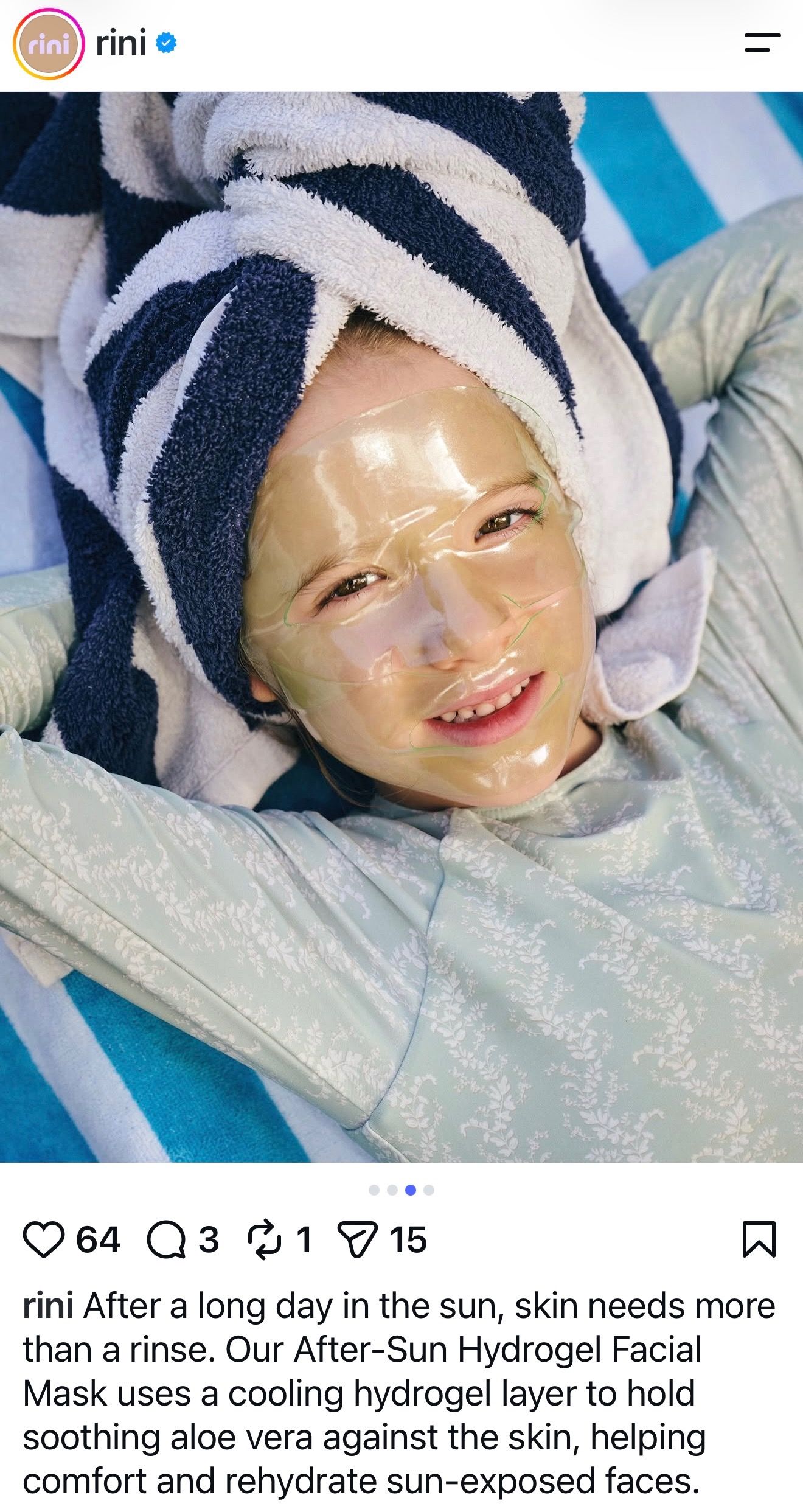
This is the side of the infantilization coin that is showing up more and more. A powerful case in point is the backlash that actress Shay Mitchell received when she co-founded a skincare brand aimed at kids as young as four. The brand, Rini, sells sheet masks, among other products, that are designed for very young children to participate in the rituals they see their parents going through at home. Understandably, people are concerned.
Rini isn’t a one-off, either. Another kids’ skincare newcomer is US brand Evereden, which was developed by pediatric dermatologists specifically for under-14s. Some products are advertised as being suitable for children as young as three.
Skincare brand Sincerely Yours also launched last year with a target audience of 10- to 15-year-olds. Co-founded by content creator Salish Matter, who is just 16 and has been creating her own online content since 2020, this brand is designed to speak to the children that Matter has been influencing for years. A staggering 80,000 people turned out for the launch of Sincerely Yours at American Dream Mall, prompting the venue to shut down due to safety concerns. It was a response reminiscent of Swiftie Mania.
And then there’s Pipa Skincare, which also makes skincare specifically for ages 8 to 13, and sells a starter bundle that has the words “Start Young” emblazoned on the box.
It all feels very jarring when you see these brands and their value props published in succession. But is all this youth-focused activity really surprising when Gen Alpha is reportedly driving 49% of skincare sales growth in the US.
These brands—and the others that will follow them—have all spotted a gap in the
beauty market to cater to young consumers who have been watching adult online content creators from a young age. They are primed for consumption. They may not be the target audience for the skincare and beauty routines shared by these creators on social media and YouTube today, but popular online content breaks all containment and can effectively nurture these consumers for the future.
Kids, as they always do, want to role-play what they see grown-ups doing. Then, once other kids start creating their own versions of this content using the same products, more children see it and the desire to join in spreads.
Ethically Murky
Things become ethically murky when the products being sold aren’t appropriate for kids’ aesthetic age range.
An obvious example is the proliferation of vapes, which take a vice (smoking) and wrap it up in infantilized, colorful, bubble-gum-scented packaging. The same thing is happening in the alcohol aisle, where products like Buzzballs evoke the 2000s alcopop era, but at a stronger concentration.
The candy-shop flavors, colors, and branding of these products speak the language of children, even if they aren’t specifically aimed at them.
Even gambling hasn’t escaped infantilization. Prediction markets like Polymarket and Kalshi allow casual investors to place bets on trivial events that appeal to young people’s sense of humor. They misleadingly tap creators to spread their gospel, claiming that participating guarantees personal sovereignty. The reality, though, is that 70% of users lose money. The loot box monetization model that is increasingly the norm in gaming has been flagged for its “gambling-like mechanics” and found to cause “financial and emotional harm to children and young people.”
We could argue that the new era of infantilized beauty brands like Rini, Pipa Skincare, Sincerely Yours, and Evereden are a child-appropriate alternative to the likes of Drunk Elephant. And we could also argue that they’re feeding an obsession with appearance and youth that isn’t child-appropriate in any form.
Culturally, the optics around the infantilization of retail are becoming more complex, and despite seeming like a license to print money, brands should be conscious of them.
One of the questions being asked of retailers, particularly in beauty, is whether the products they sell are unsuitable for children but are deliberately marketed in an infantilized way. Ingredients like retinol and acids can be damaging to young skin, while messages like “anti-aging” can be damaging to young minds.
The Italian Competition Authority (AGCM) is investigating LVMH for “possible unfair commercial practices" related to products sold by Benefit and Sephora because they may have failed to make it clear that those products are not intended for children and adolescents. The investigation mentions that the brands may have encouraged young people to buy such products through “covert marketing strategies” involving very young micro-influencers.
California State Assembly member Alex Lee has twice proposed a bill to prohibit retailers from selling cosmetics that contain retinol and other acids to consumers under 18. Similarly, in the UK, Save Face is calling for legislation to stop the sale of skincare containing strong active ingredients, often associated with anti-aging, to under-18s.
Let’s not forget that Save Face’s previous successful campaign saw the UK ban the use of Botox and fillers on under-18s, which seems like something so obvious that it’s incredible we needed legislation to stop us sticking needles into children’s faces.
Choices to Make
Another illuminating development is the multiple countries exploring social media bans for teens and kids under 16.
Australia was first off the blocks in December 2025, but similar approaches are being explored and discussed around the world, from Brazil to the UAE. The UK has announced plans to ban social media for under-16s from Spring 2027 and many other European countries are in the process of exploring similar strategies for under-15s, including Denmark, France, Greece, Spain and Poland.
There are plenty of debates around whether this is good, bad, or even effective. And these conversations will undoubtedly accelerate now that new data indicates many young Australians are still online three months after the ban. In my opinion, this is not the most interesting dialogue. What is interesting is discussing what it all means for brands that are either directly trying to gain market share among kids or are at least benefiting from algorithms that push their marketing content to young users in any way.
If (and it’s a big if) these social media bans were effective, would brands move their marketing to different channels? Would they be accepted in the same way they are online?
We might passively accept that social media algorithms serve content designed for adults to children, but culturally, we may balk at the idea of a skincare advert running on a kids' TV channel.
Currently, brands benefit from being able to distance themselves from the outcomes of online campaigns if they didn’t specifically target a certain audience. It’s a lot harder to make the same claims if you’re booking an ad spot next to children’s programming or putting a pop-up next to a children’s playground.
At that point, brands have to admit that they’re trying to “get ‘em while they’re young.” And it’ll be for consumers and legislators to decide if that’s acceptable. That is, if the industry doesn’t first.
If the phrase “get ‘em while they’re young” had a retail aesthetic, it would be the playful one that’s emerging in stores everywhere.
Bold and bright, these spaces intentionally use colors, sensory merchandising, and language that all feel very youthful. These stores aren’t selling toys or hobby items; more like high-end skincare and leather goods.
Beauty is leading the way in this tweenie aesthetic. Brands like Fwee, Pure Seoul, and Laneige are designing stores that are inspired by ice cream counters and pick-and-mix candy shops. It’s not just beauty, though. Coach’s recent Selfridges pop-up featured a slide in the shape of its dinosaur mascot, Rexy, that would fit right in at a children’s playground. Then there are brands like Jellycat, which target kids directly and are growing like crazy due to their cutesy merch and social-media-ready retail concepts.
Their growth isn’t just because kids are influencing more of household spending, though they very much are: 55% of kids surveyed by PwC say they have “a lot” of influence on what their parents buy. It’s because these spaces are intentionally designed to draw in both kids and their parents.
This is the infantilization of retail—where design aesthetics and experiential moments are rooted in interactivity, imagination, and play.
On the surface, this principle may seem harmless. After all, can’t we all use a bit more joy and levity? But new legislation indicates that now may be the right time to unpack the infantilization of retail, especially since its long-term influence on children carries a more negative weight.
From the Feed to the Shelf
If you look at the crowds who visit Jellycat’s wonderfully themed pop-ups or the people who queued up at Popmart for hours to get their hands on Labubus, you’ll see that adults are going just as crazy for these toys as the kids they’re aimed at. This is the first side of the infantilization coin: adults buying into products that are primarily targeted at kids, or “kidults.” According to the Toy Association, this particular cohort was behind a quarter of all US toy sales in 2025.
Social media built the solid foundation of this cultural phenomenon. Its algorithms are flattening everything, showing the same content, ads, and products to everyone. After users see a viral video or two on TikTok unboxing the latest Labubus, they buy into the trend because they want to participate in the excitement and become part of it. And these videos resonate because they’re dynamic, uplifting, and rooted in excitement. They go viral because the products pop and look good on camera, and the hosts are eagerly sharing the joy with viewers.
Their novelty and infantilized design are the source material for the bright colors and fun aesthetics we’re seeing bleed into brick-and-mortar.
Young adults who are curating their lives for digital feeds are always looking for ways to make the mundane more interesting. That beauty product “shelfie” looks a lot better if it’s packed with colorful bottles. The outfit photo performs better if there’s a fun, on-trend bag charm in it. The aspirational living space content is more appealing with cute homewares and a shelf of Jellycats.
But there is something deeper at work here than just aesthetically pleasing store designs and cute products.
A Different Timeline
Despite still being used as a catch-all term by many for “young” people, Millennials are in their mid-30s to 40s at this point. They’re of an age where you would expect them to be meeting the key milestones that have marked the path to adulthood for generations; buying a house, getting married, having children, and taking senior roles in their careers.
Instead, these “grown-up” indicators are being missed by some Millennials and the generations that follow them. Is it any wonder that an infantilized generation that never got to feel like “real adults” is attracted to products that reflect how they feel? If they can’t invest in the grown-up life—buying the good china, the good furniture, and the “good life”—then why not invest in affordable nostalgia? And Gen Z, who missed out on the pre-algorithm childhood that Millennials got to experience, are equally attracted to the nostalgia of a far more appealing time they never got to feel firsthand.
For many young people, the present and future look equally frightening. Climate change, political instability, economic uncertainty, and the job market’s erosion due to automation—these are all very real issues that are impacting consumer lives while also building the foundation for a bleak future. And in today’s always-on, hyper-connected digital environments, there is nowhere for younger generations to hide from these fears. Social media platforms and traditional retail outlets have built their commercial structures around monetizing fear and outrage, which means they consumers are experiencing an endless loop of negative video feeds and comment sections.
With a backdrop like that, an escape into childish innocence and small “moments of joy” seems very appealing. It also explains why 57% of Gen Z buy themselves a small treat at least once a week, according to a 2025 Bank of America report.
An Emerging Customer Base
On their own, fun and play are not problematic retail concepts. The benefits of both are well-documented and, frankly, we probably need more of them in our lives.
But brands need to consider when and why they use infantilization techniques. If they’re using this particular design style to deliberately appeal to younger consumers in their quest to build an audience, they need to decide whether they’re OK with the ethics involved.
This is the side of the infantilization coin that is showing up more and more. A powerful case in point is the backlash that actress Shay Mitchell received when she co-founded a skincare brand aimed at kids as young as four. The brand, Rini, sells sheet masks, among other products, that are designed for very young children to participate in the rituals they see their parents going through at home. Understandably, people are concerned.
Rini isn’t a one-off, either. Another kids’ skincare newcomer is US brand Evereden, which was developed by pediatric dermatologists specifically for under-14s. Some products are advertised as being suitable for children as young as three.
Skincare brand Sincerely Yours also launched last year with a target audience of 10- to 15-year-olds. Co-founded by content creator Salish Matter, who is just 16 and has been creating her own online content since 2020, this brand is designed to speak to the children that Matter has been influencing for years. A staggering 80,000 people turned out for the launch of Sincerely Yours at American Dream Mall, prompting the venue to shut down due to safety concerns. It was a response reminiscent of Swiftie Mania.
And then there’s Pipa Skincare, which also makes skincare specifically for ages 8 to 13, and sells a starter bundle that has the words “Start Young” emblazoned on the box.
It all feels very jarring when you see these brands and their value props published in succession. But is all this youth-focused activity really surprising when Gen Alpha is reportedly driving 49% of skincare sales growth in the US.
These brands—and the others that will follow them—have all spotted a gap in the
beauty market to cater to young consumers who have been watching adult online content creators from a young age. They are primed for consumption. They may not be the target audience for the skincare and beauty routines shared by these creators on social media and YouTube today, but popular online content breaks all containment and can effectively nurture these consumers for the future.
Kids, as they always do, want to role-play what they see grown-ups doing. Then, once other kids start creating their own versions of this content using the same products, more children see it and the desire to join in spreads.
Ethically Murky
Things become ethically murky when the products being sold aren’t appropriate for kids’ aesthetic age range.
An obvious example is the proliferation of vapes, which take a vice (smoking) and wrap it up in infantilized, colorful, bubble-gum-scented packaging. The same thing is happening in the alcohol aisle, where products like Buzzballs evoke the 2000s alcopop era, but at a stronger concentration.
The candy-shop flavors, colors, and branding of these products speak the language of children, even if they aren’t specifically aimed at them.
Even gambling hasn’t escaped infantilization. Prediction markets like Polymarket and Kalshi allow casual investors to place bets on trivial events that appeal to young people’s sense of humor. They misleadingly tap creators to spread their gospel, claiming that participating guarantees personal sovereignty. The reality, though, is that 70% of users lose money. The loot box monetization model that is increasingly the norm in gaming has been flagged for its “gambling-like mechanics” and found to cause “financial and emotional harm to children and young people.”
We could argue that the new era of infantilized beauty brands like Rini, Pipa Skincare, Sincerely Yours, and Evereden are a child-appropriate alternative to the likes of Drunk Elephant. And we could also argue that they’re feeding an obsession with appearance and youth that isn’t child-appropriate in any form.
Culturally, the optics around the infantilization of retail are becoming more complex, and despite seeming like a license to print money, brands should be conscious of them.
One of the questions being asked of retailers, particularly in beauty, is whether the products they sell are unsuitable for children but are deliberately marketed in an infantilized way. Ingredients like retinol and acids can be damaging to young skin, while messages like “anti-aging” can be damaging to young minds.
The Italian Competition Authority (AGCM) is investigating LVMH for “possible unfair commercial practices" related to products sold by Benefit and Sephora because they may have failed to make it clear that those products are not intended for children and adolescents. The investigation mentions that the brands may have encouraged young people to buy such products through “covert marketing strategies” involving very young micro-influencers.
California State Assembly member Alex Lee has twice proposed a bill to prohibit retailers from selling cosmetics that contain retinol and other acids to consumers under 18. Similarly, in the UK, Save Face is calling for legislation to stop the sale of skincare containing strong active ingredients, often associated with anti-aging, to under-18s.
Let’s not forget that Save Face’s previous successful campaign saw the UK ban the use of Botox and fillers on under-18s, which seems like something so obvious that it’s incredible we needed legislation to stop us sticking needles into children’s faces.
Choices to Make
Another illuminating development is the multiple countries exploring social media bans for teens and kids under 16.
Australia was first off the blocks in December 2025, but similar approaches are being explored and discussed around the world, from Brazil to the UAE. The UK has announced plans to ban social media for under-16s from Spring 2027 and many other European countries are in the process of exploring similar strategies for under-15s, including Denmark, France, Greece, Spain and Poland.
There are plenty of debates around whether this is good, bad, or even effective. And these conversations will undoubtedly accelerate now that new data indicates many young Australians are still online three months after the ban. In my opinion, this is not the most interesting dialogue. What is interesting is discussing what it all means for brands that are either directly trying to gain market share among kids or are at least benefiting from algorithms that push their marketing content to young users in any way.
If (and it’s a big if) these social media bans were effective, would brands move their marketing to different channels? Would they be accepted in the same way they are online?
We might passively accept that social media algorithms serve content designed for adults to children, but culturally, we may balk at the idea of a skincare advert running on a kids' TV channel.
Currently, brands benefit from being able to distance themselves from the outcomes of online campaigns if they didn’t specifically target a certain audience. It’s a lot harder to make the same claims if you’re booking an ad spot next to children’s programming or putting a pop-up next to a children’s playground.
At that point, brands have to admit that they’re trying to “get ‘em while they’re young.” And it’ll be for consumers and legislators to decide if that’s acceptable. That is, if the industry doesn’t first.
If the phrase “get ‘em while they’re young” had a retail aesthetic, it would be the playful one that’s emerging in stores everywhere.
Bold and bright, these spaces intentionally use colors, sensory merchandising, and language that all feel very youthful. These stores aren’t selling toys or hobby items; more like high-end skincare and leather goods.
Beauty is leading the way in this tweenie aesthetic. Brands like Fwee, Pure Seoul, and Laneige are designing stores that are inspired by ice cream counters and pick-and-mix candy shops. It’s not just beauty, though. Coach’s recent Selfridges pop-up featured a slide in the shape of its dinosaur mascot, Rexy, that would fit right in at a children’s playground. Then there are brands like Jellycat, which target kids directly and are growing like crazy due to their cutesy merch and social-media-ready retail concepts.
Their growth isn’t just because kids are influencing more of household spending, though they very much are: 55% of kids surveyed by PwC say they have “a lot” of influence on what their parents buy. It’s because these spaces are intentionally designed to draw in both kids and their parents.
This is the infantilization of retail—where design aesthetics and experiential moments are rooted in interactivity, imagination, and play.
On the surface, this principle may seem harmless. After all, can’t we all use a bit more joy and levity? But new legislation indicates that now may be the right time to unpack the infantilization of retail, especially since its long-term influence on children carries a more negative weight.
From the Feed to the Shelf
If you look at the crowds who visit Jellycat’s wonderfully themed pop-ups or the people who queued up at Popmart for hours to get their hands on Labubus, you’ll see that adults are going just as crazy for these toys as the kids they’re aimed at. This is the first side of the infantilization coin: adults buying into products that are primarily targeted at kids, or “kidults.” According to the Toy Association, this particular cohort was behind a quarter of all US toy sales in 2025.
Social media built the solid foundation of this cultural phenomenon. Its algorithms are flattening everything, showing the same content, ads, and products to everyone. After users see a viral video or two on TikTok unboxing the latest Labubus, they buy into the trend because they want to participate in the excitement and become part of it. And these videos resonate because they’re dynamic, uplifting, and rooted in excitement. They go viral because the products pop and look good on camera, and the hosts are eagerly sharing the joy with viewers.
Their novelty and infantilized design are the source material for the bright colors and fun aesthetics we’re seeing bleed into brick-and-mortar.
Young adults who are curating their lives for digital feeds are always looking for ways to make the mundane more interesting. That beauty product “shelfie” looks a lot better if it’s packed with colorful bottles. The outfit photo performs better if there’s a fun, on-trend bag charm in it. The aspirational living space content is more appealing with cute homewares and a shelf of Jellycats.
But there is something deeper at work here than just aesthetically pleasing store designs and cute products.
A Different Timeline
Despite still being used as a catch-all term by many for “young” people, Millennials are in their mid-30s to 40s at this point. They’re of an age where you would expect them to be meeting the key milestones that have marked the path to adulthood for generations; buying a house, getting married, having children, and taking senior roles in their careers.
Instead, these “grown-up” indicators are being missed by some Millennials and the generations that follow them. Is it any wonder that an infantilized generation that never got to feel like “real adults” is attracted to products that reflect how they feel? If they can’t invest in the grown-up life—buying the good china, the good furniture, and the “good life”—then why not invest in affordable nostalgia? And Gen Z, who missed out on the pre-algorithm childhood that Millennials got to experience, are equally attracted to the nostalgia of a far more appealing time they never got to feel firsthand.
For many young people, the present and future look equally frightening. Climate change, political instability, economic uncertainty, and the job market’s erosion due to automation—these are all very real issues that are impacting consumer lives while also building the foundation for a bleak future. And in today’s always-on, hyper-connected digital environments, there is nowhere for younger generations to hide from these fears. Social media platforms and traditional retail outlets have built their commercial structures around monetizing fear and outrage, which means they consumers are experiencing an endless loop of negative video feeds and comment sections.
With a backdrop like that, an escape into childish innocence and small “moments of joy” seems very appealing. It also explains why 57% of Gen Z buy themselves a small treat at least once a week, according to a 2025 Bank of America report.
An Emerging Customer Base
On their own, fun and play are not problematic retail concepts. The benefits of both are well-documented and, frankly, we probably need more of them in our lives.
But brands need to consider when and why they use infantilization techniques. If they’re using this particular design style to deliberately appeal to younger consumers in their quest to build an audience, they need to decide whether they’re OK with the ethics involved.
This is the side of the infantilization coin that is showing up more and more. A powerful case in point is the backlash that actress Shay Mitchell received when she co-founded a skincare brand aimed at kids as young as four. The brand, Rini, sells sheet masks, among other products, that are designed for very young children to participate in the rituals they see their parents going through at home. Understandably, people are concerned.
Rini isn’t a one-off, either. Another kids’ skincare newcomer is US brand Evereden, which was developed by pediatric dermatologists specifically for under-14s. Some products are advertised as being suitable for children as young as three.
Skincare brand Sincerely Yours also launched last year with a target audience of 10- to 15-year-olds. Co-founded by content creator Salish Matter, who is just 16 and has been creating her own online content since 2020, this brand is designed to speak to the children that Matter has been influencing for years. A staggering 80,000 people turned out for the launch of Sincerely Yours at American Dream Mall, prompting the venue to shut down due to safety concerns. It was a response reminiscent of Swiftie Mania.
And then there’s Pipa Skincare, which also makes skincare specifically for ages 8 to 13, and sells a starter bundle that has the words “Start Young” emblazoned on the box.
It all feels very jarring when you see these brands and their value props published in succession. But is all this youth-focused activity really surprising when Gen Alpha is reportedly driving 49% of skincare sales growth in the US.
These brands—and the others that will follow them—have all spotted a gap in the
beauty market to cater to young consumers who have been watching adult online content creators from a young age. They are primed for consumption. They may not be the target audience for the skincare and beauty routines shared by these creators on social media and YouTube today, but popular online content breaks all containment and can effectively nurture these consumers for the future.
Kids, as they always do, want to role-play what they see grown-ups doing. Then, once other kids start creating their own versions of this content using the same products, more children see it and the desire to join in spreads.
Ethically Murky
Things become ethically murky when the products being sold aren’t appropriate for kids’ aesthetic age range.
An obvious example is the proliferation of vapes, which take a vice (smoking) and wrap it up in infantilized, colorful, bubble-gum-scented packaging. The same thing is happening in the alcohol aisle, where products like Buzzballs evoke the 2000s alcopop era, but at a stronger concentration.
The candy-shop flavors, colors, and branding of these products speak the language of children, even if they aren’t specifically aimed at them.
Even gambling hasn’t escaped infantilization. Prediction markets like Polymarket and Kalshi allow casual investors to place bets on trivial events that appeal to young people’s sense of humor. They misleadingly tap creators to spread their gospel, claiming that participating guarantees personal sovereignty. The reality, though, is that 70% of users lose money. The loot box monetization model that is increasingly the norm in gaming has been flagged for its “gambling-like mechanics” and found to cause “financial and emotional harm to children and young people.”
We could argue that the new era of infantilized beauty brands like Rini, Pipa Skincare, Sincerely Yours, and Evereden are a child-appropriate alternative to the likes of Drunk Elephant. And we could also argue that they’re feeding an obsession with appearance and youth that isn’t child-appropriate in any form.
Culturally, the optics around the infantilization of retail are becoming more complex, and despite seeming like a license to print money, brands should be conscious of them.
One of the questions being asked of retailers, particularly in beauty, is whether the products they sell are unsuitable for children but are deliberately marketed in an infantilized way. Ingredients like retinol and acids can be damaging to young skin, while messages like “anti-aging” can be damaging to young minds.
The Italian Competition Authority (AGCM) is investigating LVMH for “possible unfair commercial practices" related to products sold by Benefit and Sephora because they may have failed to make it clear that those products are not intended for children and adolescents. The investigation mentions that the brands may have encouraged young people to buy such products through “covert marketing strategies” involving very young micro-influencers.
California State Assembly member Alex Lee has twice proposed a bill to prohibit retailers from selling cosmetics that contain retinol and other acids to consumers under 18. Similarly, in the UK, Save Face is calling for legislation to stop the sale of skincare containing strong active ingredients, often associated with anti-aging, to under-18s.
Let’s not forget that Save Face’s previous successful campaign saw the UK ban the use of Botox and fillers on under-18s, which seems like something so obvious that it’s incredible we needed legislation to stop us sticking needles into children’s faces.
Choices to Make
Another illuminating development is the multiple countries exploring social media bans for teens and kids under 16.
Australia was first off the blocks in December 2025, but similar approaches are being explored and discussed around the world, from Brazil to the UAE. The UK has announced plans to ban social media for under-16s from Spring 2027 and many other European countries are in the process of exploring similar strategies for under-15s, including Denmark, France, Greece, Spain and Poland.
There are plenty of debates around whether this is good, bad, or even effective. And these conversations will undoubtedly accelerate now that new data indicates many young Australians are still online three months after the ban. In my opinion, this is not the most interesting dialogue. What is interesting is discussing what it all means for brands that are either directly trying to gain market share among kids or are at least benefiting from algorithms that push their marketing content to young users in any way.
If (and it’s a big if) these social media bans were effective, would brands move their marketing to different channels? Would they be accepted in the same way they are online?
We might passively accept that social media algorithms serve content designed for adults to children, but culturally, we may balk at the idea of a skincare advert running on a kids' TV channel.
Currently, brands benefit from being able to distance themselves from the outcomes of online campaigns if they didn’t specifically target a certain audience. It’s a lot harder to make the same claims if you’re booking an ad spot next to children’s programming or putting a pop-up next to a children’s playground.
At that point, brands have to admit that they’re trying to “get ‘em while they’re young.” And it’ll be for consumers and legislators to decide if that’s acceptable. That is, if the industry doesn’t first.
If the phrase “get ‘em while they’re young” had a retail aesthetic, it would be the playful one that’s emerging in stores everywhere.
Bold and bright, these spaces intentionally use colors, sensory merchandising, and language that all feel very youthful. These stores aren’t selling toys or hobby items; more like high-end skincare and leather goods.
Beauty is leading the way in this tweenie aesthetic. Brands like Fwee, Pure Seoul, and Laneige are designing stores that are inspired by ice cream counters and pick-and-mix candy shops. It’s not just beauty, though. Coach’s recent Selfridges pop-up featured a slide in the shape of its dinosaur mascot, Rexy, that would fit right in at a children’s playground. Then there are brands like Jellycat, which target kids directly and are growing like crazy due to their cutesy merch and social-media-ready retail concepts.
Their growth isn’t just because kids are influencing more of household spending, though they very much are: 55% of kids surveyed by PwC say they have “a lot” of influence on what their parents buy. It’s because these spaces are intentionally designed to draw in both kids and their parents.
This is the infantilization of retail—where design aesthetics and experiential moments are rooted in interactivity, imagination, and play.
On the surface, this principle may seem harmless. After all, can’t we all use a bit more joy and levity? But new legislation indicates that now may be the right time to unpack the infantilization of retail, especially since its long-term influence on children carries a more negative weight.
From the Feed to the Shelf
If you look at the crowds who visit Jellycat’s wonderfully themed pop-ups or the people who queued up at Popmart for hours to get their hands on Labubus, you’ll see that adults are going just as crazy for these toys as the kids they’re aimed at. This is the first side of the infantilization coin: adults buying into products that are primarily targeted at kids, or “kidults.” According to the Toy Association, this particular cohort was behind a quarter of all US toy sales in 2025.
Social media built the solid foundation of this cultural phenomenon. Its algorithms are flattening everything, showing the same content, ads, and products to everyone. After users see a viral video or two on TikTok unboxing the latest Labubus, they buy into the trend because they want to participate in the excitement and become part of it. And these videos resonate because they’re dynamic, uplifting, and rooted in excitement. They go viral because the products pop and look good on camera, and the hosts are eagerly sharing the joy with viewers.
Their novelty and infantilized design are the source material for the bright colors and fun aesthetics we’re seeing bleed into brick-and-mortar.
Young adults who are curating their lives for digital feeds are always looking for ways to make the mundane more interesting. That beauty product “shelfie” looks a lot better if it’s packed with colorful bottles. The outfit photo performs better if there’s a fun, on-trend bag charm in it. The aspirational living space content is more appealing with cute homewares and a shelf of Jellycats.
But there is something deeper at work here than just aesthetically pleasing store designs and cute products.
A Different Timeline
Despite still being used as a catch-all term by many for “young” people, Millennials are in their mid-30s to 40s at this point. They’re of an age where you would expect them to be meeting the key milestones that have marked the path to adulthood for generations; buying a house, getting married, having children, and taking senior roles in their careers.
Instead, these “grown-up” indicators are being missed by some Millennials and the generations that follow them. Is it any wonder that an infantilized generation that never got to feel like “real adults” is attracted to products that reflect how they feel? If they can’t invest in the grown-up life—buying the good china, the good furniture, and the “good life”—then why not invest in affordable nostalgia? And Gen Z, who missed out on the pre-algorithm childhood that Millennials got to experience, are equally attracted to the nostalgia of a far more appealing time they never got to feel firsthand.
For many young people, the present and future look equally frightening. Climate change, political instability, economic uncertainty, and the job market’s erosion due to automation—these are all very real issues that are impacting consumer lives while also building the foundation for a bleak future. And in today’s always-on, hyper-connected digital environments, there is nowhere for younger generations to hide from these fears. Social media platforms and traditional retail outlets have built their commercial structures around monetizing fear and outrage, which means they consumers are experiencing an endless loop of negative video feeds and comment sections.
With a backdrop like that, an escape into childish innocence and small “moments of joy” seems very appealing. It also explains why 57% of Gen Z buy themselves a small treat at least once a week, according to a 2025 Bank of America report.
An Emerging Customer Base
On their own, fun and play are not problematic retail concepts. The benefits of both are well-documented and, frankly, we probably need more of them in our lives.
But brands need to consider when and why they use infantilization techniques. If they’re using this particular design style to deliberately appeal to younger consumers in their quest to build an audience, they need to decide whether they’re OK with the ethics involved.
This is the side of the infantilization coin that is showing up more and more. A powerful case in point is the backlash that actress Shay Mitchell received when she co-founded a skincare brand aimed at kids as young as four. The brand, Rini, sells sheet masks, among other products, that are designed for very young children to participate in the rituals they see their parents going through at home. Understandably, people are concerned.
Rini isn’t a one-off, either. Another kids’ skincare newcomer is US brand Evereden, which was developed by pediatric dermatologists specifically for under-14s. Some products are advertised as being suitable for children as young as three.
Skincare brand Sincerely Yours also launched last year with a target audience of 10- to 15-year-olds. Co-founded by content creator Salish Matter, who is just 16 and has been creating her own online content since 2020, this brand is designed to speak to the children that Matter has been influencing for years. A staggering 80,000 people turned out for the launch of Sincerely Yours at American Dream Mall, prompting the venue to shut down due to safety concerns. It was a response reminiscent of Swiftie Mania.
And then there’s Pipa Skincare, which also makes skincare specifically for ages 8 to 13, and sells a starter bundle that has the words “Start Young” emblazoned on the box.
It all feels very jarring when you see these brands and their value props published in succession. But is all this youth-focused activity really surprising when Gen Alpha is reportedly driving 49% of skincare sales growth in the US.
These brands—and the others that will follow them—have all spotted a gap in the
beauty market to cater to young consumers who have been watching adult online content creators from a young age. They are primed for consumption. They may not be the target audience for the skincare and beauty routines shared by these creators on social media and YouTube today, but popular online content breaks all containment and can effectively nurture these consumers for the future.
Kids, as they always do, want to role-play what they see grown-ups doing. Then, once other kids start creating their own versions of this content using the same products, more children see it and the desire to join in spreads.
Ethically Murky
Things become ethically murky when the products being sold aren’t appropriate for kids’ aesthetic age range.
An obvious example is the proliferation of vapes, which take a vice (smoking) and wrap it up in infantilized, colorful, bubble-gum-scented packaging. The same thing is happening in the alcohol aisle, where products like Buzzballs evoke the 2000s alcopop era, but at a stronger concentration.
The candy-shop flavors, colors, and branding of these products speak the language of children, even if they aren’t specifically aimed at them.
Even gambling hasn’t escaped infantilization. Prediction markets like Polymarket and Kalshi allow casual investors to place bets on trivial events that appeal to young people’s sense of humor. They misleadingly tap creators to spread their gospel, claiming that participating guarantees personal sovereignty. The reality, though, is that 70% of users lose money. The loot box monetization model that is increasingly the norm in gaming has been flagged for its “gambling-like mechanics” and found to cause “financial and emotional harm to children and young people.”
We could argue that the new era of infantilized beauty brands like Rini, Pipa Skincare, Sincerely Yours, and Evereden are a child-appropriate alternative to the likes of Drunk Elephant. And we could also argue that they’re feeding an obsession with appearance and youth that isn’t child-appropriate in any form.
Culturally, the optics around the infantilization of retail are becoming more complex, and despite seeming like a license to print money, brands should be conscious of them.
One of the questions being asked of retailers, particularly in beauty, is whether the products they sell are unsuitable for children but are deliberately marketed in an infantilized way. Ingredients like retinol and acids can be damaging to young skin, while messages like “anti-aging” can be damaging to young minds.
The Italian Competition Authority (AGCM) is investigating LVMH for “possible unfair commercial practices" related to products sold by Benefit and Sephora because they may have failed to make it clear that those products are not intended for children and adolescents. The investigation mentions that the brands may have encouraged young people to buy such products through “covert marketing strategies” involving very young micro-influencers.
California State Assembly member Alex Lee has twice proposed a bill to prohibit retailers from selling cosmetics that contain retinol and other acids to consumers under 18. Similarly, in the UK, Save Face is calling for legislation to stop the sale of skincare containing strong active ingredients, often associated with anti-aging, to under-18s.
Let’s not forget that Save Face’s previous successful campaign saw the UK ban the use of Botox and fillers on under-18s, which seems like something so obvious that it’s incredible we needed legislation to stop us sticking needles into children’s faces.
Choices to Make
Another illuminating development is the multiple countries exploring social media bans for teens and kids under 16.
Australia was first off the blocks in December 2025, but similar approaches are being explored and discussed around the world, from Brazil to the UAE. The UK has announced plans to ban social media for under-16s from Spring 2027 and many other European countries are in the process of exploring similar strategies for under-15s, including Denmark, France, Greece, Spain and Poland.
There are plenty of debates around whether this is good, bad, or even effective. And these conversations will undoubtedly accelerate now that new data indicates many young Australians are still online three months after the ban. In my opinion, this is not the most interesting dialogue. What is interesting is discussing what it all means for brands that are either directly trying to gain market share among kids or are at least benefiting from algorithms that push their marketing content to young users in any way.
If (and it’s a big if) these social media bans were effective, would brands move their marketing to different channels? Would they be accepted in the same way they are online?
We might passively accept that social media algorithms serve content designed for adults to children, but culturally, we may balk at the idea of a skincare advert running on a kids' TV channel.
Currently, brands benefit from being able to distance themselves from the outcomes of online campaigns if they didn’t specifically target a certain audience. It’s a lot harder to make the same claims if you’re booking an ad spot next to children’s programming or putting a pop-up next to a children’s playground.
At that point, brands have to admit that they’re trying to “get ‘em while they’re young.” And it’ll be for consumers and legislators to decide if that’s acceptable. That is, if the industry doesn’t first.
If the phrase “get ‘em while they’re young” had a retail aesthetic, it would be the playful one that’s emerging in stores everywhere.
Bold and bright, these spaces intentionally use colors, sensory merchandising, and language that all feel very youthful. These stores aren’t selling toys or hobby items; more like high-end skincare and leather goods.
Beauty is leading the way in this tweenie aesthetic. Brands like Fwee, Pure Seoul, and Laneige are designing stores that are inspired by ice cream counters and pick-and-mix candy shops. It’s not just beauty, though. Coach’s recent Selfridges pop-up featured a slide in the shape of its dinosaur mascot, Rexy, that would fit right in at a children’s playground. Then there are brands like Jellycat, which target kids directly and are growing like crazy due to their cutesy merch and social-media-ready retail concepts.
Their growth isn’t just because kids are influencing more of household spending, though they very much are: 55% of kids surveyed by PwC say they have “a lot” of influence on what their parents buy. It’s because these spaces are intentionally designed to draw in both kids and their parents.
This is the infantilization of retail—where design aesthetics and experiential moments are rooted in interactivity, imagination, and play.
On the surface, this principle may seem harmless. After all, can’t we all use a bit more joy and levity? But new legislation indicates that now may be the right time to unpack the infantilization of retail, especially since its long-term influence on children carries a more negative weight.
From the Feed to the Shelf
If you look at the crowds who visit Jellycat’s wonderfully themed pop-ups or the people who queued up at Popmart for hours to get their hands on Labubus, you’ll see that adults are going just as crazy for these toys as the kids they’re aimed at. This is the first side of the infantilization coin: adults buying into products that are primarily targeted at kids, or “kidults.” According to the Toy Association, this particular cohort was behind a quarter of all US toy sales in 2025.
Social media built the solid foundation of this cultural phenomenon. Its algorithms are flattening everything, showing the same content, ads, and products to everyone. After users see a viral video or two on TikTok unboxing the latest Labubus, they buy into the trend because they want to participate in the excitement and become part of it. And these videos resonate because they’re dynamic, uplifting, and rooted in excitement. They go viral because the products pop and look good on camera, and the hosts are eagerly sharing the joy with viewers.
Their novelty and infantilized design are the source material for the bright colors and fun aesthetics we’re seeing bleed into brick-and-mortar.
Young adults who are curating their lives for digital feeds are always looking for ways to make the mundane more interesting. That beauty product “shelfie” looks a lot better if it’s packed with colorful bottles. The outfit photo performs better if there’s a fun, on-trend bag charm in it. The aspirational living space content is more appealing with cute homewares and a shelf of Jellycats.
But there is something deeper at work here than just aesthetically pleasing store designs and cute products.
A Different Timeline
Despite still being used as a catch-all term by many for “young” people, Millennials are in their mid-30s to 40s at this point. They’re of an age where you would expect them to be meeting the key milestones that have marked the path to adulthood for generations; buying a house, getting married, having children, and taking senior roles in their careers.
Instead, these “grown-up” indicators are being missed by some Millennials and the generations that follow them. Is it any wonder that an infantilized generation that never got to feel like “real adults” is attracted to products that reflect how they feel? If they can’t invest in the grown-up life—buying the good china, the good furniture, and the “good life”—then why not invest in affordable nostalgia? And Gen Z, who missed out on the pre-algorithm childhood that Millennials got to experience, are equally attracted to the nostalgia of a far more appealing time they never got to feel firsthand.
For many young people, the present and future look equally frightening. Climate change, political instability, economic uncertainty, and the job market’s erosion due to automation—these are all very real issues that are impacting consumer lives while also building the foundation for a bleak future. And in today’s always-on, hyper-connected digital environments, there is nowhere for younger generations to hide from these fears. Social media platforms and traditional retail outlets have built their commercial structures around monetizing fear and outrage, which means they consumers are experiencing an endless loop of negative video feeds and comment sections.
With a backdrop like that, an escape into childish innocence and small “moments of joy” seems very appealing. It also explains why 57% of Gen Z buy themselves a small treat at least once a week, according to a 2025 Bank of America report.
An Emerging Customer Base
On their own, fun and play are not problematic retail concepts. The benefits of both are well-documented and, frankly, we probably need more of them in our lives.
But brands need to consider when and why they use infantilization techniques. If they’re using this particular design style to deliberately appeal to younger consumers in their quest to build an audience, they need to decide whether they’re OK with the ethics involved.
This is the side of the infantilization coin that is showing up more and more. A powerful case in point is the backlash that actress Shay Mitchell received when she co-founded a skincare brand aimed at kids as young as four. The brand, Rini, sells sheet masks, among other products, that are designed for very young children to participate in the rituals they see their parents going through at home. Understandably, people are concerned.
Rini isn’t a one-off, either. Another kids’ skincare newcomer is US brand Evereden, which was developed by pediatric dermatologists specifically for under-14s. Some products are advertised as being suitable for children as young as three.
Skincare brand Sincerely Yours also launched last year with a target audience of 10- to 15-year-olds. Co-founded by content creator Salish Matter, who is just 16 and has been creating her own online content since 2020, this brand is designed to speak to the children that Matter has been influencing for years. A staggering 80,000 people turned out for the launch of Sincerely Yours at American Dream Mall, prompting the venue to shut down due to safety concerns. It was a response reminiscent of Swiftie Mania.
And then there’s Pipa Skincare, which also makes skincare specifically for ages 8 to 13, and sells a starter bundle that has the words “Start Young” emblazoned on the box.
It all feels very jarring when you see these brands and their value props published in succession. But is all this youth-focused activity really surprising when Gen Alpha is reportedly driving 49% of skincare sales growth in the US.
These brands—and the others that will follow them—have all spotted a gap in the
beauty market to cater to young consumers who have been watching adult online content creators from a young age. They are primed for consumption. They may not be the target audience for the skincare and beauty routines shared by these creators on social media and YouTube today, but popular online content breaks all containment and can effectively nurture these consumers for the future.
Kids, as they always do, want to role-play what they see grown-ups doing. Then, once other kids start creating their own versions of this content using the same products, more children see it and the desire to join in spreads.
Ethically Murky
Things become ethically murky when the products being sold aren’t appropriate for kids’ aesthetic age range.
An obvious example is the proliferation of vapes, which take a vice (smoking) and wrap it up in infantilized, colorful, bubble-gum-scented packaging. The same thing is happening in the alcohol aisle, where products like Buzzballs evoke the 2000s alcopop era, but at a stronger concentration.
The candy-shop flavors, colors, and branding of these products speak the language of children, even if they aren’t specifically aimed at them.
Even gambling hasn’t escaped infantilization. Prediction markets like Polymarket and Kalshi allow casual investors to place bets on trivial events that appeal to young people’s sense of humor. They misleadingly tap creators to spread their gospel, claiming that participating guarantees personal sovereignty. The reality, though, is that 70% of users lose money. The loot box monetization model that is increasingly the norm in gaming has been flagged for its “gambling-like mechanics” and found to cause “financial and emotional harm to children and young people.”
We could argue that the new era of infantilized beauty brands like Rini, Pipa Skincare, Sincerely Yours, and Evereden are a child-appropriate alternative to the likes of Drunk Elephant. And we could also argue that they’re feeding an obsession with appearance and youth that isn’t child-appropriate in any form.
Culturally, the optics around the infantilization of retail are becoming more complex, and despite seeming like a license to print money, brands should be conscious of them.
One of the questions being asked of retailers, particularly in beauty, is whether the products they sell are unsuitable for children but are deliberately marketed in an infantilized way. Ingredients like retinol and acids can be damaging to young skin, while messages like “anti-aging” can be damaging to young minds.
The Italian Competition Authority (AGCM) is investigating LVMH for “possible unfair commercial practices" related to products sold by Benefit and Sephora because they may have failed to make it clear that those products are not intended for children and adolescents. The investigation mentions that the brands may have encouraged young people to buy such products through “covert marketing strategies” involving very young micro-influencers.
California State Assembly member Alex Lee has twice proposed a bill to prohibit retailers from selling cosmetics that contain retinol and other acids to consumers under 18. Similarly, in the UK, Save Face is calling for legislation to stop the sale of skincare containing strong active ingredients, often associated with anti-aging, to under-18s.
Let’s not forget that Save Face’s previous successful campaign saw the UK ban the use of Botox and fillers on under-18s, which seems like something so obvious that it’s incredible we needed legislation to stop us sticking needles into children’s faces.
Choices to Make
Another illuminating development is the multiple countries exploring social media bans for teens and kids under 16.
Australia was first off the blocks in December 2025, but similar approaches are being explored and discussed around the world, from Brazil to the UAE. The UK has announced plans to ban social media for under-16s from Spring 2027 and many other European countries are in the process of exploring similar strategies for under-15s, including Denmark, France, Greece, Spain and Poland.
There are plenty of debates around whether this is good, bad, or even effective. And these conversations will undoubtedly accelerate now that new data indicates many young Australians are still online three months after the ban. In my opinion, this is not the most interesting dialogue. What is interesting is discussing what it all means for brands that are either directly trying to gain market share among kids or are at least benefiting from algorithms that push their marketing content to young users in any way.
If (and it’s a big if) these social media bans were effective, would brands move their marketing to different channels? Would they be accepted in the same way they are online?
We might passively accept that social media algorithms serve content designed for adults to children, but culturally, we may balk at the idea of a skincare advert running on a kids' TV channel.
Currently, brands benefit from being able to distance themselves from the outcomes of online campaigns if they didn’t specifically target a certain audience. It’s a lot harder to make the same claims if you’re booking an ad spot next to children’s programming or putting a pop-up next to a children’s playground.
At that point, brands have to admit that they’re trying to “get ‘em while they’re young.” And it’ll be for consumers and legislators to decide if that’s acceptable. That is, if the industry doesn’t first.
Continue Reading...

Insights and futurism for executives in eCom and Retail
Those things we shouldn’t say out loud? We say them on the private feed. Bi-weekly “after dark” podcasts and a members-only newsletter, just for subscribers.
Our research reports combine visionary thinking with data-backed findings from our own advisory panel, made up of leaders at brands you know and trust.
Upskill, cross-skill, and future-proof your teams with Future Commerce Learning, the leading digital eCommerce learning platform, created by professional educators.