

of the United Kingdom’s capitol city.
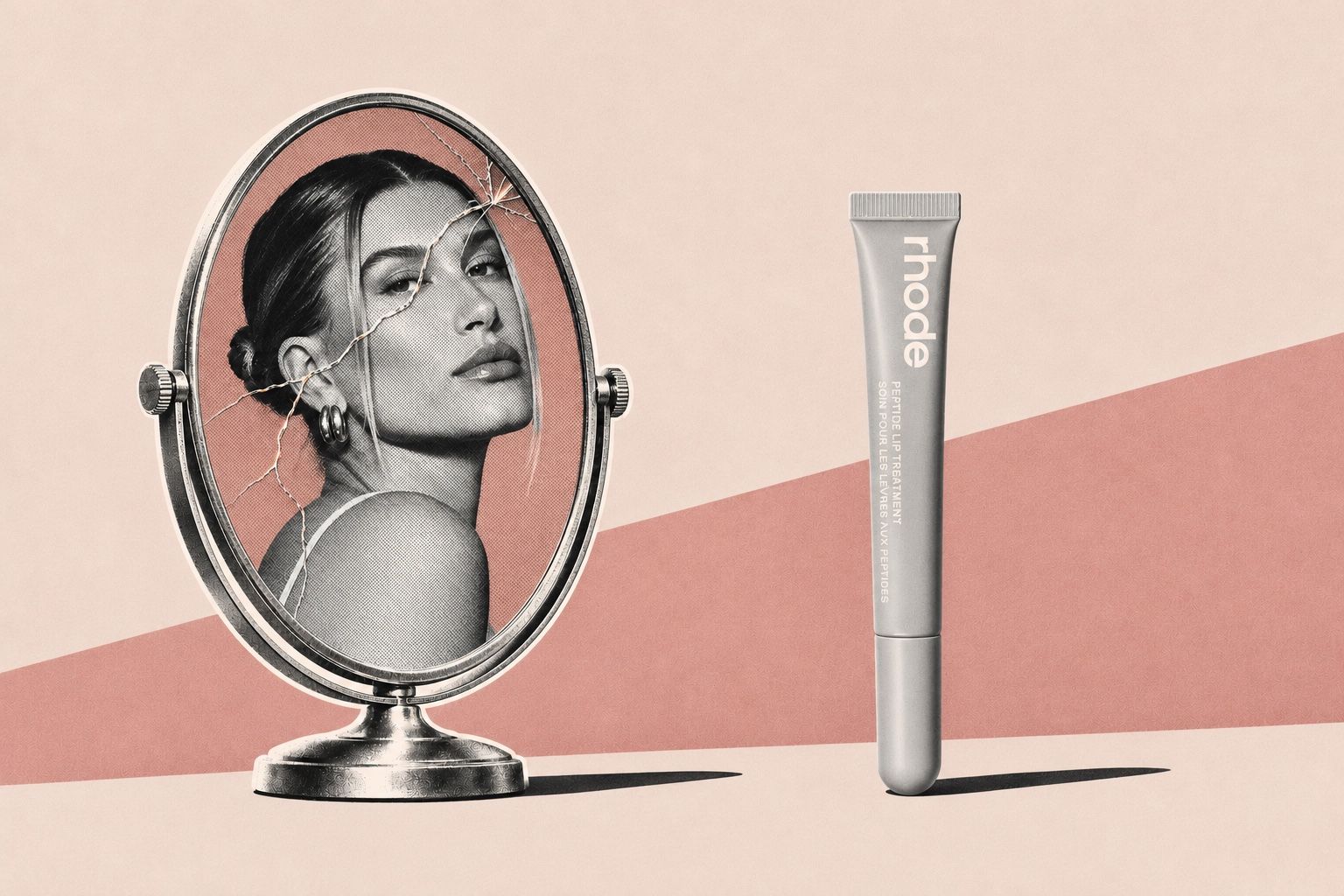
Hailey Bieber took the stage at the New York Times’ 2026 DealBook Summit, ready to talk about vibes. Instead, seasoned reporter Andrew Ross Sorkin doled out questions about e.l.f. Beauty’s acquisition of her brand, Rhode, and why she thought a $1 billion sale price was achievable. The resulting conversation has sparked a heated debate about what’s fair fodder when a celebrity is at the forefront of a brand.
When we initially covered the news in May 2025, e.l.f. Beauty shared the deal’s terms: $800 million in cash and stock, and another $200 million if Rhode hit specific performance targets over three years. Rhode reached $212 million in revenue in under three years with 10 products, and Bieber has stayed on as chief creative officer, influencing how the brand shows up on social feeds and in real life. Sorkin’s line of questioning attempts to peer into the next three years, particularly how Bieber sees the brand continuing to differentiate itself as the beauty sector gets more crowded.
For any retail executive, the ask may be completely reasonable. But one camp in the discourse, which includes Rhode fans, customers, and brand strategists, thinks Sorkin’s line of questioning was out of bounds, especially given the scope of Bieber’s involvement. The other camp offers a more direct critique: if you’re going to be on stage at one of the most prominent events for discussing global issues in technology, finance, and culture, you have to be prepared to discuss all of the above.
And in between the discourse has been an onslaught of social media theories and “gotcha” posts alleging that Bieber’s camp is trying to bury the interview with posts critiquing Sorkin’s journalistic ethics. It has been a relentless cycle of telephone, with each layer of conversation being reshared, remixed, and manipulated with AI.
She is not doing this. These screenshots are fake and I’ve confirmed this with her comms team. Please stop falling for these manufactured smear campaigns against celebrity women.
— Taylor Lorenz (@TaylorLorenz) November 23, 2026A Fallacy of Fandom
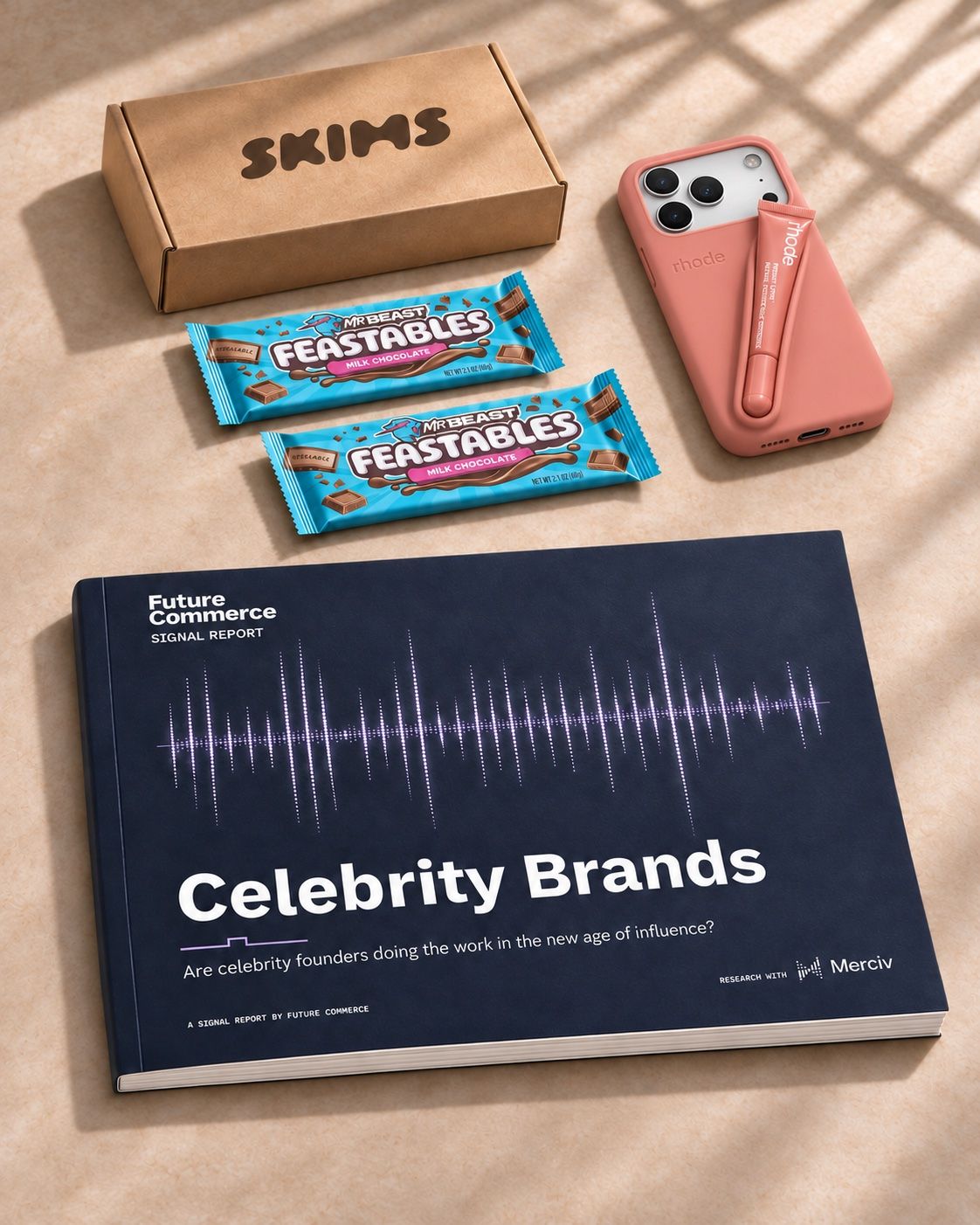
This moment perfectly encapsulates why we dedicated an entire Signal Report to celebrity and influencer brands. Because while nearly 60% of consumers say they’re skeptical of celebrity brands, that isn’t stopping them from buying, especially in beauty (62%). Many Rhode fans have since admitted they were loyal to the brand because they liked Bieber personally and gravitated toward her aesthetic. It’s an extension of their parasocial relationships and overall desire to mirror her lifestyle.
Our special report Corporations Aren’t People, Too argued that founders’ personal brands have become the brands themselves. Criticizing the company reads as a personal attack on the founder, which doesn’t land well with fandoms. But for a celebrity founder at Bieber’s level, who has been so front and center in all aspects of the brand, from product development to marketing, shouldn’t consumers expect more? Or is it more than enough that Bieber sits on stages and talks about the brand she moodboarded into existence and the product vocabulary she turned into a renowned girlie aesthetic?
Future Commerce used Merciv to code 4,118 items across media, TikTok, Reddit, Instagram, and X to determine how the discourse has evolved since the DealBook Summit last week, and whether the situation has changed perception of Rhode the brand, and not just Bieber the founder. The insights gathered are compared to a 30-day baseline to distill the tone and content of headlines, posts, and comments, and how general interest in Bieber and her brand has changed over this period.

When Competence Exceeds Aesthetics
Beyond the accusations of misogyny, many commenters noted that Bieber is known as the face of the brand, not for being a business genius. She led with this aesthetic alignment during the interview, explaining that she wanted to create a brand that “felt authentic” to her. “Why I think people really resonate with the brand is because they can feel that Rhode is me and I am Rhode, and it’s really such an extension of my personality and the things that I love.”
During her talk at VISIONS LA, Emily Segal argued that a brand built on vibes holds people’s attention only briefly. The social majority agree, framing their criticism around Bieber’s competence. Negative comments on her personal TikTok increased from 4% to 91%, and on third-party TikToks about the interview, 77% of comments about her were negative, and 92% when weighted by likes. Bieber hasn’t posted on her own TikTok feed since the summit, so commenters went to older posts to post jabs like, “Were you being optimistic here?” and “I am Rhode and Rhode is me.”

On Reddit, conversations skewed based on the communities themselves. General pop-culture subreddits ran 69% negative, and more snark-focused subreddits were even more so (88%). In unsurprising contrast, fan subreddits ran 83% positive. Reddit was already 68% negative before the event, so the interview intensified existing skepticism that most users already had.
“Unprepared/can’t explain her own business” was the top social frame (30%), while 15% praised Sorkin’s performance, and 8% included “optimistical” as a not-so-subtle dig.
The 153 media headlines we analyzed were far gentler by comparison. Critical or backlash-oriented headlines rose from 1% to 22%; however, nearly half (48%) of post-event headlines were sympathetic. The primary media angle was Bieber’s mental health (29%).
Digging deeper into the data, the backlash never quite hit Rhode. Negative comments on @rhode surged, but further analysis showed it was tied to the brand’s November 20 drop for Bieber’s thirtieth birthday. In fact, of the 245 negative brand comments tracked, more than half were focused on access (restock timeline, the website crashing, reseller issues, among the complaints). And in media headlines, Rhode was typically mentioned as a success credential for Bieber (39%) and as a general descriptor (31%). Only 13% of Rhode media mentions questioned the brand’s credibility and valuation.

Our Celebrity Brands Signal Report found that 44% of consumers believe celebrities are “just paid” when they’re involved in a brand launch. Yet Bieber is largely regarded as both Rhode’s muse and visionary. She has helped build the brand around a specific aesthetic vocabulary (e.g., “glazed,” “dewy,” and “juicy”), and has starred in many of the campaigns herself. Rhode’s success suggests Bieber’s success as a founder, which casts the negative feedback about her lack of preparedness in a different light.
If Bieber and the brand are so intrinsically linked, however, why hasn’t the Rhode brand been affected more? This is the anomaly of modern celebrity brands: a well-known face and name carry a certain weight in driving brand awareness, media coverage, and even retail entry. But that influence can only last for so long as a brand attempts to scale. After consumers make a purchase, product quality and efficacy hold more weight. When we analyzed the language of product reviews for four celebrity brands, Rhode had the highest levels of product defects and service friction.
Is All Press Good Press for Celeb Brands?
A week out from DealBook Summit, the negativity toward Bieber, which peaked November 20-21, is starting to cool. The jokes about “Rhode is me and I am Rhode” and “optimistical delusion” are coexisting with excitement surrounding new holiday drops.
Bieber took a bit, yet Rhode’s loyalists still show up. In fact, when we looked closer at the surge and sudden drop in search activity for the brand, it connected to the brand’s birthday drop, not the summit.

It’s the perfect distillation of where celebrity influence lives and dies, and it’s a bell curve that we’ve seen the Kardashians successfully apply. Well-known faces, stunt-marketing campaigns, and headline-making statements drive media clicks, social frenzy, and immediate demand. But they fade into the background among brand loyalists when they’ve bought into the vision and the product value.
If Bieber is looking to build a brand with longevity and scale to get that final $200 million, the focus should be in the second camp where Rhode already shows product efficacy and service friction. The interview will fade over time, and the clippers will subside. The reviews will stick around, and the virality of those first-hand product experiences will carry on as long as a product doesn’t hold up.
Hailey Bieber took the stage at the New York Times’ 2026 DealBook Summit, ready to talk about vibes. Instead, seasoned reporter Andrew Ross Sorkin doled out questions about e.l.f. Beauty’s acquisition of her brand, Rhode, and why she thought a $1 billion sale price was achievable. The resulting conversation has sparked a heated debate about what’s fair fodder when a celebrity is at the forefront of a brand.
When we initially covered the news in May 2025, e.l.f. Beauty shared the deal’s terms: $800 million in cash and stock, and another $200 million if Rhode hit specific performance targets over three years. Rhode reached $212 million in revenue in under three years with 10 products, and Bieber has stayed on as chief creative officer, influencing how the brand shows up on social feeds and in real life. Sorkin’s line of questioning attempts to peer into the next three years, particularly how Bieber sees the brand continuing to differentiate itself as the beauty sector gets more crowded.
For any retail executive, the ask may be completely reasonable. But one camp in the discourse, which includes Rhode fans, customers, and brand strategists, thinks Sorkin’s line of questioning was out of bounds, especially given the scope of Bieber’s involvement. The other camp offers a more direct critique: if you’re going to be on stage at one of the most prominent events for discussing global issues in technology, finance, and culture, you have to be prepared to discuss all of the above.
And in between the discourse has been an onslaught of social media theories and “gotcha” posts alleging that Bieber’s camp is trying to bury the interview with posts critiquing Sorkin’s journalistic ethics. It has been a relentless cycle of telephone, with each layer of conversation being reshared, remixed, and manipulated with AI.
She is not doing this. These screenshots are fake and I’ve confirmed this with her comms team. Please stop falling for these manufactured smear campaigns against celebrity women.
— Taylor Lorenz (@TaylorLorenz) November 23, 2026A Fallacy of Fandom
This moment perfectly encapsulates why we dedicated an entire Signal Report to celebrity and influencer brands. Because while nearly 60% of consumers say they’re skeptical of celebrity brands, that isn’t stopping them from buying, especially in beauty (62%). Many Rhode fans have since admitted they were loyal to the brand because they liked Bieber personally and gravitated toward her aesthetic. It’s an extension of their parasocial relationships and overall desire to mirror her lifestyle.
Our special report Corporations Aren’t People, Too argued that founders’ personal brands have become the brands themselves. Criticizing the company reads as a personal attack on the founder, which doesn’t land well with fandoms. But for a celebrity founder at Bieber’s level, who has been so front and center in all aspects of the brand, from product development to marketing, shouldn’t consumers expect more? Or is it more than enough that Bieber sits on stages and talks about the brand she moodboarded into existence and the product vocabulary she turned into a renowned girlie aesthetic?
Future Commerce used Merciv to code 4,118 items across media, TikTok, Reddit, Instagram, and X to determine how the discourse has evolved since the DealBook Summit last week, and whether the situation has changed perception of Rhode the brand, and not just Bieber the founder. The insights gathered are compared to a 30-day baseline to distill the tone and content of headlines, posts, and comments, and how general interest in Bieber and her brand has changed over this period.
When Competence Exceeds Aesthetics
Beyond the accusations of misogyny, many commenters noted that Bieber is known as the face of the brand, not for being a business genius. She led with this aesthetic alignment during the interview, explaining that she wanted to create a brand that “felt authentic” to her. “Why I think people really resonate with the brand is because they can feel that Rhode is me and I am Rhode, and it’s really such an extension of my personality and the things that I love.”
During her talk at VISIONS LA, Emily Segal argued that a brand built on vibes holds people’s attention only briefly. The social majority agree, framing their criticism around Bieber’s competence. Negative comments on her personal TikTok increased from 4% to 91%, and on third-party TikToks about the interview, 77% of comments about her were negative, and 92% when weighted by likes. Bieber hasn’t posted on her own TikTok feed since the summit, so commenters went to older posts to post jabs like, “Were you being optimistic here?” and “I am Rhode and Rhode is me.”
On Reddit, conversations skewed based on the communities themselves. General pop-culture subreddits ran 69% negative, and more snark-focused subreddits were even more so (88%). In unsurprising contrast, fan subreddits ran 83% positive. Reddit was already 68% negative before the event, so the interview intensified existing skepticism that most users already had.
“Unprepared/can’t explain her own business” was the top social frame (30%), while 15% praised Sorkin’s performance, and 8% included “optimistical” as a not-so-subtle dig.
The 153 media headlines we analyzed were far gentler by comparison. Critical or backlash-oriented headlines rose from 1% to 22%; however, nearly half (48%) of post-event headlines were sympathetic. The primary media angle was Bieber’s mental health (29%).
Digging deeper into the data, the backlash never quite hit Rhode. Negative comments on @rhode surged, but further analysis showed it was tied to the brand’s November 20 drop for Bieber’s thirtieth birthday. In fact, of the 245 negative brand comments tracked, more than half were focused on access (restock timeline, the website crashing, reseller issues, among the complaints). And in media headlines, Rhode was typically mentioned as a success credential for Bieber (39%) and as a general descriptor (31%). Only 13% of Rhode media mentions questioned the brand’s credibility and valuation.
Our Celebrity Brands Signal Report found that 44% of consumers believe celebrities are “just paid” when they’re involved in a brand launch. Yet Bieber is largely regarded as both Rhode’s muse and visionary. She has helped build the brand around a specific aesthetic vocabulary (e.g., “glazed,” “dewy,” and “juicy”), and has starred in many of the campaigns herself. Rhode’s success suggests Bieber’s success as a founder, which casts the negative feedback about her lack of preparedness in a different light.
If Bieber and the brand are so intrinsically linked, however, why hasn’t the Rhode brand been affected more? This is the anomaly of modern celebrity brands: a well-known face and name carry a certain weight in driving brand awareness, media coverage, and even retail entry. But that influence can only last for so long as a brand attempts to scale. After consumers make a purchase, product quality and efficacy hold more weight. When we analyzed the language of product reviews for four celebrity brands, Rhode had the highest levels of product defects and service friction.
Is All Press Good Press for Celeb Brands?
A week out from DealBook Summit, the negativity toward Bieber, which peaked November 20-21, is starting to cool. The jokes about “Rhode is me and I am Rhode” and “optimistical delusion” are coexisting with excitement surrounding new holiday drops.
Bieber took a bit, yet Rhode’s loyalists still show up. In fact, when we looked closer at the surge and sudden drop in search activity for the brand, it connected to the brand’s birthday drop, not the summit.
It’s the perfect distillation of where celebrity influence lives and dies, and it’s a bell curve that we’ve seen the Kardashians successfully apply. Well-known faces, stunt-marketing campaigns, and headline-making statements drive media clicks, social frenzy, and immediate demand. But they fade into the background among brand loyalists when they’ve bought into the vision and the product value.
If Bieber is looking to build a brand with longevity and scale to get that final $200 million, the focus should be in the second camp where Rhode already shows product efficacy and service friction. The interview will fade over time, and the clippers will subside. The reviews will stick around, and the virality of those first-hand product experiences will carry on as long as a product doesn’t hold up.
Continue Reading...

Insights and futurism for executives in eCom and Retail
Those things we shouldn’t say out loud? We say them on the private feed. Bi-weekly “after dark” podcasts and a members-only newsletter, just for subscribers.
Our research reports combine visionary thinking with data-backed findings from our own advisory panel, made up of leaders at brands you know and trust.
Upskill, cross-skill, and future-proof your teams with Future Commerce Learning, the leading digital eCommerce learning platform, created by professional educators.
THIS IS FOR MEMBERS ONLY
Recommended reading
Consumers are increasingly aware of how their products are sourced and demand us to be transparent about their origins. The next step? An even closer connection between the people who design and create the goods themselves.

Elections are situated between "pumpkin spice" season and "holiday cups" season at Starbucks. Consumer spending spikes in the fourth quarter for myriad reasons: travel, gifting, family gatherings, and Hallmark holidays like Halloween.
Something fundamental has shifted in luxury. What looks like a slowdown is actually a deeper: a psychological and cultural reset where identity fatigue and saturation are redefining what people want to own and what they want to belong to.