.jpg)


of the United Kingdom’s capitol city.
In the city of Manhattan, change is the only constant.
Of the city’s 37,000 active commercial storefronts, about 49% have been open since Q1 2020. In simple terms, that means nearly half of the tenants filling retail’s most vibrant cities are relatively new businesses, and as consumers gravitate toward new, buzzy brands and viral pop-up experiences, heritage brands that represent the city’s rich history are harder to come by.
But after one hundred years, Rothmans remains a pillar of Manhattan culture because the family-owned business has mastered the art of community—something brands have spent decades treating as a line item but have failed to do impactfully.
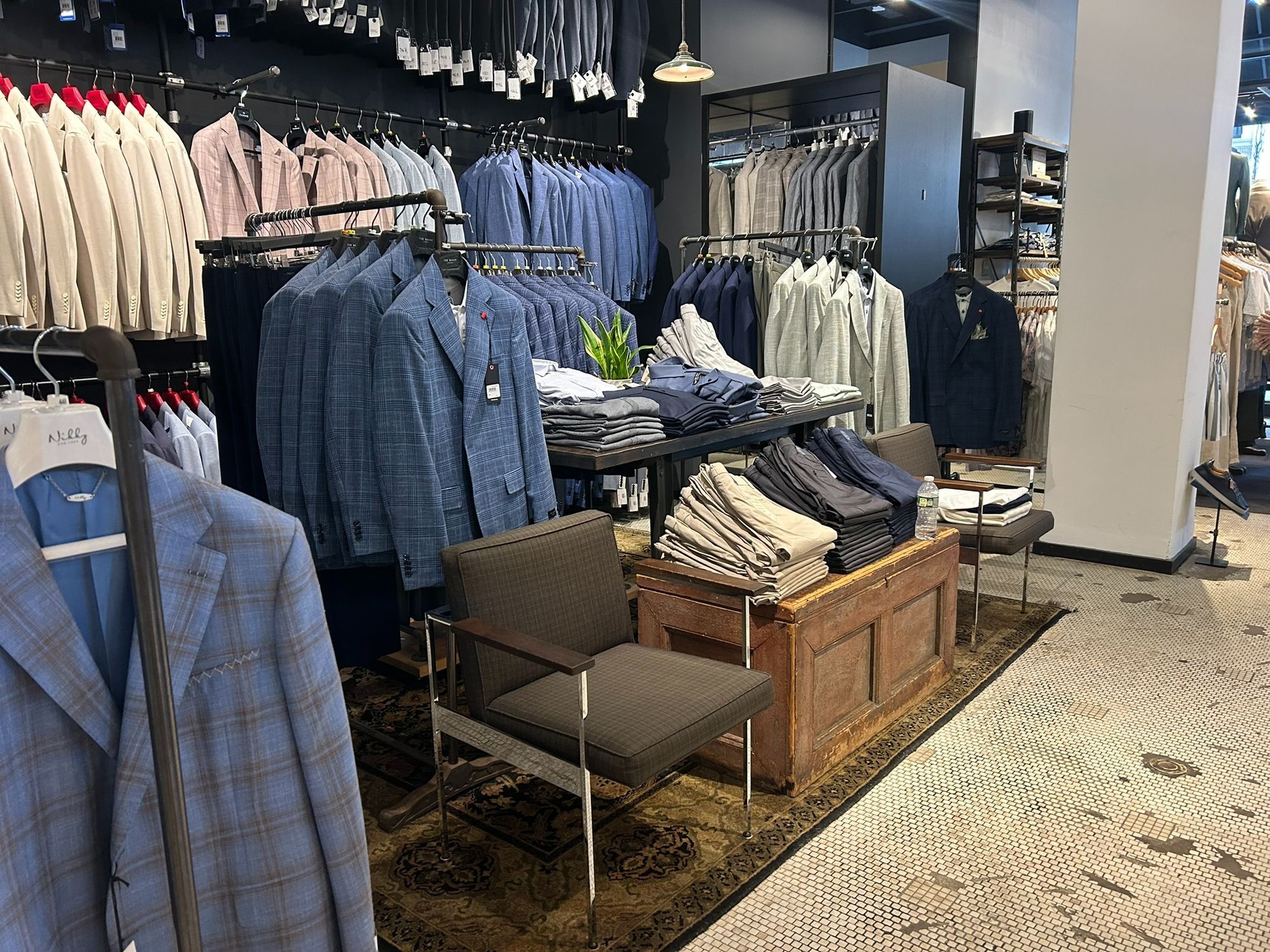
Harry Rothman founded Rothmans in 1902, and its story began at the back of a push cart on Manhattan’s Lower East Side. Tasked with supporting his mother and six siblings, he started selling men’s clothing on the street, and quickly found his hustle was actually a viable business model. Over the years, Rothmans took many forms. A tiny shop on Bleecker Street. A flagship on Fifth Avenue and 18th Street. And now, under the leadership of Harry’s grandson Ken Giddon (along with his brother Jim), an evolved version of the brand that includes an 11,000-square-foot flagship on Park Avenue South in Union Square.
“I want my people to welcome shoppers into the store. This is my house, so I take it really personally. I’m very conscious of how we treat our clients, our customers, and our friends.”
- Ken Giddon, Co-founder, Rothmans
The Union Square flagship has remained open for about forty years, through all of Manhattan’s highs and lows. “We’ve been in New York for a long time,” Giddon told Future Commerce during an interview at the store this summer. “We’ve seen its ups and downs, and the obituary has been written many times, and it’s always proven false.”
Arguably, Manhattan’s ability to overcome adversity stems from retail leaders like Giddon, who respect the city's lore while always embracing what the future holds. While he keeps his Rothmans history alive through storytelling, marketing, and in-store service, he also encourages innovation, championing new initiatives like a rotating pop-up concept featuring emerging brands, in-store podcast recordings, and even community-centered sponsorships.
But the heart of it all is being a natural part of the community. “I didn’t want to be an interloper,” Giddon admitted. So, he got to work. He co-founded New York Cares, one of the city's best-known nonprofits, served on the board of the 14th Street Partnership, and is the president of the Scarsdale Chamber of Commerce.
One of the most central moments on the retailer’s calendar is Steinyfest, a New York-based music festival founded by Greg Steinberg, another retail industry veteran. Their friendship, and their eventual business partnership, is also a lesson in community and what it means to enmesh yourself meaningfully in local culture.
“You’ve got to have your foot in the community, and Steinyfeset is the greatest example of that because it’s a homegrown festival and a lot of what Greg does is following his passion,” Giddon said. “And I’m following my passion. It’s nice to unite those two passions together.”
‘Just a Couple of Larchmont Guys’
The retail industry flocks to mass expos and hosted table-talk meetings to win their next big deal. Giddon and Steinberg, however, kept running into each other in different kinds of spaces: Thursday night drinks at a local bar, touch football on Sundays, and a Larchmont softball league. A friendship grew organically into collaboration, which grew even further into a long-term, mutually beneficial partnership.
“Before Steinyfest, I ran a different business [Something Digital] that Ken was a great networker and advisor for, and we would send everyone we knew to Rothmans,” Steinberg said. “We were just a couple of dads, trying to help each other out any way that we possibly could.”
That friendship is palpable when Steinberg and Giddon are together in a room, which they were for this interview. Giddon ties it back to creating and nurturing a village, something he believes fell by the wayside until the post-COVID era.
We sat down together in Giddon’s office earlier this summer before Steinyfest officially revealed the line-up for its 2026 installment, which is taking place October 3, 2026, at Larchmont Train Station. The set list will include emerging acts such as The Stews, Boys Go To Jupiter, Illiterate Light, and Copilot, plus a few standout headliners like Pet Francis of Dispatch. And in addition to great music, the day promises good food from local restaurants and food trucks, craft beverages, and a vendor village of local artisans and brands.
Now in its seventh year, Steinyfest started after Steinberg and Giddon partnered on a few in-store events at the Union Square location, including after-hours podcast recordings led by Future Commerce co-founders Phillip Jackson and Brian Lange. “We brought in eCommerce industry people, had an event, and that was kind of the spark for this.”
Like any other worthwhile idea, Steinyfest is also the result of constant testing, tinkering, and, most importantly, learning. “We’re trying to build this music festival, and we’re doing it with our friends, and it’s just about trying a few new things every year,” Steinberg said. “Some of them will work, so we’ll keep those things, but then the next year we’ll do some more new things.”
Giddon is enjoying watching the story unfold as both a bystander and a personal champion. “Greg built a business from scratch and sold it; it was a great success story, and I feel like this is just another version of that experience,” he said. “I feel like I’m on the ground floor and watching it all happen.”
A Family Affair
But Giddon and Steinberg aren’t on this journey alone; they’re making it a family affair.
Steinberg has brought his daughter Mia on board to build awareness for Steinyfest through marketing, media, and PR. As someone who works in brand development in her day-to-day, Mia has used her expertise to build the ethos of the Steinyfest brand, including who should be involved and how people should feel when they participate.
“It’s his daughter, my son, and the two of us,” Giddon said.
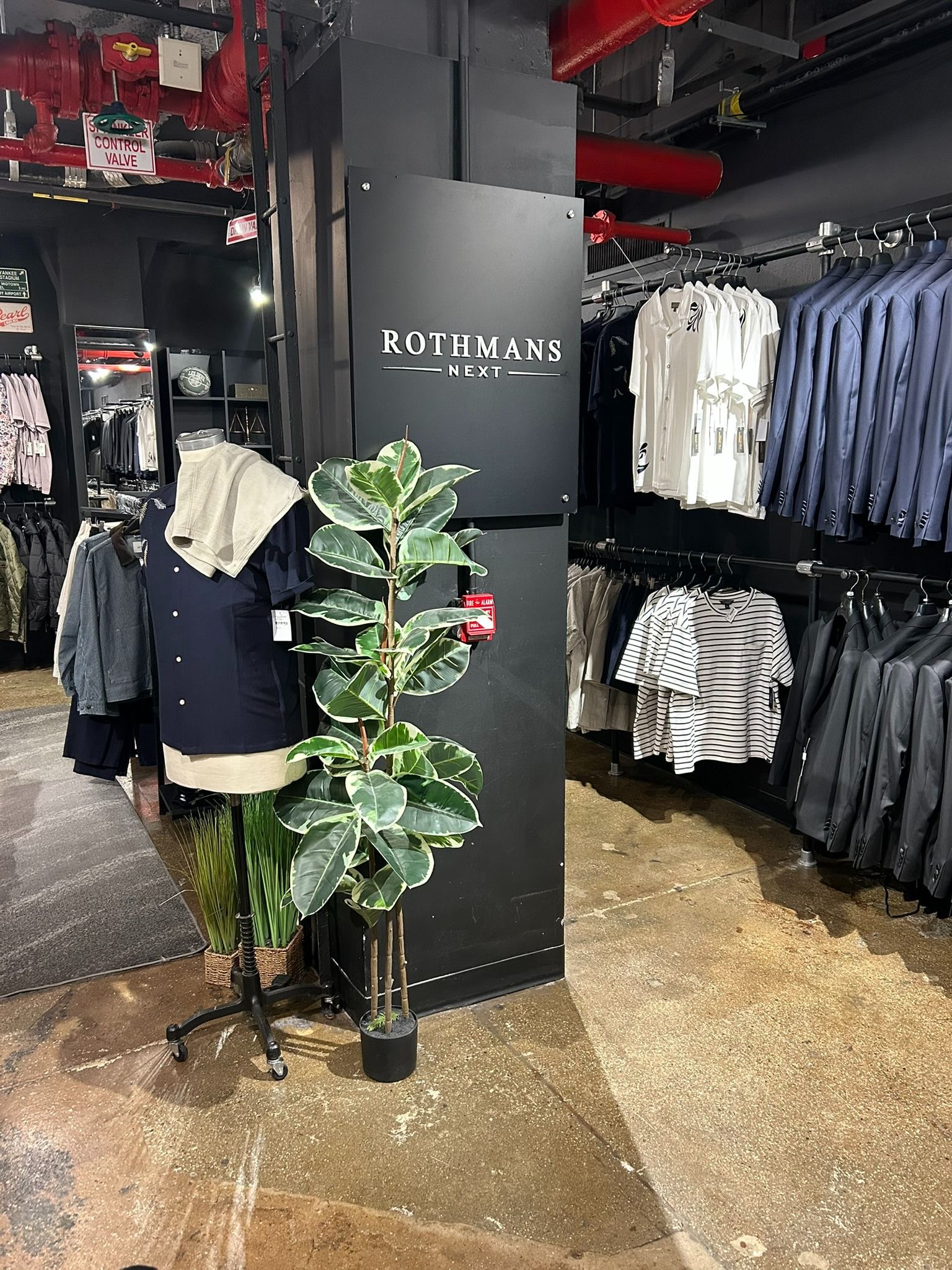
Giddon’s son Will, meanwhile, has played a central role in evolving Rothmans’ acquisition strategy to bring in new customers as they enter their primary earning years. He helped launch
Rothmans Next, a permanent pop-up concept in the store that allows the retailer to test new brands, styles, and aesthetics. He is also developing the retailer’s influencer strategy, which currently prioritizes local creators who will drive word-of-mouth that encourages young customers to bring in family and friends. Once guests come in, associates do the work to know, understand, and serve every customer intentionally, so they’re encouraged to bring their inner circle next time.
For Steinberg and Giddon, bringing in their progenies is a natural extension of the proverbial village they’re both trying to create through their work. With organic, long-term trust-building, they can encourage people to go one step outside their comfort zone, whether that be a new pattern on a dress shirt or a new band.
“Warren Buffett has a line, ‘you don’t need to know jewelry; you need to know your jeweler,’” Giddon said. “You have a guy who does your clothes for you, who fixes your car, and that just makes life easier. That’s what community is. This morning, three different families came in with their kids starting their summer internships. The dads say hello to me, and the kids are surprised they know me.”
From the Lower East Side to Larchmont Train Station
The Rothmans story began on the back of a Lower East Side pushcart and became a retail fixture built on trusted service. One hundred years later, Steinyfest is doing the same thing. By creating a one-day experience where friends, family, and the broader community can come together, Steinyfest is giving people a literal stage to find their new favorite band when they were perfectly happy replaying the same Spotify playlist.
This is how community is formed, and culture is nurtured.
While every brand and retailer is attempting to game culture to work in their favor, Rothmans and Steinyfest are doing the exact opposite. They’re the ones doing the work: showing up at town meetings, local sporting events, and retail stores, ready to listen, support, and serve.
In the city of Manhattan, change is the only constant.
Of the city’s 37,000 active commercial storefronts, about 49% have been open since Q1 2020. In simple terms, that means nearly half of the tenants filling retail’s most vibrant cities are relatively new businesses, and as consumers gravitate toward new, buzzy brands and viral pop-up experiences, heritage brands that represent the city’s rich history are harder to come by.
But after one hundred years, Rothmans remains a pillar of Manhattan culture because the family-owned business has mastered the art of community—something brands have spent decades treating as a line item but have failed to do impactfully.
Harry Rothman founded Rothmans in 1902, and its story began at the back of a push cart on Manhattan’s Lower East Side. Tasked with supporting his mother and six siblings, he started selling men’s clothing on the street, and quickly found his hustle was actually a viable business model. Over the years, Rothmans took many forms. A tiny shop on Bleecker Street. A flagship on Fifth Avenue and 18th Street. And now, under the leadership of Harry’s grandson Ken Giddon (along with his brother Jim), an evolved version of the brand that includes an 11,000-square-foot flagship on Park Avenue South in Union Square.
“I want my people to welcome shoppers into the store. This is my house, so I take it really personally. I’m very conscious of how we treat our clients, our customers, and our friends.”
- Ken Giddon, Co-founder, Rothmans
The Union Square flagship has remained open for about forty years, through all of Manhattan’s highs and lows. “We’ve been in New York for a long time,” Giddon told Future Commerce during an interview at the store this summer. “We’ve seen its ups and downs, and the obituary has been written many times, and it’s always proven false.”
Arguably, Manhattan’s ability to overcome adversity stems from retail leaders like Giddon, who respect the city's lore while always embracing what the future holds. While he keeps his Rothmans history alive through storytelling, marketing, and in-store service, he also encourages innovation, championing new initiatives like a rotating pop-up concept featuring emerging brands, in-store podcast recordings, and even community-centered sponsorships.
But the heart of it all is being a natural part of the community. “I didn’t want to be an interloper,” Giddon admitted. So, he got to work. He co-founded New York Cares, one of the city's best-known nonprofits, served on the board of the 14th Street Partnership, and is the president of the Scarsdale Chamber of Commerce.
One of the most central moments on the retailer’s calendar is Steinyfest, a New York-based music festival founded by Greg Steinberg, another retail industry veteran. Their friendship, and their eventual business partnership, is also a lesson in community and what it means to enmesh yourself meaningfully in local culture.
“You’ve got to have your foot in the community, and Steinyfeset is the greatest example of that because it’s a homegrown festival and a lot of what Greg does is following his passion,” Giddon said. “And I’m following my passion. It’s nice to unite those two passions together.”
‘Just a Couple of Larchmont Guys’
The retail industry flocks to mass expos and hosted table-talk meetings to win their next big deal. Giddon and Steinberg, however, kept running into each other in different kinds of spaces: Thursday night drinks at a local bar, touch football on Sundays, and a Larchmont softball league. A friendship grew organically into collaboration, which grew even further into a long-term, mutually beneficial partnership.
“Before Steinyfest, I ran a different business [Something Digital] that Ken was a great networker and advisor for, and we would send everyone we knew to Rothmans,” Steinberg said. “We were just a couple of dads, trying to help each other out any way that we possibly could.”
That friendship is palpable when Steinberg and Giddon are together in a room, which they were for this interview. Giddon ties it back to creating and nurturing a village, something he believes fell by the wayside until the post-COVID era.
We sat down together in Giddon’s office earlier this summer before Steinyfest officially revealed the line-up for its 2026 installment, which is taking place October 3, 2026, at Larchmont Train Station. The set list will include emerging acts such as The Stews, Boys Go To Jupiter, Illiterate Light, and Copilot, plus a few standout headliners like Pet Francis of Dispatch. And in addition to great music, the day promises good food from local restaurants and food trucks, craft beverages, and a vendor village of local artisans and brands.
Now in its seventh year, Steinyfest started after Steinberg and Giddon partnered on a few in-store events at the Union Square location, including after-hours podcast recordings led by Future Commerce co-founders Phillip Jackson and Brian Lange. “We brought in eCommerce industry people, had an event, and that was kind of the spark for this.”
Like any other worthwhile idea, Steinyfest is also the result of constant testing, tinkering, and, most importantly, learning. “We’re trying to build this music festival, and we’re doing it with our friends, and it’s just about trying a few new things every year,” Steinberg said. “Some of them will work, so we’ll keep those things, but then the next year we’ll do some more new things.”
Giddon is enjoying watching the story unfold as both a bystander and a personal champion. “Greg built a business from scratch and sold it; it was a great success story, and I feel like this is just another version of that experience,” he said. “I feel like I’m on the ground floor and watching it all happen.”
A Family Affair
But Giddon and Steinberg aren’t on this journey alone; they’re making it a family affair.
Steinberg has brought his daughter Mia on board to build awareness for Steinyfest through marketing, media, and PR. As someone who works in brand development in her day-to-day, Mia has used her expertise to build the ethos of the Steinyfest brand, including who should be involved and how people should feel when they participate.
“It’s his daughter, my son, and the two of us,” Giddon said.
Giddon’s son Will, meanwhile, has played a central role in evolving Rothmans’ acquisition strategy to bring in new customers as they enter their primary earning years. He helped launch
Rothmans Next, a permanent pop-up concept in the store that allows the retailer to test new brands, styles, and aesthetics. He is also developing the retailer’s influencer strategy, which currently prioritizes local creators who will drive word-of-mouth that encourages young customers to bring in family and friends. Once guests come in, associates do the work to know, understand, and serve every customer intentionally, so they’re encouraged to bring their inner circle next time.
For Steinberg and Giddon, bringing in their progenies is a natural extension of the proverbial village they’re both trying to create through their work. With organic, long-term trust-building, they can encourage people to go one step outside their comfort zone, whether that be a new pattern on a dress shirt or a new band.
“Warren Buffett has a line, ‘you don’t need to know jewelry; you need to know your jeweler,’” Giddon said. “You have a guy who does your clothes for you, who fixes your car, and that just makes life easier. That’s what community is. This morning, three different families came in with their kids starting their summer internships. The dads say hello to me, and the kids are surprised they know me.”
From the Lower East Side to Larchmont Train Station
The Rothmans story began on the back of a Lower East Side pushcart and became a retail fixture built on trusted service. One hundred years later, Steinyfest is doing the same thing. By creating a one-day experience where friends, family, and the broader community can come together, Steinyfest is giving people a literal stage to find their new favorite band when they were perfectly happy replaying the same Spotify playlist.
This is how community is formed, and culture is nurtured.
While every brand and retailer is attempting to game culture to work in their favor, Rothmans and Steinyfest are doing the exact opposite. They’re the ones doing the work: showing up at town meetings, local sporting events, and retail stores, ready to listen, support, and serve.
In the city of Manhattan, change is the only constant.
Of the city’s 37,000 active commercial storefronts, about 49% have been open since Q1 2020. In simple terms, that means nearly half of the tenants filling retail’s most vibrant cities are relatively new businesses, and as consumers gravitate toward new, buzzy brands and viral pop-up experiences, heritage brands that represent the city’s rich history are harder to come by.
But after one hundred years, Rothmans remains a pillar of Manhattan culture because the family-owned business has mastered the art of community—something brands have spent decades treating as a line item but have failed to do impactfully.
Harry Rothman founded Rothmans in 1902, and its story began at the back of a push cart on Manhattan’s Lower East Side. Tasked with supporting his mother and six siblings, he started selling men’s clothing on the street, and quickly found his hustle was actually a viable business model. Over the years, Rothmans took many forms. A tiny shop on Bleecker Street. A flagship on Fifth Avenue and 18th Street. And now, under the leadership of Harry’s grandson Ken Giddon (along with his brother Jim), an evolved version of the brand that includes an 11,000-square-foot flagship on Park Avenue South in Union Square.
“I want my people to welcome shoppers into the store. This is my house, so I take it really personally. I’m very conscious of how we treat our clients, our customers, and our friends.”
- Ken Giddon, Co-founder, Rothmans
The Union Square flagship has remained open for about forty years, through all of Manhattan’s highs and lows. “We’ve been in New York for a long time,” Giddon told Future Commerce during an interview at the store this summer. “We’ve seen its ups and downs, and the obituary has been written many times, and it’s always proven false.”
Arguably, Manhattan’s ability to overcome adversity stems from retail leaders like Giddon, who respect the city's lore while always embracing what the future holds. While he keeps his Rothmans history alive through storytelling, marketing, and in-store service, he also encourages innovation, championing new initiatives like a rotating pop-up concept featuring emerging brands, in-store podcast recordings, and even community-centered sponsorships.
But the heart of it all is being a natural part of the community. “I didn’t want to be an interloper,” Giddon admitted. So, he got to work. He co-founded New York Cares, one of the city's best-known nonprofits, served on the board of the 14th Street Partnership, and is the president of the Scarsdale Chamber of Commerce.
One of the most central moments on the retailer’s calendar is Steinyfest, a New York-based music festival founded by Greg Steinberg, another retail industry veteran. Their friendship, and their eventual business partnership, is also a lesson in community and what it means to enmesh yourself meaningfully in local culture.
“You’ve got to have your foot in the community, and Steinyfeset is the greatest example of that because it’s a homegrown festival and a lot of what Greg does is following his passion,” Giddon said. “And I’m following my passion. It’s nice to unite those two passions together.”
‘Just a Couple of Larchmont Guys’
The retail industry flocks to mass expos and hosted table-talk meetings to win their next big deal. Giddon and Steinberg, however, kept running into each other in different kinds of spaces: Thursday night drinks at a local bar, touch football on Sundays, and a Larchmont softball league. A friendship grew organically into collaboration, which grew even further into a long-term, mutually beneficial partnership.
“Before Steinyfest, I ran a different business [Something Digital] that Ken was a great networker and advisor for, and we would send everyone we knew to Rothmans,” Steinberg said. “We were just a couple of dads, trying to help each other out any way that we possibly could.”
That friendship is palpable when Steinberg and Giddon are together in a room, which they were for this interview. Giddon ties it back to creating and nurturing a village, something he believes fell by the wayside until the post-COVID era.
We sat down together in Giddon’s office earlier this summer before Steinyfest officially revealed the line-up for its 2026 installment, which is taking place October 3, 2026, at Larchmont Train Station. The set list will include emerging acts such as The Stews, Boys Go To Jupiter, Illiterate Light, and Copilot, plus a few standout headliners like Pet Francis of Dispatch. And in addition to great music, the day promises good food from local restaurants and food trucks, craft beverages, and a vendor village of local artisans and brands.
Now in its seventh year, Steinyfest started after Steinberg and Giddon partnered on a few in-store events at the Union Square location, including after-hours podcast recordings led by Future Commerce co-founders Phillip Jackson and Brian Lange. “We brought in eCommerce industry people, had an event, and that was kind of the spark for this.”
Like any other worthwhile idea, Steinyfest is also the result of constant testing, tinkering, and, most importantly, learning. “We’re trying to build this music festival, and we’re doing it with our friends, and it’s just about trying a few new things every year,” Steinberg said. “Some of them will work, so we’ll keep those things, but then the next year we’ll do some more new things.”
Giddon is enjoying watching the story unfold as both a bystander and a personal champion. “Greg built a business from scratch and sold it; it was a great success story, and I feel like this is just another version of that experience,” he said. “I feel like I’m on the ground floor and watching it all happen.”
A Family Affair
But Giddon and Steinberg aren’t on this journey alone; they’re making it a family affair.
Steinberg has brought his daughter Mia on board to build awareness for Steinyfest through marketing, media, and PR. As someone who works in brand development in her day-to-day, Mia has used her expertise to build the ethos of the Steinyfest brand, including who should be involved and how people should feel when they participate.
“It’s his daughter, my son, and the two of us,” Giddon said.
Giddon’s son Will, meanwhile, has played a central role in evolving Rothmans’ acquisition strategy to bring in new customers as they enter their primary earning years. He helped launch
Rothmans Next, a permanent pop-up concept in the store that allows the retailer to test new brands, styles, and aesthetics. He is also developing the retailer’s influencer strategy, which currently prioritizes local creators who will drive word-of-mouth that encourages young customers to bring in family and friends. Once guests come in, associates do the work to know, understand, and serve every customer intentionally, so they’re encouraged to bring their inner circle next time.
For Steinberg and Giddon, bringing in their progenies is a natural extension of the proverbial village they’re both trying to create through their work. With organic, long-term trust-building, they can encourage people to go one step outside their comfort zone, whether that be a new pattern on a dress shirt or a new band.
“Warren Buffett has a line, ‘you don’t need to know jewelry; you need to know your jeweler,’” Giddon said. “You have a guy who does your clothes for you, who fixes your car, and that just makes life easier. That’s what community is. This morning, three different families came in with their kids starting their summer internships. The dads say hello to me, and the kids are surprised they know me.”
From the Lower East Side to Larchmont Train Station
The Rothmans story began on the back of a Lower East Side pushcart and became a retail fixture built on trusted service. One hundred years later, Steinyfest is doing the same thing. By creating a one-day experience where friends, family, and the broader community can come together, Steinyfest is giving people a literal stage to find their new favorite band when they were perfectly happy replaying the same Spotify playlist.
This is how community is formed, and culture is nurtured.
While every brand and retailer is attempting to game culture to work in their favor, Rothmans and Steinyfest are doing the exact opposite. They’re the ones doing the work: showing up at town meetings, local sporting events, and retail stores, ready to listen, support, and serve.
In the city of Manhattan, change is the only constant.
Of the city’s 37,000 active commercial storefronts, about 49% have been open since Q1 2020. In simple terms, that means nearly half of the tenants filling retail’s most vibrant cities are relatively new businesses, and as consumers gravitate toward new, buzzy brands and viral pop-up experiences, heritage brands that represent the city’s rich history are harder to come by.
But after one hundred years, Rothmans remains a pillar of Manhattan culture because the family-owned business has mastered the art of community—something brands have spent decades treating as a line item but have failed to do impactfully.
Harry Rothman founded Rothmans in 1902, and its story began at the back of a push cart on Manhattan’s Lower East Side. Tasked with supporting his mother and six siblings, he started selling men’s clothing on the street, and quickly found his hustle was actually a viable business model. Over the years, Rothmans took many forms. A tiny shop on Bleecker Street. A flagship on Fifth Avenue and 18th Street. And now, under the leadership of Harry’s grandson Ken Giddon (along with his brother Jim), an evolved version of the brand that includes an 11,000-square-foot flagship on Park Avenue South in Union Square.
“I want my people to welcome shoppers into the store. This is my house, so I take it really personally. I’m very conscious of how we treat our clients, our customers, and our friends.”
- Ken Giddon, Co-founder, Rothmans
The Union Square flagship has remained open for about forty years, through all of Manhattan’s highs and lows. “We’ve been in New York for a long time,” Giddon told Future Commerce during an interview at the store this summer. “We’ve seen its ups and downs, and the obituary has been written many times, and it’s always proven false.”
Arguably, Manhattan’s ability to overcome adversity stems from retail leaders like Giddon, who respect the city's lore while always embracing what the future holds. While he keeps his Rothmans history alive through storytelling, marketing, and in-store service, he also encourages innovation, championing new initiatives like a rotating pop-up concept featuring emerging brands, in-store podcast recordings, and even community-centered sponsorships.
But the heart of it all is being a natural part of the community. “I didn’t want to be an interloper,” Giddon admitted. So, he got to work. He co-founded New York Cares, one of the city's best-known nonprofits, served on the board of the 14th Street Partnership, and is the president of the Scarsdale Chamber of Commerce.
One of the most central moments on the retailer’s calendar is Steinyfest, a New York-based music festival founded by Greg Steinberg, another retail industry veteran. Their friendship, and their eventual business partnership, is also a lesson in community and what it means to enmesh yourself meaningfully in local culture.
“You’ve got to have your foot in the community, and Steinyfeset is the greatest example of that because it’s a homegrown festival and a lot of what Greg does is following his passion,” Giddon said. “And I’m following my passion. It’s nice to unite those two passions together.”
‘Just a Couple of Larchmont Guys’
The retail industry flocks to mass expos and hosted table-talk meetings to win their next big deal. Giddon and Steinberg, however, kept running into each other in different kinds of spaces: Thursday night drinks at a local bar, touch football on Sundays, and a Larchmont softball league. A friendship grew organically into collaboration, which grew even further into a long-term, mutually beneficial partnership.
“Before Steinyfest, I ran a different business [Something Digital] that Ken was a great networker and advisor for, and we would send everyone we knew to Rothmans,” Steinberg said. “We were just a couple of dads, trying to help each other out any way that we possibly could.”
That friendship is palpable when Steinberg and Giddon are together in a room, which they were for this interview. Giddon ties it back to creating and nurturing a village, something he believes fell by the wayside until the post-COVID era.
We sat down together in Giddon’s office earlier this summer before Steinyfest officially revealed the line-up for its 2026 installment, which is taking place October 3, 2026, at Larchmont Train Station. The set list will include emerging acts such as The Stews, Boys Go To Jupiter, Illiterate Light, and Copilot, plus a few standout headliners like Pet Francis of Dispatch. And in addition to great music, the day promises good food from local restaurants and food trucks, craft beverages, and a vendor village of local artisans and brands.
Now in its seventh year, Steinyfest started after Steinberg and Giddon partnered on a few in-store events at the Union Square location, including after-hours podcast recordings led by Future Commerce co-founders Phillip Jackson and Brian Lange. “We brought in eCommerce industry people, had an event, and that was kind of the spark for this.”
Like any other worthwhile idea, Steinyfest is also the result of constant testing, tinkering, and, most importantly, learning. “We’re trying to build this music festival, and we’re doing it with our friends, and it’s just about trying a few new things every year,” Steinberg said. “Some of them will work, so we’ll keep those things, but then the next year we’ll do some more new things.”
Giddon is enjoying watching the story unfold as both a bystander and a personal champion. “Greg built a business from scratch and sold it; it was a great success story, and I feel like this is just another version of that experience,” he said. “I feel like I’m on the ground floor and watching it all happen.”
A Family Affair
But Giddon and Steinberg aren’t on this journey alone; they’re making it a family affair.
Steinberg has brought his daughter Mia on board to build awareness for Steinyfest through marketing, media, and PR. As someone who works in brand development in her day-to-day, Mia has used her expertise to build the ethos of the Steinyfest brand, including who should be involved and how people should feel when they participate.
“It’s his daughter, my son, and the two of us,” Giddon said.
Giddon’s son Will, meanwhile, has played a central role in evolving Rothmans’ acquisition strategy to bring in new customers as they enter their primary earning years. He helped launch
Rothmans Next, a permanent pop-up concept in the store that allows the retailer to test new brands, styles, and aesthetics. He is also developing the retailer’s influencer strategy, which currently prioritizes local creators who will drive word-of-mouth that encourages young customers to bring in family and friends. Once guests come in, associates do the work to know, understand, and serve every customer intentionally, so they’re encouraged to bring their inner circle next time.
For Steinberg and Giddon, bringing in their progenies is a natural extension of the proverbial village they’re both trying to create through their work. With organic, long-term trust-building, they can encourage people to go one step outside their comfort zone, whether that be a new pattern on a dress shirt or a new band.
“Warren Buffett has a line, ‘you don’t need to know jewelry; you need to know your jeweler,’” Giddon said. “You have a guy who does your clothes for you, who fixes your car, and that just makes life easier. That’s what community is. This morning, three different families came in with their kids starting their summer internships. The dads say hello to me, and the kids are surprised they know me.”
From the Lower East Side to Larchmont Train Station
The Rothmans story began on the back of a Lower East Side pushcart and became a retail fixture built on trusted service. One hundred years later, Steinyfest is doing the same thing. By creating a one-day experience where friends, family, and the broader community can come together, Steinyfest is giving people a literal stage to find their new favorite band when they were perfectly happy replaying the same Spotify playlist.
This is how community is formed, and culture is nurtured.
While every brand and retailer is attempting to game culture to work in their favor, Rothmans and Steinyfest are doing the exact opposite. They’re the ones doing the work: showing up at town meetings, local sporting events, and retail stores, ready to listen, support, and serve.
In the city of Manhattan, change is the only constant.
Of the city’s 37,000 active commercial storefronts, about 49% have been open since Q1 2020. In simple terms, that means nearly half of the tenants filling retail’s most vibrant cities are relatively new businesses, and as consumers gravitate toward new, buzzy brands and viral pop-up experiences, heritage brands that represent the city’s rich history are harder to come by.
But after one hundred years, Rothmans remains a pillar of Manhattan culture because the family-owned business has mastered the art of community—something brands have spent decades treating as a line item but have failed to do impactfully.
Harry Rothman founded Rothmans in 1902, and its story began at the back of a push cart on Manhattan’s Lower East Side. Tasked with supporting his mother and six siblings, he started selling men’s clothing on the street, and quickly found his hustle was actually a viable business model. Over the years, Rothmans took many forms. A tiny shop on Bleecker Street. A flagship on Fifth Avenue and 18th Street. And now, under the leadership of Harry’s grandson Ken Giddon (along with his brother Jim), an evolved version of the brand that includes an 11,000-square-foot flagship on Park Avenue South in Union Square.
“I want my people to welcome shoppers into the store. This is my house, so I take it really personally. I’m very conscious of how we treat our clients, our customers, and our friends.”
- Ken Giddon, Co-founder, Rothmans
The Union Square flagship has remained open for about forty years, through all of Manhattan’s highs and lows. “We’ve been in New York for a long time,” Giddon told Future Commerce during an interview at the store this summer. “We’ve seen its ups and downs, and the obituary has been written many times, and it’s always proven false.”
Arguably, Manhattan’s ability to overcome adversity stems from retail leaders like Giddon, who respect the city's lore while always embracing what the future holds. While he keeps his Rothmans history alive through storytelling, marketing, and in-store service, he also encourages innovation, championing new initiatives like a rotating pop-up concept featuring emerging brands, in-store podcast recordings, and even community-centered sponsorships.
But the heart of it all is being a natural part of the community. “I didn’t want to be an interloper,” Giddon admitted. So, he got to work. He co-founded New York Cares, one of the city's best-known nonprofits, served on the board of the 14th Street Partnership, and is the president of the Scarsdale Chamber of Commerce.
One of the most central moments on the retailer’s calendar is Steinyfest, a New York-based music festival founded by Greg Steinberg, another retail industry veteran. Their friendship, and their eventual business partnership, is also a lesson in community and what it means to enmesh yourself meaningfully in local culture.
“You’ve got to have your foot in the community, and Steinyfeset is the greatest example of that because it’s a homegrown festival and a lot of what Greg does is following his passion,” Giddon said. “And I’m following my passion. It’s nice to unite those two passions together.”
‘Just a Couple of Larchmont Guys’
The retail industry flocks to mass expos and hosted table-talk meetings to win their next big deal. Giddon and Steinberg, however, kept running into each other in different kinds of spaces: Thursday night drinks at a local bar, touch football on Sundays, and a Larchmont softball league. A friendship grew organically into collaboration, which grew even further into a long-term, mutually beneficial partnership.
“Before Steinyfest, I ran a different business [Something Digital] that Ken was a great networker and advisor for, and we would send everyone we knew to Rothmans,” Steinberg said. “We were just a couple of dads, trying to help each other out any way that we possibly could.”
That friendship is palpable when Steinberg and Giddon are together in a room, which they were for this interview. Giddon ties it back to creating and nurturing a village, something he believes fell by the wayside until the post-COVID era.
We sat down together in Giddon’s office earlier this summer before Steinyfest officially revealed the line-up for its 2026 installment, which is taking place October 3, 2026, at Larchmont Train Station. The set list will include emerging acts such as The Stews, Boys Go To Jupiter, Illiterate Light, and Copilot, plus a few standout headliners like Pet Francis of Dispatch. And in addition to great music, the day promises good food from local restaurants and food trucks, craft beverages, and a vendor village of local artisans and brands.
Now in its seventh year, Steinyfest started after Steinberg and Giddon partnered on a few in-store events at the Union Square location, including after-hours podcast recordings led by Future Commerce co-founders Phillip Jackson and Brian Lange. “We brought in eCommerce industry people, had an event, and that was kind of the spark for this.”
Like any other worthwhile idea, Steinyfest is also the result of constant testing, tinkering, and, most importantly, learning. “We’re trying to build this music festival, and we’re doing it with our friends, and it’s just about trying a few new things every year,” Steinberg said. “Some of them will work, so we’ll keep those things, but then the next year we’ll do some more new things.”
Giddon is enjoying watching the story unfold as both a bystander and a personal champion. “Greg built a business from scratch and sold it; it was a great success story, and I feel like this is just another version of that experience,” he said. “I feel like I’m on the ground floor and watching it all happen.”
A Family Affair
But Giddon and Steinberg aren’t on this journey alone; they’re making it a family affair.
Steinberg has brought his daughter Mia on board to build awareness for Steinyfest through marketing, media, and PR. As someone who works in brand development in her day-to-day, Mia has used her expertise to build the ethos of the Steinyfest brand, including who should be involved and how people should feel when they participate.
“It’s his daughter, my son, and the two of us,” Giddon said.
Giddon’s son Will, meanwhile, has played a central role in evolving Rothmans’ acquisition strategy to bring in new customers as they enter their primary earning years. He helped launch
Rothmans Next, a permanent pop-up concept in the store that allows the retailer to test new brands, styles, and aesthetics. He is also developing the retailer’s influencer strategy, which currently prioritizes local creators who will drive word-of-mouth that encourages young customers to bring in family and friends. Once guests come in, associates do the work to know, understand, and serve every customer intentionally, so they’re encouraged to bring their inner circle next time.
For Steinberg and Giddon, bringing in their progenies is a natural extension of the proverbial village they’re both trying to create through their work. With organic, long-term trust-building, they can encourage people to go one step outside their comfort zone, whether that be a new pattern on a dress shirt or a new band.
“Warren Buffett has a line, ‘you don’t need to know jewelry; you need to know your jeweler,’” Giddon said. “You have a guy who does your clothes for you, who fixes your car, and that just makes life easier. That’s what community is. This morning, three different families came in with their kids starting their summer internships. The dads say hello to me, and the kids are surprised they know me.”
From the Lower East Side to Larchmont Train Station
The Rothmans story began on the back of a Lower East Side pushcart and became a retail fixture built on trusted service. One hundred years later, Steinyfest is doing the same thing. By creating a one-day experience where friends, family, and the broader community can come together, Steinyfest is giving people a literal stage to find their new favorite band when they were perfectly happy replaying the same Spotify playlist.
This is how community is formed, and culture is nurtured.
While every brand and retailer is attempting to game culture to work in their favor, Rothmans and Steinyfest are doing the exact opposite. They’re the ones doing the work: showing up at town meetings, local sporting events, and retail stores, ready to listen, support, and serve.
Continue Reading...

Insights and futurism for executives in eCom and Retail
Those things we shouldn’t say out loud? We say them on the private feed. Bi-weekly “after dark” podcasts and a members-only newsletter, just for subscribers.
Our research reports combine visionary thinking with data-backed findings from our own advisory panel, made up of leaders at brands you know and trust.
Upskill, cross-skill, and future-proof your teams with Future Commerce Learning, the leading digital eCommerce learning platform, created by professional educators.