

of the United Kingdom’s capitol city.
For decades, brands were built to duel: Pepsi vs. Coke, McDonald’s vs. Burger King, Apple vs. Microsoft. These rivalries became myth and shaped how consumers absorbed marketing messages and forged brand loyalties. But commerce is being fundamentally rewired around collaboration, creating more intertwined economic systems that require a new way of designing, launching, and growing brands.
The Silent Generation prized category ownership. Steady market share and products built to last. In the austere postwar years, the lingua franca of commerce included terms such as “quality,” “durability,” and “reliability.”
Boomers turned rivalry into theater. Marketing became a form of combat, with every holdco vying to win the customer and claim the category crown. Ask any father born between 1946 and 1964, and he’ll tell you without hesitation which brand is “the best.” (Or, if you’re looking for some media with your commerce studies, you also can turn on an episode of “Mad Men.”)
Millennials ushered in and accelerated the direct-to-consumer experience. Within a 10-year window, this generation went from being told never to use a credit card on the Internet to ordering products from their favorite brand’s website and having them delivered directly to their doorstep.
Now a new script is being written. A generation raised on networks views the world as connection. Gen Z’s schools, entertainment, friendships, activism, and creativity are collaborative by default, with partnership being the operating system.
Partnerships are no longer promotional vehicles; they are growth infrastructure. In a fragmented media landscape where attention is scarce and trust is distributed, partnerships allow brands to borrow relevance, access communities, and create value that would be hard to generate independently.
As their cultural sway expands, brands are learning to mirror Gen Z’s logic and use brand partnerships as a form of cultural recalibration.
A New Collaborative Operating System
Previous generations collaborated, certainly, but collaboration wasn’t woven into the infrastructure of everyday life.
Gen Z grew up in group chats. They learned through online communities. They watched creators build audiences together, not alone. They spent formative years in multiplayer digital environments where cooperation often delivered greater rewards than competition. In my previous Future Commerce article, I explored this dynamic through the social architecture of Fortnite.
When Gen Z wants to learn something, they don’t instinctively seek an authority; they turn to communities like Reddit, Letterboxd, and TikTok. When they want to create, they collaborate. When they rally around a cause, they organize collectively. Movements such as Greta Thunberg’s Fridays for Future demonstrated how digital networks, social platforms, and online communities could transform shared concern into coordinated action at a global scale.
Even personal relationships increasingly reflect this collaborative mindset. Friendship and partnership are often defined by shared emotional labor, mutual support, and co-creation of experiences. A 2024 survey from EMN Life found that 59% of Gen Z respondents were open to polyamorous relationship structures—a statistic that, regardless of one’s perspective, illustrates a generation more willing to rethink traditional models in favor of more collaborative ones.
For Gen Z, collaboration is the default setting. Brands need to learn that it’s not just a one-off event, a workplace initiative, or even a management strategy.
Collaboration functions as an inclusion mechanism–but it can just as easily become a mechanism for distinction.
When brands collaborate with communities rather than simply marketing to them, they can bring perspectives into product development that would otherwise remain outside the brand. Collaboration becomes a mechanism for participation, with communities influencing what gets made, how it gets made, and ultimately who resonates with the product when it hits shelves.
Target’s long-running partnership with Tabitha Brown is a useful example. It began as a creator collaboration that expanded across fashion, home, food, kitchen, and outdoor categories, translating Brown’s distinctive worldview into accessible products for a mass audience. The significance wasn’t simply that she, as a creator, was given a platform but that her perspective became part of the product itself.
Gen Z creators are applying the same logic, often with the creator in the driver’s seat. Alix Earle didn’t wait to be cast in Frame’s 2025 skinny jean campaign; she pitched it. Earle kept a pair of Frame skinnies in her closet for years and brought the idea directly to creative director Erik Torstensson. The silhouette was once considered dead, but rebranding it as “The Alix” revived it. Earle helped create a new origin story.
Coco Gauff’s CG1 with New Balance takes this concept a step further. The tennis shoe carries her signature, the coordinates of the park where she learned to play, and a quote from her father on the toe box. A brand could never invent these details on its own. They turn a performance shoe into a personal artifact, and they’re precisely what fans want to buy.
Research increasingly supports this distinction. Consumers respond more favorably when assortments visibly accommodate a wider range of consumers, while research into brand communities suggests that genuine participation and co-creation can make consumers feel more represented and empowered.
How to Build an Ecosystem
Commerce rarely creates culture. More often, it reflects it.
Projected to command more than $12 trillion in spending power by 2030, Gen Z is poised to be the most influential consumer cohort in history. More importantly, it is a generation raised in networks, communities, and collaborative digital environments. The partnership economy emerging across commerce mirrors the collaborative dynamics already embedded in their daily lives.
IP partnerships and product extensions are hardly new. Disney has been licensing characters for decades, and fashion houses have worked with artists for generations. Even sports leagues have turned teams and athletes into merchandise, games, and entertainment properties for much of the modern era.
What has changed is the scale and convergence of media and commerce.
The 2025 Louis Vuitton x Takashi Murakami collab fronted by Zendaya (a Gen Z favorite) is a useful example. The original collection, launched in the early 2000s, was already a landmark moment. Murakami transformed Louis Vuitton’s most recognizable visual asset into something playful, contemporary, and culturally disruptive. Twenty years later, the revival became something much larger than a product collection. More than 200 products were supported by advertising, immersive retail environments, window displays, celebrity activations, and a multi-stage product release.
The product became the content. And the content, in turn, created the cultural moment that made the product desirable.
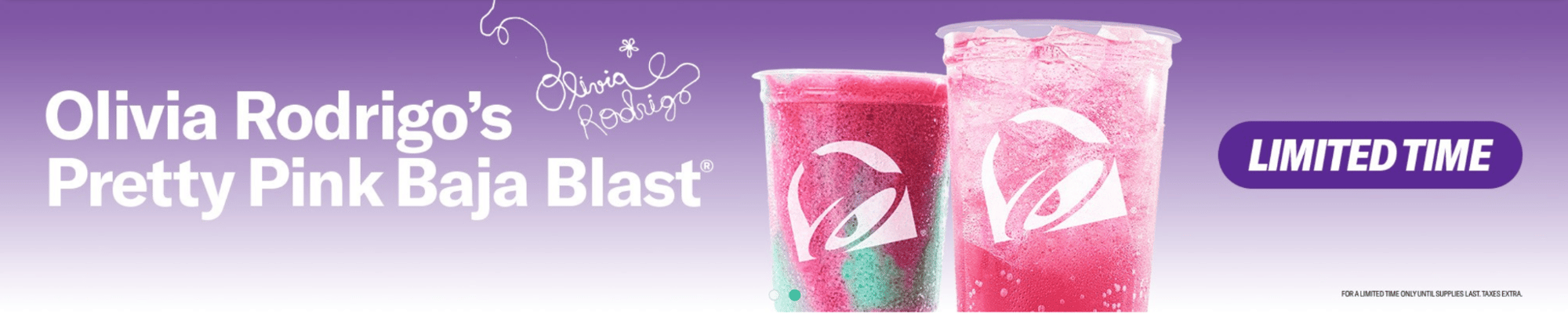
Taco Bell’s 2026 collaboration with Olivia Rodrigo shows how far that choreography can go. “You Seem Pretty Pink for a Baja Blast,” named for her latest album, didn’t simply appear on menus. It debuted at Rodrigo’s own Daisy Chain Fields Festival and a handful of Taco Bell’s Live Mas Cafes before rolling out nationally weeks later, then into Puerto Rico and Canada. Each stage had its own release, and each release had its own content ecosystem. The drink was a menu item, an album promotion, and a festival souvenir all in one.
Pinterest took a similar approach, partnering with Emma Chamberlain’s Chamberlain Coffee on limited-edition coffee blends. With their first launch, the partnership extended beyond the physical product and into Pinterest content, shoppable pins, cafe activations, merchandise, and a Cannes Lions presence. What’s notable is how the partnership started: Pinterest’s communications team, not its partnerships team, spent five years tracking Chamberlain’s organic mentions of the platform before approaching her. She was already a Pinner, and the results reflected that authenticity. Chamberlain Coffee saw a 200% spike in site sales on launch day, the collaboration earned nearly 1,500 press mentions in its first week, and the limited-edition merchandise quickly sold out.
This is what happens when media and commerce stop operating as separate categories.
A creator can become a product designer. A media platform can become a retailer. An artist can become a brand. An entertainment property can become a fashion collection. A social audience can become a customer base without ever consciously transitioning from one to the other.
The collaboration is no longer simply:
Brand A + Brand B = Product C
It is increasingly:
Brand + IP + Creator + Community + Content + Commerce = Cultural Moment.
Here is a proposed framework to assist in constructing the right collaborator and creator partnerships for your brand:
- Audience: Does the creator’s audience buy in this category?
- Identity: Was there visible affinity before the deal, and can both sides survive the other’s controversies?
- Execution: Can operations deliver the quality and volume the hype will create?
Decision 1: How deep is the creator’s hand?
Decision 2: What should the release format be?
- Evergreen line: Lowest hype, lowest risk. Suits co-designed and co-owned work.
- Limited-time offer: Menu items and seasonal capsule collections (Dunkin’, Taco Bell).
- Numbered drop: Fixed quantity, built for sell-outs and resale buzz (Dr. Squatch, Satan Shoes).
- Event-anchored drop: Tied to an album, tour, or festival, and released in stages (Olivia Rodrigo x Taco Bell).
Exclusion as a Tactic
The same network effects can work in reverse.
The aesthetics, references, language, and cultural codes that make a collaboration feel authentic to one community can simultaneously make it feel inaccessible to everyone outside it. Limited drops, insider knowledge, niche creators, and highly specific visual languages create belonging precisely because not everyone belongs.
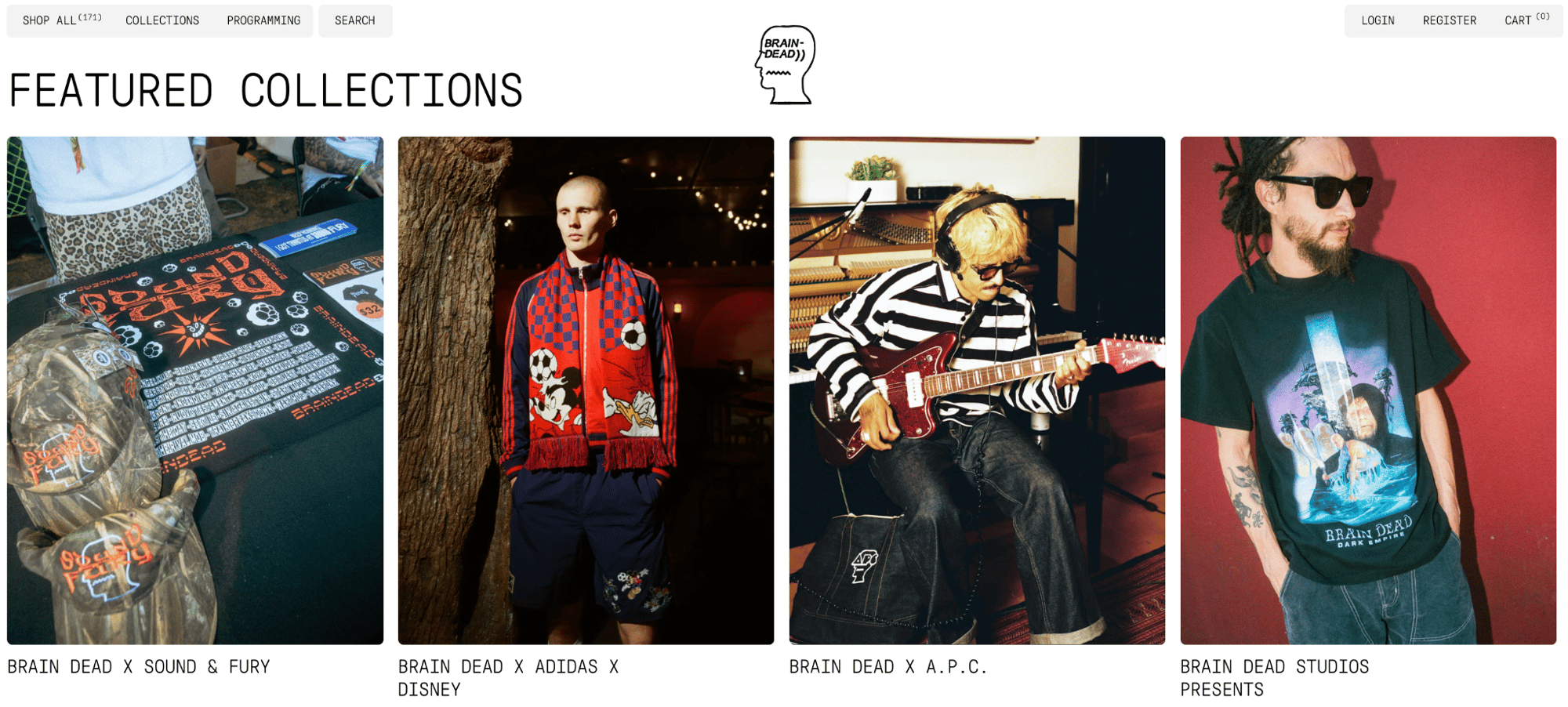
Brain Dead is an interesting example of this dynamic. Its collaborations span film, music, skateboarding, art, gaming, and fashion, creating a cultural shorthand that rewards people who understand the references. From Coach and Crocs to Adidas-Disney, the brand’s appeal isn’t simply that its products look different; it is that participating in the brand can signal membership in a particular cultural world.
Scarcity can do the same work in a fraction of the time. In June 2025, Dr. Squatch released 5,000 bars of “Sydney’s Bathwater Bliss,” a soap made with actual bathwater Sydney Sweeney sat in while crafting the campaign creative. At $8 a bar, it sold out within minutes, and resale listings climbed into the hundreds of dollars. Nobody needed that soap. The cultural value lay in having tangible proof that you were part of the moment.
Distinction has an edge, though. In 2021, Lil Nas X and the art collective MSCHF released 666 pairs of modified Nike Air Max 97s, the infamous “Satan Shoes.” They sold out in under a minute and dominated the cultural conversation for weeks. But there was one problem: Nike was never a partner. Nike sued, and the case settled with MSCHF offering to buy the shoes back. The drop proved how much demand provocation can create. It also proved that every brand involved in the “moment” needs to fully opt-in to participate.
Here’s why collaborations have become so powerful with younger consumers: they can create both belonging and distinction at the same time.
The question for brands then isn’t simply whether a partnership is inclusive. It’s who gets invited into the community, and who defines what the community looks like. Because the same infrastructure that lets brands reach previously underserved communities can also create new forms of aesthetic and cultural exclusivity.
When the Partnership Doesn’t Work
Partnership is not inherently better than independence.
Target and Ulta coupled up in 2021, and the logic was compelling. Together, they built hundreds of Ulta shop-in-shops inside Target stores. Yet the partnership ended earlier in 2026 due to subpar results.
The demise shows an important truth about the partnership economy: two audiences can overlap without the two operating systems being compatible.
As with many things in life, the original strategic idea was sound, but the execution proved to be much harder. Contributing to the misalignment were store conditions, staffing, and inventory, all within a broader period of declining traffic and challenges for Target’s physical retail environment. The partnership could not exist without the experience around it.
Creator collaborations face the same problem. MrBeast Burger launched in 2020 as a delivery-only concept run by Virtual Dining Concepts and grew to roughly 1,700 locations within two years. The audience was there, but the kitchens weren’t. By 2023, MrBeast was suing his own partner, citing thousands of negative reviews and more than half of locations rated below two stars. The world’s biggest YouTuber could guarantee demand, but he couldn’t fulfill the brand promise.
This is the hidden risk of modern collaboration.
Brands often start with the audience question: Do our customers like the same things?
The harder question is: Can our organizations actually deliver the experience that each of our customers expects?
A partnership’s strategy deck can illustrate the cultural opportunity, but it can still fail at the shelf because of misalignment in one of three areas: audience, identity, or execution.
Some collaborations defy a clean verdict. American Eagle’s 2025 “Great Jeans” campaign with Sydney Sweeney drew intense backlash online, yet the brand reported 790,000 new customers. The Sydney jacket sold out in a day and the jeans within a week, and the company’s stock jumped after earnings. Meanwhile, third-party data showed foot traffic declining. Whether it worked depends on which audience you were measuring.
Embracing the Partnership Generation
Every generation leaves its imprint on commerce.
The Silent Generation rebuilt consumer confidence by designing products built to last. Boomers turned the marketplace into a battleground of brands, intensifying competition and shaping foundational marketing philosophies. Millennials accelerated the rise of DTC commerce, empowering brands to forge direct relationships with their customers.
Gen Z may ultimately be remembered for something different: normalizing collaboration as a fundamental economic principle. Because for a generation raised in interconnected digital ecosystems, collaboration is the rule. And the next decade’s most successful brands may not be those that build the biggest audiences or dominate the loudest conversations. They may be those that cultivate the strongest connections, participate in the richest ecosystems, and understand that relevance is created together.
For much of the last century, commerce rewarded independence. The next era is rewarding interdependence.
Gen Z already understands this… and the brands that thrive will, too.
For decades, brands were built to duel: Pepsi vs. Coke, McDonald’s vs. Burger King, Apple vs. Microsoft. These rivalries became myth and shaped how consumers absorbed marketing messages and forged brand loyalties. But commerce is being fundamentally rewired around collaboration, creating more intertwined economic systems that require a new way of designing, launching, and growing brands.
The Silent Generation prized category ownership. Steady market share and products built to last. In the austere postwar years, the lingua franca of commerce included terms such as “quality,” “durability,” and “reliability.”
Boomers turned rivalry into theater. Marketing became a form of combat, with every holdco vying to win the customer and claim the category crown. Ask any father born between 1946 and 1964, and he’ll tell you without hesitation which brand is “the best.” (Or, if you’re looking for some media with your commerce studies, you also can turn on an episode of “Mad Men.”)
Millennials ushered in and accelerated the direct-to-consumer experience. Within a 10-year window, this generation went from being told never to use a credit card on the Internet to ordering products from their favorite brand’s website and having them delivered directly to their doorstep.
Now a new script is being written. A generation raised on networks views the world as connection. Gen Z’s schools, entertainment, friendships, activism, and creativity are collaborative by default, with partnership being the operating system.
Partnerships are no longer promotional vehicles; they are growth infrastructure. In a fragmented media landscape where attention is scarce and trust is distributed, partnerships allow brands to borrow relevance, access communities, and create value that would be hard to generate independently.
As their cultural sway expands, brands are learning to mirror Gen Z’s logic and use brand partnerships as a form of cultural recalibration.
A New Collaborative Operating System
Previous generations collaborated, certainly, but collaboration wasn’t woven into the infrastructure of everyday life.
Gen Z grew up in group chats. They learned through online communities. They watched creators build audiences together, not alone. They spent formative years in multiplayer digital environments where cooperation often delivered greater rewards than competition. In my previous Future Commerce article, I explored this dynamic through the social architecture of Fortnite.
When Gen Z wants to learn something, they don’t instinctively seek an authority; they turn to communities like Reddit, Letterboxd, and TikTok. When they want to create, they collaborate. When they rally around a cause, they organize collectively. Movements such as Greta Thunberg’s Fridays for Future demonstrated how digital networks, social platforms, and online communities could transform shared concern into coordinated action at a global scale.
Even personal relationships increasingly reflect this collaborative mindset. Friendship and partnership are often defined by shared emotional labor, mutual support, and co-creation of experiences. A 2024 survey from EMN Life found that 59% of Gen Z respondents were open to polyamorous relationship structures—a statistic that, regardless of one’s perspective, illustrates a generation more willing to rethink traditional models in favor of more collaborative ones.
For Gen Z, collaboration is the default setting. Brands need to learn that it’s not just a one-off event, a workplace initiative, or even a management strategy.
Collaboration functions as an inclusion mechanism–but it can just as easily become a mechanism for distinction.
When brands collaborate with communities rather than simply marketing to them, they can bring perspectives into product development that would otherwise remain outside the brand. Collaboration becomes a mechanism for participation, with communities influencing what gets made, how it gets made, and ultimately who resonates with the product when it hits shelves.
Target’s long-running partnership with Tabitha Brown is a useful example. It began as a creator collaboration that expanded across fashion, home, food, kitchen, and outdoor categories, translating Brown’s distinctive worldview into accessible products for a mass audience. The significance wasn’t simply that she, as a creator, was given a platform but that her perspective became part of the product itself.
Gen Z creators are applying the same logic, often with the creator in the driver’s seat. Alix Earle didn’t wait to be cast in Frame’s 2025 skinny jean campaign; she pitched it. Earle kept a pair of Frame skinnies in her closet for years and brought the idea directly to creative director Erik Torstensson. The silhouette was once considered dead, but rebranding it as “The Alix” revived it. Earle helped create a new origin story.
Coco Gauff’s CG1 with New Balance takes this concept a step further. The tennis shoe carries her signature, the coordinates of the park where she learned to play, and a quote from her father on the toe box. A brand could never invent these details on its own. They turn a performance shoe into a personal artifact, and they’re precisely what fans want to buy.
Research increasingly supports this distinction. Consumers respond more favorably when assortments visibly accommodate a wider range of consumers, while research into brand communities suggests that genuine participation and co-creation can make consumers feel more represented and empowered.
How to Build an Ecosystem
Commerce rarely creates culture. More often, it reflects it.
Projected to command more than $12 trillion in spending power by 2030, Gen Z is poised to be the most influential consumer cohort in history. More importantly, it is a generation raised in networks, communities, and collaborative digital environments. The partnership economy emerging across commerce mirrors the collaborative dynamics already embedded in their daily lives.
IP partnerships and product extensions are hardly new. Disney has been licensing characters for decades, and fashion houses have worked with artists for generations. Even sports leagues have turned teams and athletes into merchandise, games, and entertainment properties for much of the modern era.
What has changed is the scale and convergence of media and commerce.
The 2025 Louis Vuitton x Takashi Murakami collab fronted by Zendaya (a Gen Z favorite) is a useful example. The original collection, launched in the early 2000s, was already a landmark moment. Murakami transformed Louis Vuitton’s most recognizable visual asset into something playful, contemporary, and culturally disruptive. Twenty years later, the revival became something much larger than a product collection. More than 200 products were supported by advertising, immersive retail environments, window displays, celebrity activations, and a multi-stage product release.
The product became the content. And the content, in turn, created the cultural moment that made the product desirable.
Taco Bell’s 2026 collaboration with Olivia Rodrigo shows how far that choreography can go. “You Seem Pretty Pink for a Baja Blast,” named for her latest album, didn’t simply appear on menus. It debuted at Rodrigo’s own Daisy Chain Fields Festival and a handful of Taco Bell’s Live Mas Cafes before rolling out nationally weeks later, then into Puerto Rico and Canada. Each stage had its own release, and each release had its own content ecosystem. The drink was a menu item, an album promotion, and a festival souvenir all in one.
Pinterest took a similar approach, partnering with Emma Chamberlain’s Chamberlain Coffee on limited-edition coffee blends. With their first launch, the partnership extended beyond the physical product and into Pinterest content, shoppable pins, cafe activations, merchandise, and a Cannes Lions presence. What’s notable is how the partnership started: Pinterest’s communications team, not its partnerships team, spent five years tracking Chamberlain’s organic mentions of the platform before approaching her. She was already a Pinner, and the results reflected that authenticity. Chamberlain Coffee saw a 200% spike in site sales on launch day, the collaboration earned nearly 1,500 press mentions in its first week, and the limited-edition merchandise quickly sold out.
This is what happens when media and commerce stop operating as separate categories.
A creator can become a product designer. A media platform can become a retailer. An artist can become a brand. An entertainment property can become a fashion collection. A social audience can become a customer base without ever consciously transitioning from one to the other.
The collaboration is no longer simply:
Brand A + Brand B = Product C
It is increasingly:
Brand + IP + Creator + Community + Content + Commerce = Cultural Moment.
Here is a proposed framework to assist in constructing the right collaborator and creator partnerships for your brand:
- Audience: Does the creator’s audience buy in this category?
- Identity: Was there visible affinity before the deal, and can both sides survive the other’s controversies?
- Execution: Can operations deliver the quality and volume the hype will create?
Decision 1: How deep is the creator’s hand?
Decision 2: What should the release format be?
- Evergreen line: Lowest hype, lowest risk. Suits co-designed and co-owned work.
- Limited-time offer: Menu items and seasonal capsule collections (Dunkin’, Taco Bell).
- Numbered drop: Fixed quantity, built for sell-outs and resale buzz (Dr. Squatch, Satan Shoes).
- Event-anchored drop: Tied to an album, tour, or festival, and released in stages (Olivia Rodrigo x Taco Bell).
Exclusion as a Tactic
The same network effects can work in reverse.
The aesthetics, references, language, and cultural codes that make a collaboration feel authentic to one community can simultaneously make it feel inaccessible to everyone outside it. Limited drops, insider knowledge, niche creators, and highly specific visual languages create belonging precisely because not everyone belongs.
Brain Dead is an interesting example of this dynamic. Its collaborations span film, music, skateboarding, art, gaming, and fashion, creating a cultural shorthand that rewards people who understand the references. From Coach and Crocs to Adidas-Disney, the brand’s appeal isn’t simply that its products look different; it is that participating in the brand can signal membership in a particular cultural world.
Scarcity can do the same work in a fraction of the time. In June 2025, Dr. Squatch released 5,000 bars of “Sydney’s Bathwater Bliss,” a soap made with actual bathwater Sydney Sweeney sat in while crafting the campaign creative. At $8 a bar, it sold out within minutes, and resale listings climbed into the hundreds of dollars. Nobody needed that soap. The cultural value lay in having tangible proof that you were part of the moment.
Distinction has an edge, though. In 2021, Lil Nas X and the art collective MSCHF released 666 pairs of modified Nike Air Max 97s, the infamous “Satan Shoes.” They sold out in under a minute and dominated the cultural conversation for weeks. But there was one problem: Nike was never a partner. Nike sued, and the case settled with MSCHF offering to buy the shoes back. The drop proved how much demand provocation can create. It also proved that every brand involved in the “moment” needs to fully opt-in to participate.
Here’s why collaborations have become so powerful with younger consumers: they can create both belonging and distinction at the same time.
The question for brands then isn’t simply whether a partnership is inclusive. It’s who gets invited into the community, and who defines what the community looks like. Because the same infrastructure that lets brands reach previously underserved communities can also create new forms of aesthetic and cultural exclusivity.
When the Partnership Doesn’t Work
Partnership is not inherently better than independence.
Target and Ulta coupled up in 2021, and the logic was compelling. Together, they built hundreds of Ulta shop-in-shops inside Target stores. Yet the partnership ended earlier in 2026 due to subpar results.
The demise shows an important truth about the partnership economy: two audiences can overlap without the two operating systems being compatible.
As with many things in life, the original strategic idea was sound, but the execution proved to be much harder. Contributing to the misalignment were store conditions, staffing, and inventory, all within a broader period of declining traffic and challenges for Target’s physical retail environment. The partnership could not exist without the experience around it.
Creator collaborations face the same problem. MrBeast Burger launched in 2020 as a delivery-only concept run by Virtual Dining Concepts and grew to roughly 1,700 locations within two years. The audience was there, but the kitchens weren’t. By 2023, MrBeast was suing his own partner, citing thousands of negative reviews and more than half of locations rated below two stars. The world’s biggest YouTuber could guarantee demand, but he couldn’t fulfill the brand promise.
This is the hidden risk of modern collaboration.
Brands often start with the audience question: Do our customers like the same things?
The harder question is: Can our organizations actually deliver the experience that each of our customers expects?
A partnership’s strategy deck can illustrate the cultural opportunity, but it can still fail at the shelf because of misalignment in one of three areas: audience, identity, or execution.
Some collaborations defy a clean verdict. American Eagle’s 2025 “Great Jeans” campaign with Sydney Sweeney drew intense backlash online, yet the brand reported 790,000 new customers. The Sydney jacket sold out in a day and the jeans within a week, and the company’s stock jumped after earnings. Meanwhile, third-party data showed foot traffic declining. Whether it worked depends on which audience you were measuring.
Embracing the Partnership Generation
Every generation leaves its imprint on commerce.
The Silent Generation rebuilt consumer confidence by designing products built to last. Boomers turned the marketplace into a battleground of brands, intensifying competition and shaping foundational marketing philosophies. Millennials accelerated the rise of DTC commerce, empowering brands to forge direct relationships with their customers.
Gen Z may ultimately be remembered for something different: normalizing collaboration as a fundamental economic principle. Because for a generation raised in interconnected digital ecosystems, collaboration is the rule. And the next decade’s most successful brands may not be those that build the biggest audiences or dominate the loudest conversations. They may be those that cultivate the strongest connections, participate in the richest ecosystems, and understand that relevance is created together.
For much of the last century, commerce rewarded independence. The next era is rewarding interdependence.
Gen Z already understands this… and the brands that thrive will, too.
For decades, brands were built to duel: Pepsi vs. Coke, McDonald’s vs. Burger King, Apple vs. Microsoft. These rivalries became myth and shaped how consumers absorbed marketing messages and forged brand loyalties. But commerce is being fundamentally rewired around collaboration, creating more intertwined economic systems that require a new way of designing, launching, and growing brands.
The Silent Generation prized category ownership. Steady market share and products built to last. In the austere postwar years, the lingua franca of commerce included terms such as “quality,” “durability,” and “reliability.”
Boomers turned rivalry into theater. Marketing became a form of combat, with every holdco vying to win the customer and claim the category crown. Ask any father born between 1946 and 1964, and he’ll tell you without hesitation which brand is “the best.” (Or, if you’re looking for some media with your commerce studies, you also can turn on an episode of “Mad Men.”)
Millennials ushered in and accelerated the direct-to-consumer experience. Within a 10-year window, this generation went from being told never to use a credit card on the Internet to ordering products from their favorite brand’s website and having them delivered directly to their doorstep.
Now a new script is being written. A generation raised on networks views the world as connection. Gen Z’s schools, entertainment, friendships, activism, and creativity are collaborative by default, with partnership being the operating system.
Partnerships are no longer promotional vehicles; they are growth infrastructure. In a fragmented media landscape where attention is scarce and trust is distributed, partnerships allow brands to borrow relevance, access communities, and create value that would be hard to generate independently.
As their cultural sway expands, brands are learning to mirror Gen Z’s logic and use brand partnerships as a form of cultural recalibration.
A New Collaborative Operating System
Previous generations collaborated, certainly, but collaboration wasn’t woven into the infrastructure of everyday life.
Gen Z grew up in group chats. They learned through online communities. They watched creators build audiences together, not alone. They spent formative years in multiplayer digital environments where cooperation often delivered greater rewards than competition. In my previous Future Commerce article, I explored this dynamic through the social architecture of Fortnite.
When Gen Z wants to learn something, they don’t instinctively seek an authority; they turn to communities like Reddit, Letterboxd, and TikTok. When they want to create, they collaborate. When they rally around a cause, they organize collectively. Movements such as Greta Thunberg’s Fridays for Future demonstrated how digital networks, social platforms, and online communities could transform shared concern into coordinated action at a global scale.
Even personal relationships increasingly reflect this collaborative mindset. Friendship and partnership are often defined by shared emotional labor, mutual support, and co-creation of experiences. A 2024 survey from EMN Life found that 59% of Gen Z respondents were open to polyamorous relationship structures—a statistic that, regardless of one’s perspective, illustrates a generation more willing to rethink traditional models in favor of more collaborative ones.
For Gen Z, collaboration is the default setting. Brands need to learn that it’s not just a one-off event, a workplace initiative, or even a management strategy.
Collaboration functions as an inclusion mechanism–but it can just as easily become a mechanism for distinction.
When brands collaborate with communities rather than simply marketing to them, they can bring perspectives into product development that would otherwise remain outside the brand. Collaboration becomes a mechanism for participation, with communities influencing what gets made, how it gets made, and ultimately who resonates with the product when it hits shelves.
Target’s long-running partnership with Tabitha Brown is a useful example. It began as a creator collaboration that expanded across fashion, home, food, kitchen, and outdoor categories, translating Brown’s distinctive worldview into accessible products for a mass audience. The significance wasn’t simply that she, as a creator, was given a platform but that her perspective became part of the product itself.
Gen Z creators are applying the same logic, often with the creator in the driver’s seat. Alix Earle didn’t wait to be cast in Frame’s 2025 skinny jean campaign; she pitched it. Earle kept a pair of Frame skinnies in her closet for years and brought the idea directly to creative director Erik Torstensson. The silhouette was once considered dead, but rebranding it as “The Alix” revived it. Earle helped create a new origin story.
Coco Gauff’s CG1 with New Balance takes this concept a step further. The tennis shoe carries her signature, the coordinates of the park where she learned to play, and a quote from her father on the toe box. A brand could never invent these details on its own. They turn a performance shoe into a personal artifact, and they’re precisely what fans want to buy.
Research increasingly supports this distinction. Consumers respond more favorably when assortments visibly accommodate a wider range of consumers, while research into brand communities suggests that genuine participation and co-creation can make consumers feel more represented and empowered.
How to Build an Ecosystem
Commerce rarely creates culture. More often, it reflects it.
Projected to command more than $12 trillion in spending power by 2030, Gen Z is poised to be the most influential consumer cohort in history. More importantly, it is a generation raised in networks, communities, and collaborative digital environments. The partnership economy emerging across commerce mirrors the collaborative dynamics already embedded in their daily lives.
IP partnerships and product extensions are hardly new. Disney has been licensing characters for decades, and fashion houses have worked with artists for generations. Even sports leagues have turned teams and athletes into merchandise, games, and entertainment properties for much of the modern era.
What has changed is the scale and convergence of media and commerce.
The 2025 Louis Vuitton x Takashi Murakami collab fronted by Zendaya (a Gen Z favorite) is a useful example. The original collection, launched in the early 2000s, was already a landmark moment. Murakami transformed Louis Vuitton’s most recognizable visual asset into something playful, contemporary, and culturally disruptive. Twenty years later, the revival became something much larger than a product collection. More than 200 products were supported by advertising, immersive retail environments, window displays, celebrity activations, and a multi-stage product release.
The product became the content. And the content, in turn, created the cultural moment that made the product desirable.
Taco Bell’s 2026 collaboration with Olivia Rodrigo shows how far that choreography can go. “You Seem Pretty Pink for a Baja Blast,” named for her latest album, didn’t simply appear on menus. It debuted at Rodrigo’s own Daisy Chain Fields Festival and a handful of Taco Bell’s Live Mas Cafes before rolling out nationally weeks later, then into Puerto Rico and Canada. Each stage had its own release, and each release had its own content ecosystem. The drink was a menu item, an album promotion, and a festival souvenir all in one.
Pinterest took a similar approach, partnering with Emma Chamberlain’s Chamberlain Coffee on limited-edition coffee blends. With their first launch, the partnership extended beyond the physical product and into Pinterest content, shoppable pins, cafe activations, merchandise, and a Cannes Lions presence. What’s notable is how the partnership started: Pinterest’s communications team, not its partnerships team, spent five years tracking Chamberlain’s organic mentions of the platform before approaching her. She was already a Pinner, and the results reflected that authenticity. Chamberlain Coffee saw a 200% spike in site sales on launch day, the collaboration earned nearly 1,500 press mentions in its first week, and the limited-edition merchandise quickly sold out.
This is what happens when media and commerce stop operating as separate categories.
A creator can become a product designer. A media platform can become a retailer. An artist can become a brand. An entertainment property can become a fashion collection. A social audience can become a customer base without ever consciously transitioning from one to the other.
The collaboration is no longer simply:
Brand A + Brand B = Product C
It is increasingly:
Brand + IP + Creator + Community + Content + Commerce = Cultural Moment.
Here is a proposed framework to assist in constructing the right collaborator and creator partnerships for your brand:
- Audience: Does the creator’s audience buy in this category?
- Identity: Was there visible affinity before the deal, and can both sides survive the other’s controversies?
- Execution: Can operations deliver the quality and volume the hype will create?
Decision 1: How deep is the creator’s hand?
Decision 2: What should the release format be?
- Evergreen line: Lowest hype, lowest risk. Suits co-designed and co-owned work.
- Limited-time offer: Menu items and seasonal capsule collections (Dunkin’, Taco Bell).
- Numbered drop: Fixed quantity, built for sell-outs and resale buzz (Dr. Squatch, Satan Shoes).
- Event-anchored drop: Tied to an album, tour, or festival, and released in stages (Olivia Rodrigo x Taco Bell).
Exclusion as a Tactic
The same network effects can work in reverse.
The aesthetics, references, language, and cultural codes that make a collaboration feel authentic to one community can simultaneously make it feel inaccessible to everyone outside it. Limited drops, insider knowledge, niche creators, and highly specific visual languages create belonging precisely because not everyone belongs.
Brain Dead is an interesting example of this dynamic. Its collaborations span film, music, skateboarding, art, gaming, and fashion, creating a cultural shorthand that rewards people who understand the references. From Coach and Crocs to Adidas-Disney, the brand’s appeal isn’t simply that its products look different; it is that participating in the brand can signal membership in a particular cultural world.
Scarcity can do the same work in a fraction of the time. In June 2025, Dr. Squatch released 5,000 bars of “Sydney’s Bathwater Bliss,” a soap made with actual bathwater Sydney Sweeney sat in while crafting the campaign creative. At $8 a bar, it sold out within minutes, and resale listings climbed into the hundreds of dollars. Nobody needed that soap. The cultural value lay in having tangible proof that you were part of the moment.
Distinction has an edge, though. In 2021, Lil Nas X and the art collective MSCHF released 666 pairs of modified Nike Air Max 97s, the infamous “Satan Shoes.” They sold out in under a minute and dominated the cultural conversation for weeks. But there was one problem: Nike was never a partner. Nike sued, and the case settled with MSCHF offering to buy the shoes back. The drop proved how much demand provocation can create. It also proved that every brand involved in the “moment” needs to fully opt-in to participate.
Here’s why collaborations have become so powerful with younger consumers: they can create both belonging and distinction at the same time.
The question for brands then isn’t simply whether a partnership is inclusive. It’s who gets invited into the community, and who defines what the community looks like. Because the same infrastructure that lets brands reach previously underserved communities can also create new forms of aesthetic and cultural exclusivity.
When the Partnership Doesn’t Work
Partnership is not inherently better than independence.
Target and Ulta coupled up in 2021, and the logic was compelling. Together, they built hundreds of Ulta shop-in-shops inside Target stores. Yet the partnership ended earlier in 2026 due to subpar results.
The demise shows an important truth about the partnership economy: two audiences can overlap without the two operating systems being compatible.
As with many things in life, the original strategic idea was sound, but the execution proved to be much harder. Contributing to the misalignment were store conditions, staffing, and inventory, all within a broader period of declining traffic and challenges for Target’s physical retail environment. The partnership could not exist without the experience around it.
Creator collaborations face the same problem. MrBeast Burger launched in 2020 as a delivery-only concept run by Virtual Dining Concepts and grew to roughly 1,700 locations within two years. The audience was there, but the kitchens weren’t. By 2023, MrBeast was suing his own partner, citing thousands of negative reviews and more than half of locations rated below two stars. The world’s biggest YouTuber could guarantee demand, but he couldn’t fulfill the brand promise.
This is the hidden risk of modern collaboration.
Brands often start with the audience question: Do our customers like the same things?
The harder question is: Can our organizations actually deliver the experience that each of our customers expects?
A partnership’s strategy deck can illustrate the cultural opportunity, but it can still fail at the shelf because of misalignment in one of three areas: audience, identity, or execution.
Some collaborations defy a clean verdict. American Eagle’s 2025 “Great Jeans” campaign with Sydney Sweeney drew intense backlash online, yet the brand reported 790,000 new customers. The Sydney jacket sold out in a day and the jeans within a week, and the company’s stock jumped after earnings. Meanwhile, third-party data showed foot traffic declining. Whether it worked depends on which audience you were measuring.
Embracing the Partnership Generation
Every generation leaves its imprint on commerce.
The Silent Generation rebuilt consumer confidence by designing products built to last. Boomers turned the marketplace into a battleground of brands, intensifying competition and shaping foundational marketing philosophies. Millennials accelerated the rise of DTC commerce, empowering brands to forge direct relationships with their customers.
Gen Z may ultimately be remembered for something different: normalizing collaboration as a fundamental economic principle. Because for a generation raised in interconnected digital ecosystems, collaboration is the rule. And the next decade’s most successful brands may not be those that build the biggest audiences or dominate the loudest conversations. They may be those that cultivate the strongest connections, participate in the richest ecosystems, and understand that relevance is created together.
For much of the last century, commerce rewarded independence. The next era is rewarding interdependence.
Gen Z already understands this… and the brands that thrive will, too.
For decades, brands were built to duel: Pepsi vs. Coke, McDonald’s vs. Burger King, Apple vs. Microsoft. These rivalries became myth and shaped how consumers absorbed marketing messages and forged brand loyalties. But commerce is being fundamentally rewired around collaboration, creating more intertwined economic systems that require a new way of designing, launching, and growing brands.
The Silent Generation prized category ownership. Steady market share and products built to last. In the austere postwar years, the lingua franca of commerce included terms such as “quality,” “durability,” and “reliability.”
Boomers turned rivalry into theater. Marketing became a form of combat, with every holdco vying to win the customer and claim the category crown. Ask any father born between 1946 and 1964, and he’ll tell you without hesitation which brand is “the best.” (Or, if you’re looking for some media with your commerce studies, you also can turn on an episode of “Mad Men.”)
Millennials ushered in and accelerated the direct-to-consumer experience. Within a 10-year window, this generation went from being told never to use a credit card on the Internet to ordering products from their favorite brand’s website and having them delivered directly to their doorstep.
Now a new script is being written. A generation raised on networks views the world as connection. Gen Z’s schools, entertainment, friendships, activism, and creativity are collaborative by default, with partnership being the operating system.
Partnerships are no longer promotional vehicles; they are growth infrastructure. In a fragmented media landscape where attention is scarce and trust is distributed, partnerships allow brands to borrow relevance, access communities, and create value that would be hard to generate independently.
As their cultural sway expands, brands are learning to mirror Gen Z’s logic and use brand partnerships as a form of cultural recalibration.
A New Collaborative Operating System
Previous generations collaborated, certainly, but collaboration wasn’t woven into the infrastructure of everyday life.
Gen Z grew up in group chats. They learned through online communities. They watched creators build audiences together, not alone. They spent formative years in multiplayer digital environments where cooperation often delivered greater rewards than competition. In my previous Future Commerce article, I explored this dynamic through the social architecture of Fortnite.
When Gen Z wants to learn something, they don’t instinctively seek an authority; they turn to communities like Reddit, Letterboxd, and TikTok. When they want to create, they collaborate. When they rally around a cause, they organize collectively. Movements such as Greta Thunberg’s Fridays for Future demonstrated how digital networks, social platforms, and online communities could transform shared concern into coordinated action at a global scale.
Even personal relationships increasingly reflect this collaborative mindset. Friendship and partnership are often defined by shared emotional labor, mutual support, and co-creation of experiences. A 2024 survey from EMN Life found that 59% of Gen Z respondents were open to polyamorous relationship structures—a statistic that, regardless of one’s perspective, illustrates a generation more willing to rethink traditional models in favor of more collaborative ones.
For Gen Z, collaboration is the default setting. Brands need to learn that it’s not just a one-off event, a workplace initiative, or even a management strategy.
Collaboration functions as an inclusion mechanism–but it can just as easily become a mechanism for distinction.
When brands collaborate with communities rather than simply marketing to them, they can bring perspectives into product development that would otherwise remain outside the brand. Collaboration becomes a mechanism for participation, with communities influencing what gets made, how it gets made, and ultimately who resonates with the product when it hits shelves.
Target’s long-running partnership with Tabitha Brown is a useful example. It began as a creator collaboration that expanded across fashion, home, food, kitchen, and outdoor categories, translating Brown’s distinctive worldview into accessible products for a mass audience. The significance wasn’t simply that she, as a creator, was given a platform but that her perspective became part of the product itself.
Gen Z creators are applying the same logic, often with the creator in the driver’s seat. Alix Earle didn’t wait to be cast in Frame’s 2025 skinny jean campaign; she pitched it. Earle kept a pair of Frame skinnies in her closet for years and brought the idea directly to creative director Erik Torstensson. The silhouette was once considered dead, but rebranding it as “The Alix” revived it. Earle helped create a new origin story.
Coco Gauff’s CG1 with New Balance takes this concept a step further. The tennis shoe carries her signature, the coordinates of the park where she learned to play, and a quote from her father on the toe box. A brand could never invent these details on its own. They turn a performance shoe into a personal artifact, and they’re precisely what fans want to buy.
Research increasingly supports this distinction. Consumers respond more favorably when assortments visibly accommodate a wider range of consumers, while research into brand communities suggests that genuine participation and co-creation can make consumers feel more represented and empowered.
How to Build an Ecosystem
Commerce rarely creates culture. More often, it reflects it.
Projected to command more than $12 trillion in spending power by 2030, Gen Z is poised to be the most influential consumer cohort in history. More importantly, it is a generation raised in networks, communities, and collaborative digital environments. The partnership economy emerging across commerce mirrors the collaborative dynamics already embedded in their daily lives.
IP partnerships and product extensions are hardly new. Disney has been licensing characters for decades, and fashion houses have worked with artists for generations. Even sports leagues have turned teams and athletes into merchandise, games, and entertainment properties for much of the modern era.
What has changed is the scale and convergence of media and commerce.
The 2025 Louis Vuitton x Takashi Murakami collab fronted by Zendaya (a Gen Z favorite) is a useful example. The original collection, launched in the early 2000s, was already a landmark moment. Murakami transformed Louis Vuitton’s most recognizable visual asset into something playful, contemporary, and culturally disruptive. Twenty years later, the revival became something much larger than a product collection. More than 200 products were supported by advertising, immersive retail environments, window displays, celebrity activations, and a multi-stage product release.
The product became the content. And the content, in turn, created the cultural moment that made the product desirable.
Taco Bell’s 2026 collaboration with Olivia Rodrigo shows how far that choreography can go. “You Seem Pretty Pink for a Baja Blast,” named for her latest album, didn’t simply appear on menus. It debuted at Rodrigo’s own Daisy Chain Fields Festival and a handful of Taco Bell’s Live Mas Cafes before rolling out nationally weeks later, then into Puerto Rico and Canada. Each stage had its own release, and each release had its own content ecosystem. The drink was a menu item, an album promotion, and a festival souvenir all in one.
Pinterest took a similar approach, partnering with Emma Chamberlain’s Chamberlain Coffee on limited-edition coffee blends. With their first launch, the partnership extended beyond the physical product and into Pinterest content, shoppable pins, cafe activations, merchandise, and a Cannes Lions presence. What’s notable is how the partnership started: Pinterest’s communications team, not its partnerships team, spent five years tracking Chamberlain’s organic mentions of the platform before approaching her. She was already a Pinner, and the results reflected that authenticity. Chamberlain Coffee saw a 200% spike in site sales on launch day, the collaboration earned nearly 1,500 press mentions in its first week, and the limited-edition merchandise quickly sold out.
This is what happens when media and commerce stop operating as separate categories.
A creator can become a product designer. A media platform can become a retailer. An artist can become a brand. An entertainment property can become a fashion collection. A social audience can become a customer base without ever consciously transitioning from one to the other.
The collaboration is no longer simply:
Brand A + Brand B = Product C
It is increasingly:
Brand + IP + Creator + Community + Content + Commerce = Cultural Moment.
Here is a proposed framework to assist in constructing the right collaborator and creator partnerships for your brand:
- Audience: Does the creator’s audience buy in this category?
- Identity: Was there visible affinity before the deal, and can both sides survive the other’s controversies?
- Execution: Can operations deliver the quality and volume the hype will create?
Decision 1: How deep is the creator’s hand?
Decision 2: What should the release format be?
- Evergreen line: Lowest hype, lowest risk. Suits co-designed and co-owned work.
- Limited-time offer: Menu items and seasonal capsule collections (Dunkin’, Taco Bell).
- Numbered drop: Fixed quantity, built for sell-outs and resale buzz (Dr. Squatch, Satan Shoes).
- Event-anchored drop: Tied to an album, tour, or festival, and released in stages (Olivia Rodrigo x Taco Bell).
Exclusion as a Tactic
The same network effects can work in reverse.
The aesthetics, references, language, and cultural codes that make a collaboration feel authentic to one community can simultaneously make it feel inaccessible to everyone outside it. Limited drops, insider knowledge, niche creators, and highly specific visual languages create belonging precisely because not everyone belongs.
Brain Dead is an interesting example of this dynamic. Its collaborations span film, music, skateboarding, art, gaming, and fashion, creating a cultural shorthand that rewards people who understand the references. From Coach and Crocs to Adidas-Disney, the brand’s appeal isn’t simply that its products look different; it is that participating in the brand can signal membership in a particular cultural world.
Scarcity can do the same work in a fraction of the time. In June 2025, Dr. Squatch released 5,000 bars of “Sydney’s Bathwater Bliss,” a soap made with actual bathwater Sydney Sweeney sat in while crafting the campaign creative. At $8 a bar, it sold out within minutes, and resale listings climbed into the hundreds of dollars. Nobody needed that soap. The cultural value lay in having tangible proof that you were part of the moment.
Distinction has an edge, though. In 2021, Lil Nas X and the art collective MSCHF released 666 pairs of modified Nike Air Max 97s, the infamous “Satan Shoes.” They sold out in under a minute and dominated the cultural conversation for weeks. But there was one problem: Nike was never a partner. Nike sued, and the case settled with MSCHF offering to buy the shoes back. The drop proved how much demand provocation can create. It also proved that every brand involved in the “moment” needs to fully opt-in to participate.
Here’s why collaborations have become so powerful with younger consumers: they can create both belonging and distinction at the same time.
The question for brands then isn’t simply whether a partnership is inclusive. It’s who gets invited into the community, and who defines what the community looks like. Because the same infrastructure that lets brands reach previously underserved communities can also create new forms of aesthetic and cultural exclusivity.
When the Partnership Doesn’t Work
Partnership is not inherently better than independence.
Target and Ulta coupled up in 2021, and the logic was compelling. Together, they built hundreds of Ulta shop-in-shops inside Target stores. Yet the partnership ended earlier in 2026 due to subpar results.
The demise shows an important truth about the partnership economy: two audiences can overlap without the two operating systems being compatible.
As with many things in life, the original strategic idea was sound, but the execution proved to be much harder. Contributing to the misalignment were store conditions, staffing, and inventory, all within a broader period of declining traffic and challenges for Target’s physical retail environment. The partnership could not exist without the experience around it.
Creator collaborations face the same problem. MrBeast Burger launched in 2020 as a delivery-only concept run by Virtual Dining Concepts and grew to roughly 1,700 locations within two years. The audience was there, but the kitchens weren’t. By 2023, MrBeast was suing his own partner, citing thousands of negative reviews and more than half of locations rated below two stars. The world’s biggest YouTuber could guarantee demand, but he couldn’t fulfill the brand promise.
This is the hidden risk of modern collaboration.
Brands often start with the audience question: Do our customers like the same things?
The harder question is: Can our organizations actually deliver the experience that each of our customers expects?
A partnership’s strategy deck can illustrate the cultural opportunity, but it can still fail at the shelf because of misalignment in one of three areas: audience, identity, or execution.
Some collaborations defy a clean verdict. American Eagle’s 2025 “Great Jeans” campaign with Sydney Sweeney drew intense backlash online, yet the brand reported 790,000 new customers. The Sydney jacket sold out in a day and the jeans within a week, and the company’s stock jumped after earnings. Meanwhile, third-party data showed foot traffic declining. Whether it worked depends on which audience you were measuring.
Embracing the Partnership Generation
Every generation leaves its imprint on commerce.
The Silent Generation rebuilt consumer confidence by designing products built to last. Boomers turned the marketplace into a battleground of brands, intensifying competition and shaping foundational marketing philosophies. Millennials accelerated the rise of DTC commerce, empowering brands to forge direct relationships with their customers.
Gen Z may ultimately be remembered for something different: normalizing collaboration as a fundamental economic principle. Because for a generation raised in interconnected digital ecosystems, collaboration is the rule. And the next decade’s most successful brands may not be those that build the biggest audiences or dominate the loudest conversations. They may be those that cultivate the strongest connections, participate in the richest ecosystems, and understand that relevance is created together.
For much of the last century, commerce rewarded independence. The next era is rewarding interdependence.
Gen Z already understands this… and the brands that thrive will, too.
For decades, brands were built to duel: Pepsi vs. Coke, McDonald’s vs. Burger King, Apple vs. Microsoft. These rivalries became myth and shaped how consumers absorbed marketing messages and forged brand loyalties. But commerce is being fundamentally rewired around collaboration, creating more intertwined economic systems that require a new way of designing, launching, and growing brands.
The Silent Generation prized category ownership. Steady market share and products built to last. In the austere postwar years, the lingua franca of commerce included terms such as “quality,” “durability,” and “reliability.”
Boomers turned rivalry into theater. Marketing became a form of combat, with every holdco vying to win the customer and claim the category crown. Ask any father born between 1946 and 1964, and he’ll tell you without hesitation which brand is “the best.” (Or, if you’re looking for some media with your commerce studies, you also can turn on an episode of “Mad Men.”)
Millennials ushered in and accelerated the direct-to-consumer experience. Within a 10-year window, this generation went from being told never to use a credit card on the Internet to ordering products from their favorite brand’s website and having them delivered directly to their doorstep.
Now a new script is being written. A generation raised on networks views the world as connection. Gen Z’s schools, entertainment, friendships, activism, and creativity are collaborative by default, with partnership being the operating system.
Partnerships are no longer promotional vehicles; they are growth infrastructure. In a fragmented media landscape where attention is scarce and trust is distributed, partnerships allow brands to borrow relevance, access communities, and create value that would be hard to generate independently.
As their cultural sway expands, brands are learning to mirror Gen Z’s logic and use brand partnerships as a form of cultural recalibration.
A New Collaborative Operating System
Previous generations collaborated, certainly, but collaboration wasn’t woven into the infrastructure of everyday life.
Gen Z grew up in group chats. They learned through online communities. They watched creators build audiences together, not alone. They spent formative years in multiplayer digital environments where cooperation often delivered greater rewards than competition. In my previous Future Commerce article, I explored this dynamic through the social architecture of Fortnite.
When Gen Z wants to learn something, they don’t instinctively seek an authority; they turn to communities like Reddit, Letterboxd, and TikTok. When they want to create, they collaborate. When they rally around a cause, they organize collectively. Movements such as Greta Thunberg’s Fridays for Future demonstrated how digital networks, social platforms, and online communities could transform shared concern into coordinated action at a global scale.
Even personal relationships increasingly reflect this collaborative mindset. Friendship and partnership are often defined by shared emotional labor, mutual support, and co-creation of experiences. A 2024 survey from EMN Life found that 59% of Gen Z respondents were open to polyamorous relationship structures—a statistic that, regardless of one’s perspective, illustrates a generation more willing to rethink traditional models in favor of more collaborative ones.
For Gen Z, collaboration is the default setting. Brands need to learn that it’s not just a one-off event, a workplace initiative, or even a management strategy.
Collaboration functions as an inclusion mechanism–but it can just as easily become a mechanism for distinction.
When brands collaborate with communities rather than simply marketing to them, they can bring perspectives into product development that would otherwise remain outside the brand. Collaboration becomes a mechanism for participation, with communities influencing what gets made, how it gets made, and ultimately who resonates with the product when it hits shelves.
Target’s long-running partnership with Tabitha Brown is a useful example. It began as a creator collaboration that expanded across fashion, home, food, kitchen, and outdoor categories, translating Brown’s distinctive worldview into accessible products for a mass audience. The significance wasn’t simply that she, as a creator, was given a platform but that her perspective became part of the product itself.
Gen Z creators are applying the same logic, often with the creator in the driver’s seat. Alix Earle didn’t wait to be cast in Frame’s 2025 skinny jean campaign; she pitched it. Earle kept a pair of Frame skinnies in her closet for years and brought the idea directly to creative director Erik Torstensson. The silhouette was once considered dead, but rebranding it as “The Alix” revived it. Earle helped create a new origin story.
Coco Gauff’s CG1 with New Balance takes this concept a step further. The tennis shoe carries her signature, the coordinates of the park where she learned to play, and a quote from her father on the toe box. A brand could never invent these details on its own. They turn a performance shoe into a personal artifact, and they’re precisely what fans want to buy.
Research increasingly supports this distinction. Consumers respond more favorably when assortments visibly accommodate a wider range of consumers, while research into brand communities suggests that genuine participation and co-creation can make consumers feel more represented and empowered.
How to Build an Ecosystem
Commerce rarely creates culture. More often, it reflects it.
Projected to command more than $12 trillion in spending power by 2030, Gen Z is poised to be the most influential consumer cohort in history. More importantly, it is a generation raised in networks, communities, and collaborative digital environments. The partnership economy emerging across commerce mirrors the collaborative dynamics already embedded in their daily lives.
IP partnerships and product extensions are hardly new. Disney has been licensing characters for decades, and fashion houses have worked with artists for generations. Even sports leagues have turned teams and athletes into merchandise, games, and entertainment properties for much of the modern era.
What has changed is the scale and convergence of media and commerce.
The 2025 Louis Vuitton x Takashi Murakami collab fronted by Zendaya (a Gen Z favorite) is a useful example. The original collection, launched in the early 2000s, was already a landmark moment. Murakami transformed Louis Vuitton’s most recognizable visual asset into something playful, contemporary, and culturally disruptive. Twenty years later, the revival became something much larger than a product collection. More than 200 products were supported by advertising, immersive retail environments, window displays, celebrity activations, and a multi-stage product release.
The product became the content. And the content, in turn, created the cultural moment that made the product desirable.
Taco Bell’s 2026 collaboration with Olivia Rodrigo shows how far that choreography can go. “You Seem Pretty Pink for a Baja Blast,” named for her latest album, didn’t simply appear on menus. It debuted at Rodrigo’s own Daisy Chain Fields Festival and a handful of Taco Bell’s Live Mas Cafes before rolling out nationally weeks later, then into Puerto Rico and Canada. Each stage had its own release, and each release had its own content ecosystem. The drink was a menu item, an album promotion, and a festival souvenir all in one.
Pinterest took a similar approach, partnering with Emma Chamberlain’s Chamberlain Coffee on limited-edition coffee blends. With their first launch, the partnership extended beyond the physical product and into Pinterest content, shoppable pins, cafe activations, merchandise, and a Cannes Lions presence. What’s notable is how the partnership started: Pinterest’s communications team, not its partnerships team, spent five years tracking Chamberlain’s organic mentions of the platform before approaching her. She was already a Pinner, and the results reflected that authenticity. Chamberlain Coffee saw a 200% spike in site sales on launch day, the collaboration earned nearly 1,500 press mentions in its first week, and the limited-edition merchandise quickly sold out.
This is what happens when media and commerce stop operating as separate categories.
A creator can become a product designer. A media platform can become a retailer. An artist can become a brand. An entertainment property can become a fashion collection. A social audience can become a customer base without ever consciously transitioning from one to the other.
The collaboration is no longer simply:
Brand A + Brand B = Product C
It is increasingly:
Brand + IP + Creator + Community + Content + Commerce = Cultural Moment.
Here is a proposed framework to assist in constructing the right collaborator and creator partnerships for your brand:
- Audience: Does the creator’s audience buy in this category?
- Identity: Was there visible affinity before the deal, and can both sides survive the other’s controversies?
- Execution: Can operations deliver the quality and volume the hype will create?
Decision 1: How deep is the creator’s hand?
Decision 2: What should the release format be?
- Evergreen line: Lowest hype, lowest risk. Suits co-designed and co-owned work.
- Limited-time offer: Menu items and seasonal capsule collections (Dunkin’, Taco Bell).
- Numbered drop: Fixed quantity, built for sell-outs and resale buzz (Dr. Squatch, Satan Shoes).
- Event-anchored drop: Tied to an album, tour, or festival, and released in stages (Olivia Rodrigo x Taco Bell).
Exclusion as a Tactic
The same network effects can work in reverse.
The aesthetics, references, language, and cultural codes that make a collaboration feel authentic to one community can simultaneously make it feel inaccessible to everyone outside it. Limited drops, insider knowledge, niche creators, and highly specific visual languages create belonging precisely because not everyone belongs.
Brain Dead is an interesting example of this dynamic. Its collaborations span film, music, skateboarding, art, gaming, and fashion, creating a cultural shorthand that rewards people who understand the references. From Coach and Crocs to Adidas-Disney, the brand’s appeal isn’t simply that its products look different; it is that participating in the brand can signal membership in a particular cultural world.
Scarcity can do the same work in a fraction of the time. In June 2025, Dr. Squatch released 5,000 bars of “Sydney’s Bathwater Bliss,” a soap made with actual bathwater Sydney Sweeney sat in while crafting the campaign creative. At $8 a bar, it sold out within minutes, and resale listings climbed into the hundreds of dollars. Nobody needed that soap. The cultural value lay in having tangible proof that you were part of the moment.
Distinction has an edge, though. In 2021, Lil Nas X and the art collective MSCHF released 666 pairs of modified Nike Air Max 97s, the infamous “Satan Shoes.” They sold out in under a minute and dominated the cultural conversation for weeks. But there was one problem: Nike was never a partner. Nike sued, and the case settled with MSCHF offering to buy the shoes back. The drop proved how much demand provocation can create. It also proved that every brand involved in the “moment” needs to fully opt-in to participate.
Here’s why collaborations have become so powerful with younger consumers: they can create both belonging and distinction at the same time.
The question for brands then isn’t simply whether a partnership is inclusive. It’s who gets invited into the community, and who defines what the community looks like. Because the same infrastructure that lets brands reach previously underserved communities can also create new forms of aesthetic and cultural exclusivity.
When the Partnership Doesn’t Work
Partnership is not inherently better than independence.
Target and Ulta coupled up in 2021, and the logic was compelling. Together, they built hundreds of Ulta shop-in-shops inside Target stores. Yet the partnership ended earlier in 2026 due to subpar results.
The demise shows an important truth about the partnership economy: two audiences can overlap without the two operating systems being compatible.
As with many things in life, the original strategic idea was sound, but the execution proved to be much harder. Contributing to the misalignment were store conditions, staffing, and inventory, all within a broader period of declining traffic and challenges for Target’s physical retail environment. The partnership could not exist without the experience around it.
Creator collaborations face the same problem. MrBeast Burger launched in 2020 as a delivery-only concept run by Virtual Dining Concepts and grew to roughly 1,700 locations within two years. The audience was there, but the kitchens weren’t. By 2023, MrBeast was suing his own partner, citing thousands of negative reviews and more than half of locations rated below two stars. The world’s biggest YouTuber could guarantee demand, but he couldn’t fulfill the brand promise.
This is the hidden risk of modern collaboration.
Brands often start with the audience question: Do our customers like the same things?
The harder question is: Can our organizations actually deliver the experience that each of our customers expects?
A partnership’s strategy deck can illustrate the cultural opportunity, but it can still fail at the shelf because of misalignment in one of three areas: audience, identity, or execution.
Some collaborations defy a clean verdict. American Eagle’s 2025 “Great Jeans” campaign with Sydney Sweeney drew intense backlash online, yet the brand reported 790,000 new customers. The Sydney jacket sold out in a day and the jeans within a week, and the company’s stock jumped after earnings. Meanwhile, third-party data showed foot traffic declining. Whether it worked depends on which audience you were measuring.
Embracing the Partnership Generation
Every generation leaves its imprint on commerce.
The Silent Generation rebuilt consumer confidence by designing products built to last. Boomers turned the marketplace into a battleground of brands, intensifying competition and shaping foundational marketing philosophies. Millennials accelerated the rise of DTC commerce, empowering brands to forge direct relationships with their customers.
Gen Z may ultimately be remembered for something different: normalizing collaboration as a fundamental economic principle. Because for a generation raised in interconnected digital ecosystems, collaboration is the rule. And the next decade’s most successful brands may not be those that build the biggest audiences or dominate the loudest conversations. They may be those that cultivate the strongest connections, participate in the richest ecosystems, and understand that relevance is created together.
For much of the last century, commerce rewarded independence. The next era is rewarding interdependence.
Gen Z already understands this… and the brands that thrive will, too.
Continue Reading...

Insights and futurism for executives in eCom and Retail
Those things we shouldn’t say out loud? We say them on the private feed. Bi-weekly “after dark” podcasts and a members-only newsletter, just for subscribers.
Our research reports combine visionary thinking with data-backed findings from our own advisory panel, made up of leaders at brands you know and trust.
Upskill, cross-skill, and future-proof your teams with Future Commerce Learning, the leading digital eCommerce learning platform, created by professional educators.