



Furry Thirst Traps in Your Pocket?

Welcome to Friday, futurists.
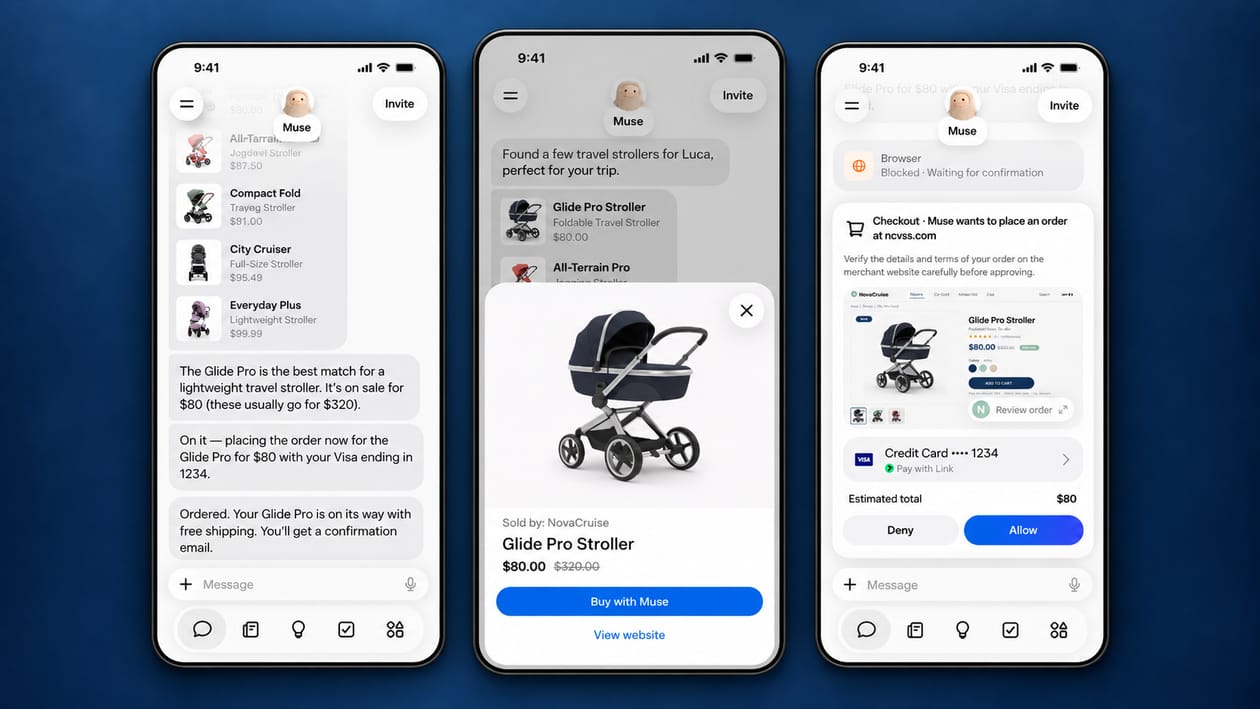
Well, we witnessed a lightspeed TTP (that is, time-to-platform) this week when Meta’s less-than-two-week-old consumer AI assistant, Muse, announced integrations with dozens of platforms across the web.
Among other integrations like Expedia, Best Buy, Gap, Sephora, Walmart, and Wayfair, Muse's launch included integrations with Shopify and Stripe, whose earlier agentic commerce platform integration with ChatGPT has not yet seen broad consumer adoption.
And ostensibly, that should be the news; end of conversation. That is, if it weren't for Alexandr Wang, Chief AI Officer at Meta, who has been shitposting and memeing his way through the past two weeks; who, at best, is making things weird, and, at worst, sexualizing the cute mascot that has defined the launch.
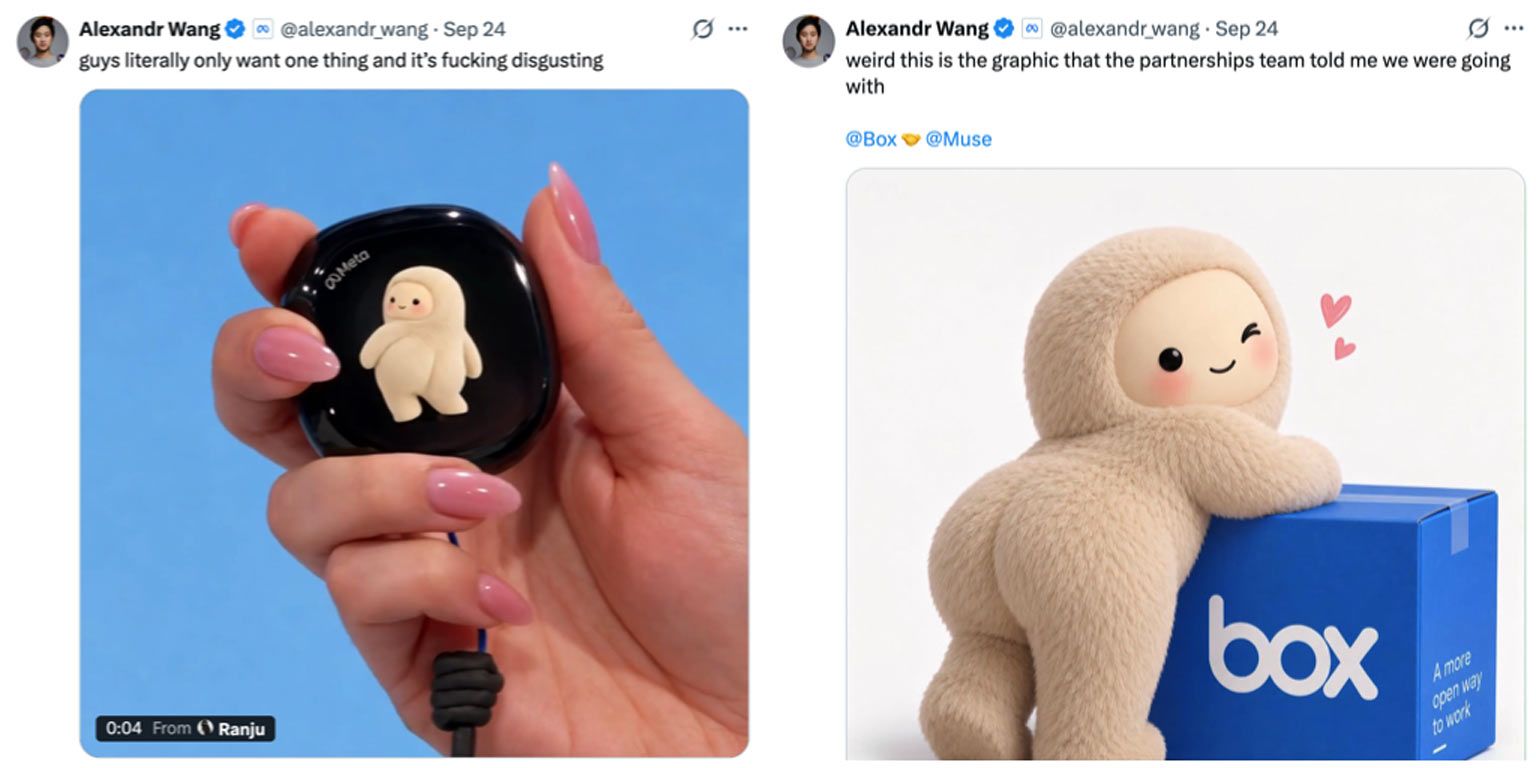
This all makes for a great internet distraction from the real announcement from Meta Connect 2026: the Muse Charm, which validates an entire category of wearables otherwise most often associated with Friend AI, whose $1M ad campaign of over 11,000 signs drew both graffiti and online hatred from NYC subway riders.

Meta, however, keeps sending mixed signals, with new product releases acknowledging privacy concerns (AI-only, camera-free glasses were a centerpiece of the release). While the culture seems to be broadly rejecting AI, Meta is picking and choosing which consumer signals to listen to.
Muse will almost certainly be the Shopify of consumer AI. The day-one platform integrations and entry points for everyday people will change how we live, work, think, and interact with the world and commerce.
And I wish we could talk more about those implications and whether society is ready for a Ta-muse-gotchi in your pocket; but instead, I can’t get the image of a furry’s butt out of my mind.
— Phillip
P.S. But honestly, what did we expect? Have you seen what all AI logos have in common?

Cinematic Suitors.
A24, The New York Times, and Sony Pictures are among the suitors lining up to buy Letterboxd, according to The Hollywood Reporter. The film discovery platform reportedly has an asking price of about $300M, nearly 20x its projected 2026 revenue.
Personal taste and UGC are equally coveted in culture; Letterboxd can give film companies something incredibly valuable: first-party data and an active community. For NYT, the value lies in expanding its portfolio, which has largely prioritized gaming in recent years.

Lights Out.
Power shortages are squeezing Bangladesh’s garment mills, creating a major margin squeeze for brands that have relied on the country as a dependable production outlet. The conflict in the Middle East has intensified the country’s natural gas shortage, and fuel prices are rising in turn. Reuters surveyed 134 knitwear factories and found that 78% have partially halted production since August, and 55% have had buyers cancel or cut orders.
4A Yarn Dyeing, a supplier for Walmart and Gap, is trying to maintain operations, but is spending up to $41,000 more a month on diesel. Egypt, however, is seeing an upswing in exports, and analysts predict that trend will continue as brands try to diversify their supply chains away from China. (Although who knows whether President Trump’s time with President Xi Jinping will lead to any positive outcomes for businesses.)

Super Size My Ad Network.
McDonald’s is building its media business, and it wants to bring in $1B in ad revenue. The McDonald’s Media Network lets other brands buy ad real estate in stores and on menu boards across 450 company-owned US stores, and plans to roll out to franchised locations in the near future. The “super-size value,” though, is that brand partners will get access to data from the QSR’s 70M daily customers. The scoop comes as RMNs like Best Buy promote their robust media offerings ahead of the Q4 ramp-up.
Every brand is now a media company, and every surface is now monetizable. The menu board is premium inventory, but will hungry guests actively engage with an ad while waiting for their Big Mac? If it’s an ad for heartburn meds, possibly.
Can It.
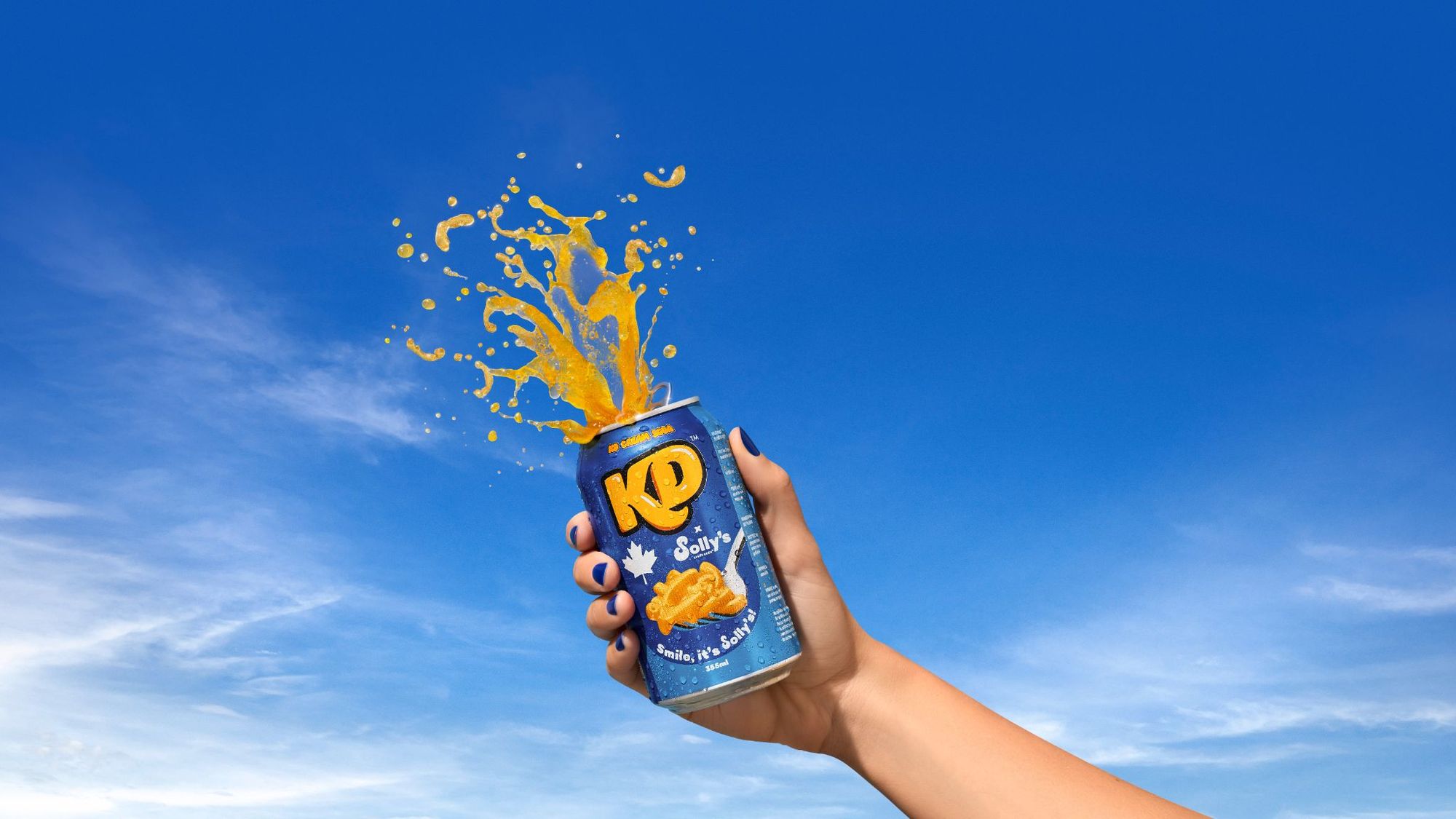
Kraft Dinner and Solly’s Craft Soda have launched a sweet-and-savory carbonated beverage that has social media asking, “WTF?” As our friend Michael Miraflor has stated, this is chaos packaging on full display; but it’s also the absurd palate at work, creating a major novelty moment for more adventurous consumers. If you love the taste of cream soda and powdered cheese, make your way to Canada for this exclusive. Chaos packaging strikes again.

The New Space Race.
In our Semafor analysis, we mused about how the next big economic arms race may be in space. It looks like that may be coming sooner than we thought. Google plans to send four of its AI chips into low Earth orbit to see if data centers can, indeed, live beyond our planet. The company partnered with Planet Labs on a prototype satellite as part of Project Suncatcher, betting on solar panels that generate up to 8x more power in low Earth orbit, and without the zoning restrictions to boot. Oracle’s recent ordeal to get Project Jupiter moving proves that space may be the next frontier, after all.
Thou Shalt Not Purchase.
A coalition of banks, including Bank of America, Capital One, ING, and NatWest, has warned consumers that shopping agents' skills are outpacing fraud protection measures. All those purchases you want your Atlas agent to make during the holiday season? Well, a few rogue items may be in your cart. To prevent (or at least minimize) total transaction chaos, banks are requesting a mandatory disclosure whenever an agent initiates a transaction.
We covered when Shopify rolled out extra measures to prevent bots from checking out without human intervention. What financial institutions want, however, is extra transparency. This will help them determine when and where they may need to ramp up their fraud protection efforts, which would be the ultimate gift for consumers during the peak season.

.svg)
