


.jpg)
Gettin’ hygge with it

Welcome to Friday, futurists.
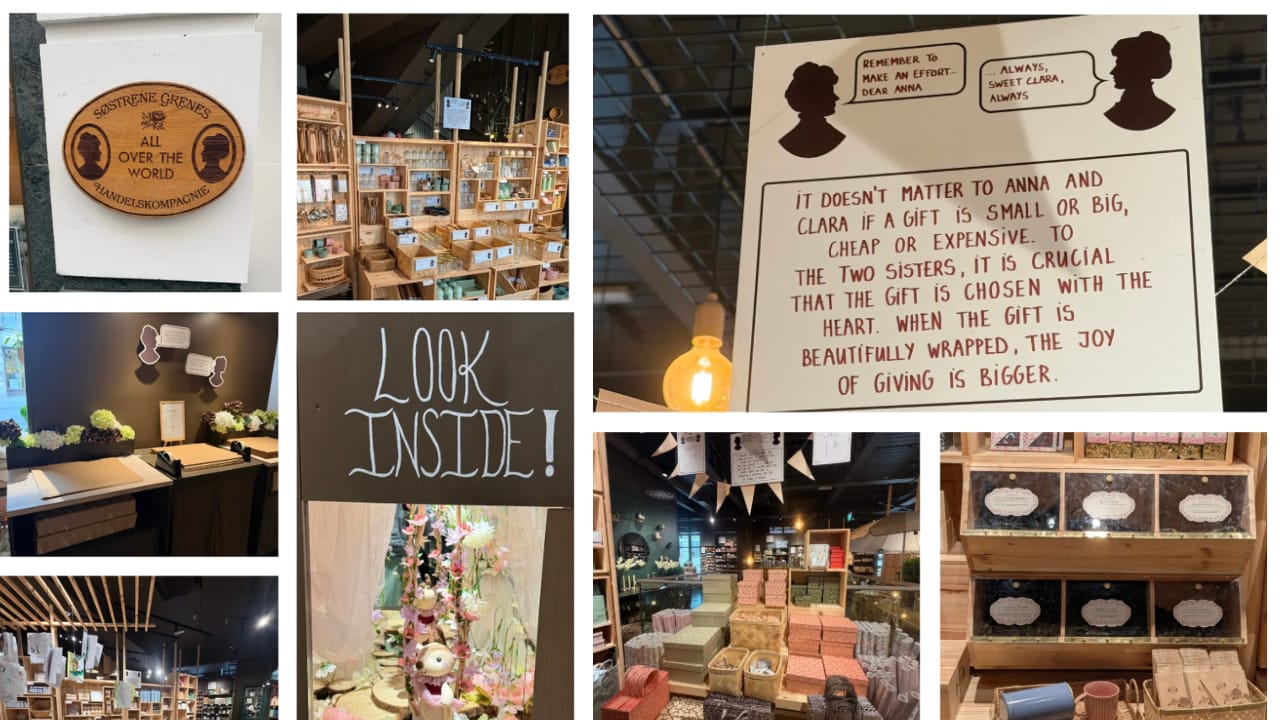
There’s something special about experiencing a brand for the first time, and when we traveled to London this summer, we got to immerse ourselves in the Søstrene Grene flagship. It’s a new brand for us, but in reality, it’s anything but. Founded in 1973, the Danish chain has more than 400 stores across 16 European countries and online shops in 18 markets.
Jack Stratten, physical retail connoisseur and Insiders columnist, shared the brand’s lore. And we found its key differentiators align perfectly with our most powerful editorial themes in 2026:
- Proof of work: All navigational signs and price tags were handwritten, with the Sharpie pen brush strokes visible. These marks of real human effort helped us buy into the heart of the brand’s story: two sisters welcoming you into their otherwise fictional world.
- Return to analog: The store’s assortment was vast, spanning home decor, gift wrapping, dry goods, and other lifestyle categories. But it was all packaged together as one cohesive experience that represents the hygge lifestyle the brand was founded to support. Items were perfectly curated on unfinished pine displays and complemented with vintage decor, making you feel like you’re venturing through someone’s home.
- Line culture: In this particular flagship, there’s only one way in and one way out—and because people have to go up the escalator to begin their journey, they have no choice but to see every nook and cranny of the store. While we never officially “waited in line,” we still had to follow a linear path to completion, which was its own special kind of effort.
People love the thought behind the store design and that it enforces slow, intentional browsing. (Though the private-label prices certainly don’t hurt either.) The message is resonating so well that the retailer plans to reach 500 stores by 2027.
Arguably, the best thing about Søstrene Grene is that you don’t need to subscribe to the hygge lifestyle to apply the best of its playbook. Our Future Commerce Plus community knows this and now has one-click access to the store’s Sensory Matrix and a new Value-Experience 2x2. Become a member to get your copy.

You’re Not Hallucinating, Those Are Jingle Bells.
Analyst firms have already pressed “publish” on their holiday predictions, arguably a bit earlier than in years past because of evolving consumer behaviors. Bain & Company expects holiday spending to top $1T, mainly due to inflation. Deloitte’s forecast is in line, predicting about $1.7T in total spend, with eCommerce growing the most year over year, up to 8.4%. PwC expects some demographics (see: Millennials and Gen Z) to curb their spending, especially in seasonal travel. (FYI: Look for more context surrounding these numbers on the pod and in our Insiders section; we have exclusive interviews with some of these firms in the pipeline!)
The Beast-to-AI-Bro Pipeline.
Jimmy Donaldson is building his beastly kingdom to include AI and analog media. An expanded partnership with Google will have his team use Gemini to conjure wilder media concepts while teaching his community of impressionable young fans how great AI is. It’s a safer, more obvious bet than his other collab with author James Patterson. The Most Dangerous Games—not to be confused with the older, singular title—premiered at number three on the New York Times Bestseller list, but fans and critics are equally abhorred by the book’s contents and the relationship itself. To the public, this is most certainly a case of slop attracting slop, and it shows that celebrity status can’t buy everything.


Tangible Value.
Jonathan Anderson wants to make Dior a true cultural institution. Through a new two-year partnership with A24, Dior will support programming across film, fashion, and the film company’s Cherry Lane Theatre in Manhattan. While we always love a good chance to laugh at awkward product placements, Anderson claims it’s about backing artists. The discourse surrounding the partnership is especially interesting to watch, considering A24’s big AI push. Columbia Sportswear is also celebrating analog with its new campaign for the Helvetica Fleece’s 35th anniversary. The first 91 people to fax their details to 503-208-8580 will get a free fleece. We appreciate a good nostalgia moment, and Columbia has always been a bit cheeky with its brand marketing—this initiative is the best of both.
New Paths to Fulfillment.
Brands are finding new ways to get their products in consumers’ hands. After initially promoting its eCommerce site as a store-level inventory availability tool, Primark is launching home delivery in Britain. Retail analyst Julie Palmer noted this “is as much about defense as growth,” especially as so many retailers fight for the value-driven consumer heading into the holiday season. Alice + Olivia, being in a completely different category and price point, is having a bit more fun with customer acquisition. The fashion brand is partnering with Glance to launch an AI-powered “See Yourself in the Show” experience that brings its 2027 New York Fashion Week presentation to local TVs.

‘Hanks’ for the PSL.
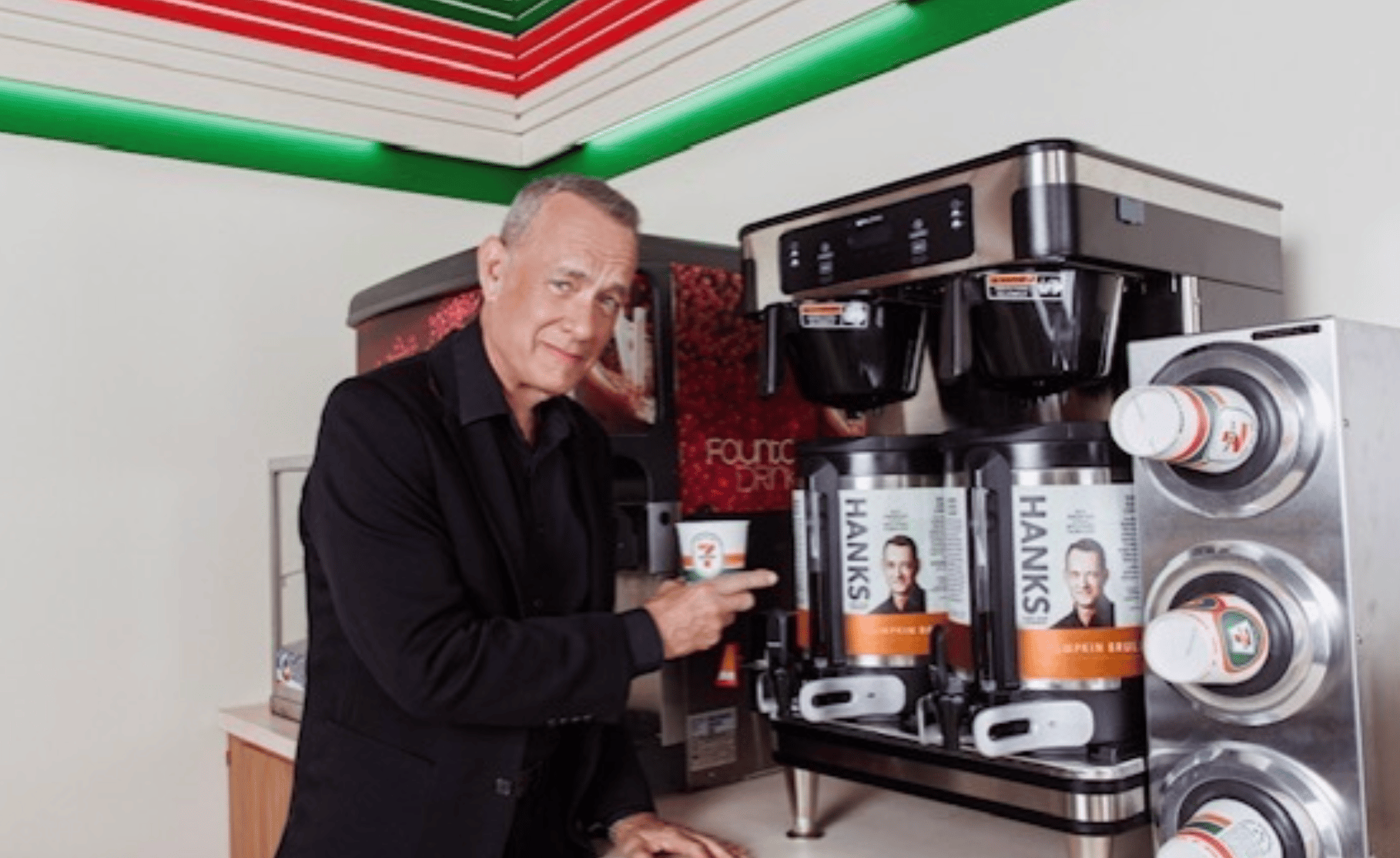
Talk about news you can use. America’s favorite movie star, Tom Hanks, has launched his own take on America’s favorite fall drink. His consumer brand, Hanks For Our Troops, has brought its signature beverage, Hanks Pumpkin Brulee Coffee, to select 7-Eleven locations. We thank the Instagram algo for delivering this news to us, especially as David S. Pumpkins’ return looms and Halloween shopping goes into full swing.
Poutine, Please.
Canada’s retaliatory counter-tariffs on 629 goods took effect on September 8, and US consumers are waiting to see where they’ll get hit hardest. Cheese, aluminum foil, and toilet paper are among the most impacted products, but overall, economists say US grocery bills will be spared. Instead, consumers will feel most of the strain in their wellness routines, with tariffs on health and beauty products. Negotiations between Canadian and US leaders have stalled. Come September 29, the US will ban dairy, alcohol, and motor vehicle imports from its friends in the north.

A Flea-Brained Idea.
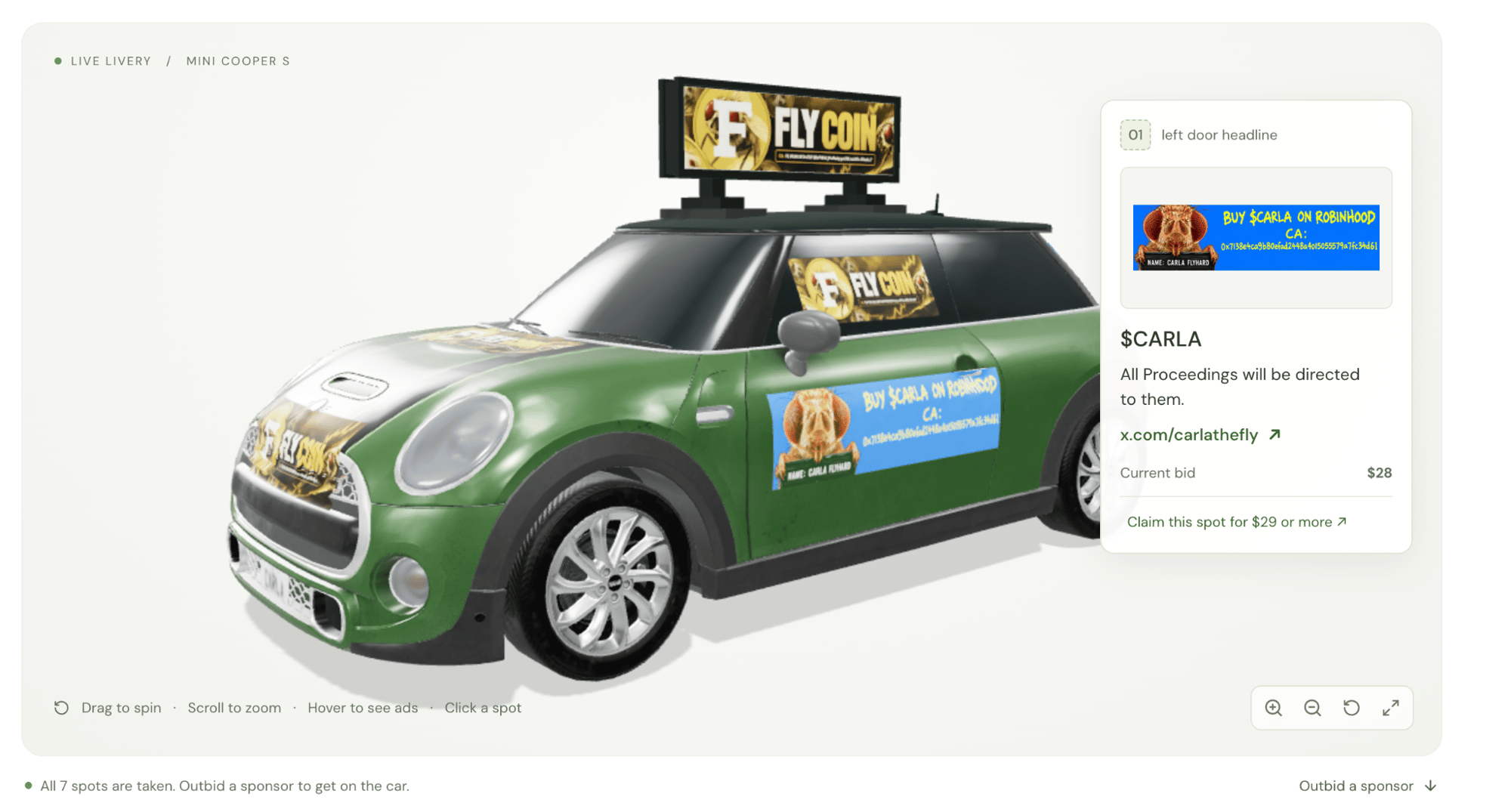
This is the latest, arguably most profound, case of everything now being an ad unit. Google open-sourced the most complete neural map of a fruit fly ever. It’s bad enough that the simulated fly brain is being forced to play Minecraft and Beat Saber. But one person is trying to see whether the neural model can learn to drive a simulated car. A new website is raising funds for the experiment through bits for ad space on the virtual car the fruit fly brain is “driving.” We’re not sure this is quite what they mean by “the Attention Economy.”
Hitting Below the Fold.
Apple finally announced its foldable iPhone alongside the iPhone 18 lineup, and immediately sparked a social media pile-on led by Duolingo, Samsung, and Motorola. This is the “brands behaving badly” aesthetic we wrote about in our zine, STRATA. While participating helps you be part of the moment, we’d argue that the power lies with whoever finishes the fight. In the ultimate reverse-UNO move, Duolingo dished some sass to Samsung, who, for some reason, thought they were on the same team. We were initially skeptical about the foldable iPhone, but if social media is judge and jury, the Y2K girlies are clearly excited to have something to snap closed in the near future.

.svg)
