


.jpg)

“Golden Goose is Yuppie Try-Hard B.S.”

Welcome to Wednesday, futurists.
We’re in London for our annual summer sojourn, gathering stories and store tours, perusing the vestiges of the culture of commerce in one of the world’s densest retail capitals.
And while we’re used to Londoners queueing out of courtesy for, well, just about everything in daily life, really, the retail queues we’ve spotted this week are curious: youth-oriented, limited-engagement, experiential, or revival brands.
👉 You'll want to file this under "Londoners love a queue." That would be a mistake. What’s happening is across every major metro—New York, LA, Miami, London, Paris—and there’s an underlying reason why.
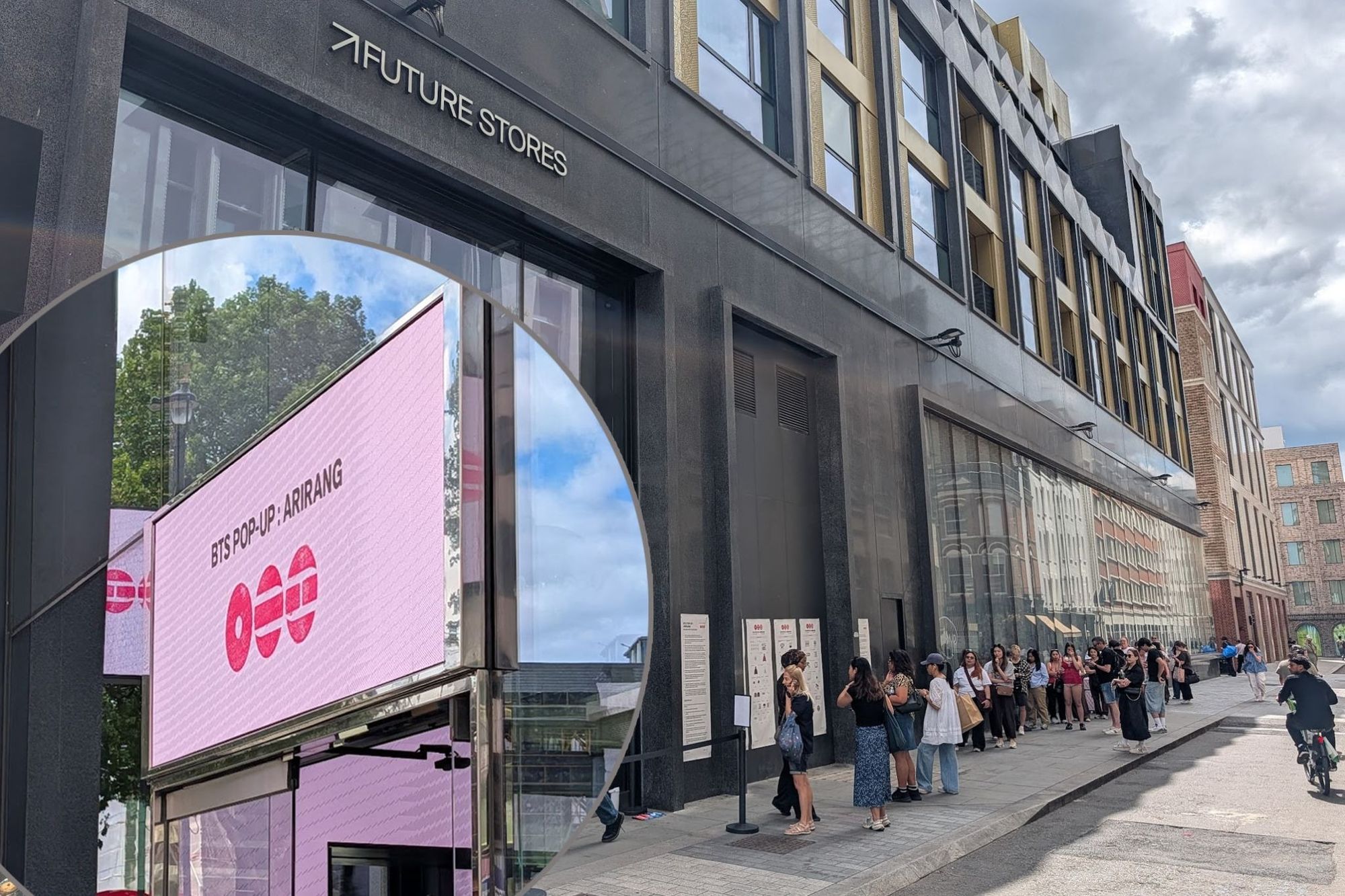
- Future Stores on Oxford Street is finally having its moment with a BTS pop-up that has had lines jammed up since its opening on June 26th. With an upcoming two-day concert at Tottenham Stadium on July 6-7, London has BTS fever, with multiple activations across the city, including a Nike x BTS activation opening on July 4th.
- Stüssy, the iconic 1980s surfwear brand, has made the leap to streetwear brand in 2026. “There’s always a queue outside of Stussy,” says Jack Stratten of Insider Trends. “I don’t get it, honestly.”
- And would you believe that Gen Z is gaga for Longchamp? The iconic French fashion house had lines in both Paris and London this week (and, no, Paris was not just for ‘chaleur exceptionnelle’ or their annual Soldes—regulated summer sales); the Le Pliage is trending again.
But by far the longest line we witnessed was for the grand opening of the Williams F1 experience pop-up on Regent Street. There, eager collectors were hoping to get their hands on collaborations with Disney, Lego, and ETAI.
OK, but so what?
Nobody waits an hour for a BTS pop-up just to get another t-shirt. Waiting has become the bulk of the experience now, and it’s a form of Proof of Work.
It's what we called the Reliquary Economy back in January: you put in time for proof that you were near the story while it was still happening. The Instants you snap, the t-shirt you snag, the standing rings you close on your Apple Watch... they’re Proof of Work in a society that has an AI-Easy-Bake-Oven for everything.
This is why Golden Goose selling you faux-worn trainers comes off as yuppie try-hard bulls**t. You didn’t earn that patina. It was bought for too much money and will be worn for too little time because trends come and go too quickly now.
FC contributor Angelica Frey called this behavior a fetish back in June: the drops, the line, the resale lottery, et al. Brands build humiliation on purpose because suffering scales. She'd say the brand has handed us a whip.
But the queue isn't you versus the drop. It's you performing the drop for the people seated comfortably at home because commerce went multiplayer a decade ago and the audience is the merch now.
Consumers don’t want to get the BTS t-shirt. They want to be seen getting the BTS t-shirt.
Get used to this concept, because Proof of Work isn’t merely something customers are flexing in 2026; it’s what they now expect from brands, too.
So, maybe Londoners love a queue after all. And so do New Yorkers and LA influencers, and anyone under the age of 25 who loves K-pop, too.
— Phillip


A Tale of Two Prime Days.
EMARKETER’s analysis of Prime Day results shows a tale of two sales events. While some saw it as an opportunity to trade up on long-coveted, high-ticket purchases, most doubled down on value (AKA cheap crap). In fact, 69% of the items sold cost $20 or less.
Basket sizes aren’t the only thing that’s falling: only 59% of shoppers said they were highly satisfied with this year’s deals, down from 68%.
But Prime Day no longer exists in isolation. Many brands and retailers are running their own competing sales events and specials. Adobe data shows this is a bright spot, with US retail spend growing 9.3% YOY during the June 23-26 period. Discounting mirrored 2025 trends, with electronics reaching up to 24% off list prices (versus 23% in 2023) and appliance and apparel rates remaining the same. Three of the five major retailers, including Walmart and Target, participated in the sales event, with some notable brands, like LEGO, offering their own exclusive discounts if consumers bought direct.
The Deal That Never Was.
GameStop CEO won’t give up on his dreams of owning eBay. Ryan Cohen has gone so far as to scrap a $35M payment package so he can “focus” on the acquisition plan. We love a story of a hyper-obsessive exec as much as the next person, but the math still ain’t mathing, man…

Not Quite Exemplary.
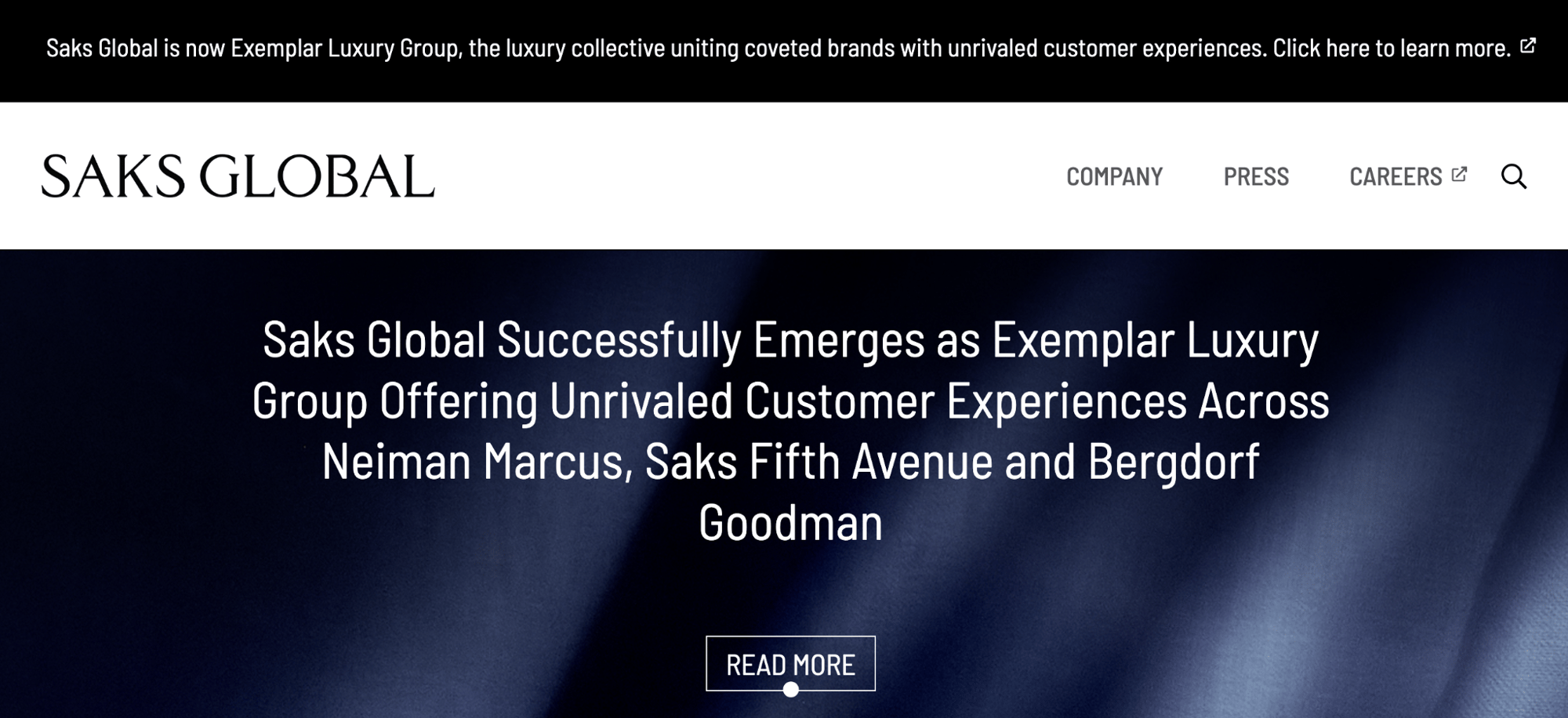
Saks Global has exited bankruptcy with a new name: Exemplar Luxury Group. The company has managed to shrink its debt 65% and plans to achieve a 7% annual revenue growth rate by 2030. Stores will remain part of that vision, despite the company closing about 100 doors during the bankruptcy process, including 57 Saks OFF 5th and all 5 Neiman Marcus Last Call stores. Only 49 will remain open.
Bain predicts that the luxury sector will make a slow recovery in 2026, but even the wealthiest consumers are moving with caution and spending more on wellness services and experiences. (That’s why LVMH could be making a bid on HYROX.) Luxury spenders are seeking value and meaning, and that means Exemplar Luxury Group will have to work harder to court this cohort.
Just Pay It.
Nike received nearly $300M in cash from “IEEPA tariff recoveries” during its fiscal year, which ended May 31, and is awaiting an additional $1B. Executives believe this puts the company in a better financial position, but that’s only one piece of a much bigger story from its earnings results, which put Nike’s turnaround in hyper-focus. Fiscal 2026 revenue was flat overall, and Q4 revenue was down 1%. Direct and Greater China revenue dropped 7% and 12%, respectively. And while wholesale revenues for Q4 were up 4% YOY, they flattened to 1% with currency adjustments.
Nike has used its cultural positioning to take a bolder stance in marketing and creative, especially during the World Cup. Future Commerce dug deep into the omnichannel initiative, which includes product, digital storytelling, and in-person activations. Representatives shared with us that the company’s “Rip the Script” ad garnered 1.5B views during the first week of the World Cup alone. Its National Team kits also sold 2.5X more than the same period during the 2022 sports event, largely fueled by the launch of its Aero-FIT performance apparel.

That’s the Way the Cookie Crumbls.
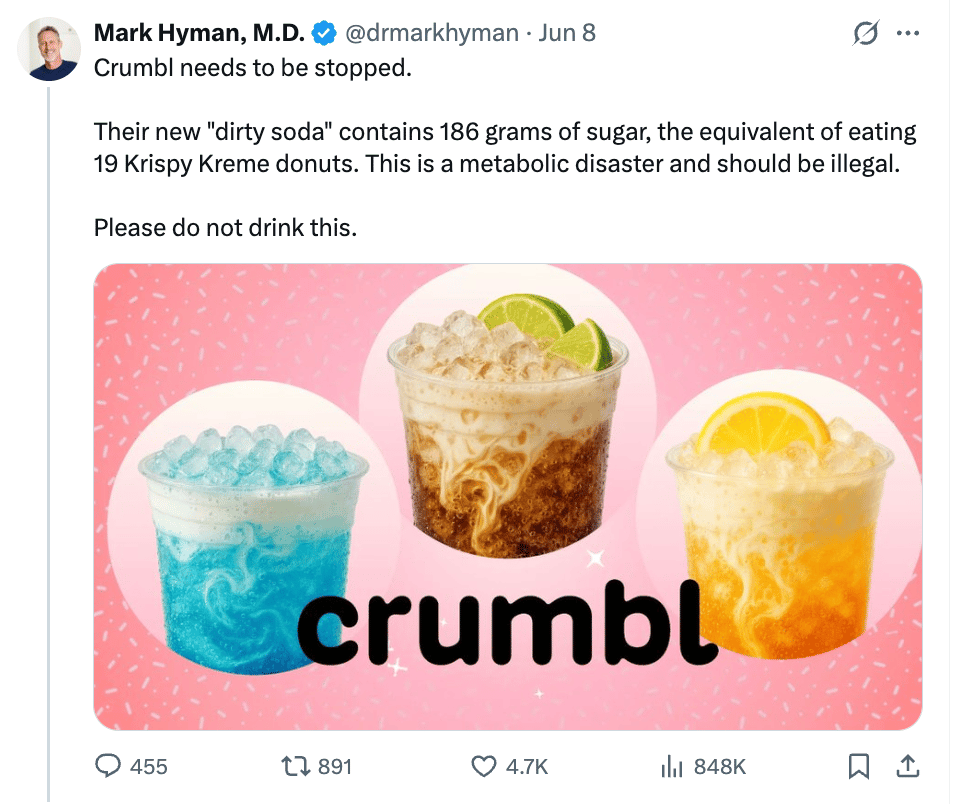
Crumbl became a social media craze in the early 2020s, but the business model that ignited its popularity may very well be its downfall. The brand’s aggressively fast product-drop schedule of mediocre concoctions and collabs was one thing, but its entry into the dirty soda market has led social media’s “healthy elite” (which, for some reason, includes Zooey Deschanel?) to call for Crumbl’s demise. Is this the beginning of the end? A 2025 sales drop and growing store footprint could be a recipe for disaster.

Viral for All the Wrong Reasons.
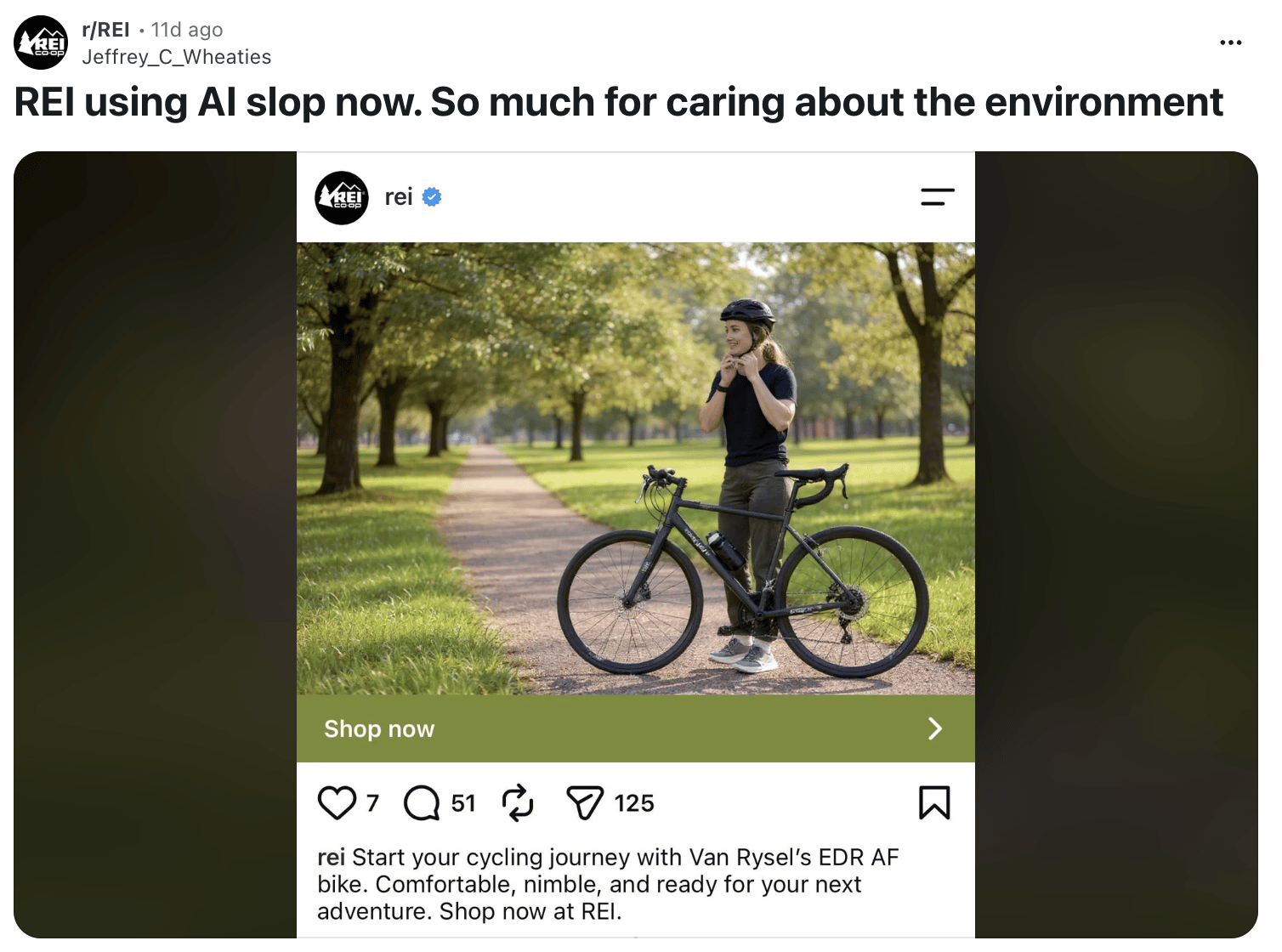
An REI ad is making the rounds on social media for a creative choice they didn’t even make. The ad in question features a Van Rysel bike with two sets of handlebars, among other inaccuracies. Both the brand and the retailer were puzzled by the output. According to REI, Meta auto-enrolled them in its AI image-generation tool, which creates new ad iterations from an original ad. In a Reddit thread griping about the ad, one contributor who claimed to be an REI employee noted that the retailer was becoming “obsessed” with AI, and that more training was focused on AI use. To some, the anecdote shows a business taking actions that are at odds with its values. But will the snafu actually affect sales and loyalty, or is this another case of performative outrage?
A Federal Bet.
Two senators are calling for a federal investigation into Polymarket for its social media strategy. The move comes after a damning Wall Street Journal piece uncovered how creators were promoting false wins on the prediction platform. Senators John Curtis (R., UT) and Adam Schiff (D., CA) sent a formal letter to Commodity Futures Trading Commission (CFTC) Chairman Michael Selig, calling the report “deeply troubling.” The CFTC declined to confirm whether it was already conducting an investigation into the company that’s single-handedly powering the sovereign economy.


.svg)
