

of the United Kingdom’s capitol city.
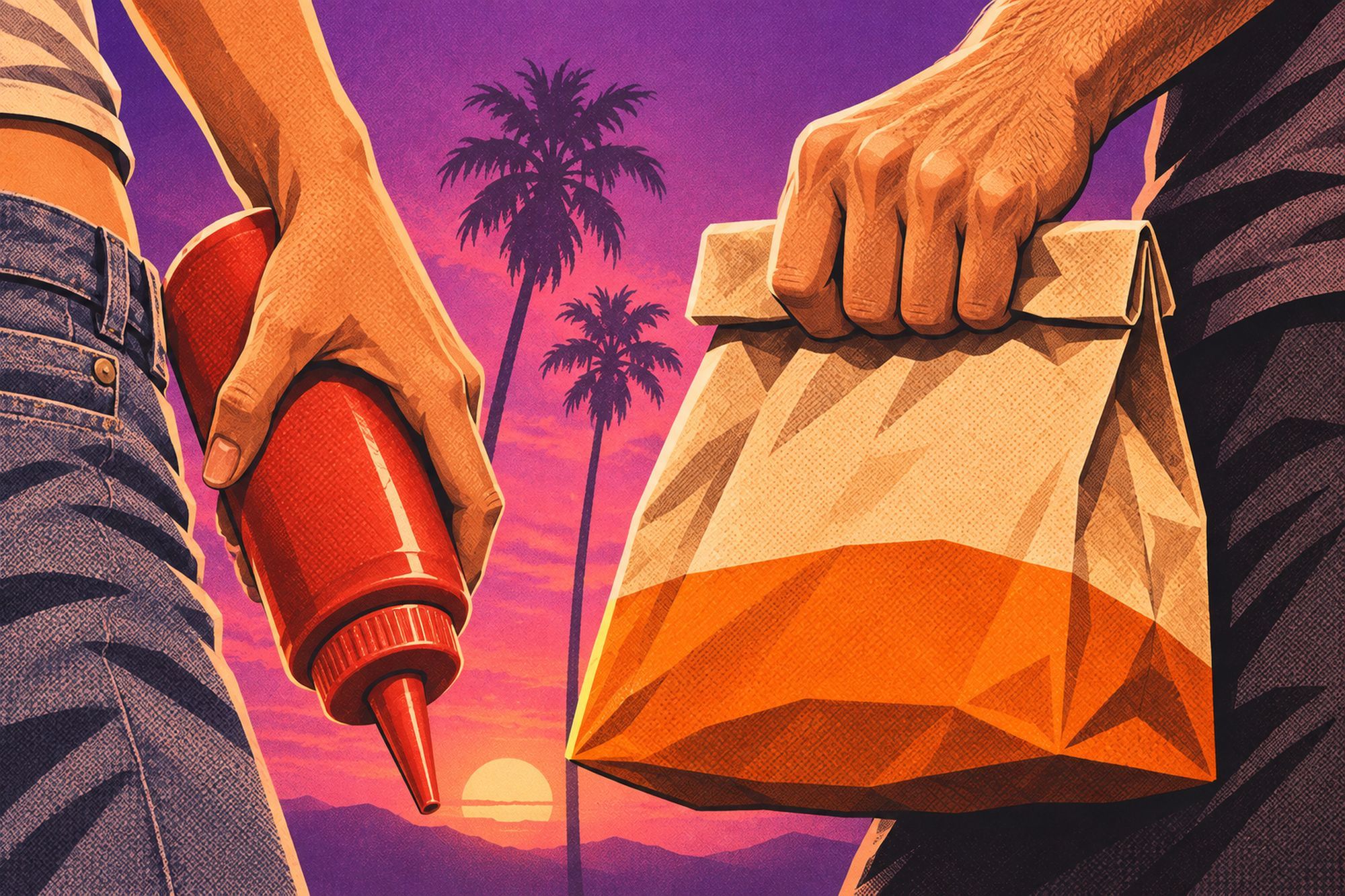
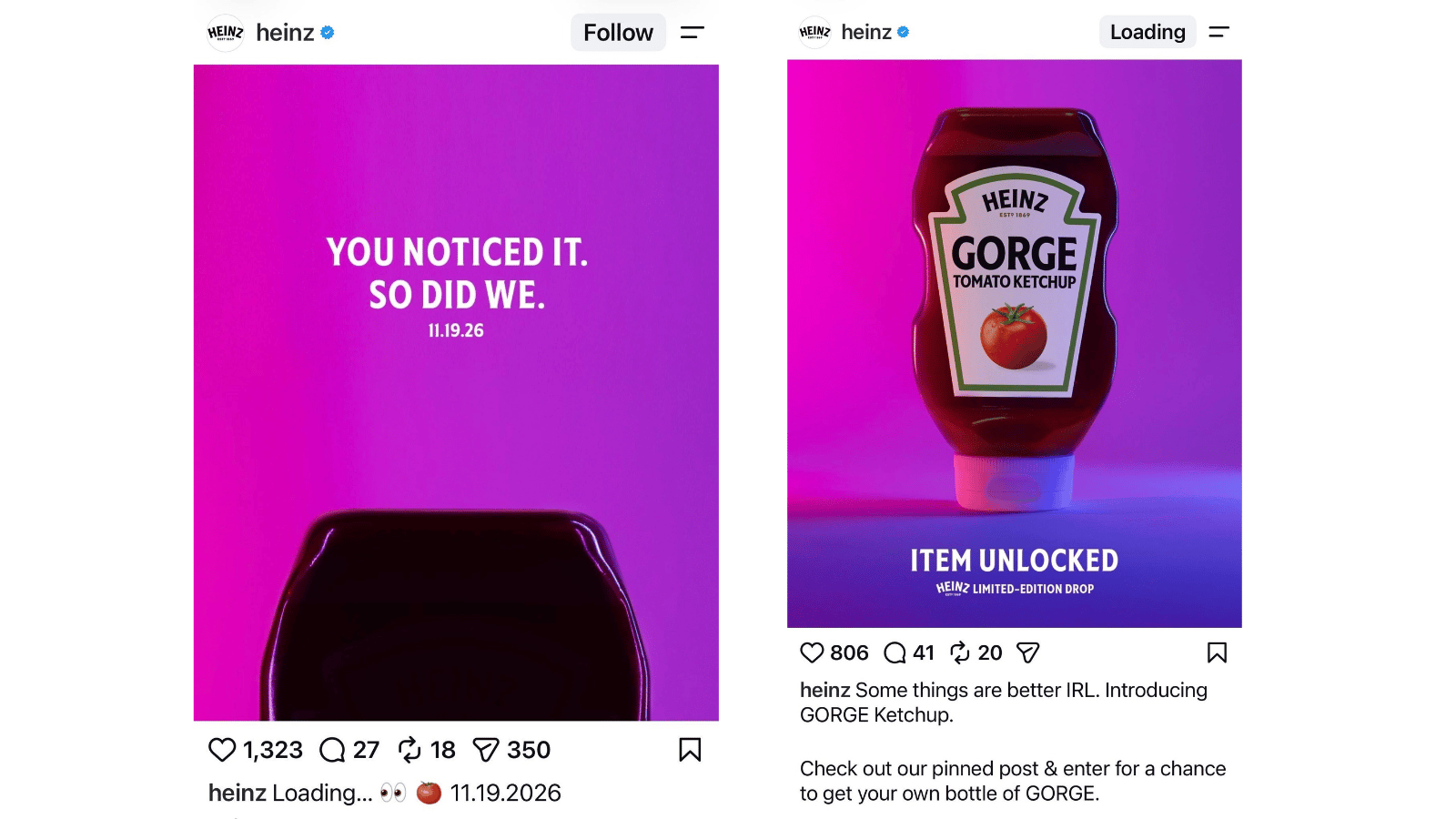
Among the many parody brands in Grand Theft Auto VI is a ketchup called GORGE. Heinz could have let the joke pass, but instead decided to make it real. The limited run of GORGE Ketchup is now a real product, a condiment that exists because a video game made fun of the condiment it was imitating.
This example of brand hyperstition is one of our modern expressions of monoculture in a world where commerce is quite literally culture. Even within the immersive world of GTA VI, we must have a world populated with quasi-recognizable brands.
Tech journalists aren’t the only ones proudly touting their days-long gaming binges. Logitech gave its employees a comp day off so they could play without excuses or cameras-off meetings. The total economic impact of lost productivity due to the GTA release is estimated to be in the billions of dollars.
Is it a World Without Brands?
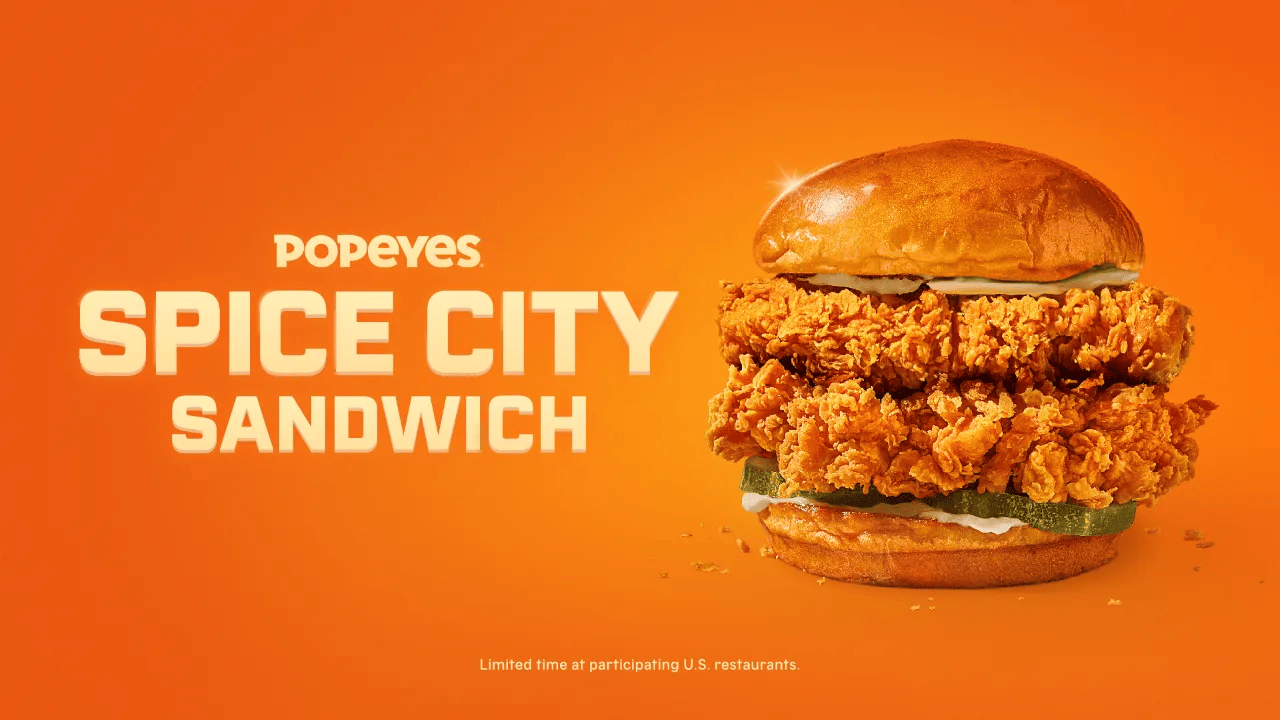
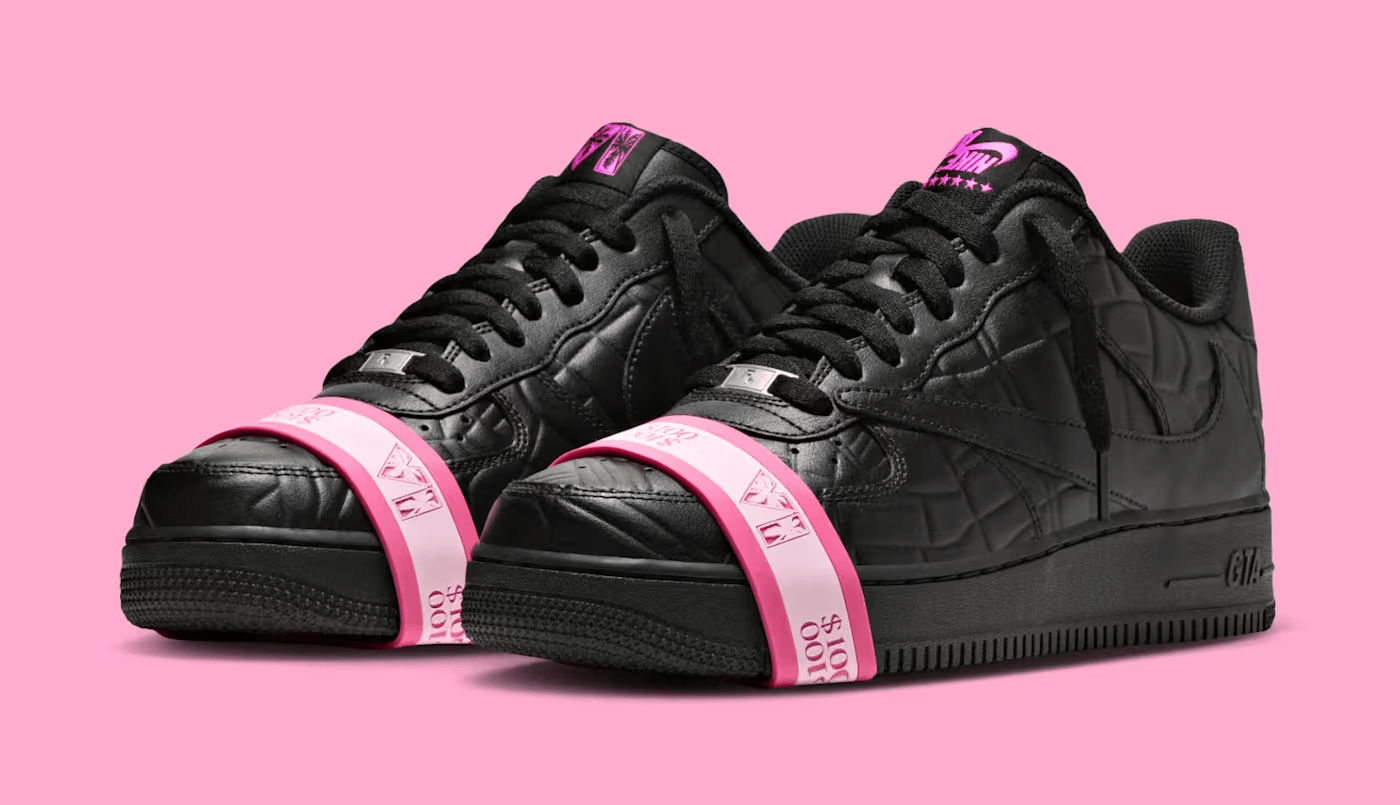
Heinz has company. KFC Australia staged a fake funeral on Instagram Live, so workers had an excuse to call out and play. Popeyes put a Spice City Sandwich on menus in select US locations. Petco dressed its cats and dogs in the cover art for “Grand Theft Pawto,” and Travis Scott’s Cactus Jack brought Nike and Rockstar together on a pair of Air Force 1s.
Even sans-prostitution, the game is as dark as ever with its depictions of crime and violence. What has changed, though, is how much darkness brands are willing to stand next to, and according to Dr. A.K. Pradeep, founder and CEO of Sensori.AI, that darkness is the draw. The game pulls its audience into the discomfort together, and that shared mess is what makes GTA VI the monocultural moment of the year.
“The sunny and the light, while wonderful, appear shallow. The darker and the painful and the traumatic appear deeper at the same time,” Dr. Pradeep said. “Because it’s built around the limbic system, ‘Grand Theft Auto’ allows for deeper connections, or more powerful connections, for a brand or for a message.”
He illustrates it with a thought experiment. Two people meet for tea and swap the good things happening in their lives. Later, they meet again and trade their deepest fears and frustrations. The first conversation gets remembered as fun, possibly surface-level. The second is the one they’ll describe as “a really deep conversation.” GTA lives in that second bucket, and the brands that show up there can contribute to the cultural weight and meaning.
The last time a ‘Grand Theft Auto’ title arrived, much of the conversation centered on backlash over its content. This time, brands have adopted an if-you-can’t-beat-them-join-them posture, and Dr. Pradeep attributes the shift to a broader change in what society is willing to tolerate.
“What was considered unacceptable to even utter publicly, let’s say eight years ago, is par for the course today, and we kind of shrug it, and we move on,” he said. “Brands feel like there is a little more license to participate in this, because it is not like, ‘My God, how dare you be part of this environment.’ That’s gone.”
Turning Gaming into Product Innovation
The list of “official partnerships” for GTA VI is relatively slim. Beyond the aforementioned Air Force 1 release, Rockstar Games prioritized partnerships with Netflix and YouTube to support promotional rollouts, and with the Miami Heat, which hosted a themed game against the Milwaukee Bucks complete with Vice City court designs and uniforms.
But that hasn’t stopped brands across categories from embracing the moment, especially because of commerce’s inherent role in the story. Protagonist Jason Duval goes to the store and buys flowers for his girlfriend ahead of her prison release, and a central part of the gameplay is you earning, laundering, and, yes, spending money.
Brands are in the foreground and background of the experience. While they are technically “imaginary brands,” they are clearly modeled after the brands we use and rely on in our everyday lives. For instance, my husband called out one scenario when he was scrolling through an Instagram-like feed, and another when he had to order what he assumed was an Uber. Many gamers are also referencing a fast-food chain called Chacey’s, an obvious reference to Arby’s. The brand names and logos weren’t always completely present, or they were some bizarro interpretations of them. But what made the commerce experiences stick were the environment and actions in each scene.
“The caricature of a brand, with some important personality attributes of the brand carried over, does more for a brand than it actually being present,” he said. “It’s like a Halloween parade. If you show up as yourself, everybody will say, ‘Excuse me, why did you not put a costume on?’”
Pradeep explained that these parodies give the real brands permission to rethink how they appear in the real world, whether that be through marketing, product, or experience, and that’s what makes these “culture-jacking” moments so powerful.
People treat brands like people, Dr. Pradeep said, and your friends will recognize you even in costume. “The brain loves these simple puzzles,” he added. Solving the puzzle is the reward, and the parody sticks harder than an obvious product placement would. But the brand underneath still has to be recognizable. Dr. Pradeep sees GTA forcing the same reckoning generative AI already demands of marketers, who can now produce 10,000 pieces of content before they finish their morning coffee.
“What about me must always be real? What about me has permission to be different?” he said. “Every brand marketer must do a bit of soul-searching and ask.”
What Drives Grand Theft Auto
When I asked Dr. Pradeep about why the commercial response to GTA VI has changed so much, he broke it down using scientific terms. Certain scenarios, specifically those that conjure up feelings of stress or discombobulation, activate the amygdala, which then triggers a fight-or-flight response. Fear, anger, pain, sadness, and disgust are its primary triggers, and the game is full of them.
“When the amygdala is triggered, the rational reasoning part of the brain, the prefrontal cortex, shuts down,” Dr. Pradeep explained. “In a threatening situation, you don’t sit and have a conference call. You are motivated to act.”
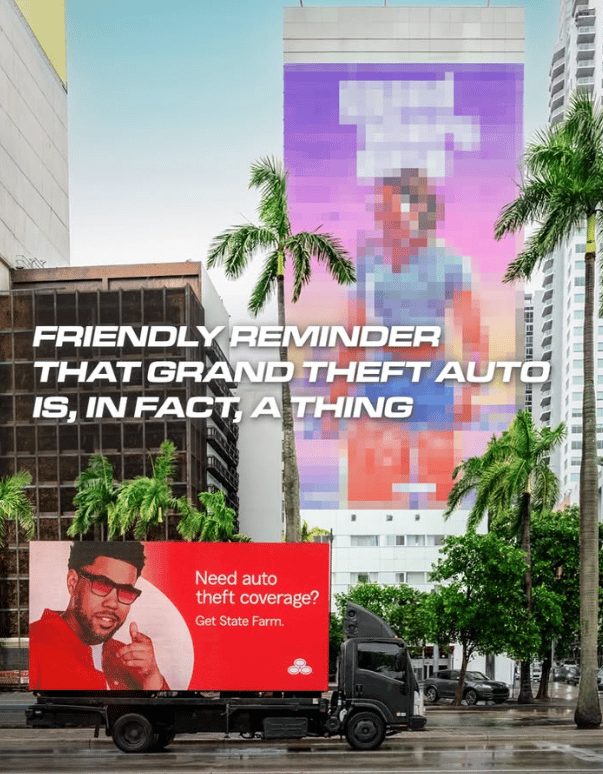
The same response hardwires memory. “In moments of fight or flight, your brain says, ‘I better remember whatever is going on here, so I can deal with it the next time,’” he said. “It’s freeze-framed.” Marketers have pulled this lever for decades. Insurance ads lean on car crashes and sudden illness for a reason. It’s no surprise that State Farm turned the Miami Heat game into a drive-by marketing moment.
GTA VI hands brands an entire world built on that wiring, which is exactly why Dr. Pradeep urges caution. A brand placed in the wrong memorable moment earns a negative association that sticks just as hard.
“It needs to align with the DNA of your brand,” he said, “so you don’t, shall I say, bastardize your brand for a few moments of cheap publicity.”
The Same Buggy Old Code
For all of its technical spectacle, GTA VI is a mirror. Players hail rides and scroll feeds between heists, and Dr. Pradeep calls the result “a beautiful juxtaposition of the mundane and the everyday holding hands with the ridiculous and the bizarre and the insane.”
That’s why the game resonates so much; because it reminds us how little the consumer underneath has changed.
“Unlike Apple’s iPhones, humanity, at least our brains, have never received a software update,” he said. “It’s the same buggy old code that’s still running.”
When I asked my husband how he knew which brands he was looking at, his answer was simple: he looked at the world around them, what the characters were doing, and he knew right away. Commerce is culture, and the brands that understand that are already playing the game.
Among the many parody brands in Grand Theft Auto VI is a ketchup called GORGE. Heinz could have let the joke pass, but instead decided to make it real. The limited run of GORGE Ketchup is now a real product, a condiment that exists because a video game made fun of the condiment it was imitating.
This example of brand hyperstition is one of our modern expressions of monoculture in a world where commerce is quite literally culture. Even within the immersive world of GTA VI, we must have a world populated with quasi-recognizable brands.
Tech journalists aren’t the only ones proudly touting their days-long gaming binges. Logitech gave its employees a comp day off so they could play without excuses or cameras-off meetings. The total economic impact of lost productivity due to the GTA release is estimated to be in the billions of dollars.
Is it a World Without Brands?
Heinz has company. KFC Australia staged a fake funeral on Instagram Live, so workers had an excuse to call out and play. Popeyes put a Spice City Sandwich on menus in select US locations. Petco dressed its cats and dogs in the cover art for “Grand Theft Pawto,” and Travis Scott’s Cactus Jack brought Nike and Rockstar together on a pair of Air Force 1s.
Even sans-prostitution, the game is as dark as ever with its depictions of crime and violence. What has changed, though, is how much darkness brands are willing to stand next to, and according to Dr. A.K. Pradeep, founder and CEO of Sensori.AI, that darkness is the draw. The game pulls its audience into the discomfort together, and that shared mess is what makes GTA VI the monocultural moment of the year.
“The sunny and the light, while wonderful, appear shallow. The darker and the painful and the traumatic appear deeper at the same time,” Dr. Pradeep said. “Because it’s built around the limbic system, ‘Grand Theft Auto’ allows for deeper connections, or more powerful connections, for a brand or for a message.”
He illustrates it with a thought experiment. Two people meet for tea and swap the good things happening in their lives. Later, they meet again and trade their deepest fears and frustrations. The first conversation gets remembered as fun, possibly surface-level. The second is the one they’ll describe as “a really deep conversation.” GTA lives in that second bucket, and the brands that show up there can contribute to the cultural weight and meaning.
The last time a ‘Grand Theft Auto’ title arrived, much of the conversation centered on backlash over its content. This time, brands have adopted an if-you-can’t-beat-them-join-them posture, and Dr. Pradeep attributes the shift to a broader change in what society is willing to tolerate.
“What was considered unacceptable to even utter publicly, let’s say eight years ago, is par for the course today, and we kind of shrug it, and we move on,” he said. “Brands feel like there is a little more license to participate in this, because it is not like, ‘My God, how dare you be part of this environment.’ That’s gone.”
Turning Gaming into Product Innovation
The list of “official partnerships” for GTA VI is relatively slim. Beyond the aforementioned Air Force 1 release, Rockstar Games prioritized partnerships with Netflix and YouTube to support promotional rollouts, and with the Miami Heat, which hosted a themed game against the Milwaukee Bucks complete with Vice City court designs and uniforms.
But that hasn’t stopped brands across categories from embracing the moment, especially because of commerce’s inherent role in the story. Protagonist Jason Duval goes to the store and buys flowers for his girlfriend ahead of her prison release, and a central part of the gameplay is you earning, laundering, and, yes, spending money.
Brands are in the foreground and background of the experience. While they are technically “imaginary brands,” they are clearly modeled after the brands we use and rely on in our everyday lives. For instance, my husband called out one scenario when he was scrolling through an Instagram-like feed, and another when he had to order what he assumed was an Uber. Many gamers are also referencing a fast-food chain called Chacey’s, an obvious reference to Arby’s. The brand names and logos weren’t always completely present, or they were some bizarro interpretations of them. But what made the commerce experiences stick were the environment and actions in each scene.
“The caricature of a brand, with some important personality attributes of the brand carried over, does more for a brand than it actually being present,” he said. “It’s like a Halloween parade. If you show up as yourself, everybody will say, ‘Excuse me, why did you not put a costume on?’”
Pradeep explained that these parodies give the real brands permission to rethink how they appear in the real world, whether that be through marketing, product, or experience, and that’s what makes these “culture-jacking” moments so powerful.
People treat brands like people, Dr. Pradeep said, and your friends will recognize you even in costume. “The brain loves these simple puzzles,” he added. Solving the puzzle is the reward, and the parody sticks harder than an obvious product placement would. But the brand underneath still has to be recognizable. Dr. Pradeep sees GTA forcing the same reckoning generative AI already demands of marketers, who can now produce 10,000 pieces of content before they finish their morning coffee.
“What about me must always be real? What about me has permission to be different?” he said. “Every brand marketer must do a bit of soul-searching and ask.”
What Drives Grand Theft Auto
When I asked Dr. Pradeep about why the commercial response to GTA VI has changed so much, he broke it down using scientific terms. Certain scenarios, specifically those that conjure up feelings of stress or discombobulation, activate the amygdala, which then triggers a fight-or-flight response. Fear, anger, pain, sadness, and disgust are its primary triggers, and the game is full of them.
“When the amygdala is triggered, the rational reasoning part of the brain, the prefrontal cortex, shuts down,” Dr. Pradeep explained. “In a threatening situation, you don’t sit and have a conference call. You are motivated to act.”
The same response hardwires memory. “In moments of fight or flight, your brain says, ‘I better remember whatever is going on here, so I can deal with it the next time,’” he said. “It’s freeze-framed.” Marketers have pulled this lever for decades. Insurance ads lean on car crashes and sudden illness for a reason. It’s no surprise that State Farm turned the Miami Heat game into a drive-by marketing moment.
GTA VI hands brands an entire world built on that wiring, which is exactly why Dr. Pradeep urges caution. A brand placed in the wrong memorable moment earns a negative association that sticks just as hard.
“It needs to align with the DNA of your brand,” he said, “so you don’t, shall I say, bastardize your brand for a few moments of cheap publicity.”
The Same Buggy Old Code
For all of its technical spectacle, GTA VI is a mirror. Players hail rides and scroll feeds between heists, and Dr. Pradeep calls the result “a beautiful juxtaposition of the mundane and the everyday holding hands with the ridiculous and the bizarre and the insane.”
That’s why the game resonates so much; because it reminds us how little the consumer underneath has changed.
“Unlike Apple’s iPhones, humanity, at least our brains, have never received a software update,” he said. “It’s the same buggy old code that’s still running.”
When I asked my husband how he knew which brands he was looking at, his answer was simple: he looked at the world around them, what the characters were doing, and he knew right away. Commerce is culture, and the brands that understand that are already playing the game.
Continue Reading...

Insights and futurism for executives in eCom and Retail
Those things we shouldn’t say out loud? We say them on the private feed. Bi-weekly “after dark” podcasts and a members-only newsletter, just for subscribers.
Our research reports combine visionary thinking with data-backed findings from our own advisory panel, made up of leaders at brands you know and trust.
Upskill, cross-skill, and future-proof your teams with Future Commerce Learning, the leading digital eCommerce learning platform, created by professional educators.
THIS IS FOR MEMBERS ONLY
Recommended reading
Brands have become a statement of status or belief. If each individual brand represents one data point in our identity, then collaborations multiplies this; but the very best collabs aren’t crafted in a marketing lab
We live in a hyperculture: the coexistence of dozens of subcultures and countercultures, each independently co-creating contextual content derived from world events, from elections to the Super Bowl.
Brand activations at events can drive 4x higher recall than digital ads, and consumers are more likely to overspend in these spaces. But how do brands like Pinterest, Seeking, and Brex create experiences that drive meaningful outcomes?