[00:00:02] Phillip: Hey, Brian. I'm pretty pumped for today.
[00:00:04] Brian: Yeah, me too.
[00:00:06] Phillip: Yeah. This is gonna be, I think, a pretty landmark conversation. Big turning points. It's very rare that we have someone who's, I think, more futurist than we are. I don't think we're gonna get weird with it here in just a little bit.
[00:00:17] Brian: That's true. I love futurism.
[00:00:20] Phillip: Let's go. Yeah, me too. I think part of it's because I'm all hopped up on Peeps, from the last weekend, because we had Easter here in the United States.
[00:00:29] Brian: That sounds like a drug, and it actually kinda is.
[00:00:32] Phillip: I think it should be illegal, actually— the Peepsification of everything. We got Peeps everywhere. So much so— I just saw a video, we'll put this out on the newsletter— the Pope stopped and got Peeps out of the crowd, I think, just the other day. If the Pope is high on Peeps—
[00:00:48] Brian: Pope Peep.
[00:00:49] Phillip: The Pope ate a Peep— and that'll be in the newsletter. Before we get any further, before we introduce our next guest, which I'm really pumped for— I wanna remind everybody, by the time you hear this, Strata will be shipping. We're in pre-order right now. Strata is the 10 aesthetics of commerce, and the things that I think are gonna shape the next year or so of how consumers are seeing the world and the world around them. This is our newest zine. You can go get it right now at futurecommerce.com/strata. It's on pre-order. And if you were on Metalabel last year, when we dropped Lore, you'll get a number in addition. So go grab your copy of Strata. This is 80 pages, and every single page is meticulously designed. I'm showing it to you on the screen right now. But—
[00:01:31] Brian: Look at that. Look at that.
[00:01:32] Phillip: We had an incredible artist edition. Somebody created a mural of this when we were at Shoptalk, and I had that sucker— five-foot-by-seven-foot— shipped all the way back to my house. I think that arrives today or tomorrow, Brian. I'm gonna do, like, some content around that. It would be pretty cool.
[00:01:46] Brian: I feel like you should, like, put it in your office, and then you can kind of do it.
[00:01:50] Phillip: I don't know where I'm gonna put this thing. So— Strata, go get it. We only have 500 of these, and once they're gone, they're gone. We said that about Multiplayer, but I might actually mean it this time, because these are very timely. I think in a few years' time, these won't mean anything. Labubus— who cares about Labubus? It'll be like Beanie Babies.
[00:02:09] Brian: It's about the concept, Philip.
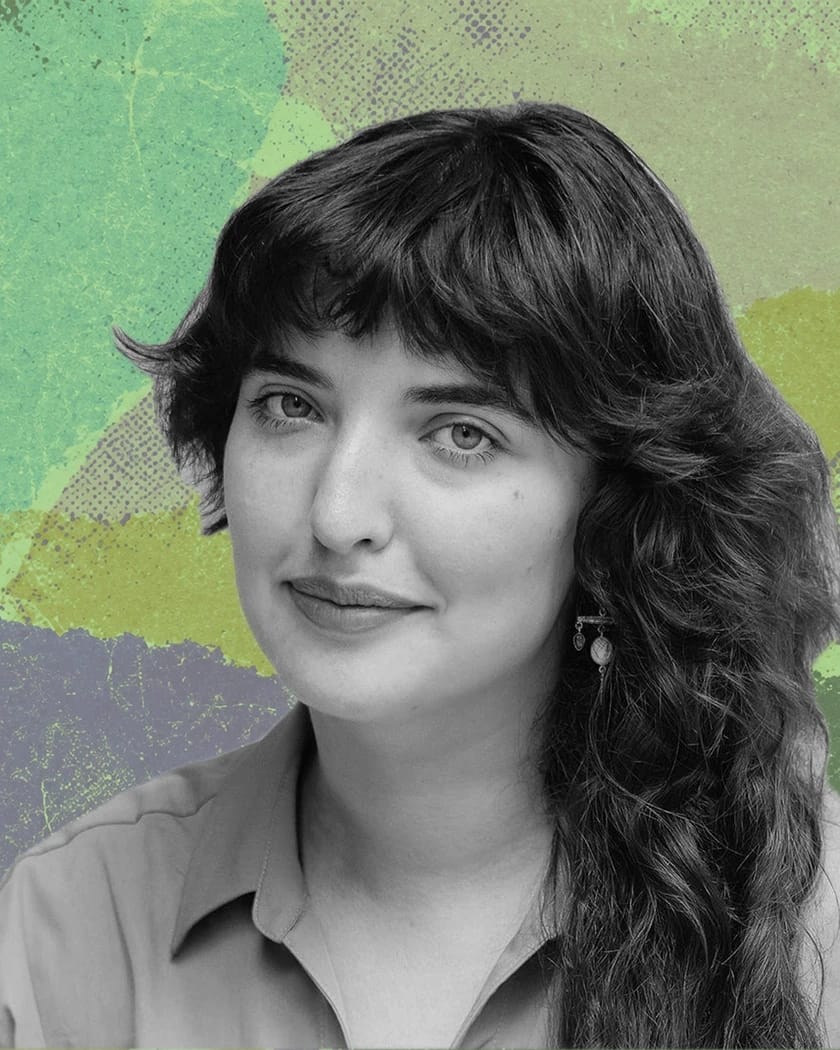
[00:02:11] Phillip: Exactly. And Wicked and Labubus— like, why do these things matter? Why now? If you've ever wondered why— we explain the why behind it. Go get Strata. And this is volume one. We intend to do this every year. Pick it up— futurecommerce.com/strata. Okay. That's enough for our little self-promo. Our next guest— she is a founder, inventor, and thought leader at the intersection of AI, commerce, and culture. So she sounds very much like a perfect guest for Future Commerce. And she's the founder and CEO of VLGE, a next-generation platform building the world-model layer for commerce. And I wanna hear more about what all that means. Welcome to the show, Evelyn Mora.
[00:02:57] Evelyn Mora: Hello. So glad to be here.
[00:02:58] Brian: Hi, Evelyn.
[00:02:59] Evelyn Mora: Hey, guys. What's up?
[00:03:01] Phillip: Hey. I've been reading your content and your op-eds and pieces— I think they've been published in the last year or so since you and I have come to know each other. But today I think we're gonna get into what you're currently working on— you know, intelligent agents. I think you have a thesis about how we're going to be using agents to build teams and do modern work. But you spent a ton of time also building game systems for brands in third spaces, fourth spaces, the metaverse, if you will. But I'd love to hear a little bit about what VLGE is. What's your current work looking like right now?
[00:03:45] Evelyn Mora: Yeah, thank you so much for having me. I'm really excited to be here with you guys. And— you called me out as more futurist than you. I would argue that that is not true, but that's a huge compliment, thank you. So— I founded Village five years ago. So VLGE is pronounced "Village." And I promise you that's not a crypto thing. I've never been in crypto. It's just a trademark spelling.
[00:04:13] Brian: But you're in AI, but you've never been in crypto? What? You're a rare person.
[00:04:19] Evelyn Mora: I'm one of the, like, OGs of Clubhouse, you know, and I've seen all these artists becoming millionaires, like, in the matter of three hours and such, but I never actually was that kind of into crypto. It just didn't get me that excited. So— yeah, I don't— I think that blockchain is still under development, if that makes sense, and there is still a lot to do. As a concept, it is great, but— so, right now, and for five years, I've been building Village— previously Digital Village. So we are a world-model platform, and we gather spatial intelligence for high-quality training data.
[00:05:00] Brian: Very cool. That seems, like, very simple, but there's actually a lot to unpack there. What are you doing in terms of building and training AI agents? And you've even said that building and training AI agents is like building and training a team. What does that mean practically? What does building a well-trained brand agent actually look like?
[00:05:25] Evelyn Mora: Yeah. So on Village, first and foremost, we focus on an ethical way of gathering the data— and, obviously, the compensation and everything has to be consent-based, and it has to be very scalable. Obviously, when you go for quality, you have to put in the work, right? So we're very obsessed about human data. So not, like, simulations— synthetic simulations and such, where, you know, you have a bunch of NPCs running around— but when you have humans going and playing and reacting with their free will and their freedom and their personality and identity, and all the voices and cues and colors and shades and textures that create impact and reaction on them. So that, to me, is the ultimate high-signal data— what we call it on Village— and that's what we're gathering. And it's used for robotic training, for world-model training, for ecommerce platforms to build their agents, train their agents, and build their data pipeline. So a good agent is a well-trained agent. So I'll give you a robotics example, right? There was a robot that was hit by a train the other day. Now, honestly, I'm confused— I don't know if it was AI-generated, if it was real, or what. But the thing is, like, the delivery robot went to the train tracks—
[00:06:45] Phillip: I saw this, yeah.
[00:06:47] Evelyn Mora: Yeah. And then it got hit by a train, because it didn't know what to do. It was stuck, it didn't know what to do from that moment on. So on Village— if that was trained with Village data, the robot would have known that, "Okay, this is the train track," and what to do next, right? So, essentially, good data on robots or agents is almost like information where they know the nuances and nitty-gritties of the real world, the real life, the real people, and they can service you better, basically. So that's what we mean with good AI agents. So, for instance, let's say Chanel or Tiffany's have their own AI agents. So they would obviously firstly start by digitizing their historical data— so anything, you know, look-books, brand books, whatever you name it, all the data. And then they would actually have to create data pipelines to continuously feed information back to that agent, right? And it's not enough to just train the Tiffany's agent with Tiffany's information— but a good agent would know everything about Tiffany's competitors, the past and the future and the current moment.
[00:08:03] Evelyn Mora: And they would also know everything about Brian and Philip, right? They would know Brian, your partner and their preferences— you know, all these little details are very important to be able to train a good agent. And for me, like, if I had a brand and I would train my agent, I would make sure that all the roads lead to my brand— meaning that if I go to Paris and I need a raincoat, a good agent would know my budget, my personality, my preferences. So they would not necessarily go like, "Oh, here is a $2,000 raincoat for you, Evelyn," because I'm, you know, let's say, Burberry's AI agent— but it would say, "Hey, here is a Vinted link, or a Vestiaire Collective link, for a secondhand Burberry that is like $200, and the seller is in Paris, so you can get it quickly." You know what I mean? So, like, basically everything in the house, but you don't necessarily get all the financial outcomes. Does that make sense? So it's kind of the bird's-eye view on bringing all the people into your house, if that makes sense.
[00:09:10] Phillip: Yeah. I think a lot of people are realizing more and more, firsthand, what this is actually practically like— because so many people, I think, have been thrust into the tactical, hands-on reality of training agents from scratch, because of things like OpenClaw. You know, people are starting from zero. And I think that that's been an eye-opening reality for a lot of folks. They don't have context— these things have no context whatsoever, and they're having to spoon-feed it and create that world context from zero. And I think for many people, especially in a business context, that can be an extraordinarily frustrating reality— because there is no training of it. There's no sharing of context from other shared sources of context, where you might have memory in something like Claude that you use in your organization. Now you have to start over from effectively zero. And these are also things that are used extraneously in an organization sometimes, without permission in the organization. We did some research a couple years ago, Brian, where we asked people if they were using AI in their organization. 91% of people said they were. And we asked people what their organization's policy around AI was at the time.
[00:10:35] Phillip: This is two years ago. And more than 50% of the people answered in that study that said that their organization had a less-than-permissive policy around using AI in the organization— meaning there was no policy around AI in the organization. Meaning, these people were just using their personal accounts to try to make themselves more productive. And I think what happens is, this need for productivity, and this need for wanting to stay ahead and stay on the cutting edge, is driving people who maybe ordinarily weren't early adopters into being early adopters, and they're doing it ahead of what their organization's policies, or their IT policies, might have been. And so they're experiencing these sharp corners and these rough edges more so than we would have in the past— because an iPhone wouldn't have come out in this state, right? Consumer tech wouldn't have come out in this state, and IT tech probably wouldn't have come out in this state. But we're experiencing this more now than ever before. So you're a 100% right. But I think that's just the new reality, and probably the pace of rapid change that we're in.
[00:11:48] Brian: And I think— you know, to take this sort of back a long way— based on what you were saying, Evelyn, it made me think of Norbert Wiener's "God & Golem, Inc.," which is a big influence on my viewpoint of how AI is evolving and has evolved. And he talks about, like, closed-system tech— he doesn't even know what he's really talking about, because he doesn't understand exactly how all this stuff is gonna sort of actually formulate in the future. Like, 99%—
[00:12:17] Evelyn Mora: Of people on LinkedIn. Right?
[00:12:18] Brian: Yeah— well, no. I mean, he does. He knows way more than the people on LinkedIn.
[00:12:23] Phillip: But actually, it's like—
[00:12:25] Brian: Yeah— the fifties or sixties, right? He's in the fifties. And he's talking about things that don't exist. So it's, like, really hard to, like, sort of project that out. And so he perfectly predicts the rise of AI, like, to almost ridiculous degrees. I think I've said this on the podcast before, but, like, he talks about when AI will evolve out of closed-system games— like, being able to optimize to open. He says when AI beats the master of the game Go, that will be the moment that it will move to open.
[00:13:07] Phillip: That happened a while ago.
[00:13:08] Brian: Like, literally— the month that that happened, with Google's AlphaGo, OpenAI was formed as a company. That's the exact same month. And then— so the reason I brought this up is because he talks about how, in the future— in his future— how training will happen. And he says, basically— it seems to me that the best hope of reasonably satisfactory mechanical translation is to replace a pure mechanism, at least at first, by a mechanico-human system, involving, as critic, an expert human translator to teach it by exercises, as a schoolteacher instructs human pupils. Perhaps, at some later stage, the memory of the machine may have absorbed enough human instruction to dispense with human participation, except, perhaps, for a refresher course now and then. In this way, the machine would develop linguistic maturity. And he literally talks about how, eventually, an AI will be able to take a language, translate it into another language with all of its idioms, and then back to the original language, and it would all flow perfectly. And the idea is, like— we're gonna have to train these in a way that makes them understand what human interaction is like, and that's what these simulations are talking about.
[00:14:38] Evelyn Mora: Yeah. No, absolutely. I feel like there are a lot of opinions out there. And I think, when we talk about AI— and, like, the technology itself, and its many, many faces and ways and opportunities and dangers and whatever, and bottlenecks— I don't think we are anymore in a place— this is my personal opinion— where we can just have a personal opinion about AI. We have to take it with the information and the reality that actually exists today. Does that make sense? Because I feel like there's a lot of people that go like, "Oh, this won't happen," or "this will happen," or "this is like that." There is a lot of fear. There is a lot of anxiety, especially around the new generation— you know, everyone's freaking out. And as a defense mechanism, everyone's coming up with their own ideas. And when I say everyone, I don't mean just general people— I mean authors, journalists, very respected journalists, scientists, CEOs of big companies. And I think it's good for us to have opinions, but we have to package it together and find symbiosis with the facts and the reality we're in. You know what I mean? So I feel like there's just a lot of forecasting, and opinions, and then facts, and then just illusional information, all kind of becoming this big AI bubble— which makes it very difficult for all of us to navigate this space. Do you know what I mean?
[00:16:15] Brian: So— you talk about things like embodied data versus disembodied data, which is something that absolutely fascinates me. What does that mean?
[00:16:24] Evelyn Mora: Embodied— yeah, embodied data is human data. And I'm just really obsessed about the fact that— you know, adding to what I said before— we are acting like this space, and agents, and AI in general, is, like, trained outside of us or against us. But the reality is that everything is trained based on our own input. You know, I remember, like, years ago— I don't even remember when COVID was, but— a little side note: it was Easter break, and we worked both Friday and Monday, because we have a big product push. And I was just walking and talking on the phone on Monday here in Kensington, in London, where I'm right now. And it was, like, super COVID vibes— like, there was no one in the street, it was amazing. I just wanted to side-note that it was really awesome. I'm a little bit missing those silent, peaceful moments— no cars, no people. But, yeah— going back to what I was saying— I'm very obsessed about the fact that we have to get human data, right? Like, human individual data. And we're almost, like, treating these training sets and AI agents, and AI in general, as something that we don't have any impact on. But, like, during COVID, I took this test— well, it was a course at Yale. And it was all about digital footprints, right? The first set of data that all these big models are trained on are, like, literally scraped data from the internet.
[00:18:02] Evelyn Mora: So we all do have, like, digital footprints, and our choices— whether it's, like, what we choose to buy, what we choose to consume online and offline— that's the data that these models are trained on. And so, for me, it's really important to be able to get the very high-fidelity data. So we really understand— when Brian goes around and does things, we want to really actually penetrate Brian's brain and really understand, like, "What do you like? What do you dislike? Why? Why did you make that decision?" You know, because in 2D spaces, we can only get that much information— you click on something, you have your heat maps and such, but you get very binary information from 2D spaces, you know, platforms, screens. But then, in 3D space, we can actually create formulas and create environments that are, actually, like, playgrounds. You know, a playground theory for children, for cognitive development, is actually a thing. We can understand why Brian purchased these shoes, right? Like, what led to Brian doing a certain thing. And I think that when you get that level of data, and then you can scale it— and if we can get a million different people doing that same journey, and we can get all the nuances, the gaze, the dwell times, the interactions, the proximities— and then we tie in all those decisions and interactions into this sequence, you get a really interesting story, and a very interesting high-signal data set.
[00:19:51] Evelyn Mora: That, to me, is the goal of the future. And this is what we are focused on. And what I'm obsessed about is the cultural part of things, like human movement, right? So— I might sound crazy when saying this, but I went to see Alexander Whitley's latest show here in London. It's, like, a contemporary dance show. It was one of the most beautiful experiences of my life— just because, you know, our hand movement now— you can call me crazy, but our hand movement, our posture, the way we move and react, our physicality, but also our personality, our emotions, our mentality. And then there is a subconscious, unconscious, and conscious mind. And then there is Evelyn with Brian and Phillip, and then there is Evelyn alone, and then there is an Evelyn with my partner, and then there is an Evelyn with my best friend. So all these nuances and sides of Evelyn can be captured. And that is the high-signal data that we should train our models on. And we need to internalize that these are trained based on my data. Are you guys still following me? I took you on a journey—
[00:21:05] Brian: Yeah. Yeah. You're talking about, like, the larger context of everything that you can be in relation to other people, and then combining that with those people's data— like, you can start to build these, like— what does the context mean for the person? Exactly.
[00:21:21] Phillip: Right. Yeah. And I think we could just go even deeper, because, you know, I think this audience is certainly clued into most of those things. I think where— what I'd love to understand is— a lot of brands are trying to understand the nuance between a future where they have a psychosocial relationship with their answer engine— like their LLM, the thing that they talk to every day— which acts as a proxy for some brand, or some thing that is a curator of knowledge and information, or recommendations for information that maybe a brand is syndicating or publishing— which is effectively a new generation of search, right? And that is one view of the future, which I think is the current one that we have right now. But then there's something else— another version of this— which I think is something closer to what you were just talking about, which is another intelligence, where the brand has to have some level of context or insight into all of these various facets and parts and personalities and contexts of the totality of the person— that's not just one particular point of insight.
[00:22:50] Phillip: Right? Like, "I have my work agent," or "I have my personal agent." It's got to be the entirety of who you are, and all these facets of your personality— which I don't know that we do— right? We still firewall off a lot of those parts of who we are based on, I don't know, the mode of work that we're in— or the mode of— it's what we would call "new modes" in our research. It's like, "I'm in work mode, so I'm doing this, and I'm doing it on this agent, I'm doing it in this account. And I'm in home mode, so I'm doing it over here in this." So maybe you can go a little deeper on that too, and maybe think a little bit about how we might solve some of those in the future state, because I think that that's super interesting.
[00:23:33] Evelyn Mora: Yeah. I think— I guess, you know, back in the days, when brands would do marketing on campaigns or whatever, they would be like, "Oh, we're gonna go after, you know, Gen Zs," and then "Gen Z" would be this massive box of a certain age bracket, right? So, "Okay, this is the Gen Z group." Then, you know, WGSN and all these guys came up with all these "Zillennials" and all these kind of little boxes in the boxes of the Gen Z, for us to better understand them. And— I guess, like, we love to put things in boxes as humans. And we have historically been treating people like, "Oh, you know, Philip is a man." You know, we would just kind of brand you and tag you— "you're a man," period. And then you would say, "Hold on— I identify as a man," for instance. You know— what I'm trying to get to is that people have understood their individuality, and they have claimed that freedom to an extreme sense. And in the very near future, we will also understand the value— the financial value and contribution— of our individuality. And we will be moving to this era of personal economy— which is why, you know, people are now starting to pay people to generate data. And we're gonna be like, "Hold on. You're using my data. You owe me money." You know? Because we're gonna shift from algorithm slavery into, like, a business relationship more and more with individuals. And we are forced to move away from these box situations where, like, "Oh, we're just gonna create an ad and send it to all the millennial women, and then they just gonna have to like it, because it's the social norm to go do Pilates and drink matcha"— and, you know, whatever trend is going on, whatever social group you wanna be part of, "here is the products that you should buy to be part of this social group, to get accepted," and blah, blah, right? But I think we're coming to an era where we no longer have these groups of generations and people, but we will have individuals.
[00:25:57] Evelyn Mora: And for that, I think AI's role, agents' role, the way we train them, will be absolutely instrumental. So— my vision five years ago, when I started Village, was that, "Hey, we want to build, like, this Rue Saint-Honoré in Paris, but in the digital space." And I've stayed true to that vision, which is why we've survived all the tsunamis of the metaverse coming up and going down— you know, all these situations. Because the vision was always to really reimagine the brand online, and give it a more three-dimensional identity. That doesn't mean that it has to be a game in Roblox or a virtual world. But, you know, how brands exist in digital spaces, and how they interact, is really important. So that's where I would go— I would talk about the individual economy, where, you know, Chanel has to adapt to all these, let's say, 10 million groups of women or men or whatever— all the genders— in a very individualistic way, in a very, very personal way. And the first to achieve that will capture the loyalty, I think.
[00:27:11] Phillip: Okay. You're really onto something there. We tend to prattle on about our POV here, but I think a lot of people have heard it over and over. When you're thinking about this age of the individual— right— and I think we— 2022, Brian, I think we were talking a lot about the sovereign individual, and we were talking about, like, this— that was the year of ChatGPT— I think we talked— we put that out in a Visions report about five months before ChatGPT landed. And we're talking about, "Okay, the coming age of AI." It was— now I'm gonna prattle on— it was the week that Blake Lemoine said, you know, he went to Congress and said, "There's a god in that machine in there, we should probably do something about that." And he was the whistleblower that sort of kicked off the series of events that led to ChatGPT. But we were talking about this coming age of the individual. I think we are seeing that play out now. How far do you think that that extends, Evelyn? And how does that change the shape of corporations? Because, in our projections, that kind of means that there's a hollowing out of the middle— meaning corporations get, you know, infinitely smaller and infinitely larger, right? You have these very, very large corporations that serve infinitely smaller and more atomized sizes— or atomized groups. We have people that are more sovereign unto themselves, and they accomplish more for themselves, right? They take control of their health. They take control of their finances. They take control of what— where they may have gone to larger authorities in the past, and institutions— they now have sovereignty. They can do that for themselves now. So all of these things that you used to rely on small and medium-sized institutions to do, now you can do for yourself. So that's how we've seen it, but I'm curious how you see that play out— because it sounds like that's a future that none of us can actually picture.
[00:29:27] Evelyn Mora: I'll give you a ridiculous example. So— I assume, you know, One Piece— a.k.a. Luffy, a.k.a., you know, all the pirates. So— you know the Devil Fruit that he ate— he's very flexible. So this is what we have to turn into, what we have to become as companies. Like, we have to be insanely flexible— like, literally, that's it. I don't think we're gonna become smaller as companies, but we're gonna just expand into a different material and just exist everywhere. Do you know what I mean? Like— again, we just really need to break away from the old thinking, where we are, again, putting everything in boxes. We are a C-corp based in blah, blah. And, you know, we have to just kind of become Luffys, and we have to be infinitely present everywhere all the time— we have to expand in that way. And I think that's how corporations should think of AI, and the use of AI— and, you know, kind of put that into create systems that can expand infinitely and really take a different shape. And in terms of categories— you know, like beauty brands, and fashion brands, and car brands— I think we will have to ultimately— now I'm going to, like, 2040— we have to give people, or the flexibility for the consumers, to consume the products in the way they want to, and then allow these services and products to take a new shape out in the wild.
[00:30:58] Evelyn Mora: And we know that that's difficult, because brands are like— there is, like, 600 people going like, "This is the wrong pink, you know, use this one." But we do have to release control and kind of maybe reduce the brand story and identity to something very minimal that can expand. We have to just kind of— brands, obviously— I'm from fashion and retail, so they're obviously very protective of their brand story and whatnot. But the inevitable reality is that they have to let loose that control at some point. And it will start happening gradually, by essentially wanting to have us become their loyal customers. So they would have to provide a super, super individualistic service— you know, the VIC, VIP, whatever you want to call it— that's probably going to be something like "generative important customer." GIP, you know— the GIPs. So we'll be the future GIPs. Yeah.
[00:32:12] Phillip: You know— the William Gibson "the future is not evenly distributed" situation. What is happening right now is, increasingly smaller numbers of, like, small businesses are able to spin up these "ghost brands," or, like, very thin white-labeled brands, that are basically direct-from-manufacturer shipping. And you can have very small minimum orders, and the factories make them just-in-time, or in small quantities that are shipped direct from the factory. If you sort of project that outwards, or you play that out ten or fifteen years, I don't see why there isn't a future where people aren't making things that they want for themselves, on demand. Why is there not an agentic version of that that says, "I want a brand that is for me, that is for Evelyn, that is for Brian, that is one-of-one"? It is direct from manufacturer. To me, there doesn't need to be a brand at all. And, to me, there is an agentic version of that that is direct from manufacturer, that is just for you. That seems like a logical end. And maybe it's not pervasive. Maybe it doesn't kill everything— because, in my world, the way I see the world is, the new always coexists with the old, right? You'll always have the old and the new that coexist together. They never truly kill the old, but it will be some appreciable amount to which you can assign some value to it, and it will grow a new market. And that, to me, seems like the thing that we're talking about that no one can really define yet, or name.
[00:33:56] Brian: I literally wrote about this in 2017. I can actually quote it. It's from "Your Body as a Data Land"—
[00:34:05] Phillip: Which I think is probably the most "futurist" thing that you've continually gone back to. But, yes, please.
[00:34:13] Brian: Yeah. Basically, I said that changes in supply-chain manufacturing and last-mile manufacturing will have a profound effect on brands, designs, repairs, and clothing replenishment. "If every piece of clothing fits every person perfectly, including cut and style, then purchasing decisions will be based on pattern, design, and quality of manufacturing material. Manufacturers will likely have offerings at every tier. AI will be applied to patterns plus body type plus desired style to determine what looks best per customer. New computer-generated patterns will leave very little room for designers, while a maker open-source design community might create additional patterns and designs. To put it in real-world terms, the general public will pay for a subscription where price is determined by quality and quantity of clothing replaced by x number of time periods."
[00:35:07] Evelyn Mora: That makes so much sense. It's like it reduces desire into the need and convenience.
[00:35:17] Brian: Mhmm.
[00:35:17] Evelyn Mora: Yep, right? Yeah. I think we've made ourselves come to this point, with how everything has been impacting us through algorithms and such. I feel like there are people that go like, "Oh, I need to— I'm actually—" like, people have learned to love themselves. It's another crazy thing— I don't know if you have experienced that lately, but they go like, "Actually, you know what? I'm good as I am, and I just wanna add things onto me that complement who I am," rather than kind of adapt something external to me, like become a Tommy Girl or something-else girl. Does that make sense?
[00:36:01] Brian: Sure.
[00:36:03] Evelyn Mora: Yeah. Maybe there is some sort of a psychological aspect to why we will actually get there at some point.
[00:36:13] Phillip: I don't think I've heard "Tommy Girl" referenced in many years, but I am here for that. We should bring that back.
[00:36:22] Brian: What are the dangers here? So, two dangers. One is— it sounds like, in an increasingly isolated world, like, where we've kind of built these worlds for ourselves— we are having trouble relating to other people in their worlds, and also to the general world. Don't you think? Like— yeah, exactly. Like, people are getting alienated, and they're getting, you know— click-holed— and they're heading down traps of their own making. The second sort of danger here is— if brands only follow individual people, sometimes what they end up doing— and I think we're seeing this increasingly, and we talked about this a lot with our other zine that we didn't show at the beginning of the show, the Multiplayer Brand— like, brands are giving up control of their narrative to people. This is already happening, right? It already has happened at significant scale. The danger in that is, you start to lose narrative. You start to lose the ability to even tell a good story. And without something for people to, like, sort of play off of or respond to, you end up losing the plot of your brand altogether. And, like, your brand could cease to exist, because it's been so splintered in terms of its narrative. And so I'm curious, Evelyn— as that splintering continues to become clearer, and also isolation continues to increase— how does that play into this digital world, and the digital-modeling component?
[00:38:21] Evelyn Mora: Yeah. I mean, you took me on a journey as you were talking, so I need to find my way back, but I'll tell you what— where I landed. Yeah. I feel like— you know, you talked about brands kind of already giving up a lot of the— like, letting loose on the narrative side of things. I like to think of brands as food. Because when you use onion, or garlic, or something, you can always taste it, you know— to a certain extent, it will have an impact. So I think that, when it comes to narrative, brands will have to maybe evolve their storytelling into a flavor that can always be integrated into a certain environment and space and place— whether it's in a gaming environment, or a physical environment, or a TikTok video, you know. Does that make sense? So— because I think everyone is pushing a very particular narrative. You know, "we are a leather goods brand, and the story of Coco Chanel, or the story of Louis Vuitton, or the story of this and that"— like, we are over it. Like, no one needs to hear that anymore. You know, we just don't care. I mean, we really appreciate Coco Chanel. But, like, at this point, we need to evolve— there is a heritage, there is a story in that brand that needs to be elevated into a flavor that everyone can mix in their own lives, if that makes sense. So that's how I think brands should evolve, into these different mediums.
[00:40:03] Brian: Yeah. I like that idea of brands as food— as a flavor— because I think that, oftentimes, brands wanna see themselves as just the constant star of the show, and, like, have a narcissistic component. They want their attention footprint to extend as far as it possibly can— instead of understanding the role that they should play. And I think that's really dangerous, actually, because brands end up caught up in memetic cycles, and they take whatever attention's available, and they hog it, and they bring it in, and they take more than they should. And those memetic cycles then switch, and then, all of a sudden, they're caught in a position where they have to reduce significantly. And so I like the idea of being an ingredient— of not being the professor who doesn't realize that their students have multiple classes, and that that class is not their only class. And so I think that it's really important to understand where you fit in as an ingredient. And I think that food is a great metaphor for that, because, actually, things sometimes don't work together— and then sometimes things will work together in really surprising ways. And so allowing your community to find those opportunities, I think, is a really great way. And then you can look at yourself as, perhaps, a little bit of a chef— understanding how to mix things up.
[00:41:38] Evelyn Mora: Yeah. And regardless of how you mix it, an onion is still an onion. We don't reduce the value of the onion. Do you know what I mean? Like, I love onion, and it's always a beautiful vegetable— even if you do a bad soup, or you burn them, or whatever. It's always an— an onion is an onion, right? So the value of the onion doesn't reduce based on what I do with it.
[00:42:03] Brian: That's a really great point. Yeah, I love that. Emily Segal, who is an incredible forecaster, spoke at our Visions event a couple years ago, and she talked about reducing brands to, sort of—
[00:42:19] Phillip: Yeah— a single point of recognition—
[00:42:21] Brian: Yeah— a single point.
[00:42:22] Phillip: Yeah. Like, one vector, or, like, even a vibe, right?
[00:42:25] Brian: It's just easy to— well, beyond a vibe. It was, like, "After Vibes." She literally called it "Brands After Vibes."
[00:42:?] Phillip: After Vibes.
[00:42:?] Brian: But it's something that could be recognizable and simple, and, like, brought into attention in different ways by different people, and find its way through as a thread— but never lose the fact that it's an onion, or Chanel, or whatever. You know? So I think you're really onto something with that.
[00:42:50] Evelyn Mora: Yeah. We just have to make a cookbook, I guess, Philip.
[00:42:53] Brian: Yes. I love it. Let's do a cookbook.
[00:42:58] Phillip: The— well, the cookbook analogies, I think— as the developer ecosystem goes, so does the rest of the consumer ecosystem. I think it's very much trickled down. The law of platforms is— you've got, like, this cycle where developers get you to where you're going, and consumers take you further, right? And then, at some point in the future, when you have a new development cycle, then you bring the developers back in. Like, there's levels. It's almost an S-curve, right? And so, to some degree, we're in the early stages of the consumer AI cycle, where there's one phase that was developed where consumers definitely have the older tech— they're doing some really interesting things with the older, like, conversational tech. And then there's a lot of early adopters who are doing some really interesting stuff with the newer agentic models, and they're on some of the things that we're talking about now. And the recipe angle, the cookbook angle, is very much happening. Right? It's about how do I create "skills," which are effectively a recipe for a certain task— and tools, and how you create a recipe for certain behaviors. And then there's also how you make the "soul" MD files— how you make it— like, these are things that do have analogs, either for behaviors, or for tool access, for accomplishing certain types of work.
[00:44:30] Phillip: But in the next phase, organizations, enterprises are also saying, "And now you can shop with it. And now you can accomplish these extremely complicated, multimodal tasks that require things like looking at a product, imaging the product on the user's body." All of these things, I think, do come into play when you're talking about the mode of, like, brand-choice shopping, etcetera. I feel like we could keep chatting about this. You have a framework about the "Data Atelier." Give me a little bit about— the philosophy that sort of cleaves— we touched on this a little bit, but I'd like you to use the language that you've put into the framework— that talks more about, like, how you differentiate the work you might do for an enterprise versus the smaller scale. Because I think the smaller-scale companies move faster. They tend to be the ones who are trying to build it themselves, or who are early adopters. But I think the AI era has maybe broken that model— it's changed a lot of that. So what's your experience, and what is this framework— the mental model— that you're working on right now?
[00:45:59] Evelyn Mora: First, I want to just paint a super-scary picture. So— "Your body is a data land. We will pay you for your data— but AI is going to become so expensive, you cannot afford it. So it's going to become an elite product. So then we're going to take your data for free, and allow you to use our AI if you want to be part of society." Answering your question— that was a brain dump. So— Data Atelier. It's an inspiration. It's called "Haute Tech", inspired from haute couture. But someone said to me— a professor— that, "Oh, maybe you should call it 'Haute Data.'" But, anyway— too late. It's all about approaching data-pipeline building the same way as you would approach garment-making in an haute couture atelier. So— assuming you guys are super-mega fashionistas, both of you, so I don't need to explain to you what haute couture is, right?
[00:47:01] Phillip: No, no. We got it. Yeah.
[00:47:03] Evelyn Mora: Yeah. So— ultimately, I just feel like tech and fashion— ultimately, these industries, they speak a different language. And sometimes they don't understand each other— actually, oftentimes. And oftentimes, also, they have a lot of friction in finding symbiosis. Obviously, Mark Zuckerberg is trying to find symbiosis on the Prada front row, but fashion is not kind of digesting that really, really well. And then, obviously, then there is Jeff Bezos sponsoring the Met Gala, which is, like, the most important event in fashion, blah blah. So tech is trying to penetrate fashion, and fashion is trying to penetrate tech, but yet still they don't really understand each other. The only common language they speak is money. But, ultimately, the point of the Data Atelier is to help speak the language of fashion, and help the fashion industry to understand— how, what could their approach be, like, literally from the start today? "If I'm a CEO of a big company, how would I start actually structuring this?" I think somebody mentioned here before— oh, I think it was you— about how companies adapt, and have adapted to AI in the past years— they are still very clueless, you know what I mean? And they have issues in terms of— clueless in terms of— they don't know exactly how to go about it in terms of scaling. So I feel like the framework gives them a very grassroots-level understanding, and points out how important it is to just really build that foundation really well, and then scale from there— rather than just kind of rushing to adapt everything, like what happened with Web3. Everyone just kind of threw themselves into these games and worlds, and lost hundreds and hundreds of millions— if not billions— of dollars.
[00:49:01] Evelyn Mora: And then they just went like, "Oh, it sucks, it sucks." But the problem is, like— obviously, the blame is never one-sided, right? So now everyone's coming back to find the game cache again in Roblox, because all the people are there, blah, blah, blah. But the point is, like— for me, building a Data Atelier is very important, because the data and the agents— all the training data, essentially, that a brand builds in the future— will become their most important IP. That's how they will compete against their competitors. That's how they will get the attention of the consumers. And I wrote an article about that in Vogue Singapore. And it actually created this huge wave of people going like, "This is not gonna happen." And then there was a bunch of— yeah— a lot of articles from different authors. There was a really strong reaction, which I love, you know— I love reactions, any kind. And then they were referring to OpenAI, like, "They've just, like, canceled the payment gateways" and such.
[00:50:06] Brian: Right.
[00:50:07] Evelyn Mora: Which is not that black and white— that's part of the process, right? But the reality stands that it's already happening, right? Brands are connecting with people through agents, and they are selling products through agents. And that is going to scale to an unimaginable scale. And, ultimately, in this— let's say— agent battle, agent Hunger Games— it really does matter how you train, and what kind of training data you capture. And for that, you need pipelines, right? You need a constant, ongoing flow of data that is really specific and high-signal for your brand. And that is going to be your gold, that you essentially lead with in the future. So the Haute Tech framework— which we launched with Oxford University— it's all about, like, why is that important, and literally tells you how you have to go about it. And it has to be an organization-wide activity, and really, actually, like, a huge undertaking— that everyone needs to do it, small or big, actually. And then there are companies like L'Oréal that do that in a week. So there are big companies that are very, very fast. But we know that there are also groups that are very, very slow. And today, the majority of fashion people, when you ask them about AI, they'll start talking about the creative output, right? Obviously, fashion is a very creative industry, but, ultimately— again, just like sustainability— it has so many connecting layers to it, that doesn't make it difficult, but it makes it complicated. So that's why you need to have a very solid foundation, and you have to define a way to go about building your data pipelines, and ensuring you get continuous flow of good data.
[00:52:03] Phillip: When you say it's a framework— you know, "framework" can often be interpreted in a bunch of different ways. Could you— is that a development framework? Is it, like, a semantic framework? Give me a little bit more on it.
[00:52:20] Evelyn Mora: So— how would I put this— this is being built. It's almost like the SOS handbook to fashion on how to start building the pipelines. But this is based on our work with different brands on how we started building their pipelines. And, of course, different brands work differently, they have different challenges and such. So I've been trying to literally give them steps on how to start treating the data, scaling the data, and understanding the value of that data— and doing it early. So, yeah— I think it's both. Obviously, we didn't reveal too much, because I don't want to educate the competitors, right? So I'm not spilling all the tea and the beans out there. But I do want to be helpful. I'm still originally from the fashion industry, and I do love the industry more than anything. Even though I'm a tech girl now, I'm still a fashion person— you know, Tommy Girl forever. But— so I do think, for me— our strength, obviously, and our founder-problem fit, is in fashion, and being in this industry for so long, I feel like we really have the cultural upper hand in the world today to really help the tech and fashion come together. And I think that's a strength and a responsibility. And so this framework really caters to that purpose.
[00:53:50] Phillip: This hour has flown by. There's so much more— I feel like there are things we could be touching on. How would people work with you on the framework? How do you put that into employ?
[00:54:03] Evelyn Mora: So— the framework that we launched, I don't know, it's, like, 25 pages. There is a longer version, which I said to Jerry Saltz recently— let's see what comes out of that. But people just can contact us. I mean— we're not a consultancy company. We provide, literally, the data. We build the pipelines, and we provide the data. And people can just email me— [email protected]. And that's V-L-G-E. And, still today, I do not like to put any brands into boxes. There is a way to go about gathering and scaling your data pipelines and the training data— and all these many, many ways you can use it and utilize it— but it's always, you know, a case-by-case basis.
[00:54:53] Phillip: That's great. All right. Well, Evelyn Mora— great to have you. Thank you for joining us for this first time to have you, and— you are quite the futurist.
[00:55:01] Brian: Oh, yeah.
[00:55:02] Phillip: What a stimulating conversation. We will have you back again sometime— in Village. It's been over a year since we met, and I didn't even know it was pronounced that way.
[00:55:12] Evelyn Mora: No worries. You know, they say a darling child has many names. VLGE can also stand for "Virtual Life Generative Engine." How about that?
[00:55:23] Brian: Oh, I like that.
[00:55:25] Evelyn Mora: I promise I just made that up. But— generative world models. Thank you so much for having me, it's been a pleasure. I've been a fan for a long time. I have all your publications, and they cost me a lot, because I carry them from country to country, and I have to pay for them every time— extra weight, you know, when I check them in. It's totally worth it, and it's really an experience. So it's been an honor. Thank you so much.
[00:55:48] Phillip: Oh, thank you. Thank you. Appreciate you. Thank you, Evelyn, and congrats on everything you've built. I wish you luck on this next phase. And thank you all for watching this episode of Future Commerce. If this sparks something for you— hey, reach out, see what Evelyn's working on. We'll include her most recent op-eds in the show notes, so you should check those out. And if this conversation did spark something for you— like, subscribe, and follow. And it is a fact that most people that subscribe to this podcast have not rated or reviewed it on any of the podcast platforms. So why don't you go do that wherever you get your podcasts? It helps more people join the conversation. And if you wanna bring more Future Commerce into your world, you can do that with a brand-new zine. It's called Strata, volume one. Go get it— futurecommerce.com/strata. Remember, commerce shapes the future, because commerce is culture. We will see you next time.





.jpg)
.jpg)
