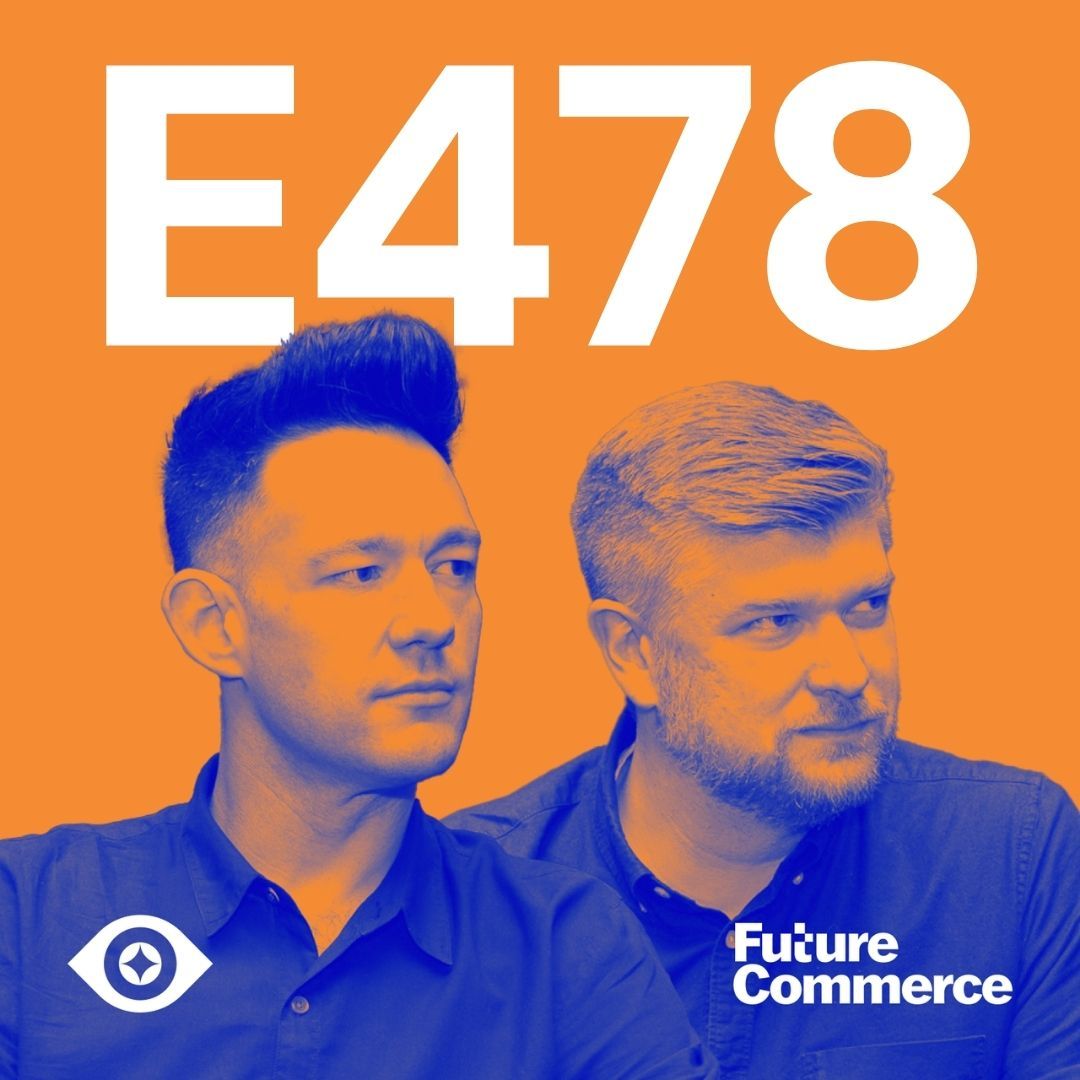
[00:00:00] Phillip: And welcome to Future Commerce, the podcast at the intersection of culture and commerce. I'm Phillip.
[00:00:04] Brian: I'm Brian.
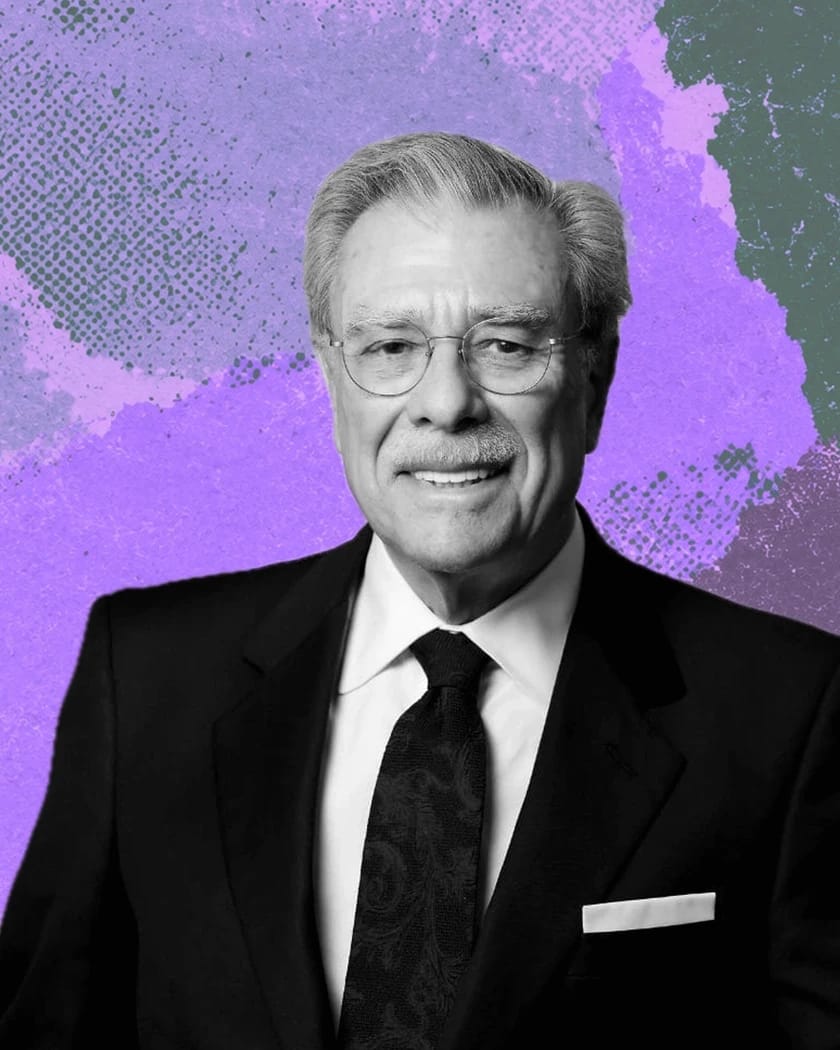
[00:00:05] Phillip: And today, we have a very special guest. Uh, and, you know, one, I think this is kind of a special one for me. We've been talking about this brand for ages. Talked about it on our run up for our 2026 predictions, and I'm proud to say I've been a customer of this company you know, one of my favorite brands, and I think probably one of yours too. He is the CEO of Daily Harvest where he's led the company through its next chapter following a 2025 acquisition by Chobani. Welcome to the show, Ricky Silver.
[00:00:34] Ricky: Thanks for having me.
[00:00:35] Phillip: Yeah. Glad to have you. Uh, fellow technologist, I think we heard about it in the pre show. You had some tech aspirations when you first came in a little bit. We'll talk a little bit about that today. We'll also talk a lot about, you know, the culture of the business and the changing and adaptation of the business to culture, which is a lot about the things that we think about here today. But, catch us up a little bit about what you're working on at Daily Harvest right now.
[00:00:59] Ricky: Yeah, so this past year we turned 10, and is an incredible as you mentioned, we're acquired by Chobani, which is an incredible home for the brand we're really excited about where the business is headed. A little background on me, I was actually our Chief Supply Chain Officer before stepping into the CEO role. And so, you know, had a chance to help build and scale the organization and the innovation and supply chain through COVID, post COVID navigation of shifting consumer behaviors and widening our portfolio, shrinking our portfolio, trying to find that perfect fit. But at the end of the day, you know, we've always been built on this idea that organic fruits and vegetables are a foundational part of everyone's health and wellness. And we have to make it easier for people to consume those organic fruits and vegetables. So whether that be through our, you know, most well known ready to blend smoothies or some of our delicious new high protein opals, we're always looking for ways to make it easier for consumers to build those healthy habits. We've actually just relaunched our website, which is very exciting and we can definitely dig into those details today on the call.
[00:02:13] Brian: Awesome. Well, I think it's an interesting moment, you know, being acquired by Chobani and last year. Uh, we're entering kind of a new environment of this year with how sort of food is looked at and changes in our political environment. But it really it sort of started well before that in many ways because the sort of wellness industry on social media has certainly been taking over how people view health and food for some time now. And so you recently launched eat food not fiction and that may be a little bit of a counter to some of the science quote unquote or recommendations or prescriptions that people are putting out there on social media. Uh, you know, there may be a bar that may or may not have recently let go of its chief scientist. and so I think that, you know, with a lot of misinformation and confusion in the marketplace, tell us what Eat Food Not Fiction is about.
[00:03:29] Ricky: Yeah. So I'll say from the very beginning, the business was really built on a sort of a belief that you gotta listen to your consumer, right? A lot of brands talk about consumer research. I really think we're one of the few that have have walked the walk the entirety of our existence. And you know, as we engage with our existing customers and even potential new customers, one thing really broke through over the last year and that is that consumers are highly confused and flustered quite frankly by the wellness advice they're being served each and every day. You know, you mentioned primarily on social mediand there's this sort of wellness hype machine that's been generating momentum and, you know, everyone's looking for that silver bullet or that one sort of product or that one tool that you can use to solve it all. And we quite frankly believe the simplest path to health is through eating whole fruits and vegetables and building these small manageable daily habits. And so eat food, not fiction is really our response to that wellness hype machine and an attempt little tongue in cheek as well to bring a little levity to the experience for people and remind them back around sort of where those foundational changes in your life can be made.
[00:04:43] Ricky: I'd also say the challenge has always been with health and wellness through every sort of ebb and flow of culture and ebb and flow of trend is the consistency of the habits we're asking people to form, right? And this idea that it's exhausting to try to keep up, it's exhausting to get it right every day. And one thing that we think we do really well at Daily Harvest is make it easier for you to make one simple choice. Right? We like to talk to our consumers around, get your day started with one of those delicious and healthy smoothies or opals I mentioned earlier that allow you to say, okay, I checked that box off. I got my one really healthy choice and today it takes a little bit of the stress off the table. Food and stress, I think have increasingly come to the forefront. You mentioned both politically and culturally, this is a conversation that's happening and we're trying to help consumers recognize that food can be a levity or a release in some ways from the exhaustion that this wellness world is creating for people.
[00:05:50] Phillip: What if if you had to sort of name it, you know, what is the behavior you're trying to replace in the consumer and what do you wanna replace it with? Because I know that subscription was like the core of the business, you know before. Um, how how is that relationship with the behavior and the consumer, you know, changing? And then what is the relationship and the nature of your consumer with Daily Harvest today?
[00:06:15] Ricky: Yeah. For our entire existence as a brand up until this year online, we were subscription oriented. We were actually subscription required. Um, and one of the interesting things we found in the data was some of our best consumers were actually those that engage with the skipping function. And you might say, well, that's interesting. Right? Well, it showed to us that people were actively managing their plan. And some items, food in particular, isn't necessarily the thing that you have a preset, you know, built in daily routine on. Right? There's so many choices you make in a given day around the types of foods you're interested in. We found consistency and longevity in the consumer base was not tied to one particular subscription framework. So we spent the last year really testing beyond that framework. First offering kind of pre curated bundles, allowing consumers to choose our high protein smoothie bundle or, for example, our detox bundle, was a curated set of food for a two or three day period. And what we found was fascinating. It was not just driving new customer adoption, we also saw some of our existing subscribers engage with those offerings. It gave us the conviction to launch our new site this year, which no longer has subscription as a requirement, which is huge. We do have an auto replenishment option you can opt into, and we're seeing a very healthy number of consumers opt into that. But we're really excited to give consumers the flexibility they're looking for and quite frankly demanding. And I should share anecdotally in my own experience, right, I travel a lot for work and I have these moments where I'm on the road, right, I'm not able to stick to my sort of healthy routine. Actually start to feel physically the craving for Daily Harvest. I crave that simplicity and that healthy base of organic fruits and vegetables, and I come back to the office or at home and it helps me reset my own habits and experience. And so we're all about trying to meet consumers where they are, and this relaunch really is the first step on that next journey.
[00:08:28] Brian: That really reminds me, Phillip, of your 2026 prediction for the year, which is this idea of sovereignty. Like, customers really wanna be able to own their lives. Mhmm. Um, and yet at the same time, like, have when it's working, just let it run. Because and I think there's something to that. You said something earlier, Ricky, about that you're you're trying to give people peace. Um, and for some people, peace means just, like, being having that there that food there for them that they can rely on, like you said. Daily harvest is 100%. Like, they don't have to worry about it. For other people, peace means not overstocking Yeah. And or, like, being able to have something on demand. And so I really love that angle of, like, just, like, not forcing people down a specific track, but, like, just kind of, you know, being there in the way that they need you to be there. And doing it on a much simpler and probably much easier to manage tech stack. Yes. Which Yes.
[00:09:37] Ricky: True. There's another portion of simplicity was our own business's simplicity. We've been on quite the journey on that to your point.
[00:09:46] Phillip: Yeah. And just to like, you know, to get us into that sort of mode and thinking too, I think a lot of the the conversations around AIn particular to break the seal on the AI conversation, but you know, a lot of that has been talking about gaining additional productivity, right, in the business. Um, I don't think AIs the only way to gain productivity in the business. Right? And so I think businesses should be looking for every way to gain additional productivity. And I think one of the themes of the year, Brian, to your your point was, you know, more autonomy in business. We're looking for ways to automate away the things that, you know, create that are margin erosive, things that create, you know, that are drags in a business being able to, you know, accomplish its mission at the end of the day. And meanwhile, that can often be in conflict with a consumer trying to have sovereignty away from the things that they feel are institutions that are dictating their future. So customers now have tools that give them more insight, more value, and more power than they've ever had before over their lives and their future. And so when you have those two things working together, something like a subscription is something that's antithetical. It gives the business a lot of margin, gives the business a lot of future uncertainty, but the consumer wants more power. The consumer wants more certainty. And so looking at what you've done, Ricky, and, you know, all the choices you made, it seems like you're you're really piloting into a future that's more certain of a cultural climate and a more aware of where, you know, the world is heading into. Um, so I and just, you know, just trying to put a bow on that and Yeah. Really applaud it.
[00:11:33] Ricky: And on that note, if you don't mind me adding, just like–
[00:11:35] Phillip: Yeah.
[00:11:36] Ricky: You know, I think my operations background has made it a little bit easier for me to get comfortable with some of these changes in that, you know, you manage operations as a set of problems to solve and, you know, planning for a big change like this in terms of how much inventory to have and, you know, how much contracts to make on on key ingredients. You know, when you've got a decade long history of forecasting on one business model, it can feel incredibly daunting to change that business model overnight. I know that is a problem I can solve, however. Right? It will take weeks. It will take months to fine tune, but there's ways to manage that risk. And so I would say, you know, it's been exciting for me to be in that CEO seat as the sort of operator that I am because I think it has allowed my team to take bigger swings and push for more strategic changes that are at the root of what the consumer is asking for, not what is easier to run as a business to your exact point. And I think that really speaks to me that sort of business autonomy and consumer sovereignty. So I really appreciate you all bringing that theme up.
[00:12:49] Phillip: You know, do you find that the relationship with the consumer, you know, these days you find them coming in more informed stance? You know, like, I don't want to paint the consumer and like your customers being a full time nutrition manager, but there might be some that are more informed than others. Like, how do you see the the customer being more informed or more evolved, more more the evolution is becoming to a point where, you know, does that affect CX in some way? I'm curious what your experience is as a team.
[00:13:24] Ricky: I would say, no question, there's a heightened sense of there's more information the consumer has. Sometimes that leads consumers to be more knowledgeable than they were in the past. Sometimes as we started the conversation out with it leads consumers to have, you know, preconceived notions around information they've been fed that may or may not be accurate. You know, I think a really good example of that is this sort of evolving conversation around protein and carbohydrates and fiber. Right? You know, fiber comes from carbohydrates for reference. And so, it's just a good example where we have a oftentimes conversation around, do you over engineer food to go after one nutrient like protein but land in some sort of non real space to avoid those other scary things like carbohydrates or do you actually stand by the fact that, you know, organic fruits and vegetables are a foundation of healthy eating. They provide you so much in terms of the fiber you need and consumers in The US are getting not nearly enough fiber and yet we're focusing all the conversation on protein. And so I think that's where one, as a brand we've always, I think showed up as a trusted source of information. You know, we're not having to really change how we approach the conversation. And I think what is so great about the Eat Food Not Fiction campaign the team built was there is a little levity to it. And I think in the day we're living in today, food and wellness conversations have gotten so serious. Mhmm. And I think consumers are craving a little levity and a little relief, a little release, a little peace, like as we talked about earlier, and humor is a great way to get at that.
[00:15:11] Brian: Yeah. I think that's that's really true. And we've talked about sort of the social component to this, but there also is sort of an injected component as well. A lot of people are now moving from looking at individual, like, people's feeds and influencers to consolidated information in the form of Gen AI. And there's the the I would imagine that, you know, as you start to create additional content, how are you thinking about how that content's consumed by an LLM and how that's impacting people's viewpoint and health journeys and how they sort of think about what's true?
[00:15:58] Ricky: I think it's influenced a lot when you think about like what partnership looks like and what community building looks like. Right? Because I think as an individual brand, you know, you can only do so much through your own site, through your own ads, through your own social feeds. And so I think eight years ago as the business was scaling, what it looked like to partner with influencers and creators was really about awareness and trust and cache, right? Think sort of where brands are operating today and I think it's, you know, we're not perfect at it, but I do think we're good at recognizing who we work with and the partners that we bring into our ecosystem play a major role in emphasizing that same message and emphasizing the sort of foundational ease of the type of nutrition conversation we're having. It also helps I'll say that we are a part of Chobani where, you know, this is a, you know, a true leader in the conversation about making, you know, whole foods accessible, delicious, and easy to identify and purchase. And so it's it's nice actually a lot of times we've been out in in the early days of our now being acquired where the portfolio comes together and you start to see the beauty and the benefit of not just the foods itself, but how that connects back to the agricultural world we all are are reliant on. Um, and so I'm really excited about where we can take the portfolios in the future. and obviously, you know, being a part of Chobani unlocks an incredible, you know, new set of opportunities in the retail space, which we have really only begun our journey in.
[00:17:40] Brian: I feel like this collective approach is really such a such a smart idea, this level of, like, aligning you're aligned with a set of companies because you're all under one umbrella, but there's also a broader community of people focused on Whole Foods that, you know, you can connect with and help develop content around. It's not just one source that's gonna get you into the top ranking of ChatGPT. It's actually a plethora of sources that are are respected and trusted. and it feels like in many ways and this is I mean, for better, for worse, it feels like this is actually a private set of voices or like a I should say a it's not there it's it's for Authoritative trust. Yeah.
[00:18:36] Phillip: Yeah. Independent set of voices.
[00:18:37] Brian: Exactly.
[00:18:39] Ricky: And I think we––I've talked about this a lot about the role of, you know, leaders, the roles of individuals within the organization. You're also seeing, you know, if you can do it credibly and authentically, right leaders stepping out of the traditional marketing channels and actually finding ways to communicate via op eds or substacks or podcasts, you know, other places where you're able to communicate much more a perspective about who you are. I think that's the other part of this that the sort of the technology side is where a lot of the mental focus goes naturally. But I think you can't lose sight of the fact that in a world where people are mistrusting more in general, that finding ways to be more personal and open about who you are as a person and sort of where you come from and your background and what informs the decisions of the company are all building blocks towards having a trust in a company you continue to purchase from. And so I think it kinda keeps going back to that same theme that you all have been been bringing up, this idea that, you know, decisions you make, you know, for for autonomy and efficiency within a company can't fly in the face of still being a brand that consumers want to connect with. And connection is a motive, right? It is not sort of tech driven in that way even if technology is the thing that's bringing us together.
[00:20:09] Phillip: Totally. I, you know, you have this, you know, wealth of experience at, you know, PepsiCo, Vita Coco before coming to Daily Harvest. And, you know, you have some experience of innovation at scale. Talk to me a little bit about the, you know, the missional alignment of Daily Harvest while heading into more of an enterprise setting and how, you know, how you're anticipating you maintaining that ethos. Right? That's think that you're talking about it now. What are some of the things, you know, tactically, strategically you can do to keep that as you're heading, like, say the frozen aisle?
[00:20:47] Ricky: It was really important to me when we kicked off our process and engaged with a number of different entities that we were thinking through where the brand could thrive longer term. Getting a chance to meet with the Chobani leadership team and Hamdi himself gave me the confidence that the mission orientation of our brand was not just going to survive, but was going to be built upon. Chobani has done an incredible job rooting their entire existence through the lens of accessible, delicious, right? Nutritious food and making an impact both on those that are consuming the product, but also those that are directly involved in manufacturing and quite frankly in the agricultural space that informs it. That is exactly where Daily Harvest has been, albeit on a different scale our first ten years. And so I'm really excited about seeing where we can take the mission and the impact. And it's been fun to see where there's already overlap. For example, we are the fruits and vegetable experts, I would say, right? Know, Chobani also has a fair amount of fruit and vegetable procurement in their world. We're already starting to see the overlaps of impact we can have addressing things like waste in the system, addressing things like organic transition. So there's a lot there that made this acquisition an incredibly important fit for me.
[00:22:18] Ricky: I think, as I go back to your first part of the question, sort of my the early days of my career, I think what I saw upfront was the amount of hard work and effort and thoughtfulness that was being built into those companies around trying to resolve the tension between hyper efficient food at scale and health and nutrition. And so I think I've been able to have an interesting voice in this conversation where it's easy in this day and age to kind of to say like big food bad, know, new food good. And I try to always bring a more nuanced perspective to it, which is the systems that we've operated in the past have been really built around this idea of the sort of cheapest, most efficient delivery of calories. And so I often do my job advocating when I can both within Daily Harvest and as a person for a US food system built with a north star towards nourishment and allowing a collectivism to help overcome some of those tensions. So it's that early those early days informed a lot of my thinking. The last thing I'll leave you with on that topic is I had this experience early on where I asked a question in a room full of very senior leaders why we weren't collaborating with one of our biggest competitors on a fairly expensive disruptive technology exploration.
[00:23:54] Ricky: In my heart, the thing we were all collectively working for was was critical for the future of the the planet. And In my gut knew that it probably wasn't much of a competitive advantage from a consumer standpoint. And so the idea that we wouldn't pool our resources together despite that competition was sort of shocking to me. I was young, I was naive, but that reaction to that conversation really has informed a lot of my thinking early on or sort of later I should say in my career. And we do a lot of work at Daily Harvest working in coordination with competitors, you know, within operations, within the supply chain. You know, we can compete on shelf. We can, you know, be quite frankly additive to a consumer's experience oftentimes. But I really believe that if you're going to solve fundamental issues in the food system, you're gonna see you need to see big shifts in how we operate. it will have to come from a position of collectivism, not sort of individual's company winning those those fights.
[00:25:00] Phillip: Wow. The warmth of collectivism from Ricky Silver who deals with a lot of frozen food. I love to hear that. So what a pleasure. This has been a phenomenal conversation. I'd love to have you back to chat a little bit more about how, you know, the plan is shaping up. And Yeah. Eat food, not fiction, I think, is is an amazing mantra, especially in the times that we live in right now. And if you're just listening and not watching, I'm gesturing broadly to the world that we live in at the moment. You know, wish you the best of luck. We're rooting for you, and, you know, let's check back in sometime soon.
[00:25:38] Ricky: Yeah. And hopefully, I've convinced you to go back on the site and grab another box of smoothies.
[00:25:43] Phillip: I already messaged the wife. I think it's better for our kids than heading out for the $16 acai bowl, that is what they really want.
[00:25:52] Ricky: 100%. I love it. Thank you so much for having me.
[00:25:55] Phillip: Appreciate it. Thank you so much. And thank you for listening to this episode and checking out this episode of Future Commerce. If this conversation sparks something for you, I want you to like, follow, subscribe wherever you get your podcasts and it's gonna help more people join the conversation. If you want more of Future Commerce in your world, including this, you know, it's our newest book. This is called LORE, and this is our newest annual. You got a whole shelf of these. You can get more of these and all of our print over at futurecommerce.com. Remember, commerce shapes the future because commerce is culture. We'll see you next time.


.jpg)

.jpg)