.jpg)
this episode sponsored by:
No items found.


The Age of Autonomy & Sovereignty: the collapse of consumer trust meets the retailer on AI autopilot.
▶Listen
Prepare for the Age of Autonomy
Past predictions →Holiday shopping data with Cimulate: how consumers actually shop with AI. Includes the companion film, Your Store is a Chatbot Now.
Read the research →Most Super Bowl ads failed before they aired. Dr. Marcus Collins explains why. We break down the Super Bowl as a cultural spectacle: the ads, the Bad Bunny halftime show, and the Levi's strategy that no one is talking about.



Our annual summit / November 3
On November 3, join the visionaries taking the stage at VISIONS. A summit on commerce, culture, and AI at MoMA in New York.
Explore VISIONSMost Super Bowl ads failed before they aired. Dr. Marcus Collins explains why. We break down the Super Bowl as a cultural spectacle: the ads, the Bad Bunny halftime show, and the Levi's strategy that no one is talking about.
Have any questions or comments about the show? Let us know on futurecommerce.com, or reach out to us on Twitter, Facebook, Instagram, or LinkedIn. We love hearing from our listeners!
[00:00:00] Phillip: Hello, and welcome to Future Commerce, a podcast at the intersection of culture and commerce. I'm Phillip.
[00:00:04] Brian: And I'm Brian.
[00:00:07] Phillip: He's got a— oh my gosh. Are you, really, today?
[00:00:10] Brian: Oh, I am.
[00:00:12] Phillip: You can't see it if you're listening to the audio feed. Brian has pulled out a stogie, I think, to celebrate.
[00:00:19] Brian: Celebration. This is probably one of the best shows of my entire life.
[00:00:23] Phillip: This is— gonna celebrate the win, and I think rightfully so. Brian's gonna, I think, take the victory lap today, as we cover a little bit of this.
[00:00:31] Brian: I got my gear on. We are in celebration mode. Not only that, but we have one of the people I've been looking forward to talking to the most in the world. Welcome, Doctor Marcus Collins.
[00:00:43] Marcus Collins: I mean, I feel left out that I don't have a stogie too, but I'm glad to be here. I feel celebratory. I'm able to— like, I'm gleaning your zeal here, Brian. I'm benefiting. The mirth is high.
[00:00:55] Brian: Lots of joy abounds here on this show. I love it. It's a little early for the champagne this morning, but otherwise, I would have a glass of champagne.
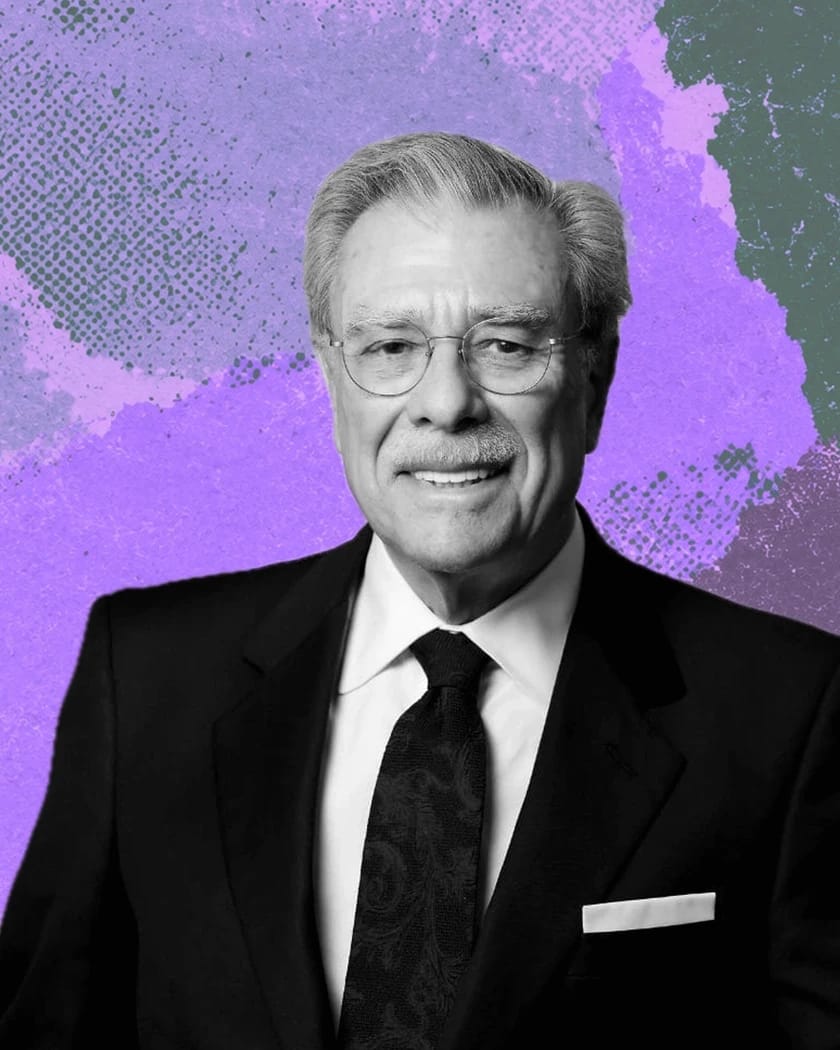
[00:01:06] Phillip: I guess we're obligated now to put the video portion of this up. But we are— we're gonna talk Super Bowl. We're gonna talk a little bit about the ads, and I think the cultural affair that it is. But, for those who are not familiar, Doctor Marcus Collins— he is an award-winning marketer. He's a cultural translator. We've worked together on at least one video, which is forthcoming on Future Commerce, the channel over on YouTube, and he is the best-selling author of For the Culture, a book that you should all pick up if you haven't already. Go get it right now. Pause this feed, go pick it up wherever books are sold. And he's the co-host of the From the Culture podcast, and I don't know how it's taken this long for us to collaborate on this. But, Marcus, give us a little bit of, you know, the update of what you've been working on, what you're up to these days.
[00:01:58] Marcus Collins: Sure. You know, first of all, I'm so excited to be here, so thank you so much for having me. You know, I study culture and its influence and impact on human behavior. Historically, I've studied culture through a consumption lens— why we buy, what we buy, how we negotiate and construct meaning around brands and organizations. But, as of late, I've sort of widened the aperture to think about culture through the lens of work, particularly organizational culture. What are the inner workings of the groups of people who come together to engage in the collective production of work? And what I realized, when it comes to organizations, is that our ability to do marketing well— that is, the consumer-culture engagement side— is only as good as our ability to optimize the organizational-culture side, right? The front stage is only as good as the backstage. So studying both of those, widening the aperture to think about both of those remits, I think has really strengthened and sharpened my consumption-culture studies, while making me far more curious about the organizational side.
[00:03:05] Phillip: That's— when you're sort of thinking about the— we always talk about the culture in commerce, right? We're talking about, sort of, the back-of-house experience, right? The culture in the commerce community. And we've always said that because of the ecosystem of the commerce industry, we have a tremendous amount of experience in the commerce industry. You know, I spent twenty years working— ten years brand-side, ten years agency-side. I've always thought that, because of the tight intersection in our culture, and how much we're fascinated with buying things, and how much of our mindshare is taken up with buying things— that if you could impact the culture in the commerce industry, then you maybe could impact the culture through the commerce industry. Sounds like you're also fascinated with the same thing.
[00:03:57] Marcus Collins: Absolutely. You know, I just realized that no matter how good the front of the stage is— right, the actors, the stage, the props— no matter how good that is, it's only as good as the backstage is optimized. And if you want to impact the front stage, it starts in the back. To your point, if you want to engage the broader commerce landscape, it starts with the people who are doing the commercial work on the retail side.
[00:04:30] Brian: Yeah. There's an article I wrote called "Potemkin Brands." I think that there's a lot of brands out there that represent, like, the— what were called Potemkin villages. And there was this one general who, in the Russian army back in the— post, you know, sort of early nineteenth century, I wanna say— that set up these, like, facades of villages along the river, so that the queen, when she came through, would look at these villages and think that he was doing a really good job with them. So there'd be these fake facades down the river. And it was— his name was Potemkin, and so they're called Potemkin villages. And I feel like there's a lot of brands out there that have these facades that they've sort of constructed, and it doesn't really represent what's happening behind the scenes. And so, culture in our world is setting the tone and doing it right and doing it real and doing it in a transparent way that shows that it's real— that is really important in that process of actually influencing the culture. Otherwise, that's just a bunch of facades.
[00:05:44] Phillip: Brian— on that note, just— Marcus, before you jump in. In that case, I think the modern example is, like, North Korea, and that makes us all Dennis Rodmans, because I think we're all very easily duped. But I digress.
[00:05:57] Brian: You said "Dennis Rubin." I thought you were gonna go somewhere else with that, but that's cool too.
[00:06:02] Marcus Collins: I mean, it's such a great example. You're totally right. Like, you know, we'll put up these veneers about what we are as an organization, where on the inside, it's eroding, right? You know, people feel trapped. People feel like they're not able to be the best versions of themselves. And no matter how well we pretend, the proof is in the pudding— in the ability for the organization to realize its best self, to realize its full potential. So no matter how well you put on the front, the facade of how we are, soon enough, it cracks.
[00:06:37] Brian: That's right. You start—
[00:06:38] Marcus Collins: —to get the erosion that leads to great brain drain, that gets to— I mean, essentially, organizations sort of hollowing out of what it could be, or perhaps what it once was.
[00:06:48] Phillip: What's your experience? I know there's— I've seen you talk a lot. I've seen you talk about your experience and, you know, your hand on the wheel and helping with turnarounds. What's a little bit of the crib notes on what you've seen done right, and how you've helped in the world of brands?
[00:07:08] Marcus Collins: I think the brands that are able to fully realize their potential start with what they believe— and not like the Simon Sinek "why." I mean, that's good too. Sure. Don't get me wrong. But it's really about, like, their truth about the world. Like, the reality that they operate inside of. Mhmm. Their shared reality becomes the foundation to the operating system that we call culture. Because we believe a thing, because we hold a thing to be true, we therefore navigate accordingly. Like, how we work together is a byproduct of how we see the world, how we collectively think. The best companies have been able to challenge their preexisting realities. They've been able to— what would C.K. Prahalad call it— challenging the dominant logic, such that they're able to see the world differently and therefore engage in the world differently. It's— I mean, it's in us as individuals as it is in collectives. So, of course, we'd see inside of collectives that we call organizations that it's our way of seeing the world that informs how we traverse through it. So if we want to change and be the best versions of ourselves, we have to see the world differently. The same thing goes inside of our organizations— whether you're a brand, a sports team, a musical band, or wherever the case is, where people come together to engage in the—
[00:08:32] Brian: —collective production of work. You went exactly where I thought and hoped you would go, which is the Seahawks. Such a great example.
[00:08:41] Phillip: Is that what he said?
[00:08:42] Marcus Collins: I just teed it up.
[00:08:43] Brian: Pretty much. I just teed it up. So— sports teams. I mean, if you think about the history and the lore behind the Seahawks, and the organization that they were in the past, with Pete Carroll and the culture that he built, and, sort of, the Super Bowl win and then the Super Bowl loss, but the era of the Legion of Boom as a defense— Mike Macdonald had big shoes to fill, and also a little bit of a crumbling empire, right? And so, when he came in and said, you know, "Let's not be the Legion of Boom. Let's definitely honor their history in the lore of our organization and our identity as a defensive team, but we are not them. And so we have to build something that's our own"— that sort of became this mindset of, like, "We are our own thing, and we will represent it." And that's why you said— "We did not"— you know, "We did not care" about— and this is at the end of the NFC championship game, at the Rams. And they asked him, you know, "How does it feel to go through the 49ers and the Rams to get here and win this?" And he said, "We did not care." It's not to say they didn't engage with those teams and plan for them and build a game plan around them. It's not that they just did their own thing without thinking about other people. They certainly did. But it didn't have to do with any, like, sort of old rivalry or whatever. It had to do with them being the team that they are in that moment. And I think that that is everything that an organization should be doing these days.
[00:10:28] Marcus Collins: I mean, just to continue on the sports thread, and shout out to the Seahawks for sure— I mean, I had to take a moment to shout out the Pistons. Here's the Pistons. Yeah. Yeah.
[00:10:38] Phillip: Three—
[00:10:38] Marcus Collins: Three years ago, they were the worst team in the league. Like— yes— the losing-est team ever in the league. Franchise-history losing record. And they turn it around in a year. The next year they find themselves in the playoffs, got bumped out of the first round. Now, today, they are the number one team in the NBA. How does that happen? When, by the way, most of their players still stayed. Uh-huh. The new coach comes in, and it's not the coach himself— it's his ability to inspire the team to think differently. You know, to your point about, like, the Seahawks playing their kind of game— the Pistons, historically, we have won three championships. Each one of those championships have been won off of one core idea: defense. Mhmm. Defense wins games, right? So you could be the best scorer there is, but when you join this team, you're playing defense, right? Everything sits inside of this defense, because that's our reality. That's our conception of reality— that we believe defensive play wins games, so we play hard-nosed defense, full stop. And if you look at where the Pistons had found themselves, sort of, in places that weren't desirable, they had drifted away from that. Yeah. They had drifted from the core. And it's when you get back to a shared reality, then everyone on the team goes, "Oh, I know why I'm here. I know what I'm meant to do. I play defense. Everything's about defense. We score, yes, but defense first."
[00:12:10] Phillip: I love it. There's such an interesting analog to, you know, the way that I think real life works. And I think just an analog to the way that I think we see— I don't know— civilization works. Not everything can be up-and-to-the-right forever, right? We have things sort of rise and fall naturally over time. And sports organizations, I think, see it on a much shorter time scale. We have to experience brands on, sort of, a cultural scale, where things happen over maybe decades. So things happen a little slower— maybe we don't realize them in the moment that they're happening. I think we try to accelerate that with capital. That's a whole other podcast, we can have that conversation later. But there's, you know, a time and season for everything, and I think it's difficult to have conversations where we are obsessed with growth, we're obsessed with incrementality, but there are times for teams to rise, and then there's times for other teams to rise. And I think the same happens in brand culture. There's times for your brand to have a moment. There's a time for Stanley to be dominant in the culture, and then there's a time for Stanley to not be dominant in the culture. I think it's very difficult to say that Stanley should be the only thing around for, you know, the next fifty years. That just doesn't happen, right? It's rare.
[00:13:40] Marcus Collins: I mean, to your point, in sports, there are manufactured starts and stops. Mhmm. There's preseason, the season, end of the season, "go fishing," right? And, "We'll see you next season." In business, it's literally either—
[00:13:57] Phillip: Yeah. It's always on.
[00:13:59] Marcus Collins: —a long-term time horizon where you're always on, or very, very, very, very, very, very short time horizons. I.e., we're looking at the stock market— what's the price right now? What's the stock price right now? Like, we're chasing this very short-term thing, or looking at a very long-term thing that is hard to measure in the upfront. So oftentimes we end up forgetting about that, which, of course, is undermining to the brand. But even at the end of the year, because you're probably on during the holiday too— like, you're always on. So the days begin to blur to such a degree that we cannot go, "Hey, this is not our season right now," because what is a season? Unless we go, "We don't have a new product." And those things are all internally moderated, as opposed to looking at where you fit within the broader zeitgeist. And it's almost like— as you say that— like, almost every industry sort of has that. Like, the music industry has that, you know? Where, like, "We're on— we got a new album out. We're promoting the album. We're doing the album. Then we're gonna go away for a little bit." You know, movies, the same thing— "We're in theater, then we're going to streaming, and then we're gonna go away for a little bit till we make a new movie." But when it comes to brands, it's always on, which makes it very difficult to say, "All right, you're going to a self-imposed chill."
[00:15:20] Phillip: Literally nobody is ready for that conversation. Yeah.
[00:15:24] Marcus Collins: Nobody. "Wait a minute. If I'm judged by my ability to perform while I'm on, what does that mean when I'm off?" Eek.
[00:15:33] Phillip: Yeah, for sure. For sure. I would love to sort of pivot into having a little bit of a breakdown on things that you found interesting— and, sort of, an analysis on the marketing around the content in the Super Bowl. I'm always fascinated by your perspective. I have my takes. People can get any dose of me whenever they want. I'd love to hear your take on how you felt this Super Bowl went, maybe compared to others, or what your big overarching takes were. You know, what do you think were some of the cultural interpretations of this year's Super Bowl?
[00:16:15] Marcus Collins: Well, we could start with the ads and then get into the broader programming.
[00:16:20] Brian: Mhmm.
[00:16:21] Marcus Collins: You know, for the first time— and I know this is, like, "cry me a river"— for the first time, I actually really felt for marketers this year around. Because I felt like— you know, I'm looking at the discourse happening on social-networking platforms, and even the rooms that we're in, and they were like, "Oh, man, the advertising's so mid this year. Ugh. It's not so great." And I go, "Yo, do you know how hard it is to make a Super Bowl ad?" And, quite literally, like, the expectations are through the roof. Like, it's a really tough thing. I mean, in any given year, it's hard to make a Super Bowl ad, but to meet the expectations of the public is a challenge, because marketers are doing their best tricks during the three-hundred-sixty-four days that is not the Super Bowl to get people's attention, to break through—
[00:17:10] Phillip: Yeah.
[00:17:10] Marcus Collins: —to have relevancy, to resonate. Like, it's a really hard thing to do. And I felt like the public this year were like, "Meh. Meh." It's like, ugh, that's tough. Now, granted, there was some "meh" in there, but there were some highlights. I was like, "Well, that's interesting, and that's cool. And that actually has a lot of promise." But, ultimately, I felt bad for advertisers, for our colleagues out there who are making Super Bowl ads. I felt for them. I also—
[00:17:45] Phillip: Could I ask you a question, then, on that front? How much do you think it impacts— and maybe this is just, you know, industry-insider conversation, so maybe I'm just— you know, I have a little bit too— I'm too close to the television screen here. But do you think releasing the ads a week before is impacting people's perspective on what is good and what is bad? You know, are they seeing them too early? Is that affecting our view on, like, "Oh, we've already seen it"? Or is that just an ad-industry thing— we know it, we've seen it, we're tired of it?
[00:18:22] Marcus Collins: I think the public, by and large, don't see the total sort of suite of ads beforehand. They may see some here or there. And when it comes on TV, they're like, "Oh, yeah, saw that one." I don't think anyone's like, "I saw it, pass the chips," you know? Like, "I'm ready to ignore it." I don't think it's that. But, again, I feel bad for marketers, because they're probably thinking, "I gotta get as much value out of this thirty seconds as possible. What is a $20 million investment, considering just the onslaught of information and attention-grabbing that's happening during the Super Bowl and leading up to it? At the very least, I gotta make those thirty seconds count." You know, these releases beforehand are probably a way by which they're able to prime what is the actual spot.
[00:19:17] Brian: Do you think some of the lack of enthusiasm actually has to do with what's being sold right now? Because— okay, hear me out. Like, right now, people are not necessarily that excited about AI. There were a lot of AIs.
[00:19:33] Marcus Collins: Oh, you aren't excited about AI, Brian?
[00:19:37] Brian: People aren't very excited about, you know— I don't know, like, junk food. Like, a lot of junk-food ads. Or Meta, or Coinbase. Like, in fact, you could argue the Coinbase ad was perfectly executed, but every single person in the room that I was with groaned the moment the logo was flipped onto the screen. They're like, "Oh, this is a fun idea of a karaoke commercial, like Backstreet Boys"— you could argue it was actually perfectly executed. It's just, people are over it. They're over Coinbase. So I wonder— you think about Pepsi and Coke and Lay's and all these things— are people just kinda over them, taxes?
[00:20:28] Marcus Collins: I mean, you're not far off. Because I would say the thing that got me most excited this year, beyond a handful of ads— I thought the movie trailers were amazing.
[00:20:40] Brian: Yeah. Right.
[00:20:40] Marcus Collins: I was like, "Yo, Scream 7, count me in." Right.
[00:20:43] Brian: Right. "Count me in." Like, they—
[00:20:46] Marcus Collins: I thought the movie spots really got my attention, because they feel novel. Honestly, they felt like something I was not expecting. And not just because, you know, you expect certain brands to show up— but, to your point, if you're selling me AI all day long, this is just another sale for the same things. And it's kind of hard to escape the fact that, like, the cultural discourse before the Super Bowl is this fearful dialogue about AI taking over the world, you know? And, not to mention, like, the world's on fire. So it's very hard to get excited about potato chips and nerds, you know?
[00:21:26] Phillip: Yeah. We— I think maybe we could go into, you know, sort of a beat-by-beat, but I do think there's— some companies took an interesting approach. I think there's something to be said around the tearjerkers, right? There's— Mhmm— Google always tries to make you feel something.
[00:21:50] Brian: Mhmm.
[00:21:51] Phillip: Right? And they're generally very good at that. And then I think there's a little cynicism, right? I feel like the, you know, Amazon and their Alexa ad, I think, was a really interesting choice, given that most people are in the fear mode around AI. And that seems like a really opposite choice. And, like— so I'm curious. Yeah. To your point, Brian, you know, they're now thinking about it in total— that the content centered around AI does seem pretty heavy-handed. But, you— yeah. It's the dollars. Also— hey, AI companies, if you wanna partner with Future Commerce, you know, we have a wonderful executive audience that would love to buy your product.
[00:22:32] Marcus Collins: Write checks. You know what I'm saying?
[00:22:34] Phillip: This is gonna look like—
[00:22:35] Marcus Collins: You know— so, to your earlier point, Brian, about what's being sold— it's also the manner in which it is being sold. You know, Phil, you make a really good point that if you take Anthropic, Google, and OpenAI, they have three really disparate approaches to how they played the Super Bowl. OpenAI, as the market leader ought to do, they said, "This is the possibilities of the category. This is what AI can do." And as the market leader, it's your job to save the category, to grow the category. So you do that. Great. For Google— Gemini, you know— it's like, "Hey, here are different use cases for—"
[00:23:16] Phillip: Yeah.
[00:23:17] Marcus Collins: "—for this technology," in a way that is heartfelt, in a Google way. Makes sense, right? For the third-place guy, being Anthropic— you go hard in the paint. You do that. You throw shots. So they did the right thing. And, if nothing else, out of the three, Anthropic felt like they were in the group chat. Like, they took all the things that people say about, like— "Isn't it weird how, you know, overly enthusiastic ChatGPT is when you ask it questions?" All those things, like the weird glitch— "Oh, that's a great question, Marcus"— like, all these weird things, they were able to anthropomorphize. And for a brand— a company called Anthropic, "anthro," about people— for them to lean into that made a ton of sense. And it's no wonder that their search traffic went up. Agreed. Right after the fact. Like, that's a powerful way to think about how we engage in this. Then you take Amazon Alexa, which I actually really enjoyed, that spot, because it was like all the hyperbolic things that we are deathly afraid of— that, like, AI is trying to kill us. And what's interesting is that he walks in the house with a snake in his hand.
[00:24:35] Phillip: Yeah.
[00:24:35] Marcus Collins: And he was like, "This thing is trying to kill us." Like, everything is trying to kill us, you know? Yeah. So, if anything, there's some optimism that's being sort of nodded and winked there, but the manner in which it's done, I thought, was really savvy.
[00:24:48] Phillip: So that kinda leads me to our take. And, you know, if you wanna run through some ads beat-by-beat— you know, I have my choice for who actually won the Super Bowl from the ad perspective. But we wrote a piece over on Future Commerce Insiders, Marcus, where we sort of contrasted a bunch of ads and, like, their messaging. You brought up a couple here where it's, you know, you have Amazon talking about all the ways AI may kill you, versus Google Gemini talking about all the ways that AI might be helping you form these core memories, as, you know, you're in your childhood— in your, you know, moving out of your childhood home and into your new home. And I think that that's, like, an extraordinary contrast. Meanwhile, Lay's has an, you know, Americana spot— you've got a farmer passing on this legacy to, sensibly, his daughter, in his retirement party. And you've got Pringles celebrating, like, "I build the perfect man and then consume him," you know, the sexuality.
[00:25:49] Phillip: Right? So you've got this, like, extraordinary duality that's playing out beat-for-beat. You could do the same with, like, Dunkin' and Starbucks, right? And so— I'm just curious. You could probably, in categories, start to show, like, really— the way that we pinned it was— yeah, I really think that there's kind of two Americas that are watching the Super Bowl, and they are examining it through their own lens of their own experience. And these brands, at different echelons, in different strata of society, are speaking encoded language to them and saying, "You know, we know who our customer is." And I think that, depending on who you are, if you're cynical, you could probably look at it and say, "Wow, that certainly is not for me. And also, I'm kind of afraid or concerned about where we're heading," right? On all of these ads, right? So— but I'm curious what you think, and maybe you have a few that sort of speak to you on a certain level.
[00:26:47] Marcus Collins: Yeah. I mean, that's always happening. Whenever we're communicating on behalf of the brand, we are signaling a desired meaning in hopes that we find congruence— that someone goes, "Yeah, I see it that way too." Which makes Super Bowl even more challenging, because the population is so heterogeneous. Like, there's a third of the country watching the Super Bowl at any given time, and you're trying to talk to a segment inside of this broad populace that's a microcosm for the country writ large. So, by its very nature, not everybody's gonna like it. But, I mean, we know that anyway. Anytime you do marketing, you can't target everyone, so you're not gonna get everybody. When you have this very heterogeneous collection of people, you certainly aren't going to get everybody. And you gotta say to yourself, "I'm cool with that." The challenge is when you go, "Well, we don't wanna offend anyone. We don't wanna turn anybody off." So you go to the lowest common denominator, and you get a spot that's like— dude, this was for no one.
[00:27:50] Brian: What is this?
[00:27:51] Marcus Collins: "This is the worst." So you take the Lay's spot, which I thought was, like, really well done. It was beautiful. You know, you got a sense of where it was gonna go pretty early on. Yeah. And, just considering the cultural backdrop that we're in— because everything is culturally moderated— you know, when he gifted the farm to his daughter, all I kept thinking was, like, "Man, he gave her all that debt."
[00:28:17] Brian: "Man, you messed up her whole life, B." And a bunch of work too.
[00:28:22] Marcus Collins: Seriously. Like, just considering— I mean, like, farmers are getting choked out right now. Oh, man. So I thought of this— that's all I thought about. Because— and that's the thing about marketing that's so awesome and so challenging— that, like, people are coming to your brand, they're coming to your communication, with all of this extra baggage, or rather this extra meaning. And when they're looking at your thing, it's passing through this meaning-making system, by which they are saying, "Okay, interpret what I see." And based on that, they see the world accordingly. Now, you know, Brian, you mentioned Coinbase. Now, here's the thing. I thought the Coinbase spot was quite brilliant. It was. And, if nothing else, it signaled— it was really, like, a flare to the entire marketing community that we have to break the brief. The brief by which we have normally gone about making Super Bowl ads— we have to end it, because we're at an arms race of incrementality. Like, the expectations are so high, and our ability to exceed them is so low, because there is not that much more headroom in approaching Super Bowl ads the way that we normally do— "Let's make it funny. Let's have a celebrity. Let's do a thing and do with that." And here's the thing: it's not gonna work anymore. You have to break the thing. So Coinbase— though the execution could be questionable, to your point, where you saw Coinbase and you were like, "Oh, man, this—"
[00:29:56] Brian: The Coinbase world is amazing. No, I think that people just got tired of Coinbase. That has no bearing on the quality of the ad. I thought it was a great spot, totally.
[00:30:05] Marcus Collins: So, at the very least, we gotta break the brief. We have to break the brief. The closest to that, in my opinion— my humble opinion— was Levi's. Levi's— yeah— really subverted it. In that we got all these celebrities, but you see nobody's face. Yeah. It's their butts. Mhmm. And, to me, that spot felt very much like Apple's silhouettes, their iPod-plus-iTunes ads back in the day. It felt like a silhouette. In this case, the silhouette is the derriere, which is perfectly cast in a pair of Levi's jeans. And, of course, just like they were holding the iPod in those Apple ads, there's the Levi's red tab there. So you know who these silhouettes are in context with, or who they're in partner with. I thought it was just really, really well done.
[00:30:56] Phillip: Agree. I—
[00:30:56] Brian: Actually, it felt like a classic commercial to me. In so many ways— like, was it— I mean, I don't mean to contradict you, but it kinda felt like an old-school brief. Like, to me— I felt like the Coinbase one totally broke the brief. But, for me, the Levi's one was the— an example of a perfectly executed commercial that, like, in the classical sense of it—
[00:31:23] Marcus Collins: Almost. But that's breaking the brief, though. Like, the classic—
[00:31:27] Brian: That's true. You're right.
[00:31:28] Marcus Collins: —eight-years-ago brief is different than the brief today.
[00:31:31] Brian: Yes.
[00:31:31] Marcus Collins: You know, it was a classic— Dan White used to say that creativity is subversion. It was the classic subversion, right? Coinbase did it one way. Levi's did it in a more traditional way, but it was breaking the norm of what we normally have today.
[00:31:51] Brian: Can I make one more note real quick on Coinbase? I just— sorry, Phillip. I just— last note there. I was just in Vegas for Manifest, and I stayed at a hotel, Resorts World, that has, like, a rooftop bar with— actually, it has open air. It's pretty cool. And you can look down over all of Vegas from this bar. And I looked down, and— I guess everybody can kinda see the Sphere, but I had a really unique view of it right from there. And they ran the commercial on the Sphere, which I thought was brilliant. So it wasn't just built for the Super Bowl. It was— yeah— built for new mediums like the Sphere. And so I think that, again, to your point about breaking the brief, it became a piece of media— Mhmm— that could be used in many contexts, and that's pretty rare, to have something of that, sort of, with a thought process beyond a typical brief. Really, really cool. Well executed.
[00:32:54] Marcus Collins: Absolutely.
[00:32:54] Phillip: Marcus, I— sorry to— I know you leapfrogged backwards, Brian. I'm gonna try to keep going forward.
[00:33:00] Brian: Keep going.
[00:33:00] Phillip: We talked about Levi's. This is my take: Levi's, in my opinion, won the Super Bowl. And the reason being is, they sort of had a one-two-three punch that I feel like landed in such a hard way. Their derriere, you know, "we're behind you" sort of ad— it plays in such a way where you get the brand, they catch your attention with the ad, and then they cut to the greatest shot ever, which is when they're coming back from commercial, and they've got a wide shot of the stadium saying it's Levi's Stadium. And that integration is an incredible execution with NBCUniversal. You can't pull that off without the partnership to say, like, "You have to cut wide to the stadium," so that your partnership dollars and having paid for the naming rights makes sense. Like, dollar for dollar, your ad dollar and your naming-rights dollars have to go hand in hand, so that those two things make sense. But the third punch comes when Bad Bunny finishes, and you have the— "the only thing that is stronger than hate is love." And that's the image that goes viral at the end. And what's above it? Levi's. To me, there's no greater execution. Like, it's all three, and in all three mixed, it's like— gives me chills, honestly.
[00:34:34] Brian: Well, and butts were featured heavily in the halftime show. So it was, like, a quadruple punch.
[00:34:41] Phillip: But— Marcus, I'd love your take on that sort of thing, and, like, how— you know, what's your take? How do you read those?
[00:34:48] Marcus Collins: I mean, I think you're dead on. And, to continue to add on the layers, the Super Bowl was in San Francisco, which is Levi's home turf. Mhmm. They did what I thought was the coolest on-premise activation, with Empire— that's the record label that's San Francisco-based. You've got artists like, um, Shaboozey. They've done records with E-40, with Anderson .Paak— like, all these amazing artists out of the Bay. Empire bought First One Montgomery, that— right there off Market. And Montgomery is, like, this classic area in San Francisco, and Levi's did this, like, massive pop-up where they had artists performing. They did a Tiny Desk session with NPR. They were all artists from the Bay. They had, like, marching bands perform. Then they had, like, this curation of Empire over the fifteen years they've been in existence, and all these, like, custom partnerships that Levi's has had with Nike. Just unbelievable. So we were on the ground— this was the place to be. And all of this ties very closely to what Levi's as a brand stands for. They are all about progress. In fact, I think their CMO, Kenny Mitchell, says it this way. He says that Levi's is in the business of outfitting the originals who make progress every day. And, like, come on. I mean, from the Bad Bunny integration— that's progress, especially from where we are today, right? The spot— like, they're just highlighting people who are making progress. The originals are making progress. The brand, I thought— just to your point— they realized this is not a thirty-second ad. This is a constellation of nodes that together tell the story of Levi's in a way only Levi's could, which I thought was really powerful.
[00:36:59] Brian: Wow. That's progress.
[00:37:00] Phillip: Well said. Well said. I wish we had, like, hours and hours with you. We gotta do, like, a Lex Fridman-style show with you one day. What else did you think was— we didn't touch on the Bad Bunny of it all. I mean, can we unpack some of the Bad Bunny? You know, there's so much symbolism, so many cameos. There was the counter-programming. I mean, what would you like to touch on?
[00:37:28] Marcus Collins: There's so much to unpack. So I feel like, to do it justice, we should probably hit just a few beats.
[00:37:36] Brian: Sure.
[00:37:37] Marcus Collins: The first is that— someone put it this way— that this was not a musical performance we saw. This was theater.
[00:37:45] Brian: I think—
[00:37:46] Marcus Collins: This is really powerful when you consider the Bad Bunny performance and the Kendrick Lamar performance the year beforehand. You know, they both were meant to be experienced on screen, not in person. If you were watching that show at Levi's Stadium, I imagine it probably wasn't as awe-inspiring as it was for us.
[00:38:08] Phillip: Right.
[00:38:09] Marcus Collins: Looking at him, like, drop through the set and then come out here, hand the Grammy to the kid version of him— all the pageantry that was the curation of the experience— it was theater in action, because he was giving some social commentary that was beyond the music itself.
[00:38:31] Brian: Again—
[00:38:33] Marcus Collins: Making it very hard for marketers, considering, you know, the production value for the Super Bowl halftime show continues to exceed itself, right? It continues to meet expectations at the bare minimum, where— and there's more headroom to do more, because it's not a stage where I perform music; it is a canvas where I put on a theatrical debut of sorts. There's not that much headroom left in advertising, based on the way we normally do it, so they have to break it— because Jay-Z and Rock Nation have broken the brief for halftime shows.
[00:39:12] Phillip: Wow. Yeah.
[00:39:13] Marcus Collins: Unbelievably powerful. Just unbelievable. Second thing is— so, I'm a big Bad Bunny fan. By that, I mean— I'm not, like— I didn't know a lot of his music, I knew some songs, but I wasn't, like, a fanatic, right? Like, my wife is crazy about Bad Bunny, for a myriad of reasons, I'm sure. But he's easy on the eyes, one would say. But I wasn't, like, a terribly large fan. But I felt so much joy watching that performance. Yeah. It was just joyous, man. Like, it really captured what music is about. We call music "the universal language," because, without even knowing the words that were being sung, I still felt it. I was still moving. I was still having a good time. And you cannot beat that. You cannot beat that. And then the third beat— and I'll open it up for you all jumping in here too— the third beat for me is that, even in the face of adversity— that being the discourse that was happening that was challenging it, of course, the rival, alternative halftime show that was really just throwing shots at it— it still prevailed. You know, it still was a great show. It was well-attended. And the people who took in the show, they were moved. And, like, that's what this whole thing is about. If we go back to progress— like, that is the progression we're making. We're widening the aperture of what America looks, sounds like, and feels like. You know, he's Puerto Rican. He is American. But our collective aperture for what America looks and sounds like was very, very narrow. And, considering the demographic shifts that are happening in the country, and that the Hispanic and Latino expressions of Americana are more and more normal, I go, "That's the world we're looking at." That is not the future. It's today. But, of course, the future— it is already here. It's just not democratized.
[00:41:27] Phillip: Yeah. That's right. Yeah. "The future's already here. It's not evenly distributed." That's a— but, you know, it's such an interesting perspective. I think that goes back to the, you know, "two Americas" thing that we see playing out as well. Yeah. For all of the discourse leading up to the Super Bowl, and sort of the speculation about what would happen during the halftime show— I felt it was a very— I mean, depending on whatever your values are and what you consider to be a family-friendly halftime show, this might be the most family-friendly halftime show I've seen in maybe seven, eight years. It was, like— this was peak. And, for me— you know, this is— I saw somebody, and I was gonna try to source it, but I couldn't find it. And this is probably due to my lack of using bookmarks on X. But somebody was like, "You know, only one of the halftime shows this year celebrated traditional marriage and waved an American flag. I'll have you guess which one it was." But, anyway, I digress. I do think that there's a really interesting thing to take in, which is the strategy behind it all.
[00:42:53] Phillip: And I think that that's where we have really kind of forgotten what it is we're doing with the NFL, right? America's greatest power is our cultural dominance and our export of culture. And, you know, you go to— I've visited Amsterdam, and they speak perfect English with no accent, and it's their second language. And why is that? It's because they grow up watching American television. And there's an incredible power that our media has, and the export of our sport overseas is a further potential for us to continue to have more cultural sway. I don't think that that is a bad strategy for the United States of America, which has other issues to deal with on a cultural stage. The proliferation of the NFL across the globe is probably a good thing. And so, as we widen that aperture, I think it would do well for us to have a lot more folks paying attention to the NFL. And that's where— I think there's something like 12 NFL games will be played abroad next year.
[00:44:26] Marcus Collins: Yep.
[00:44:26] Phillip: And that, to me, is— you know, I think we can give up one halftime show every so often for more people to pay attention to that. I think people might be entrenched in the way they feel about something— it's hard to talk them out of it. But if you were to take it at face value, I think— to your point— it was an enjoyable halftime show. I think it was well executed. And I think it did fit into the broader thesis of how American culture continues to drive our presence on the world stage. I would love to see that mean something positive for us in the world.
[00:45:05] Brian: You know, if we take, sort of, the cultural narrative around this out of it— like, that alone— like, sorry, keeping the American—
[00:45:19] Phillip: The American—
[00:45:19] Brian: —"new America" culture split out of this. The NFL is in the business of attention. And, let's be honest, like, a very big market— a very easy market— is all of the countries that Bad Bunny listed. Yeah.
[00:45:37] Phillip: There you go.
[00:45:38] Brian: And so, you know, I think in the not-so-distant future, we'll probably see NFL teams pop up south of the border. I would argue— yeah—
[00:45:51] Phillip: That'd be great.
[00:45:51] Brian: Yep. And, you know, we've got a Canadian baseball team. We've got Canadian hockey teams, obviously. I think the international steps for the NFL are very, very, very clear. And they've already pushed the absolute boundary of what they can do— expanding the season. Like, the players cannot take any more. So they can't make any more money off more games. They can't get more eyeballs off more games. They are at the absolute limit of where they can make money off of their current programming. So what's the option? Expand who sees it. And so— smart. Smart. Smart.
[00:46:40] Marcus Collins: I mean, the NBA already showed sort of the prototype, the blueprint, for what this can mean. I mean, look at the Olympics, where, like, ten years ago, the teams in other countries weren't that great. Now they're really good, because they play in the NBA as well, right? It's becoming an international game. And considering the NFL is now the new American pastime, this is just ripe for exportation, right? To be exported into other places. It's like— it's like our Seinfeld of sports. Like, this is the thing. Yeah. Like, this would be the one to take over. Not baseball. This is the thing here.
[00:47:18] Phillip: I love that. And along with it, everything that comes— it's a whole package. It's not just the sport. It's also the culture around the sport, which happens to be advertising and consumption in our brands and everything else. And that, to me, is the— you know, the second-favorite American pastime is, you know, "What are we buying next?"
[00:47:39] Brian: First— sorry. That's number one.
[00:47:41] Phillip: So that's actually the first American pastime.
[00:47:44] Marcus Collins: I mean, what makes the Super Bowl the Super Bowl is all the cultural rituals that go into it. It's not even the game itself.
[00:47:50] Phillip: Right.
[00:47:50] Marcus Collins: No shade, Brian, but it's not even the game that's played. It's the— "what are we eating? Where are we going? What are we watching? What are we wearing?" Like, it's all the thing— the tailgating of it all.
[00:48:00] Brian: Yeah.
[00:48:00] Marcus Collins: It's those things that— it creates a broad door and broad invitation for more people to be a part of it. And, ergo, it becomes a much more consumption-rich platform that we call sport.
[00:48:14] Brian: I will counter that just a little bit. The narrative of the game actually is really important. So, people consider this a boring game. I did not, because I understand this on two levels—
[00:48:25] Phillip: Levels, Brian?
[00:48:26] Brian: No. It's not just about the win. Like, if you understand football at a deep level, you understand the chess match that unfolded there. And there was a lot more drama than people realized, and the way the game was played was actually kind of where the NFL is going. But people don't realize— and they might need to make—
[00:48:44] Phillip: They might need to make—
[00:48:45] Brian: —changes in order to get it back to "touchdown, touchdown, touchdown." Like, the way that they've changed the kickoff rule is set up for special teams to be a bigger part of the game, and for defenses to be a bigger part of the game, and for field goal kicks and field position to be a bigger part of the game again. Like, all of that is happening, and people don't understand it. So the narrative around the game actually is maybe part of the lack of enthusiasm for this particular game. It was kind of a boring game to some people. It felt one-sided. It was one-sided.
[00:49:21] Marcus Collins: Sports means dynamism. You know, again, I go back to the Pistons. You know, when the Pistons were in the "Goin' to Work" days in the early two-thousands— I mean, teams wouldn't score over 75 points on the Pistons. And people hated watching the games. They felt boring, because they were so defense-heavy. They weren't very offensive, so they didn't feel super dynamic. But we know that, in sport, that's what wins games— great defense. So you have to engineer the sport so that there's more dynamism. The NBA, you know, had lots of dunks, lots of three-pointers, but now that's feeling a little soft— not enough dynamism.
[00:49:58] Phillip: Yeah. And, I mean, for whatever it's worth, Brian— a quote-unquote "boring game" maybe leads to a little more focus on the ads in between. But it has always been the case at the Super Bowl, I think— that's always been the big star of the show for people who are passive football fans at best.
[00:50:22] Marcus Collins: More expectations from marketers. Again— expectation. It really does.
[00:50:26] Brian: All the heavy lift on them.
[00:50:29] Phillip: Raises the bar. Are there any final lessons learned? Maybe something that can tie back to your book, and— how can people, you know— what's a lesson we can all pull out of it, and where can we go get the book?
[00:50:41] Marcus Collins: At the end of the day, the Super Bowl is a cultural ritual.
[00:50:46] Brian: Mhmm.
[00:50:46] Marcus Collins: It's not just a sporting game. This is a place where people come together and engage in ceremony. And since it is culturally mediated, culture will weave in and out of every aspect of the game, and all the spectacle that we call the game— from the Super Bowl halftime show to the ads that exist as well— which means, then, the winners of the Super Bowl, whether it's on the field, in the thirty-second spots, or on the stage for the fourteen, whatever, minutes that are being performed— the ones that are closest to culture, that understand the cultural conventions of the zeitgeist, those are the ones that will win. And that requires fortifying an organizational culture that has an ear toward the reality that is the zeitgeist, and the wherewithal and the ability to respond to it accordingly. And I think the NFL has proven to us that they can do that quite well.
[00:51:50] Phillip: Wow. All right. Well, Doctor Marcus Collins— thank you for joining us. You can get his book; it's called For the Culture. And subscribe to the podcast, From the Culture. We'd love to have you back, Marcus, please.
[00:52:05] Marcus Collins: Anytime, guys. Please—
[00:52:07] Phillip: Join us again. And let's not— you know, I think we've been ten years on the air here. Let's not wait another ten years to have you back.
[00:52:?] Marcus Collins: Amen.
[00:52:?] Phillip: Thanks for tuning into this episode of Future Commerce. If this conversation sparked something for you, why don't you let someone else know about it? Hit like, subscribe, follow wherever you get your podcasts. It helps more people join this conversation. If you wanna find more Future Commerce in your world, you can bring it into your real world. We've got our new book out— it's called Lore, and you can find more print, just like this, at our shop. Go ahead and hit futurecommerce.com to get all of this and more, and us in your inbox a few times a week. Remember, commerce shapes the future, because commerce is culture.
[00:52:46] Brian: See you, Hawks.
.jpg)
