[00:00:00] Phillip: And welcome to Future Commerce, the podcast at the intersection of culture and commerce. I'm Phillip.
[00:00:04] Brian: I'm Brian.
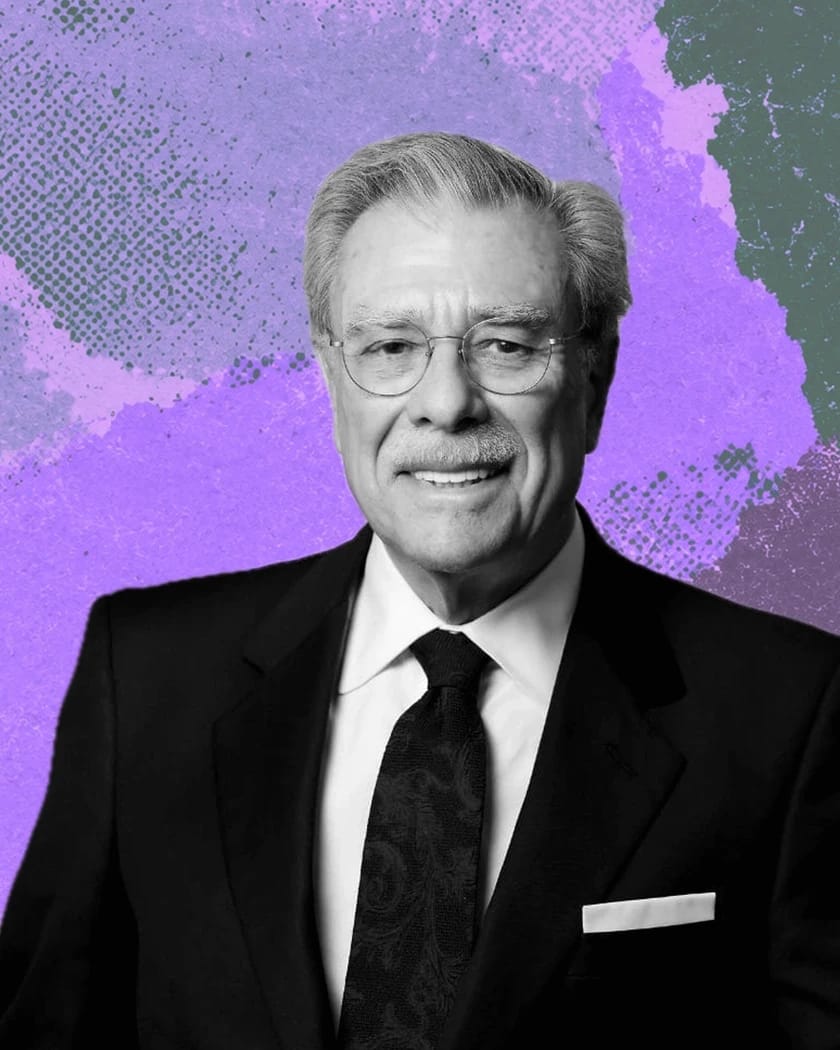
[00:00:05] Phillip: And today we have a very special episode. I, Brian, had the pleasure of visiting New York just a few weeks ago because we will be returning to MoMA for our fourth annual VISIONS Summit on November 3. And I got to tour the new larger theater that we'll be joining as our new summit — you know, 400-plus executives from all over the world will be coming for our VISIONS Culture and Commerce Summit. Go to futurecommerce.com, you can find out more about that. But as I was there, I made my way over to the MoMA Design Store in Soho. It was my first time visiting, and I was just so taken aback. All of the things I love under one roof that are an incredible curation and merchandising of beautiful, thoughtful things, you know, both for the home and things that I love to collect. You can see, like, Teenage Engineering on the shelf behind me, beautiful design books, art books, but really thoughtful and curated items. And I've been shopping MoMA for many, many years. And so it is a wonderful pleasure to introduce to you our next guest. He is the Chief Retail Officer at MoMA Retail, where he has spent the last decade helping shape the MoMA Design Store across physical retail, e-commerce, wholesale licensing and marketing, and creative direction. I would like to welcome to the show, Jesse Goldstine. Welcome to Future Commerce.
[00:01:25] Jesse: Thanks, Phillip. Great to be here. Thanks for having me.
[00:01:28] Phillip: Thank you. You know, MoMA is truly global. You are all over the world now and certainly online. And I would love to just talk a little bit about the move to retail as a point of entry and talk a little bit about you and your role at MoMA. Tell us about your ethos and how you are showing up in retail in the world.
[00:01:49] Jesse: Great, glad to. Happy to have an opportunity to talk about our wonderful business. So I've been at MoMA just over ten years, almost eleven years now, first as the head of e-commerce and now managing the overall retail business. And that business comprises e-commerce, comprises the stores inside of the museum, our design stores across the street and in Soho, our stores in Japan. And last fall, we opened a shop, a bookstore, our first bookstore in Seoul with Hyundai Card. And last but not least, we have our product licensing with brands like Uniqlo, LEGO, and Mattel. And so our business is really a business unlike any other. And this really comes from — I think there's four things that differentiate us from any other brand. The first is our connection to MoMA's Department of Architecture and Design. MoMA was the first museum in the world to establish a curatorial department around architecture and design in 1932. And the museum and the department have a long history of educating the public about good design. Retail's DNA is very much connected to that department. And that makes us special in that many of the products that we sell in our stores are connected to our collection, came out of our collection, came into being because of good design competitions at MoMA in the 50s. So there's a deep DNA connection back to MoMA, and that's a really big deal. The second differentiator is that every item that we sell in our stores has been approved by a curator. And that's a big differentiator. Third, we do our best to democratize design. There's a real effort to make sure we have compelling design at every price point. From the $34 MoMA Yankees baseball cap that's all over the streets of New York to an almost $6,000 handcrafted digital wood Japanese piano from Roland. That's exclusive to MoMA also. So really, you know, running the whole gamut. And then when people purchase from us, their purchase supports a really important cultural institution in New York City, MoMA. And in all those ways, I think we are different from any other business in the market.
[00:04:24] Brian: I think some of those items that you're selling may end up back in a museum at some point, which is really cool. It's a circular economy, if you will. But I think what's really interesting is there's a story that kind of came out in Fast Company here, just last year. And it was about how retail is actually kind of the point of entry to the museum itself, which I find fascinating — that the products are beautiful, curated. You've got the most interesting assortment in the world. And so that's actually how people are finding their way back to the museum. Entry through the gift shop, if you will. When did that idea click for you? I mean, this is clearly part of your strategy and what you've been able to develop there. And so I'm just interested how you got there.
[00:05:17] Jesse: That's right, Brian. By contrast, the typical retail model in a museum is exit through the gift shop, which you were kind of getting at with your contrast. I would say as the museum's been thinking strategically about how to increase the museum's footprint — right? — in a good year, we'll welcome 3,000,000 people here on 53rd Street at MoMA's campus. But 3,000,000 people means there's an audience of billions of people that are not connecting with MoMA on campus. So retail is an important node to help us reach beyond our campus. And this really became evident, I think, in long-term strategic thinking about how the museum could increase its footprint. We started looking at our data in retail and realized, looking at our transaction base, that the vast majority of our transactions weren't even happening on campus. They were happening across the street. They were happening in Soho. They were happening online. They were happening through our licensed partners. And as we grew to understand that and started a dialogue internally, I think more and more opportunities started to arise as we thought about increasing MoMA's footprint through retail. We started to do exit surveys of visitors to the museum, and we saw that a significant number of people were saying that they heard of MoMA through our retail products. Maybe they saw a Champion hoodie on TikTok. Maybe they picked up a LEGO Starry Night set. But MoMA stuck in their minds and they came to visit MoMA. So with those kind of data points, we really started thinking about how can we double down on what's going on here.
[00:07:05] Phillip: There's so many ways to talk about how the museum's work and the curatorial work also shows up within the four walls of the retail experience. You said that each of the products are approved by the museum's curatorial team. How does a retail initiative like the Modern Mural, which is, I believe, a collaboration between the museum and the design store — how does something like that work as an experience within the retail experience that isn't just relegated into a background feature within retail, which, I think, often, you know, can be — it's a wall decoration, but this is a feature piece. How do you think thoughtfully and how do you collaborate intentionally with your teams across the two divisions?
[00:08:04] Jesse: I love that question. The thinking around the Modern Mural is very much the same framework I just described about reach. So we were in the process of renovating our Soho store — or planning the renovation of our Soho store — and trying to think strategically around how we can best leverage that store for the institution. And as we thought about it, we realized it was a really underutilized space in that MoMA's mission is to connect people around the world to the art of our times. Right? And we have this location in Soho, and all we were doing was selling. Selling wonderful product, but we were just selling. And that store does really well and has an enormous amount of traffic. And we know from our data that that enormous amount of traffic doesn't necessarily funnel 60 blocks uptown to the museum. So many people that visit our store in Soho are coming to the store through social media, through shopping Soho, and they don't intend to go to the museum. And so this is new audience for the museum. And one of the sweet spots for any cultural institution is reaching new audiences.
[00:09:23] Jesse: So as we thought through this, we realized we've got many, many, many visitors to this store. They're not going to come to MoMA likely. Our mission is to connect people around the world to the art of our times — a new audience. And eventually we came to the conclusion of how can we create an experience where we bring our exhibition program into the store? And we had to work through things like, well, you can't bring a priceless oil painting and hang it on a wall because security, because there's going to be kids with sticky fingers touching everything because it's a retail store. I really had to rethink. And when I say dozens, dozens of departments at MoMA collaborated to make it happen. And so not only is there right now a beautiful mural on the back wall of the store that's striking, that's joyous, that's a love letter to New York and a love letter to Soho by Nina Chanel Abney. It's really beautiful. But the project ended up changing the culture at MoMA and how we think about retail as a way to further the institution's mission.
[00:10:29] Phillip: Nina, by way of chance, Brian, went to Parsons — the New School — of which we have a lot of friends of ours and friends of the show. Over the years, we've done a lot of collaboration with the New School. And I really think that there's something really interesting about the way that these, you know, culture and commerce are so intrinsically intertwined. This is a thing that we talk a lot about, Jesse, is that we experience culture through what we buy. It's not just what we buy, it's what we become. It's like you are what you eat. But we are experiencing culture. Like, we become cultured through the things and the objects that we possess or the things that we have. And it's a form of taste. So there's a lot of taste discourse these days. Right? And the things that we like are also a form of our expression of our taste. Collecting is certainly part of that. And licensing has become a big part of the way that MoMA is showing up in the world. And I know that you've mentioned LEGO already. I think you have a partnership with Mattel. I'm curious how you're thinking about this expression of taste and culture through commerce and if that's a thought or an intention of yours when you're working with these brands and licensees of MoMA, and how you show up in these collections of consumer products. And how do you preserve, like, the integrity of the brand into original designs as you're, you know, as you're creating a Van Gogh Starry Night with LEGO. Like, these are really important concepts to convey. You know, ostensibly, it's on you to make sure that they show up in the world in that, you know, in a culturally significant way. So I'm just curious how you bring those to market and how you hold those to be true.
[00:12:25] Jesse: Right. So, as a museum, we take the quality of these products incredibly seriously. And I think our licensed product has a, you know, maybe unusually high level of quality to it across the board as a result. So when we're talking to partners, we always want to be able to answer the question, why MoMA? In a really great partnership, you've got two brands that maybe stretch beyond something they've done before to create a third new idea. That's still true to both brands, but maybe is stretching each to a new place. So if we can't answer the question, why MoMA? And if we can't feel like we're going to have a product that speaks to our DNA, then the project doesn't go forward. Another thing that's incredibly unique to our licensing program is the involvement of our curatorial department. This isn't something where retail goes off on our own and creates a product and gets a rubber stamp from our curatorial colleagues. It's a very, very collaborative conversation between retail, between our curatorial colleagues, and between our partner. And there's lots of iterating, there's lots of mock-ups, dialogue, taking works to the galleries and holding them up in front of the artworks from which they come. It's a very serious process, and we hope that we'll delight the customer with the output and that it will be true to our collection.
[00:14:11] Brian: It sounds like such an important process — that once you pick the partner, then kind of making sure that the collaboration's going to resonate. What about actually picking your partners? What's just the criteria for a potential partner before moving forward with the collaboration?
[00:14:27] Jesse: It starts with that first question, why MoMA? And then we're often thinking about questions of what kind of curiosity has this partner shown in the past? What kind of design innovation, strength in design? We're thinking about geography. We're thinking about audience. And all these things really need to come together in a meaningful way for us to pursue a partner.
[00:14:58] Brian: You mentioned data before from the store, the Soho store. And I know, you know, sometimes eventually you'll pull a SKU. You're curating your assortment at any given time. And you're doing that really to build this beautiful experience, make it so that each object can really shine in its own way. How do you — are you using data from sales? Are you using data from responses? Like, how are you thinking through which products to recycle out so you can make space for the next round?
[00:15:34] Jesse: Yeah. So I think this happened in maybe the most dramatic and discrete way recently when we renovated our Soho store and really changed how we wanted to show up to our customer. And so there — don't forget, we have an extraordinary group of buyers who travel the world, find really exceptional designs to bring to our store. And their job is to fall in love with these products and get our customers really excited. They do it extraordinarily well. Now, Soho — we were getting to a place where Soho was so crowded with these extraordinary... Sometimes it was hard to find the product. Sometimes it was hard to see a product. It was really hard to tell the story about all the products because there were so many of them. And so when we rethought the store, we started with a premise of, we want a store where our products can shine, where we have space to tell stories. And so we needed to go through — exactly to your point — and trim some SKUs. And as a design-focused company, it's really hard to let go of SKUs that we all love. But we did, to your point — we did look at the data. We looked at sales trends for SKUs. We looked at classes and subclasses and stories that we could tell around specific products and, you know, made cuts accordingly. We created a whole new store setup and set of fixtures for us to really spotlight and tell stories around those products. And the upshot is we've really done less with more. Our sales are much stronger, and our productivity per SKU is dramatically higher as a result. And this makes it easier for us to run our business and for us to drive profit. So I think at the start of that project, it was painful and felt inconceivable that doing this would be a win, because it was sort of like, are we going to lose our entire identity as a brand by taking out all these amazing SKUs? But I think it's allowed us to be more who we are.
[00:17:40] Brian: I love that. Yeah. And you've done a great job. I've bought several things from MoMA as well. One of the things that sticks out in my mind — still in heavy use in my household, and I bought it a long time ago — is a cutting board that's, like, yellow in the shape of a chicken, which is...
[00:17:58] Phillip: This has got a lot of airtime on Future Commerce.
[00:18:01] Brian: And, you know, it's just one of those items that you have in your household, you use on a regular basis, that just brings kind of a little bit of delight and fun and whimsy and art to your household. And, you know, you use it in front of a guest and they're like, what's that? And I think that — I think you've done an incredible job, like, sort of picking specific concepts or interesting angles on things. And one of those things you did recently with the MoMA Design Store, which went viral on social media, is the MoMA Mart concept — which, I love that little bit of play on words there — where foods were reimagined as everyday items and art and collectibles and things like that. And so as you went through sort of, like, this process of blending culture and commerce and co-creation with consumers, like, what did this sort of teach you and your team? And were you able to sort of use this to think about amplifying and engaging with a social media audience?
[00:19:04] Jesse: Great question. What a fun pop-up this was. You know, we leverage pop-ups, which tend to be centered in our Soho pop-up space, to typically bring new brands to the market. So, you know, Muji appeared for the first time in the US in our pop-up space, same with HAY. This was a particularly delightful pop-up. There was this real tension balance between function and illusion across the whole assortment. Normally, we do a pop-up in our space, we have one buyer — our home buyer, our tech buyer, our kids buyer — that finds a brand or an opportunity and tells that story in this space. In this case, all of our buyers were contributing. And the customers came in, and when you looked at the products — and I'm not sure if either of you made it, but maybe some of your listeners did — you would look at a product and be like, is that a piece of brie? Oh, no. It's a salt and pepper shaker. You know? Are those soup dumplings? Yes. No. Wait a second. That's a chopstick rest. This beautiful, delicate crate of fresh strawberries is really a bunch of candles.
[00:20:19] Jesse: So there's this, like, figuring it out as a visitor that was really delightful. And you felt the energy in our pop-up space in a way that we hadn't seen before. People were really delighted by the experience of figuring out the array of products. And it was really true across the whole range of products. And then that worked really well in social media and people took great footage of it, but social media wasn't satisfying enough an experience. And so then people came in to confirm what they saw, to see more. And it was a really delight — as an employee and as part of the team that puts it together — really extra rewarding to see that sort of virtuous cycle across channels. And it really culminating in a physical space in a way that it couldn't online. And you really got this a little bit more of a sense of third place. You got a sense of community. People were all exploring this together. It's like you're going to a big concert or something. People are really having an experience in our store, and it was remarkable.
[00:21:29] Brian: It is so fun.
[00:21:30] Phillip: There's something about a pop-up too, and sort of ephemerality, that drives more social engagement as well. And I think that, as tough as they can be to pull off... We have a friend of the show — I'll name-drop her — Rebekah Kondrat, who has this love-hate relationship with a pop-up. It's like, they take as much work as anything else, but they just drive so much engagement, and I think really just ignite so much excitement. And congrats on that too, because I think that it also allows you to be, like, creatively experimental and do this, you know, this time-bound merchandising that you otherwise just couldn't do. And in its own way, it feels like almost like what you would do with a — you know, like what the museum might do, you know, if you're going to have an exhibition. Right? You're going to have a — it's very similar type of a, you know, a play that's happening within the retail experience. I want to take a little bit of a left turn, Jesse. We usually, as — if we were to wrap up the show, we'd probably ask you for a little prediction of what you'd be doing in the future.
[00:22:45] Phillip: But I feel like I should probably ask you a little bit about AI before we get there. MoMA — just on the museum side — for the last couple of years had Refik Anadol's Unsupervised there as a part of the installation, and it's a generative, data painting. So AI, you know, has this really interesting, I'd say, polarizing effect within the art community, especially — consumers seem to be jumping into a lot of the social discourse, which is talking about social. Within the retail community, especially among the e-commerce community, AI presents this, you know, potential lever for, you know, accomplishing a lot more. You seem to be sitting sort of at the intersection between these two camps in your world. So I'm curious, does AI have any business within your business in helping to curate or personalize any of the experience? Because we are talking about, you know, human concepts here like taste, right? And that's really what you've done — is you've curated a lot of tasteful product and merchandise experiences. And so I'm just curious what role AI might play within MoMA Design Store's four walls.
[00:24:05] Jesse: So maybe — I'll take a half step back — and just say that MoMA has had a very pro-AI culture. We've got a human-plus-AI focus. And I'd say most people across the institution had AI goals this year. And the retail business, big picture, has benefited for sure from everyone coming up the learning curve on AI. We're a more efficient business. We're creating better analysis. Our creative team has really dived in and leveraged AI on so many different fronts. And then to your point, Phillip, for years, our e-commerce business has been leveraging AI technologies and we're rolling out, like, one new AI partner — I mean, even two AI partners a month at this rate right now. So we see lots of opportunity. And so online, we see tons more potential for improving personalization, discoverability, both on our site and through agents. And so we're both pedal to the metal on AI opportunities in the business. But also, let's not forget the DNA of my brand, the DNA of our business is rooted in decisions made by humans in our curatorial department that are part of our museum. And so I continue to believe that MoMA is an extraordinary institution. I continue to have tons of faith in our curators on the museum side and in our buyers on the retail side. And so I will continue to defer to them and put my faith in them until our AI overlords tell me that I need to behave differently.
[00:26:11] Brian: And so, to the point about the future then — twenty years out, does the physical store even exist at that point? I'm just kidding. But, like, what — eventually, like, I expect the physical store's purpose will start to change, especially for a brand like MoMA that has such a strong physical footprint with your gallery. So where do you see the store headed twenty years from now?
[00:26:43] Jesse: You know, thankfully my success does not rely on me being a prognosticator of what's going to happen in twenty years. But I will say there's something really special about our brand that I think will make it — that will sort of inoculate it against some sort of automated sock repurchase every six months, underwear repurchase. Maybe you create an agent that takes care of many of your daily, weekly, monthly needs. Maybe lots of things can be automated, but it's sort of the — it's the DNA of our brand that there is delight, there is amazing design, there is discovery in our stores. And coming into our stores, people are thinking about finding something beautiful for their home. They're thinking about finding an exceptional gift. They're not looking for the cheapest basics that might be much more susceptible to stores becoming obsolete or stores becoming pickup locations. I'll continue to celebrate the aspects of our business that tell the stories of the beautiful designs that we sell. And I hope that that will last for years to come.
[00:28:00] Brian: Love that.
[00:28:01] Phillip: Well, well said. Congrats on all the success so far. I wish you continued success. Would love to have you back. Thank you so much for joining us.
[00:28:11] Jesse: Thank you. This is a lot of fun. I appreciate it.
[00:28:13] Phillip: And thank you all for joining us for Future Commerce. And if this conversation sparked something for you, we'd love for you to like, follow, subscribe wherever you get podcasts. Helps more people join the conversation. You wanna bring Future Commerce into your physical world, you can do that. We've got physical print, like this, our brand new book. It's called LORE. It's 300 pages of hardcover print, and, put this on your coffee table. Get it at futurecommerce.com. And, you know, this is where commerce meets culture in beautifully crafted books, zines, journals, collectibles. Go get it at futurecommerce.com. Remember, commerce shapes the future because commerce is culture. We'll see you next time.




.jpg)