[00:00:01] Phillip: And welcome to Spooky Commerce, the podcast at the intersection of culture and commerce. I'm Phillip.
[00:00:08] Alicia: And I'm Alicia.
[00:00:09] Phillip: This is, I think, my favorite time of the year for the podcast anyway, where we get to dive into a little bit of our holiday data. Alicia, we're going to do a little bit of that here today. But I know you haven't always been the biggest fan of Halloween, but I'm excited to dive into it. You're coming around.
[00:00:29] Alicia: I have. And I think a lot of it has to do with all of, like, the really fun collabs and experiences that I've been able to cover over the past couple of years in particular. We had some really great opportunities this year to understand how brands are kind of seizing the moment and turning our desire for escapism and just a little levity and joy, and they're really turning that into something special from a commercial standpoint.
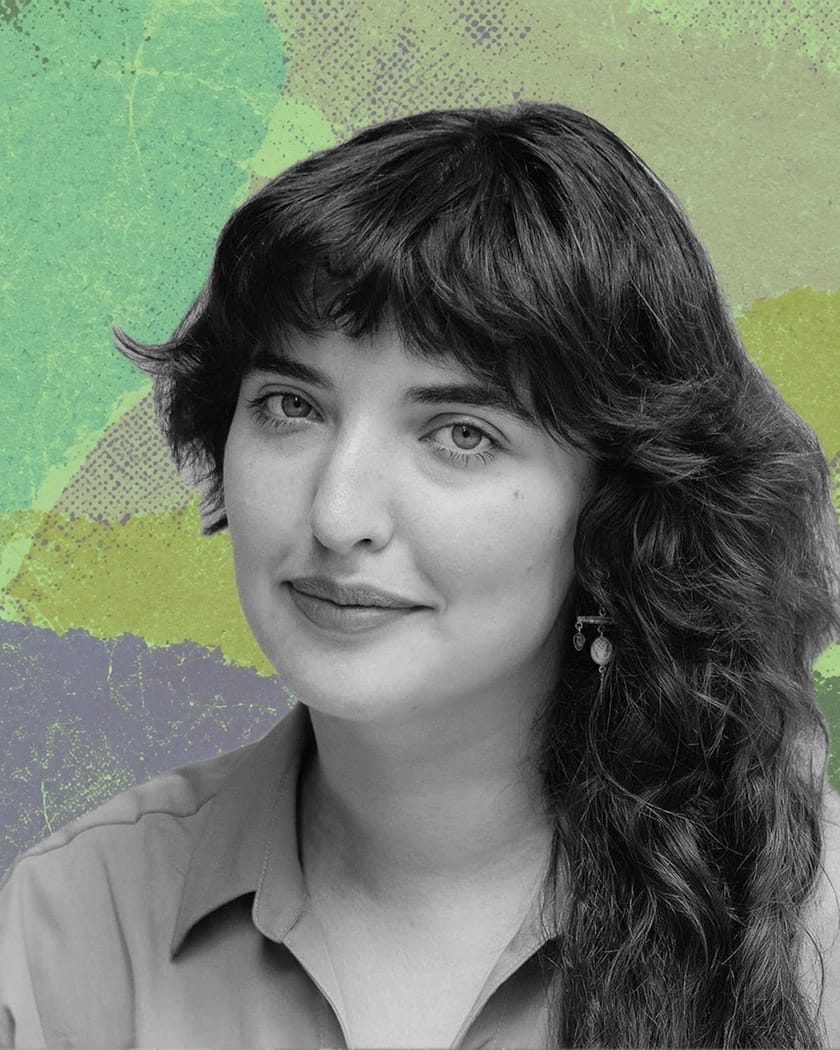
[00:00:54] Phillip: So true. And to kick us off in this season, on the podcast just a week ago, we had Home Depot talking about how they made their foray into Halloween and a fixture in the retail space in Halloween, at least among Gen Z, with, you know, a 12-foot skeleton in your front yard. And now people, you know, all around the world, they're spending tremendous amounts of money on this holiday. But my... if it is truly going global, the question for me is what happens when that season, when this Halloween season crosses the Atlantic, you know, and everything else that you can possibly think of becomes, you know, we're shipping our cultural exports, becoming Americanized. Halloween is not just American anymore. And I think that there's a lot packed into that. So our guest today is watching that, and she is the global director of retail strategy and insights at CI&T. She began her career in merchandising strategy at Target, advised retailers at Gartner, and now brings an American retail perspective to the UK, where she's tracking how culture and consumer behavior travel across the pond. Melissa Minkow, welcome back to Future Commerce.
[00:02:06] Melissa: Thank you so much for having me. Hello.
[00:02:08] Phillip: What is it looking like for you already over... is this your first Halloween across the pond?
[00:02:12] Melissa: Second.
[00:02:13] Phillip: Second. Yes. What is it looking like, and how does this differ from your first?
[00:02:19] Melissa: I wouldn't say it differs a ton from last year, but both of these, according to my British friends, differ significantly from many years prior, and also according to Reddit. So that has been really interesting, is just consulting both friends and online to see what the changes are. And the changes supposedly have been basically the Americanization of Halloween. So it seems there's always been some sort of connection to Halloween here, especially because it actually has some, like, Celtic roots if you really dive deep. But there were traditions that they referred to as guising, which is more kind of like the dress-up vibe, but related to those Celtic roots. Whereas now they are seeing a lot of retailers be a big part of this season and this event, and stretching it for weeks, if not, you know, a lot of the whole month of October, and that is more new.
[00:03:22] Phillip: Wow. Alicia, you're the new convert here. I'm assuming you're all in, you're decorating, you're doing the whole thing. Are you spending more now than you were in the past?
[00:03:33] Alicia: Oh, without a doubt. So previously in our household, Halloween just kind of blended into the autumnal vibes, right? Like, as soon as September 1 rolled around, we just put all of the fall stuff out. I would put on When Harry Met Sally, it was a whole vibe. And, like, that was kind of like the cozy Nora Ephron fall of it all. And then I think it was once our son reached a certain age and he was always into the whole dressing-up thing. And he's not super into horror or scary Halloween. He's more cutesy and fun and the adventure Halloween side of things. So it's like, how do we kind of bring that into our home and get him excited for this season, but also tap into our newfound interest and enjoyment of the season, because we kind of get to experience it through him? So it kind of changes your perspective, not to get all sappy, but once you experience commerce and culture through the lens of a new entrant, for lack of a better term, you kind of interpret it differently, right? You have your own experiences and frankly traumas around certain holidays as a kid, like in elementary school. But to see someone you're so close to, like, having fun with it and getting to experience and experiment with their identity through something like Halloween, I mean, it's just fun. It's a different vibe.
[00:05:05] Phillip: Yeah. There's, I saw this statistic too. We are moving up dramatically. I think it came up on the Home Depot episode. Americans are now, like, accelerating Halloween into the number two holiday spending spot, which to me is wild, because it means that we're going to outpace, you know, Thanksgiving. I mean, Mother's Day, Father's Day, that's, you know, okay, that's sad enough. Valentine's Day. Think about what that means in terms of, like, familial and, you know, romantic relationships. And that says a lot about our modern culture right now. Like, this might... I was saying to you, Alicia, and to our team, I'm like, this may be the last generation to even be able to carry on a tradition of Thanksgiving. Not to get dark, but, like, what families are gonna be left? Halloween is what we got left. And that's... it makes a—
[00:06:05] Alicia: ...lot of sense too. Yeah, 100%.
[00:06:08] Phillip: And I would love... I think that makes so much sense too when you think about how fractious online culture has become and the way that it is very competitive. I like that neighborhoods and these hyperlocal expressions have allowed people to become more aware of who lives next door or who's around them. And I think that that's the pendulum swinging back away from the isolationism that at least the United States has been really locked into for a long time. It's suburban expressions as well. Melissa, what is the tenor over there? You said the last couple years have been quite different. I found a data point, Scottish Grocer had this study they had cited that UK Halloween spending twenty years ago was, you know, £12 million. Now it's £230 million. You know, all signs are pointing, even in the last couple years, to this acceleration. What does it look like at the hyperlocal level? What does it look like at sort of the national level?
[00:07:15] Melissa: Yeah. So a few things. I did see that since 2013, estimated UK consumer spending for Halloween products has quadrupled, and 80% of Brits named Halloween as a top cultural moment. So that was also interesting. Spend is expected to be £705 million this year, which is up 6% from last year. And the driving demographics, it's really reliant upon Gen Z and millennial shoppers, who account for roughly 80% of the engagement. On a global level, in terms of across the UK, this is clearly just growing. At a localized level, what I think is fascinating is you talking about neighbors and community. And in cities, you have so much public transit and so much reliance on public transit. You are around people all the time. My sense of community and communal living went way up moving here. But if you talk to a Londoner and a Brit, specifically a Londoner type of Brit, they will tell you that Londoners are very unfriendly, that Brits are very unfriendly, that there's no neighborly decorum, that there's no sense of community. So, and I specifically remember even talking about, when I was based in the US, ideas for the future of retail in the UK, because my role has always been global.
[00:08:50] Melissa: And I said, would there ever be communal subscription boxes, because people live in larger buildings or they share the tube together or whatever? And my British colleagues at the time were like, absolutely not, we're not neighborly, we're not communal, we're very unfriendly. But I find Brits to be incredibly friendly. And I find a very strong sense of community here, because I'm using public transit multiple times a day. There's, I mean, third spaces, shared spaces, that's how everybody centers their social life. The pub is the center of your day a lot of times. So I do wonder if at a local level there's varying degrees of what Halloween will look like, because maybe it's, you know, getting together at the pub versus getting together in your neighborhood. But in general, just the definition of community and what it means to be neighborly looks very different in the States versus what it looks like here.
[00:09:50] Alicia: That's a really interesting distinction. I know I saw a thread on Instagram. It was like a whole, like, trunk-or-treat debate. Like, I think that's mainly an American thing, right, Melissa? Like, trunk-or-treats aren't really a thing...
[00:10:03] Melissa: I don't even know what trunk-or-treat... what's trunk-or-treat?
[00:10:07] Alicia: Oh boy. Okay. So, definitely more of a suburban American custom now. And granted, there are benefits for kids with ADHD or certain scenarios where they get overstimulated or overwhelmed in mass chaotic things like trick-or-treating. But essentially, schools or public spaces will host these trunk-or-treats where you can rent a parking space, so to speak. It's usually free to participate, but you decorate the trunk of your car, you keep the trunk open, and then kids basically go around to all of the cars and trick-or-treat that way.
[00:10:48] Phillip: This is the most American thing ever, by the way.
[00:10:50] Melissa: Yeah. It's super American.
[00:10:52] Alicia: I think it started during the pandemic. I mean, I'll have to fact-check myself a little bit.
[00:10:59] Phillip: We were doing it before that, but it's nowhere near as prevalent, like, not even close.
[00:11:04] Alicia: Yeah, yeah, yeah. But anyhoo, it was interesting to read the feedback. I mean, you know, one, talking about, like, the ableism angle, that, like, you know, if your kid has autism or ADHD, there are so many benefits, and that's understood. But what was even more interesting, if you want to layer deeper, was the sheer volume of people who said, we have tried to trick-or-treat in our neighborhood and there are so many people, despite having decorations and actively participating, for lack of a better term, they don't open the door if kids are trick-or-treating. So there's, like, an opt-out happening. Then there are some people who do want trick-or-treaters, but, like, the kids aren't coming. So it's like there's kind of this fragmentation happening that I find to be really interesting, which I think creates more opportunity for those communal spaces, Melissa, like you're talking about, to kind of say, like, yes, we're here, we're creating these opportunities for people to come out, gather, whether it's a Halloween party, whether it's a costume contest, whether it's trick-or-treating. We used to trick-or-treat at the mall. I don't know if that's a New Jersey thing, but, yeah, we have all the weird things.
[00:12:18] Phillip: Now, that's the most New Jersey thing. Do you want to hear the most Florida thing ever?
[00:12:25] Alicia: Yes.
[00:12:26] Phillip: This is something that went around, a bunch of Florida Nextdoor posts about a week ago. This is a letter from an HOA. "Dear residents, I hope this letter finds you well. As we approach the Halloween season, the board has been discussing ways to create a consistent and positive experience for the children in our community who go trick-or-treating. This year, the association is encouraging all residents to hand out fun-sized candy bars only, and we're asking that full-size candy bars not be distributed."
[00:12:58] Alicia: This is America.
[00:12:59] Phillip: "It is intended to help keep the experience consistent throughout the neighborhood and avoid situations where some homes feel pressure to match larger offerings. We appreciate your cooperation." Anyway, it's like, "thank you for your attention to this matter."
[00:13:14] Alicia: You can't want to be the king-size house and not provide the king-size. Like, I'm sorry.
[00:13:20] Phillip: I'm, like, by the way, every single comment on this is like, this is Mamdani's America. But...
[00:13:30] Alicia: Oh my gosh. As long as you're not the Smarties house or, what is it, the Necco Wafer house?
[00:13:37] Phillip: Yeah, the Necco, that's... oh my gosh. You know what?
[00:13:41] Melissa: That's Florida, you said, right?
[00:13:43] Phillip: Yeah, that's Florida. Yeah.
[00:13:44] Melissa: Wow. Yeah, I wouldn't have expected that in Florida. Fascinating.
[00:13:47] Phillip: Me neither. Well, I mean, there's an HOA everywhere in Florida. It is such a thing. I think it's also a competition for your time and your attention, Alicia. We have no fewer than five events to go to that are all trick-or-treating-sort-of-style events. And I think part of that lends to the amount of spend in the American wallet in the holidays. Because for Halloween, if you go and you buy any sort of chocolate, you're spending $25 for a bag. So, like, even if you go to Costco and you buy the, like, mixed bag of chocolate and it's, like, all the fun-size candies, even at Costco, it's $25 for that bag. That used to be $8. It used to be $9. So now it's become, you know, it's the nerds, the stuff. And even then, like, a big mixed bag is gonna be $18, $19, $20. Like, you go to enough of these things and—
[00:14:47] Alicia: It adds up.
[00:14:47] Phillip: You're doling out $110 on candy alone. Yeah. Never mind the last-minute costumes, which is where we're at at the moment. Like, my kids, whatever the obsession is at the moment is what they're going to be dressing up as, and now we're doing the last-minute costume thing. Anyway, I don't know if you all have the same experiences, but that's where we're at.
[00:15:10] Alicia: Yeah. And I think Deloitte said the average budget per household, and granted, this is US-specific, the average budget was $285 per household.
[00:15:18] Phillip: That's right.
[00:15:18] Alicia: So if you kind of out-dole it by category, right? Like you said, candy is typically a top three, but then it's costumes, which, the typical bagged costume is $60 minimum for kids, and then it's only up from there, plus all of the ancillary things. But then decor, I mean, is easily and quickly creeping up as one of the top three, if not the top category. And I think it lends itself to basically what you're kind of hinting at, Phillip, that other things are more expensive, and home decor is easily something that you can repurpose and you can add to. And I think that was something that our guest from the Home Depot referred to, that these are hubs and spokes that you can build upon for your home over the years.
[00:16:09] Phillip: Yeah, for sure.
[00:16:10] Alicia: And it's that way that you can culturally participate in the holiday and then also kind of create your space how you want to. And it kind of taps into that need for, like, social validation, right? That we're also hinting at, like Skelly. Like, Skelly is a suburban phenomenon. Like, we have houses around here that, like, commit, and I mean, like, every week they reframe Skelly and it's like a whole new set. There are new props, there are new additions that people are putting, like, into their front lawns. And some people keep them up year-round. Like, it is wild. So I think, like, home decor is such an interesting category because it is such an entry point for so many different types of brands, so many IP properties, and it does create that halo effect, I guess you could say, into all of these other areas that we're talking about, that community aspect, but then also that social sharing and social validation piece. It's crazy. I mean, Melissa, I would love to go to you. Are people decorating at the house level, or is it mainly, like, those communal spaces? Like, what are you seeing in the UK?
[00:17:30] Melissa: Well, it's funny you mentioned the cost. One thing about that, when I brought this up with my coworker and asked her what she's doing for Halloween, she said that her friends have been talking about the cost of costumes and how they're really trying to figure out how to do it in the most affordable way. And so there are so many charity shops throughout London, and I sent Alicia a photo from one last week. Now, whenever I'm walking by, they have skeletons in the window, they have witch outfits, they have all of that. I know Vinted is a really commonly consulted resource for fast fashion, it's obviously secondhand, but it's sustainable, and it's fantastic fast fashion in that way. And I used Vinted last year for my Halloween costume. So I'm repurposing some parts of my wardrobe this year for my Halloween costume. So I do think there's a cost-of-living component for sure, but I don't know about spend on candy for trick-or-treating, just because it is less of a thing here in general. And also, yeah, like, the sense of community comes more from third spaces a lot of times than it does hosting. Like, I had a friend in town last week, and I had a local friend drop by because she lives near me. And we had to explain to my friend that was visiting, this isn't something we normally do. We've lived here a little bit over a year. That was only the second time my friend has been over to my place, and she's a close friend of mine, and she lives a twenty-minute walk away. So we don't host as often here because spaces are smaller. There's kind of that piece as well. Like, a lot of birthdays happen in the pub and stuff like that. So, and that's not to say Brits don't host at all, they certainly do, but it doesn't have the same cultural aspects to it. So I don't think here the Halloween budget is as much going towards candy for trick-or-treaters as it is going towards costumes for events. That would be my guess.
[00:19:37] Alicia: Yeah. And what other ways are you seeing it getting Americanized? Like, what through-lines, I guess, are you really seeing shine through? Because, you know, for context, listeners, Chicago was home, right, to London, right? So you kind of have that dual perspective. So what are you seeing or hearing, I guess, where people are like, oh, this is Americanized now, this has become something completely different, I guess for better or worse, right? There could be an air of excitement to that or distaste.
[00:20:08] Melissa: That's the thing. I don't think it's distaste at all. I think people complain in a way that is demonstrating endearment more than, I don't know, it's begrudging, but I think they do get excited about it, or it wouldn't be driving so much consumerism here. So they're clearly getting into it. But I think the Americanization of it, what that looks like is commercializing candy in general for this time of year specifically. So walking by Tesco yesterday, or Iceland, the candies and the, like, just packaged sweets had pumpkins on them, which I don't... and ghosts on them. And I don't think that would have happened ten years ago. So the fact that they have Halloween-themed items in the grocery store that you can just purchase for your family, that is a good example of the Americanization of it, I would say.
[00:21:05] Alicia: Yeah. See, this is the phenomenon that Morning Consult and Hershey kind of studied a little bit further. They call it treatonomics, which I kind of love. I love a good branded theory that you can actually turn into...
[00:21:21] Phillip: That's my favorite. I love that too.
[00:21:22] Alicia: So good. And it refers to those small indulgences that we can make as consumers. So, your point around, like, you may not be getting trick-or-treaters or trick-or-treating yourself, but being able to get the cute little novelty candies and giving it to your kids or enjoying them yourself, heck yeah, I'll do that. And what has been especially interesting is that it's started earlier and it's been so consistent. And it's kind of like a self-fulfilling prophecy in a way, that demand can start on the consumer side, or it can start just through, like, organic discovery with, like, one brand or, like, one retailer just starting to test it, and then it just catches on because of social media. I think that ripple effect, or that cycle, has been especially strong. And, you know, I saw it as early as July, I got news for you. And here's the Costco count, it started... we have a rolling ticker, Melissa, of how many times have you mentioned Costco.
[00:22:28] Melissa: Love it.
[00:22:30] Alicia: Costco started in, I think, late July, early August. Started to see decorations.
[00:22:37] Melissa: This is where there's a big tension that I wanted to discuss, which is: we had a retail calendar that was very strict around events, that was, like, back-to-school and Christmas and Hanukkah, and in the States, July 4, the Super Bowl. Like, there were just particular kind of tentpole shopping moments. And with deal and discount culture and this race to the bottom, we've seen consumers hypersensitive to deals and taking advantage of them sooner. With Prime Day popping on the scene, a lot of that kind of eroded, and people were saying they were doing their back-to-school shopping earlier, and we saw back-to-school advertisements way farther in advance. And so now we're seeing Halloween candy way earlier in advance. But then, at the same time, we have this weird tension of people want the moment when it is the moment. So that's what brings around the seasonal feeling and the nostalgia. So that's something that I just find always really interesting in retail that we're constantly navigating. And then the other thing I wanted to bring up is, because we've talked about the Americanization, just globalization of holidays in general, especially because of TikTok and social media in general, or the internet. Like, Singles Day, for example, obviously did not originate in the US, but there are US retailers who now have Singles Day events. So it's just interesting to see both the spreading-out happening of the retail calendar while also the condensation of it simultaneously. And then this global motivation behind bringing retail to different places. And I've been thinking a lot about the globalization of shopping in general over the last week, as I have not been able to see You Can See Everything, because A24... at least that.
[00:24:38] Phillip: I'm so sorry.
[00:24:39] Melissa: I'm so upset. And I just, I think about spoilers. This is kind of off-topic, but it is relevant. I think about spoilers all the time, because I am an American but I do live in the UK. And so a lot of the people I follow on social media are in the States, and they're spoiling everything for me, because the time difference, or, you know, different releases. And then also—
[00:25:02] Phillip: I'm guilty of this, by the way. I'm so sorry.
[00:25:04] Alicia: Please stop. I have hidden you from my feed, Phillip. Hiding.
[00:25:08] Melissa: It's horrible. Like, we have all of this... this speed that we've never had before, and this globalization that we've never had before, and it is just fueling the economy in new directions.
[00:25:21] Phillip: I think that's... it's funny. There's, like, this acceleration in so many other areas of, like, media consumption and cultural awareness, to your point. Like, it does present all kinds of other interesting, like, second-order effects, to your point, right? Like, we have this "You Can See Everything" is a really good example. We're doing a podcast later today, I think it's an After Dark, I think we're doing an After Dark later today, that was basically us talking, you know, internally as a team about our experience of having seen the film and some of our thoughts about it. And I saw it on Thursday, and I saw it again on Saturday. And in my mind, I'm like, this is old news. And my feed also thinks it's old news too. It is Wednesday. Like, this film ostensibly has been out for less than a week. And, you know, I'm already tired of all of the takes. And I think that that's an extremely... like, that's a microcosm for what happens in a lot of consumption verticals as well, too. And especially around algorithmic feeds, like, once I interacted with some of that content, it was like, oh, you want a little bit of this? How about a whole freaking lot of it?
[00:26:53] Phillip: And we're becoming inundated.
[00:26:53] Alicia: It's all you see. It's all you see.
[00:26:53] Phillip: And I think that's... that deluge. I've been talking a lot about temperance lately. It's a big focus of mine in thinking about 2027 and some, like, thematic content and editorial themes. But, you know, there's no temperance in the algorithm, right? It's just gonna, like, shove as much down your throat as you possibly can handle. And I feel like that's also just how all of the holidays work in general, too. We... the programming of it coming back into, like, June and July, from a merchandising perspective, I feel like we are inundated at every turn. And so, I guess, in essence, what I'm trying to say is, you know, as algorithmic as our feeds have become, I think the algorithm is also determining what the real-world experiences are like as well. And we're becoming less aware in real life as to who has context and who has a certain level of experience and who doesn't. And I think that, in that way, where we have more neighborhood-level awareness, we're becoming more locally aware in things like expressions of Halloween, we're becoming way less aware of who has situational and contextual awareness.
[00:28:23] Melissa: Exactly that. That was why I felt like this tangent was worth bringing up, because it is, because of this globalization, consumerism in different forms is landing in pockets it didn't previously have a place, and it's then being interpreted in new ways. So it's just ironic that I keep seeing in all these Reddit forums "Halloween has become Americanized in the UK," because, yeah, it has become Americanized, but it's the UK version of the Americanized version of Halloween. So, yeah. And this is kind of on that topic as well, of the algorithmic piece. Chanté Joseph is the author of that Vogue article from exactly a year ago, "Is Having a Boyfriend Embarrassing Now?" And she's a British author, phenomenal. She writes, she does a bunch of different articles in a bunch of different publications. And she posted to her Instagram, I love following her, her Instagram stories the other day about that music video. I'm forgetting who the guy was, but he's standing there and there's a ton of dancers in the background, and it went completely viral, and it was this choreographed dance. It went crazy all over the internet, and they recreated it for the VMAs. But then there was also a ton of AI slop versions of it, because it actually is replicable through AI. And it was so impressive, not AI, that people thought it was AI, but it wasn't. And what Chanté Joseph was saying, which I thought was a brilliant point, was that because she interacted with that, her algorithm started serving her AI versions of it. And now she can't even enjoy and unsee the AI side of the original work that had nothing to do with AI and wasn't that way. So...
[00:30:18] Alicia: That... the experience is tainted then.
[00:30:20] Melissa: Yeah, exactly. So, yeah, there's a lot of that going on.
[00:30:24] Phillip: It recontextualizes your original experience. That's a shame. Yeah. I've talked often about an experience, if you've been listening to this podcast for a long time, I had an experience where I used to go to a lot of local band shows. There's a band, it's like a metal and hardcore band that started in local, like, Orlando and Tampa clubs back in the late nineties, I'm very old. And so I was going to these shows before they were anybody. It's a band called Underoath. They went on to, like, win a bunch of Grammys. But I was going to these shows when they were, like, 16, 17, 18 years old, and I just remember being there. Like, I had this firsthand memory of being there. And a few years ago, I was like, I wonder if any of those shows are on YouTube. And I went and looked for them, and it turns out they are. There's one video in particular where you can see me on, like, the front row. You know? And I'm watching it. And I'll tell you, just having seen that changes the context of the way I remember it, because now I'm remembering the YouTube video.
[00:31:43] Phillip: And it's a little more concrete than the fuzzy memory now that I have of being, you know, at the Refuge in Clearwater, Florida in 1998. But I think that that kind of recontextualization, media-centric experience, is happening in every facet of society right now. And that's, I think that's just the way the world works.
[00:32:09] Melissa: They're all lenses, right? Your phone is a perspective, and then your brain is a perspective.
[00:32:15] Phillip: 100%.
[00:32:16] Melissa: Kate Berlant actually was just on Good Hang, and she was saying, when she does her social media purges and she's off of it, she has memories again. So it's like, yeah, if you don't have your phone do the work of recalling something for you, or if you didn't have YouTube to reference, your brain would reference it maybe a different way. So, yeah, it is... it's perspective, and it's just wild for sure.
[00:32:38] Alicia: Yeah. And it makes you think about, like, how children and teens are experiencing Halloween, because, like, we have, like, our own snapshots, right, of when we were younger, but it's not, like, live-streamed. We don't have full-blown videos, unless you had the giant camcorder, you see full-blown moment-by-moment, beginning-of-day, end-of-day experiences, especially for holidays, right? Because those are bragalicious moments, right? Parents love that. But how does that change the experience when it's not just people getting to live in the moment, there's kind of an era of having to perform, right? Because how do you not adjust how you feel and go through a moment when you know a camera is up and monitoring you? You know what I mean?
[00:33:33] Phillip: You make such a great point. Like, we covered a few years ago this idea of, like, the surveillance economy, which came out, I read Shoshana Zuboff's book. I should call it a tome, it's very large. But it is about, like, a surveillance generation and what that does to us. We all have sort of this, like, latent fear of being surveilled, an Alexa in every home, etcetera, which I'm becoming more paranoid over every single day of my life now. But there's other sides of that too, Alicia. Like, I grew up in a world where it was socially acceptable to sort of dress up as maybe your favorite cartoon character once a year. And now it's socially acceptable to do that all year round, in Comic-Cons and cosplay, right? It's, like, this idea of expression of fandom has changed the way that people interact in social groups dramatically. And I also would say, when we were talking about globalization earlier, that we have this sympathetic influence with Asian culture. As much as American culture has impacted global culture, we have the same thing happening now with every form of Asian entertainment, whether it's Asian cuisine, whether it's... K-pop is a gigantic influence on the music industry. Matcha is one, like, that's just one example. We have boba, that's another. We have skincare, it's nonstop in my house.
[00:35:17] Alicia: My son is super into it.
[00:35:18] Phillip: Like, almost every single thing that is youth culture has some facet of its roots in Asia. And I think that that would have probably been somewhat unthinkable thirty years ago, to the level that it has permeated the culture writ large today. And so much of that was rooted in fandom years ago. I think when you think about what the context of, like, an otaku was... So, I don't know, it's just a very different world now. It's hard for me to relate, but it's a very different world from what my 14- and 15-year-old relate to. So, I mean, we go to K-pop shops now. Like, actively seek them out. We go to them, and, you know, the boy bands of today are very different from the *NSYNCs that I grew up with, but I digress.
[00:36:11] Alicia: Totally. Well, and I think the end point, I think, to this is that Halloween is almost becoming this expansion moment, you know, with fandom at the core of it. And we were able to speak with someone from Disney's licensing division for the Americas. And what was really interesting is to hear firsthand, knowing that the core of their business is experiences, that Halloween was a fixture that essentially led to a completely new pillar of business for them, an extended area of business for them. So, again, you take this one moment, right? One day, then before you know it, it turns into a two-to-three-month ticketed event that's confined to the parks, and the success builds there. And then that turns into a whole licensing ecosystem that spans so many brands, so many different product categories. And those drops are starting again in the summertime, and social media drives the excitement around those drops, because of activating it, the creators are sharing it, and that creates that desire, that urgency to shop, right? This is my conspiracy theory that I'm building my whole life around, right? And if those content-creation moments didn't happen and didn't activate in that moment, it's out of sight, out of mind. We wouldn't even know they existed unless we decided to step foot into that store or decided to visit that ecommerce site, right? So it's like, how does the demand get pulled and manipulated to create some sort of false reality that becomes an actual reality? And it all, again, Phillip, connects to your point around fandom. Like, that's really the juggernaut.
[00:38:05] Phillip: I can't agree any more. I have often wondered, on this very show, if I ever was actually a sneakerhead, or if, you know, performance marketing and algorithms made me one.
[00:38:19] Alicia: Probably the latter.
[00:38:20] Phillip: I'm sorry. Maybe probably the cringiest time in my life, but I digress. I do love shoes.
[00:38:28] Alicia: I mean, who doesn't? But I think the be-all of this conversation is, like, wow, Halloween is, like, a big moment now. Who knew?
[00:38:38] Phillip: That's right.
[00:38:39] Alicia: What a time to be alive. The number of pitches we got this year was incredible.
[00:38:44] Phillip: Shocking, actually. And I will say, like, at the rate that it's going, it is the second most... I mean, from a consumption perspective, it's the second most important consumer holiday. And if you look at the trajectory, I know I was joking before, but in reality, if you look at where societies and, like, all the challenge in society, and, you know, again, in relationships and family makeup at the moment, thirty years from now, there's a lot of family-based consumption holidays that I feel like will be on the decline. Halloween will be immune to that. So, yeah, there's a Mintel report for you. Well, this has been great. Melissa, great to have you, as always.
[00:39:39] Melissa: Thanks for having me. Yeah, I always have a great time talking to you guys.
[00:39:42] Phillip: When's the next time you get over to the States? You're gonna be here in January for the big show, and—
[00:39:47] Melissa: I will be there, yeah, for NRF indeed.
[00:39:49] Phillip: That's great. Well, we'd love to see you when you're here, and it's always great to have you. And always great to have you all tune in. Thank you for listening and checking out this episode of Future Commerce. You can find more episodes of this podcast at futurecommerce.com. Like us, rate us, leave us a little message on Apple Podcasts or Spotify, wherever you get your podcasts, it helps other people discover this podcast. And join us at our summit. It's coming to the Museum of Modern Art. We're back for our fourth year, and that's February 10, 2027. Can't wait to see you there. We've got an incredible lineup. Go check it out. It's called VISIONS Summit, and we'll help you to expand what you think the future is and help you see around the next corner for your organization. Visions.futurecommerce.com. Remember, commerce shapes the future because commerce is culture. We'll see you next time.