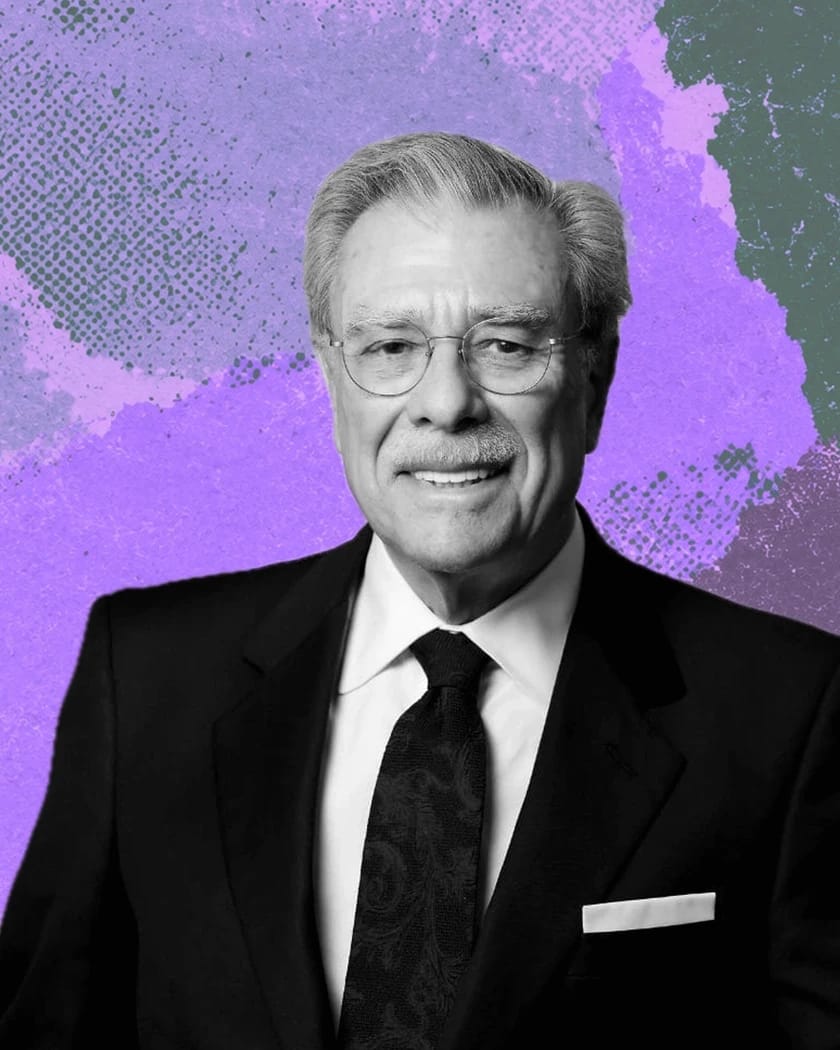
[00:00:00] Phillip: Welcome to Future Commerce, the podcast at the intersection of culture and commerce. I'm Phillip, and something that's taken me by surprise recently is the amount of deep dives in archival work that is going into r- like telling stories of our retail past. And I think that's intersecting with a really interesting time in our culture where we're wanting more experiences. I've been saying a lot that we're in the experience economy, and it feels like history repeats itself. We have lived in times before where retail experience was paramount, it was really important. And no one is doing it better than telling the stories of those types of spaces and the world that we used to live in than our next guest. Emma Apple Chozick is a writer, creative strategist, the founder of gr8 collab, and once and future guest here of Future Commerce, we've collaborated in the past before. And she tells stories on social media, short-form vertical video, and does all kinds of things these days. Glad to have you back to the show, Emma. I'm excited to talk about a lot of things today.
[00:01:02] Emma: I'm thrilled to be here. Thanks for having me back.
[00:01:05] Phillip: Yeah. Last time you were on, you had just launched gr8 collab. I think we were talking about some really interesting work that you were in the middle of at the moment. I'm really just curious what's, what's the work looking like today and what's fascinating you at the moment?
[00:01:19] Emma: Yeah. I mean, yeah, it's been almost three years since I launched the consultancy, which is crazy. I think, you know, when I started gr8 collab, the work was really about, you know, helping brands tell their stories. Strategic partnerships was really core to, like, the business, and... it still is. And thinking about how do brands do things that are culturally resonant and, you know, talk to their audience and story tell across different platforms. And I think as, you know, time has gone on, I was, you know, doing content partnerships, like one-off here and there with brands, and continuing to do my own content on different channels. But I think, you know, obviously as... you continue to work with people, you go deeper in partnerships and you go deeper in work with brands. And so it's been just really fun, I think, to... think about, you know, what are the stories that I wanna tell and who are the brands to work with and tell those stories. And also, like, how can I help brands better connect with their audiences and... think about building, you know, projects that have longevity to them too, which I'm sure we'll get into here.
[00:02:30] Phillip: What has changed about the... content, the stories that you've been most interested in yourself versus what's resonated with your audience? And is there something between those two dynamics that you feel like is driving more interest in the consultancy? Like what are brands interested in?
[00:02:50] Emma: Brands are incredibly interested in, I think, editorial judgment and taste. And I think taste is, like, getting a big ... I don't know. Like, it feels like a buzzword the same way that when I joined Thingtesting in 2021, I was the first community hire, and I remember community being, like, the coolest job to have. And then I took on the curation, and, like, curation was, like, the coolest thing to ... And all of these things are products of taste, and taste is obviously completely subjective. But I think when a brand resonates with some- a... particular person's taste, that's not replicable. Like, a brand can't create that on their own. They ca- they can try, but it's never gonna feel authentic, and I think that's why we're seeing so many brands, you know, want to partner with people who have their own judgment and their own taste and their own audiences who come to them for those specific things. So I think, you know, it's been really just, I guess, fulfilling to... work with brands where they say, "Hey, we wanna work with you. We don't actually know ..." Sometimes they say, "We don't even know what we wanna do, but, like, we wanna do something. What do you think?" Versus, you know, sometimes a brand will come to you and say, "Oh yeah, we need to, like, redo our website, and blah, blah, blah." And then you find out actually no, you just need to, like, recondition who you are, or you need to talk... And so, like, I think brands are getting more comfortable coming to people that they respect their tastes and opinions and judgment and saying, "What do you think?" and then building and shaping something together.
[00:04:29] Phillip: I think that when I think about how we have known each other over like, I think we're working on four or five years now, and the journey you've taken, I have always thought of you as a person w- who has cultivated, you know, a very keen sense of taste of many things, not just one thing, right? And so when I look at the content that you've created, it feels demeaning almost to call it content, but it's like when I look at the research that you've done and you've put it out into the world in various formats, whether it's something on a Substack or you've, you've created video about it, it's ex- it's always... it always feels like uniquely you. But it seems like you're following new passions these days. And I'm, I'm really interested in how your interests can guide what brands invest in versus being pulled into what brands want you to do, which I think is always the tension in the relationship between like a, not just a content creator or a collaboration partner, but also in the consultancy realm. I just, like a... quick glimpse of me. I spent 10 years agency side, and we weren't very careful about it, and next thing you know, like all we ever did was like footwear and wellness. And like you have to be extremely intentional, in not just the relationships you form, but also in how you... form that... image of yourself in the world too. I think you've done that really well, but how much do you think about that?
[00:06:10] Emma: Thank you. You know, I think there's like a... piece of it where I think about that, and there's a piece of it where, like, you ultimately just have to go with your gut. And I think, you know, w- hearing-- I appreciate you talking about, like, the length at which you feel that I've been doing this across my career because, you know, when I joined Thingtesting years ago, I remember, like, talking about in my interview there, like, that I was just excited about brands that were doing more than selling a product. And I think that's what I've always been interested in, is like the story behind things. Like, as a kid, I loved that show How It's Made. Like, the context of things is really relevant. And so when I-- whether I'm doing consulting work or I'm working, you know, like doing a content partnership, all of those things kind of live in the same world, and that's also a new thing that I'm realizing about my work as well, like totally transparently, is like they all kind of feed off of each other. If I'm making a video, I'm also helping to uncover what is the insight or, like, tension point or story that we want to tell together. It's not just-- Very rarely is it like, "Here's the brief. Make this video." And there's plenty of creators that do content like that, and I... respect it and it's great, but it's not really how I operate from a content perspective. And it's like the same reason that sometimes I won't post a video for two, three weeks. And I remember having a conversation at one point with a potential manager, and they were like, "You gotta be posting every day if you wanna, if you wanna, you know, grow." And I was like, "Well, I don't know if the goal is actually, quote, 'to grow.'" I think the goal is to work on a really, like, compelling projects that are aligned with what I'm interested in, can reach new people. But, like, the goal isn't always reach. And I think I've... always sort of straddled that line a bit between, yeah, it's great when something goes viral, but also why did that thing go viral? Did it go viral because it hit a point that people really resonated with or did it go viral because the hook was a clickbait, and obviously people watch past the first three seconds?
[00:08:22] Phillip: And it's interesting too how virality, our measure of virality has changed dramatically in, you know, in my lifetime, the last 10 years in particular. I think just anything that breaks out of, you know, what is locked into like the very small amount of reach that a brand's organic reach has today in a brand account, is some level of success. I think it's why personal brand is so important these days too. And I think like almost everything comes down to the design of the system, like is-- leads to, and the incentives within the system sort of leads to all of the behaviors that you see. And that's why there are so many partnerships, I think, and there's why so many people have to partner with people who've cultivated large followings is because the... incentives in the system exist in the system that require that ecosystem to exist. I... think we've arrived there. I think it's a, it's fairly healthy, but also we're kind of better for it because I don't know that anyone trusts a brand's taste necessarily. By and large, you know, for every Apple or in bygone days of Apple, you know, there's a million others who have, you know, there is no taste. We talk a lot about brand cultural relevance, but l- like what do you think is, like who are the most interesting brands today? Like how are they engaging in the world? What are they doing? And like are they, and how are you working with them?
[00:09:51] Emma: That's a big question. There's this, like, question around, like, what is a culturally resonant brand, an interesting brand? I think obviously you have, you know, large fashion housh- houses that do incredible, like, brand work. I mean, looking at, like, what Prada just opened at their, you know, Milan store, and their, like, the Prada Foundation that they have there, which is, like, one of my favorite museums in the world. And honestly, the art is incredible, but also if you go to the bathrooms there, they're, like, incredibly designed, and the coat... the coat room is incred- like, all these pieces, like, help feed into the cultural story that a brand is telling. But I think, you know, the most culturally resonant brands today are the ones that, like, operate from a place of, like, yes, authenticity, but they also know, like, when... to speak and when not to, and, like, what is for them and what's not for them. And there's sort of, like, that discernment that you have to have, and there's a piece of, like, I always talk about, like, conviction. I think it's so obvious when a brand is, like, just doing something for the sake of doing it versus doing it because they have a true conviction and, like, need to put it out into the world. And sometimes those things take years and years, and, like, sometimes they throw them away a million times before they put it out. But, like, those are the brands that I, you know, am most interested in knowing about, and also the brands that I think will have the most longevity.
[00:11:24] Phillip: Yeah. I-- and... too, I think you can't just turn-- It's not like you just turn on whatever new hot channel is and there you go, you're... relevant now. I-- although w- I think we might talk about Substack in a little bit. But I do think there's, for every Prada that's going up, right, and... building, you know, Mecca to its top customers, you also have Saint Laurent that's going down and building, you know, the Avenue Montaigne accessory store. And but I think you could do both. Like, also Saint Laurent's doing, like, it's just like these cafes too. And I think that there's-- we have the-- all of these signals in culture where there's-- I don't know, it's a little bit of mixed signals that you get across the board as to how we engage in experience, and experience is to some degree like how we engage with brand now because everything in... our, at least in the American wallet or Western society's wallet, is going much more towards these in- these experiential purchases. And so the brand has to, the brand, again, it's the incentive in the system, the brand is, like, sort of required, it's incum- incumbent on the brand to be part and parcel of that system. I don't know where media comes into that and a brand participating as a media outlet comes into that. But to your point earlier, it's... I'm, I'm really curious about how... the-- you continue to... we have, maybe I'm off on, I'm off on a little tangent, but I do think that there is this challenge when we are looking at sort of this layer of experience versus the... traditional, like, business of retail and where those two things intersect versus all of these sort of like hot new channels that we always tend to put our-- They're sexy, we put our lenses on them and we're like, "Oh, this is what we're doing now." And I don't think that that's actually like cultural relevance necessarily. I don't know that any of those actually reflect culture. I think actually we bend culture to those things because that's where we put capital towards, and an industry likes to talk about them because they're new. But I think that the people actually define what the culture is around the brand. That's a, it's neither here nor there. But you are doing a lot of content and editing around things like Substacks right now. I'd love to know what you-- how are brands wanting to show up in those channels? And what... do they tend to want to gain? How are, how are you doing that work? How are brands showing up?
[00:14:08] Emma: Yeah. I mean, it depends on the brand. I think there's a lot of brands that are like, "Oh, TikTok, we're done with that. Now we're doing Substack. Everyone's doing Substack, so let's launch a Substack." And I think I've had a l- I've actually ... The w- we'll talk about ShopMy, but like, and what I've done with their Substack. But I've had a lot of conversations preceding that Substack with other brands that wanted to launch on Substack, and it, a lot of times was a conversation that was like, "Hey, we wanna do a Substack." "Okay, cool. Like, who are you trying to reach? What, you know, what... do you want this channel to do that you're not doing on Instagram?" And you know, sometimes of course, the answer is like, "Hey, we want your perspective." But a lot of times it's like, "Oh, yeah, we wanna like also drive people to our website and like get people to like buy our clothes." Okay. What, how are we gonna, how are you thinking we're gonna do that? 'Cause, like, is your Instagram doing...
[00:15:06] Phillip: Dot in between there is, is a, is a lot of work.
[00:15:09] Emma: Right, and like that, you know, like, of course I wanna, you know, I... wanna move the needle for brands re-... regardless of what the goal is. But we also have to be real about, like, what... we're driving to before we get to what channel does this best live on. And so I have a lot of convers- like, talking people off the, like, ledge of going to, like, the shiny new platform too because you have to just be clear about what you're looking for and what you're gonna get out of it. And so that's always, like, the first conversation. I think what was really interesting when I started talking to ShopMy about a Substack is, you know, it was very, very clear from the beginning from their side that it was not going to be a marketing channel for, you know, for ShopMy. It was going to be a newsletter that reached brand leadership and talked about something that would be interesting to them. You asked a question about, like, real editorial and I think real editorial has to start with, like, a question or an insight or, like, maybe a point of tension. And if you don't have that, especially on a channel where you're asking someone to read long-form content, it becomes very difficult to compete in a sea of long-form content as a brand. Maybe if you're an influencer or you're somewhat a... person who is known for your taste and judgment, you can write about your favorite shoes. But a platform that sells people's favorite shoes can't talk about your favorite shoes because it's becomes an ad and no one wants to read that. So having that data became, like, a very important piece to the ShopMy Substack and this idea that we could use the data to have an insight about something that's happening, happening in commerce and creator-... and, like, brand conversation at large that really no one else has that da- I mean, they might have their own version of that data. But no one, no one also had the data that said Sol de Janeiro's GMV went up X number last November because of a holiday SKU they had launched, which suggested further to the ... This was the first story I wrote about fragrance and the idea that storytelling on TikTok and Instagram was quite literally driving brands to launch entirely different SKUs of their products to meet the conversation that was happening online. And how is it possible that people are buying something that you have to smell before ever smelling it? Because someone they follow on Instagram who they trust that their taste and their judgment and their perspective said they should buy it. And so using that data has allowed this publication specifically, I think, to... tell a story that's very ownable. But I think there's, you know, there's other brands that have done a really fantastic job, I think, with partnering with writers on their own channels as well. So thinking about, you know, Hinge has done actually, I think, a really good job with partnering with creators. Eventbrite has done a great job with this, amplifying their own content to their own audiences and saying like, "The brief is whatever you think it is," versus saying, "Hey, can you write about us and talk about this thing we're launching?" Because that doesn't hit, I don't think.
[00:18:46] Phillip: Yeah. No, I agree. We... encounter that. I mean, it's B2B, it's... obviously different, but the... dynamics are the same. And I think that there's people who understand that we, you know, there's an implicit trust between us and an audience and, you know, they s- tend to be very senior and very forward-thinking. And then there's others who, you know, want advertorial and, you know, they want really tight control, and I think that there's... like, the dynamics are... very, very much... they're very similar. I think what... what's really fascinating to me is how a lot of these folks, they-- what their mindset has been for so long around measurability, return on ad spend, performance marketing, gener- like centric, growth mentalities. And I think that a lot of the... and, and even in like enterprises who are... typically have en-... engaged in a lot of brand-centric activity and spent a lot on top-of-funnel and brand awareness. And I think what we now might be seeing, I'd love to hear your perspective on this, is that creator maybe has been thought of as a lot of bottom-of-funnel. But I... I'm wondering if that tide is turning a little bit and now we're starting to see a little bit more of the, oh, like we're, we're more willing to invest in creators and as a channel for, you know, top-of-funnel and awareness as a whole, and maybe budgets are... bigger and they're allowing for more of that spend. I'm, I'm curious what your perspective is there.
[00:20:38] Emma: You know, I think, I think all of those things are so important. I think, you know, I... was having a conversation the other day about... retail stores, and about how every retail store wants to have a cafe now. Like, "Is... what's it actually driving? Is... is it dr-... is it, you know, are people buying things?" And I... think the answer is yes, it just, it is a longer tail. But I think brands are also realizing that if they want to be part of the conversation, like a larger conversation in the zeitgeist, they need to do things beyond meta ads. And they need to do it in a way that I think is relevant to their audience and who they're trying to reach. Like, not everyone needs to host a dinner party. Like, if that's not, if that doesn't feel aligned to your brand, don't do it. Not everyone has to have a Substack, unless you can figure out an angle that really you can be a category of one in owning. So I think, I think brands are just realizing that consumers are also tired of being marketed to. Like, the consumers are increasingly getting smarter too about what is an ad and what's not, and they don't wanna be made to feel stupid. And I think people really respect when a brand treats them as a consumer, as intelligent and thoughtful, and someone worth thinking through how they're going to message to them.
[00:22:09] Phillip: I think it's a really good segue. You... did this series recently, a piece of research that you released over on-- I think I saw it on Instagram, although I'm sure you... placed it in a bunch of places, about a... retail chain, BEST Products, and their, like, commitment to retail experience, architecture, design. I'd love for you to kinda get into that a little bit. I w- I also wanna talk about your process in how you go about telling these stories, the research, some of the archival work there. But I-- When you're talking about, specifically about how much people care and how much intentionality goes into this and, like, the measurability of those types of investments. I mean, obviously we'll talk about their fate. I don't know if it was the most successful experiment. But I think there's a lot to learn here too about doing things that aren't necessarily always measurable but certainly memorable. Tell us a little bit about BEST.
[00:23:11] Emma: There's, in the video I shared, there's a letter from the BEST owners to James Wines. He was commissioned to design nine BEST locations through his firm SITE in the 1970s. And I think, you know, at that time, people were, like, no- they were kind of going out of, like, downtown department stores and now going to these, like, big box retailers along the highways, and they all kind of looked the same. They're all these huge white boxes, and BEST was like- And SITE together, they really decided, like, let's do something interesting on these locations. So like, one of them looks like the bricks are just, like, tumbling out of the front of it. And I believe when they opened this one that's in Houston, they put a giant black cl- cloth over it, and to unveil it, they had a helicopter, like, raise the cloth. And one of the things that I don't really talk about in the video, but it wasn't super well-received, I believe, by the architecture community. This was a time where, like, humor had absolutely no place, and architecture was very serious. And, like, even I think s- still to this day, there are, you know, some, some people in the industry who would probably not laugh at what SITE and BEST were doing. But it was a compelling thing and, you know, in the comments, there's a lot of people who are like, "Oh my God, I remember this." Someone commented saying they worked at BEST, not at one of the SITE-designed ones, but at a different one, and was always really jealous of the employees that worked at these designed stores because it was quite, I mean, it was quite novel. And by the way, this was obviously a time before experiential retail. And then to sort of, like, elevate it by, you know, their Miami location was, like, a glass wall with a rainforest behind it and, like, a cascading waterfall, and they kind of just did it for the sake of, like, let's do something interesting, and it worked or maybe it didn't. It, I mean, it certainly didn't, you know... They're, they're not around anymore. I believe there's one location that's still standing but is, like, quite, quite dis- disheveled and not quite in its prime.
[00:25:30] Phillip: I think it'd be difficult to tell the way that some of these were designed. But yeah. You know what's interesting, in... and you can see actually some of these. We'll link to your original video. We'll also link to SITE New York, which is the firm. They still have pictures of some of their... the actual buildings that were taken at the time, you know, in say like the '80s... the '70s and the '80s at the time of their openings. There's even one that I found just to be like cuckoo, which is a... concept of a store that looks like it's a parking lot that just wraps over the top of the building. Like it just, you... you know, if you wanna go off-roading, you just drive up onto the roof of the building. I wonder why they didn't build that one, to be honest with you. But you know, there's... something about this particular time where there's something that tickles my brain about this coexisting with like ShowBiz Pizza or Chuck E. Cheese, and like this was, I think, very much a time of like experience being very key to bringing you out of the house. And again, showrooming, I think I brought it up earlier, is like, you know, pieces... going, going back to how companies like Service Merchandise, they really wanted you to have a showroom-type experience. It wasn't about coming in, just getting the product. It wasn't a utilitarian necessarily. You are your own salesperson. You grab it, you take it to the till. It was more about like engaging from the outside to the inside with a, you know, every sight line was considered. Y- you're... coming in to have a... memorable experience. And I think that that's something that we talk a lot about, Emma, is the... inability to measure cultural relevance as opposed to the... capital return. Certainly we see this a lot in streaming media. The... drip model is certainly something we talk a lot about more culturally, but I think it tends to not be as performant as when people drop or when... streaming services drop a... season. Netflix has said, you know, time and time again that when they put an entire season of television all up, up all at once, more people are more apt or more likely to get all the way through a season when they binge it. They fall off when it's, you know, coming out on a weekly basis. But it's not as memorable culturally, and I think that we have a similar thing that's happening right now. Maybe we're returning to that with cafe culture. We want something that gives us an excuse to dwell, something that gives us an excuse to be there. Also to build something that, you know, has some departure from the norm and artistic merit to it. Certainly nothing like BEST Products and SITE. W- let's-- When you're doing this work and you're doing the... research, how long do you spend looking into something like this? Actually, what was the impetus for you to go down the rabbit hole on this particular piece of research?
[00:28:54] Emma: So I guess a helpful piece of context here is that I don't have a social calendar. I am someone who like, if you see a video that I've posted, I like E- I have just made that video. Like, I do not believe in, like, "Oh, this will be a good video for, like, this..." Like, I remember on, it was like the day before New Year's Eve last year and I was like, "Oh, I wonder if there's like anything interesting I could talk about around like New Year's Eve." And then I was just sort of like thinking about like the, like joy and excitement of New Year's Eve and I was like, "New Year's Eve glasses. I wonder who designed them." And went down this huge rabbit hole and like found this crazy story about the two guys that designed New Year's Eve glasses and I was like, "Oh my God, I have to make this right now." So I literally texted my friend that I was supposed to go out to dinner with and was like, "Hi, I have to push the reservation back a couple hours because I need to do something really quick." And like that is like, I think that is kind of also the same spirit of a lot of the things that I cover which is people following their curiosity. And so you can tell when I've, when I've like made... I would, I hope that this is, you know, you can tell at least that in my content that like when I'm talking about something I'm really excited about it because I'm also learning about it. S- so I think the research really depends on the video. But, you know, for the BEST video, it was... it was Labor Day, and I was in New York. And I am gonna out myself, but I am a, like, closeted Soho House member. And I was trying to get a spot at the pool, and they were like, "There's no spots. You're on the wait list and it's three hours long." And I was like, "Whatever. I'll just have lunch downstairs and, like, do my own thing." And so I'm sitting out there, it's really hot, and I'm, like, just on my phone, and I was just sort of like, how did sales ... Like, what ... Like, how did this happen that, like, all these brands wanna have s- big sales on holidays? Like, what is that relationship? 'Cause I was getting all these ads targeted, obviously. And then I just sort of started thinking about, like, retail at large. And then I kind of was like, oh, I wonder, like, what interesting retail stores looked like, I don't know, even, like, 20, 30 years ago. And I've, like, done a lot of videos about, like, the history of Marni stores. I basically looked up, like, old stores, store designs, and something about BEST came up, and I was like, "I don't know what that is." So then I looked that up, and then I was on SITE's. Like, it... And you know what? Like, snowballs from there. But I think, again, it's like I can't talk about something unless I'm interested in it myself, and that is a sometimes difficult thing to do when part of your income comes from working with brands. But, like, that is the only way I will talk about something.
[00:31:50] Phillip: I, and I think it's the, it's probably the best way. W- that's one of the... traps, I think, is when you fall into a cadence, you certainly wind up talking about things that don't interest you, and I think that that winds up coming through over time too. Case in point, after 14 years of podcasting, you know, you can-- I myself have certainly been on the ups and downs of that. And I... That's why when I come across something like the story of SITE and their sort of like the art industry, or it's like art as a discipline informing how we create architecture, those things are very closely related. It's something we talked about last year at VISIONS Summit. And how much architecture is related to how we, you know, how we a- as... people engage in the world, like how we use things, how... how we, how... commerce is designed, like how it brings people together, how cities function. Like these are really important human concepts. We just take them for granted. And I think that that's such a inter- And they go through such large macro cycles too, and trends, and I think that they're just such a interesting and valuable thing to be talking about in our space. Often just goes unremembered. And I-- So when you're doing work like what you're doing, I think it's worth taking a moment to highlight it. Would love to have more people check it out, and we'll share it in the description in the show notes. What are you working on next, and what's exciting you right now?
[00:33:32] Emma: So last year, l- actually around this time, I launched a YouTube show called Surroundings, which is all about exploring the environments that shape people's creative worlds. And there's three episodes that are live on YouTube with all New York City-based creatives. But as an extension of that, I launched a sort of access-based programming inside of architecturally and culturally significant spaces last fall. We've done tours at a Frank Lloyd Wright house upstate, a private residence, like, led by the owners themselves, which was really fascinating. The Sheats-Goldstein Residence in Los Angeles. If you've seen Charlie's Angels, then you would know that house. The Neutra VDL House and the Max Cetto House in Mexico City. And I'm currently in the midst of planning a lot more tour programming. I'm working with this platform called Posh, which is an events ticketing platform, to host some of those, which is really exciting, and I think there is, you know, obviously everyone wants to spend time in person together. But what's been really fun about these tours is, like, I've been going on architecturally significant, you know, home tours since I was a kid. I grew up in a mid-century contemporary home in Connecticut. I just published a story actually for Dwell magazine about that home, which is, was also a really fun project. And, you know, like, kind of just like allowing things to unfold, I think the same way that I've tried to really, like, shape my content and a lot of my work at large around, like, what is interesting to me and what... feels curious and worth spending time with is kind of how I'm hoping to continue to build the business and... projects and also things that, like, maybe aren't monetizable but are just fun to do and, like, feel sincere.
[00:35:33] Phillip: Yeah. That's-- I think there's no better way. And it seems like it's coming through. It's so authentic, and I've always appreciated everything that you've ever put out. Love following it, and I know others will too. Thank you for coming. Loved to have you.
[00:35:50] Emma: Having me. This is so fun.
[00:35:53] Phillip: Emma Apple Chozick is writer and founder of gr8 collab. thegr8collab.com, with an eight. We'll link all of this up in the show notes. Thanks for coming on, Emma. Good to see you again.
[00:36:04] Emma: Good to see you. Thanks for having me.
[00:36:06] Phillip: And thank you for listening, watching this episode of "Future Commerce." You can check out more episodes of our podcast at futurecommerce.com. Bring more future commerce into your world. You can join us at our VISIONS Summit. It's at MoMA again for our fourth year. We're joining up with some incredible speakers and minds, futurists and I would say provocateurs this year. We're gonna have some Socratic debate on the stage. We say that commerce has been taken over b- by AI, culture is next. VISIONS Summit, November 3rd at the MoMA in New York City. Thank you for listening, and remember, commerce shapes the future because commerce is culture.


.jpg)


.jpg)